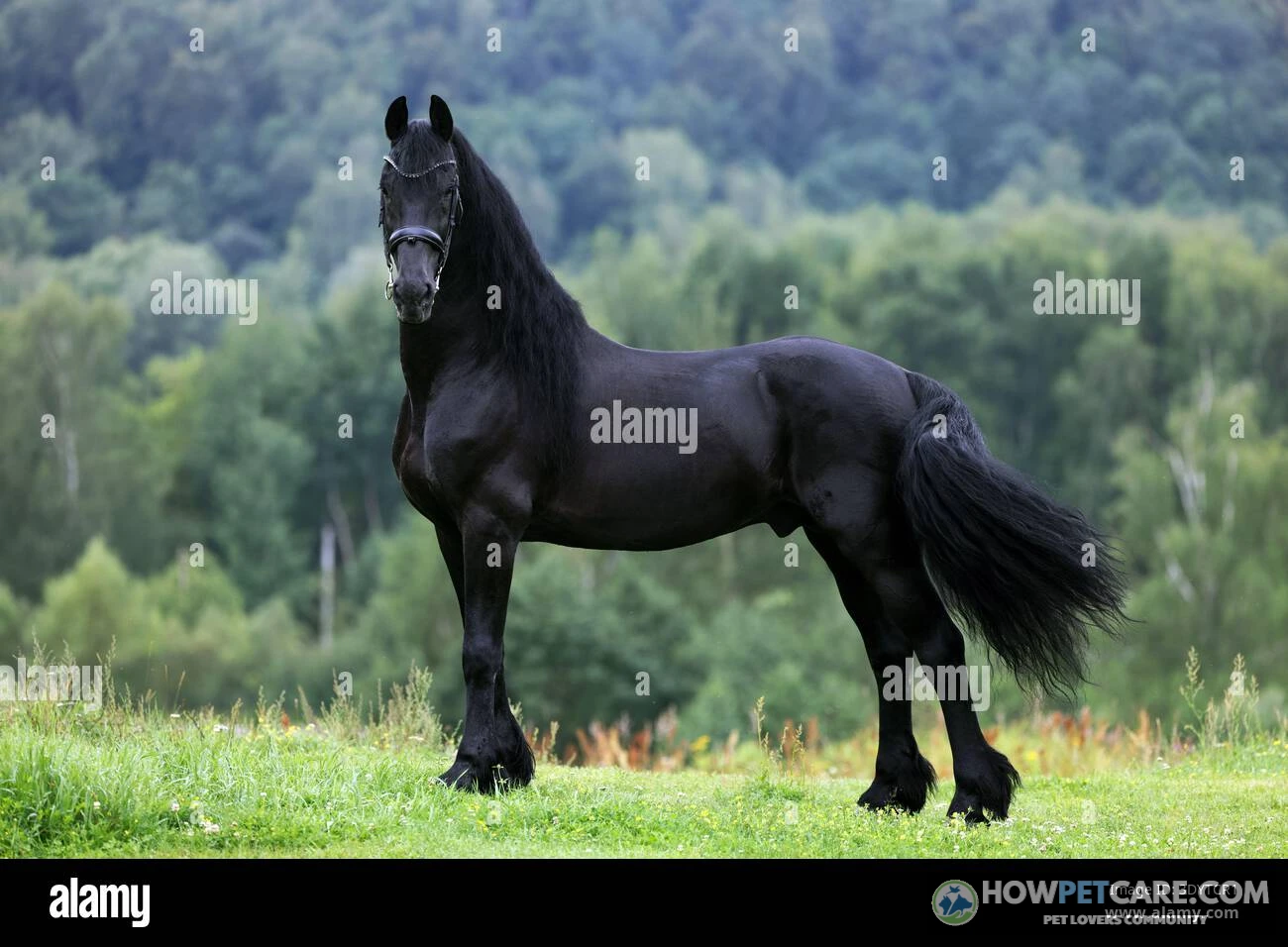

A Friesian horse is a striking Dutch riding and driving breed known for its black coat, abundant mane and feathering, elevated movement, and people-oriented temperament. In 2026, purchase prices commonly range from $8,500–$14,000 for registered weanlings to $32,000–$55,000 for confirmed amateur horses, with annual ownership often costing $12,000–$30,000 or more.
A Friesian horse can be a good match for a supported amateur seeking an expressive partner for dressage, driving, breed shows, or recreational riding. The buyer, however, must be prepared to manage the breed’s power, specialized grooming needs, health due diligence, and above-average ownership costs. In the 2026 US market, practical asking-price bands run from about $8,500–$14,000 for many registered weanlings to $32,000–$55,000 for confirmed amateur riding or driving horses. Elite sport horses, high-predicate mares, and approved stallions can exceed $100,000.
The purchase price is only the starting point. A boarded owner should plan to spend roughly $12,000–$30,000 or more per year, plus an emergency reserve. First-year spending can reach $20,000–$50,000 before the purchase price once tack, training, transport, insurance, diagnostics, and setup costs are included.
The Friesian is a Dutch warmblood-type carriage and riding breed, not a true cold-blooded horse comparable to a Clydesdale or Shire. Purebred Friesians are known for a black coat, abundant mane and tail, substantial feathering, and elevated movement. Those qualities account for much of the breed’s appeal, but they also make objective evaluation essential. Dramatic knee action does not prove collection, registration papers do not prove soundness, and a gentle demeanor does not make every Friesian suitable for a novice.
Is a Friesian Horse Right for You? Size, Temperament, and Suitability
The best-prepared Friesian owner has moderate riding or driving experience, access to knowledgeable professional support, dry turnout, and the financial capacity to address problems early. The breed often suits riders who value presence, trainability, and human interaction more than upper-level jumping scope or maximum endurance.
Friesians compete successfully in dressage, carriage driving, exhibitions, and recreational riding. They are less suitable for buyers focused primarily on upper-level jumping, speed work, or sustained hard exercise in hot conditions.
Official Conformation and Friesian Horse Characteristics
KFPS evaluation favors a balanced, rectangular horse with an expressive head, a sufficiently long arched neck, a strong topline, a sloping shoulder, correct legs, abundant hair, and active, elevated movement. The body should appear harmonious rather than simply large or upright. Judges also assess walk quality, trot mechanics, impulsion, elasticity, and use of the hindquarters.

The desired black coat is central to breed type. KFPS breeding standards tightly restrict white markings, so buyers considering breeding or inspections should verify whether a marking affects eligibility instead of relying on a seller’s interpretation.
A high front end can produce a memorable silhouette while concealing weak engagement behind. During an evaluation, watch whether the horse tracks evenly, keeps its rhythm through transitions, and lifts the back. Excessive toe flicking, a four-beat canter, trailing hind legs, or movement generated mainly from the knee should not be confused with advanced dressage ability.
Typical Height, Weight, and Movement
A typical adult Friesian horse size is approximately 15.2–16.3 hands and 1,200–1,500 pounds, though some individuals fall outside that range. Registry thresholds differ by sex, book, and predicate, so a typical size is not necessarily the minimum required for a particular designation.
Friesians are not generally bigger than Clydesdales. A Clydesdale commonly has greater height, bone, and draft mass, while a Friesian has a substantial but more sport-oriented frame. That distinction matters when choosing stall dimensions, trailer capacity, saddle trees, and safe handling practices.
The movement usually feels more elevated than that of a flatter-moving stock horse. A broad body and expressive trot can test a rider’s hip mobility and balance. Assess the walk and canter as carefully as the trot. Both reveal relaxation, back use, and whether the horse can carry itself rather than merely push forward.
The Amateur-Suitability Reality Check
Friesian horse temperament is often described as people-oriented, willing, intelligent, and calm. Even so, an individual may be forward, sensitive, physically powerful, or anxious when separated from companions. Training history matters at least as much as breed reputation.
A supported amateur may do well with a properly schooled Friesian that has reliable brakes, tolerates imperfect rider balance, hacks away from home, and stands quietly for mounting and care. An absolute novice should not assume that a large, expressive horse will be effortless simply because it seems gentle on the ground.

A calm sales video does not establish amateur suitability. Test transitions, steering, mounting, hacking, loading, clipping, and behavior with more than one rider before committing.
Friesian Horse Price by Age, Training, and Studbook Status
The average price of a Friesian horse in the US depends primarily on verified registration, age, soundness, useful training, temperament, inspection results, and performance history. The following 2026 figures are planning ranges, not appraisals. Region, seller urgency, reproductive status, import history, and market conditions can place an individual above or below them.
Foals, Weanlings, and Unstarted Young Horses
A registered weanling may look affordable, but the buyer takes on the risks associated with growth, soundness, temperament, and training. Plan for several years of board, handling, and veterinary care before the horse becomes a riding partner. Confirm parentage, genetic status, limb alignment, handling, and whether registration is complete rather than merely “eligible.”

Trained Riding and Driving Horses
Useful training usually provides more value than cosmetic presentation. For an amateur, a horse that safely walks, trots, canters, hacks, loads, and accepts varied environments may be worth more than a flashier prospect with an inconsistent canter. When evaluating a driving horse, distinguish professional arena schooling from documented road-safe experience.

Ster Mares, Breeding Stock, and Approved Stallions
Ster, Kroon, Model, Preferent, and approved-stallion status can materially affect Friesian horse price because these labels document specific inspection, performance, or production achievements. They do not guarantee soundness, fertility, rideability, or compatibility with a particular owner.
Approved Friesian stallions are scarce and should not be confused with intact males that are simply registered. A proven broodmare’s value should reflect reproductive records, foaling history, offspring quality, genetic compatibility, and current breeding soundness—not the predicate alone.
Price Premiums That Are—and Are Not—Worth Paying
| Horse category | Typical age | Training or discipline | Registration or predicate | Indicative US price range | Primary value drivers |
|---|---|---|---|---|---|
| Weanling/yearling | 6–18 months | Halter-broke, basic handling | Foal Book | $8,500–$14,000 | Parentage, genetic reports, handling, dam line, conformation |
| Young prospect | 2–3 years | Groundwork, long-lining, unbacked | Foal Book or pending adult inspection | $14,000–$22,000 | Temperament, movement, mature-size potential, baseline imaging |
| Green riding horse | 4–5 years | Basic walk/trot/canter | Studbook mare or registered gelding | $22,000–$35,000 | Canter quality, soundness, brakes, ground manners |
| Amateur dressage/driving horse | 6–10 years | First/Second Level or dependable harness work | Studbook or Ster | $32,000–$55,000 | Verified record, consistency, hacking or road experience |
| Breeding-quality Ster mare | 4–9 years | Ridden, driven, or performance tested | Ster | $38,000–$65,000 | Inspection results, performance, fertility, pedigree, progeny |
| Elite sport/high predicate | 6–12 years | Advanced dressage or driving prospect | Kroon, Model, Sport, or Sport-Elite | $65,000–$120,000+ | Verified performance, collection, health, rarity, production value |
Pay for capabilities you can verify: safe behavior, correct foundational training, soundness for the intended work, authentic records, and a temperament you enjoy. Color intensity, mane length, dramatic video editing, and unsupported “stallion quality” claims offer weak evidence of value.
The advertised price does not include a PPE, radiographs, sales commission, tax where applicable, transport, insurance, tack fitting, or immediate veterinary work. A $30,000 horse may therefore cost several thousand dollars beyond the signed sale price before it arrives ready to work.
First-Year and Annual Friesian Horse Cost of Ownership
The First-Year Financial Ledger
Use a range instead of relying on one national average. The low scenario assumes modest regional board and limited paid training. The high scenario assumes metropolitan full board, regular professional help, full shoeing, and more extensive diagnostics.
| Expense | Initial or one-time cost | Annual low estimate | Annual high estimate | Friesian-specific consideration |
|---|---|---|---|---|
| Board and turnout | $0–$1,000 setup | $8,400 | $16,800 | Dry footing and adequate stall space help protect feathered legs |
| Forage, balancer, supplements | $100–$400 | $2,200 | $3,800 | Base the ration on forage testing, body condition, and workload |
| Farriery | $0–$300 assessment | $1,200 | $3,600 | Balance, breakover, heel support, and sport needs affect cost |
| Routine veterinary and dental care | $300–$1,200 | $1,100 | $2,200 | Include vaccines, dentistry, Coggins, fecal testing, and exams |
| Insurance | $200–$500 setup/exam | $900 | $2,500 | Premium follows insured value, use, deductible, and exclusions |
| Training and lessons | $500–$2,000 | $1,200 | $9,600 | Professional conditioning may be important for amateur owners |
| Feather and skin management | $150–$400 | $450 | $900 | Mites, dermatitis, and persistent swelling can increase costs |
| Tack and fitting | $2,000–$7,000 | $400 | $1,200 | Broad backs and changing toplines require reassessment |
| Transport and competitions | $500–$3,000 | $600 | $4,000 | Trailer size and distance materially affect the total |
| Emergency reserve | $5,000 minimum | Replenish as used | $10,000+ target | Keep liquid funds for colic, lameness, or urgent hospitalization |
These categories overlap in practice, so don’t add every maximum and treat the result as universal. A realistic boarded-horse operating plan is approximately $12,000–$30,000 or more annually. First-year care and setup may total $20,000–$50,000 before acquisition or import costs.
Recurring Annual Expenses
Board dominates many budgets, but professional training and farriery can change the total quickly. Keeping a horse at home isn’t free. Account for hay, bedding, fencing, manure removal, utilities, equipment depreciation, labor, insurance, and backup care.
Routine care should include vaccinations chosen for local risk and travel, dental examinations, fecal egg counts with targeted parasite control, hoof care on an individualized cycle, and saddle checks as conditioning changes. Price mortality and major-medical insurance before purchase, since exclusions may determine whether the transaction remains affordable.
Breed-Specific Cost Premiums and Emergency Reserves
Compared with an average light horse, Friesian ownership may involve larger forage quantities, dry-lot improvements, more frequent skin inspections, treatment for feather mites or dermatitis, specialized saddle fitting, corrective or sport farriery, and help from a trainer familiar with the breed’s mechanics.

Insurance does not replace accessible cash. Maintain at least a $5,000 liquid reserve and understand deductibles, exclusions, claim-notification rules, and whether colic surgery coverage requires annual veterinary documentation.
Chronic progressive lymphedema (CPL) may require ongoing management rather than a one-time cure. Persistent swelling, skin folds, scabs, or secondary infection can substantially increase veterinary and labor costs. Budget conservatively if a horse already shows changes.
KFPS, FHANA, FHS, Predicates, and UELN Paper Verification
Which Organization Issued the Papers?
KFPS is the Royal Friesian studbook based in the Netherlands. FHANA administers KFPS interests and registration services in North America. The Friesian Horse Society, or FHS, is a separate nonprofit registry established in 1992 for the US and Canada and has its own UELN code. These records are not interchangeable.
FHS papers are not automatically fraudulent or meaningless, but they do not establish KFPS registration, KFPS predicates, or KFPS breeding rights. Friesian Sport Horses and Friesian crosses must also be represented accurately rather than advertised as KFPS purebreds. The International Friesian Show Horse Association supports competition, but participation in its shows does not replace studbook registration.
How to Read KFPS Predicates
A Foal Book designation generally identifies a purebred registered horse that has not entered the adult mare studbook or is otherwise retained in that register. Studbook entry reflects adult inspection requirements. Read auxiliary-book status carefully because its lineage and breeding implications differ.
Ster recognizes qualifying conformation and movement. Kroon and Model add requirements for elite mares, including performance and, for Model, maturity and production criteria. Sport reflects verified competitive achievement. Preferent and Prestatie concern the quality or performance of offspring. Approved-stallion status is a separate and demanding breeding designation.
Predicates can increase market value, but they don’t replace a PPE or test ride. Ask the issuing organization to confirm the current definitions and the individual horse’s recorded results, as rules and thresholds can change.

The Five-Point Identity and Lineage Check
-
Identify the authority
Read the document header and confirm whether the issuer is KFPS, FHANA acting for KFPS, FHS, or another registry. Do not treat the names as equivalent.
-
Match the horse
Scan the microchip during the PPE and compare the number with the certificate or passport, veterinary record, and seller’s description.
-
Verify the UELN
Check the Universal Equine Life Number in the issuing studbook’s database. A UELN identifies the record system; by itself, it does not prove a KFPS predicate.
-
Audit lineage and status
Confirm registered name, sire, dam, birth date, book designation, predicates, inspection history, DNA parentage, and ownership record directly with the registry.
-
Align the transaction file
Require the seller’s identity, bill of sale, transfer forms, microchip scan, registration certificate, and database entry to agree before releasing funds.
A mismatch may be clerical, but it still needs to be resolved in writing. Never accept a promise that papers, transfer signatures, or DNA reports will arrive after full payment.
Friesian Pre-Purchase Exam and Genetic Screening Checklist
Hire an independent equine veterinarian who does not represent the seller. Define the intended use before the examination, since a pleasure horse, breeding mare, driving horse, and upper-level dressage prospect call for different risk decisions.
Core Clinical and Performance Examination
The PPE should cover identification, eyes, heart, lungs, mouth, skin, limbs, feet, neurologic function, and general condition. Observe the horse on firm and soft footing, both straight and circling, at all relevant gaits. Include flexion tests and an evaluation under saddle or in harness when it is safe to do so.

Assess the horse at rest, during work, and through recovery. Look for respiratory noise, irregular rhythm, weakness, poor canter mechanics, delayed recovery, or behavior that differs materially from the sales representation.
Recommended Radiographs and Endoscopy
Radiographs should be based on risk rather than sold as a universal “clean X-ray” package. Common areas include the feet, fetlocks, hocks, and stifles. Neck or back imaging may be appropriate when examination findings, history, price, or intended work support it. The veterinarian should interpret images in relation to clinical function; an incidental finding does not automatically mean a failed PPE.

Consider upper-airway endoscopy for demanding sport or driving horses when there is respiratory noise, unexplained poor performance, previous airway treatment, or a concerning exercise examination. For problems that appear only during work, dynamic endoscopy may provide more useful information than a resting examination.
Mandatory DNA Documentation
Require laboratory reports for the known Friesian dwarfism and hydrocephalus mutations. The Fenway Foundation supports Friesian genetic health work and provides access to dwarfism and hydrocephalus testing. Make sure the report identifies the same horse by registered name and microchip or another reliable identifier.
A clear horse does not carry the tested mutation. A carrier has one copy and may be clinically normal. An affected result indicates two relevant copies. Carrier status does not necessarily disqualify a riding horse, but a carrier must not be bred to another carrier. Testing reduces specific genetic risks; it does not certify total health.
Breed-Specific Red Flags That May Change the Deal
| Check | Required document or procedure | Who verifies it | Red flag | Recommended buyer action |
|---|---|---|---|---|
| Identity | Live microchip scan matched to papers | Veterinarian and registry | Number mismatch or unreadable chip | Pause payment and resolve through issuer |
| Dwarfism/hydrocephalus | Identified laboratory DNA reports | Laboratory and veterinarian | Missing report, affected result, or undisclosed carrier | Test before closing; review breeding implications |
| CPL and feathered skin | Part feathers; inspect and palpate all lower limbs | Veterinarian | Firm folds, nodules, chronic swelling, ulceration | Obtain diagnosis, prognosis, and cost estimate |
| Orthopedic soundness | Dynamic exam, flexions, targeted radiographs | Veterinarian | Persistent lameness or significant use-related lesion | Renegotiate only with a clear management plan |
| Airway | Exercise assessment; endoscopy when indicated | Veterinarian | Noise, collapse, poor airflow, unexplained intolerance | Seek specialist review before purchase |
| Esophageal function | History, examination, diagnostics if indicated | Veterinarian | Recurrent choke, feed discharge, suspected dilation | Investigate for megaesophagus or motility disorder |
| Cardiovascular system | Rest and post-exercise auscultation; further testing if indicated | Veterinarian or cardiologist | Murmur, arrhythmia, abnormal pulses, poor recovery | Obtain echocardiography or withdraw |
| Records | Vaccination, dental, medication, lameness, reproductive, EHV-1 history | Veterinarian and seller | Gaps, contradictions, or undisclosed treatment | Require written disclosure and supporting records |
Ask about retained placenta in mares, repeated choke, unexplained fever, EHV-1 exposure, colic, skin treatment, lameness, injections, surgery, and reproductive performance. No routine PPE can guarantee that aortic rupture or another future event will not occur. Cardiovascular findings call for specialist evaluation, not false reassurance.
Interpret genetic results with a veterinarian or qualified breeding adviser. The decisive breeding rule is to avoid carrier-to-carrier matings while considering the individual horse’s health, use, and genetic value.
Friesian Horse Care: Nutrition, Feathering, Hooves, and Health
Daily Feed and Forage by Workload
Build the horse’s diet around weighed forage, forage analysis, body-condition scoring, workload, and balanced minerals. Don’t feed heavily simply because the horse looks large. Many Friesians in light work need quality grass hay, an appropriate ration balancer, salt, and water rather than a high-calorie concentrate.

Introduce dietary changes gradually. Divide concentrates into small meals, use slow feeders when appropriate, and monitor manure, water intake, body weight, and topline. A working driving or dressage horse may need more energy, but calories should reflect measured work rather than appearance.
Heat management also needs attention. Provide shade, ventilation, water, and appropriate electrolyte support based on sweating and veterinary or nutrition guidance. Adjust conditioning when humidity and the horse’s recovery indicate that the workload exceeds its current fitness.
Foal and Young-Horse Nutrition
The best diet for a Friesian horse foal supports controlled, even growth. Begin with adequate mare’s milk or a veterinarian-directed replacement, then introduce safe forage and a balanced young-horse ration suited to the foal’s development. Protein quality and mineral balance matter more than rapid weight gain.
Monitor growth, limb alignment, body condition, and the mare’s milk supply. Don’t add several mineral supplements to a complete ration without calculating the total. A veterinarian or equine nutritionist should assess orphan foals, rapid growth, developmental orthopedic concerns, or forage with uncertain mineral content.
Black Coat, Mane, Tail, and Feather Care
Inspect the skin beneath the feathers daily with your hands, not just your eyes. Check for heat, swelling, moisture, scabs, itching, odor, or thickening. Pick out the feet, remove mud, and dry the pasterns thoroughly. Excessive washing and oily products may trap moisture or hide disease.

Separate tangles by hand before gently combing the mane and tail. Use clean tools, and don’t remove healthy hair simply to speed up grooming. The glossy black coat, long mane and tail, and substantial feathering are defining breed characteristics, but healthy skin matters more than show-ring volume.
Feather mites can lead to stamping, rubbing, and irritated skin. Treatment choices depend on the diagnosis, local drug rules, and the individual horse, so seek veterinary guidance rather than improvising systemic medication. Persistent swelling or skin folds require assessment for CPL.
Preventive Veterinary and Farriery Calendar
Daily care includes checking water and appetite, observing manure, picking out hooves, inspecting limbs, and making a brief soundness assessment. Each week, examine the skin more closely, track weight by tape when useful, inspect tack, and clean grooming tools.
Schedule hoof trimming or shoeing according to growth, balance, footing, and workload, not a rigid breed rule. Arrange dental examinations at intervals advised by the veterinarian. Choose vaccinations based on geography, travel, barn exposure, and competition requirements. Use fecal testing to guide parasite control instead of automatically dosing every horse on the same calendar.
Friesian horse lifespan and health issues cannot be reduced to a guaranteed age. Genetics, cardiovascular and gastrointestinal health, CPL severity, body condition, workload, preventive care, and prompt treatment all affect longevity. A seller’s claim that the breed always reaches a certain age should not influence the purchase decision.
Training a Friesian for Dressage, Driving, or Recreational Riding
A Progressive Dressage Training Framework
To train a Friesian horse for dressage, develop rhythm, relaxation, contact, straightness, and prompt transitions before asking for collection. Frequent walk-trot and trot-canter transitions, large figures, poles where appropriate, and gradual lateral work can improve coordination and hindquarter strength.

Don’t reward knee action by itself. The horse should reach toward the contact, lift through the thoracic sling, and keep a clear rhythm without curling behind the bit. Short, productive sessions usually build strength more safely than prolonged drilling.
An upright neck and broad torso can make saddle fit and rider balance more difficult. Reassess the tack as the topline changes. The saddle should allow shoulder movement without concentrating pressure behind the withers, and the rider should not manufacture a high outline with the reins.
Driving Preparation and Harness Safety
Driving suits many Friesians, but visual presence alone is not enough. Establish voice cues, long-lining, straight halts, standing, rein acceptance, and calm exposure to noise before hitching. Introduce the vehicle in a controlled environment with professional help.
The harness must fit the individual horse, distribute the load correctly, and allow free shoulder movement. Confirm braking responses on slopes, then expose the horse progressively to traffic, dogs, bicycles, machinery, and other likely hazards. A horse advertised as “drives” should demonstrate the claimed configuration and environment.

Friesian Horse vs Dutch Warmblood for Jumping
A sound, correctly trained Friesian may be enjoyable for recreational jumping. For upper-level jumping, the Dutch Warmblood is generally the more logical choice because jumping lines are selected for scope, efficiency, power, and sport performance.
Friesians may have more elevated front-leg action, a heavier body, and less economical jumping mechanics. Individual ability varies, but the breed should fit the primary job. Choose a Friesian for demonstrated suitability, not because you expect training to override conformation.
How to Test Ride for Amateur Suitability
Watch the seller or trainer ride first. Then test mounting, walk quality, steering, upward and downward transitions, brakes, canter leads, circles, and the response to a mistake. If relevant, hack alone and with company, ride near the gate, and test the horse in a safe open space.
Assess separation anxiety, tying, loading, clipping, bathing, farrier manners, and acceptance of veterinary handling. Ask another competent rider to repeat key tasks. A horse that works only for one professional may not be practical for an amateur.
A written lease can test whether Friesian movement, sensitivity, grooming, and monthly costs suit you. Assign responsibility for insurance, veterinary care, farriery, training, permitted use, and return conditions.
Your Friesian Buying Plan: Domestic Search, Dutch Import, and Final Decision
How to Find and Screen Reputable Sellers
For a search such as “where to buy a Friesian horse near me,” start with KFPS or FHANA resources for KFPS horses, the relevant independent registry for other stock, recognized breeders, inspection records, trainer referrals, and breed events. Social media may help uncover prospects, but it should never serve as identity verification.
Ask every seller for the registered name, microchip, UELN, issuer, pedigree, genetic reports, health history, training videos, and reason for sale. Request unedited footage that shows catching, grooming, tacking, mounting, all gaits, and the specific job you expect the horse to perform.
Domestic Purchase Checklist
Before shopping, define the intended use and maximum total first-year budget. Shortlist horses whose training—not just appearance—matches that use. Verify the papers, inspect the horse in person when possible, complete a realistic performance evaluation, and commission an independent PPE.
The written contract should identify the horse and seller, describe representations, disclose known medical or behavioral issues, state the price and payment method, allocate transport risk, and explain what happens if agreed conditions are not met. Bind insurance before transit if coverage is required.
Step-by-Step Netherlands-to-US Import Timeline
Import requirements may change, so confirm the current process with the USDA, an experienced equine import agent, the airline, the quarantine facility, and a veterinarian before paying a nonrefundable deposit.
-
Complete seller and horse due diligence
Verify KFPS records, ownership, microchip, training, genetic reports, and an independent PPE. Agree in writing on currency, tax treatment, agent commission, and who bears risk at each stage.
-
Arrange European export preparation
Book ground transport, required blood tests, export health documentation, and any pre-export isolation or quarantine. Coordinate timing because certificates and test results may have limited validity.
-
Reserve air freight and entry services
Use an experienced equine shipper to schedule the flight, approved container space, insurance, US customs broker, and USDA port-of-entry handling.
-
Complete US inspection and quarantine
The horse undergoes entry inspection and applicable federal quarantine. CEM requirements vary by sex, age, origin, testing, and current rules; mares and stallions generally require more post-entry processing than geldings.
-
Release and deliver domestically
After clearance, obtain the full health and customs file, verify the horse again, and use an appropriate commercial transporter for delivery and post-travel monitoring.
Budget separately for agent commission, European ground transport, PPE, laboratory work, export documentation, isolation, air freight, insurance, broker and USDA charges, CEM quarantine or testing, and final US transport. As a planning allowance, buyers commonly reserve a five-figure amount above the European sale price. Obtain current written quotes because route, sex, fuel, quarantine, and destination can change the total sharply.
After travel, watch for fever, cough, nasal discharge, diarrhea, reduced appetite, or neurologic changes, and follow the receiving veterinarian’s biosecurity plan. Keep vaccination and EHV-1 history documentation, but remember that records do not replace arrival monitoring.


Final Buy, Renegotiate, or Walk Away Decision
Buy when identity and ownership are verified, the horse can perform the intended job, the PPE findings fit your risk tolerance, genetic status is documented, the contract protects both parties, and the full first-year cost stays within budget.
Renegotiate only when a finding is understood and manageable—for example, routine dental work, a disclosed maintenance need, or a transport issue with a firm written solution. Reduce the price only when doing so truly compensates for the risk. A discount cannot make an unsuitable horse suitable.
Walk away from a mismatched microchip, unresolved ownership, unverifiable predicate, concealed carrier status, materially different behavior, significant unexplained PPE finding, pressure to skip testing, or refusal to put claims in writing. Do the same if the purchase and care costs would consume the emergency reserve.
Before releasing funds, ask the veterinarian to scan the microchip, confirm the final transaction documents, activate insurance, approve transport, and place the registration, DNA reports, images, laboratory results, disclosures, and bill of sale in one permanent purchase file.
| Horse Category | Typical Age | Training or Discipline | Registration or Predicate | Indicative Price Range | Primary Value Drivers |
|---|---|---|---|---|---|
| Weanling/yearling | 6–18 months | Halter-broke, basic handling | Foal Book | $8,500–$14,000 | Parentage, genetic reports, handling, dam line, conformation |
| Young prospect | 2–3 years | Groundwork, long-lining, unbacked | Foal Book or pending adult inspection | $14,000–$22,000 | Temperament, movement, mature-size potential, baseline imaging |
| Green riding horse | 4–5 years | Basic walk/trot/canter | Studbook mare or registered gelding | $22,000–$35,000 | Canter quality, soundness, brakes, ground manners |
| Amateur dressage/driving horse | 6–10 years | First/Second Level or dependable harness work | Studbook or Ster | $32,000–$55,000 | Verified record, consistency, hacking or road experience |
| Breeding-quality Ster mare | 4–9 years | Ridden, driven, or performance tested | Ster | $38,000–$65,000 | Inspection results, performance, fertility, pedigree, progeny |
| Elite sport/high predicate | 6–12 years | Advanced dressage or driving prospect | Kroon, Model, Sport, or Sport-Elite | $65,000–$120,000+ | Verified performance, collection, health, rarity, production value |
FAQ
What is special about Friesian horses?
Friesians combine a striking black coat, abundant mane and feathering, elevated movement, and a generally people-oriented temperament. They are especially recognized for dressage, driving, exhibitions, and recreational riding.
Can a purebred Friesian horse have white markings?
KFPS breeding standards strongly favor a black coat and tightly restrict white markings. A small star may be permitted in some registration contexts, but larger white markings can affect inspection or breeding eligibility.
Should I lease a Friesian before buying one?
A lease can be a useful way to test whether the breed’s movement, sensitivity, grooming needs, and ongoing expenses suit you. Use a written agreement that assigns responsibility for insurance, veterinary care, farriery, training, and return conditions.
Does a Friesian need special horse tack?
The tack is not inherently breed-specific, but many Friesians need careful saddle and harness fitting because of their broad backs, upright neck carriage, shoulder movement, and changing topline. Fit should be reassessed as conditioning or body shape changes.