

No — cats should not eat grapes or raisins. No safe amount has been established for cats, and grape ingestion carries a risk of kidney injury. If your cat ate any, note the amount and time and call your veterinarian or a pet poison hotline right away.
If you’re wondering can cats eat grapes, the answer is no. Cats should not eat grapes or raisins. No safe amount has been established for cats, and because kidney injury is a real risk, any known ingestion is worth a call to your veterinarian or a pet poison hotline. The feline evidence is limited, so neither “one grape will kill your cat” nor “cats are fine” holds up.
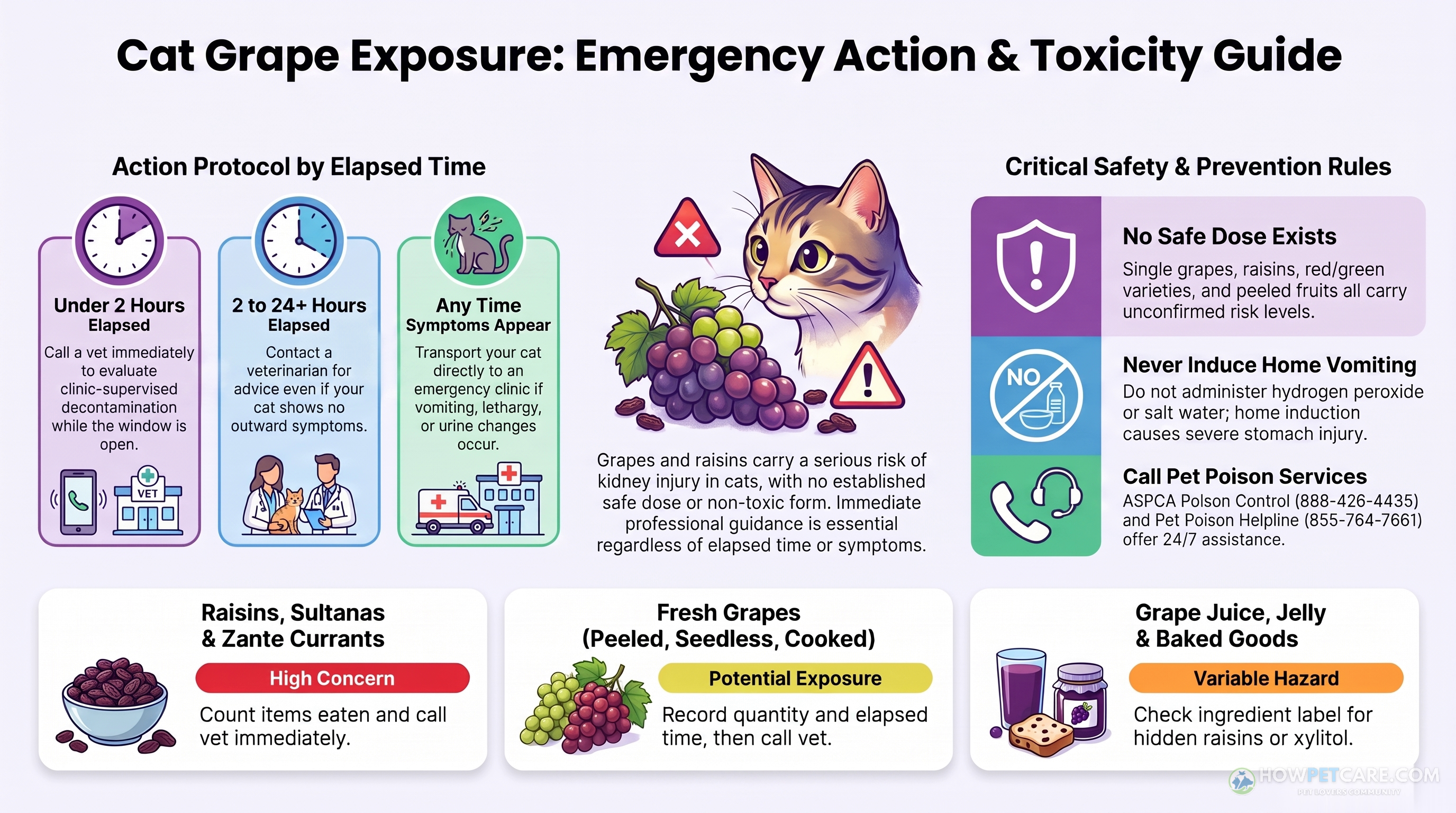
If your cat just ate one, remove any remaining fruit, note the amount and time, and call your vet, an emergency clinic, or one of these U.S. poison services: ASPCA Animal Poison Control Center at 888-426-4435 or Pet Poison Helpline at 855-764-7661. Both charge a consultation fee—confirm the current amount when you call. Don’t wait for symptoms, and don’t induce vomiting at home. A veterinarian or poison specialist can assess the exposure and tell you whether your cat needs to be seen.
The sections below cover what to do based on time since ingestion, what a single grape could mean, what the feline evidence shows, and what a veterinary assessment may involve. This is general safety information, not a diagnosis; let your veterinarian or poison-control service guide decisions for your cat. For context beyond grapes, a severity chart of foods toxic to cats can help you compare risks.
My Cat Ate a Grape: What to Do Based on How Long Ago It Happened
First, remove the fruit and keep your cat away from it. Note the time, estimate the amount, identify the form (fresh grape, raisin, or food containing grape), and check your cat’s behavior. If the exposure involved a prepared food, keep the package or photograph the ingredients.
| Time since ingestion | Cat’s condition | What to do | What the vet may do |
|---|---|---|---|
| Under 2 hours | Seems normal | Call your vet or a poison hotline now. Do not induce vomiting at home. | Consider supervised vomiting induction and, in some cases, activated charcoal. |
| 2–12 hours | Normal or has vomited | Call anyway; share the amount, time, and product. Watch appetite, energy, thirst, and urination. | Decide whether decontamination is still useful and whether examination, bloodwork, or fluids are warranted. |
| 24 hours or more | No symptoms | Still call. Ask whether kidney bloodwork and follow-up testing are appropriate. | Assess hydration and kidney values; recommend repeat testing if the exposure or findings warrant it. |
| Any time | Vomiting, lethargy, not eating, or unusual drinking or urination | Go to a veterinary emergency clinic now and call ahead. | Triage, blood and urine testing, supportive care, and hospitalization if needed. |

Under 2 hours since eating
Call right away, even if your cat seems completely normal. This is generally the best window for a veterinarian to consider decontamination. A clinic might use an injectable medication to induce vomiting and may consider activated charcoal, depending on the product and circumstances. Never use hydrogen peroxide or salt water to make a cat vomit, and don’t induce vomiting unless a veterinarian specifically directs you.
2 to 12 hours since eating
Call even if your cat has already vomited. Vomiting doesn’t confirm that everything has left the stomach or that the danger has passed. A veterinarian can decide whether decontamination is still appropriate and whether the amount, your cat’s health, or current symptoms justify testing or fluids.
24 hours or more since eating
A cat that still looks well should still be discussed with a veterinarian. Early kidney injury isn’t always obvious from behavior alone. Ask whether a baseline kidney panel makes sense and when values should be rechecked; one normal early result may not settle the question after a meaningful exposure.
If your cat is already unwell
Repeated vomiting, marked tiredness, refusal to eat, weakness, or changes in thirst or urination warrant urgent veterinary attention after a known grape exposure. Reduced or absent urination is an emergency. Call the clinic while you’re on the way, if possible.
Tell the veterinary team your cat’s weight, the product and estimated amount, when it was eaten, current signs, medications, and any history of kidney disease. Existing kidney disease is a reason to discuss the exposure promptly and to use a lower threshold for evaluation.
Is One Grape Dangerous to a Cat? How Much Is Toxic for Cats Specifically
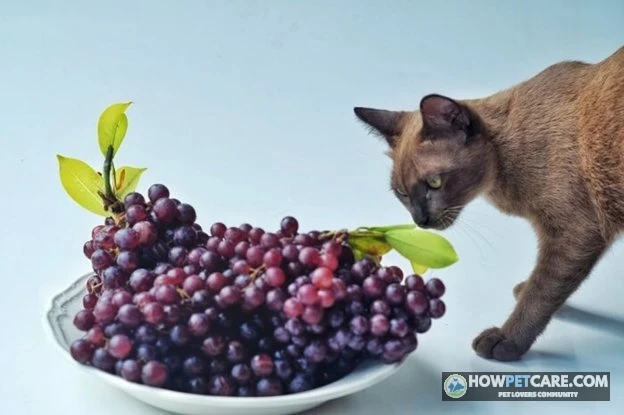
There’s no published feline toxic dose that tells an owner how many grapes are safe or dangerous for a cat. Any precise cat-specific cutoff would be misleading.
The often-repeated estimates—about 0.7 ounces of grapes per kilogram of body weight and 0.1 ounces of raisins per kilogram—come from dog data, not validated feline thresholds. Don’t use them to calculate a safe amount for a cat. Even in dogs, reported susceptibility varies, and a dose estimate doesn’t guarantee that an individual animal will be unaffected.
A single grape is not a known safe dose for a cat, but it isn’t proof that kidney failure will occur. For one grape in a cat that’s acting normally, call a veterinarian or poison service for a risk assessment; that doesn’t automatically mean an emergency-room visit is required. Several grapes, raisins, a small or young cat, known kidney disease, concentrated raisin products, or any symptoms make prompt veterinary guidance especially important.
The Dutch study discussed below offers some context: none of 13 monitored cats developed acute kidney injury, but that small finding can’t establish a safe dose or rule out risk in other cats. Base the practical decision on the actual exposure and your cat’s health, not on dog-derived dose arithmetic.
Do Grapes Cause Kidney Failure in Cats? What the 2022 Dutch Study and Other Evidence Show
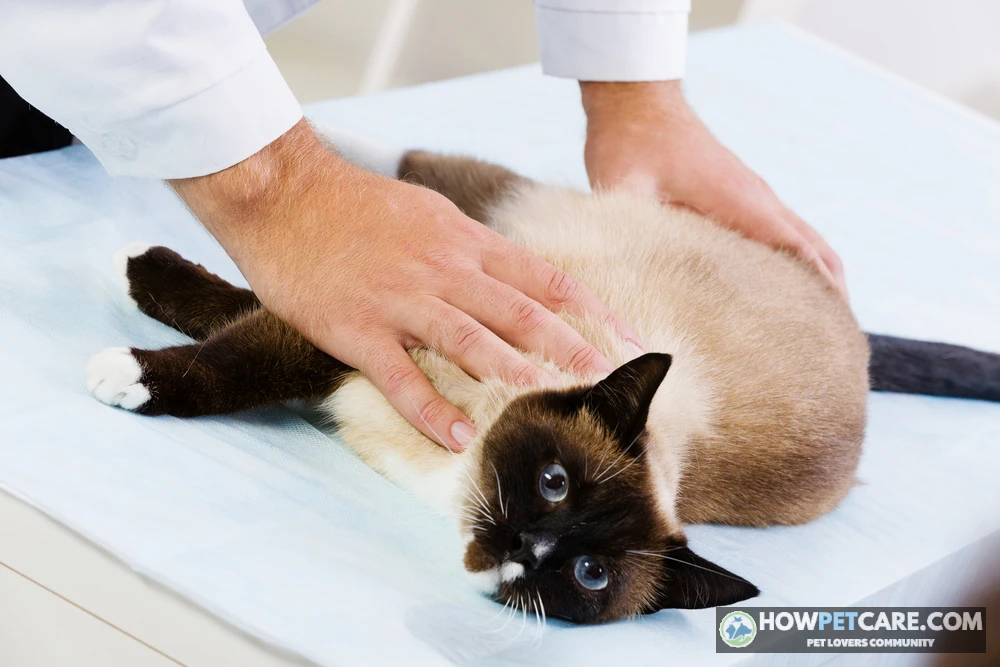
In dogs, grapes and raisins are associated with acute kidney injury (AKI), which can be severe. The precise toxic agent hasn’t been established. Tartaric acid and potassium bitartrate have been proposed as possible culprits, but the mechanism remains uncertain.
What we know from dogs
Veterinary warnings about grapes in cats draw partly on the seriousness of grape-associated kidney injury in dogs and partly on limited feline evidence. That doesn’t mean dog dose estimates transfer to cats. The frequently quoted figures are dog-derived, and no feline threshold has been established.
What the 2022 Dutch study found
A 2022 prospective Dutch study followed 13 cats after they ate fruit from the Vitis genus. Two cats (15.4%) showed gastrointestinal signs, and none developed AKI (0 of 13).
This is useful cat-specific evidence, but it’s a small group. It can’t show that grapes are harmless to cats, establish a safe dose, or predict what will happen to an individual cat. It does show that kidney failure isn’t inevitable after every feline exposure. The absence of AKI in this small sample should temper certainty in sweeping claims—not remove the reason to call for professional advice.
What the evidence does not tell us
The available findings don’t provide a reliable number of grapes that’s safe for every cat, and they don’t make waiting for symptoms a safe plan. Because a serious outcome is possible and early veterinary advice may affect care, treat ingestion as a potential toxic exposure and contact a veterinarian or poison-control service.
Fresh Grapes, Raisins, Currants, Juice and Baked Goods: Which Grape Forms Are Riskiest?
No form of grape is established as safe for cats. The relative concerns below are based on the nature of each product and, where stated, dog data—not a tested feline ranking.
| Form | Relative risk concern | What is known (dog data vs. cat data) | Recommended action |
|---|---|---|---|
| Raisins, sultanas, Zante currants | High concern per gram | Dried grapes are concentrated; dog data use lower dose estimates for raisins than fresh grapes. A cat dose is unknown. | Count what may have been eaten and call promptly. |
| Fresh grapes: red, green, peeled, seedless, or cooked | Potential exposure | No color or preparation is proven safe for cats. The toxic agent is not confirmed to be limited to skin or seeds. | Record the amount and time, then call. |
| Juice, jelly, baked goods, trail mix, or cereal | Depends on grape content and other ingredients | The grape content varies; some foods contain raisins or concentrated fruit. Other ingredients may pose separate hazards. | Check the label and call with the product details. |
| Botanical blackcurrants or redcurrants | Different fruit; do not confuse with Zante currants | Botanical currants are not dried grapes. The grape-related evidence does not automatically apply to them. | Identify the exact product; call if it also contains raisins or the ingredients are unclear. |
| Grapeseed oil or grape-extract supplements | Unknown; not established as the toxic component | There is limited feline evidence, and these products are not shown to be the source of grape-associated kidney injury. | Do not give intentionally; ask a veterinarian about a known or substantial ingestion. |

Peeled, seedless, and cooked grapes aren’t safe alternatives: removing skin or seeds or heating the fruit doesn’t establish that what’s left is harmless. Red and green grapes are both off-limits. For mixed foods, tell the vet about the full ingredient list, not just the grape component—sweeteners such as xylitol in foods can pose separate hazards.
Symptoms of Grape Poisoning in Cats and When They Show Up
Vomiting is the most commonly reported early sign after grape ingestion in cats; diarrhea, tiredness, and loss of appetite can also occur. Reports place early vomiting in cats around 6–24 hours after ingestion, though timing information is limited. Don’t wait for a symptom to appear before calling.
Later concerns include changes in thirst or urination, dehydration, weakness, and little or no urine. Reduced urination needs emergency assessment. Vomiting by itself has many possible causes in cats, but after a known grape exposure it should be reported to the vet.
| Time after ingestion | Signs to watch | Tests the vet may run | Why it matters and retest timing |
|---|---|---|---|
| First 0–12 hours | Vomiting, drooling, appetite loss, tiredness, abdominal discomfort | Exam; hydration assessment; baseline BUN and creatinine if indicated | Establishes a starting point and helps guide immediate care. Symptom timing is not a reliable safety test. |
| 12–36 hours | Ongoing vomiting, hiding, weakness, poor appetite, changes in thirst | BUN, creatinine, phosphorus, potassium, urine concentration, and urine output | Trends and urine findings can help identify developing kidney problems. |
| 24–72 hours | Increased drinking or urination, then potentially reduced or absent urine; dehydration or marked weakness | Repeat kidney values and electrolytes; urine monitoring; other tests as clinically indicated | A normal early panel may not settle the question; the vet decides whether and when to repeat testing. |
BUN and creatinine are blood measures used to assess kidney function; phosphorus and potassium help evaluate related changes and guide care. Urine concentration and output add important context. No single retest schedule fits every exposure, so follow the clinic’s instructions. The timeline above is a monitoring guide, not a substitute for veterinary assessment.
What the Vet Will Do, How Long Treatment Takes and What It Costs
A veterinary visit typically starts with an exam and a history of what was eaten and when. If ingestion was recent, the vet may consider inducing vomiting and, in some cases, activated charcoal. They may check kidney values, electrolytes, hydration, and urine findings, then recommend observation, fluids, or hospitalization based on the individual cat.
For an exposure of concern, IV fluids and monitoring may be recommended. A roughly 48-hour fluid protocol is commonly discussed in dog-related grape exposure guidance, but it isn’t a fixed rule for cats. The veterinarian may recommend a different duration or outpatient monitoring based on the amount, timing, test results, and the cat’s condition. A cat treated before kidney injury develops may recover over a few days; the available evidence doesn’t justify promising a particular recovery time for every cat.
There’s no dependable national price for this visit: U.S. costs vary widely by location, clinic, time of day, and whether hospitalization is needed. Rather than relying on a made-up average, ask the clinic for an itemized estimate covering:
- Examination and emergency triage
- Vomiting induction or activated charcoal, if appropriate
- Baseline bloodwork and urine testing
- IV fluids, monitoring, and any hospital stay
- Repeat kidney tests and follow-up care

Ask whether a shorter or outpatient plan is reasonable for your cat, when repeat tests should happen, what changes mean you should return immediately, and whether your pet insurance covers toxin ingestion. Poison hotlines charge consultation fees—ask for the current amount when calling.
Early advice and care before kidney injury generally offer a better outlook than waiting until kidney values or urine output are abnormal. Established AKI is more serious and may require prolonged treatment; some cats may have lasting kidney problems. Your veterinarian is best placed to discuss prognosis once the exam and test results are known.
Why Cats Go for Grapes and How to Keep Them Out of Reach
Cats are obligate carnivores without functional sweet taste receptors, so a grape’s appeal likely comes from its rolling movement, texture, or novelty rather than sweetness. A grape can look like a toy, but batting it around can lead to a bite or swallow.
Store grapes and raisins in closed containers or cupboards rather than open fruit bowls. Pick up dropped fruit promptly, and watch for raisins in trail mix, baked goods, cereal, and lunchboxes. Tell visitors and family members not to offer grapes or raisin-containing food as treats.

Cats don’t need fruit. If your cat enjoys an occasional novelty treat, small pieces of foods such as blueberries or seedless watermelon are commonly considered non-toxic, but keep portions modest and check with your vet if your cat has a medical condition or a restricted diet. Treats should stay a small part of a cat’s daily calories; the commonly cited limit is no more than 10%. When in doubt, ask what is toxic to cats rather than testing snacks at home.
Your Next Steps: A Checklist for Right Now and for the Future
- If your cat ate a grape or raisin today, note the amount, form, and time, then call your veterinarian, an emergency clinic, or a poison hotline.
- Don’t wait for symptoms, and don’t induce vomiting at home.
- If your cat is vomiting, weak, refusing food, or urinating less than usual, go to an emergency clinic and call ahead.
- If your cat seems fine, still ask whether an exam or baseline and repeat kidney tests are appropriate.
- Save your veterinarian, emergency clinic, ASPCA Animal Poison Control Center (888-426-4435), and Pet Poison Helpline (855-764-7661) in your phone.
- Keep grapes, raisins, and foods containing them out of reach, and check ingredient labels before sharing food.
FAQ
Can kittens eat grapes?
No. Kittens are smaller, so a given amount is a larger dose per kilogram, and no safe amount has been established for any cat. If a kitten eats a grape, call a vet or poison control right away.
Are red or green grapes safer for cats?
Neither is considered safe. The toxic agent has not been identified, and no grape color has been shown to be harmless to cats.
What fruits can cats eat instead of grapes?
Small pieces of blueberries, seedless watermelon or banana are generally considered non-toxic as occasional treats. Cats do not need fruit, and treats should stay a small part of the diet, so check with your vet if your cat has kidney disease or diabetes.
Why does my cat play with grapes if cats cannot taste sweetness?
Cats lack functional sweet taste receptors, so the interest is usually in the rolling movement, texture or curiosity. That play can still end in a bite, so keep grapes off counters and floors.
Should I give my cat hydrogen peroxide to make it vomit after eating a grape?
No. Hydrogen peroxide can irritate or injure a cat’s stomach and is not recommended for cats. Call a vet or poison control, who can arrange safer vet-supervised vomiting induction if it is appropriate.