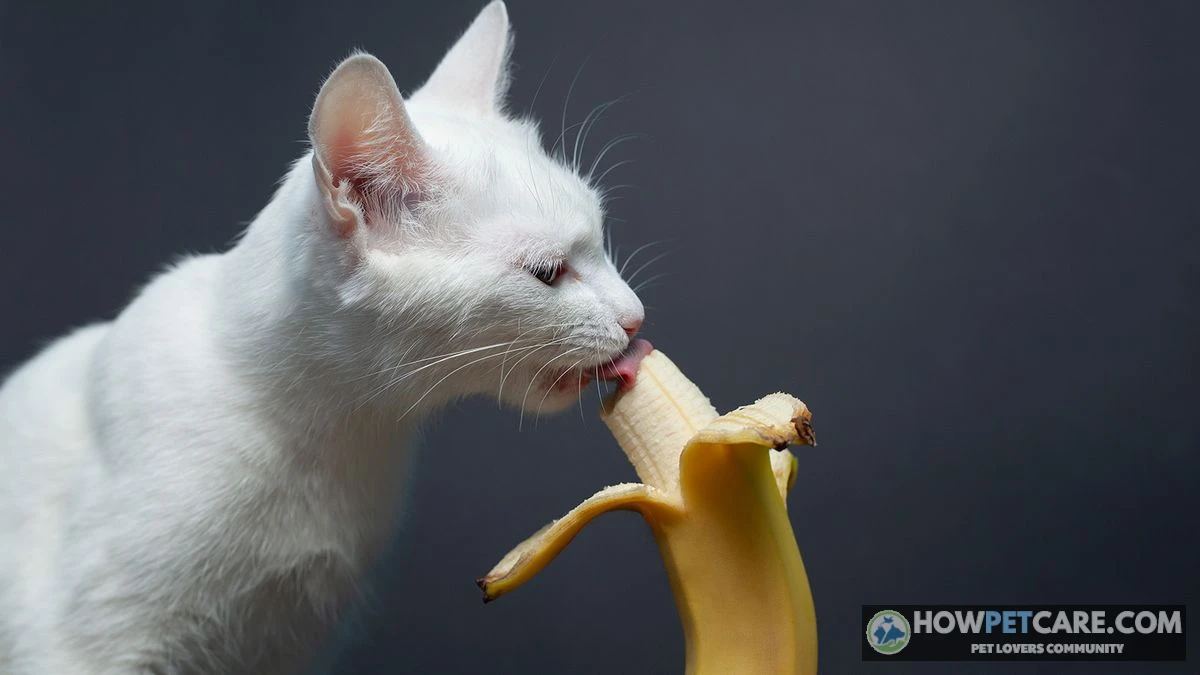

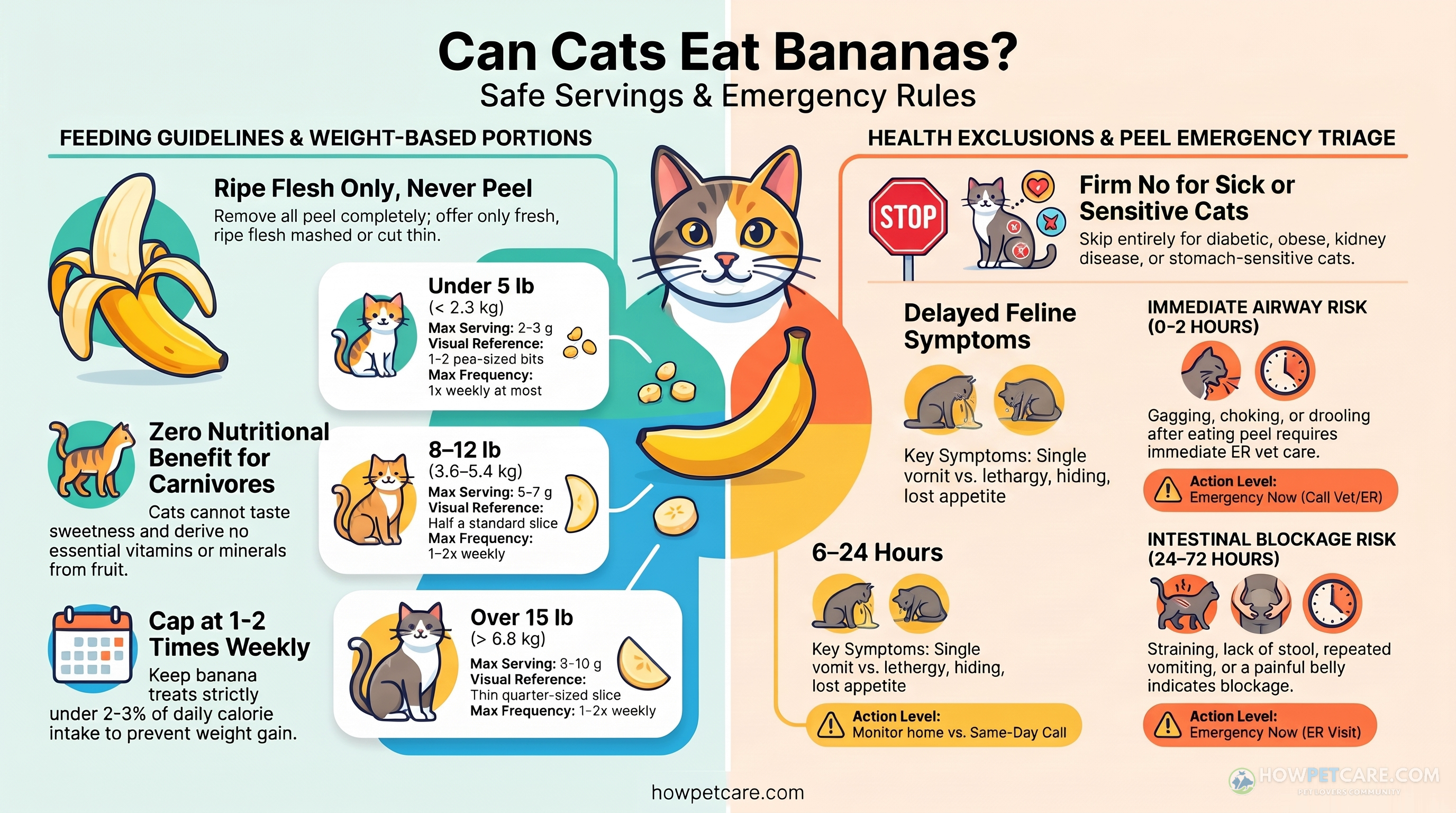
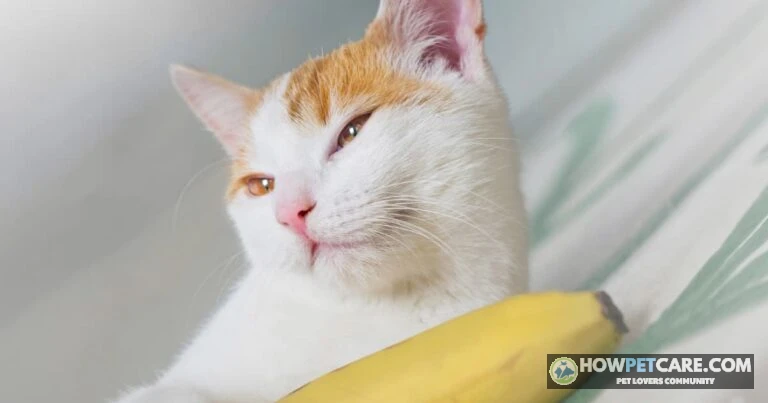
Yes — cats can eat bananas, but only in tiny amounts. Offer 2-10 grams of ripe, peeled flesh (sized to body weight) once or twice a week at most. Never feed the peel, and skip bananas entirely for diabetic, overweight, or kidney-disease cats.
Can Cats Eat Bananas? Yes, a Few Grams Is Safe, but Not Daily
Yes — bananas are safe for cats to eat, but only a few grams of ripe flesh, offered rarely. Banana is not toxic to cats; the real limits are sugar content, calories, and a cat digestive system built for animal protein, not fruit.
Three rules decide it for any cat:
- Flesh only, never the peel.
- 3-10 g, sized to body weight (chart below).
- Once or twice a week at most, for healthy adults.
So "can cats eat bananas as a treat" resolves to yes — tiny and rare. A cat is an obligate carnivore, and banana meets no dietary need. Firm no’s up front: diabetic cats, cats on strict weight-loss or renal diets, and any cat with active vomiting or diarrhea. If your cat already swallowed a peel, skip to the peel triage section.
Why Bananas Are Safe but Not Beneficial for an Obligate Carnivore
Banana is safe and non-toxic, but it is not necessary in any feline nutrition plan. A cat’s digestive system handles animal protein and fat and has limited capacity for carbohydrates, so fruit adds nothing a complete food already provides.
Banana is not good for cats. It runs about 89 kcal per 100 g, with sugar—including fructose—plus fiber and potassium. That makes it calorie-dense, not nutritious for an obligate carnivore.
Banana is non-toxic and nutritionally near-worthless for an obligate carnivore. Treat it as a flavored morsel, never as health food.
Is a banana toxic to cats? What the ASPCA list does and does not say
Banana does not appear on the ASPCA toxic food list, so "are bananas toxic to cats" is a clean no for poisoning. The list does not cover the other risks, though: sugar and starch fed often can push blood glucose, weight, and diabetes risk, and a peel can choke or obstruct.
Why some cats are curious about bananas
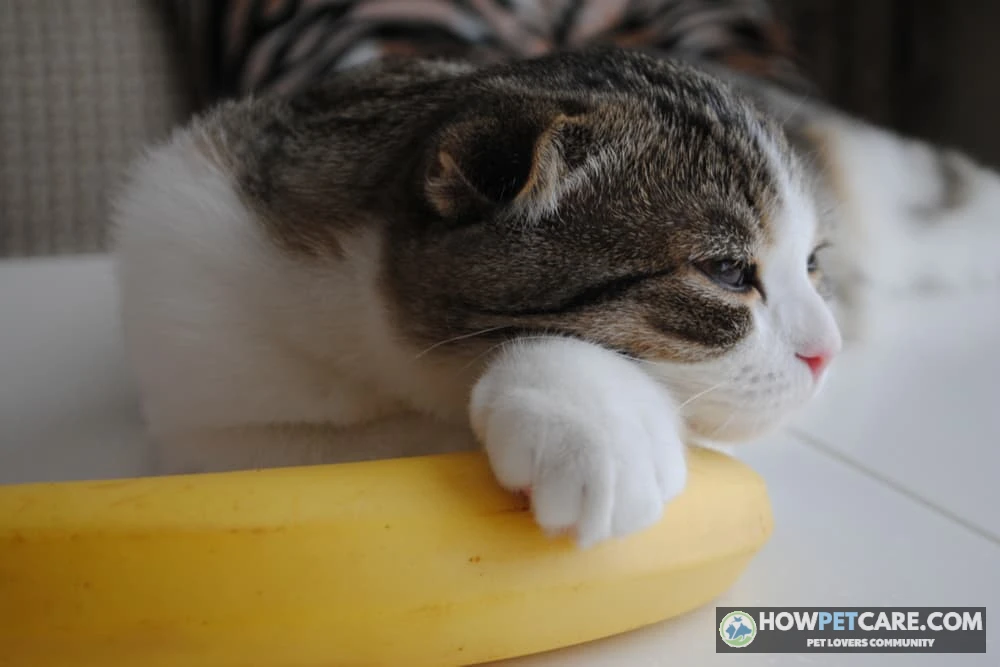
Cats cannot taste sweetness, so a cat’s interest is not a sugar craving. The draw is texture, smell, or your attention — the honest answer to "why does my cat like bananas." Banana is not poison for a cat; it is simply a sugar-dense fruit an obligate carnivore has no biological need for.
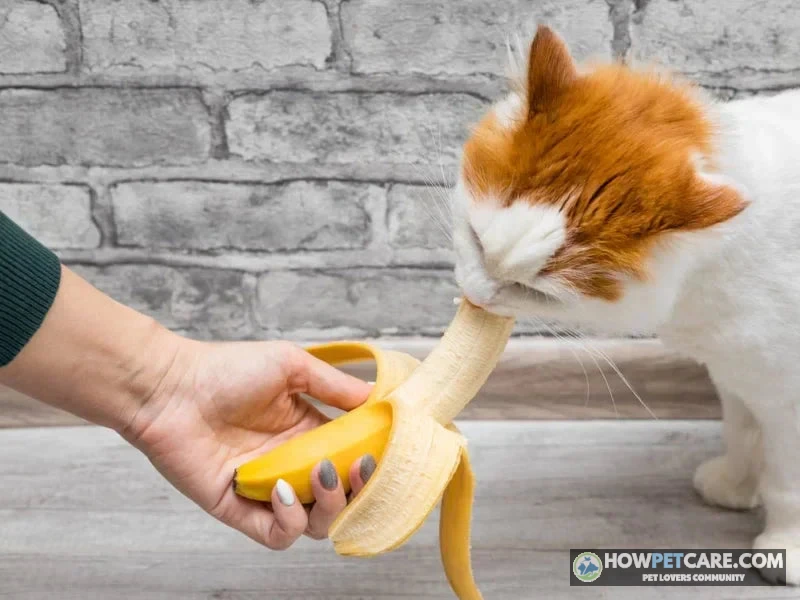
How Much Banana Can a Cat Eat? Serving Size by Body Weight
Portion size is the whole question, and "a small piece" is not a portion. Evidence-backed safe amounts for a medium cat sit at 3-10 g; the old "1-inch slice" cap only matches the chart if the slice is thin. Banana runs about 0.9 kcal per gram (89 kcal per 100 g), and a medium fruit weighs about 118 g.
Banana serving chart by cat weight
| Cat weight | Max serving (g) | Approx. kcal | Visual reference | Max frequency (healthy adult) |
|---|---|---|---|---|
| Under 5 lb / under 2.3 kg | 2-3 g | 2-3 kcal | 1-2 pea-sized bits; thinner than a dime edge | Once weekly at most |
| 5-8 lb / 2.3-3.6 kg | 3-4 g | 3-4 kcal | Half a nickel-sized slice or 2-3 kibble pieces | 1x weekly |
| 8-12 lb / 3.6-5.4 kg | 5-7 g | 4-6 kcal | About half a standard slice, roughly nickel diameter | 1-2x weekly |
| 12-15 lb / 5.4-6.8 kg | 7-8 g | 6-7 kcal | Thin quarter-sized slice; 3-4 kibble pieces | 1-2x weekly |
| Over 15 lb / over 6.8 kg | 8-10 g | 7-9 kcal | Quarter-sized thin slice, not a chunk | 1-2x weekly |
Calorie math for your cat
A healthy adult cat at 8-12 lb needs roughly 225-310 kcal/day, putting the 10% treat-calorie ceiling at about 23-31 kcal. Banana should sit lower, near 2-3% of daily calories: 225 x 0.02 = 4.5 kcal and 310 x 0.03 = 9.3 kcal, or roughly 5-10 g at 0.9 kcal/g. The chart caps the 8-12 lb band at 5-7 g, so even the stricter reading holds.
What 3-10 g looks like in real life
2-3 g is two pea-sized bits; 5 g is a nickel-thickness sliver or 2-3 kibble pieces; 7-10 g is a thin quarter-sized slice, never a chunk. Weigh it once on a kitchen scale and eyeballing stays honest.
Frequency: why guides disagree and which rule to follow
"Occasional," "every few weeks," and "under 2% of carbs" conflict because they assume different cats: healthy adult versus overweight, 10% treat cap versus a stricter sugar cap, active versus indoor. Here is the rule: healthy adults up to 1-2 times weekly at chart amounts; overweight, senior, indoor, or GI-sensitive cats every few weeks, or skip. The treat-budget pillar guide carries the full 10% rule; this section applies it to banana only.
My Cat Ate a Banana Peel: Symptom Timeline and When to Call the Vet
Cats cannot eat banana peels. The peel is not poisonous, but it is tough and fibrous — a choking and blockage risk, with pesticide residue a secondary concern. Work from what was eaten and how much, not from fear.
First 10 minutes: what to do right now
-
Secure the scene
Remove any remaining peel. Note whether it was a small nibble, a large strip, or most of a peel, and estimate the time it was eaten.
-
Check the airway
Gagging, repeated retching, drooling, pawing at the mouth, or breathing trouble within the first 0-2 hours is urgent. Call a vet now.
-
Do not induce vomiting
Do not induce vomiting unless a veterinarian or poison line explicitly says so. Keep fresh water available, and do not feed a big meal to push it through.
-
Watch 6-24 hours
One soft stool or a single mild vomit can be monitored at home. Appetite loss, hiding, lethargy, or a tense belly means a same-day vet call.
-
Watch 24-72 hours
No stool, straining, continued vomiting, a swollen or painful belly, dehydration, or collapse means an emergency now.
-
Call with facts ready
Cat weight, peel or flesh, estimated amount, time since ingestion, symptoms, and any prior GI surgery.
Peel ingestion symptom timeline
| Time since ingestion | Symptoms | Action level | What to do |
|---|---|---|---|
| 0-2 hours | Choking, gagging, drooling, pawing at mouth, breathing trouble | Emergency now | Call a vet or ER immediately; do not wait for stool |
| 6-24 hours | One soft stool or mild vomit, vs appetite loss, hiding, lethargy, tense belly | Monitor vs same-day call | One mild sign: keep watching. Anything else: call a vet today |
| 24-72 hours | No stool, straining, continued vomiting, swollen or painful belly, dehydration, collapse | Emergency now | ER visit; blockage is the concern |
Monitor, call, or go to the ER: decision tiers
Monitor at home: small nibble, no symptoms. Call a vet same day: a large piece, one vomiting episode, reduced appetite. Emergency now: repeated vomiting, painful or bloated belly, no stool, collapse, breathing trouble. Higher-risk groups: kittens, small cats, cats with prior GI surgery or blockage.
If your cat ate a whole banana
Flesh only is usually a monitoring situation — expect possible soft stool or one vomit. Whole banana with peel moves into the call-the-vet tier. Have weight, amount, time, and symptoms ready for the poison hotline.
These tiers are decision aids, not a diagnosis. A veterinarian or animal poison hotline makes the final call for your cat.
Can Diabetic, Overweight, or Sensitive-Stomach Cats Eat Bananas?
This is where "can cats eat bananas as a treat" becomes a firm no for some cats.
Diabetes and obesity
Diabetes in cats: avoid banana entirely — the sugar and carbohydrate load can disrupt glucose control — and ask the vet before any carbohydrate treat. Obesity in cats: even a few grams add up; use the lowest weight band or choose a protein treat.
For a diabetic cat, banana is not a small-amount food; it is a no. Same for any cat on a strict weight-loss or prescription renal diet.
Kidney, pancreas, and GI conditions
Chronic kidney disease: CKD cats should stay away from banana because of its potassium load; if your vet has flagged low potassium, that call decides. Pancreatitis, IBD, or a sensitive GI history: fiber and sugar can trigger loose stool, so skip it.
Diarrhea and upset stomach: do bananas help?
No. Banana is not a diarrhea remedy for cats and can worsen loose stool. Diarrhea past 24 hours is a vet call, not a treat decision.
Pregnant and nursing cats
No nutritional need; their extra calories belong in high-protein, high-calorie complete food. A tiny taste only if the vet agrees, and any new food during illness, medication, pregnancy, or nursing earns veterinarian advice first.
| Cat Weight (lb) | Cat Weight (kg) | Max Serving (g) | Approximate Calories (kcal) | Visual Reference Portion | Max Frequency |
|---|---|---|---|---|---|
| Under 5 lb | Under 2.3 kg | 2-3 g | 2-3 kcal | 1-2 pea-sized bits; thinner than a dime edge | 1x weekly at most |
| 5-8 lb | 2.3-3.6 kg | 3-4 g | 3-4 kcal | Half a nickel-sized slice or 2-3 kibble pieces | 1x weekly |
| 8-12 lb | 3.6-5.4 kg | 5-7 g | 4-6 kcal | About half a standard slice, roughly nickel diameter | 1-2x weekly |
| 12-15 lb | 5.4-6.8 kg | 7-8 g | 6-7 kcal | Thin quarter-sized slice; 3-4 kibble pieces | 1-2x weekly |
| Over 15 lb | Over 6.8 kg | 8-10 g | 7-9 kcal | Quarter-sized thin slice, not a chunk | 1-2x weekly |
Can Kittens Eat Bananas? Age Thresholds and Doses
- Under 8 weeks or still weaning: no banana; milk or kitten formula covers everything, and weaning starts around 8 weeks at the earliest.
- 8-12 weeks: avoid; the GI tract is still adapting to solid food, and treats mask diet issues.
- 12 weeks to 6 months: an optional lick-sized taste, about 1-2 g, occasionally.
- 6-12 months: follow the chart by body weight, low end.
Kittens are stricter because rapid growth demands calorie-dense, protein-rich food that a treat displaces; growth diets are the job for the first 12 months. Never use banana as a meal substitute, and watch for diarrhea for 24 hours after any taste.
Green vs. Ripe Bananas, Medication Hiding, and Other Edge Cases
Green vs. ripe: what changes for cats
| Feature | Green banana | Ripe with brown speckles | Overripe / moldy |
|---|---|---|---|
| Sugar load | Lower sugar, more resistant starch | Higher sugar, softer texture | Highest sugar, possible fermentation |
| Digestibility | Harder to digest; gas or constipation risk | Easiest to mash and portion | Poor choice; discard |
| Verdict | Skip; resistant starch is no benefit to an obligate carnivore | Best option, smallest chart serving only | Never feed |
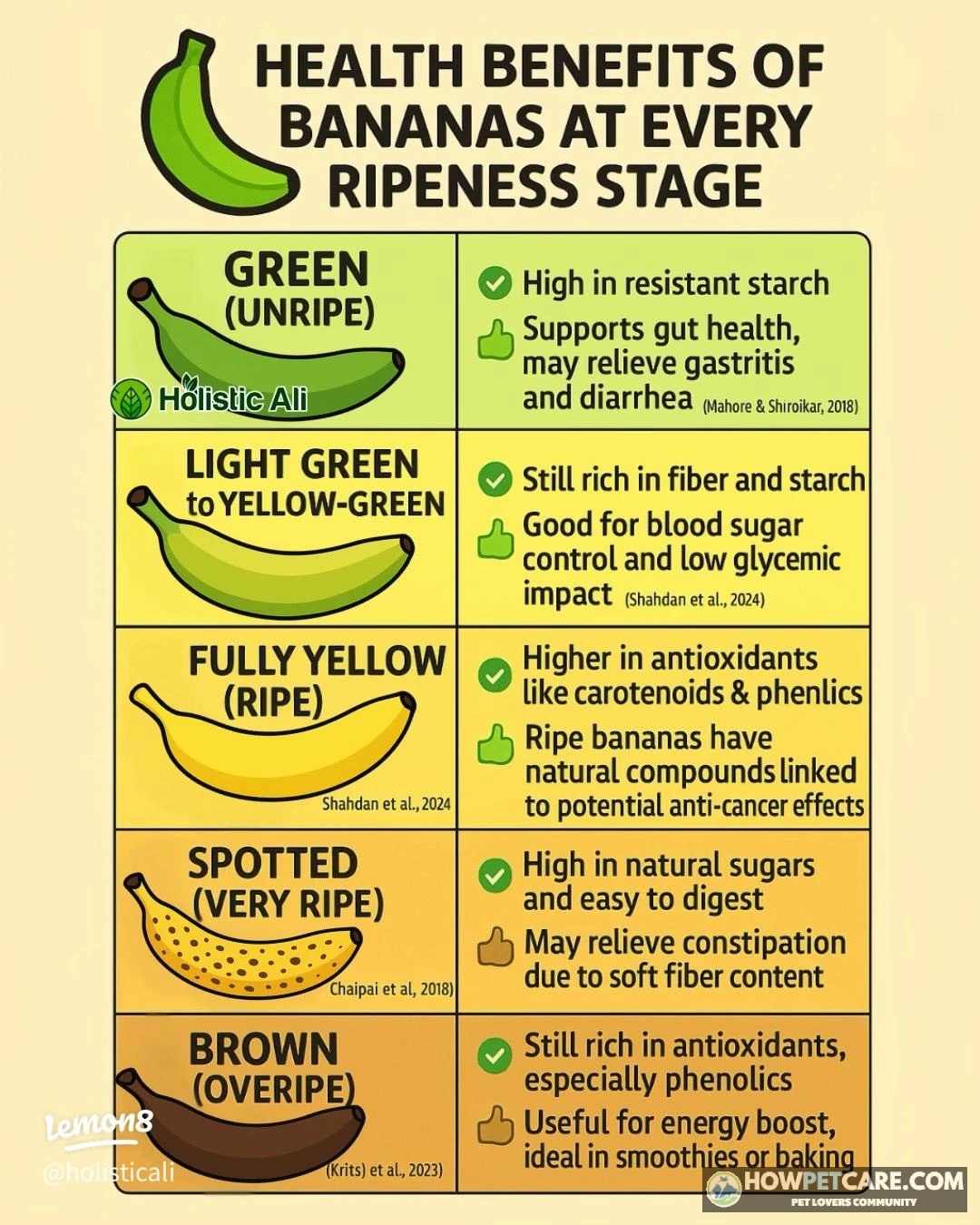
Pick ripe fruit with brown speckles and serve the smallest chart amount; avoid overripe, fermenting, or moldy banana.
Using banana to hide pills: potassium and timing cautions
A 1-2 g piece can hide some tablets, but ask the vet first — some drugs carry food-timing requirements. Cats on ACE inhibitors, potassium-sparing diuretics, or kidney diets should not get banana routinely without vet guidance; one tiny piece is low risk, routine use is not. Commercial pill pockets, a little wet food, or a vet-recommended paste hide pills more predictably, and no medication gets crushed into food unless the vet confirms it.
A 2 g banana piece adds under 2 kcal. Count it against the treat budget anyway.
Banana Bread, Chips, Baby Food, and Peanut Butter: Verdict Table
| Product | Verdict | Main risk | Notes or safer option |
|---|---|---|---|
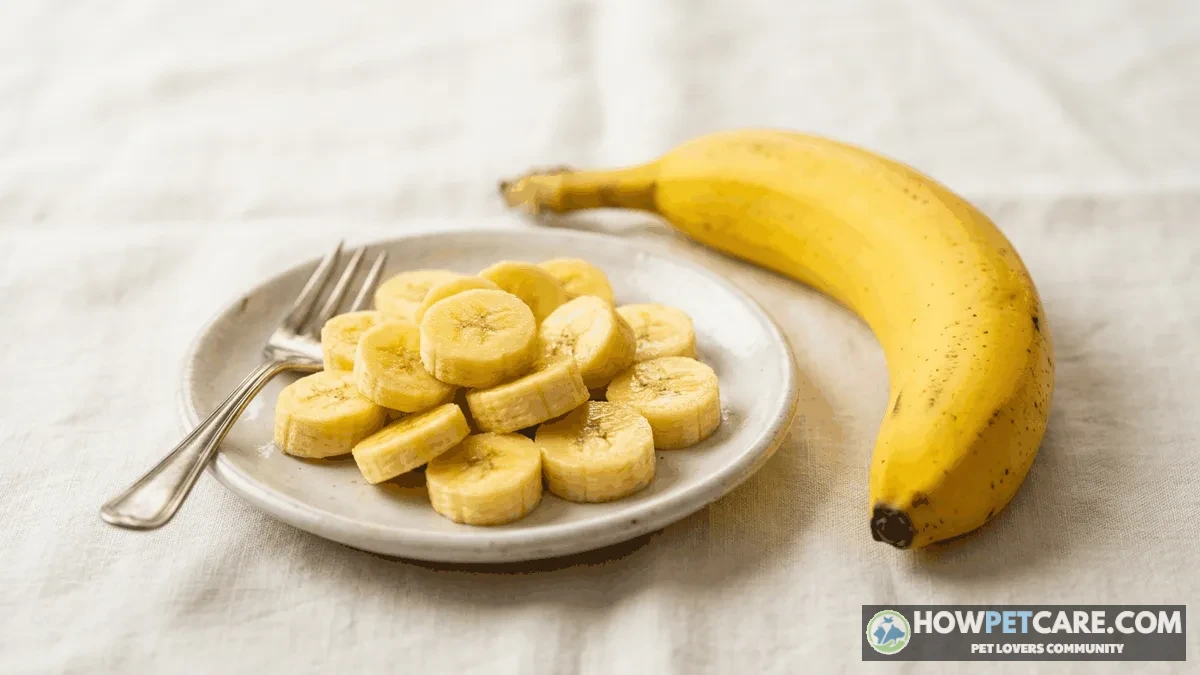
| Plain ripe banana flesh | OK in 2-10 g chart serving | Sugar and calories, mild GI upset | Peel removed; mash or cut tiny; count toward treat calories |
| Banana bread | Never | Added sugar and fat; possible raisins, nuts, chocolate, or xylitol | Even crumb amounts are not worth the ingredient risk |
| Dried banana chips | Avoid | Concentrated sugar and calories; often fried or sweetened | If one is eaten, watch for thirst or soft stool and skip future pieces |
| Banana baby food / purée | Only if the list is banana or banana + water | Onion or garlic powder, sweeteners, mixed fruit | Reject anything with xylitol, juice concentrate, or spices |
| Banana + peanut butter | Avoid generally | Fat and sugar load; xylitol in some spreads | Use a commercial cat-safe pill pocket if medication is the goal |
| Frozen banana chunk | Risky | Hard frozen chunk can choke or crack teeth | Offer only a tiny fully thawed smear, or skip |
| Overripe / moldy banana | Never | Fermentation and mold risk | Do not use brown-liquid fruit as a treat |
Xylitol is well documented as dangerous for dogs; cat-specific data is thin. Any banana product whose label lists xylitol is a skip, not a tiny-amount food.
How to serve plain banana safely
Peeled, fresh, ripe, mashed or cut to chart size, nothing added, leftovers removed — and the serving comes out of the treat budget, not on top of it.
Your Banana Decision Checklist and Safer Fruit Swaps
Five questions, in order:
- Adult over 12 months — not a kitten under 6 months, not still weaning? If no, skip.
- Free of diabetes or fragile glucose control? If no, skip and ask the vet.
- Healthy weight, not on a weight-loss plan? If no, use the lowest band or pick a protein treat.
- Free of CKD, heart or potassium-affecting meds, pancreatitis, IBD, sensitive GI history? If any apply, no routine banana without vet approval.
- No vomiting or diarrhea in the last 24 hours? If the stomach is already upset, wait 48 hours or skip.
All five clean: chart serving, peeled and ripe, at most once or twice weekly, then watch stool and appetite for 24 hours. Any no: skip banana and ask your veterinarian. After any serving, watch for vomiting, loose stool, or lethargy; rare allergic signs — rash, swelling, itching, watery eyes, wheezing — mean stop and call.
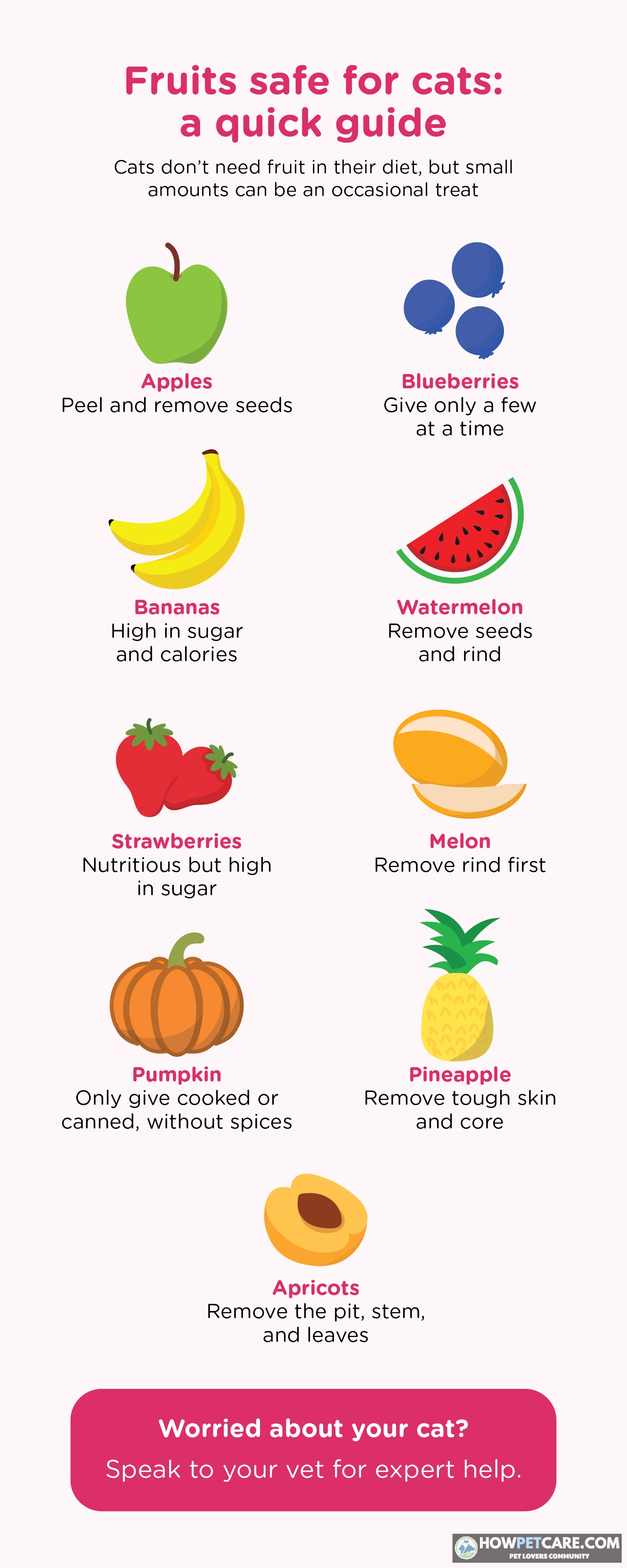
What fruits are safe for cats to eat starts here: blueberries, seedless watermelon, and cantaloupe in tiny amounts for healthy cats. Never feed grapes or raisins, and skip citrus. For the full safe, caution, and toxic chart of human foods cats can eat, use the pillar guide — banana is one line in it, not a food group.
1Why does a cat show interest in a banana even though fruit is not a natural component of a feline diet?
Cats are obligate carnivores that lack sweet taste receptors, meaning their interest in fruit stems from texture, scent, or human interaction rather than flavor preference.
2Under which of the following health conditions should banana flesh be completely avoided for a cat?
The carbohydrate and fructose load in bananas can disrupt blood glucose regulation in diabetic cats.
3A cat ingests a piece of banana peel 1 hour ago and begins gagging, drooling, and pawing at its mouth. What is the immediate required action?
Acute signs like gagging, drooling, and pawing at the mouth within 2 hours of peel ingestion indicate a choking hazard or upper respiratory obstruction requiring emergency care.
4Which of the following banana-derived or banana-flavored human foods should be strictly avoided or never given to cats?
Banana bread contains high levels of added sugar and fat, alongside potential toxic ingredients like raisins, nuts, chocolate, or xylitol.
5What is the maximum recommended single banana serving for a healthy adult cat weighing 6 lb (2.7 kg)?
The portion guideline for cats in the 5 to 8 lb weight range caps serving sizes at 3 to 4 grams (about 3-4 kcal) to keep calories within safe limits.
6Which of the following fruits are safe, occasional treat alternatives for healthy adult cats when offered in tiny, seedless portions?
Blueberries are non-toxic to cats and can be offered in tiny amounts as an occasional treat.
7A cat swallowed a strip of banana peel 30 hours ago and is now experiencing abdominal swelling, lethargy, straining without stool production, and repeated vomiting. What condition is the primary concern?
Banana peels are tough and indigestible; an inability to pass stool combined with vomiting and abdominal pain 24-72 hours post-ingestion indicates a dangerous intestinal blockage.
Weigh the piece, peel it, cap it at the chart, and you have answered "can cats eat bananas" for your cat — not for someone else’s.
FAQ
Can cats eat bananas as a treat every day?
No. Daily banana adds unnecessary sugar and calories for an obligate carnivore, so limit healthy adult cats to a few grams once or twice a week, and less for overweight cats.
What fruits are safe for cats to eat?
Small amounts of blueberries, seedless watermelon, and cantaloupe are generally considered safe for healthy cats as occasional treats. Never give grapes, raisins, or citrus, and remove all seeds and pits.
Can cats eat bananas with peanut butter, strawberries, or apples?
Plain peanut butter in tiny amounts is not toxic, but it adds fat and sugar, and any product containing xylitol is dangerous. Strawberries and seedless apple flesh are fine in tiny pieces, but mixing foods makes it harder to spot what upset your cat’s stomach.
Are bananas toxic to cats?
No. Bananas are not toxic and do not appear on the ASPCA toxic list. The concerns are sugar, calories, digestive upset, and the peel being a blockage risk.
Why does my cat like bananas?
Cats cannot taste sweetness, so interest is more likely due to the soft texture, the scent, or curiosity about what you are eating. It does not mean your cat needs the nutrients.