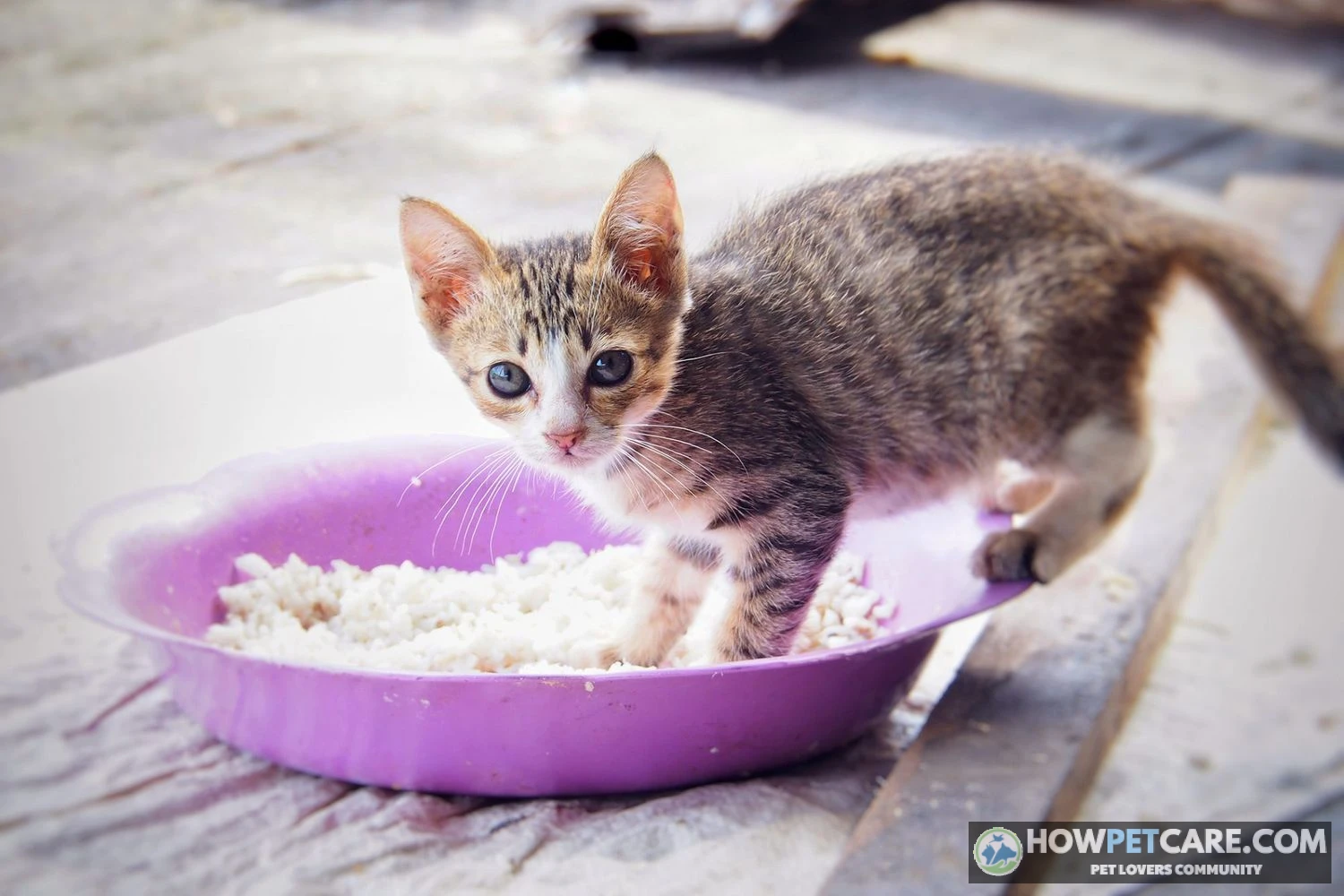

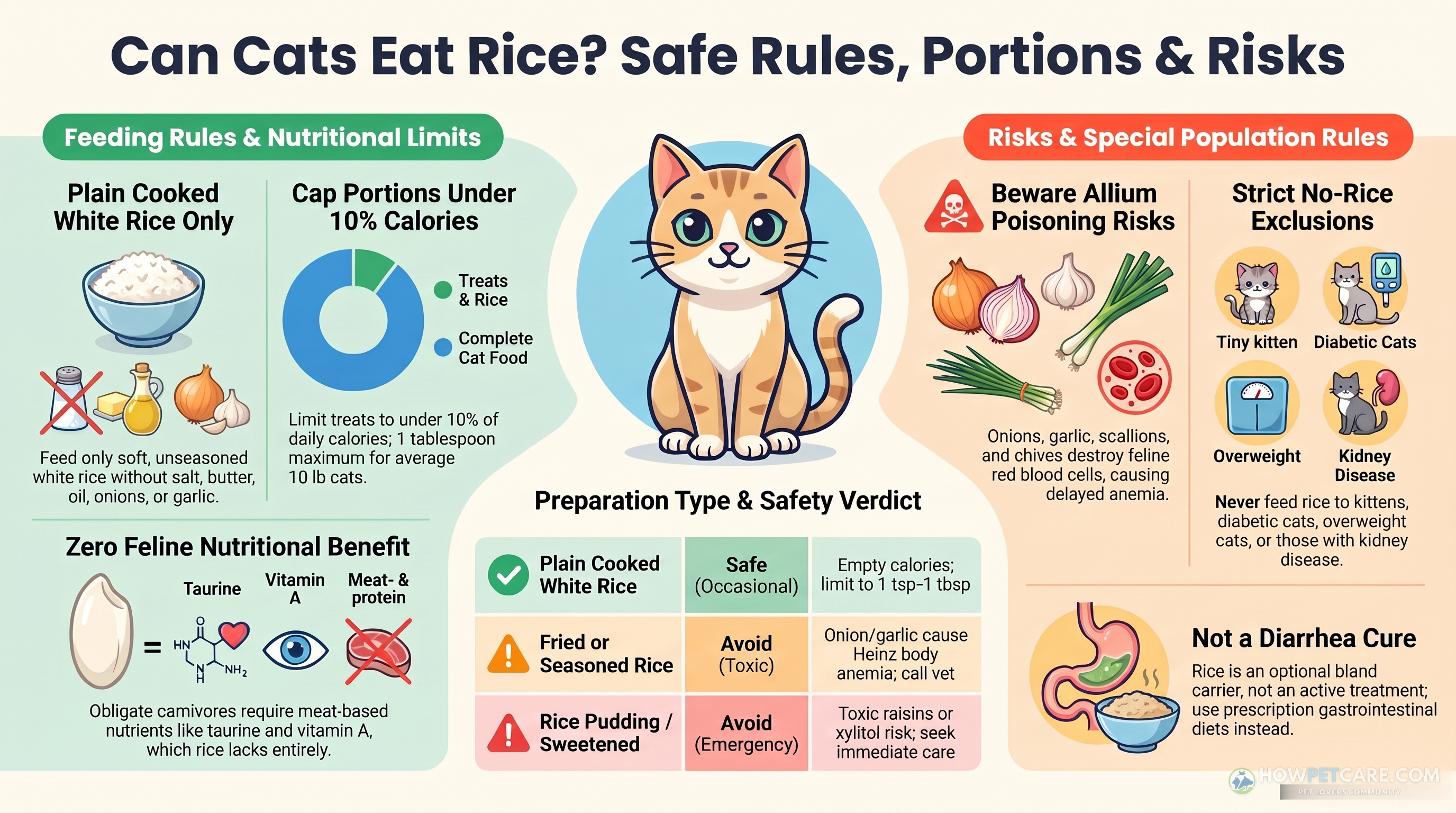
Yes – cats can eat plain, fully cooked rice in tiny amounts. It’s non-toxic but nutritionally empty, so keep it to 1 teaspoon to 1 tablespoon once or twice a week for a healthy adult cat, with no salt, butter, oil, onion, garlic, or seasoning.
Can Cats Eat Rice? Yes, Plain Cooked Rice in Small Amounts
Yes. Plain, fully cooked rice with no seasoning isn’t toxic to cats, and it’s safe as an occasional tiny taste. It isn’t a necessary food. If you’re searching for "can cats eat rice," the answer is yes only when the rice is cooked, plain, cooled, free of salt, butter, oil, onion, garlic, and sauces, given in a tiny portion, and fed to a healthy adult cat. Rice adds calories and carbohydrate but no meaningful feline nutrition because cats are obligate carnivores. Safe and useful are different standards. If your cat already ate seasoned rice or a large amount, skip to the monitor-or-call-a-vet section.
Cats are obligate carnivores, and their bodies are built for meat-based nutrition. They need high-quality protein, taurine, arachidonic acid, and preformed vitamin A. Plain rice supplies none of those in meaningful amounts. It’s mostly digestible starch. A cat can tolerate a small amount, but tolerance isn’t the same as benefit. The rest of this guide covers concrete amounts, rice-type comparisons, dish-by-dish verdicts, sick-cat guidance, and a decision path for the common situation where a cat has already eaten rice.
How Much Rice Can a Cat Eat? Teaspoons, Grams, and How Often
As of 2026, there’s no official or evidence-based rice dose for cats. Any specific number is calorie math, not a prescription. The ranges below follow the common treats-and-extras guideline that snacks stay under about 10% of daily calories, with PetMD’s conservative under-1-tablespoon-per-week reference point in mind. They are an occasional ceiling, not a feeding recommendation.
Standard nutrition data put plain cooked white rice at roughly 130 kcal per 100 g. That works out to about 4 kcal per teaspoon (about 3 g) and about 13 kcal per tablespoon (about 10 g). For a typical 10 lb (4.5 kg) adult indoor cat eating about 200-250 kcal a day, 10% is 20-25 kcal. One tablespoon of rice is therefore about 5-6% of the day’s calories. Two tablespoons would exceed the 10% ceiling for many cats that size. That’s the practical reason the ceiling is one tablespoon, not a bowl.
The table below turns that math into weight-based serving ranges. Use a kitchen scale if you’re unsure, and round down rather than up.
| Cat weight | Approx. daily calories | Rice amount per serving (teaspoons) | Rice amount per serving (grams) | Suggested frequency | Notes |
|---|---|---|---|---|---|
| 5 lb / 2.3 kg | 130-160 kcal | up to 1 tsp | up to 3 g | once a week max | Extra-small cats have tiny calorie budgets – even 1 tbsp can top 8% of the day |
| 8 lb / 3.6 kg | 180-220 kcal | 1-2 tsp | 3-6 g | once a week | Keep to 1 tsp if the cat’s kibble already lists rice |
| 10 lb / 4.5 kg | 200-250 kcal | 1 tsp – 1 tbsp | 3-10 g | once or twice a week | 1 tbsp is about 5-6% of daily calories – the practical ceiling for most cats |
| 13 lb / 6 kg | 250-300 kcal | up to 1 tbsp | up to 10 g | once or twice a week | Confirm the weight is healthy, not excess fat, before treating |
| 16 lb / 7.3 kg | 280-330 kcal | 1-1.5 tbsp | 10-15 g | once or twice a week | If the cat is overweight rather than large-framed, skip rice entirely |
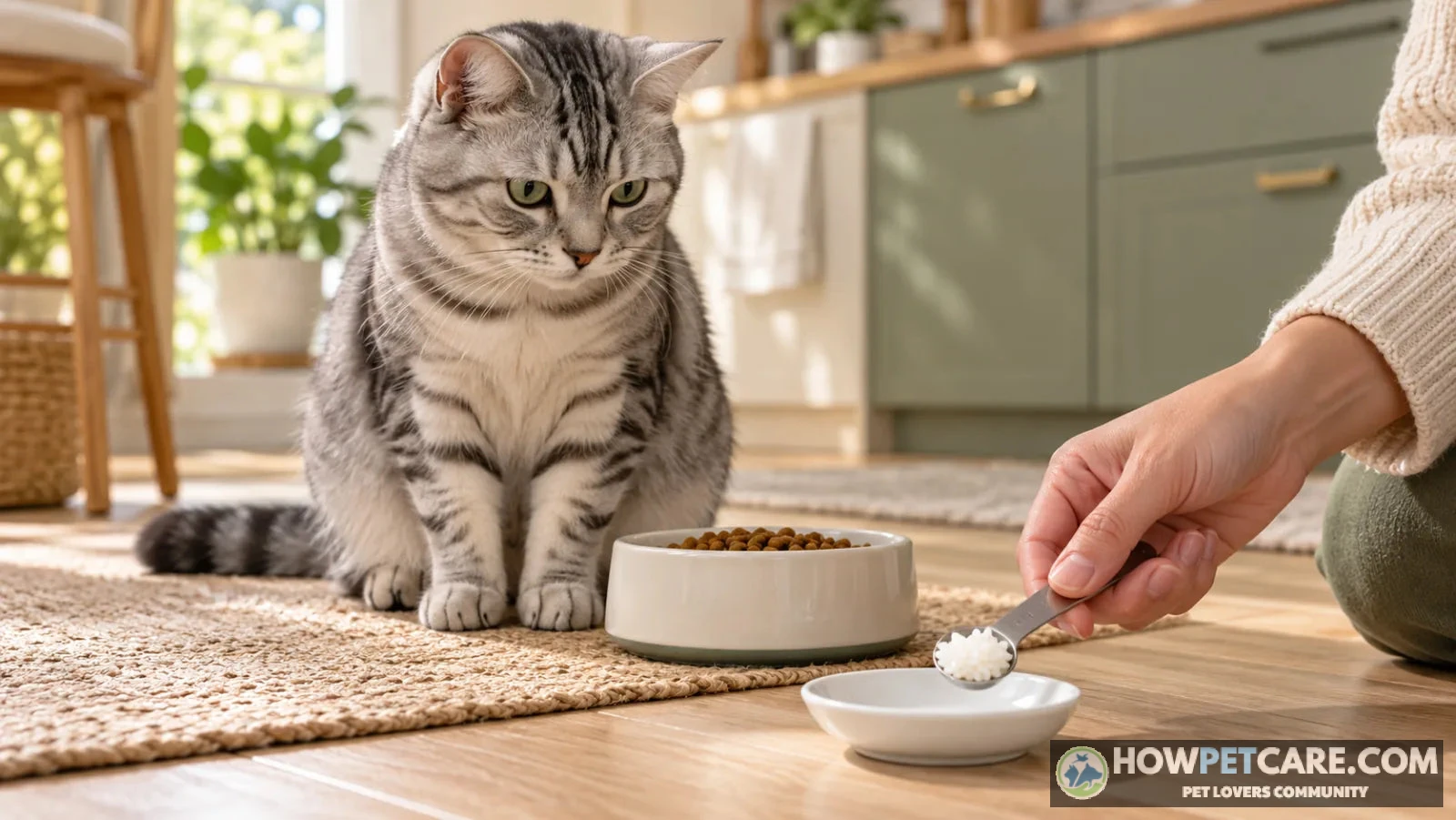
Visual check: 1 teaspoon of cooked rice is about a fingertip-to-first-knuckle pinch; 1 tablespoon is one level cat-food-scoop spoonful. When in doubt, weigh it on a kitchen scale.

Cooked rice packs together, so a rounded spoon can easily double the portion. Level the spoon or use a scale. This matters most for small cats and for cats already eating rice in their commercial food.
The 10% calorie rule applied to rice
The 10% rule exists because treats and extras shouldn’t crowd out complete and balanced cat food. For a 10 lb cat at 225 kcal a day, the treat budget is about 22 kcal. One tablespoon of plain cooked rice is about 13 kcal, so it fits. A second tablespoon takes the total to about 26 kcal and crosses the line. For a 5 lb cat, even one tablespoon can be close to 8% of daily calories. That’s why the table scales portions by weight instead of giving one blanket answer.
Does the rice already in commercial cat food count?
Yes. Many dry foods and some wet foods contain rice, rice flour, or rice bran. Check the ingredient list. That starch already counts toward your cat’s carbohydrate intake, so lean toward the lower end of the range or skip the extra rice entirely. The same logic applies to treats that contain rice syrup or rice flour.
Can cats eat rice every day?
No. Daily rice isn’t recommended. It displaces complete and balanced cat food, adds a carbohydrate load cats don’t need, and matters even more for diabetic or overweight cats. Plain rice is a rare taste, not a daily supplement. If you’re using rice because you think the cat needs extra calories or fiber, ask your veterinarian what the cat actually needs first.
Rice vs. a Cat’s Real Needs: What the Nutrition Numbers Show
The phrase no nutritional benefit isn’t an opinion. It’s what the numbers show. Cooked white rice has about 2.7 g protein per 130 kcal, which works out to roughly 21 g protein per 1,000 kcal. The AAFCO adult maintenance minimum for protein is 65 g per 1,000 kcal. Rice delivers about one-third of that minimum – and that’s before considering protein quality and amino acid balance. It contains no taurine and no preformed vitamin A, both of which cats require in their diet. It has no meaningful arachidonic acid either.
| Measure per 1,000 kcal | Plain cooked white rice | AAFCO-style adult maintenance target |
|---|---|---|
| Protein | about 21 g | at least 65 g |
| Taurine | none | required |
| Preformed vitamin A | none | required |
| Carbohydrate | high | no minimum; not a required nutrient |
| Fat | very low | minimum required for energy and nutrients |
Cats digest cooked starch reasonably well, which explains why rice is usually tolerated. But tolerance isn’t a benefit. Every rice calorie is a calorie not spent on complete and balanced cat food. For a cat with a healthy weight and appetite, that’s a minor trade. For a diabetic, overweight, or kidney-disease cat, it’s a trade worth avoiding unless a veterinarian directs it.
White, Brown, Wild, or Instant Rice: Which Type Is Safest for Cats?
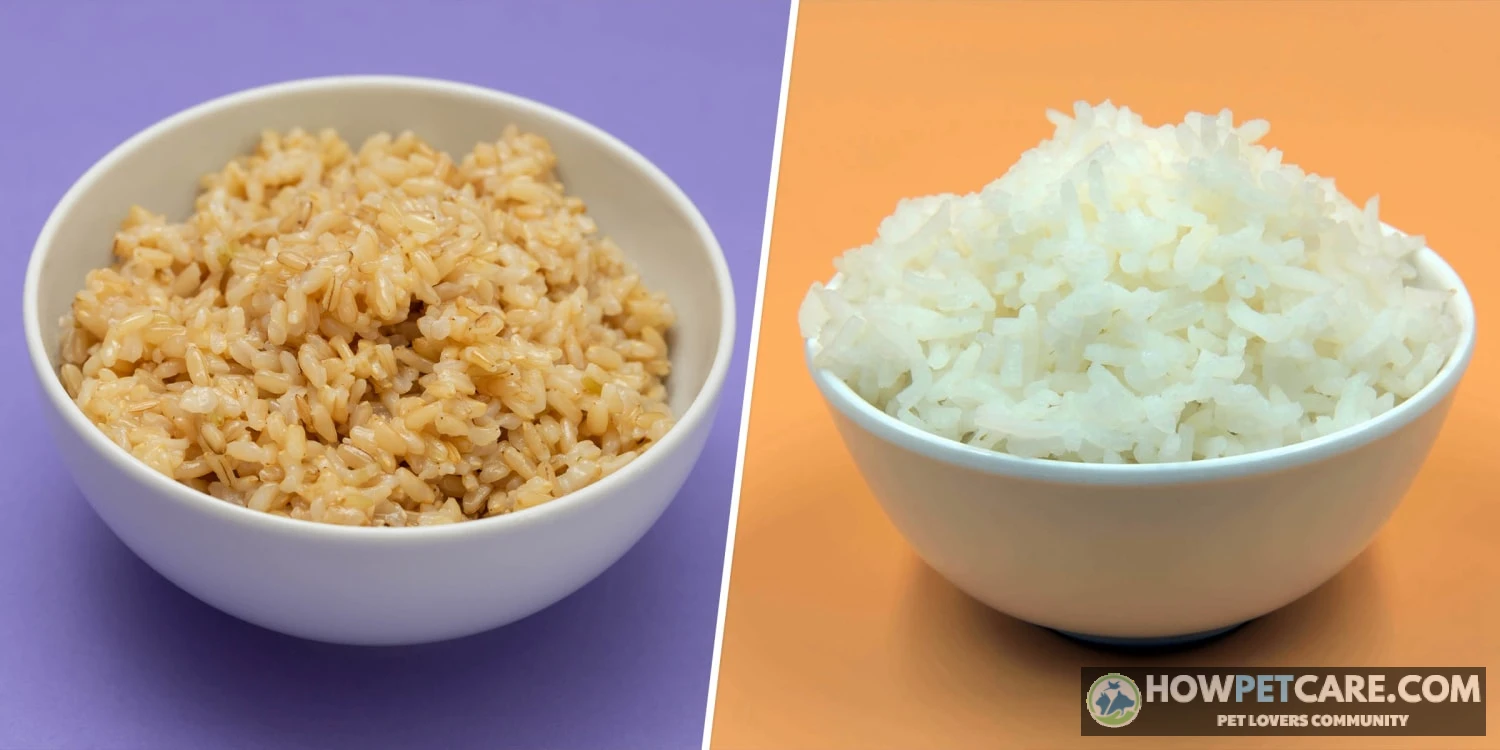
White rice is the better pick for cats. The bran is removed, so the starch is easier to digest. Brown rice is non-toxic, but many cats digest it poorly, and its extra fiber can contribute to gas or loose stools. Both white and brown rice are acceptable only in small amounts, well cooked and plain. That means no salt, no butter, no oil, no broth, and no seasoning.
White rice vs. brown rice for cats
Choose plain cooked white rice if you’re offering an occasional taste. Brown rice has a slightly better nutrient profile on paper, but the practical difference for a cat is small and the digestion trade-off is real. Wild rice, technically a grass seed, is non-toxic but offers no advantage over white rice and is tougher to digest. Plain instant rice is fine if it’s truly plain, but check the packet – seasoning packets often contain onion or garlic powder, which changes the verdict completely. Rice milk is covered in the dish table below.
Can cats eat uncooked rice?
No. Uncooked rice is hard to digest, can irritate the gut, and expands as it absorbs water. It’s not a classic toxin like onion or garlic, but it shouldn’t be fed. Raw rice also contains compounds such as lectins that cooking helps address. If a cat eats dry rice in quantity, watch for vomiting, bloating, discomfort, and lethargy, and call a vet for guidance if the cat is small, ate a large amount, or starts showing symptoms.
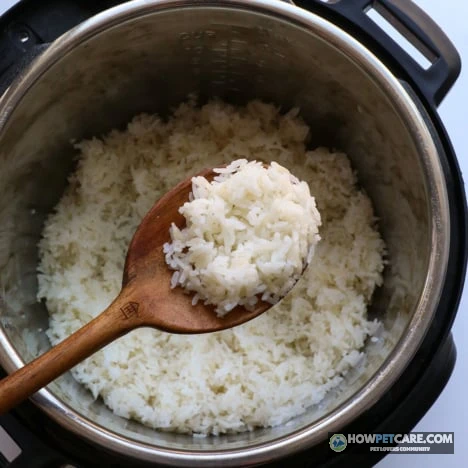
How to prepare rice for a cat
-
Use plain water
Boil or steam the rice in plain water. No salt, oil, butter, broth, onion, garlic, or seasoning of any kind.
-
Cook it soft
Cook the rice until the grains are fully soft. Undercooked rice is harder on the gut and easier to choke on.
-
Cool it down
Let the rice cool to room temperature before serving. Hot food can upset the mouth and stomach.
-
Serve a small portion
Give 1 teaspoon to 1 tablespoon, scaled to body weight, mixed into or beside normal complete and balanced cat food.
Leftover rice needs care. Refrigerate it promptly after cooking and discard it after about a day. Rice left at room temperature can grow Bacillus cereus bacteria that cause vomiting and diarrhea. If you wouldn’t eat the leftover yourself, don’t feed it to your cat.
Does Rice Help a Cat With Diarrhea? What Vets Say About Chicken and Rice
Short answer: don’t count on rice to treat cat diarrhea. The strongest available summary in the evidence is blunt: rice doesn’t work as a bland-diet remedy for feline upset stomachs, and vomiting more than once or twice a month warrants a vet visit. That doesn’t mean a short bland diet can never help a mild, brief upset. It means rice isn’t the active treatment, and there’s little controlled clinical evidence for rice specifically in cats.
Where the advice comes from matters. Chicken and rice is a long-standing home remedy borrowed largely from dog care. Veterinary sources genuinely disagree about it, and some older advice predates newer AAFCO and WSAVA-oriented guidance on complete and balanced feeding. A short-term bland, highly digestible, low-fat diet can help a mild, short-lived stomach upset, but rice is mostly a carrier. Many veterinarians now prefer a prescription gastrointestinal diet or plain boiled skinless chicken in small portions. Rice is optional in that picture, not the point.
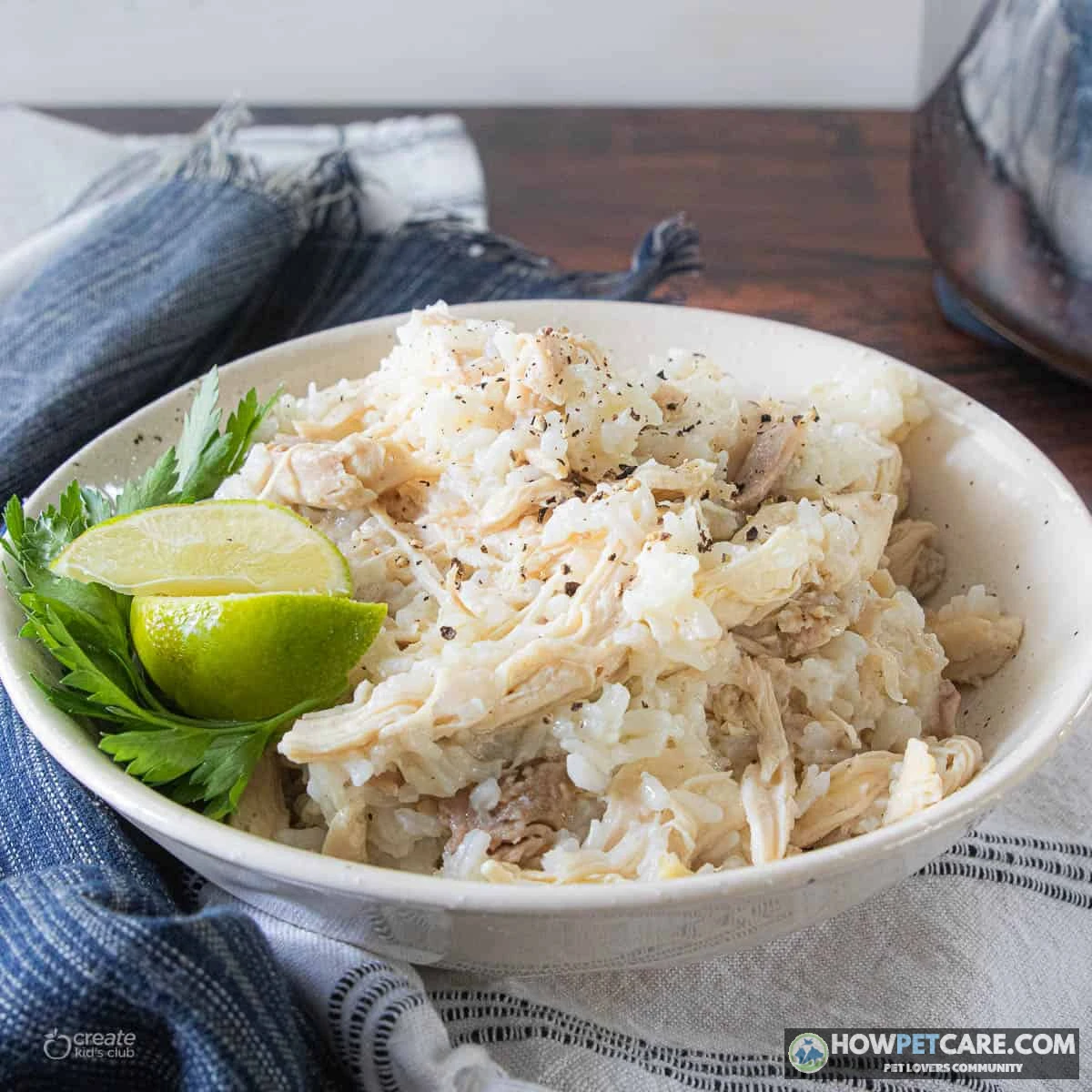
The myth says vets recommend chicken and rice for an upset stomach, so feeding it is what a vet would do. The reality is messier. Chicken and rice is a home remedy with little controlled evidence for rice specifically in cats. A short bland diet can help mild, brief upset, but a prescription gastrointestinal diet or plain chicken is often preferred now. Rice is a carrier, not a cure. A home bland diet is a 24-48 hour bridge, not a treatment, and it can mask the underlying problem while the clock runs.
Is chicken and rice a bland diet for cats?
If you’re wondering whether cats can eat rice mixed with chicken, the safe version is plain boiled skinless chicken plus plain cooked white rice, with no seasoning, for a healthy adult cat with a mild, brief upset. Keep it to roughly 24-48 hours. It’s not nutritionally complete and shouldn’t be extended. It’s also not appropriate for kittens, seniors, diabetic or CKD cats, or any cat that is vomiting repeatedly, lethargic, not drinking, or passing blood. Those cats need a vet call first.
What vets recommend instead
Veterinary guidance commonly favors a short trial of a highly digestible, low-fat veterinary gastrointestinal diet, or small portions of plain boiled skinless chicken – cooked through, since raw chicken carries its own risks. Fresh water matters. So does a gradual return to the regular complete and balanced cat food. If you want a home option because you can’t reach a vet, use it as a bridge and set a firm stop time. Don’t keep feeding rice as a substitute for a complete diet.
When to skip home care
A bland-diet trial is for an otherwise bright, eating, drinking adult cat with a mild, brief upset. If diarrhea lasts beyond 24-48 hours, or if there is repeated vomiting, lethargy, not drinking, blood in the stool, or any other symptom, call a vet. Rice can mask a problem without treating the cause.
Fried Rice, Rice Cakes, Rice Krispies, Sushi and Other Rice Dishes: Which Are Safe?
The plainer the rice dish, the safer it is. Anything fried, flavored, sweetened, or sauced shifts the risk from empty calories to possibly toxic ingredients. The table below gives dish-by-dish verdicts for the rice products people actually share.
| Dish or product | Verdict | Main risk | What to do if eaten |
|---|---|---|---|
| Fried rice | Avoid | Onion, garlic, scallion (Heinz body anemia risk), oil, soy sauce sodium | Call a vet or poison line even if the cat seems fine – anemia signs can be delayed days |
| Seasoned rice (pilaf, Spanish, takeout, broth-cooked) | Avoid | Onion/garlic powder, high sodium, spices | Same as fried rice – check ingredients, call a vet if alliums are involved |
| Rice pudding | Avoid | Sugar, dairy (most adult cats are lactose intolerant), possible raisins or xylitol-sweetened mixes | If raisins or xylitol: vet now. Otherwise monitor 24 h for vomiting/diarrhea |
| Plain unsalted rice cake | Caution – a crumb is fine | Dry, choking risk, zero nutrition | Monitor; flavored versions with onion/garlic powder get a vet call |
| Rice Krispies / puffed rice cereal | Caution | Sugar, empty calories | A piece or two is not an emergency – monitor, do not repeat |
| Sushi rice / sushi | Avoid | Seasoned with sugar, salt, vinegar; raw fish adds pathogen and thiaminase risk; wasabi irritates | Monitor closely; call a vet if raw fish was eaten or symptoms start |
| Rice milk | Caution | Added sugar or sweeteners; may cause loose stool; not a milk substitute | Check the label for xylitol (emergency if present); a small lap otherwise just needs monitoring |
| Plain instant rice | OK if truly plain | Seasoning packets often contain onion/garlic | If a seasoning packet was used, treat as seasoned rice |
| Wild rice | Caution – non-toxic | Harder to digest, no advantage over white rice | Monitor for gas or loose stool |
| Rice and beans | Avoid | Most recipes contain onion/garlic; beans are a poor fit for cats | Call a vet if the recipe included alliums |
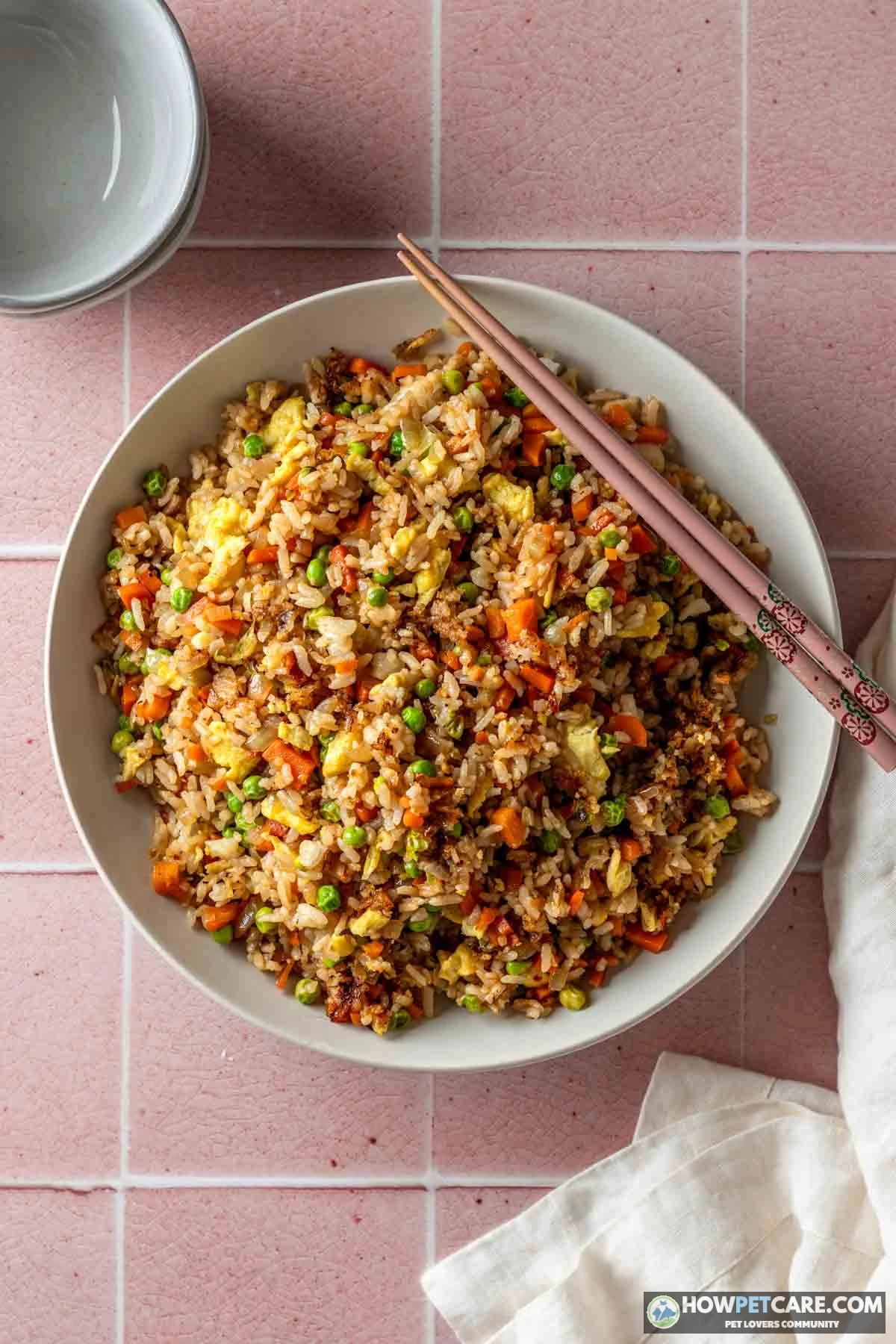
The big hazard is onion and garlic. They’re not just seasonings to avoid. They can damage feline red blood cells and cause Heinz body anemia. Scallions, chives, shallots, and garlic powder carry the same concern. Fried rice and takeout rice are the most common sources because they often contain several of these at once. Rice pudding is a separate risk because raisins are toxic to cats and some pudding mixes contain xylitol. If the dish included either, treat it as an emergency.
For the rest of the human-food picture, use our companion chart of safe and toxic foods for cats rather than assuming a food is fine because it contains rice.
My Cat Already Ate Rice: Monitor at Home or Call a Vet?
Work through the table top to bottom and find the first row that matches what happened. Have ready when you call: the product or ingredient list, estimated amount eaten, time eaten, and your cat’s weight.
Gastrointestinal signs such as vomiting, drooling, or diarrhea can appear within hours. Red blood cell damage – Heinz body anemia – usually becomes visible over the following 1-5 days. Garlic is more potent than onion, and cats are more sensitive than dogs. A cat that seems fine tonight is not necessarily clear if it ate seasoned rice.
| Scenario | Risk level | Symptoms to watch | Action | Timeframe |
|---|---|---|---|---|
| Plain cooked rice, small amount (up to about 1 tbsp), healthy adult cat | Low | Mild vomiting or soft stool | Monitor at home; offer normal food and water | Watch 24 hours |
| Plain cooked rice, large amount – or cat is a kitten, senior, or has a medical condition | Low-moderate | Vomiting, bloating, lethargy, diarrhea | Monitor closely; call a vet if any symptom appears or the amount was very large | Watch 24-48 hours |
| Raw / uncooked dry rice | Low-moderate | Vomiting, bloating, discomfort as dry grains absorb water | Monitor; call a vet for guidance if the cat is small, ate a lot, or shows symptoms | Watch 24 hours |
| Fried or seasoned rice containing onion, garlic, scallion, or chives | Moderate-high | GI signs (vomiting, drooling, diarrhea) within hours; anemia signs over 1-5 days: pale gums, weakness, rapid breathing, dark urine | Call a vet, ASPCA Animal Poison Control, or Pet Poison Helpline now – even if the cat seems fine | Call promptly; keep watching for several days |
| Rice pudding or baked rice dish with raisins or xylitol | High | Vomiting, lethargy, weakness, collapse | Emergency vet | Immediately |
| Any rice scenario plus: repeated vomiting, pale or yellow gums, collapse, labored breathing, dark urine, cannot keep water down | Emergency | – | Emergency vet now | Immediately |

Cat ate plain cooked rice
If a healthy adult cat ate a small amount of plain cooked rice, monitor for 24 hours. Mild vomiting or soft stool is possible but usually settles. Offer normal food and fresh water. Don’t fast the cat unless a vet tells you to. If the amount was large, or the cat is small or has a medical condition, watch more closely and call a vet for guidance if symptoms appear.
Cat ate fried or seasoned rice
Call a veterinarian, ASPCA Animal Poison Control, or Pet Poison Helpline even if the cat seems fine. The concern isn’t the rice – it’s the onion, garlic, scallion, chives, oil, sodium, and other ingredients. Signs can be delayed. Don’t induce vomiting at home unless a vet instructs it.
Warning signs of onion or garlic toxicity
Watch for vomiting, drooling, diarrhea, weakness, pale gums, rapid breathing, dark urine, collapse, or inability to keep water down. Anemia signs can develop over the following days rather than minutes. If you see any of those signs after seasoned-rice exposure, treat it as an emergency. Bring the product label or takeout container, the estimated amount, the time eaten, and the cat’s weight to the vet.
Rice for Kittens, Senior Cats, and Diabetic, Overweight, or Kidney-Disease Cats
Special populations need separate verdicts, not a passing mention. The table below is the quick reference; the subsections explain each one.
| Cat | Verdict on rice | Why | Practical note |
|---|---|---|---|
| Kitten (under 12 months) | No | Growing cats need calorie-dense, high-protein food; small stomachs fill up on low-value calories, and starch digestion is still maturing | Call a vet promptly for kitten diarrhea – they dehydrate far faster than adults |
| Healthy adult | Yes, tiny amounts | Non-toxic but nutritionally empty | Cap at 1 tsp-1 tbsp, once or twice a week |
| Senior cat | Caution | Usually tolerated, but appetite or stool changes in older cats often signal disease | Skip the home remedy – a vet check beats a rice trial |
| Diabetic cat | No | Starch raises blood glucose, and diabetic cats’ carbohydrate load is tightly managed | Ask the vet before adding any new food |
| Overweight cat | No | A single tablespoon is roughly 5% of a day’s calories with nothing useful in return | Skip it entirely; spend the treat budget on a bit of plain cooked chicken |
| CKD (kidney disease) cat | Caution – not toxic, but avoid freelancing | Protein and phosphorus are managed under veterinary direction, and appetite is precious | Never let rice displace a prescribed renal diet |
| Cat with suspected food sensitivity | Stop and observe | True grain allergy is uncommon; protein allergies such as beef or fish are more typical, but intolerance happens | Itchy skin, ear issues, or chronic loose stool after rice – stop feeding it and see a vet |
Can kittens eat rice?
No. Kittens shouldn’t be fed rice at all. They need nutrient-dense, high-protein growth food, and their small stomachs fill up quickly. Rice adds bulk without the protein, fat, vitamins, and minerals a growing cat needs. Starch digestion is also still maturing in young kittens, so rice is a poor fit even in small amounts. If a kitten has diarrhea, call a vet promptly – kittens dehydrate fast and can become dangerously weak in a short time.
A teaspoon of rice to a 10 lb cat is a snack. A teaspoon of rice to a 2 lb kitten is a meal replacement. That is why kitten guidance is a firm no, not a smaller portion.
Diabetic, overweight, and CKD cats
Diabetic cats should avoid rice. Starch raises blood glucose, and diabetic cats have tightly managed carbohydrate loads and insulin schedules. Don’t add rice without asking the vet. Overweight cats should skip rice too – a tablespoon is calories the cat doesn’t need, and the treat budget is better spent on plain cooked chicken or a small taste of tuna. Cats with chronic kidney disease are a separate case: plain rice isn’t toxic, but protein and phosphorus are managed under veterinary direction, and appetite is precious. Never use rice to replace a prescribed renal diet or to stretch the food without veterinary guidance.
Signs of rice intolerance or allergy
Watch for itchy skin, ear problems, chronic vomiting, or loose stools after rice is added. True grain allergy is uncommon in cats compared with protein allergies such as beef or fish, but intolerance can happen. Stop the rice and see a vet if signs appear. Don’t keep testing at home while a cat is losing weight or having repeated digestive trouble.
Before You Share Rice With Your Cat: A Quick Decision Checklist
-
Check the rice
It must be plain, fully cooked, cooled, and free of onion, garlic, salt, butter, oil, sauce, broth, or seasoning.
-
Check the cat
Healthy adult only. Not a kitten, and not a cat with diabetes, kidney disease, or a weight problem unless a vet has approved it.
-
Check the amount
Use 1 teaspoon to 1 tablespoon, scaled to weight from the table, no more than once or twice a week.
-
Check the reason
If the cat is sick, call a vet instead of relying on rice. Don’t extend a home bland diet beyond 24-48 hours.
-
Check what already happened
If the cat ate fried, seasoned, sweetened, or unknown rice, use the scenario table above and call a vet or poison hotline when onion, garlic, raisins, or xylitol may be involved.
Better treat options are simple: small pieces of plain cooked chicken or turkey, tiny bits of plain cooked egg, a few grams of ripe banana, or ordinary cat treats that fit the cat’s daily calorie budget. For the full list of what human foods are safe for cats – and which ones aren’t – use our companion chart. When in doubt, the safest choice is complete and balanced cat food and a call to your veterinarian.
1Why does plain cooked white rice offer no meaningful nutritional benefit to a healthy adult cat?
As obligate carnivores, cats require specific meat-derived nutrients like taurine and preformed vitamin A, which plain rice does not supply.
2An owner is deciding between plain white rice and plain brown rice as an occasional tiny treat for an adult cat. Why is white rice considered the preferred choice?
The removal of the bran layer in white rice makes the remaining starch easier for a cat's gastrointestinal tract to process.
3A cat inadvertently eats leftover fried rice containing garlic powder, onions, and scallions. Which of the following statements correctly describe the risks and typical clinical course of this ingestion?
Onions, garlic, scallions, and chives contain oxidants that damage red blood cell membranes in cats.
4What primary physical risk occurs if a cat consumes a significant quantity of uncooked, dry rice grains?
Uncooked rice expands as it absorbs digestive moisture, leading to discomfort, bloating, and gut distress.
5Why is plain cooked rice strongly discouraged for kittens under 12 months of age?
Growing kittens need calorie-dense, high-protein food to thrive, and their developing digestive systems digest starch less efficiently.
6Which of the following rice dishes pose severe health risks to cats and should be strictly avoided?
Raisins cause toxicity in cats, and xylitol is a hazardous sweetener that can induce severe clinical emergencies.
7A cat consumed leftover seasoned takeout rice two days ago. Today, the cat exhibits pale gums, rapid breathing, dark urine, and lethargy. Which condition is most strongly indicated by these delayed signs?
Pale gums, rapid breathing, dark urine, and weakness developing 1 to 5 days after eating seasoned food are classic signs of allium-induced red blood cell destruction.
8What is the recommended upper serving ceiling of plain cooked white rice for a healthy 10 lb (4.5 kg) adult cat?
One tablespoon of cooked white rice provides roughly 13 kcal, which represents about 5-6% of a 10 lb cat's daily calorie budget, keeping it safely under the 10% treat limit.
FAQ
What can I feed my cat instead of rice?
Complete and balanced cat food is the best option. For an occasional treat, small pieces of plain cooked chicken, turkey, or egg with no seasoning fit a cat’s meat-based needs better than rice. For an upset stomach, ask your vet about a veterinary gastrointestinal diet.
Can cats eat leftover rice from the fridge?
Only if it was refrigerated soon after cooking, is plain, and is under about a day old. Rice left at room temperature can grow Bacillus cereus bacteria that cause vomiting and diarrhea, so discard doubtful leftovers.
Can cats drink rice water?
Plain rice water is not toxic, but it has no proven benefit for cats and does not replace fresh drinking water. A cat with diarrhea that is not drinking needs veterinary attention, not rice water.
Does rice make cats constipated?
Plain rice can firm stools slightly in some cats, but it is not a reliable treatment for either diarrhea or constipation. A cat that strains or has not passed stool in 48 hours or more should see a vet.
Can cats eat rice mixed with wet food?
Yes, a teaspoon or so of plain cooked rice mixed into regular wet food is fine for a healthy adult cat occasionally. Keep it within the weekly limit so it does not displace the complete diet.