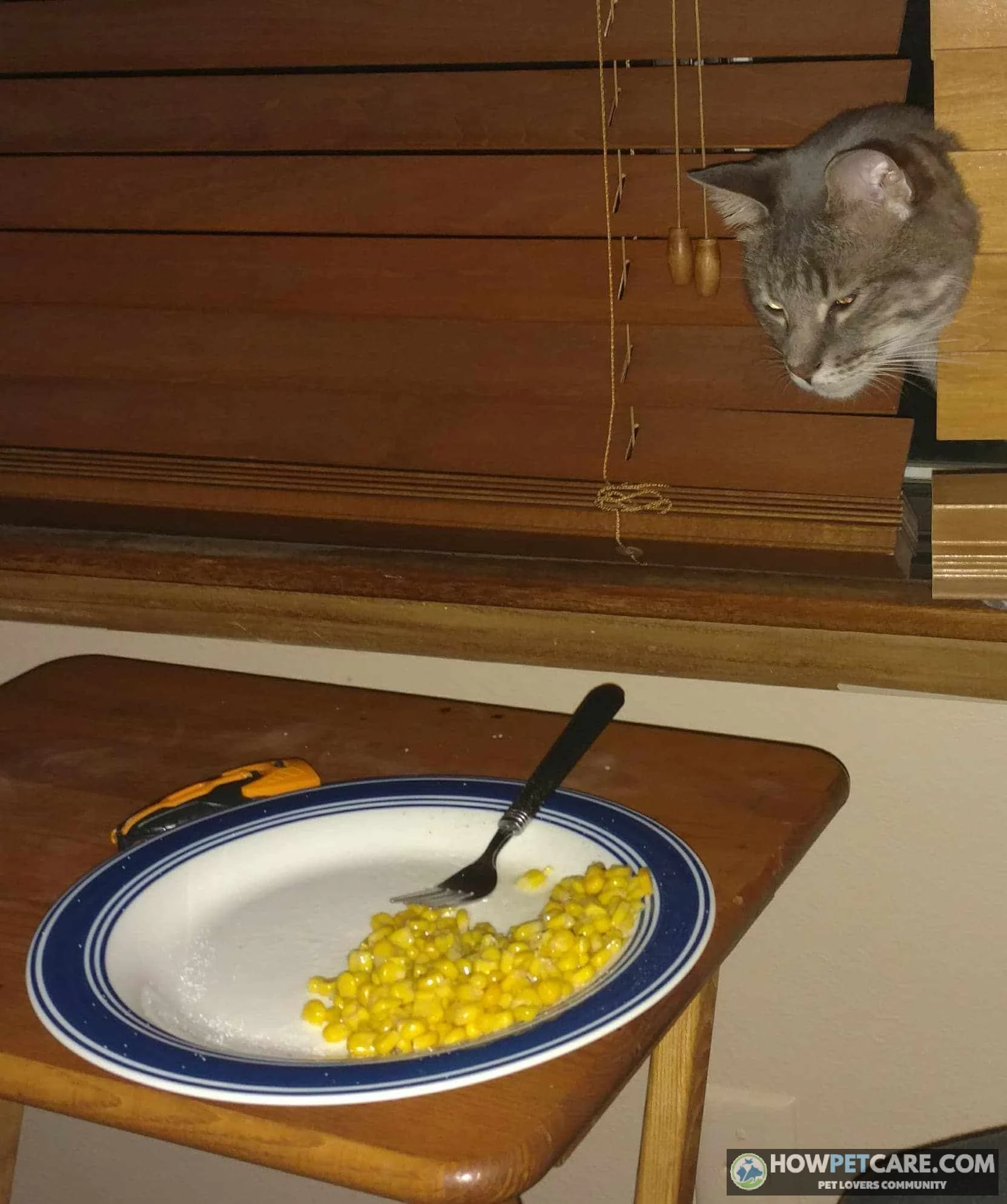

Plain cooked corn kernels are safe as an occasional treat for healthy adult cats, but never as a meal. Offer 3–5 kernels, keep treats under 10% of daily calories, and avoid cob, additives, and corn for diabetic, kidney, or obese cats.
Plain cooked corn kernels aren’t toxic to cats, but they aren’t ideal nutrition either. Corn is safe as an occasional small treat — never as a meal component — for healthy adult cats, as long as it’s plain, cooked, and served without butter, salt, sugar, onion, or garlic. Corn on the cob is a different story: cob pieces and husks pose a serious intestinal blockage risk and are never safe.
Cats are obligate carnivores, meaning their bodies run on animal protein, not grains. Corn adds carbohydrates and some fiber but none of the essential nutrients — like taurine needs in cats — that cats must get from meat. So the honest verdict is this: a few plain kernels as a rare treat is fine; corn as a daily staple is not.
Corn Safety by Form: Kernels, Cob, Popcorn, Chips and Cornbread

Not all corn is equal in a cat’s bowl. The form decides whether you’re offering a low-risk nibble or an emergency waiting to happen.
| Form | Safe? | Risk Level | Calorie/Notes |
|---|---|---|---|
| Plain boiled or steamed kernels | Yes, occasionally | Low | About 3–5 plain kernels, ~4–7 calories; remove from cob first |
| Corn on the cob | No | High | Cob pieces can cause intestinal blockage; husks and silk can irritate |
| Plain air-popped popcorn | Yes, rarely | Low–Medium | Only fully popped, no butter/salt; unpopped kernels are a choking risk |
| Buttered popcorn | No | Medium | Butter adds fat; salt can be harmful in quantity |
| Salted chips | No | Medium–High | High salt and fat; unsafe for cats |
| Cornbread | No | Medium | Contains sugar, butter, oil, and often dairy or onion/garlic powder |
| Corn dog | No | High | Fried batter, salt, sugar, and processed meat additives |
| Canned corn | No, unless rinsed | Medium | Often packed with salt or sugar; rinse thoroughly and use sparingly |
Plain boiled or steamed kernels carry the lowest risk because cooking softens the starch and makes the kernel easier to digest. Corn on the cob is the opposite: the cob itself is indigestible and can lodge in the intestine, sometimes requiring surgery. Husks and leaves aren’t highly toxic but can irritate the digestive tract or cause obstruction.
Popcorn is acceptable only when it’s plain, air-popped, and fully popped — no butter, salt, or flavoring. Microwave popcorn and seasoned varieties are off the table. Cornbread, chips, and corn dogs fail the test because of added fat, salt, sugar, and spices; onion and garlic powder in particular can damage red blood cells in cats.
Moldy or discolored corn is a separate hazard entirely — it can contain aflatoxin or tremorgenic mycotoxins that cause serious liver damage. Never feed corn that looks or smells off.
How Much Corn Can a Cat Eat? Kernels, Grams and Calorie Math
Treats should stay under 10% of a cat’s daily calories. For an average adult cat eating roughly 200–250 calories a day, that ceiling is about 20–25 treat calories total — and corn should share that budget with every other treat.
| Serving | Kernels | Grams | Calories | Frequency |
|---|---|---|---|---|
| Tiny treat | 3 kernels | ~3 g | ~4 kcal | Occasional |
| Small treat | 5 kernels | ~5 g | ~7 kcal | Once or twice weekly at most |
| Maximum treat ceiling | 10 kernels | ~10 g | ~14 kcal | Not daily; counts toward 10% treat limit |

A practical rule of thumb: offer 3 to 5 plain cooked kernels for a healthy adult cat, and never more than 10 kernels at a time. That works out to roughly 3–10 grams and 4–14 calories, which keeps corn well inside the treat-calorie ceiling. Frequency should be occasional — not daily, and not at every meal. One veterinarian source puts the recommendation at about one teaspoon of sweet corn per serving, no more than twice a week.
Adjust downward for smaller, less active, or overweight cats. If your cat is already getting other treats, corn’s portion shrinks accordingly. When in doubt, less is more.
How to Prepare Corn for Cats: Additive Verification Checklist
Safe preparation is simple: cook plain corn, remove the kernels, cool them, and serve small pieces. The danger is almost always in the additions.
Use this checklist before serving any corn to your cat. If you can’t check every box, don’t serve the corn.
- ☐ Corn is plain — no butter, oil, margarine, or mayonnaise
- ☐ No salt added
- ☐ No sugar, honey, or sweeteners added
- ☐ No onion, garlic, onion powder, or garlic powder
- ☐ Kernels are fully removed from the cob; no cob pieces, husks, or silk
- ☐ Corn is cooked (boiled or steamed), not raw
- ☐ Corn is cooled to room temperature
- ☐ Kernels are cut into bite-size pieces
- ☐ Serving stays within the portion guide for your cat’s weight

Cooked plain kernels are preferred over raw because cooking makes corn easier to digest and reduces the chance of stomach upset. Raw corn isn’t toxic, but it’s harder to digest and more likely to cause loose stool or gas. Cornmeal — ground corn — is actually easier to digest than whole kernels and is sometimes used as a fiber source in dry cat food.
Always remove kernels from the cob before serving. Never give cob pieces, husks, or silk. Cool the corn fully and serve at room temperature in bite-size portions so your cat can’t choke.
Corn for Cats with Diabetes, Kidney Disease, Obesity or Sensitive Stomachs

Condition-specific guidance matters more than the general verdict.
Diabetic cats: Avoid corn. The carbohydrate load can spike blood glucose and interfere with insulin regulation. The long-term effect of corn on insulin sensitivity in healthy cats isn’t well established, which is another reason to keep it out of a diabetic cat’s diet.
Kidney-disease cats: Don’t add corn without your veterinarian’s input. Phosphorus content and overall diet balance matter more than any treat.
Obese cats: Skip corn entirely. Prioritize protein and calorie control; even a few kernels add unnecessary carbohydrates.
Sensitive-stomach cats: Offer only one or two plain cooked kernels and watch for gas, loose stool, or vomiting for 24 hours before considering more. Introduce slowly and stop at the first sign of trouble.
If your cat has diabetes, kidney disease, or obesity, do not experiment with corn at home. Ask your veterinarian first — even small amounts can complicate management of these conditions.
Corn in Cat Food: Useful Ingredient or Just Filler?
Corn in commercial cat food isn’t toxic, but it isn’t a substitute for meat protein. For a wider look at food for cats, ingredient quality matters more than any single grain. Corn provides carbohydrates and some fiber, yet it lacks the essential amino acids — including taurine — that cats can’t synthesize on their own and must get from animal tissue.
Cornmeal and corn syrup differ in processing and nutritional value. Cornmeal, the ground whole grain, is easier to digest than intact kernels and functions mainly as a carbohydrate and fiber source. Corn syrup is a refined sweetener with no nutritional role for cats and is best avoided.
The filler debate resolves this way: corn isn’t useless — it contributes energy and fiber — but it should never displace animal protein. A cat food that lists meat or fish as the first ingredient and uses corn as a minor component is nutritionally sound; one that relies on corn as the primary protein source isn’t meeting feline needs.
Corn Silk and Leaves: Toxic or Just Irritating?

Corn silk and leaves aren’t highly toxic, but they can irritate or obstruct. Sweet corn leaves aren’t poisonous, yet they can cause vomiting or diarrhea through mechanical irritation of the digestive tract. The key distinction is between sweet corn plants and the decorative "corn plant" (Dracaena), which is genuinely toxic — don’t confuse the two.
Saponin-related concerns versus mechanical irritation: some sources raise saponin toxicity in corn plant material, but the evidence points more strongly to physical irritation and obstruction risk than to chemical poisoning in sweet corn. Either way, the practical advice is the same — keep corn plants, husks, and silk out of reach.
If your cat chews on corn plant material, contact your veterinarian if vomiting, diarrhea, or lethargy appears. The ASPCA and veterinary sources consistently advise preventing access rather than treating ingestion after the fact.
Corn Allergy and Intolerance: Symptoms and Vet-Call Criteria
Corn allergy and corn intolerance are different problems. An allergy is immune-mediated; intolerance is digestive.
Allergy signs: itching, ear inflammation, vomiting, diarrhea, and skin lesions. Intolerance signs: gas, loose stool, or vomiting after eating corn. The overlap is vomiting and diarrhea, so timing matters — symptoms within hours of eating point toward intolerance; chronic or recurring skin and ear issues point toward allergy.
Monitor at home if: a single episode of mild gas or soft stool resolves within 24 hours and your cat is otherwise normal. Call the vet if: vomiting repeats, diarrhea lasts more than a day, skin or ear symptoms appear, or your cat stops eating. Stop feeding corn immediately and contact a veterinarian if symptoms persist or worsen.
The percentage of cats allergic to corn versus other grains isn’t well established in the available evidence, so any claim about corn being a common allergen should be treated cautiously.
Emergency Protocol: What to Do If Your Cat Swallowed Corn Cob

Use this step-by-step protocol if your cat swallows a piece of corn cob.
- Check breathing: If your cat is gagging, coughing, or unable to breathe, go to an emergency vet immediately. Do not wait.
- Do NOT induce vomiting: Never give hydrogen peroxide, salt, or anything else to make your cat vomit. A swallowed cob piece can tear the esophagus on the way back up.
- Do NOT push anything down the throat: Do not try to retrieve the cob with your fingers or tools.
- Remove access: Take away any remaining corn, cob pieces, husks, or silk so your cat cannot eat more.
- Watch for blockage symptoms over the next 12–24 hours: vomiting, repeated retching, lethargy, loss of appetite, abdominal pain, straining to defecate, or no stool.
- Call your vet right away if: you saw your cat swallow cob, or if any blockage symptom appears. Tell the vet what was swallowed, approximately how much, and when.
- Go immediately to an emergency clinic if: your cat is vomiting repeatedly, is extremely lethargic, has a swollen or painful abdomen, or cannot keep water down.
- At the vet: expect a physical exam, possible X-rays or ultrasound, and discussion of whether the cob can pass or needs surgical or endoscopic removal.
Cob ingestion is a high-risk emergency because the cob is indigestible and can cause intestinal obstruction requiring surgery. Do not wait for symptoms to worsen before calling.
Quick Decision Guide: Treat, Skip, or Call the Vet
- Green light: A small amount (3–5 kernels) of plain cooked corn for a healthy adult cat, occasionally.
- Yellow light: Monitor closely for sensitive, overweight, or older cats; reduce or skip.
- Red light: Cob ingestion, any additives, or any blockage or allergy symptoms — call the vet.
- Better alternatives: When in doubt, replace corn with safer cat treats and protein-based snacks.
The bottom line: plain cooked corn kernels aren’t toxic and can be an occasional tiny treat, but corn on the cob, seasoned preparations, and corn for cats with medical conditions are off the table. When you’re unsure, skip the corn and offer a protein-based treat instead.

| Form | Safe? | Risk Level | Calorie/Notes |
|---|---|---|---|
| Plain boiled or steamed kernels | Yes, occasionally | Low | About 3–5 plain kernels, ~4–7 calories; remove from cob first |
| Plain air-popped popcorn | Yes, rarely | Low–Medium | Only fully popped, no butter/salt; unpopped kernels are a choking risk |
| Canned corn | No, unless rinsed | Medium | Often packed with salt or sugar; rinse thoroughly and use sparingly |
| Corn on the cob | No | High | Cob pieces can cause intestinal blockage; husks and silk can irritate |
| Buttered popcorn | No | Medium | Butter adds fat; salt can be harmful in quantity |
| Salted chips | No | Medium–High | High salt and fat; unsafe for cats |
| Cornbread | No | Medium | Contains sugar, butter, oil, and often dairy or onion/garlic powder |
| Corn dog | No | High | Fried batter, salt, sugar, and processed meat additives |
FAQ
Can kittens eat corn?
Kittens should not eat corn as a routine treat because their diets need concentrated animal protein for growth. A tiny accidental amount of plain cooked kernel is unlikely to harm them, but corn should not be offered intentionally.
Is raw corn safe for cats?
Raw corn is not toxic, but it is harder to digest than cooked corn and may cause digestive upset. Plain cooked kernels are the safer choice if you offer corn at all.
Can cats eat popcorn?
Plain air-popped popcorn without butter, salt, or flavoring is the only acceptable form, and even then only a few pieces. Avoid microwave popcorn and any seasoned varieties.
What happens if a cat eats too much corn?
Overeating corn can cause vomiting, diarrhea, gas, or stomach discomfort due to excess carbohydrates and fiber. Repeated overfeeding can contribute to weight gain and nutritional imbalance.
Can cats eat corn on the cob safely?
No. Corn on the cob is dangerous because cats may swallow cob pieces that can cause intestinal blockage. Always remove kernels from the cob before offering any corn.