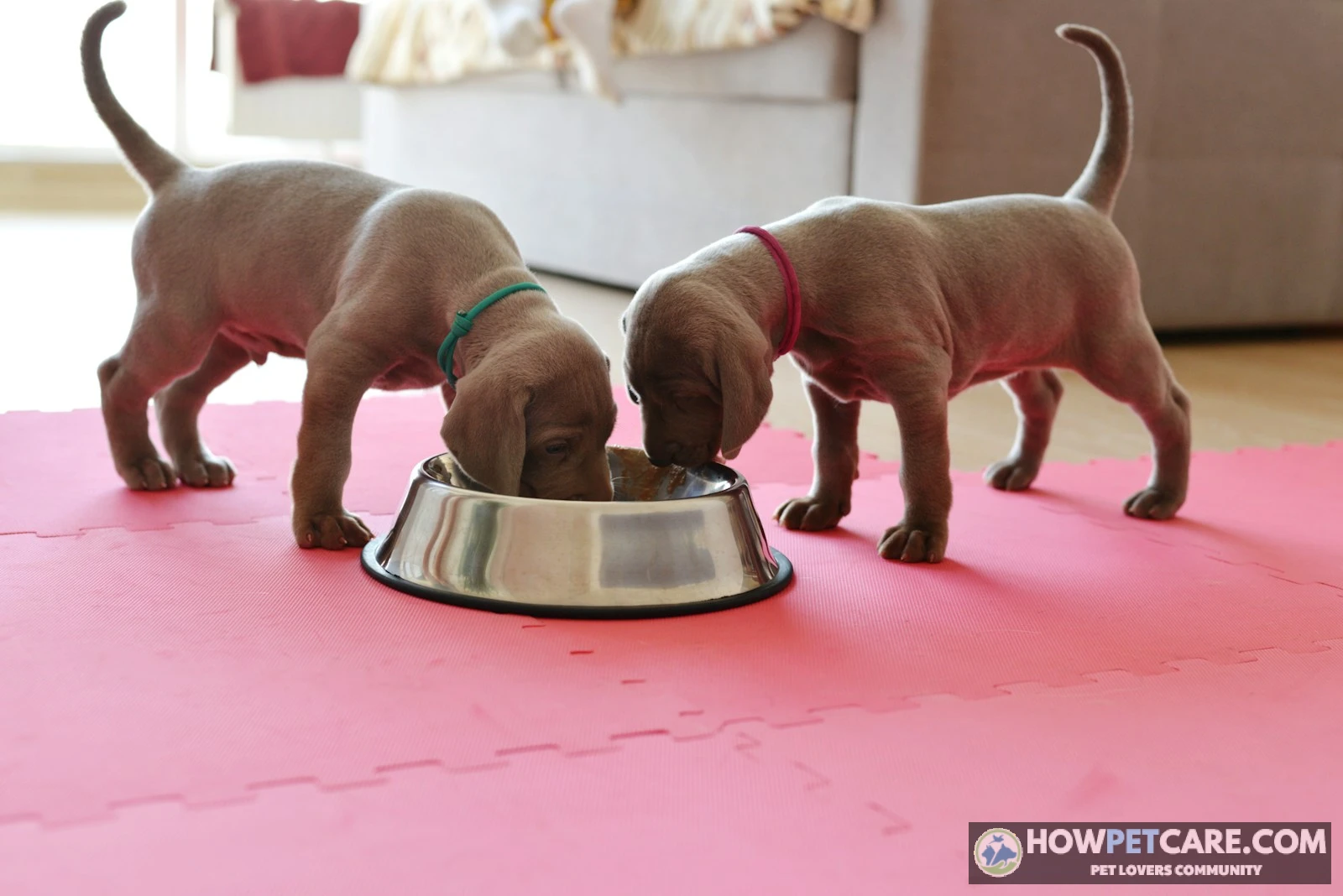

Puppies start eating solid food at about 3 to 4 weeks old, beginning with a soft gruel of complete puppy food mixed with warm water or puppy milk replacer. They keep nursing while they learn, and most are fully weaned and eating regular puppy food by 6 to 8 weeks old.
Puppies start eating solid food at about 3 to 4 weeks old. Their first food is usually a soft gruel made with complete puppy food and warm water or puppy milk replacer. They continue nursing or receiving milk replacer as they learn to eat, and most are fully weaned by about 6 to 8 weeks old.
Puppies Start Eating Solid Food at About 3 to 4 Weeks Old
Weaning is a gradual transition from milk to puppy food, not an overnight switch. Before approximately 3 weeks of age, puppies generally need their mother’s milk or a properly prepared puppy milk replacer rather than solid food.
As puppies become more mobile and their baby teeth emerge, you can offer small tastes of gruel. Their mother will usually nurse them less as they eat more. Puppies develop at different rates, so use the timeline as a guide. Ask your veterinarian about any puppy who is small, unwell, or not gaining weight.
The short answer by age
At 3 to 4 weeks, introduce soft food and a shallow dish of water. From about 4 to 6 weeks, gradually make the meals thicker. By approximately 7 to 8 weeks, many puppies can eat dry or lightly moistened puppy food.
When puppies are fully weaned and off mother’s milk
Most puppies no longer need their mother’s milk or milk replacer by 6 to 8 weeks, once they’re eating enough complete puppy food and drinking water on their own. Some mothers may allow occasional nursing beyond that point. Don’t abruptly remove milk from a puppy who isn’t eating enough yet; ask your veterinarian how to support the transition.
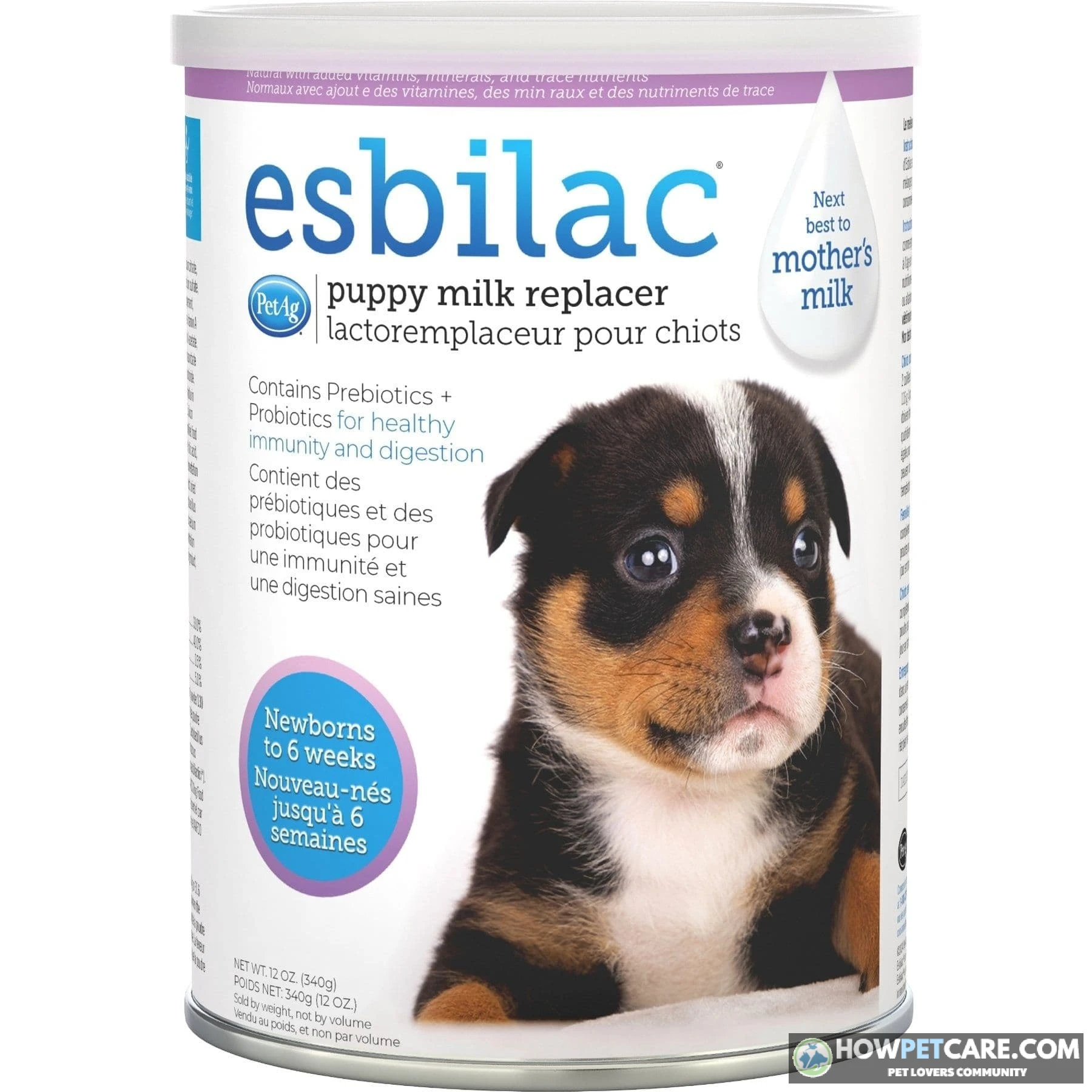
Signs a Puppy Is Ready to Start Solid Food
At around 3 to 4 weeks, look at each puppy rather than assuming the whole litter is ready on the same day. A healthy puppy may be ready to explore gruel if:
- Baby teeth are beginning to emerge.
- The puppy can get around and approach a shallow dish.
- The puppy sniffs or licks food, a clean finger, or the mother’s food.
- The puppy can lick a drop of prepared puppy milk replacer from your finger rather than only suckling.
- The puppy is active, nursing well, and gaining weight steadily.
The mother may also begin moving away from nursing puppies. That can be part of weaning, but her behavior alone won’t tell you whether every puppy is getting enough food.
A puppy who is still crawling, shows little interest in lapping, or has recently been ill may need a different pace. Contact your veterinarian promptly if a puppy is losing weight, not nursing, lethargic, chilled, or has a swollen or hard belly. Don’t simply wait for that puppy to reach the next milestone.
Week-by-Week Puppy Weaning Schedule: Age, Food, Consistency and Meals per Day
This puppy weaning schedule is a practical starting point. Offer the foods listed alongside nursing or prescribed bottle feeds until the puppy is eating enough from the bowl. Early meals can be very small; they’re a chance to practice eating as well as a source of nutrition.
How to use the weaning chart
Move toward thicker food as the puppy laps and chews comfortably, eats more, and gains weight. A puppy who needs more time can stay at a softer stage while you continue monitoring intake. If progress stalls or weight gain is poor, contact your veterinarian rather than relying on the chart alone.
| Age | Main Food Type | Consistency | Meals/Offerings per Day | Mother’s Milk or Replacer | Water | Notes |
|---|---|---|---|---|---|---|
| Under 3 weeks | Mother’s milk or puppy milk replacer | Liquid | Nursing on demand; bottle schedule as directed by a veterinarian | Sole food source | Generally not needed separately | No routine solid food yet. |
| 3–4 weeks | Puppy gruel | Thin, smooth, and easy to lap | About 3–4 small offerings | Continues to provide most nutrition at first | Introduce a shallow dish | Expect exploration and mess; don’t force the puppy to eat. |
| 4–5 weeks | Puppy gruel | Soft porridge | About 3–4 offerings | Nursing or replacer continues as food intake rises | Fresh water available | Gradually reduce liquid as lapping improves. |
| 5–6 weeks | Wet puppy food or soaked puppy kibble | Soft mash or tender pieces | About 4 offerings | Tapers as solid intake increases | Fresh water available | Some puppies no longer need replacer; others need a more gradual transition. |
| 6–7 weeks | Puppy food | Softened or lightly moistened | About 4 meals | Little or none for many puppies | Fresh water available | Let chewing ability and weight gain guide the pace. |
| 7–8 weeks | Puppy food | Dry or lightly moistened | About 4 meals | Most puppies finish weaning by 8 weeks | Fresh water available | Dry food is optional if a complete wet diet is used. |
| 8–12 weeks | Complete puppy food | Dry, wet, or moistened | About 3–4 meals | No milk needed once fully weaned | Fresh water available | Keep food consistent initially; change it gradually if needed. |
How to Make Puppy Gruel and Soften Kibble, Step by Step
Choose a food with a nutritional adequacy statement saying it’s complete and balanced for growth or all life stages under AAFCO standards. For a puppy expected to become a large adult, check that the statement includes growth of large-size dogs. You can use either wet puppy food or appropriately softened dry puppy kibble for first meals.
The ratios below are kitchen starting points by volume, not precise nutritional formulas. Kibble absorbs liquid at different rates, and wet foods already contain moisture. Add enough liquid to reach a texture your puppy can comfortably lap or chew.
| Stage / Age | Kibble or Wet Food | Liquid | Approximate Ratio | Soaking Time | Serving Temperature |
|---|---|---|---|---|---|
| First gruel, about 3–4 weeks | Dry puppy kibble | Warm water or prepared puppy milk replacer | Start with 1 part kibble to 3 parts liquid; adjust to a smooth slurry | About 15–20 minutes, or longer until fully soft; mash | Lukewarm, not hot |
| First gruel with wet food | Complete wet puppy food | Warm water or prepared replacer | Add liquid gradually until easy to lap | No soaking needed; mash and mix | Lukewarm, not hot |
| Mid-weaning, about 4–5 weeks | Puppy kibble | Warm water or prepared replacer | Try 1 part kibble to 2 parts liquid | Soak until fully soft, then mash | Lukewarm or room temperature |
| Later weaning, about 5–6 weeks | Puppy kibble | Warm water | Try 1 part kibble to 1 part liquid, adding more if needed | Soak until soft enough to mash or chew | Room temperature |
| Finishing, about 6–8 weeks | Puppy kibble | Water as needed | Gradually reduce liquid | Soak as needed for comfortable chewing | Room temperature |
If you’re using powdered milk replacer, prepare it with water according to its label first. Measure the prepared liquid into the gruel; don’t treat dry powder as ready-to-use milk. Never use cow’s milk as a substitute for puppy milk replacer.
-
Prepare the food
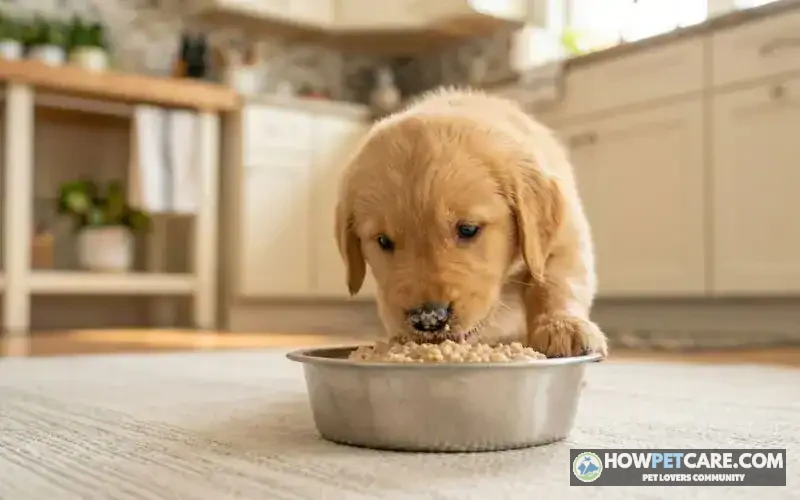
Soak complete puppy kibble until soft, then mash it with warm water or prepared puppy milk replacer. Alternatively, stir liquid into complete wet puppy food.
-
Check the texture and temperature
Make the first mixture smooth and easy to lap. Test it on your wrist: it should feel lukewarm, never hot.
-
Offer a small amount
Place the gruel in a shallow, stable dish and supervise the puppies. Let them approach and lick it voluntarily.
-
Clean up and adjust
Remove uneaten food after the meal, discard leftovers, and wash the dish. Over subsequent meals, gradually use less liquid as the puppies manage thicker food.
First-meal method: offering gruel to a hesitant litter
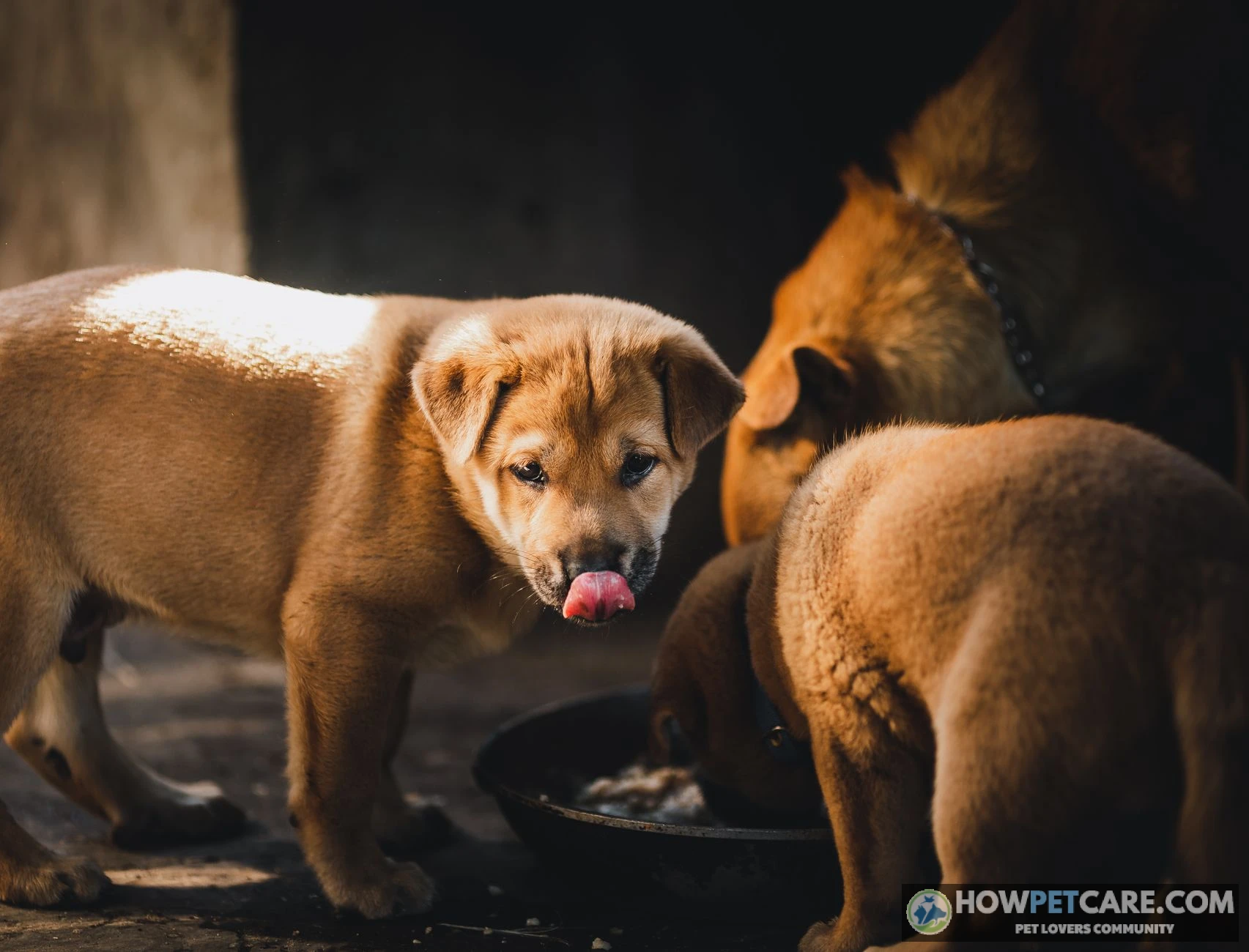
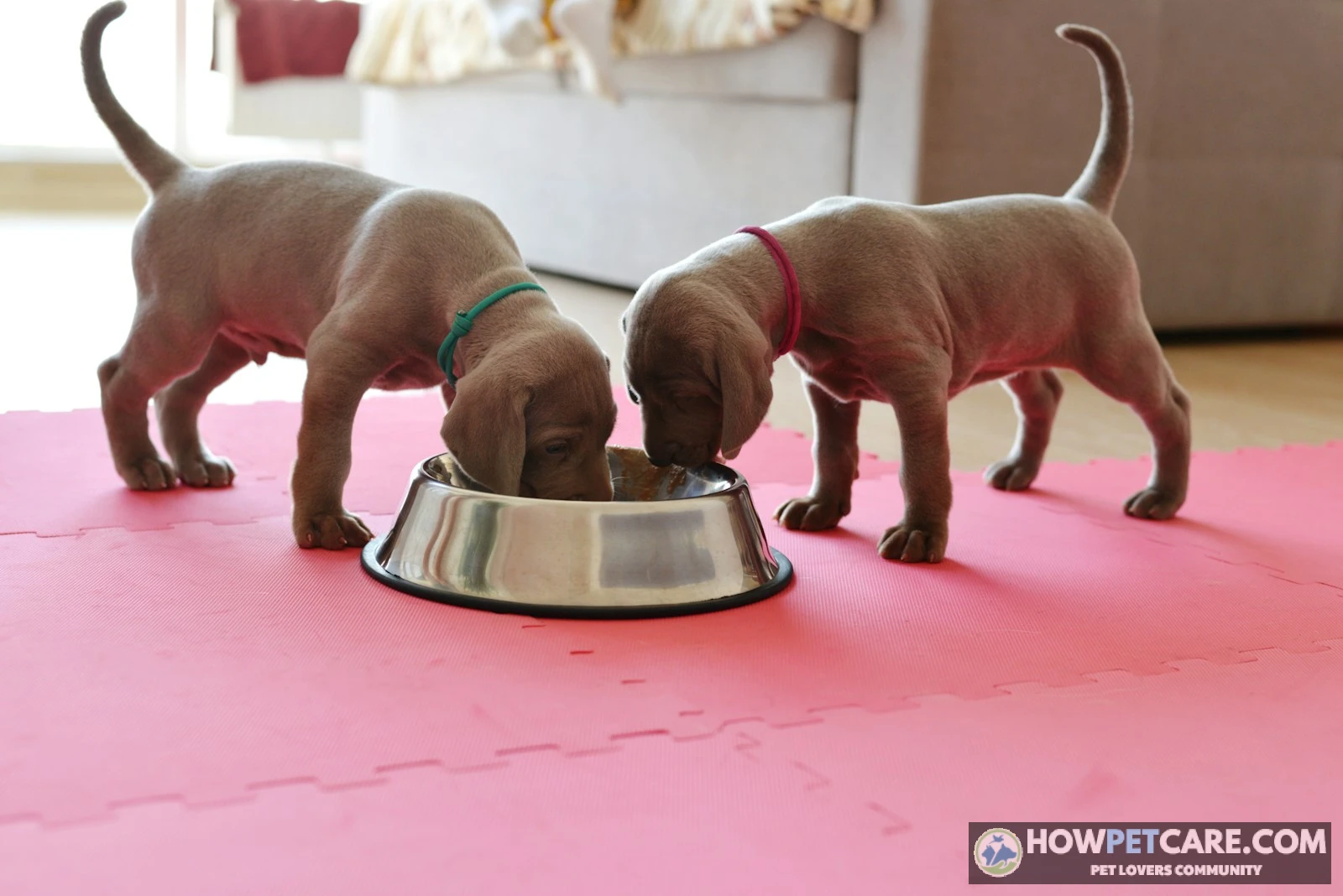
Put a small dab on a clean fingertip and let each puppy lick it off. Then hold your finger near the dish and give them time to investigate. Puppies may step in the food or need several introductions before they eat much.
Supervise them closely and wipe messy faces and paws with a warm, damp cloth afterward. Don’t push a puppy’s face into the dish or squirt food into its mouth.
Wet puppy food vs. softened kibble for weaning
Complete wet puppy food is already soft and can be thinned quickly. Dry kibble needs soaking and mashing at first, but you can gradually reduce the added water as chewing improves. Either is suitable if the label identifies it as complete and balanced for the puppy’s growth needs.
A homemade meat-and-rice mixture isn’t automatically a balanced puppy diet. If you want to feed a homemade diet, ask your veterinarian for a complete recipe formulated for your puppy’s growth stage rather than improvising one.
When puppies can switch from moistened to fully dry kibble
Many puppies can manage dry kibble around 7 to 8 weeks, although some benefit from a little water for longer. At 4 weeks, soak and mash kibble rather than offering hard pieces. Reduce the moisture gradually, and return to a softer texture if a puppy struggles to chew.
Meal Frequency, Portion Sizes and Water: What a Weaning Puppy Needs
Early gruel sessions are small offerings, not replacements for all milk feeds. As puppies eat more puppy food, measured meals become part of the routine. Around 6 to 8 weeks, four meals spread through the day are a practical starting schedule; an individual puppy’s veterinarian may recommend a different plan.
How much should a weaning puppy eat?
There’s no reliable spoonful-per-pound rule for every puppy. Foods differ in calorie concentration, and requirements vary with age, size, growth rate, and how much milk the puppy still receives.
Once puppy food supplies the full diet, use the package’s daily feeding guide for the puppy’s age and weight, including expected adult weight if the label asks for it. Divide the suggested daily amount among the day’s meals. For example, if the label’s starting amount for your puppy is 1 cup per day and you feed four meals, start with 1/4 cup per meal. That’s an arithmetic example, not a universal portion recommendation.
During the milk-to-food overlap, don’t automatically feed a full label amount on top of a full milk ration. Ask your veterinarian to help adjust the combined intake, especially for bottle-fed puppies. Offer modest amounts and observe what each puppy eats. An empty communal bowl doesn’t prove that every littermate was fed.
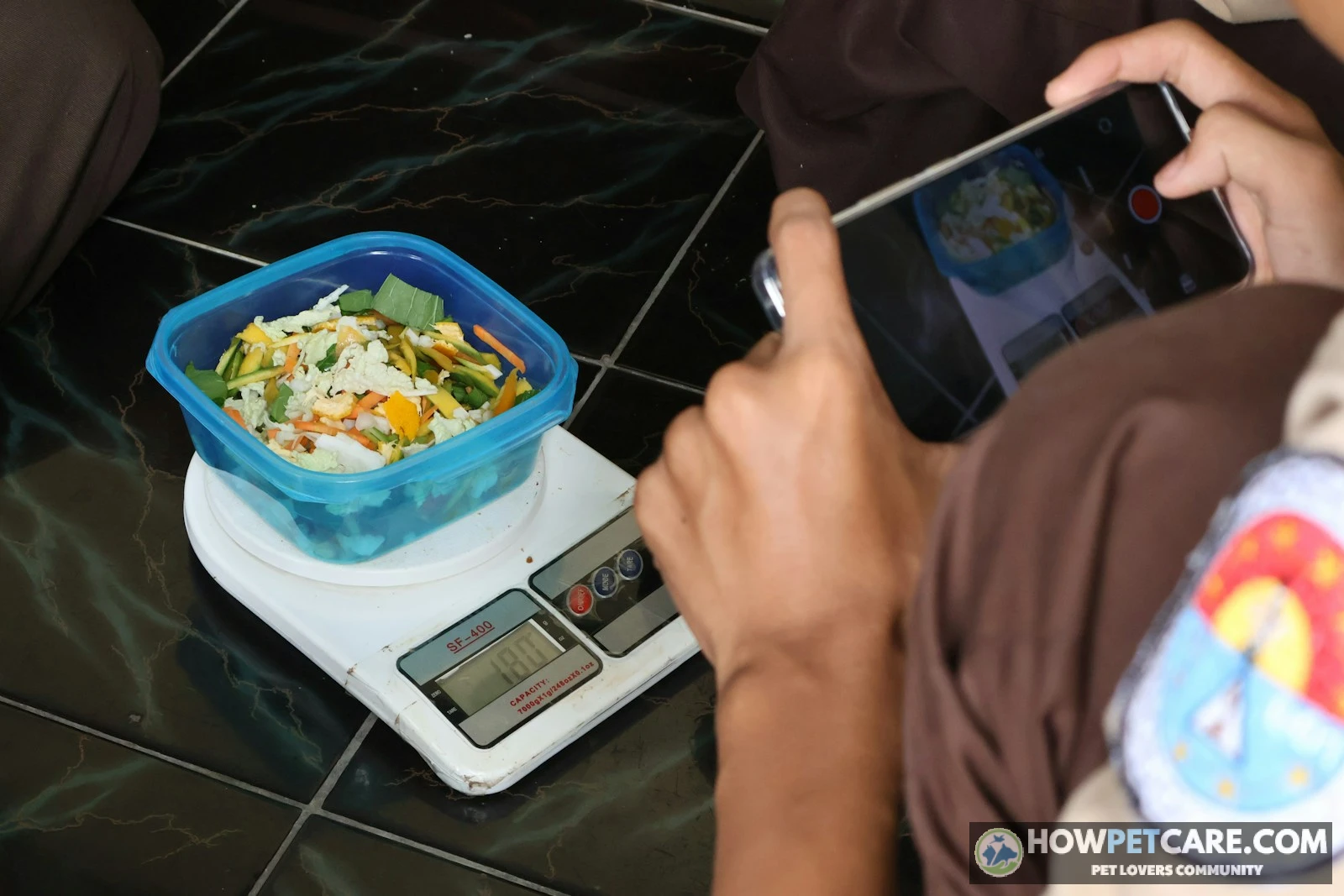
Weigh young puppies individually on a gram or kitchen scale each day and record the results. Steady gain matters more than comparison with a littermate. Contact your veterinarian if weight is flat or falling. Very small puppies may need more frequent meals; large-breed puppies need a growth diet appropriate for their expected adult size. Your veterinarian can help adjust portions to growth and body condition.
When puppies start drinking water
Introduce fresh water in a shallow, stable dish at about 3 to 4 weeks, alongside the first gruel. At first, puppies may investigate more than they drink. Keep the dish clean, refresh it regularly, and supervise young puppies around it. Fresh water should remain available as food becomes less soupy.
Milk and wet gruel contribute fluid early on. As nursing or replacer decreases, drinking water independently becomes increasingly important. There’s no single useful water volume for every weaning puppy. If you worry that a puppy isn’t drinking or is becoming dehydrated, call your veterinarian rather than trying to force water into its mouth.
Weaning Orphaned or Bottle-Fed Puppies Without a Mother
Orphaned and rejected puppies can begin exploring gruel at roughly the same age as nursing puppies, but their caregiver must manage milk feeds throughout the transition. Arrange veterinary guidance early for the feeding plan, growth checks, and care of the litter.
Colostrum, the mother’s first milk, supplies immunoglobulins in the first days of life. An orphan may or may not have received it before separation. Tell the veterinarian what you know rather than assuming the puppy received no maternal protection.
Mixing and warming milk replacer
Use a commercial puppy milk replacer, not cow’s milk. Mix powdered replacer exactly as the label directs; adding extra powder or water changes its concentration. Warm the prepared feed to approximately body temperature and test it before offering it. Follow the label’s storage and handling instructions.
For bottle feeds, keep the puppy belly-down in a natural nursing position, not on its back. Let the puppy suckle at its own pace. Ask your veterinarian about the correct nipple, amounts, and feeding intervals for the puppy’s age, weight, and health; very young or weak puppies need an individualized plan.
Young orphaned puppies also need help urinating and defecating until they can do so independently. Ask your veterinarian to demonstrate gentle stimulation and explain when to stop.
From bottle to bowl: a gradual transition
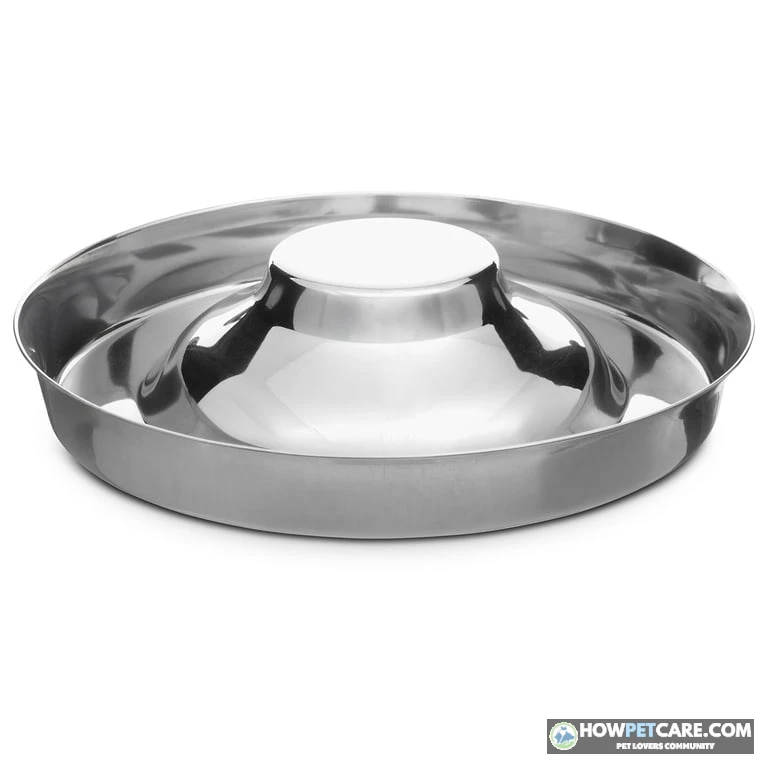
- At about 3 to 4 weeks, offer a little prepared, lukewarm puppy milk replacer in a shallow saucer while continuing the established bottle schedule.
- Let the puppy lick a drop from your clean finger and discover the saucer. Don’t force its face down or pour liquid into its mouth.
- Once the puppy is lapping, offer a smooth gruel made with complete puppy food and prepared replacer or warm water.
- As measured bowl intake rises and weight gain remains steady, work with your veterinarian to reduce bottle feeds gradually. Don’t discontinue them just because the puppy takes a few licks.
A weak or chilled puppy, a puppy who won’t suckle, or one whose weight is falling needs prompt veterinary attention. Don’t force-feed or attempt to replace a veterinary feeding plan with gruel.
Troubleshooting Weaning: Refusal, Diarrhea, Slow Weaners and When to Call the Vet
A little mess or hesitation is normal when a litter meets a new food. Illness and inadequate intake are different: young puppies can deteriorate quickly, so watch each puppy’s energy, nursing, stool, and weight.
My puppy won’t eat gruel
Try a fresh, lukewarm batch with a smoother texture. Use a stable shallow dish, and offer a small taste from a clean finger when the puppy is awake and interested. Continue nursing or the established milk-replacer plan while the puppy learns.
A healthy puppy just starting at 3 weeks may need more time. If a puppy is still mostly nursing at 4 to 5 weeks, keep offering soft food and track weight daily; contact your veterinarian if intake or growth concerns you. A puppy approaching 6 weeks with little interest in solids should have a veterinary assessment rather than simply waiting for weaning to happen.
Never force-feed with a syringe or push food into a resistant puppy’s mouth. Inhaled food or liquid can cause serious harm.
Diarrhea or vomiting after solids
A diet change can coincide with softer stool, but parasites, infection, overfeeding, and other problems can also cause digestive signs. Don’t assume diarrhea is just an adjustment. Pause further changes to the diet, make sure milk feeds and water access are maintained as appropriate, and ask your veterinarian for advice about the puppy’s age and symptoms. Don’t give human antidiarrheal medication unless your veterinarian directs you to.
Contact your veterinarian promptly if a young puppy has diarrhea or vomits, particularly if it happens again or the puppy isn’t eating normally. Seek urgent care for blood, repeated vomiting, marked lethargy, a swollen or painful belly, or signs of dehydration. Don’t wait a full day for those warning signs to resolve.
Warning signs that mean call the vet
- Poor intake or growth: A puppy refuses milk as well as food, loses weight, or stops gaining.
- Breathing or swallowing trouble: Coughing or difficulty breathing during or after feeding can signal aspiration or choking; breathing distress is an emergency.
- Sudden swelling or collapse: A markedly swollen belly, repeated unproductive retching, facial swelling, or difficulty breathing needs emergency veterinary care.
- Concerns about the mother: Painful, swollen mammary glands, illness, or a suspected lack of milk warrant a call. Don’t abruptly wean the litter without an alternative feeding plan.
This guidance can help you recognize when to seek care; it can’t diagnose the cause of a puppy’s symptoms.
After Weaning: Feeding an 8-Week-Old Puppy and Your Next Steps
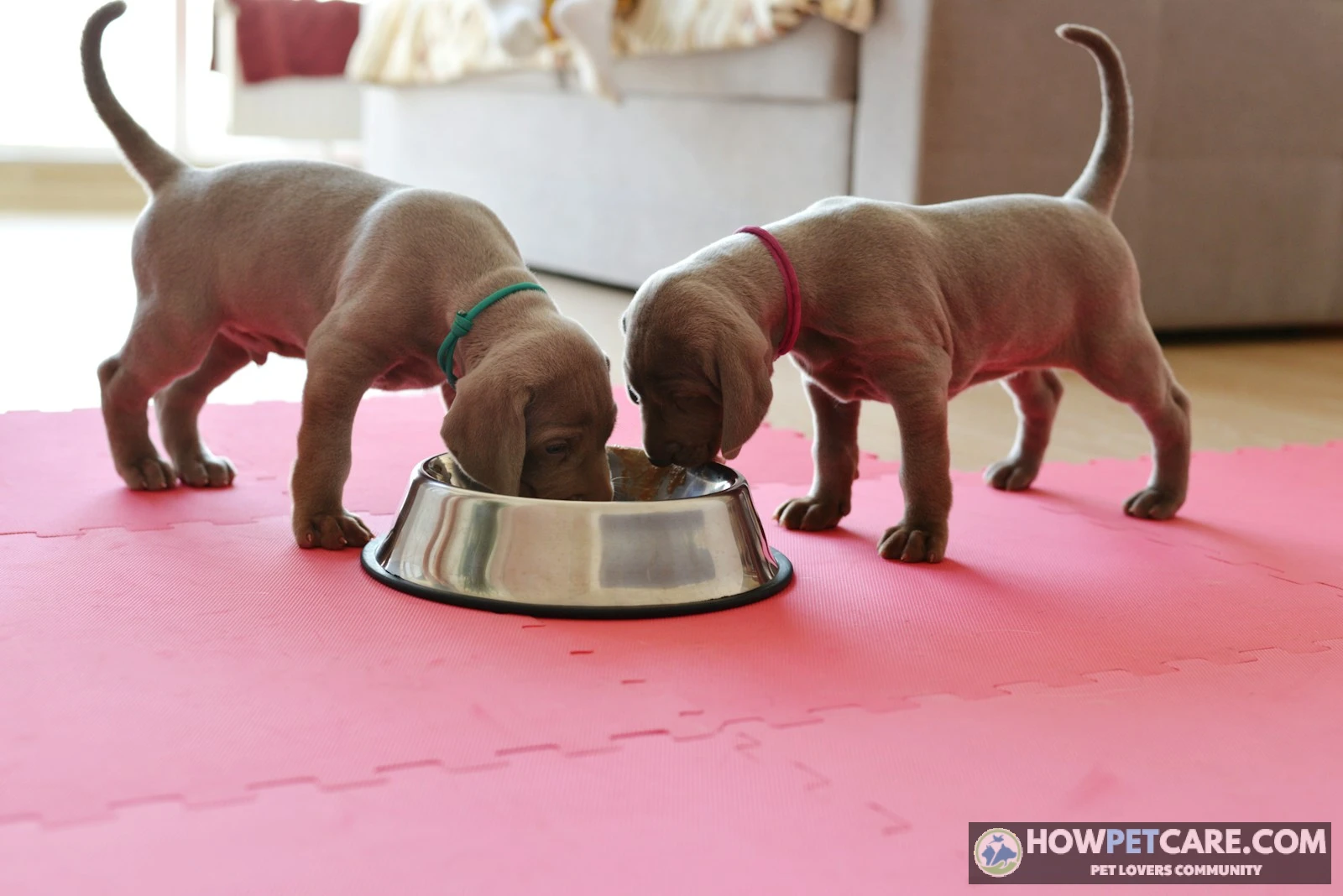
An 8-week-old puppy is usually fully weaned and eating complete puppy food, whether dry, wet, or softened. If your new puppy comes home at this age, ask what food and feeding schedule it was used to, and keep them consistent initially. If a change is needed, introduce the new food gradually over several days while watching appetite and stool.
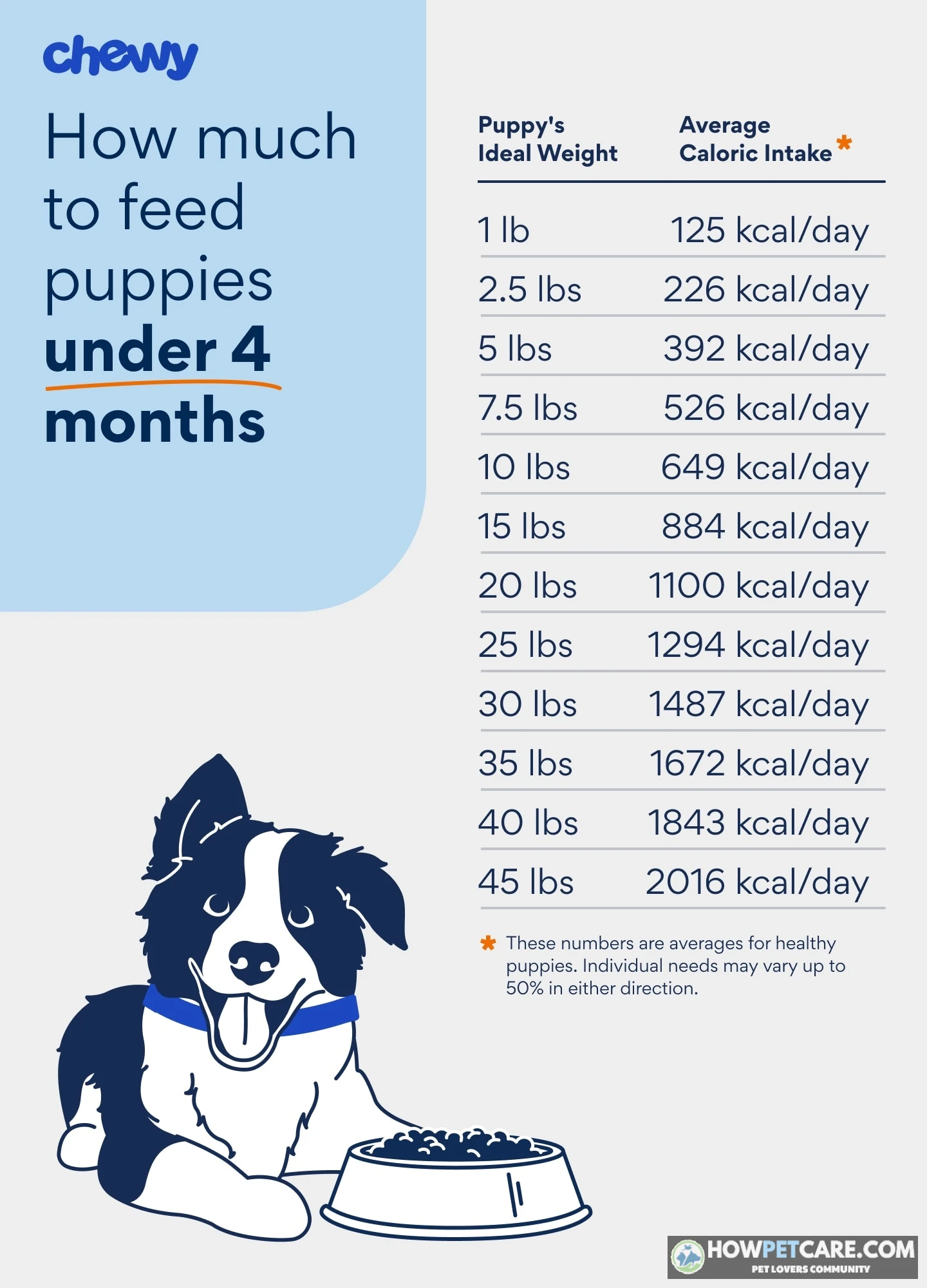
Puppy feeding schedule from 8 weeks to 6 months
| Age | Meals per Day | Food Form | Notes |
|---|---|---|---|
| Around 8 weeks | 3–4 | Complete puppy food, dry or moist | Confirm the puppy is fully weaned and eating independently. |
| 8–12 weeks | About 4 | Complete puppy food | Divide the daily portion among meals; monitor growth. |
| 3–6 months | About 3 | Complete puppy food | Adjust portions as the puppy grows. |
| Around 6 months and older | Often 2 | Complete puppy food until ready for adult food | Ask your veterinarian whether your puppy needs a different schedule. |
| Near adult size | Usually 2 | Transition to complete adult dog food | Timing varies with breed and growth; change foods gradually. |
These are starting schedules, not a substitute for individual advice. A toy-breed puppy or a puppy with a medical concern may need a different feeding frequency.
When puppies can switch to adult dog food
Keep feeding a complete growth diet until your puppy is approaching adult size; until then, a puppy eating adult dog food misses nutrients balanced for growth. Small breeds may reach that point around 9 to 12 months; large and giant breeds often need growth food longer, sometimes 12 to 18 months or beyond. Your veterinarian can help choose the transition time based on expected adult size and growth.
As you plan each stage of weaning, use this checklist:
- Check each puppy’s age, readiness, appetite, and weight trend.
- Prepare a small batch of appropriate gruel and set out a shallow water dish.
- Use the chart to choose a texture and feeding frequency; keep milk feeds in place while intake is developing.
- Record each puppy’s weight daily during early weaning and adjust the plan with your veterinarian.
- Contact your veterinarian promptly for poor intake, stalled weight gain, illness, or any uncertainty about an orphan’s feeding plan.
1At what age should puppies typically be introduced to their first soft gruel alongside nursing?
At this developmental stage, baby teeth begin emerging and mobility increases, making it the ideal time to introduce a thin slurry.
2Why should cow's milk never be used as a substitute for puppy milk replacer when preparing weaning gruel?
Cow's milk lacks the specific nutritional profile required by growing puppies and frequently causes digestive distress such as diarrhea.
3What is the recommended starting volumetric ratio of dry kibble to liquid when preparing first gruel for 3- to 4-week-old puppies?
A high liquid ratio creates a thin, smooth slurry that very young puppies can easily lap up before learning to chew.
4What is the correct body position for holding an orphaned puppy during bottle feeding?
Keeping the puppy on its stomach mimics natural nursing against the mother and allows safe, comfortable swallowing.
5Which physical milestone indicates that an individual puppy is ready to begin exploring solid gruel?
The emergence of deciduous teeth alongside increased mobility signals that a puppy can begin exploring soft foods.
6How many meals per day are generally recommended for a newly weaned puppy between 8 and 12 weeks of age?
Spreading the daily food requirement across four smaller meals accommodates a young puppy's limited stomach capacity and active metabolism.
7When should a puppy typically be switched from a puppy growth formula to adult dog food?
Growth diets supply essential nutrients needed until physical development completes, which varies significantly by breed size.
8What is the recommended approach if a litter of puppies hesitates to sample gruel from a dish for the first time?
Offering a small taste on a finger allows puppies to explore the new taste and texture safely at their own pace.
9What daily monitoring practice helps caregivers ensure that every puppy in a litter is receiving adequate nutrition during weaning?
Daily individual weigh-ins provide clear data to catch faltering growth or weight loss early.
10Which symptom in a weaning puppy represents a medical emergency that requires prompt veterinary attention?
Symptoms affecting respiratory function or indicating potential aspiration require urgent professional medical care.
| Age | Main Food Type | Consistency | Meals/Offerings per Day | Mother's Milk or Replacer | Water | Notes |
|---|---|---|---|---|---|---|
| Under 3 weeks | Mother's milk or puppy milk replacer | Liquid | Nursing on demand; bottle schedule as directed by a veterinarian | Sole food source | Generally not needed separately | No routine solid food yet. |
| 3–4 weeks | Puppy gruel | Thin, smooth, and easy to lap | About 3–4 small offerings | Continues to provide most nutrition at first | Introduce a shallow dish | Expect exploration and mess; don't force the puppy to eat. |
| 4–5 weeks | Puppy gruel | Soft porridge | About 3–4 offerings | Nursing or replacer continues as food intake rises | Fresh water available | Gradually reduce liquid as lapping improves. |
| 5–6 weeks | Wet puppy food or soaked puppy kibble | Soft mash or tender pieces | About 4 offerings | Tapers as solid intake increases | Fresh water available | Some puppies no longer need replacer; others need a more gradual transition. |
| 6–7 weeks | Puppy food | Softened or lightly moistened | About 4 meals | Little or none for many puppies | Fresh water available | Let chewing ability and weight gain guide the pace. |
| 7–8 weeks | Puppy food | Dry or lightly moistened | About 4 meals | Most puppies finish weaning by 8 weeks | Fresh water available | Dry food is optional if a complete wet diet is used. |
| 8–12 weeks | Complete puppy food | Dry, wet, or moistened | About 3–4 meals | No milk needed once fully weaned | Fresh water available | Keep food consistent initially; change it gradually if needed. |
FAQ
Can puppies eat dry kibble at 4 weeks old?
Not dry. At 4 weeks, kibble should be soaked in warm water or milk replacer until soft and mashed into gruel. Most puppies move to moistened kibble around 5 to 6 weeks and dry kibble by about 7 to 8 weeks.
When do puppies stop drinking their mother’s milk?
Most puppies are mostly weaned by 6 to 8 weeks old, with nursing tapering off gradually from about 4 weeks. Some mothers continue brief nursing a little longer.
Is it okay to give puppies cow’s milk during weaning?
No. Cow’s milk can cause diarrhea and does not match a puppy’s nutritional needs. Use mother’s milk or a puppy milk replacer.
Can I wean puppies earlier than 3 weeks?
Generally not, unless a vet advises it. Puppies under 3 weeks need milk from their mother or a replacer, and early weaning raises the risk of nutritional and health problems.
How long should I keep a puppy on puppy food?
Puppies typically stay on puppy food until they near adult size, around 9 to 12 months for small and medium breeds and up to 18 months for large breeds. Ask your vet for the right timing for your dog.