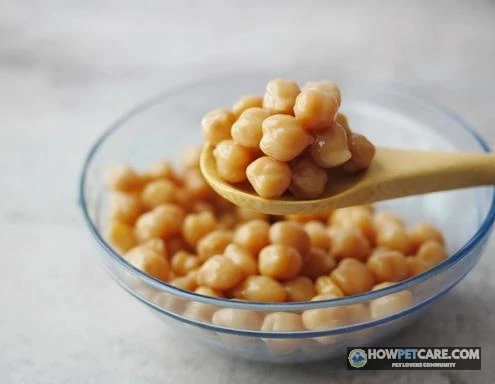

Yes—plain, fully cooked, unseasoned chickpeas can be a safe occasional treat for many healthy adult dogs. Avoid raw, seasoned, hummus-style, or unrinsed canned chickpeas; scale portions to body weight and keep all treats under 10% of daily calories.
Yes — plain, fully cooked chickpeas can be a safe occasional treat for many healthy adult dogs. Raw, seasoned, canned-without-rinsing, or hummus-style chickpeas are not safe. Keep chickpeas a small side, never a meal replacement or daily staple, and scale portions to your dog’s body weight.
Can Dogs Eat Chickpeas? The Quick Verdict and Safe Basics
Plain cooked chickpeas are safe for many dogs in small amounts. They aren’t toxic, and they deliver plant protein, fiber, and minerals such as folate, iron, and manganese. The risk comes from form, portion, and add-ins — not from the bean itself.
Verdict by form
- Plain cooked chickpeas (dried, soaked, and boiled): safe as an occasional treat for healthy adults.
- Canned chickpeas: usable only if no-salt-added or low-sodium and rinsed thoroughly.
- Raw or dried chickpeas: unsafe — hard, hard to digest, and a choking or blockage risk.
- Hummus, seasoned, or oil-cooked chickpeas: unsafe — garlic, onion, lemon, salt, oil, or xylitol may be present.

What makes chickpeas risky
Chickpeas contain raffinose, a sugar that can cause gas, bloating, or mild stomach upset in sensitive dogs. They also add carbohydrates and, in canned form, a lot of sodium. Because chickpeas are calorie-dense legumes, overfeeding can push treats past the 10% daily calorie limit.
Plain, fully cooked, unseasoned chickpeas only — in small amounts, scaled to body weight, and never as a meal.
Safe Chickpea Portions by Dog Weight and Age
The portions below are starting amounts and maximum occasional amounts. Keep all treats combined under 10% of daily calories.
| Dog size | Weight range | Starting portion | Maximum occasional portion |
|---|---|---|---|
| Toy | Under 10 lbs | 1/2 chickpea, once | 2–3 chickpeas |
| Small | 10–25 lbs | 1–2 chickpeas | 1 tablespoon (about 8–10 chickpeas) |
| Medium | 26–50 lbs | 2–3 chickpeas | 2 tablespoons |
| Large | 51–90 lbs | 4–5 chickpeas | 3 tablespoons |
| Giant | Over 90 lbs | 5–6 chickpeas | 1/4 cup |

Puppies and dogs under 10 lbs should start with a single mashed chickpea and wait 24–48 hours before offering more. Treat-calorie math: for a 20 lb dog, treats should stay around 27 calories per day, and 3 tablespoons of chickpeas is about 40 calories — so even large dogs shouldn’t get the maximum portion every day.
Puppy and toy-breed adjustments
Puppies have smaller digestive capacity and developing systems. Start with one mashed chickpea, wait a full 24–48 hours, and increase only if stools stay normal. Toy breeds under 10 lbs should never exceed a few chickpeas per serving. For puppies under 12 weeks, skip chickpeas entirely unless your veterinarian says otherwise.
Raw, Cooked, and Canned Chickpeas: Form-by-Form Rules
Raw chickpeas
Raw or dried chickpeas are hard, hard to digest, and can cause stomach upset or intestinal blockage. Never feed them whole or soaked-but-uncooked. If your dog ate a raw chickpea, watch for vomiting, lethargy, or abdominal pain and contact your veterinarian if symptoms develop.
Cooked dried chickpeas
This is the safest form. Soak dried chickpeas, cook until fully soft and easy to mash, cool completely, and serve plain with no salt, oil, or seasoning. Cooking breaks down raffinose partially and softens the bean so it’s easier to digest.
Canned chickpeas and sodium
Canned chickpeas carry high sodium, preservatives, and sometimes flavorings that can harm dogs. If you use canned, choose no-salt-added or low-sodium and rinse thoroughly. Rinsing can cut sodium by roughly 40%, but it doesn’t remove all of it.
- ☐ Pick a can labeled no salt added or low sodium if available (regular canned chickpeas can carry 300–500 mg sodium per serving).
- ☐ Pour chickpeas into a fine-mesh strainer.
- ☐ Rinse under cool running water for 30–60 seconds, tossing gently.
- ☐ Shake the strainer and pat dry with a paper towel.
- ☐ Sniff check: if the chickpeas still smell briny or salty, rinse for another 30 seconds.
- ☐ Serve plain — no can liquid, no oil, no seasoning.

Simple selection rule: if the label lists more than 140 mg sodium per serving and you can’t find a no-salt-added can, cook dried chickpeas instead — it’s the lower-sodium path by default.
Native Pet recommends avoiding canned chickpeas entirely because of salt and additives, while Petaluma, Beco, and Dr. Caryn (JustAnswer) say low-sodium canned chickpeas rinsed well are acceptable. When in doubt, cook dried beans.
How to Prepare Dried Chickpeas for Dogs Step by Step
-
Soak
Rinse dried chickpeas and soak in cool water for 8–12 hours (or overnight). Discard the soaking water.
-
Cook
Simmer in fresh water until very soft and easy to mash, usually 1–2 hours. No salt, oil, or spices.
-
Peel and cool
Slip off loose skins if your dog is small or sensitive, cool completely, then mash or serve whole plain.
Peeling is optional but helps very small dogs and sensitive stomachs, since the skins are the least digestible part. Store cooked chickpeas in the refrigerator for up to 3 days or freeze in small portions.
Hummus, Add-Ins, and Toxic Foods to Avoid
Why hummus is unsafe
Never feed hummus. It commonly contains garlic, onion, lemon, salt, oil, or xylitol, which can be dangerous for dogs. Garlic and onion can damage red blood cells; xylitol can cause a dangerous blood-sugar crash and liver injury; excess salt and fat can trigger pancreatitis or sodium toxicity. Plain cooked chickpeas are the only safe form.
Common add-ins to avoid
- Salt, oil, butter, or ghee
- Garlic, onion, chives, or leeks
- Lemon juice, vinegar, or spices (paprika, cumin, chili)
- Sweeteners, including xylitol
- Sauces, dressings, or cheese

Check labels on store-bought chickpea products — roasted chickpea snacks and chickpea pasta often contain added salt, oil, or seasoning.
Condition-Specific Cautions: Diabetes, Kidneys, Pancreatitis, and Sensitive Stomachs
| Condition | Feed chickpeas? | Why | Safer adjustment |
|---|---|---|---|
| Diabetes | Only with vet approval | ~27 g carbohydrates per cup can raise blood glucose | Skip entirely unless your vet builds it into the carb budget |
| Kidney disease | Generally avoid | Phosphorus and potassium add renal load; extra protein matters too | Ask your vet about renal-safe treat options |
| Pancreatitis | Avoid during flare-ups | Any legume’s fiber and carbs can be hard on an inflamed pancreas; fat-free is not automatically safe | Stick to the vet-prescribed low-fat recovery diet |
| Sensitive stomach / chronic GI | Trial with extreme caution | Raffinose in chickpeas commonly causes gas and bloating | Try 1–2 mashed chickpeas once; stop at the first sign of gas or loose stool |
Rule of thumb: if your dog is on prescription food or managing any chronic condition, treat chickpeas as a question for your vet, not a treat decision.
Diabetes and carbohydrates
Chickpeas contain roughly 27 g of carbohydrates per cup cooked, which can raise blood glucose. Diabetic dogs should only get chickpeas if a veterinarian builds them into the daily carbohydrate budget.
Kidney, pancreas, and GI cautions
Dogs with kidney disease face added phosphorus and potassium load. Dogs with pancreatitis should avoid legumes during flare-ups even when fat-free. Dogs with sensitive stomachs often react to raffinose with gas and bloating; start tiny and stop at the first sign of trouble.
Chickpeas vs Peas, Lentils, and Black Beans for Dogs
| Legume | Protein | Fiber | Carbohydrates | Digestibility notes |
|---|---|---|---|---|
| Chickpeas | ~3 g | ~2 g | ~11 g | Moderate; raffinose can cause gas — cook very soft and mash for small dogs |
| Green peas | ~2 g | ~1.5 g | ~5 g | Easiest on the stomach; lowest carb of the four |
| Lentils | ~4 g | ~2 g | ~9 g | Well digested when fully cooked; soft texture suits most dogs |
| Black beans | ~2.5 g | ~2 g | ~10 g | Most gas-prone; serve in the smallest portions of the group |

(Values per 1/4 cup cooked.)
How to choose: lowest carbs → green peas; most protein per bite → lentils; already have a can open → rinsed chickpeas in small amounts. On the DCM/taurine question: legumes in occasional treat amounts are not the same as legume-heavy kibble diets, and the FDA’s investigation has not established a single cause — DCM is multifactorial. If your dog eats a boutique legume-rich food, discuss grain-inclusive options with your vet rather than adding more legumes as treats.
First-Feeding Protocol and Allergy or Intolerance Warning Signs
- Day 1: Offer the starting portion for your dog’s weight — mashed, plain, fully cooked, at room temperature.
- Wait 24–48 hours. Feed no other new foods during this window so any reaction is traceable to chickpeas.
- Check twice daily for: vomiting, diarrhea, excess gas, itching or paw licking, hives, facial swelling, or unusual lethargy.
- No symptoms? Repeat the same starting portion once more on day 3, then increase gradually toward the maximum occasional portion over the next 1–2 weeks.
- Any symptom? Stop chickpeas immediately. Mild gas or loose stool usually resolves in a day; hives, swelling, repeated vomiting, or lethargy warrant a call to your veterinarian the same day.
- Log it: note the date, amount, and any reaction so you have a record if you discuss it with your vet.

Symptom checklist
- Allergy signs: itching, hives, facial swelling, repeated vomiting, lethargy.
- Intolerance signs: gas, bloating, loose stool, mild vomiting.
Stop feeding and contact your veterinarian if allergy signs appear or symptoms persist beyond 24 hours.
Your Chickpea Feeding Decision Checklist
Go or no-go checklist
- ☐ Dog is a healthy adult (or vet-cleared puppy).
- ☐ Form is plain, fully cooked, unseasoned chickpeas.
- ☐ Portion matches your dog’s weight tier and stays under 10% of daily calories.
- ☐ No garlic, onion, salt, oil, spices, sweeteners, or xylitol.
- ☐ First feeding done as a tiny trial with a 24–48 hour wait.
- ☐ No chronic condition (diabetes, kidney disease, pancreatitis, chronic GI) without vet approval.
When to call the vet
Call your veterinarian if your dog shows hives, facial swelling, repeated vomiting, lethargy, or symptoms lasting more than 24 hours after eating chickpeas; if your dog has a chronic condition and you want to add chickpeas; or if your dog ate raw, seasoned, or hummus-style chickpeas. When in doubt, skip chickpeas — they’re an optional treat, not a dietary requirement.

| Dog Size Category | Weight Range | Starting Portion | Maximum Occasional Portion |
|---|---|---|---|
| Toy | Under 10 lbs | 1/2 chickpea | 2–3 chickpeas |
| Small | 10–25 lbs | 1–2 chickpeas | 1 tablespoon (about 8–10 chickpeas) |
| Medium | 26–50 lbs | 2–3 chickpeas | 2 tablespoons |
| Large | 51–90 lbs | 4–5 chickpeas | 3 tablespoons |
| Giant | Over 90 lbs | 5–6 chickpeas | 1/4 cup |
FAQ
Can dogs eat chickpea pasta?
Plain cooked chickpea pasta is not toxic, but it is dense in carbohydrates and calories, so it should only be an occasional tiny taste. Avoid sauces, salt, garlic, onion, or cheese additions.
Can dogs eat chickpeas and lentils together?
Yes, in small amounts if both are plain and fully cooked, but combining legumes can increase gas. Start with a smaller portion than you would use for either alone.
How much sodium remains after rinsing canned chickpeas?
Rinsing can reduce sodium substantially, but it does not remove all of it. Use low-sodium or no-salt-added canned chickpeas and keep portions small.
What is the difference between Desi and Kabuli chickpeas for dogs?
Both should be cooked plain before feeding, and neither is inherently unsafe. Desi chickpeas are smaller and often have a thicker seed coat, so they may need longer cooking and thorough peeling.
Can dogs eat hummus made from chickpeas?
No. Hummus often contains garlic, onion, lemon, salt, oil, or xylitol, which can be dangerous for dogs. Feed only plain cooked chickpeas instead.