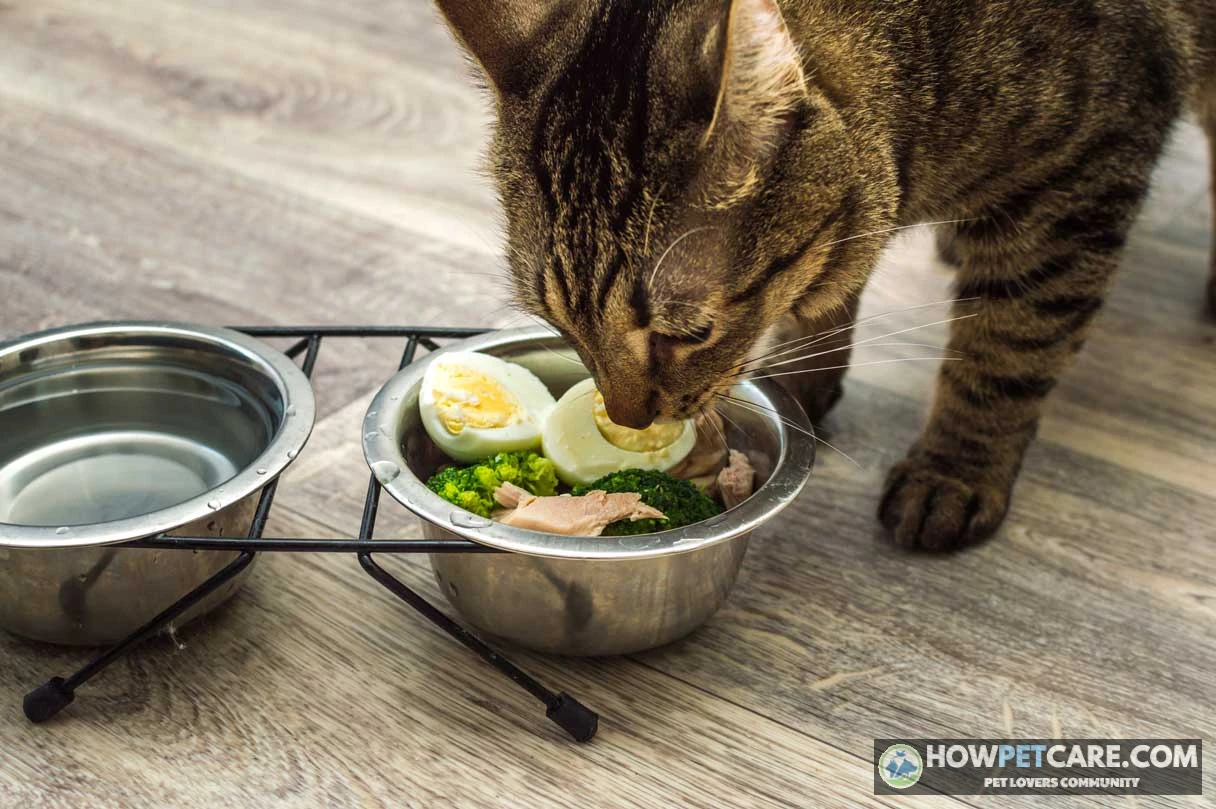

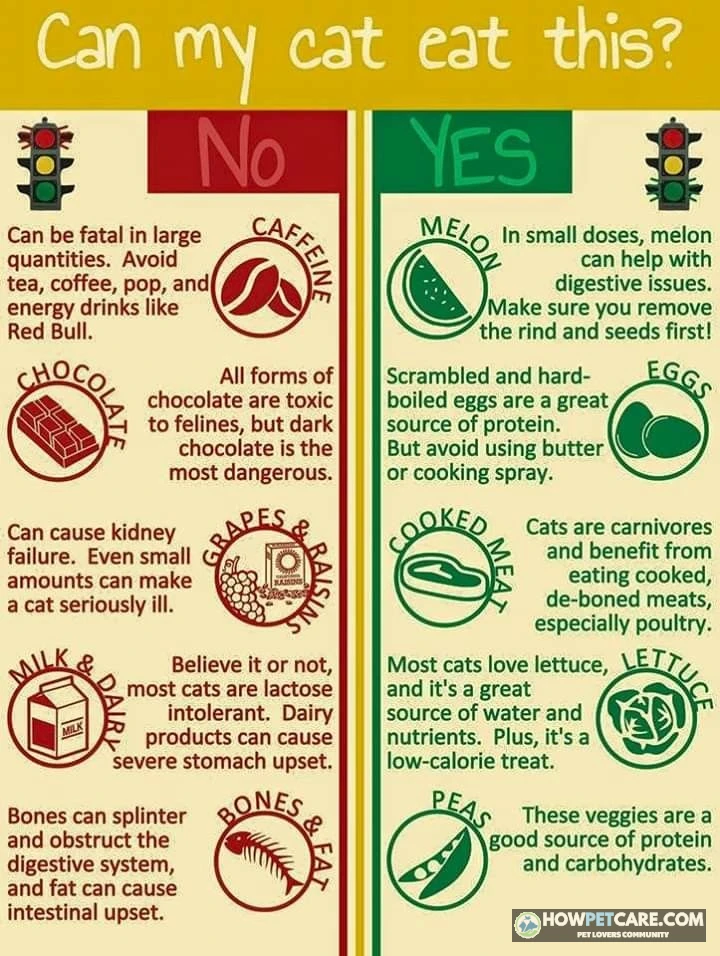
Cats can eat small amounts of plain, cooked, unseasoned chicken, turkey, fish, or egg, plus a little plain pumpkin or cooked vegetables. Keep all human food under 10% of daily calories. Never feed onion, garlic, chocolate, grapes, raisins, alcohol, or xylitol—all are toxic to cats.
Plain, cooked, unseasoned chicken, turkey, fish, and egg are among the safer human foods for cats in small portions. A little plain pumpkin or a few cat-safe vegetable or fruit pieces may also be acceptable. Keep onion, garlic, chocolate, grapes, raisins, alcohol, and products sweetened with xylitol away from cats. Human food should be a treat or topper, never a replacement for complete cat food. Treats should account for no more than about 10% of daily calories.
In the chart, “safe” means safe only in the listed plain form and portion. “Caution” means there are limits or special risks. “Toxic” means don’t feed it; call a veterinarian or poison-control service if your cat eats it. Portion examples are conservative estimates for a healthy 10-pound adult cat, not veterinary prescriptions.
Safe, Caution, or Toxic: Look Up Your Cat’s Human Food Here
Safe: plain proteins and a few extras
| Food | Status | Max portion for a typical 10 lb cat | How often | Prep rule | Notes |
|---|---|---|---|---|---|
| Cooked chicken or turkey | Safe | About 1 tablespoon shredded (10–15 g) | Daily only within the treat budget | Cook plain; remove skin and bones | No seasoning, gravy, onion, or garlic |
| Plain canned pumpkin | Safe | About 1 teaspoon | A few times weekly | Use 100% pumpkin, not pie filling | Optional; not a required part of a cat’s diet |
| Cooked carrots, green beans, or peas | Safe | A few small pieces, up to about 1 tablespoon | Occasionally | Cook soft, cut small, and serve plain | Low nutritional value for cats |
| Cooked egg | Caution | About 1/4 egg | A few times weekly | Cook fully; no butter, oil, or seasoning | Raw egg carries foodborne-illness risk |
| Cooked salmon or other fish | Caution | About 1 teaspoon flaked | 1–2 times weekly | Cook plain; remove every bone | Frequent fish can unbalance the diet; fat and mercury are concerns |
| Canned tuna in water | Caution | About 1 teaspoon | Occasionally | Drain; choose no-salt-added tuna | Not a complete diet; frequent feeding is not recommended |
| Blueberries, melon, or banana | Caution | 1–2 tiny pieces | Rarely | Wash; remove seeds, rind, and peel as appropriate | Sugary and nutritionally unnecessary |
| Cooked white rice or plain oatmeal | Caution | About 1 teaspoon | Rarely | Cook fully with water; no additions | Filler, not a needed nutrient source |
| Hard cheese | Caution | Pea-sized cube | Rarely | Plain, with no rind or seasoning | Lactose, fat, and sodium may cause problems |
| Peanut butter | Caution | Pea-sized smear | Rarely | Check the full label for xylitol | Calorie-dense; avoid if ingredients are uncertain |
| Deli meat, ham, or bacon | Caution | A kibble-sized piece at most | Rarely to never | Avoid; if offered, it must be plain and unseasoned | Salt, fat, preservatives, and seasoning are concerns |
| Onion, garlic, chives, leeks, or shallots | Toxic | None | Never | No safe cooked, powdered, or raw form | Allium compounds can damage red blood cells |
| Chocolate or caffeine | Toxic | None | Never | No safe form | Dark and baking chocolate are especially concentrated |
| Grapes or raisins | Toxic | None | Never | No safe amount established for cats | Treat any ingestion as a reason to call |
| Xylitol, including sugar-free products | Toxic concern | None | Never | Check gum, sweets, baked goods, and spreads | Cat-specific data is limited; call after any ingestion |
| Alcohol or raw yeast dough | Toxic | None | Never | Keep away from the cat | Dough can expand and ferment, producing alcohol |
| Macadamia nuts, salty snacks, or heavily fatty foods | Avoid | None | Never as a treat | Do not offer | Salt and fat can pose significant risks |
| Wild mushrooms | Toxic risk | None | Never | Do not offer any wild mushroom | Identification is unreliable; call if eaten |
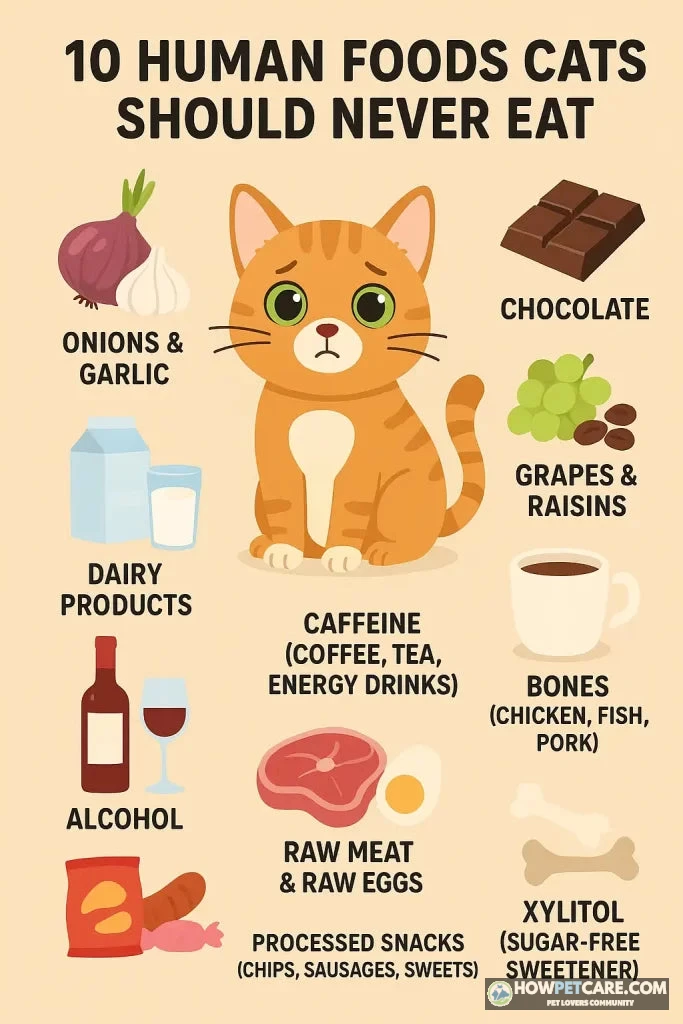
This chart is general guidance for healthy adult cats. Kittens, seniors, and cats with health conditions may need stricter limits. Cook meats and eggs thoroughly; raw meat, fish, and eggs can carry Salmonella, E. coli, and Listeria.
Caution: foods that depend on form, amount, or your cat’s health
“Caution” doesn’t mean a food makes a good treat. Its form, quantity, and your cat’s health can all affect the risk. Keep servings within the overall calorie allowance, and skip anything salty, fatty, seasoned, or made with unknown ingredients.
Toxic: foods to keep out of reach
Don’t add onion or garlic powder, broth, sauces, or seasoning blends to your cat’s food. Cooked and powdered allium ingredients still count. If your cat eats a toxic or uncertain food, contact a veterinarian instead of waiting for symptoms.
Why Cats Need Cat Food First: Obligate Carnivore Nutrition and the 10% Treat Rule
What obligate carnivore means for what goes in the bowl
Cats are obligate carnivores. Their nutritional needs depend on nutrients found in animal tissue, including taurine and certain vitamins and fatty acids. Taurine deficiency can harm the heart and eyes. Complete cat food is formulated to provide a balanced diet; a collection of human foods isn’t.
Choose cat food labeled complete and balanced for the appropriate life stage. AAFCO establishes nutrient profiles and feeding-trial standards used in the United States. Human food belongs as an add-on, not a substitute. Replacing cat food with meat, vegetables, or leftovers can leave a cat short of taurine and other nutrients or create mineral imbalances.
Portion sizes by cat weight (calorie budget and what it looks like on a spoon)
Keep all treats and human-food extras together to no more than about 10% of daily calories. To work out the limit, multiply the daily calorie target by 0.10. Your veterinarian can set the right target; needs vary with body condition, activity, age, and whether the cat is neutered.
| Cat weight | Approx. daily calories | 10% treat allowance | Example: cooked chicken | Example: cooked egg | Notes |
|---|---|---|---|---|---|
| 8 lb (3.6 kg) | About 180–200 kcal | About 18–20 kcal | About 1 tablespoon shredded | About 1/4 egg | These are estimates for a typical indoor adult |
| 10 lb (4.5 kg) | About 200–250 kcal | About 20–25 kcal | About 1 heaping tablespoon | About 1/3 egg | Use the cat’s actual calorie target, not weight alone |
| 12 lb (5.4 kg) | About 240–280 kcal | About 24–28 kcal | About 1.5 tablespoons | About 1/3 egg | A cat who is overweight may need fewer calories |
For example, a 10-pound cat with a daily target of 220 calories has an extras budget of about 22 calories. That could be roughly a tablespoon of cooked chicken or about a third of a cooked egg—not both, along with tuna and other treats. A teaspoon of cooked chicken contains only a few calories; a large cooked egg has roughly 70–80 calories. Food values and serving conversions are estimates, so check the package or ask your veterinarian if precision matters.
A small cat’s treat allowance can disappear quickly. A few bites from several people add up, so count commercial treats, table scraps, toppers, and food used to give medication in the same daily budget.
 You might be wonderingCan cats eat blueberriesCan Cats Eat Blueberries? Yes: Portions by Weight & Vet SignsRead the answer
What Human Food Can Cats Eat Every Day vs. Only as an Occasional Treat
Nothing in this guide should take the place of complete cat food. Feeding human food instead of a balanced diet can cause nutrient deficiencies and mineral imbalance. “Every day” means a small topper may fit some healthy cats’ plans; it doesn’t mean human food can make a complete daily meal.
Near-daily toppers (in topper-sized amounts)
Plain, lean, cooked chicken or turkey is the most practical near-daily option, as long as the portion fits the calorie budget and the cat’s regular food remains the foundation of its diet. Offer a small shredded spoonful, not a person-sized serving. Set it aside before adding salt, oil, sauces, onion, garlic, or seasoning.
Weekly or occasional treats
A small portion of cooked egg can be offered a few times a week. Keep cooked salmon and other fish to one or two small servings weekly; offer tuna less often. Too much fish can unbalance the diet, and frequent tuna raises concerns about mercury and sodium. A teaspoon of plain pumpkin or a few cooked vegetable pieces can be an occasional extra. Pumpkin isn’t a treatment for ongoing digestive symptoms.
Rare, small-taste-only foods
Fruit, cooked white rice, oatmeal, cheese, and peanut butter offer cats little nutritional benefit. They can add sugar, starch, lactose, salt, fat, or unwanted ingredients. If you offer a taste, stick to the chart’s small limit and don’t make it routine. Skip deli meats, bacon, and seasoned leftovers.
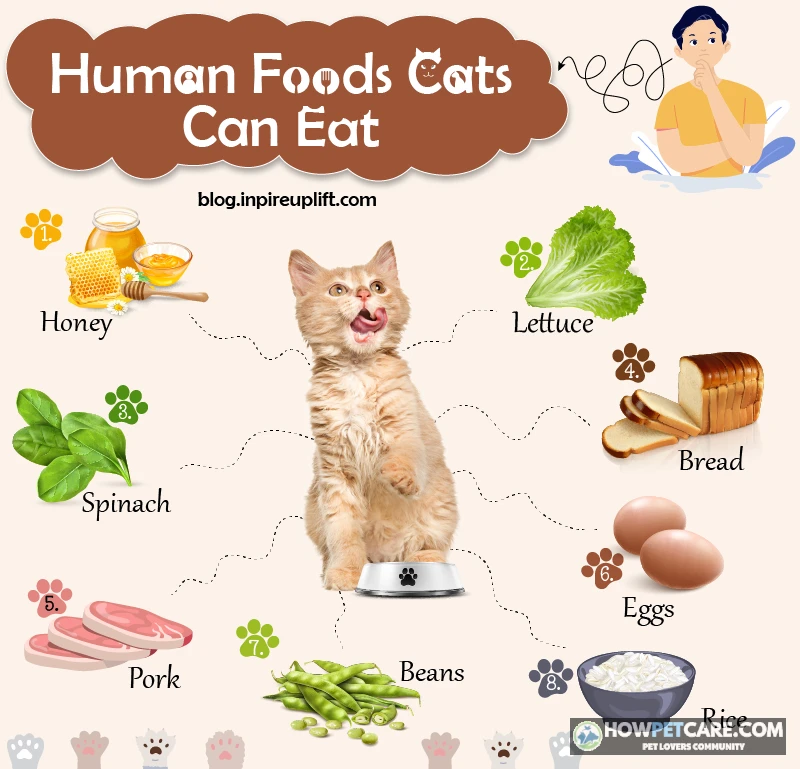
If you run out of cat food, plain cooked chicken or turkey can serve as a short-term stopgap while you get more, provided your cat doesn’t have a condition that requires a special diet. It isn’t nutritionally complete, so don’t use it as a continuing replacement. Call your veterinarian if your cat refuses food or has a medical diet. Offering toppers in the bowl rather than from the table also makes portions easier to track and can help curb habitual begging.
How to Prepare Human Food for a Cat: Cooked, Plain, Boneless, Seedless
A five-step prep routine
- Choose an ingredient from the safe or caution rows, and check for medical or medication restrictions.
- Cook it plainly by boiling, baking, steaming, or poaching. Don’t add oil, butter, salt, sauces, onion, garlic, or seasoning blends.
- Remove skin, bones, seeds, pits, and rinds. Cut the food into small pieces.
- Let it cool to room temperature, then offer a measured amount in your cat’s bowl.
- Refrigerate leftovers promptly and use them within 2–3 days as a cautious household window. Discard food left out or showing signs of spoilage.
Rules for bones, raw meat, dough and leftovers
Don’t feed cooked bones. They can splinter and injure the mouth or digestive tract. Raw-bone feeding is debated and carries choking and bacterial risks, so it isn’t recommended here. Raw meat, fish, and eggs—including raw chicken—can expose cats and people in the household to pathogens; cook them thoroughly.
Raw yeast dough is hazardous because it can expand in the stomach and ferment into alcohol. Plain baked bread isn’t useful cat food, though a tiny crumb is generally a low-value rather than nutritious treat. Baked bread and raw dough are not interchangeable.
The easiest way to share dinner safely is to set aside a plain portion before cooking or seasoning the family meal. Even “just a little” meat may contain onion or garlic powder, salty broth, fatty drippings, or sauce. For fruit, remove pits and seeds. Apple seeds and the pits of some stone fruits contain compounds that can release cyanide when chewed.
Toxic Foods for Cats: Why They Are Dangerous and What Symptoms to Watch For
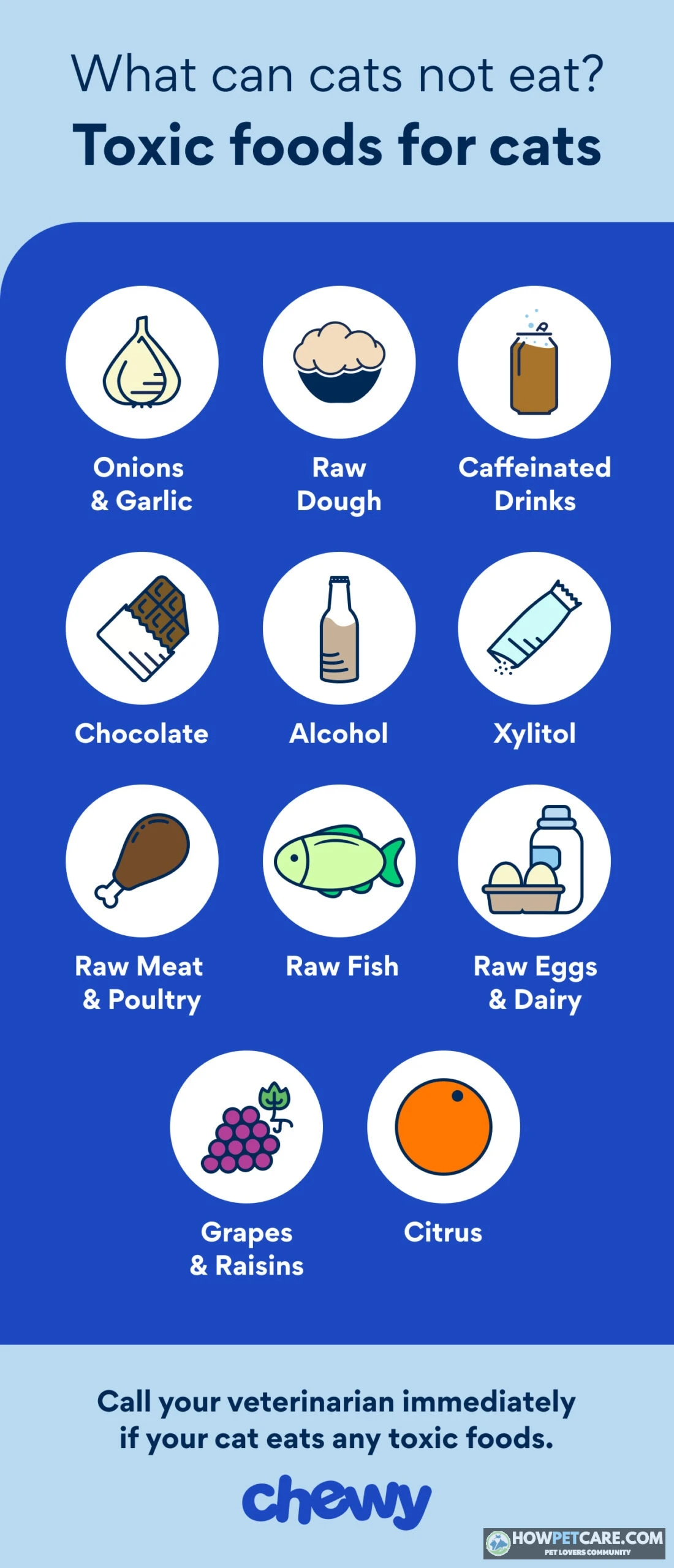
There’s no reliable, universal chart of dangerous doses for cats. Risk depends on the food’s concentration, the amount eaten, and the cat’s size and health. Don’t guess at a threshold to decide whether to call. For high-risk foods, contact a professional promptly, even if the amount seems small.
| Food | Why it is harmful | Approximate risk or threshold | Symptoms to watch for | When signs may appear | Action |
|---|---|---|---|---|---|
| Onion, garlic, chives, leeks, shallots | Allium compounds can damage red blood cells and cause anemia | No safe serving; powders and cooked forms count | Vomiting, weakness, reduced appetite, pale gums, rapid breathing | Digestive signs may come first; anemia signs can be delayed | Call a veterinarian or poison service promptly |
| Chocolate | Theobromine and caffeine affect the heart and nervous system | Dark and baking chocolate are more concentrated; no home-safe threshold | Vomiting, restlessness, fast heartbeat, tremors, seizures | Often within hours, but timing varies | Call promptly; identify the chocolate type and amount |
| Grapes or raisins | A safe dose is not established for cats; kidney injury is a concern | Treat any ingestion as unsafe | Vomiting, lethargy, reduced appetite, changes in urination | Timing and sensitivity are uncertain | Call promptly; do not wait for signs |
| Xylitol products | Cat-specific toxicity evidence is limited; products may contain other hazards | Treat any ingestion as a call-now event | Vomiting, weakness, wobbliness, tremors, seizures | Timing is uncertain in cats | Call with the product label and amount |
| Alcohol or raw yeast dough | Alcohol intoxication; dough can expand and ferment | Very small amounts can matter in a small animal | Vomiting, wobbliness, unusual sleepiness, low body temperature, collapse | Can develop quickly | Call or go to an emergency clinic |
| Caffeine | Stimulant effects on the heart and nervous system | Keep all sources away; risk depends on dose and product | Restlessness, rapid heartbeat, tremors, seizures | Often within hours | Call promptly |
| Wild mushrooms | Some varieties contain potent toxins and are hard to identify | Any wild mushroom ingestion is concerning | Vomiting, diarrhea, weakness, wobbliness, organ-related signs | Varies by species | Save a sample or photo and call immediately |
Garlic is more potent than onion by weight, but that’s no reason to estimate a “safe” amount. Cats are small, concentrated products can be easy to underestimate, and poisoning signs may take time to appear. The amount eaten, packaging, and time of exposure can help a professional assess the risk, but they don’t replace a call.
Your Cat Ate Something Toxic: What to Do in the First 15–30 Minutes
Triage steps in order
If your cat eats chocolate, onion, garlic, grapes, raisins, xylitol, alcohol, raw dough, or an unknown wild mushroom, call for professional guidance now. No symptoms doesn’t mean the cat is safe.
-
Remove the food
Move the cat away and prevent further eating. Keep the wrapper, package, ingredient list, or a photo of the food.
-
Estimate the exposure
Note what was eaten, the approximate amount, and when. A rough estimate is useful; weigh the cat only if you can do so quickly.
-
Call a professional
Contact your veterinarian or nearest emergency clinic. You can also call ASPCA Animal Poison Control Center at 888-426-4435 or Pet Poison Helpline at 855-764-7661. Confirm current numbers on their official sites; consultation fees may apply.
-
Do not induce vomiting
Do not use home remedies or induce vomiting unless a veterinary professional specifically instructs you.
-
Share the key details
Tell them the product, ingredients, estimated amount, time, cat’s weight and age, health conditions, medications, and any symptoms.
There’s no dependable amount threshold to use at home for onion, garlic, grapes, raisins, xylitol, or alcohol. A cat’s size, product concentration, and uncertainty about the dose all make a prompt call the safest response. Don’t wait for symptoms; some effects are delayed.
Signs that mean go to the emergency clinic now
Go immediately if your cat has seizures, tremors, collapse, difficulty breathing, repeated vomiting, pale or yellow gums, severe weakness, or a painful, bloated belly. If the cat seems stable but may have eaten a dangerous food, call the veterinarian or poison service while you prepare to follow their instructions. Secure trash, countertops, baking ingredients, and holiday foods to prevent another exposure.
Cheese, Avocado, Mushrooms, Deli Meat, Tuna and Peanut Butter: Verdicts on Disputed Foods
Sources can seem to disagree because “safe” may mean anything from non-poisonous to suitable as a regular treat. Focus on what the food can do, the portion involved, and whether it offers enough benefit to justify the risk.
| Food | Why sources conflict | Practical verdict | Safest default |
|---|---|---|---|
| Cheese and dairy | Cats may like milk, but many adult cats digest lactose poorly; cheese is also fatty and salty | Caution: at most a pea-sized hard-cheese piece rarely | Skip milk; avoid dairy if it causes gas, vomiting, or loose stool |
| Avocado | Dog-focused warnings are sometimes applied to cats; the flesh differs from the pit, skin, and leaves | Avoid as a routine food; the pit is a choking and obstruction hazard, and the flesh is fatty | Keep the whole avocado away; call if the pit or a substantial amount is eaten |
| Mushrooms | Plain grocery mushrooms differ from toxic wild varieties, which are difficult to identify | Skip mushrooms; never offer wild ones | Call promptly after any wild mushroom ingestion |
| Deli meat, ham, bacon | They are meat, but are often salty, fatty, cured, or seasoned | Avoid; a rare kibble-sized taste of plain meat is the upper limit | Choose fresh, plain cooked chicken or turkey instead |
| Canned tuna | A small taste differs from frequent tuna feeding or a tuna-only diet | Caution: about 1 teaspoon occasionally, water-packed and no added salt | Do not make tuna a staple; it is not complete cat food |
| Peanut butter | Some products are merely fatty; others may contain xylitol or other unsuitable ingredients | Caution: at most a pea-sized smear, only after checking the label | Skip it if ingredients are unclear or the label changes |
Most adult cats are lactose intolerant to some degree, so milk can cause digestive upset. Some cats may tolerate a small bite of hard cheese, but it’s not a good routine treat. When feeding canned tuna, the main practical concerns are frequent exposure, sodium, and nutritional imbalance—not that every tiny taste is automatically poisonous. Peanut butter isn’t a meaningful protein treat for a cat; check the ingredient label each time because formulations can change.
When reliable sources differ, take the more cautious option. These foods add little that a complete cat diet doesn’t already provide.
Human Food for Kittens, Senior Cats and Cats With Health Conditions
A food that suits a healthy adult may not be right for a growing kitten or a cat on a medical feeding plan. Use this filter before sharing food, and ask your cat’s veterinarian if the diagnosis or diet isn’t clear.
| Cat or condition | Safer approach | Limit or avoid | Why it matters |
|---|---|---|---|
| Kitten | Keep kitten-formulated complete food as the diet; if approved, offer a tiny amount of plain cooked chicken or egg | Avoid replacing meals or introducing several foods at once | Growth raises nutrient and calorie needs |
| Senior cat | Ask about soft, moist options if appetite or chewing changes | Do not treat weight loss or appetite change with table food alone | Dental problems and illness may affect eating |
| Kidney disease | Follow the veterinarian’s renal-diet and treat plan | Avoid unapproved high-phosphorus, high-protein, or salty foods | Nutrient limits depend on the individual cat and disease stage |
| Diabetes | Coordinate treats with the feeding and insulin plan; plain meat or egg may be a suitable option if approved | Avoid sugary or starchy foods and unmeasured snacks | Treat calories and meal timing can affect management |
| Obesity | Use very small lean pieces only if they fit the weight plan | Avoid skin, fatty meat, cheese, butter, and fried foods | Extra calories can undermine weight loss |
| Urinary crystals or urinary disease | Ask the veterinarian which treats fit the prescribed food; support the hydration plan | Avoid salty foods and unapproved diet changes | The right food depends on the type of urinary problem |
| Pancreatitis risk or sensitive stomach | Introduce only a tiny amount of lean, plain food if the vet agrees | Avoid high-fat foods and abrupt changes | Fat and sudden diet changes can worsen digestive problems |
| Suspected food allergy | Keep a diet and symptom record and follow a vet-directed elimination plan | Do not add several new proteins or treats | Extra foods can make it harder to identify a trigger |
Kittens need a complete diet formulated for growth. Keep treats small so they don’t crowd out meals. For a senior cat, new food refusal, dental trouble, or weight loss calls for veterinary attention—not a string of tempting human-food additions.
Kidney disease, diabetes, and urinary issues need individual guidance. Protein, phosphorus, sodium, carbohydrate, hydration, and medication timing may all matter. Don’t assume plain meat is appropriate for a cat on a therapeutic diet. If your cat has diabetes, coordinate any treat with the veterinarian’s feeding and insulin instructions.
Food allergy and food intolerance aren’t the same. Allergies often involve itching, skin or ear problems, and sometimes digestive signs; intolerance more often causes digestive upset. The signs can overlap and don’t confirm a diagnosis. Introduce one new food at a time. Contact your vet about persistent vomiting, diarrhea lasting more than a day or two, itching, or weight loss. A veterinarian may recommend a controlled diet trial.
If your cat is underweight, don’t try to fix it with cheese, fatty meat, or extra table food. Weight loss can have an underlying cause, and unbalanced additions may worsen nutrition. Ask the vet to investigate and recommend a calorie-dense, balanced plan. For medication, ask whether the pill can be hidden in a particular food. Some medications have food restrictions, and a large treat can push the cat over its calorie budget.
Your Quick Checklist Before Giving Your Cat Any Human Food
Ask yourself these questions before offering a bite:
- Is the food on the toxic list, or does it contain onion, garlic, chocolate, grapes, raisins, alcohol, or xylitol?
- Is it plain and properly cooked, with bones, seeds, pits, skin, and rind removed where needed?
- Does my cat’s age, diagnosis, prescribed diet, or medication change the answer?
- Does this serving fit within today’s total treat budget, including other treats?
- Am I introducing only one new food so I can notice a reaction?
Start with a tiny taste and watch for changes in appetite, stool, vomiting, or itching over the next day. Even if your cat tolerates it, the food still isn’t nutritionally complete or suitable for unlimited feeding. Tell everyone in the household what’s off-limits, measure treats in advance, and store toxic foods securely.
Keep your veterinarian, emergency clinic, ASPCA Animal Poison Control Center, and Pet Poison Helpline contact details available. If your cat eats a potentially toxic food, call promptly and do not induce vomiting unless a professional instructs you.
This guide offers general information, not a diagnosis or poisoning treatment plan. Your veterinarian can set food limits for a cat with a health condition, a special diet, or a change in weight or appetite.
 You might be wonderingCat food for older catsCat Food for Older Cats: Best Picks Ranked by Cost & Nutrition (2026)Read the answer
FAQ
Can cats drink milk?
Most adult cats do not digest lactose well, so milk can cause gas, loose stool or diarrhea. Fresh water is the better choice, and a lactose-free cat milk is the usual alternative if you want a treat.
Can cats eat bread, rice or pasta?
Small amounts of plain cooked rice or baked bread are not toxic, but they add calories without the nutrients cats need. Never give raw dough, because it can expand and ferment in the stomach.
Do cats need vegetables?
No. Cats are obligate carnivores and get what they need from a complete cat food. Small bits of cooked pumpkin or other plain, cat-safe vegetables are optional extras, not requirements.
Can cats eat fruit like banana or watermelon?
A few small pieces of banana or seedless watermelon are generally not toxic, but fruit is sugary and gives a cat little benefit. Keep it to an occasional taste, and never give grapes or raisins.
Is it okay to give my cat a bite of my dinner?
Only if the bite is plain, unseasoned, cooked meat or egg and it fits in the cat’s daily treat budget. Skip anything with onion, garlic, salt, sauce or fat, and set aside the cat’s portion before you season the meal.