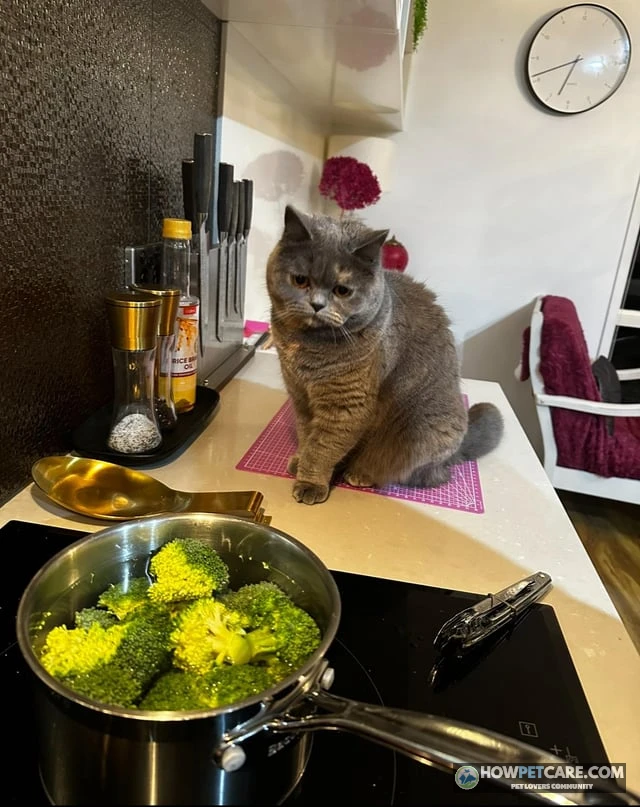

Yes—healthy adult cats can eat plain broccoli in tiny amounts. Serve it washed, cooked until tender, cooled, and chopped pea-sized: about 5 g under 4 kg, 10 g at 4–6 kg, 15 g over 6 kg, no more than once or twice weekly. Avoid onion, garlic, sauces, and seasoned dishes.
Yes. Cats can eat plain broccoli within the conservative portions below. It is generally non-toxic, but it is neither necessary nor especially useful for an obligate carnivore. If your cat ate plain broccoli within those portions, you can usually monitor at home. The main concerns are digestive upset and choking on firm pieces. A dish containing onion or garlic is different: both are toxic to cats, so contact a veterinarian or animal poison service promptly.
Can cats eat broccoli? The quick safety verdict
Plain broccoli is generally safe as a treat for a healthy adult cat within the portion and frequency guidance below. That doesn’t mean every broccoli dish is safe, or that broccoli should replace a complete cat food. Cats are obligate carnivores and need nutrition primarily from animal sources, including essential taurine. The ASPCA does not list broccoli as a toxic plant for cats, but ingredients added during cooking can make a dish hazardous.
Raw versus cooked: both can be safe, but preparation changes the risk
Raw broccoli isn’t inherently poisonous. Sources disagree about whether it must be cooked; that reflects a difference in preparation advice, not proof that raw broccoli is toxic. Firm raw pieces are harder to chew and digest, and large chunks can be a choking risk. Washing removes surface dirt, but cooking is the more cautious choice if you’re concerned about residue or your cat gulps food.
Steam or boil broccoli until tender, let it cool, and chop it finely. Serve it plain, without salt, oil, butter, sauce, or seasoning. Cooked broccoli is easier to chew, but well-washed raw broccoli cut into tiny pieces isn’t automatically unsafe for a healthy cat.

How much broccoli can a cat eat, and how often?
There is no established veterinary dose of broccoli by body weight. The amounts below are conservative treat ceilings for plain, tender, finely chopped broccoli, not a validated medical limit. Start with half the suggested amount, or less, and stop if your cat develops digestive symptoms. These portions are intended for healthy adult cats; kittens and cats with medical conditions need a stricter approach.
Portion examples by body weight
| Cat weight | Suggested maximum per serving | Approximate prepared pieces | Weekly frequency ceiling | Notes |
|---|---|---|---|---|
| Under 4 kg (under 9 lb) | About 5 g | 1–2 pea-sized floret pieces; about 1 tsp chopped | 1 serving | Roughly 2 calories; not a default treat for kittens. |
| 4–6 kg (9–13 lb) | About 10 g | 2–3 pea-sized pieces; about 2 tsp chopped | 1–2 servings | Roughly 3–4 calories. A 4.5 kg cat eating about 220 calories daily has a total treat budget of about 22 calories. |
| Over 6 kg (over 13 lb) | About 15 g | 3–4 pea-sized pieces; about 1 tbsp chopped | 1–2 servings | Don’t increase the serving just because the cat weighs more; keep every piece tiny. |
Broccoli has about 34 calories per 100 g, so calories usually aren’t the main constraint at these portions. A cat’s tolerance for the fiber and texture matters more. The 10% treat-calorie rule applies to all treats combined, not broccoli alone. These weight bands and weekly limits are cautious practical guidance, not limits established by clinical trials. There is no evidence-based weekly frequency ceiling; offering broccoli no more than once or twice a week keeps it from becoming a routine and leaves room for a complete diet.
One medium floret can weigh roughly 10–15 g, so for many cats, one chopped floret is already the entire serving. Measure the edible pieces rather than offering a whole floret. If your cat develops loose stool, vomiting, gas, or appetite changes, stop serving broccoli.

Why frequency and total treat calories matter
Broccoli shouldn’t become a daily routine. Even low-calorie treats can displace balanced food, and too much broccoli can cause vomiting, diarrhea, gas, or dehydration. Keep the total from all treats below 10% of daily calories; the rest should come from complete cat food.
Raw, cooked, frozen, and different broccoli parts
Wash fresh broccoli before serving it. For a first taste, cook it until tender without additives, cool it completely, then mince a portion within the limit for your cat’s weight. Don’t force it into food if your cat refuses it. Interest in broccoli is curiosity, not evidence of a nutritional need—habitual nibblers may do better with a pot of cat grass.
How to prepare a first taste
- Check that the broccoli is plain and hasn’t touched onion, garlic, sauces, or seasoning.
- Wash it, steam or boil it until tender, then let it cool fully.
- Chop it into pieces no larger than a pea and measure the portion for your cat’s weight.
- Offer a few pieces, not the whole serving at once, and watch for digestive upset.
Stems, leaves, sprouts, and frozen broccoli
| Food or form | Generally safe? | Preparation or key risk | Serving guidance |
|---|---|---|---|
| Raw florets | Generally, with caution | Firm pieces can be hard to chew and digest; large pieces can cause choking. | Wash and mince; cook if your cat gulps food. |
| Plain cooked florets | Yes | Tender and easier to chew; avoid all seasonings and fats. | Cool and dice finely. |
| Stems and stalks | Caution | Edible, but tough and fibrous. | Peel, cook until very soft, and mince; skipping them is simplest. |
| Leaves | Caution | Not known to be toxic, but they can be stringy and cat-specific evidence is limited. | If offered, use only a portion within the weight-based limit, cooked and finely shredded. |
| Sprouts or microgreens | Best skipped | Safety information for cats is limited; raw sprouts can carry bacterial contamination. | Don’t use as a routine cat treat. |
| Frozen broccoli | Yes, if plain and prepared | Frozen-hard pieces can pose choking or tooth-injury risks; check for sauce or butter. | Thaw fully, cook until tender, and chop. |
| Broccoli in mixed dishes | Usually no | Onion, garlic, dairy, salt, fat, and sauces can make the dish unsafe or upsetting. | Don’t share; check ingredients if your cat already ate some. |

Broccoli with cheese, rice, cauliflower, or seasonings
Broccoli-cheddar soup and broccoli with cheese are poor choices for cats. Dairy, fat, and salt may upset the stomach, and soups or prepared dishes may also contain onion or garlic. Rice fills no nutritional need for a cat and doesn’t make a seasoned dish safer. Plain cauliflower is generally non-toxic as a taste, but combining vegetables is no reason to increase the portion.
The garlic and onion exposure action plan
Onion and garlic are toxic to cats in fresh, cooked, powdered, dehydrated, or concentrated forms. Don’t wait for symptoms after a credible exposure. If your cat ate broccoli prepared with either ingredient, or you can’t rule them out, call your veterinarian or an animal poison service now. Don’t induce vomiting at home.
Have your cat’s weight, the ingredient list, the estimated amount eaten, and the time of exposure ready. Restaurant food, soup, broth, stock, and seasoning blends can hide alliums. If the ingredient list is unavailable, explain that uncertainty when you call and follow the professional’s instructions.
If you’ve confirmed there was no onion or garlic and your cat ate rich or seasoned food, remove the leftovers, provide fresh water, and monitor closely. Contact a vet if symptoms develop or worsen. Plain broccoli is usually less concerning; use the symptom guidance below.

What broccoli offers cats—and what it does not
Broccoli contains soluble fiber, vitamin C, vitamin K, folate, and antioxidants. Its soluble fiber may affect digestion, but a treat portion isn’t a treatment for constipation, hairballs, or another health problem. Cats don’t need broccoli to obtain essential nutrients, and a treat portion can’t replace a complete cat food. Broccoli is non-toxic, not a feline superfood.
Broccoli versus other cat-safe and toxic vegetables
| Vegetable | Safety for cats | Practical note |
|---|---|---|
| Broccoli | Generally safe, plain and within the portion guidance above | Cooked, tender, finely chopped pieces are easiest to manage. |
| Green beans | Generally safe, plain | A mild alternative; avoid salted or sauced versions. |
| Plain pumpkin | Generally safe | Use plain pumpkin, not pie filling with added sugar or spices. |
| Peas | Generally safe | Offer plain and thawed; they aren’t a dietary requirement. |
| Carrots | Generally safe when cooked | Raw chunks can be hard to chew; cook and cut into small pieces. |
| Onion, garlic, chives, leeks | Toxic | Any credible exposure warrants a prompt call to a veterinarian or poison service. |
| Grapes and raisins | Unsafe; contact a vet if eaten | These aren’t vegetables, but may be mistaken for safe snack foods. |
None of these vegetables is required in a cat’s diet. Choose only plain, appropriately prepared foods, and keep treats within the overall calorie limit.
Symptoms after broccoli: monitor, call a vet, or seek urgent care
After your cat eats plain broccoli, watch for vomiting, diarrhea, gas, abdominal discomfort, reduced appetite, or unusual lethargy. Too much can cause digestive upset and dehydration. Stop offering broccoli if symptoms begin. You can monitor a single mild episode in an otherwise normal cat, but contact a vet if it persists, recurs, or worsens.
Repeated vomiting, inability to keep water down, marked lethargy, a painful or swollen abdomen, choking, difficulty breathing, collapse, or straining without passing stool or urine needs prompt veterinary attention. Don’t assume straining is caused by broccoli: inability to urinate is an emergency.
First steps after a seasoned broccoli dish
Check the ingredient list to determine whether the concern is possible poisoning or digestive upset. If onion or garlic is present, including powder or ingredients in broth, call a veterinarian or animal poison service promptly, even if your cat seems normal. Allium-related illness can be delayed. Don’t wait for weakness, pale gums, or rapid breathing, and don’t try home-induced vomiting.
If the dish is confirmed free of onion and garlic and there are no red-flag symptoms, remove the food, provide fresh water, and monitor for vomiting, diarrhea, gas, or reduced appetite over the next 24–48 hours. Call a vet if signs recur, persist, or worsen. Have the food details and the amount and time eaten ready.
| Situation or symptom | What to do | Urgency |
|---|---|---|
| Plain broccoli within the portion guidance above; cat acts normally | Remove leftovers and monitor. | Home monitoring is usually reasonable. |
| Onion or garlic present, or ingredients are uncertain | Call a veterinarian or animal poison service; share the recipe, amount, time, and cat’s weight. | Prompt call; don’t wait for symptoms. |
| One mild episode of vomiting or loose stool | Stop treats and monitor; contact your vet if it persists or recurs. | Call if ongoing or worsening. |
| Repeated vomiting, inability to keep water down, painful or swollen belly, marked lethargy | Contact a veterinarian promptly. | Same-day urgent assessment. |
| Choking, trouble breathing, collapse, or inability to urinate | Seek emergency veterinary care. | Emergency. |

Kittens and cats with chronic conditions need a stricter rule
The adult portion table isn’t a recommendation for every cat. Broccoli is nonessential, so if a cat has a condition or a prescribed diet, skipping it is the simplest way to avoid disrupting the feeding plan.
When a plain taste is not a good idea
| Cat | Guidance | Why the rule changes |
|---|---|---|
| Kitten | Skip by default; ask the veterinarian before introducing nonessential treats. | Low calorie needs and sensitive digestion make complete kitten food the priority. |
| Chronic kidney disease (CKD) | Check with the treating veterinarian before offering extras. | A renal diet may be carefully balanced; unplanned foods can interfere with the plan. |
| Diabetes | Ask the veterinarian first; avoid unpredictable treats. | Food timing and carbohydrate intake may be part of glucose management. |
| Urinary disease or stone history | Follow the prescribed diet and ask the treating veterinarian. | Don’t assume broccoli’s vitamin C causes bladder stones; risk depends on the cat and overall diet. |
| Gastrointestinal disease or food sensitivity | Avoid introducing it without veterinary guidance. | A new food or fiber may aggravate symptoms in some cats. |
| Overweight or on a weight plan | Count every treat; ask about suitable alternatives. | Low calorie doesn’t mean unlimited, and treats still contribute to the daily total. |
Broccoli contains vitamin C, but that alone doesn’t establish that ordinary portions cause bladder stones in cats. The evidence provided doesn’t support treating that risk as universal. For cats with urinary disease, the treating veterinarian’s diet plan takes priority. Likewise, don’t use broccoli to manage diabetes, kidney disease, or gastrointestinal symptoms.
A simple broccoli decision checklist for cat owners
Before offering broccoli, confirm it’s plain and wash it. Cook it until tender if you prefer the lower-texture-risk option, then cool it and cut it into pea-sized pieces. Use the conservative portion for your cat’s weight, start with less, and offer it no more than once or twice a week. Keep all treats combined under 10% of daily calories.
Skip broccoli if it contains onion, garlic, rich dairy, or seasoning, or if your cat is on a medical diet or has a history of digestive problems. If your cat already ate some, identify the ingredients first. You can usually monitor a cat that feels well after eating plain broccoli; onion or garlic means a prompt professional call. Seek urgent care for choking, breathing trouble, collapse, inability to urinate, or other severe symptoms.
| Cat Weight Range | Suggested Maximum Portion | Approximate Prepared Pieces | Weekly Frequency Limit | Estimated Calories (Inferred) | Portion Notes |
|---|---|---|---|---|---|
| Under 4 kg (under 9 lb) | About 5 g | 1–2 pea-sized floret pieces; about 1 tsp chopped | 1 serving | Roughly 2 calories | Not a default treat for kittens. |
| 4–6 kg (9–13 lb) | About 10 g | 2–3 pea-sized pieces; about 2 tsp chopped | 1–2 servings | Roughly 3–4 calories | A 4.5 kg cat eating about 220 calories daily has a total treat budget of about 22 calories. |
| Over 6 kg (over 13 lb) | About 15 g | 3–4 pea-sized pieces; about 1 tbsp chopped | 1–2 servings | Roughly 5 calories | Don't increase the serving just because the cat weighs more; keep every piece tiny. |

FAQ
Why does my cat like broccoli?
Cats may be curious about its smell, texture, or the food you are eating. Interest does not mean broccoli meets a nutritional need, so keep any taste plain and within the treat limit.
Is broccoli toxic to cats?
Plain broccoli is generally considered non-toxic to cats, though too much can cause digestive upset. Broccoli prepared with onion or garlic is a different situation and warrants an immediate call to a veterinarian.
Can cats eat broccoli cheddar soup?
It is best not to offer it: soup can contain onion or garlic, and cheese, cream, salt, and fat may upset a cat’s stomach. If your cat already ate some, check the ingredients and contact a veterinarian promptly if onion or garlic is listed.
Can kittens eat broccoli?
A tiny taste of plain broccoli is not usually toxic, but kittens need nutritionally complete kitten food and can be more vulnerable to digestive upset. Ask your veterinarian before adding nonessential treats.