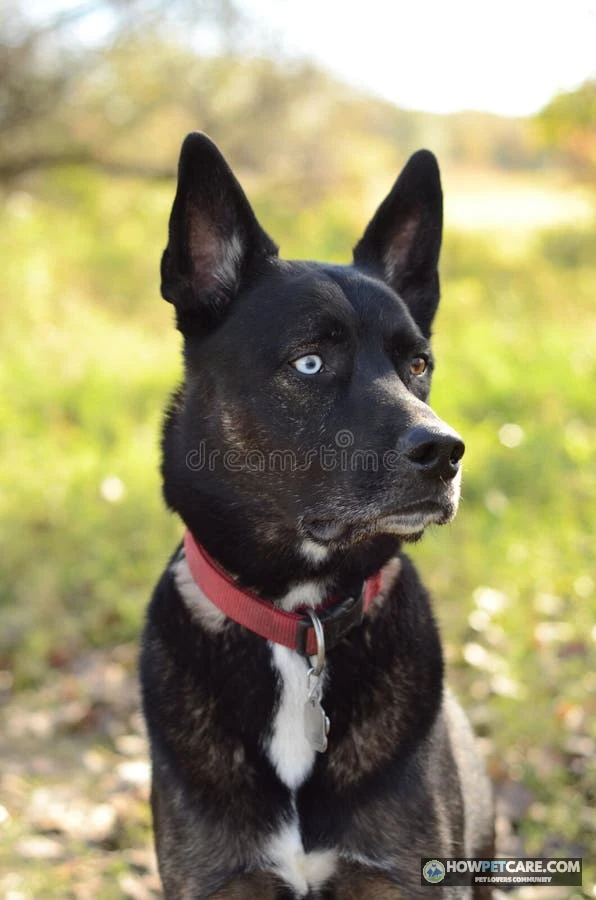

A German Shepherd Husky mix (Gerberian Shepsky) is a high-energy working cross, typically 20–25 inches tall and 45–90 pounds, with a 10–14 year lifespan. It needs 90–120 minutes of daily exercise, secure fencing, heavy-shedding management, and suits experienced, active owners rather than first-time or low-activity households.
A German Shepherd Husky mix—commonly called a Gerberian Shepsky—is a high-energy designer dog breed pairing two of the world’s most capable working breeds: the German Shepherd Dog and the Siberian Husky. While many prospective owners are drawn to their striking, wolf-like appearance and piercing blue eyes, the reality of living with this cross requires an unvarnished operational assessment. This is not an ornamental companion or a casual pet for an inactive household. A Shepsky combines intense physical stamina, strong predatory motor patterns, heavy seasonal shedding, and sharp intelligence that turns destructive when understimulated.
For prospective or novice handlers, deciding to bring home a Husky German Shepherd mix demands an honest look at your daily schedule, living space, and long-term financial commitment. This comprehensive guide delivers the operational routines, caloric feeding formulas, prey drive management protocols, and lifecycle expense ledgers required to responsibly manage this crossbreed.
German Shepherd Husky Mix at a Glance: Size, Traits, and Owner Fit
The German Shepherd cross Husky is recognized by hybrid clubs like the American Canine Hybrid Club (ACHC) and the Dog Registry of America (DRA), but it is not a standardized, registered purebred with predictable generational uniformity. Because the Shepsky dog breed combines two distinct working genealogies—one developed for pastoral herding and protective patrol, the other for relentless arctic endurance and cooperative draft pulling—individual dogs vary markedly in build, coat distribution, and drive levels.
Gerberian Shepsky Full-Grown Size and Weight
Prospective owners wondering how big do German Shepherd Husky mixes get should prepare for a medium-to-large, athletic dog with significant sexual dimorphism. On average, adult Shepskies stand between 20 and 25 inches at the shoulder and weigh between 45 and 90 pounds.
- Males: Typically stand 22 to 25 inches tall and weigh between 60 and 90 pounds, often inheriting the heavier bone density and broader chest of the German Shepherd.
- Females: Typically stand 20 to 23 inches tall and weigh between 45 and 70 pounds, retaining the leaner, lighter frame common to the Siberian Husky.

Because there is no centralized breed standard governing size, genetic variance between parent bloodlines heavily influences the final scale. An individual inheriting substantial working-line German Shepherd genetics may trend toward a muscular 85-pound frame, whereas an individual leaning toward working Siberian Husky lines might top out as an agile, 50-pound runner.
Coat, Eye Color, and Wolf-Like Physical Traits
The physical hallmark of the Gerberian Shepsky is its lupine aesthetic. The head is usually wedge-shaped, framed by erect or occasionally semi-erect triangular ears. The tail is thick and bushy, carried in a low saber curve at rest like a German Shepherd, or arching upward in a sickle curve when alert, reflecting its Husky ancestry.
The coat is invariably a dense, weather-resistant double coat consisting of a harsh, water-repellent outer guard layer and a thick, woolly undercoat. Color patterns vary widely across litters, including classic black and tan saddles, solid sable, silver-grey, pure white, red-and-white, or deep agouti patterns. Eye coloration is one of the breed’s most searched traits; puppies frequently inherit the piercing icy blue of the Siberian Husky, deep brown or amber from the German Shepherd, or complete heterochromia—possessing one blue eye and one brown eye, or bi-colored split irises within the same eye.

Typical Lifespan and Daily Commitment
The typical German Shepherd Husky mix lifespan ranges from 10 to 14 years when supported by proper nutrition, lean body-condition management, and proactive veterinary care. However, sustaining a Shepsky across those 14 years requires a non-negotiable daily commitment.
On a baseline level, a healthy adult Shepsky demands roughly 90 to 120 minutes of daily physical exercise and structured mental enrichment. Their double coat sheds year-round, requiring multiple weekly grooming sessions and daily management during seasonal coat blows. If you work outside the home for 10 hours a day, live in a sound-sensitive apartment, or lack the energy for rigorous outdoor exercise in all weather conditions, this crossbreed will quickly overwhelm your household.
A quick weekday snapshot (the full hour-by-hour puppy-versus-adult schedule appears later in this guide):
| Time | 4-Month-Old Puppy | 2-Year-Old Adult |
|---|---|---|
| Morning | Toilet break, sniffing, and a puzzle-feeder breakfast (10–15 min) | Brisk walk with loose-leash practice (35–45 min) |
| Midday | Crate or pen rest with a food-search game | Scent search, then settled alone time |
| Evening | Calm family interaction and a food puzzle (10–20 min) | Walk or tracking game, then nosework (30–45 min) |
| Overnight | Crate or pen sleep routine | Quiet sleep routine, with small pets secured separately |
A Gerberian Shepsky is an athlete with working breed ancestry. Depriving this cross of physical exertion and cognitive work will lead to chronic behavioral issues, including escape attempts, nuisance howling, door-ditching, and destructive chewing.
F1 vs Multigenerational Shepskies: Why Traits Are Hard to Predict
Prospective owners often assume that purchasing a designer dog breed yields a balanced, 50/50 split of the best traits of both parent breeds. In canine genetics, inheritance does not operate as an even blend. Understanding generational breeding distinctions is critical to setting realistic expectations.
What F1, F2, and Backcross Labels Mean
The genetic composition of a Husky Shepherd mix depends fundamentally on its breeding generation:
- F1 (First Generation): The direct offspring of a purebred German Shepherd Dog and a purebred Siberian Husky. Genetically, this cross is a complete roll of the Mendelian dice. Littermates can exhibit radically different coats, eye colors, physical structures, and behavioral drives.
- F1b (Backcross): An F1 Shepsky bred back to either a purebred German Shepherd or a purebred Siberian Husky. This cross intentionally skews the genetic ratio (75% to 25%) toward one parent breed to amplify specific traits, such as higher trainability (GSD backcross) or a lighter, smaller frame with blue eyes (Husky backcross).
- F2 (Second Generation): The offspring of two F1 Shepskies. F2 pairings present the widest phenotypic and behavioral volatility, as recessive traits from both original grandparent breeds segregate unpredictably.
- Multigenerational: Litters produced from multiple generations of Shepsky-to-Shepsky pairings. Without rigorous, closed-studbook pedigree tracking and clear selection standards across many generations, multigenerational designer crosses remain far less predictable than established purebreds.

Temperament Volatility vs Physical Predictability
Prospective buyers often select puppies based strictly on physical aesthetics—such as seeking a German Shepherd mixed with Husky that has a black-and-tan saddle and blue eyes. However, behavioral inheritance cannot be tailored to match appearance.
Parent Drives Inherited in a Shepsky:

German Shepherd Dog (Pastoral/Working Drive)
  ├── High Biddability (Desire to work with handler)
  ├── Protective Vigilance & Stranger Suspicion
  └── Environmental Sensitivity & Alert Barking

Siberian Husky (Arctic Draft/Pack Drive)
  ├── High Independence (Self-directed problem solving)
  ├── High Sociability with Strangers & Low Guarding
  └── Relentless Roaming & Predatory Chase Motor Patterns
An F1 Shepsky might inherit the German Shepherd’s environmental sensitivity and wariness of strangers alongside the Husky’s independent, stubborn refusal to follow basic handler cues. Conversely, another pup might inherit the Husky’s intense escape drive and high prey drive paired with the German Shepherd’s physical size and jaw strength. Breeders who promise "predictable temperaments" in early-generation crosses are ignoring standard genetic distribution.
The Limits of Hybrid Vigor
A persistent myth in designer dog marketing is that "hybrid vigor" (heterosis) protects mixed-breed dogs from purebred hereditary illnesses. While crossing two distinct gene pools can reduce the incidence of specific, highly concentrated homozygous recessive conditions, it does not eliminate inherited structural or systemic diseases.
Because the German Shepherd Dog and the Siberian Husky share several genetic liabilities—including hip dysplasia, degenerative eye conditions, and susceptibility to bloat—combining the two does not erase those risks. A Shepsky can easily inherit hip dysplasia alleles from both parents, resulting in early-onset joint degeneration regardless of hybrid status. Health outcomes depend on documented parental orthopedic evaluations, not the crossbred label.
German Shepherd Husky Mix Temperament and Family Reality Check
Evaluating the German Shepherd Husky mix temperament and personality requires separating two fundamentally different canine work ethics. The German Shepherd is an operator: selectively bred for close handler focus, environmental vigilance, territorial awareness, and rapid response to human direction. The Siberian Husky is a marathoner: selectively bred for physical endurance, independent route decision-making, low territorial drive, and minimal handler dependency.
When these temperaments combine, you get a fiercely intelligent, affectionate, and playful animal that questions repetitive tasks and retains a high degree of autonomous drive.
Are German Shepherd Husky Mixes Good Family Dogs?
Prospective owners routinely ask: are German Shepherd Husky mixes good family dogs? In an active, structured household with dog-savvy adults and older children, a Shepsky can be an exceptionally loyal, engaging companion. They thrive on inclusion in outdoor adventures, trail running, camping, and structured yard games.
However, in homes with toddlers or chaotic daily traffic, their suitability requires qualification:
- High Arousal and Bounciness: Adolescent Shepskies play with intense physical exuberance. An 80-pound, 10-month-old dog spinning, mouthing, and jumping will easily knock down small children.
- Herding and Nipping: Herding ancestry from the GSD parent can manifest as heel-nipping, circling, and body-checking running children.
- Possessiveness vs. Resource Guarding: While Huskies rarely show territorial aggression, German Shepherds possess protective guarding instincts. If boundary-setting and canine socialization are neglected, a Shepsky may develop resource-guarding behaviors around food bowls, high-value chews, or sleeping zones.

Every family interaction requires proactive parental management. A Shepsky should never be left unsupervised with infants or toddlers, regardless of perceived gentleness.
Are Shepskies Suitable for First-Time Owners?
For an inexperienced first-time handler, a Shepsky is a challenging project dog. First-time owners often struggle because standard novice training techniques fail against working-breed drives. If an owner relies on permissive, unstructured guidance, the Husky’s stubborn independence emerges; if an owner resorts to outdated, heavy-handed physical corrections, the German Shepherd’s environmental sensitivity can trigger defensive reactivity.
A first-time owner can succeed only if they commit to professional, reward-based training classes from day one, maintain an unyielding daily exercise regimen, and dedicate time to understanding canine body language and arousal thresholds.
Apartment Living, Escape Risk, and Separation Distress
Keeping a German Shepherd mixed with Husky in an apartment or rental property is difficult and carries a high risk of behavioral breakdown. The primary hurdles are vocalization, escape tendencies, and containment stress:
- Vocal Repertoire: German Shepherds are alert barkers that vocalize at corridor noises, footsteps, and outside activity. Huskies are dramatic vocalizers that express frustration, excitement, and loneliness through loud howls, whines, and "talking." In multi-family housing with shared walls, these vocalizations frequently trigger landlord disputes and noise violations.
- Escape Artistry: Siberian Huskies are renowned escape artists capable of clearing six-foot fences, digging out underneath footings, and slipping flat collars. A Shepsky left in a standard suburban backyard will systematically test the perimeter if understimulated.
- Separation Anxiety: Both parent breeds form intense attachments to their social units. Left alone for extended work shifts without progressive desensitization, a Shepsky can develop acute separation distress, resulting in chewed door frames, shredded drywall, and frantic boundary destruction.

Standard four-foot chain-link fencing is inadequate for a Shepsky. Safe containment requires a minimum of a six-foot privacy fence with buried anti-dig wire or concrete footings along the perimeter, paired with secure gate latches.
Puppy vs Adult Shepsky: An Hour-by-Hour Exercise and Training Schedule
Managing a Gerberian Shepsky requires structured daily systems rather than sporadic weekend workouts. The physical and cognitive needs of an orthopedic-developing puppy differ dramatically from those of a fully matured, high-drive adult.
Sample Routine for a 4-Month-Old Puppy
A 4-month-old Shepsky puppy’s skeletal growth plates are open. High-impact running, forced road marching, and repetitive jumping must be strictly avoided to prevent early orthopedic trauma. The focus at this life stage is sleep, biological fulfillment, social exposure, and short bursts of foundational training.

Sample Routine for a 2-Year-Old Adult
At two years old, growth plates have fused, the dog’s adult musculature is developed, and its working drive is operating at peak capacity. The adult routine balances intense physical exertion with cognitive problem-solving to ensure steady emotional regulation.
The following side-by-side operational schedule outlines a realistic weekday management plan for both life stages:
| Time | 4-Month-Old Puppy Activity | Puppy Duration or Limit | 2-Year-Old Adult Activity | Adult Duration or Intensity | Management Notes |
|---|---|---|---|---|---|
| 6:30 a.m. | Toilet break, calm sniffing, breakfast in a puzzle feeder | 10–15 min outside | Brisk walk with sniffing and loose-leash practice | 35–45 min | Avoid forced running and repetitive jumping for the puppy |
| 7:00 a.m. | Short name, recall, and handling session | 3–5 min | Obedience, place work, and controlled tug | 10–15 min | Stop while the dog is still successful |
| 7:30–9:30 a.m. | Crate or pen nap after a toilet break | 1.5–2 hr, with breaks as needed | Settle on a mat while the household starts the day | 30–60 min | Rest is part of the workload, not a punishment |
| 9:30 a.m. | Toilet break and food-search game | 10 min | Scent search around the home or yard | 15–20 min | Use easy hides first; prevent frantic searching |
| 10:00 a.m.–noon | Supervised free movement, chew, then nap | 2 hr cycle with frequent toilet needs | Alone-time practice or calm independent chew | Begin at a tolerable interval; build gradually | Do not test separation by leaving for a full workday |
| Noon | Meal, toilet break, and gentle social exposure | 15–25 min total | Meal in a slow feeder, then decompression walk | 20–30 min | Keep exposures below the puppy’s fear or arousal threshold |
| 1:00–3:00 p.m. | Crate or pen rest | 1.5–2 hr | Nap or quiet household time | 1–2 hr | Provide a quiet, temperature-controlled area |
| 3:00 p.m. | Toilet break, leash skills, and low-impact play | 10–15 min | Long-line recall practice in a secure area | 20–30 min | A long line is not a substitute for secure fencing |
| 4:00–5:30 p.m. | Nap and supervised chew | 1–1.5 hr | Rest, then cooperative-care practice | 5–10 min | Handle paws, ears, coat, and teeth with food rewards |
| 5:30 p.m. | Dinner, toilet break, and calm family interaction | 20–30 min | Dinner, then a walk or tracking game | 30–45 min | Prevent frantic evening activity around children or cats |
| 7:00 p.m. | Mat settling and a simple food puzzle | 10–20 min, then rest | Nosework, place training, or controlled play | 15–25 min | Mental work can replace some physical work on hot days |
| 9:00 p.m. | Final toilet break and overnight crate or pen routine | Overnight plan varies by puppy | Final toilet break and quiet sleep routine | Overnight | Keep cat and small-pet access separated whenever supervision ends |
Adjustment rule: When progressing physical activity, increase only one variable at a time—duration, distraction, or intensity. If the Shepsky becomes mouthy, frantic, vocal, unable to settle, or unusually destructive, reduce the next session and add rest rather than simply exercising harder.

Training a Smart but Independent Husky Shepherd Mix
Training a Shepsky requires balancing the German Shepherd’s eagerness to partner with the Husky’s tendency to calculate whether a reward is worth the effort. A Shepsky will not perform repetitive drills indefinitely out of sheer obedience.
To build a responsive working relationship:
- Keep Repetitions Low: Limit formal obedience repetitions to 3 to 5 iterations before rewarding and shifting to a different skill. Repetitive drills trigger Husky disengagement.
- Use High-Value Variable Reinforcement: Transition quickly from kibble to high-value rewards—such as freeze-dried liver, string cheese, or access to an interactive tug toy—when working around environmental distractions.
- Condition a Flawless Long-Line Recall: Never trust an adolescent or adult Shepsky off-leash in unfenced public areas. Their instinct to track scent trails and sprint across open fields is profound. Train recall using a 30- to 50-foot biothane long line paired with an emergency whistle cue reinforced with jackpot rewards.
- Build Impulse Control: Integrate structured impulse games into daily life. Require the dog to hold a solid sit or "place" command before opening exterior doors, setting down food bowls, or releasing them to fetch a toy.

Managing Shepsky Prey Drive Around Cats and Small Pets
One of the most dangerous misconceptions surrounding this cross is that early socialization automatically makes a German Shepherd Husky mix safe around cats, rabbits, chickens, or small toy dogs. Siberian Huskies possess exceptional predatory drive. This is not misbehavior; it is a genetically hardwired predatory motor pattern consisting of an orient-eye-stalk-chase-grab-bite sequence.
German Shepherds also possess high chase drive, often modified by herding instincts (stalking, circling, and body-blocking). When these genetic backgrounds merge, the predatory response to a sprinting indoor cat can be instant and lethal.
Prey Drive Trigger Assessment
Handlers must learn to differentiate between manageable excitement and true predatory fixation. Use this matrix to evaluate your dog’s behavioral phase:
| Observed behavior | Working interpretation | Required phase | Handler action |
|---|---|---|---|
| Brief look, loose body, takes food, turns away on cue | Manageable interest | Phase 1 or 2 | Reward disengagement; increase distance if attention hardens |
| Play bow, bouncy movement, interrupted chase attempt | Aroused play or herding-style control | Phase 2 | Stop movement, redirect to a known cue, and use a barrier before arousal rises |
| Stiff body, closed mouth, fixed stare, slow stalking | Possible predatory sequence | Phase 1 only | End the session; add distance and obtain qualified behavior guidance |
| Lunging, barrier slamming, trembling anticipation, silent tracking | Unsafe fixation | Permanent separation pending assessment | Use closed doors, tall gates, and separate routines; do not repeat exposure tests |
| Grab, bite, shake, or successful chase | Demonstrated predatory behavior | Permanent no-contact management | Never allow uncontrolled access; contact a veterinary behaviorist or qualified behavior professional |

Step-by-Step Cat Introduction Protocol
If you introduce a Shepsky to an existing indoor cat, follow this systematic, progressive five-phase protocol. Never allow the animals to "work it out themselves," and never physically restrain a cat in your arms during an introduction.
-
Step 1: Environmental Fortification
Isolate the cat in a dedicated safe room behind a solid, closed door. Equip the room with litter, food, water, scratching posts, and vertical escape shelves. Ensure the cat has elevated pathways (wall perches, tall cat trees) throughout the rest of the home that allow transit without touching the floor.
-
Step 2: Scent and Olfactory Desensitization
Rub a towel over the cat’s cheeks and spine and place it beneath the Shepsky’s food bowl. Simultaneously, place a blanket carrying the Shepsky’s scent in the cat’s territory. Feed both animals on opposite sides of a solid, closed door so that olfactory awareness is paired with high-value meals. Continue for 5 to 7 days until neither animal reacts to the door boundary.
-
Step 3: Visual Barriers at Distance
Introduce visual contact through a double-stacked baby gate or a tall mesh screen door. The Shepsky must be on a securely held 6-foot leash at a distance of at least 15 feet. Keep sessions under 60 seconds. Reward the dog for glancing at the cat and immediately re-orienting to you on a name cue. If the dog hardens its posture, freezes, or stares silently, you are too close. Increase distance immediately.
-
Step 4: Controlled Parallel Exposure
Once the Shepsky can calmly disengage and take treats at 15 feet across five consecutive sessions, shorten the distance gradually. Practice basic obedience (sit, down, hand touch) parallel to the barrier while the cat moves freely in its safe room. The dog must remain loose-bodied, with soft eyes and normal respiration.
-
Step 5: Supervised In-Room Drag-Line Work
Allow the cat into the shared living area only with the Shepsky wearing a properly fitted harness attached to a 10-foot drag line held by an adult handler. The cat must always have an open, elevated retreat route. Reinforce the dog constantly for ignoring the cat. If the cat runs, immediately secure the leash and redirect the dog before chase velocity engages.
Red Flags and Permanent Management Rules
Can a German Shepherd Husky mix ever be left safely unsupervised around domestic cats? The unvarnished answer is no. Even a Shepsky that coexists peacefully with a sleeping indoor cat for years can experience "predatory drift" if that cat suddenly startles, vocalizes, bolts, or falls from a shelf. The sudden, erratic movement triggers predatory capture instincts before the dog’s domestic training can intervene.
- Permanent Separation Rule: Whenever responsible adults leave the home, sleep, or cannot actively supervise, the Shepsky and small animals must be secured in separate, non-adjacent rooms behind closed, solid doors.
- Small Exterior Pets: Outside the home, predatory drive is significantly amplified. Backyard chickens, outdoor cats, pet rabbits, and squirrels will be hunted. Do not expect farm reliability without intense working-stock training.


Feeding and Gerberian Shepsky Shedding and Grooming Guide
Maintaining a working cross requires a firm operational handle on two major ongoing commitments: caloric fuel management and double-coat shedding cycles.
Daily Calories and Cup Portions by Life Stage
Feeding a Shepsky requires calculating precise caloric intake rather than relying on arbitrary cup estimates. Large, active breeds vary widely in metabolism. Underfeeding causes muscle wasting and developmental issues in puppies, while overfeeding accelerates growth plate damage and stresses juvenile hips.
To establish a baseline, calculate your dog’s Resting Energy Requirement (RER) using the standard veterinary formula:
RER (kcal/day) = 70 × [Body Weight in kg]^0.75
Multiply the RER by a life-stage and activity factor:
- Puppy (weaning to 4 months):
RER × 3.0 - Puppy (4 months to adult size):
RER × 2.0 - Intact Active Adult:
RER × 1.8 - Neutered Moderate Adult:
RER × 1.6 - Working/High-Endurance Adult:
RER × 2.0 to 3.0+
The following table outlines estimated daily caloric requirements and portion conversions across standard weight brackets. Convert calories to cups by dividing the daily target by your food brand’s specific energy density (standard premium dry diets range from 350 to 450 kcal/cup; the table assumes an average of 400 kcal/cup):
| Life Stage | Body Weight | Estimated Daily kcal Range | Protein and Fat Guidance | Example Cup Conversion (at 400 kcal/cup) | Adjustment Factors |
|---|---|---|---|---|---|
| Puppy (3–5 mos) | 20–35 lbs | 950–1,400 kcal | Min 26% Protein / 15% Fat (Large Breed Growth) | 2.5–3.5 cups | Divide across 3 meals; track calcium-phosphorus ratio |
| Adolescent (6–12 mos) | 40–65 lbs | 1,350–1,850 kcal | Min 24% Protein / 14% Fat | 3.5–4.5 cups | Divide across 2 meals; monitor joint growth closely |
| Active Adult | 50–70 lbs | 1,400–1,800 kcal | Min 24% Protein / 16% Fat | 3.5–4.5 cups | Adjust for winter cold or heavy trail running |
| Large/High-Drive Adult | 75–90 lbs | 1,800–2,300 kcal | Min 26% Protein / 18% Fat | 4.5–5.75 cups | Split into 2 meals; avoid exercise 1 hr before/after meals |

Protein, Fat, and Body-Condition Targets
For growing Shepsky puppies, feed a certified complete-and-balanced diet formulated specifically for large-breed growth. These diets manage the calcium-to-phosphorus ratio (ideally maintaining a tight 1.1:1 to 1.3:1 ratio) and curb rapid growth spikes that worsen hip and elbow dysplasia.
Maintain an ideal Body Condition Score (BCS) of 4 to 5 on a standard 9-point scale. You should easily feel the Shepsky’s ribs beneath the dense coat without pressing through a layer of fat. The waistline must show a visible tuck when viewed from above and profile. Excess adipose tissue places unnecessary load on developing or vulnerable joints.
Seasonal Undercoat Blowout Without Coat Damage
The Gerberian Shepsky shedding and grooming guide begins with a clear rule: never shave a double-coated dog. Shaving damages the delicate balance between the undercoat and outer guard hairs, leading to patchy coat regrowth, loss of thermal insulation, and increased vulnerability to sunburn and heatstroke.
Shepskies shed continuously, but twice a year—typically in spring and autumn—they "blow" their entire undercoat over a 3- to 4-week shedding season. During these windows, fur comes out in massive clumps.
Follow this weekly and seasonal coat care routine:
- Routine Maintenance: Brush two to three times per week using an undercoat rake with smooth, rotating metal pins to clear dead undercoat, followed by a wide slicker brush to smooth guard hairs.
- Tools to Avoid: Avoid bladed stripping tools or aggressive de-shedding blades that cut guard hairs rather than pulling loose dead undercoat.
- The Blowout Protocol: During peak shedding season, bathe the dog using a deshedding shampoo and conditioner, allowing the conditioner to sit for 10 minutes to loosen dead hair follicles. Towel dry thoroughly, then use a high-velocity canine pet dryer. The concentrated air stream lifts the loosened undercoat out in sheets without irritating the skin. Follow immediately with an undercoat rake while the fur is blown straight.

German Shepherd Husky Mix Lifespan and Health Issues
Prospective owners must evaluate German Shepherd Husky mix lifespan and health issues realistically. Crossing two distinct gene pools does not provide immunity from serious inherited canine disorders. Responsible owners must budget for routine preventive care and watch closely for common hereditary risks.
Hip Dysplasia, Eye Disease, and Other Hereditary Risks
Both parent breeds carry well-documented genetic liabilities:
- Hip and Elbow Dysplasia: A malformation of the ball-and-socket joint that causes joint laxity, chronic inflammation, cartilage destruction, and debilitating secondary osteoarthritis. Large, active dogs with hip dysplasia face chronic pain that requires lifelong multimodal management (anti-inflammatories, joint supplements, physical therapy) or expensive surgical intervention (total hip replacement or femoral head ostectomy).
- Degenerative Myelopathy (DM): A progressive, incurable neurological disease of the spinal cord common in German Shepherds. DM typically presents in dogs over eight years of age, causing progressive hind-limb ataxia, knuckling of the paws, loss of mobility, and eventual paralysis.
- Inherited Eye Disorders: Siberian Huskies are genetically prone to progressive retinal atrophy (PRA), juvenile cataracts, and corneal dystrophy. German Shepherds carry risks of chronic superficial keratitis (pannus), an immune-mediated inflammatory condition of the cornea triggered and worsened by UV radiation.
- Other Conditions: This crossbreed also shows elevated rates of seasonal allergies, atopic dermatitis, endocrine issues like hypothyroidism, and patellar luxation.

Bloat Warning Signs and Emergency Response
Gastric Dilatation-Volvulus (GDV), commonly called bloat, is an acute, life-threatening surgical emergency common to deep-chested breeds like the German Shepherd. GDV occurs when the stomach fills with gas and twists on its mesenteric axis, cutting off venous blood return to the heart, compromising stomach tissue perfusion, and inducing systemic shock.
If your Shepsky shows unproductive retching (dry heaving), sudden abdominal swelling, excessive drooling, pacing, restlessness, or pale gums, transport them to an emergency veterinary hospital immediately. Untreated GDV is fatal within hours.
Preventive measures include:
- Splitting the daily food portion into two or three smaller meals rather than one large meal.
- Using slow-feeder bowls to prevent rapid gulping of air during eating.
- Restricting vigorous exercise, running, and heavy water intake for at least 60 minutes before and after meals.
- Discussing a prophylactic gastropexy (surgically tacking the stomach to the abdominal wall) with your veterinarian during spay or neuter surgery.
Health Tests to Verify Before Adoption or Purchase
If purchasing from a breeder, demand verified proof of parent health screening. Do not accept a generic "vet checked" claim as proof of genetic health. Insist on:
- Orthopedic Foundation for Animals (OFA) or PennHIP Evaluations: Passing hip and elbow ratings for both the German Shepherd and Husky parents.
- OFA Eye Certification (CAER): Clean ophthalmologist evaluations completed within the prior 12 months for both parents.
- DNA Screening Panels: Verifiable clearance for the SOD1 gene mutation associated with Degenerative Myelopathy.
The True 12-Year Cost of Owning a Shepsky
The initial acquisition price of a puppy is a fraction of the total investment required over a 10- to 14-year lifespan. Prospective owners who fail to plan for long-term expenses often find themselves financially overwhelmed when veterinary or behavioral emergencies arise.
Rescue Adoption vs Responsible Breeder Costs
There are two main ethical routes for acquiring a Shepsky:
- Breed-Specific Rescue or Shelter Adoption ($350–$800): Rescues specializing in German Shepherds, Siberian Huskies, or Northern working breeds frequently take in Shepskies. Adoption fees typically cover initial spaying/neutering, microchipping, baseline vaccinations, heartworm screening, and transitional medical care. Rescues also evaluate adult temperament, giving you an honest assessment of existing drive and pet tolerance.
- Responsible Dedicated Breeder ($1,500–$3,500): If purchasing a puppy, work exclusively with breeders who perform comprehensive orthopedic and genetic health testing on both purebred parents, raise litters inside the home using structured early neurological stimulation, and provide a written lifetime return-to-breeder contract.

Beware of online marketplaces or "backyard breeders" selling Shepsky puppies for $400 to $800 with no parent health testing or pedigree records. These operations frequently mass-produce dogs in substandard conditions, shifting massive downstream financial costs—such as early orthopedic surgery, severe parvovirus treatment, and chronic reactivity rehabilitation—directly onto the buyer.
Monthly and Annual Maintenance Ledger
Maintaining an 80-pound, high-intake working cross requires significant recurring expenditure. The financial ledger below details typical baseline expenses over a 12-year lifespan, presented in 2026 dollars:
| Expense Category | Rescue Adoption Scenario | Responsible Breeder Scenario | Recurring Monthly or Annual Cost | 12-Year Estimate | Cost Assumptions |
|---|---|---|---|---|---|
| Adoption or purchase | $350–$800 | $1,500–$3,500 | One time | $350–$3,500 | Verify records; unusually cheap puppies may shift costs into treatment |
| Initial setup and gear | $900 | $1,200 | Replacement every 2–4 years | $4,000–$5,000 | Heavy-duty crate, gates, beds, harnesses, long line, grooming tools, ID, storage |
| Food | $1,080 | $1,080 | $90/month | $12,960 | High-quality large-breed diet; 40–50 lbs dry food monthly |
| Routine veterinary care and preventives | $900 | $900 | $900/year | $10,800 | Annual exams, core vaccines, year-round flea/tick/heartworm preventives |
| Training and behavior support | $800 | $1,000 | $600–$1,000/year after year one | $7,400–$10,000 | Puppy foundation class, private adolescent lessons, recall/leash workshops |
| Grooming supplies and professional care | $300 | $300 | $250/year | $3,300 | High-velocity dryer, slickers, undercoat rakes, seasonal grooming blowouts |
| Insurance or dedicated emergency reserve | $900 | $900 | $75/month | $10,800 | Accident/illness pet insurance policy or equivalent bank savings reserve |
| Boarding, walking, and gear replacement | $600 | $600 | $500/year | $6,600 | Occasional pet sitting, midday dog walking, replacing chewed equipment |
| Orthopedic or major medical contingency | $2,000 | $2,000 | Capital reserve | $2,000–$12,000+ | Reserve fund; covers one major emergency, foreign body surgery, or cruciate tear |
| Planning total before major illness | $17,330–$18,830 | $18,980–$21,130 | About $390–$550/month after setup | About $58,210–$75,060 | Baseline care, training, gear, food, routine vet care, and standard reserve |
Emergency Care and Lifetime Cost Scenarios
Beyond basic recurring maintenance, working crossbreeds present substantial emergency risk exposures:
- Torn Cranial Cruciate Ligament (CCL): Highly athletic, heavy-boned dogs that jump, twist, and sprint are prone to CCL tears. Surgical repair (TPLO) runs $4,000 to $6,500 per knee. Roughly 40% to 50% of dogs that tear one CCL will tear the opposite ligament within two years.
- GDV Bloat Surgery: Emergency surgical detorsion and gastropexy typically ranges from $3,500 to $9,000 depending on tissue necrosis and intensive-care hospitalization.
- Foreign Body Ingestion: Bored adolescent Shepskies are prolific chewers. Surgical removal of an ingested tennis ball, rope toy segment, or sock costs $2,500 to $5,000.
Without comprehensive pet insurance or a dedicated $5,000 liquid emergency fund, owning this crossbreed carries real financial vulnerability.
Your Shepsky Go/No-Go Adoption Checklist
Before browsing adoption listings or contacting breeders, complete this objective diagnostic. Score yourself honestly against the day-to-day requirements of living with a high-drive working cross.
7-Point Shepsky Suitability Diagnostic
Score each statement:
- 0 points = No realistic plan / Cannot accommodate
- 1 point = Possible with lifestyle adjustments and added budget
- 2 points = Already confirmed, reliable, and active in my household
- Daily Activity Commitment: I can consistently dedicate at least 90 to 120 minutes every single day to combined physical exercise, sniffing walks, and structured training for an adult dog, regardless of weather conditions.
- Adolescent Training Support: I have the financial budget and time to attend professional, reward-based training classes and maintain daily reinforcement when adolescent regression hits between 7 and 18 months.
- Secure Physical Environment: I possess homeownership authorization or landlord approval with zero breed restrictions, paired with a securely fenced yard (6-foot minimum) or a firm commitment to 100% on-leash management.
- Alone-Time Management: My daily schedule does not leave the dog isolated for 9 to 11 consecutive hours. I can implement progressive alone-time conditioning or fund dog-walking support.
- Small-Pet Safety Protocols: If I own cats, rabbits, or small animals, I am prepared to build permanent physical barriers and separate living zones, accepting that full unsupervised freedom may never be safe.
- Financial Resilience: I can comfortably absorb an ongoing maintenance cost of roughly $400 to $550 per month, alongside maintaining an active pet insurance policy or a dedicated $3,000+ emergency medical reserve.
- Tolerance for Mess and Noise: I genuinely accept heavy seasonal double-coat shedding, daily fur accumulation on clothing and furniture, yard digging tendencies, and potential alert barking or vocal howling.

Diagnostic Verdict
- 12–14 Points (GO — Fully Prepared): You have the physical space, schedule flexibility, financial reserves, and behavioral realism required to raise a thriving Gerberian Shepsky. Proceed to review verified health records or connect with breed rescues.
- 7–11 Points (PAUSE — Significant Gaps): Do not bring a Shepsky home yet. Address the specific operational deficits highlighted by your low-scoring points (such as upgrading fencing, securing training funding, or establishing dog-walking care). Consider fostering an adult Shepsky through a rescue before committing long-term.
- 0–6 Points (NO-GO — Unsuitable Cross): A Shepsky will not thrive in your current living situation, and you risk chronic frustration, behavioral deterioration, and eventual rehoming. Consider lower-drive, lower-arousal companion breeds that better match your space, schedule, and energy levels.
What to Verify Before Saying Yes
If you have determined that your household is a match, complete these final verification checks before signing adoption contracts or paying a deposit:
- Meet Adult Mixes: Spend hands-on time with fully mature Shepskies (ages 2 to 5), not just puppies. Observe their shedding volume, energy levels, and physical strength firsthand.
- Verify Orthopedic Records: If purchasing a puppy, review official OFA or PennHIP certificates for both parents. Confirm hips score "Fair," "Good," or "Excellent," and elbows are graded normal.
- Check Rental Breed Restrictions: If you rent, verify in writing that your lease allows both German Shepherd and Siberian Husky mixes. Insurance underwriters frequently place both parent breeds on dangerous-dog exclusion lists.
- Plan Immediate Vet Intake: Schedule an independent veterinary wellness check within 48 to 72 hours of bringing your dog home to confirm baseline systemic health, orthopedic comfort, and clear fecal/parasite screens.
| Breed Name | Average Weight | Average Height | Typical Lifespan | Daily Exercise Needs | Coat Type & Shedding | Key Temperament Traits | Major Health Risks |
|---|---|---|---|---|---|---|---|
| German Shepherd Husky Mix (Gerberian Shepsky) | 45–90 lbs (Males: 60–90 lbs; Females: 45–70 lbs) | 20–25 inches at shoulder (Males: 22–25 inches; Females: 20–23 inches) | 10–14 years | 90–120 minutes of daily physical exercise and structured mental enrichment (for healthy adult) | Dense, weather-resistant double coat (harsh, water-repellent outer guard layer and thick, woolly undercoat). Continuous year-round shedding with heavy seasonal coat blows twice a year; requires multiple weekly brushings/grooming sessions and high-velocity drying. | Fiercely intelligent, high energy, intense physical stamina, playful, vocal, affectionate, strong predatory motor patterns/prey drive; mixes GSD focus, biddability, and guarding with Husky independence, roaming, and sociability; can question repetitive cues, requires experienced handlers and strong impulse control. | Hip and elbow dysplasia, Degenerative Myelopathy (DM), inherited eye disorders (Progressive Retinal Atrophy [PRA], juvenile cataracts, corneal dystrophy, pannus), Gastric Dilatation-Volvulus (bloat/GDV), seasonal allergies, atopic dermatitis, hypothyroidism, patellar luxation. |
FAQ
Do German Shepherd Husky mixes bark or howl a lot?
They may inherit German Shepherd alert barking, Husky howling, or both. Training, adequate enrichment, and gradual alone-time conditioning can reduce unnecessary vocalization, but quiet behavior is not guaranteed.
Can a Gerberian Shepsky be trusted off leash?
Many Shepskies have strong roaming and chase instincts, so off-leash freedom should be limited to securely fenced areas unless the individual has an extensively proofed recall. A long line is the safer option in open public spaces.
Do Shepskies tolerate hot weather?
Their double coat provides some insulation, but it does not protect them from heatstroke. Exercise should be shifted to cooler hours, with shade, water, surface-temperature checks, and immediate rest if heavy panting, weakness, or disorientation appears.
Are German Shepherd Husky mixes naturally protective?
Some inherit German Shepherd vigilance, while others display the Husky’s more social response to strangers. Protective behavior should never be assumed or encouraged without professional guidance because fear and reactivity can be mistaken for reliable guarding.
At what age is a Shepsky fully grown?
Most reach close to adult height by about 12–18 months but may continue filling out and maturing behaviorally until roughly 2–3 years old. Large individuals can mature more slowly.