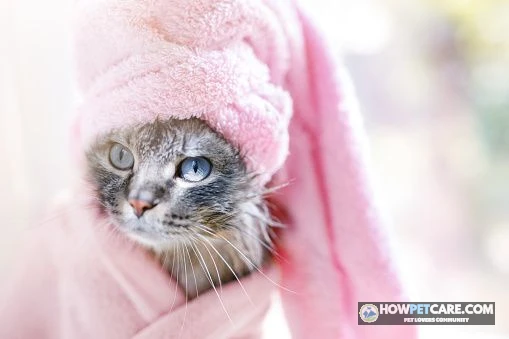

Most healthy kittens need baths only when dirty, contaminated, or vet-directed—never more often than every 4–6 weeks. Kittens under 8 weeks should be spot-cleaned with a warm, damp cloth instead of a full bath, since they chill easily.
Most healthy kittens need no routine baths; bathe only when they’re dirty, contaminated, or medically directed, and generally no more often than every 4–6 weeks. Kittens under 8 weeks should be spot-cleaned, not given a full bath, because they can chill easily. A clean kitten that grooms normally can often go months—or its whole life—without a bath.
Use the age-by-age schedule below as a conservative guide, not a calendar prescription. A vet’s advice takes priority for a kitten with a skin condition, fleas, illness, or an unusual mess.
How often should you bathe a kitten? Rarely, and only when it needs one
For most kittens, the right bathing frequency is as needed, not weekly or monthly. A one-time mess may call for one bath; otherwise, brush or wipe the coat and let the kitten groom itself. Cats are effective self-groomers, and kittens begin developing grooming behavior at roughly 2–4 weeks.
Routine bathing can remove oils that help protect the skin and coat. Repeated washing may leave skin dry, flaky, or irritated. For a healthy kitten, weekly bathing is not a safe default. A vet may prescribe a different schedule for a skin problem, and hairless kittens have different coat-care needs; both exceptions are covered below.
Do kittens need baths or do they clean themselves?
Usually, kittens clean themselves. Mother cats also groom their young, and a healthy kitten’s grooming is generally enough to keep an ordinary coat clean. Step in when something is stuck in the fur, the kitten cannot groom effectively, or a veterinarian recommends a bath.
A kitten that suddenly stops grooming, smells persistently bad, or has an oily, scabby, or irritated coat may need a veterinary check—not simply more frequent baths.
Can you bathe a kitten every week without damaging its skin?
For a typical kitten, no. Weekly baths can strip protective oils and dry or irritate the skin. Don’t set a weekly routine unless your veterinarian has specifically instructed you to follow one. A flea-control plan is not the same as repeatedly bathing the kitten; baths alone do not resolve an infestation.
Kitten bath schedule by age: under 4 weeks through adulthood
Age is a useful first check, but it is not the only one. Consider the kitten’s size, health, ability to stay warm, and reason for cleaning. Many veterinary-oriented sources advise avoiding full baths before 8 weeks because young kittens have difficulty regulating body temperature.
| Age | Full bath OK? | Maximum routine frequency | What to do instead or watch for |
|---|---|---|---|
| Under 4 weeks | No | None | Use a warm, damp cloth on the dirty area only. Keep the kitten warm; ask a vet for advice, especially for an orphan. |
| 4–8 weeks | Spot-clean by default; full bath only for an urgent need | No routine baths; a one-time emergency bath only with veterinary guidance when possible | Use a damp cloth for ordinary mess. Young kittens chill quickly. |
| 8–12 weeks | Possible if needed and the kitten is healthy and can be dried fully | As needed, not scheduled | Keep the bath brief and the room warm. Many kittens still need no full bath. |
| 3–6 months | Yes, when genuinely dirty or greasy | No more often than about every 4–6 weeks | Brush or wipe first; don’t bathe simply because time has passed. |
| Adult cat | Yes, when needed | If baths are necessary, about every 4–8 weeks at most unless a vet directs otherwise | Most healthy cats need baths rarely or not at all. |
Treat these as conservative general ranges, not guarantees that a bath is safe for every kitten. Base bathing frequency on the individual animal and the reason for bathing; veterinary advice overrides a general schedule. Over-bathing can dry and irritate skin.
When can you give a kitten its first bath?
For a healthy kitten, wait until at least 8 weeks before considering a full bath, and bathe only if there is a real need. Some sources describe 4 weeks as a minimum for gentle bathing, but that does not make a full bath advisable for every kitten that young. For kittens under 8 weeks, use spot-cleaning as the default.
Age alone is not a complete readiness test. A small, ill, underweight, or chilled kitten may not tolerate a bath safely. Ask a veterinarian before bathing a very young kitten, particularly if it is orphaned or has fleas.
How often should you bathe an 8-week-old kitten?
An 8-week-old kitten should not be bathed on a schedule. If it is healthy, warm, and genuinely dirty, a brief bath may be possible, but wiping or brushing is often enough. If you are unsure whether the kitten is large or strong enough to stay warm and recover comfortably, ask your vet first.
Signs your kitten actually needs a bath (and signs it doesn’t)
Try a brush or damp cloth first. A full bath is more likely to be warranted when a mess is stuck to the coat or a veterinarian directs you to use a particular shampoo. A mild dusty coat, normal shedding, or slightly dirty paw tips usually do not justify a bath.
Does my kitten actually need a bath? A six-question check
Use these questions before filling a basin:
- Is there a mess that a cloth cannot remove? Grease, sticky food, mud, or feces caught in fur may warrant a bath if gentle spot-cleaning fails.
- Could the substance be toxic if licked? Oil, paint, motor fluid, essential oils, or an unknown chemical calls for prompt veterinary or poison-control advice. The kitten may swallow residue while grooming. Don’t delay calling for advice while trying home remedies.
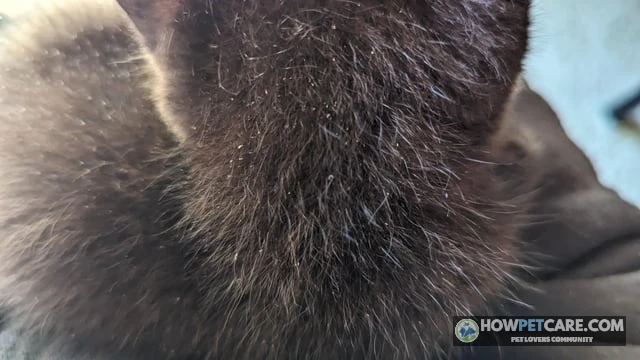
- Are there fleas or flea dirt? Flea dirt looks like small dark specks; on a damp paper towel, it can leave a reddish-brown stain. A bath alone will not control fleas.
- Did a vet prescribe a bath? Conditions such as ringworm, infection, or allergies may require a specific medicated shampoo and schedule. Don’t substitute an over-the-counter product.
- Can the kitten groom itself? Illness, very young age, or physical limitations may mean it needs help staying clean.
- Is a strong odor still present after wiping? A persistent smell can warrant a bath or a vet check; a mild kitten odor by itself is not a reason to bathe.
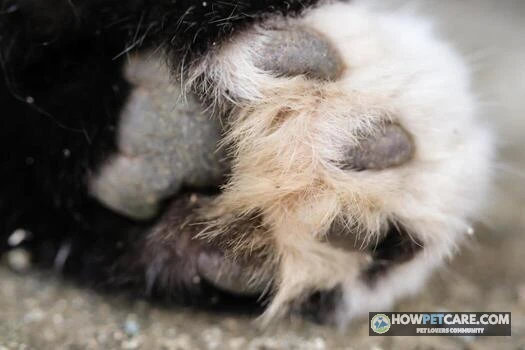
If none applies, skip the bath. A brush or damp cloth is usually the gentler choice.
Situations that call for a vet or poison hotline before any bath
If a kitten has a potentially toxic substance on its coat, contact a veterinarian or an animal poison-control service promptly for instructions. Don’t wait to see whether a bath solves the problem. The right response depends on what the substance is, where it is, and whether the kitten has licked it.
A medical skin problem also calls for veterinary guidance. Use a medicated shampoo only when it is recommended for that kitten, and follow the directions provided.
How often should you bathe an indoor kitten?
Usually, an indoor kitten with a clean coat, no fleas, and no skin condition does not need routine baths. It may go months without one. Brush as needed and wipe a small dirty patch rather than bathing the whole kitten.
How often to bathe Sphynx, Persian, Maine Coon, and short-haired kittens
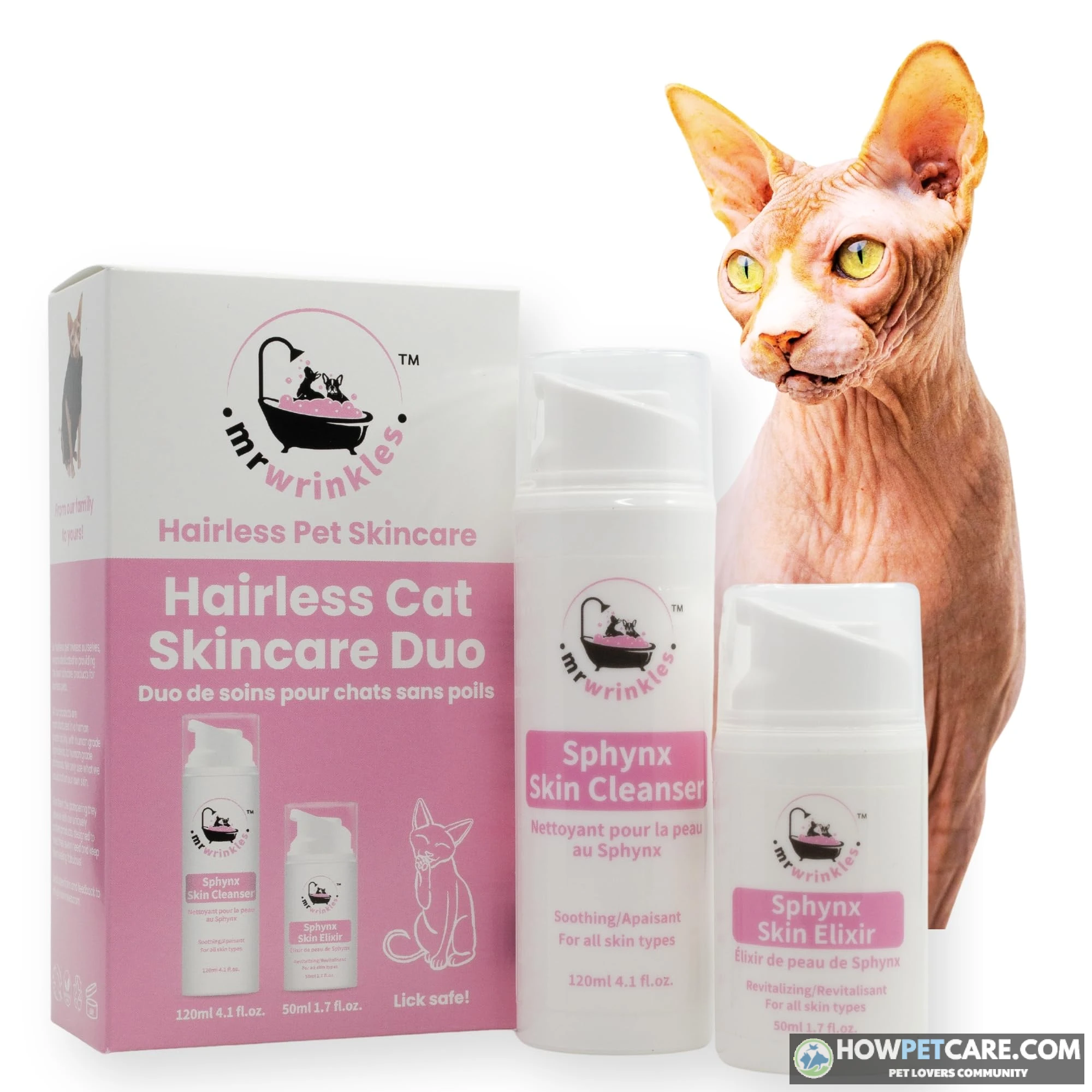
Coat type changes the grooming routine, but it does not cancel the age and safety rules. Hairless cats may need regular skin cleaning; long-haired cats generally need more brushing, not more baths.
| Coat type / breed | Typical bath frequency | Main grooming priority | Special notes |
|---|---|---|---|
| Sphynx and other hairless cats | Some need a gentle bath every 1–4 weeks once old enough, depending on oiliness | Skin care, warmth, and checking folds | Keep a kitten under 8 weeks to spot-cleaning. Ask a vet or breeder how often this kitten’s skin needs cleaning. |
| Persian and other long-haired cats | Occasional; if needed, no more often than about every 4–6 weeks | Brushing, often daily for a Persian | Work through mats before bathing; wet mats can tighten and become harder to remove. |
| Maine Coon | Occasional, when dirty | Thorough brushing at least weekly | A dense coat can take longer to wet and dry, so avoid a bath unless it has a clear purpose. |
| Short-haired indoor kitten | Rarely, often never | Occasional brushing | Self-grooming usually handles ordinary coat care. |
Treat these breed schedules as starting points, not a claim that every cat of a breed needs the same routine. Skin oiliness and coat condition vary. Ask your vet or breeder for advice specific to your kitten, and keep hairless kittens warm after any bath.
Bathing a kitten with fleas: how often, Dawn vs flea shampoo vs vet treatment
A flea bath may remove some fleas, but it does not provide lasting flea control. Pair any bath with a flea comb, environmental cleaning, and an age- and weight-appropriate preventive recommended by a veterinarian. Water alone does not eliminate fleas.
Young kittens need special caution. For a kitten under about 4 weeks, avoid a bath; use a flea comb and a damp cloth, and call a vet. For kittens under 8 weeks, or any kitten with a heavy infestation, get veterinary guidance before choosing a shampoo or treatment. Product age and weight limits vary, so check the specific label and ask a vet rather than assuming a product is safe.
| Option | Minimum age / weight | Residual protection | Safe frequency limit | Risks and best use |
|---|---|---|---|---|
| Flea comb and damp cloth | Any age | None | Comb as needed; check with a vet for very young or heavily infested kittens | Avoids pesticide exposure but does not prevent reinfestation. Dip caught fleas into soapy water. |
| Dawn dish soap | Not a routine kitten product; ask a vet before use, especially for a young kitten | None | Treat as a one-time emergency stopgap, not a repeat bathing schedule | Can dry skin; avoid eyes and mouth and rinse completely. It does not provide ongoing flea control. |
| Kitten-labeled flea shampoo | Follow the exact label; minimum age and weight vary | Usually little or none | Follow the label; do not bathe more often than it permits | Never use dog flea shampoo. Some dog products contain permethrin, which is toxic to cats. |
| Vet-recommended flea treatment | Depends on the product and kitten’s age and weight | Some options provide ongoing control | Follow the product directions and veterinary advice | Best route for young kittens, heavy flea burdens, or signs of illness. |
How often can you bathe a kitten with fleas?
Do not use repeated baths as the flea-control plan. If a vet advises a flea bath, treat it as a short-term step; do not repeat more often than about once a week, and only when the product label and veterinarian allow it. Frequent washing can dry the skin, and bathing does not stop fleas from returning.
Pale gums, weakness, or unusual lethargy in a flea-infested kitten need prompt veterinary attention. A young kitten can become seriously unwell, so don’t rely on repeated home baths.
Dawn dish soap or flea shampoo: which one, when?
Dawn dish soap is sometimes used as a one-time emergency measure to remove fleas from a kitten, but it is not a flea preventive or a routine shampoo. It can dry the skin, has no lasting effect, and needs to be rinsed thoroughly. Ask a veterinarian before using it on a young or unwell kitten.
A flea shampoo is appropriate only if its label explicitly allows use for the kitten’s age and weight. Never use a dog flea product on a cat or kitten: some contain permethrin, which is toxic to cats. For kittens under 8 weeks, a heavy infestation, or any uncertainty, call a vet rather than choosing between household soap and flea shampoo.
Using a flea comb between baths
Comb carefully through the coat, especially around the neck and base of the tail. Wipe or dip the comb into soapy water to trap the fleas you remove. Also wash the kitten’s bedding, vacuum resting areas, and ask your vet how to protect other pets in the home. Without addressing the environment and other animals, fleas can return.
What to do instead of a bath: spot-cleaning, wipes, and waterless shampoo
For kittens under 8 weeks and kittens that dislike water, cleaning one patch at a time is often safer and less stressful than a full bath.
How to clean a kitten under 8 weeks old without a bath
Use a soft washcloth dampened with warm—not hot—water. Wring it out, then wipe only the dirty area in the direction the fur grows. Keep the rest of the kitten dry, and pat the cleaned patch with a soft towel afterward. Work in a warm, draft-free room and return the kitten to a warm resting place promptly.
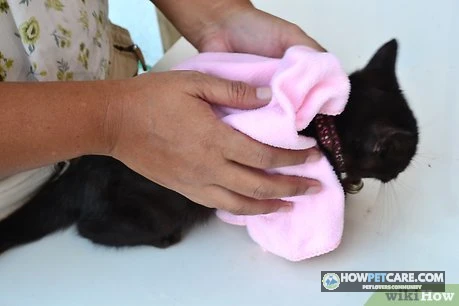
For feces on the rear end, soften the mess with the damp cloth and gently wipe it away. If that is not enough, use only a small amount of warm water on the affected area, then dry the kitten thoroughly. Do not immerse a young kitten. If it is orphaned, persistently dirty, or unable to stay warm, ask a veterinarian for care instructions.
Waterless shampoo and wipes: what to look for
Choose grooming wipes or waterless cat shampoo specifically labeled as safe for cats or kittens, and check the age restrictions. Fragrance-free wipes are a sensible option for a kitten with sensitive skin. Avoid the eyes, nose, and mouth, and don’t leave a coating the kitten may lick off. If the product causes redness or itching, stop using it and contact your vet if symptoms persist or worsen.
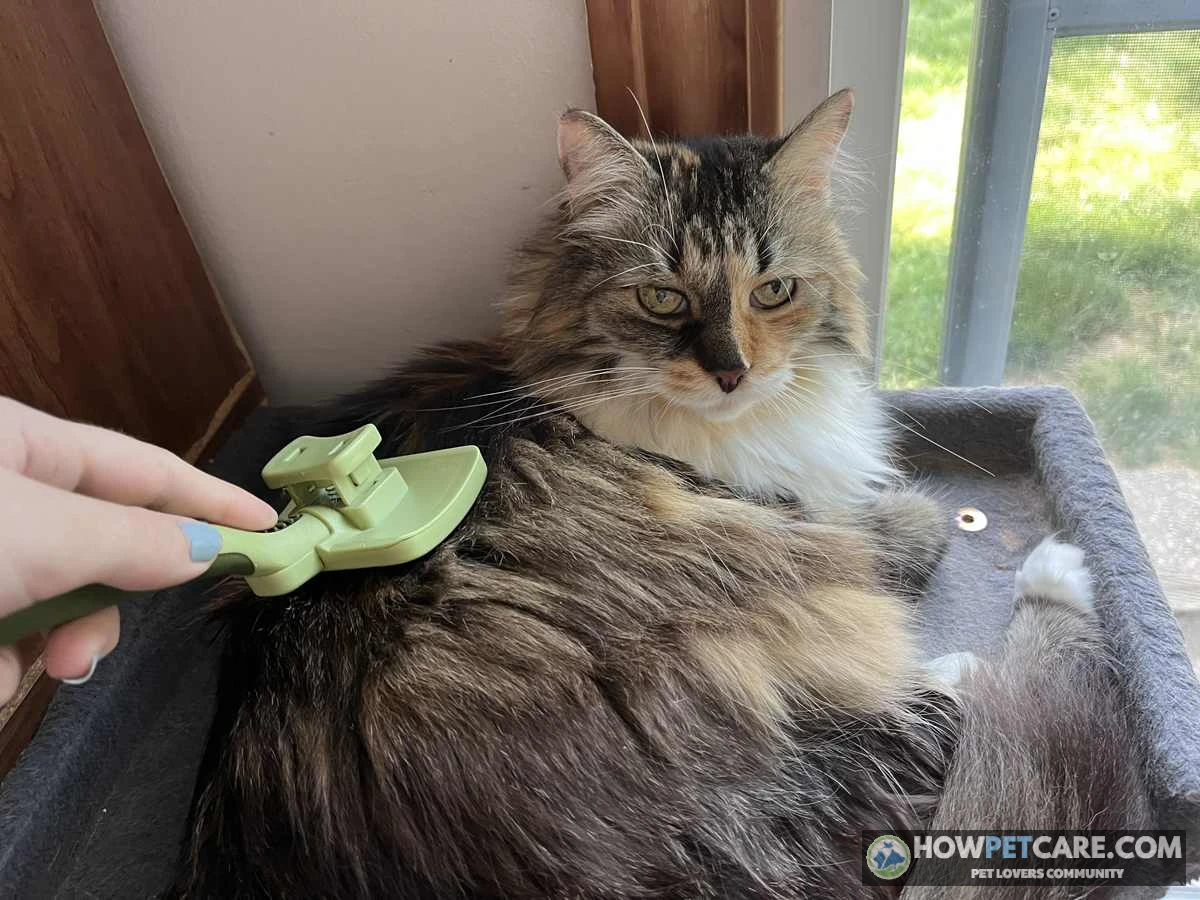
Brushing is the main routine grooming tool for most kittens. Use a soft brush, keep sessions short, and stop if the kitten becomes distressed.
Kittens that panic at the sight of water
Don’t force a full bath. Stop, wrap the kitten in a towel if needed, and switch to a damp cloth or cat-labeled wipes. If a bath is truly necessary, try again only when the kitten is calm, with a non-slip surface, shallow water, and another adult helping. For toxic contamination or heavy fleas, contact a vet instead of trying to restrain a panicking kitten at home.
How to bathe a kitten safely at home: shampoo, water temperature, and drying
Only bathe a kitten that is old enough, healthy, and genuinely needs it. Prepare everything first so the kitten spends as little time wet as possible.
What shampoo is safe for a kitten, and which products to avoid
Use a cat-safe shampoo labeled for kittens, following its age restrictions and directions. A gentle, soap-free product is preferable for ordinary cleaning; use a medicated shampoo only when a veterinarian recommends it.
Avoid human shampoo, including baby shampoo, and dog shampoo. They may irritate a kitten’s skin, and some dog flea products contain ingredients dangerous to cats. Avoid essential oils, including tea tree oil, and harsh degreasers. If the kitten has a toxic substance on its coat, call a vet or poison-control service for instructions rather than improvising with a cleaner.
Water temperature and how much shampoo to use
Aim for water around 100°F (38°C); a practical range is about 98–102°F (37–39°C). Test it on your inner wrist: it should feel comfortably warm, not hot. Use a shallow basin with about 2–3 inches of water, or use a cup to wet and rinse the coat without filling the basin.
Use the smallest amount of kitten shampoo that will clean the dirty area, and follow the product label. As a rough starting guide, use about a pea-sized amount for a kitten under 2 pounds and a dime-sized amount for one weighing 2–5 pounds, diluted as directed. Don’t treat these amounts as a substitute for the bottle’s instructions. Rinse until no residue remains.
The water-temperature and shampoo-amount figures here are practical guidelines, not a substitute for product directions or veterinary advice for a small, ill, or underweight kitten.
Step-by-step bath process
Gather kitten shampoo, a cup or gentle sprayer, a non-slip mat, two or three towels, and a warm room. Cotton balls may rest at the outer ear opening if needed, but never push them into the ear canal. Keep the face dry and use a damp cloth to clean it.
- Brush the coat first and check for mats. Do not soak a matted coat; water can tighten the tangles.
- Set up the warm room and basin before bringing in the kitten. Keep the water shallow and comfortably warm.
- Hold the kitten securely but gently. Wet the body from the neck down with a cup or gentle stream; keep water away from the face and ears.
- Dilute and apply a small amount of kitten shampoo as the label directs. Avoid the eyes, nose, mouth, and ears.
- Rinse thoroughly. Shampoo residue can irritate skin or be swallowed during grooming.
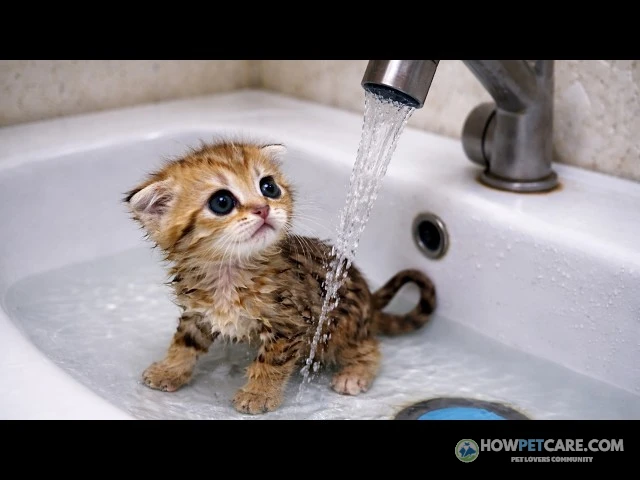
- Keep the bath brief—around 5 minutes is a useful target—then lift the kitten straight into a warm towel.
Drying a kitten and preventing chill
Wrap the kitten in a warm, dry towel immediately and pat rather than rub. Swap towels if the first becomes wet. Keep the kitten in a warm, draft-free room until the coat is fully dry. A hair dryer is optional: use the lowest warm or cool setting, hold it well away, keep it moving, and stop if the kitten is frightened.
Afterward, offer a quiet warm resting spot and watch for shivering, cold ears or paws, or unusual tiredness. Young kittens are vulnerable to chilling, which is why full baths are discouraged under 8 weeks.
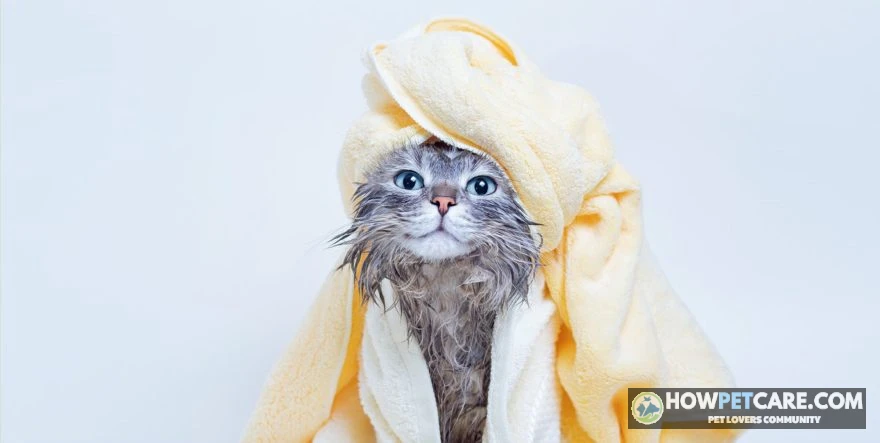
When a kitten bath goes wrong: panic, water in ears, hypothermia, and when to call a groomer
What to do if your kitten panics or hates water
Stop the bath rather than holding a frightened kitten under water. Wrap it in a towel and let it settle in a warm, safe place. For minor dirt, use a damp cloth or wipes next time. If a full bath remains necessary, ask a veterinarian or experienced groomer about a safer plan. Never force the kitten’s head under water or scruff it as a way to keep it submerged.
Water in the ears or aspirated water
If water reaches an ear, tilt the kitten’s head and blot the outer ear with a towel. Don’t insert cotton swabs or anything else into the ear canal. Repeated head shaking, ear discharge, or a persistent head tilt warrants a veterinary call.
Coughing, gagging, or labored breathing after water enters the nose or mouth needs urgent veterinary attention. Breathing trouble is not a problem to manage with home remedies.
Signs of hypothermia or a shampoo reaction
Watch for shivering, cold ears or paws, weakness, lethargy, or slow breathing after a bath. Dry the kitten and warm it gradually with towels; a warm—not hot—water bottle wrapped in cloth can be placed nearby. Contact a veterinarian promptly, especially if the kitten remains cold or weak, becomes difficult to rouse, or has slow or labored breathing.
Skin redness, intense itching, hives, facial swelling, vomiting, or drooling after shampoo exposure may signal a reaction. Rinse visible product off with lukewarm water and call a vet for advice. Facial swelling, breathing difficulty, collapse, or severe weakness needs emergency veterinary care.
DIY or professional groomer: how to decide
Consider a cat-experienced professional groomer if the kitten has severe mats, needs a recurring hairless-cat routine, panics during handling, or you are unsure how to hold it safely. Call first to confirm the groomer accepts kittens, what minimum age and vaccination requirements apply, and whether the service includes bathing and drying.
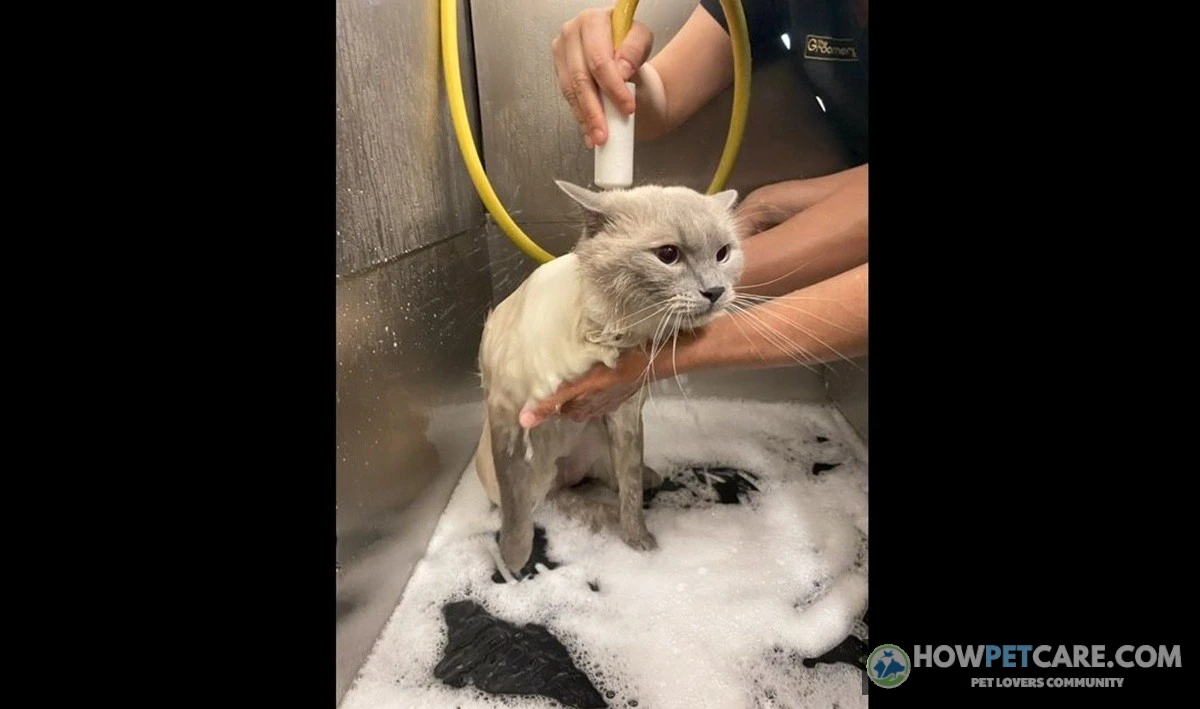
A basic professional cat bath may cost roughly $40–$100 in the United States, with price depending on location, coat, and service. Treat that as a broad estimate and confirm the current price directly with local groomers. For skin disease, toxic contamination, breathing trouble, or a sick kitten, choose a veterinarian—not a groomer.
Your kitten bath decision checklist: what to do next
- Check age and health. Under 8 weeks means spot-cleaning by default. Call a vet before bathing a young, sick, underweight, or orphaned kitten.
- Identify the reason. For mild dust or dirty paws, brush or wipe. For stuck-on mess, fleas, toxic contamination, or a medical issue, follow the relevant veterinary guidance above.
- Consider the coat. Hairless kittens may need a regular skin-cleaning routine once old enough; long-haired kittens need brushing first; most short-haired indoor kittens rarely need baths.
- Prepare before getting the kitten wet. Have kitten-labeled shampoo, towels, a non-slip surface, and a warm room ready. Keep the water comfortably warm and the session short.
- Watch the kitten afterward. Dry it fully and look for shivering, lethargy, itching, redness, vomiting, or breathing problems.
Call a veterinarian for persistent skin redness, hair loss, ongoing itching, pale gums in a flea-infested kitten, or any breathing difficulty after a bath. If the kitten is clean and healthy, the next step may simply be to put the shampoo away.
FAQ
Can I use baby shampoo or human shampoo on a kitten?
It is best to avoid it, because human and baby shampoos are formulated for a different skin pH and can dry a kitten’s skin. Use a shampoo labeled for kittens or cats, and if a toxin is on the coat and you have nothing else, rinse with plain lukewarm water and call a vet.
How do I keep water out of my kitten’s ears during a bath?
Wet the body from the neck down, keep the head tilted slightly up, and clean the face with a damp cloth instead of pouring water over it. Blot the outer ear with a cotton ball or towel afterward and never push cotton deep into the ear canal.
Do indoor kittens need baths?
Usually not. An indoor kitten with no fleas, skin problems, or messy coat can go months without a bath, and regular brushing or occasional wipe-downs are enough.
Should I bathe my kitten right after vaccinations?
It is best to wait until the kitten has recovered, usually a day or two, and ask your vet if the kitten seems unwell. Bathing is a stress on a kitten that may already be tired or running a mild fever.
Can I use a hair dryer to dry my kitten?
Yes, if the kitten tolerates it. Use the lowest warm or cool setting at a distance, keep it moving, and stop if the kitten panics. Otherwise towel dry thoroughly and keep it in a warm room until completely dry.