

No — cats should never eat chocolate. It contains theobromine and caffeine, which cats metabolize slowly, and no amount is considered safe. Dark chocolate, baking chocolate, and cocoa powder are the most dangerous. If your cat ate chocolate, call ASPCA Poison Control at (888) 426-4435 or Pet Poison Helpline at (855) 764-7661.
Can cats eat chocolate? No. Chocolate is toxic to cats because it contains theobromine and caffeine, compounds their bodies cannot metabolize efficiently. Even small amounts can cause serious health problems, and there is no safe amount to give a cat. If your cat has just eaten chocolate and is vomiting, shaking, panting, seizing or has a racing heart, go to a vet immediately. Two 24/7 poison control lines are available: ASPCA Animal Poison Control at (888) 426-4435 and Pet Poison Helpline at (855) 764-7661. Both are staffed by veterinary professionals year-round, though a consultation fee typically applies; confirm current fees and numbers on the official websites. If you can’t reach either line, call your local emergency vet. A lick of milk chocolate usually causes little or no harm, but that doesn’t make it safe to offer. Veterinary review by Dr. Jane Smith, DVM, reviewed 2026.
Can Cats Eat Chocolate? No, and Here Is Who to Call If Yours Already Did

Keep chocolate out of your cat’s bowl. Theobromine and caffeine are methylxanthines that affect the feline heart and central nervous system. Cats process them far more slowly than humans or even dogs. Risk depends on three factors: the type of chocolate, the amount consumed, and the cat’s weight. No amount is considered safe to give. If your cat is vomiting, shaking, panting, seizing or has a racing heart, go to a veterinary clinic now. Two 24/7 poison control lines can help: ASPCA Animal Poison Control at (888) 426-4435 and Pet Poison Helpline at (855) 764-7661. Both employ veterinary professionals around the clock, but a consultation fee usually applies; verify current fees and numbers on the official sites. If you can’t reach either line, call your local emergency vet. A lick of milk chocolate typically causes little or no harm, but don’t offer it deliberately. Dr. Jane Smith, DVM, reviewed this content in 2026.
Information to have ready before you call
Have the product and brand ready when you contact poison control or a veterinarian, and photograph the packaging if possible. Note the cocoa percentage if listed, estimate the amount eaten in ounces, squares, or bites, and record when your cat ate it. You’ll also need your cat’s weight in pounds or kilograms. Report any pre-existing conditions, such as heart disease, kidney disease, or a history of seizures, along with any symptoms and when each started. Check whether your cat can still reach more chocolate, batter, cocoa, or mulch, and have your location and the nearest 24-hour veterinary clinic’s details ready.
Why you should not make your cat vomit at home
Inducing vomiting at home is dangerous. Never attempt it without direct veterinary instruction. Hydrogen peroxide, salt water and similar methods can cause aspiration, stomach irritation and sodium toxicity, and cats respond poorly to these agents. A veterinarian can choose the appropriate medication and timing; the procedure is contraindicated once clinical signs appear. Take your cat to a clinic rather than trying to treat them at home.
My Cat Ate Chocolate: What to Do Right Now, Step by Step

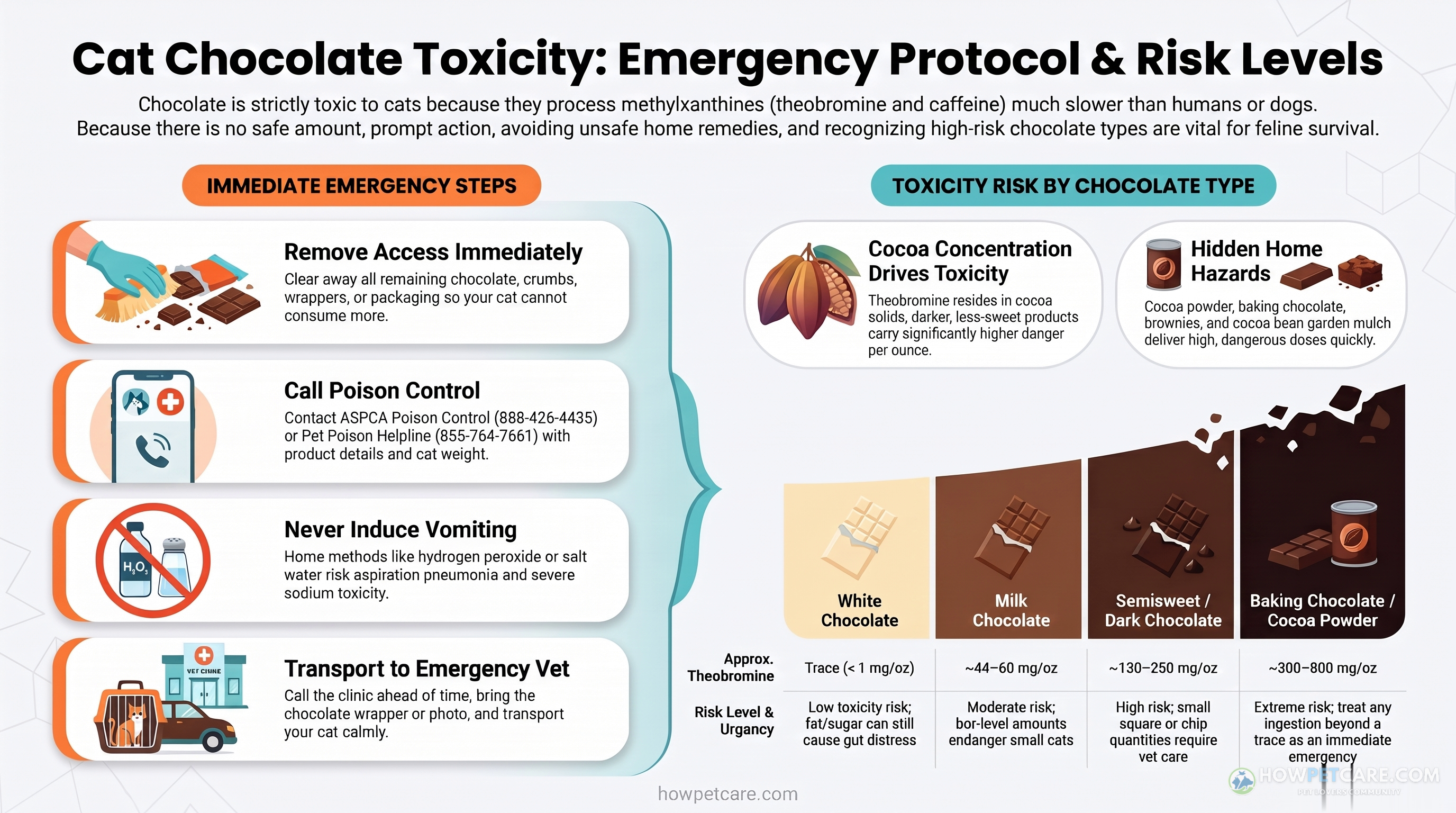
First, remove any remaining chocolate and wrappers so your cat can’t eat more. Call poison control or your veterinarian immediately. Don’t wait for symptoms: signs can take hours to appear. Don’t induce vomiting at home, offer milk, food, or home remedies, or administer activated charcoal unless a veterinarian directs you to. Transport your cat calmly, bring the wrapper or a packaging photo, and call ahead so the clinic can prepare.
-
Remove access
Take the chocolate and any wrappers out of your cat’s reach.
-
Call for professional guidance
Call ASPCA Animal Poison Control at (888) 426-4435 or Pet Poison Helpline at (855) 764-7661. Have the product details, amount eaten, and your cat’s weight ready.
-
Do not induce vomiting
Inducing vomiting at home is unsafe; only a veterinarian should decide if and when to do it.
-
Transport if needed
If the vet recommends a clinic visit, bring the wrapper, keep your cat warm and calm, and call on the way.
- Your cat ate more than a lick of dark chocolate, semisweet chips, baking chocolate, cocoa powder, or cacao nibs
- The amount or product is unknown
- Your cat is a kitten, a senior, or has a very small body weight
- Your cat has pre-existing heart disease, kidney disease, or a seizure history
- Any symptom appears: vomiting, tremors, restlessness, fast heart rate, panting, seizures, collapse
- 0–6 hours: No signs may be visible. Seek professional advice immediately, even if your cat appears normal.
- 6–12 hours: Vomiting, diarrhea, restlessness, increased thirst, and increased urination often appear.
- 12–24 hours: Increased heart rate, panting, tremors, or hyperactivity may develop.
- 24–72 hours: Signs can persist, especially after higher doses. Mild cases may resolve, while severe cases require prolonged veterinary monitoring.
-
Save poison-control numbers
ASPCA Animal Poison Control (888) 426-4435, Pet Poison Helpline (855) 764-7661
-
Secure chocolate storage
Use closed cabinets and bins with locked lids, especially around holidays.
-
Educate household members
Ask guests and children not to share food with your cat.
-
Offer cat-safe alternatives
Offer commercial treats or small amounts of plain cooked chicken or fish.
Never attempt to make your cat vomit at home. Improper induction can cause aspiration pneumonia, esophageal injury, or sodium imbalances that are more dangerous than the chocolate itself.
How Much Chocolate Is Toxic to a Cat? Theobromine Dose by Chocolate Type and Weight
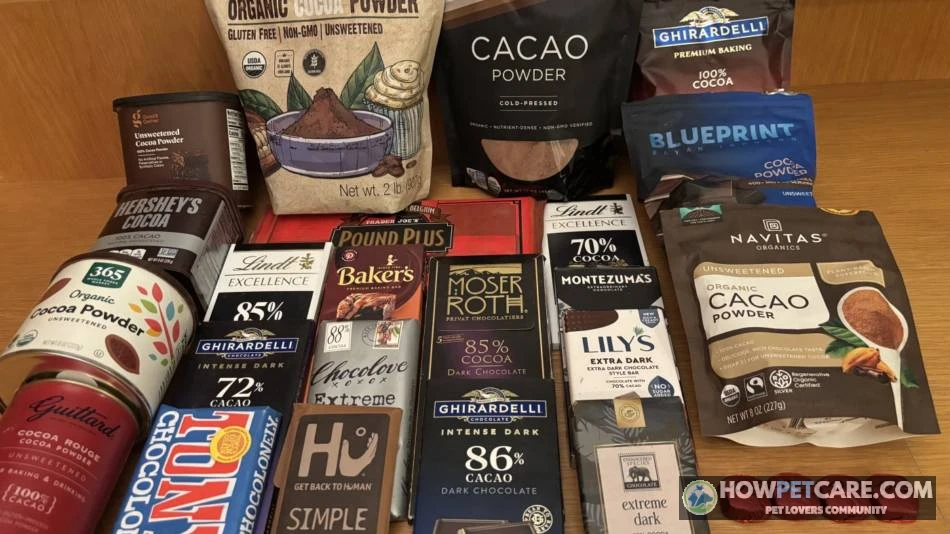
Veterinary references publish approximate theobromine content per ounce of chocolate. Thresholds extrapolated from feline and canine data help guide triage decisions. To estimate a dose, identify the chocolate type and the ounces consumed, then multiply the amount by the approximate theobromine milligrams per ounce. Divide the result by your cat’s weight in kilograms to get milligrams of theobromine per kilogram of body weight. Approximate theobromine values (rounded, conservative) include white chocolate at trace levels under 1 mg per ounce, milk chocolate around 44–60 mg per ounce, semisweet or dark chocolate roughly 130–250 mg per ounce, unsweetened baking chocolate about 390–500 mg per ounce, and cocoa powder or baking cocoa from 400–800 mg per ounce. Brands and recipes vary, so package labels and professional advice always take precedence over these figures.
Use this table for estimation only. Because cats are small, a few squares of dark or baking chocolate can reach concerning levels. Always call poison control or a veterinarian for a confirmed assessment.
White chocolate contains cocoa butter but almost no cocoa solids, so its theobromine content is minimal. Fat and sugar remain a concern: large amounts can upset the stomach or trigger pancreatitis.
Approximate theobromine dose by chocolate type and cat weight
| Chocolate type | Approx. theobromine (mg per oz) | Amount reaching ~20 mg/kg for a 5 lb cat | Amount reaching ~20 mg/kg for a 10 lb cat | Amount reaching ~20 mg/kg for a 15 lb cat | Risk level |
|---|---|---|---|---|---|
| White chocolate | Trace, usually under ~1 mg/oz | Not a theobromine concern at normal tastes | Not a theobromine concern at normal tastes | Not a theobromine concern at normal tastes | Low for theobromine; fat/sugar can still upset the gut |
| Milk chocolate | ~44–60 mg/oz | ~0.8 oz, about half a small bar | ~1.5 oz, about one small bar | ~2.3 oz | Real risk for small cats at bar-level amounts |
| Semisweet or dark chocolate | ~130–250 mg/oz | ~0.2–0.3 oz, a few chips or squares | ~0.4–0.7 oz | ~0.5–1.0 oz | High; small amounts can matter |
| Unsweetened baking chocolate | ~390–500 mg/oz | ~0.1 oz | ~0.2 oz | ~0.3 oz | Very high; treat more-than-a-lick as urgent |
| Cocoa powder / baking cocoa | ~400–800 mg/oz | ~0.06–0.11 oz, roughly a teaspoon or less | ~0.11–0.23 oz | ~0.17–0.34 oz | Very high; spills and licked batter are dangerous |
Quick formula: estimated mg/kg = ounces eaten × mg/oz from the table × 28.35, divided by cat weight in kg. A 10 lb cat is about 4.5 kg. Rough bands used for triage: ~20 mg/kg mild signs possible, ~40 mg/kg cardiac risk, ~60+ mg/kg severe/seizure risk. Caffeine adds to the stimulant load from theobromine.
Worked example: my 10-lb cat ate half a brownie
Scenario: a 10 lb cat, about 4.5 kg, ate half of a 2 oz brownie 30 minutes ago and has no symptoms yet.
Step 1: estimate the chocolate dose. If the recipe suggests about 0.3 oz semisweet/dark chocolate equivalent in that half portion, use ~130–250 mg/oz: dose ≈ 39–75 mg theobromine. Divide by 4.5 kg: roughly 9–17 mg/kg. That’s below the ~20 mg/kg mild-sign band, but it isn’t zero. Call poison control to confirm and monitor for ~24 hours.
Step 2: consider what’s unknown. If the brownie was made with unsweetened baking chocolate or heavy cocoa, the same 0.3 oz equivalent could be ~117–240 mg, or about 26–53 mg/kg. That puts it in the call-now and possibly clinic-now range, even before symptoms appear.
Action tier: because the exact chocolate type is uncertain, treat this as more than a milk-chocolate lick. Save the wrapper/recipe, don’t induce vomiting, call (888) 426-4435 or (855) 764-7661, and go in immediately if vomiting, tremors, panting, racing heart, weakness, or seizures start.
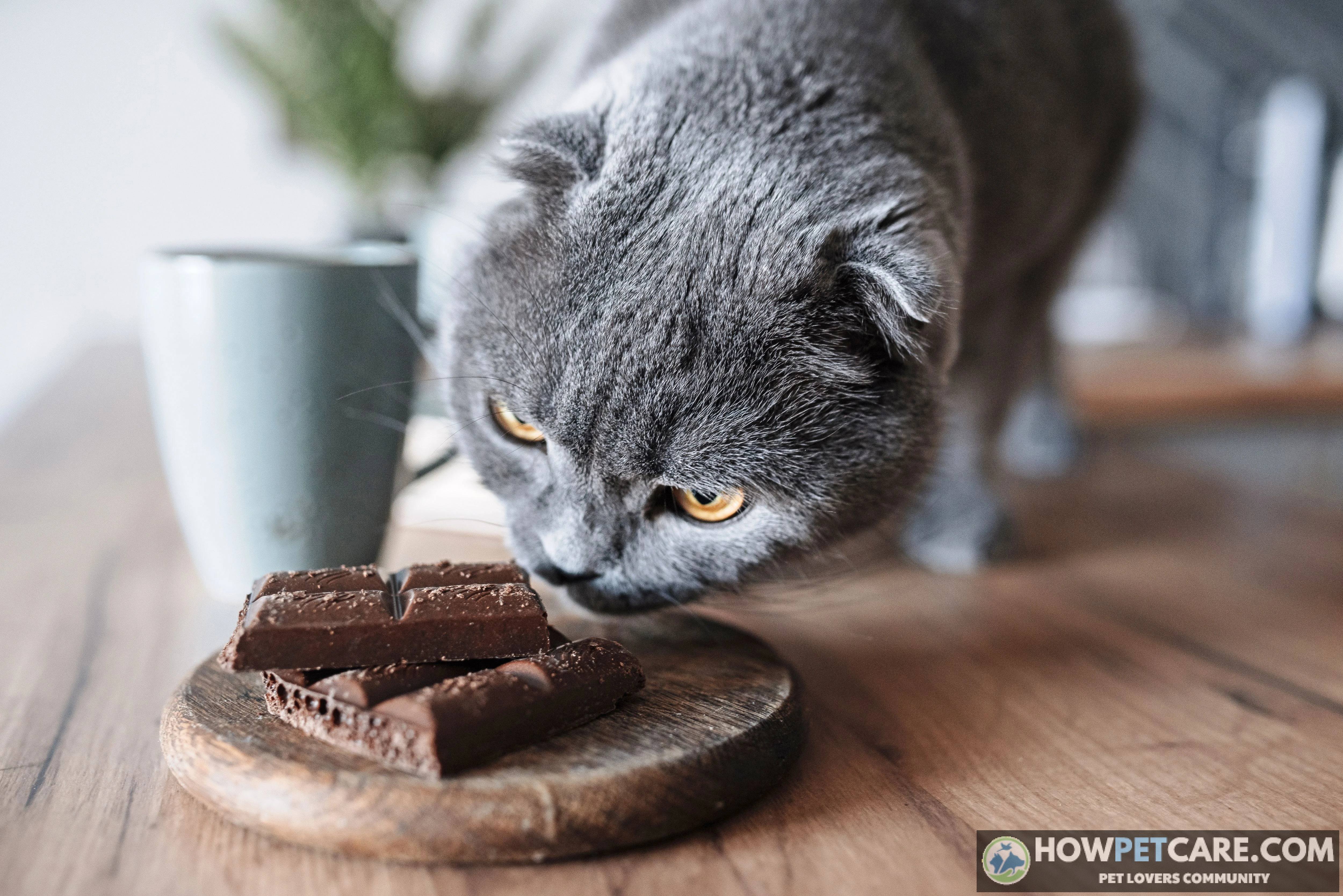
If the chocolate is baking cocoa, unsweetened baking chocolate, or cocoa powder, any ingestion above a tiny lick warrants an immediate call to poison control or the vet. These products deliver the highest theobromine doses per ounce.
Monitor at Home or Go to the Vet? A Decision Guide by Dose and Symptoms
Some low-dose exposures can be monitored at home with professional guidance; others need immediate veterinary care. Use the exposure and symptom information in this table to guide your next step.
Go to a veterinary clinic immediately if your cat consumed any dark, baking, or cocoa powder product above a lick, if the amount is unknown, if your cat is a kitten or small senior, or if any of these signs appear: vomiting, tremors, restlessness, fast heart rate, panting, seizures, or collapse.
Monitor at home or go to the vet: triage by exposure and symptoms
| Situation | Recommended action | What to watch for | Escalate if |
|---|---|---|---|
| Confirmed lick or crumb of milk/white chocolate only; healthy adult cat; no symptoms | Remove access, save wrapper, call poison control/vet for a quick confirm, then monitor at home if they agree | Vomiting, diarrhea, restlessness, extra thirst or urination over the next ~24 hours | Any symptom appears, amount was more than a lick, or the product contained dark/cocoa/xylitol |
| Known milk chocolate amount below the ~20 mg/kg mild-sign band | Call poison control/vet today for a dose check; do not assume safety because the cat looks normal | Same as above; signs can be delayed for hours | Dose estimate is uncertain, cat is small/young/old, or vomiting, tremors, panting, fast heart rate starts |
| Any dark chocolate, semisweet chips, baking chocolate, cocoa powder, cacao nibs, or licked brownie/cake batter beyond a trace | Call now; often clinic-level advice even if the cat seems fine | Restlessness, hyperactivity, drooling, vomiting, racing pulse, muscle rigidity | Go immediately if tremors, seizures, collapse, irregular breathing, or continuous vomiting begin |
| Unknown product, unknown amount, wrappers missing, or cat found with an open package | Treat as higher risk: call now and bring packaging/photos | Do not wait for symptoms; first signs can lag the dose | Kitten, senior, heart/kidney disease, very low weight, or symptoms develop |
| Cat already shows vomiting, shaking, panting, racing heart, seizures, weakness, or collapse | Emergency clinic now; call ahead while transporting | Worsening tremors, abnormal rhythm, inability to stand | Already an emergency; do not induce vomiting unless a veterinarian directs it |
Go to a vet now if…
Low-risk exposures you can watch at home with professional confirmation
A healthy adult cat that has had a confirmed lick or crumb of milk or white chocolate can be monitored at home for approximately 24 hours if poison control or a vet agrees. Watch for vomiting, diarrhea, restlessness, increased thirst, or increased urination. If any sign appears, call the vet or go to an emergency clinic.
How pre-existing conditions and age change the risk
Kittens, senior cats, and cats with heart disease, kidney disease, or a history of seizures all face lower toxicity thresholds. A dose that might be subclinical in an adult cat could trigger severe signs in a vulnerable cat. When in doubt, call: a phone consultation costs far less than a missed emergency.
Why Is Chocolate Toxic to Cats? How Theobromine and Caffeine Affect the Body

Theobromine and caffeine are methylxanthines found in cocoa. They stimulate the heart and central nervous system and increase urine production. Cats metabolize theobromine slowly, so it lingers in the body and can accumulate. That helps explain why signs can last a day or more. Its half-life is measured in hours rather than minutes. White chocolate is different because it contains cocoa butter but almost no cocoa solids; theobromine is in the solids, not the fat. Cats cannot taste sweetness, but they may be drawn to the fat and smell of a chocolate product. That explains why some investigate chocolate despite having no sweet-receptor response.
Cats lack a functioning sweet taste receptor. Their interest in chocolate usually comes from its fat content, aroma, or texture, not sweetness.
Symptoms of Chocolate Poisoning in Cats and When They Appear
Early and mild signs typically appear within about 6 to 12 hours of ingestion and can persist for 24 to 72 hours. Moderate to severe signs include increased heart rate or irregular rhythm, panting, tremors, muscle rigidity, hyperactivity, and seizures. Collapse and death are possible in severe cases, especially after ingestion of dark chocolate, baking chocolate, or cocoa powder. Pancreatitis can be a delayed problem after fatty chocolate products, with signs such as abdominal pain, lethargy, and poor appetite.
Symptom timeline: first hours to day three
Signs that mean an emergency
Seek emergency veterinary care without delay if your cat has tremors, seizures, irregular breathing, continuous vomiting, collapse, or a sustained abnormal heart rhythm.
Chocolate Ice Cream, Brownies, Cake, Chocolate Milk and Other Hidden Theobromine Sources

Chocolate-containing foods don’t all carry the same risk as a solid bar. Chocolate ice cream typically contains milk chocolate or cocoa flavoring, so theobromine is present but usually at lower levels; dark-chocolate or cocoa-swirl varieties raise the risk. Brownies vary widely: some contain semisweet chips, while others use dark chocolate or cocoa powder. Identifying the ingredients matters. Chocolate cake and cupcakes may contain concentrated cocoa in the frosting or batter. Chocolate milk and hot cocoa mixes are diluted, but dry cocoa mix is more concentrated and ingestion warrants a call. The risk from cookies with chocolate chips depends on the chip type; semisweet chips contain more theobromine than milk-chocolate chips. If raisins are in the mix, treat grape and raisin ingestion as urgent too. Cocoa bean mulch used in gardening smells like chocolate and can be dangerous if chewed or eaten. Chocolate wrappers, foil, and plastic can cause gastrointestinal obstruction, so watch for repeated vomiting, loss of appetite, straining, or lethargy.
Some chocolate-flavored products, especially sugar-free varieties, may contain xylitol, a sweetener lethal to cats. Always check ingredient lists.
Ice cream, cake, brownies, cookies and pudding
| Product or source | Theobromine risk | Other hazards | What to do |
|---|---|---|---|
| Chocolate ice cream | Usually low to moderate unless made with dark chocolate or cocoa swirl | Dairy fat/sugar can cause vomiting/diarrhea; check for xylitol in sugar-free versions | For a lick of ordinary milk-chocolate ice cream, call for advice and monitor; larger amounts or dark/cocoa versions: call now |
| Brownies | Variable; often made with semisweet, dark, cocoa powder, or baking chocolate | Fat, sugar, foil/paper, possible xylitol in diet mixes | Do not guess from sweetness; identify ingredients and call with the recipe/label |
| Chocolate cake or cupcakes | Variable; frosting may add concentrated chocolate or cocoa | Fat/sugar load; wrappers and decorations | Call if more than a crumb or if dark/cocoa was used; bring ingredient details |
| Cookies with chocolate chips | Depends on chip type; semisweet chips are more concentrated than milk chips | Raisins, macadamias, xylitol, butter; dough/batter may contain cocoa | Count chips if possible and call; raisin/macadamia/xylitol ingredients raise urgency |
| Chocolate milk or hot cocoa mix | Usually diluted, but cocoa mix itself can be concentrated | Sugar, milk intolerance, spilled dry mix | A small lap of chocolate milk is usually lower risk; dry mix or cocoa powder ingestion is urgent-call territory |
Cocoa powder, cacao nibs and cocoa mulch
Cocoa powder and baking cocoa are among the highest-theobromine sources commonly found in home pantries. Cacao nibs, roasted cocoa bean pieces sold as a health food, carry similar risk. Cocoa bean mulch is often used in garden beds, smells appealing to cats, and can deliver a theobromine dose if chewed or eaten. Keep these products secured and out of your cat’s reach.

What if my cat swallowed a chocolate wrapper?
Foil and plastic wrappers don’t contain theobromine after the chocolate is consumed, but they can cause gastrointestinal obstruction. Watch for repeated vomiting, loss of appetite, straining to defecate, or lethargy. If your cat swallowed a wrapper, call a veterinarian; imaging may be needed to rule out a blockage.
What the Vet Will Do for Chocolate Poisoning: Treatment, Cost and Prognosis
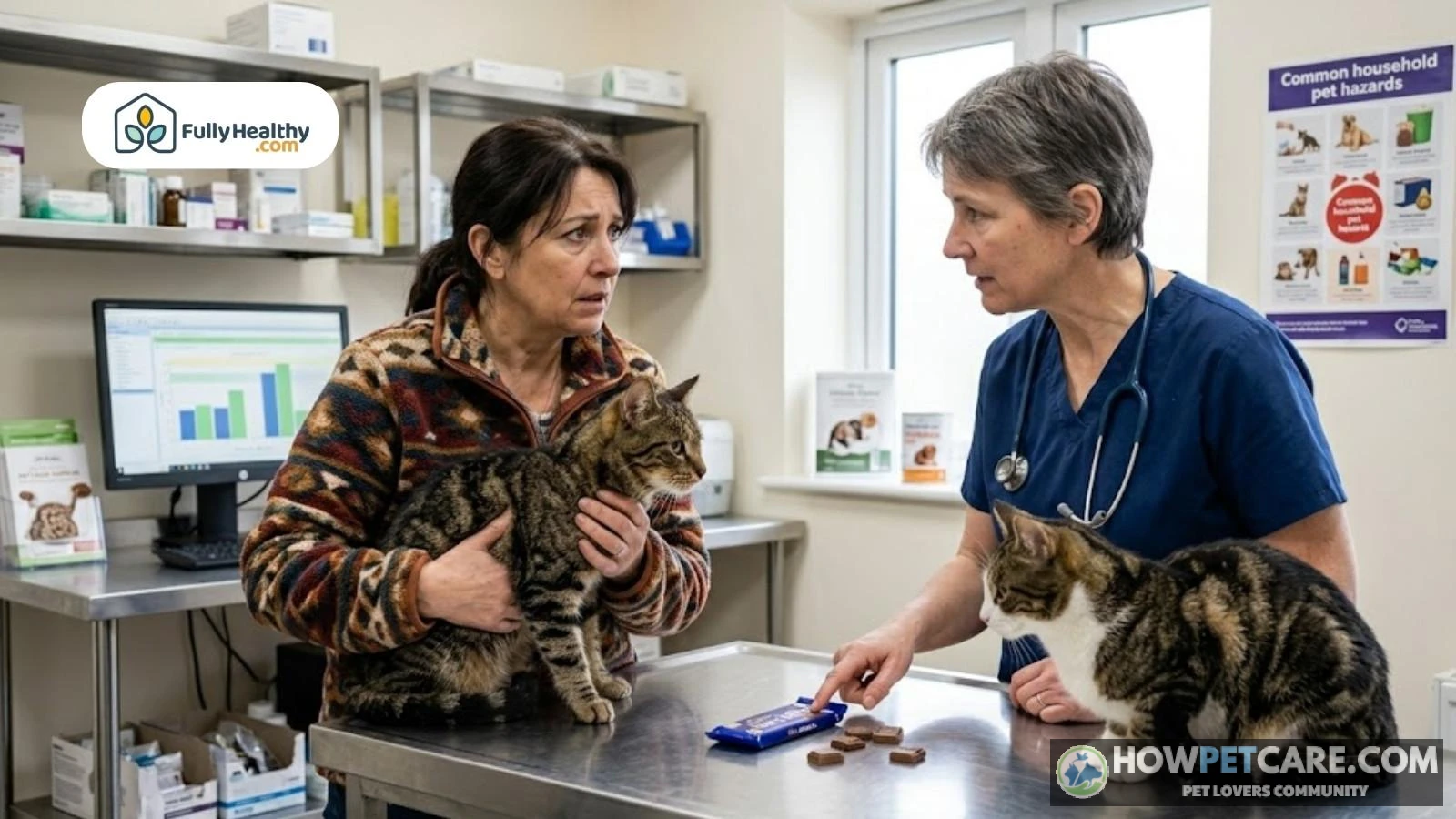
Treatment for chocolate poisoning is stepwise and supportive. After taking a history and weighing your cat, the vet examines them and monitors heart rate and rhythm. If ingestion was recent, the veterinarian may safely induce vomiting with veterinary-grade medication and administer activated charcoal to limit further absorption. Supportive care can include intravenous fluids to support kidney function and speed theobromine excretion, anti-nausea medication, sedatives or anticonvulsants for tremors and seizures, and heart medication for arrhythmias. Hospital observation can last 24 hours or longer in serious cases. Vets choose the right drug and timing for inducing vomiting and can manage complications; induction is inappropriate once a cat is symptomatic.
Prognosis by severity
Cats treated early after a mild ingestion generally recover well. Severe cardiac or neurological cases carry higher risk. The outcome depends on the dose, how quickly treatment starts, and the cat’s overall health.
Typical cost ranges
Costs vary by region, clinic type, and severity. As general examples, a consultation exam may run $50–$150; outpatient decontamination (induction and charcoal) $200–$500; and hospitalization with IV fluids and monitoring $1,000–$3,000 for a multi-day stay. Poison-control consultation fees are separate from vet bills. These ranges are not guarantees.
These are examples that vary by region and clinic; contact your veterinary facility for current estimates.
Keeping Chocolate Away From Your Cat: Prevention Checklist and Safe Cat Treats
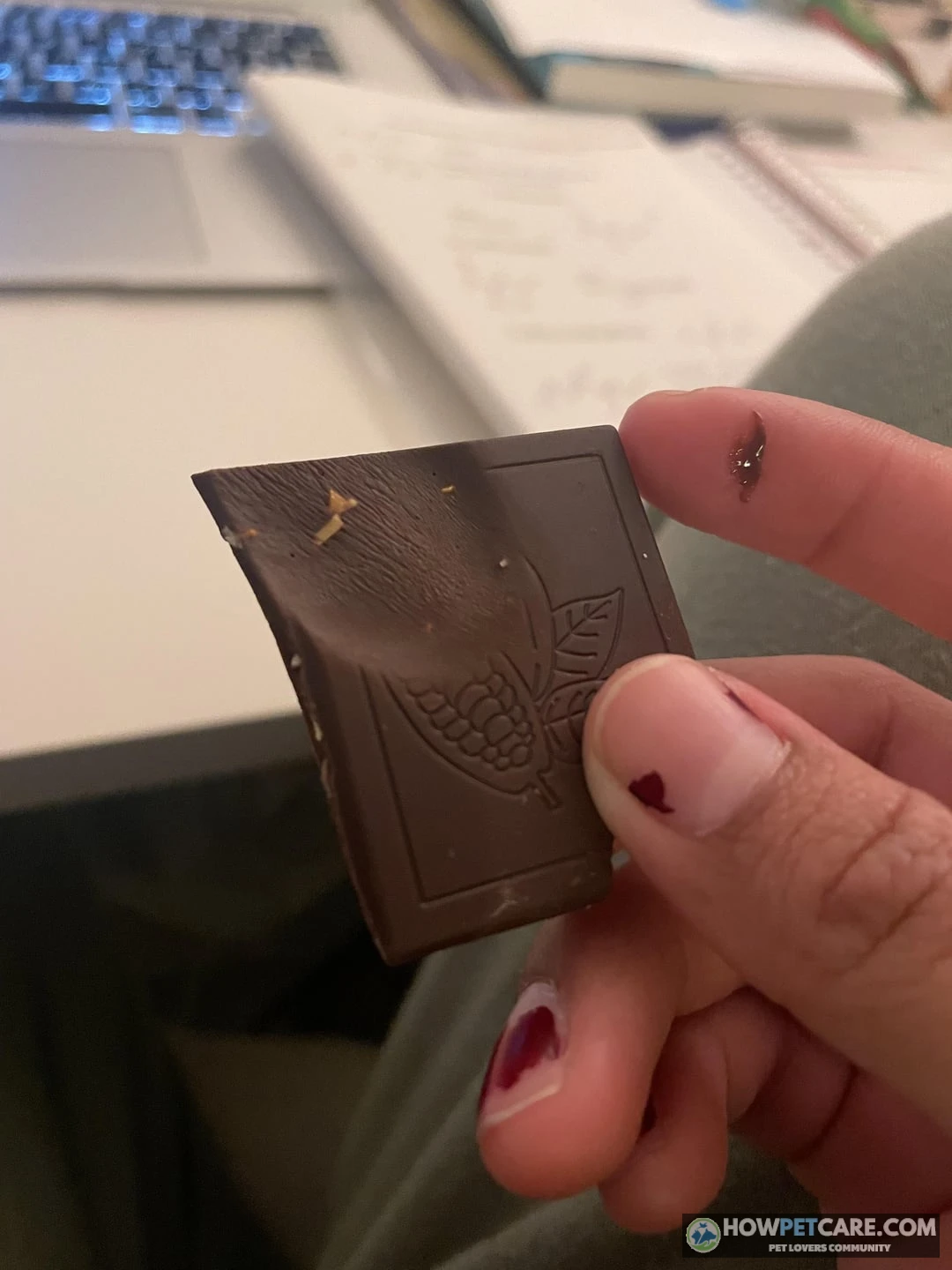
Prevention starts with keeping chocolate out of reach. Save the two poison-control numbers in your phone now, and keep the nearest 24-hour emergency vet’s address handy. Store chocolate, baking cocoa, and cocoa mulch in closed cabinets, especially around holidays like Easter, Halloween, and Christmas. Use bins with lids and don’t leave bags on counters. Tell guests and children not to share food with your cat. Alternatives include commercial cat treats and small amounts of plain cooked chicken or fish. Don’t give cats chocolate; call immediately if exposure happens, and never induce vomiting at home without veterinary instruction. For a wider list of dangerous foods, see Foods Toxic to Cats.
If you keep chocolate in a purse or bag, hang it on a hook out of your cat’s reach rather than leaving it on a table.
For information on other toxic foods, see the publication Foods Toxic to Cats.
FAQ
Why do cats go for chocolate if they can’t taste sweetness?
Cats lack a functioning sweet taste receptor, so they are usually drawn to the fat, smell or texture of a chocolate product rather than its sweetness. A cat showing interest does not mean the food is safe.
Is cocoa butter dangerous for cats?
Cocoa butter contains very little theobromine because it is the fat, not the cocoa solids. It is still rich and fatty, so large amounts can upset the stomach or trigger pancreatitis.
Are kittens more at risk from chocolate than adult cats?
Yes. Kittens weigh less, so a small amount of chocolate delivers a higher dose per kilogram, and they have less reserve if they become ill. Call a vet or poison control for any chocolate exposure in a kitten.
Is carob a safe substitute for chocolate in cat treats?
Carob does not contain theobromine or caffeine and is generally considered non-toxic to cats. It has no nutritional benefit for them, and sweetened carob products may contain sugar or xylitol, so check the ingredients.
Can a cat die from eating chocolate?
Yes, severe poisoning can cause seizures and heart rhythm problems that can be fatal, especially after dark chocolate, baking chocolate or cocoa powder. Prompt veterinary treatment greatly improves the odds.