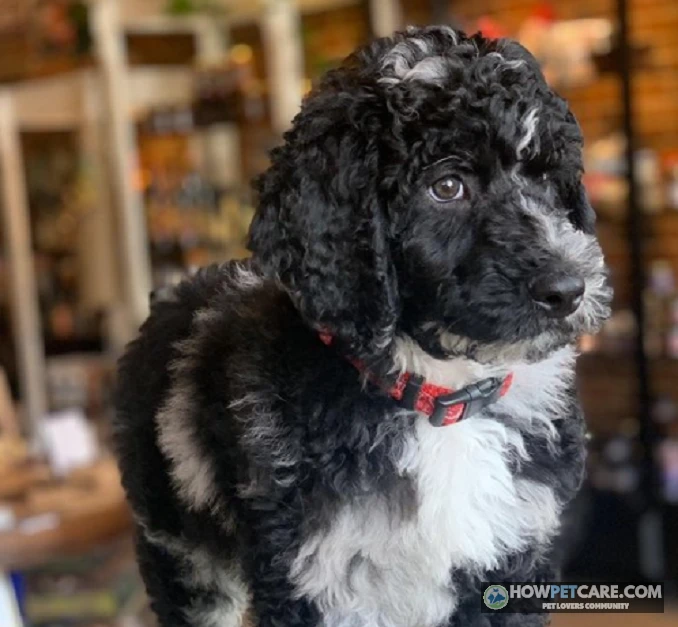

An Alsatian Poodle mix, or Shepadoodle, is a German Shepherd–Poodle cross with F1 adults commonly reaching 22–28 inches and 50–90 pounds. No Shepadoodle is truly hypoallergenic, daily exercise needs are 60–90 minutes, and first-year costs commonly range from about $3,100 to $10,250.
An Alsatian Poodle mix, usually called a Shepadoodle, is a cross between a German Shepherd (Alsatian) and a Poodle, most often a Standard Poodle. It is not an AKC-recognized breed, so appearance, size, coat, and temperament vary widely, especially by generation. A realistic adult range for a Standard Poodle x German Shepherd cross is about 22-28 inches and 50-90 pounds for an F1, with narrower but still variable bands for F1B and multigen dogs. Plan on 60-90 minutes of daily exercise plus mental work, and expect a responsible first-year budget to land between roughly $3,100 and $10,250 depending on breeder price, coat type, and training needs. No Shepadoodle is truly hypoallergenic; some are lower-shedding, and that has to be tested against the individual dog and your own allergy response.
What an Alsatian Poodle Cross Actually Is (and Why Generation Changes Everything)

Breeders developed the Alsatian Poodle cross to combine the German Shepherd’s loyalty and working ability with the Poodle’s intelligence and lower-shedding coat, two traits that also define many breeds of poodle dogs. The name "Alsatian" is the British/Commonwealth term for the German Shepherd, reflecting post-World War I sentiment rather than a separate breed. Both parent breeds rank among the most intelligent dogs in Stanley Coren’s canine intelligence research. The cross was reportedly used in U.S. military programs in the 1960s to explore working dogs for handlers with allergies.
Because this is a designer cross rather than a closed breed, littermates can differ sharply. Hybrid vigor can reduce the chance of some single-gene recessive disorders, but it does not protect against complex inherited problems such as hip dysplasia or bloat.
F1 vs F1B vs Multigen Explained
| Generation | Poodle share | Coat tendency | Shedding likelihood | Adult weight band (Standard Poodle x GSD) | Grooming intensity | Plain-language note |
|---|---|---|---|---|---|---|
| F1 | ~50% | Mixed: straight, wavy, or curly may appear in the same litter | Low to moderate; least predictable | Often 55-90 lb | Moderate to high | This is the widest outcome range; littermates can differ a lot |
| F1B | ~75% | More often wavy to curly | Lower on average than F1 | Often 50-80 lb | High | Backcrossing improves coat predictability somewhat, not certainty |
| F1BB / multigen | ~87%+ Poodle influence | Usually curlier or fleece-like | Often lowest-shedding group | Often 45-75 lb | High to very high | More Poodle coat does not remove all Shepherd traits or health risks |

Treat those predictions as probabilities, not guarantees. Coat, size, and shedding are polygenic, and two puppies from the same litter can land in different rows.
Why Littermates Can Look Different
One F1 litter can hold a puppy with a straight Shepherd-type coat, another with a wavy coat, and a third with a curly Poodle-type coat. Generation labels help, but they do not lock in phenotype. Ask the breeder how they tracked coat development and which puppies were selected for which homes.
How Big a German Shepherd Poodle Mix Gets by Generation and Poodle Size
For a Standard Poodle x German Shepherd cross, an F1 commonly reaches 22-28 inches at the shoulder and 50-90 pounds. F1B dogs often fall around 50-80 pounds, and multigen dogs often around 45-75 pounds, although individual variation is substantial. Miniature Poodle crosses exist but are less common and less predictable in adult size; no reliable size band should be promised for them. Adult size is usually reached between 12 and 18 months, with large-breed feeding and body-condition monitoring influencing growth.
Standard Cross Size Table
| Generation | Poodle Size | Adult Height | Adult Weight |
|---|---|---|---|
| F1 | Standard | 22-28 in (56-71 cm) | 50-90 lb (23-41 kg) |
| F1B | Standard | 22-27 in (56-69 cm) | 50-80 lb (23-36 kg) |
| Multigen | Standard | 21-26 in (53-66 cm) | 45-75 lb (20-34 kg) |
| F1/F1B | Miniature | Variable; less common | Variable; less predictable |

Don’t use Sheepadoodle figures from Old English Sheepdog crosses for this mix. If a listing mixes the two, ask for parent breed documentation.
Growth Stages and Feeding Calories
Feed a high-quality large-breed puppy formula and adjust portions to growth and body condition, transitioning to adult food around 12-18 months. Your veterinarian can set calorie targets based on weight and age. Avoid overfeeding during growth; excess weight increases stress on developing joints.
Is a Shepadoodle Really Hypoallergenic and Low-Shedding?
No dog is 100% hypoallergenic because allergens are present in dander, saliva, and urine. A Shepadoodle may be lower-shedding, especially with a curlier coat, but shedding and allergy risk are generation- and coat-dependent. F1B dogs, with roughly 75% Poodle influence, are more likely to inherit a lower-shedding coat than F1 dogs, but certainty is not guaranteed.
Coat types usually fall into three broad groups: straight Shepherd-type coats, wavy coats, and curly Poodle-type coats. Straight coats tend to shed more; curly coats usually shed less but mat more easily. A puppy’s coat at 8-12 weeks can hint at adult shedding, but generation and the Poodle parent’s coat genetics matter more.
Coat Type Prediction from a Puppy

Look for coat texture, curl pattern, and density, but treat the prediction as a probability. Ask the breeder which coat types have appeared in prior litters and whether the parents’ coats are known. A breeder who promises a guaranteed non-shedding puppy is using marketing language, not genetics.
Allergy Testing Before You Buy
Before committing, spend extended time with the specific puppy or an adult dog of a similar coat type. Rub the dog’s fur, then touch your face and eyes, and monitor symptoms for several hours. People with severe asthma or multiple pet allergies should be especially cautious. If possible, arrange a controlled visit and discuss the plan with an allergist before purchase.
Grooming Schedule by Coat Type: Brushing, Tools, and Professional Costs
Grooming is not optional for this cross. Fleece or curly coats need line brushing 3-4 times per week, while straight coats need 2-3 brushing sessions weekly to manage undercoat. Professional trims commonly cost $60-90 per visit for a doodle coat, though large or matted coats may cost more depending on region.
Fleece Coat Routine
- Daily: 5-10 minutes of line brushing with a slicker brush and metal comb.
- Twice weekly: Check behind ears, armpits, collar line, and groin for mats.
- Weekly: Clean ears, check nails, wipe eyes and beard.
- Monthly: Bath with dog-safe shampoo, thorough blow-dry, comb-out, sanitary trim check.
- Professional trim: every 6-8 weeks; budget $90-$180 for a 60-90 lb doodle coat depending on region and matting.

Straight Coat Routine
- 2-3 times weekly: Undercoat rake followed by slicker brush.
- Weekly: Comb feathering, check ears, nail check.
- Monthly: Bath only when needed, blow-dry to prevent trapped moisture, check skin for irritation.
- Professional trim: every 10-12 weeks for tidy-up; budget $70-$140.
Professional Grooming Costs
Keep these tools on hand: slicker brush, stainless steel comb with wide and narrow teeth, undercoat rake, dematting tool for small tangles only, nail grinder or clippers, ear cleaner and cotton pads, and detangling spray. Red flags include mats that cannot be combed through, skin odor, redness, repeated ear infections, or a groomer recommending shaving because the coat is packed with undercoat.
Daily Exercise and Structured Training: Needs and Consequences
A Shepadoodle usually needs 60-90 minutes of daily exercise plus structured mental enrichment. Because both parent breeds are highly intelligent, 15 minutes of focused brain work can calm and focus the dog more effectively than physical exercise alone. Without enough activity and training, this cross may become destructive, anxious, reactive, or excessively vocal.
Exercise Plan by Age

Puppies need short, frequent play and training sessions rather than long forced runs. Adolescents need leash skills, impulse control, and safe off-leash exercise in secure areas. Adults need a mix of walking, running, retrieval, scent games, obedience, and puzzle work. Adjust intensity for heat, joint health, and veterinary guidance.
Barking: Litter Variation vs Breed Trait
Barking varies by individual and upbringing rather than being uniform across the cross. Some dogs inherit the German Shepherd’s alertness, while others are quieter. Early training, adequate exercise, and management of triggers reduce nuisance barking. Don’t assume an entire litter will bark the same amount.
Inherited Health Problems and the Breeder Tests to Demand
Health risks that matter most include hip dysplasia, elbow dysplasia, degenerative myelopathy, bloat/GDV, and eye conditions. Hybrid vigor may lower some single-gene risks but does not eliminate polygenic or structural problems. Ask for documented screening rather than verbal assurances.
Health Risks That Matter Most

Hip and elbow dysplasia affect large, active dogs and can require costly management. Degenerative myelopathy is a progressive spinal condition for which DNA testing exists. Bloat/GDV is an emergency in deep-chested dogs; discuss gastropexy with your veterinarian. Eye and cardiac screening help identify inherited risks before breeding.
Breeder Interview Kit and Paperwork
Ask these in order and write down exact answers. Do not accept "vet checked" as a substitute for named tests.
Which OFA or PennHIP hip result is on file for both parents, and what is the rating?
- Pass: named registry number or certificate image
- Red flag: "our vet looked at the X-rays"
- Probe again: "Can you email the certificate before I visit?"
Are both parents’ elbows screened through OFA?
- Pass: OFA elbow clearance
- Red flag: no elbow screening
- Probe again: "Which elbow grade was recorded?"
Do you DNA test for degenerative myelopathy (DM) in both parents?
- Pass: clear/clear or clear/carrier pairing with an explanation
- Red flag: "Shepherds don’t get that"
- Probe again: "Can I see the lab report?"
What eye screening was done, and when?
- Pass: CAER/OFA eye exam within the last 12 months
- Red flag: no eye exam or only a puppy wellness check
- Probe again: "Is the eye exam listed in the database?"
Was cardiac screening performed?
- Pass: cardiologist or OFA cardiac result
- Red flag: "vet listened with a stethoscope"
- Probe again: "Was it an echocardiogram or auscultation only?"
What generation is this litter, and how do you know?
- Pass: F1/F1B/multigen with parent history
- Red flag: "hypoallergenic generation"
- Probe again: "Can you show the parents’ pedigree or DNA results?"
How do you match puppies to homes?
- Pass: temperament notes and lifestyle questions
- Red flag: "first deposit gets first pick"
- Probe again: "Can I see your matching notes?"
What is your socialization plan from birth to 8 weeks?
- Pass: named exposures and handling routine
- Red flag: "they live with the family" only
- Probe again: "Which sounds, surfaces, and people are introduced?"
What health guarantee do you provide, and for how long?
- Pass: written contract with specific conditions
- Red flag: verbal promise only
- Probe again: "What happens if dysplasia is diagnosed?"
Will you take the dog back at any age?
- Pass: clear return policy
- Red flag: "we don’t do returns"
- Probe again: "Is that in writing?"
Which vaccines, deworming, and microchip records will I receive?
- Pass: itemized veterinary record
- Red flag: handwritten list only
- Probe again: "Can I contact the clinic directly?"
Can you provide two recent buyer references?
- Pass: references with similar coat and generation
- Red flag: only testimonials on a website
- Probe again: "Can I ask them about grooming and health?"
Walk away if a breeder refuses certificates, pressures you for a deposit, or markets "100% hypoallergenic."
First-Year Cost Breakdown: Puppy Price Through Training and Gear
A reputable health-tested Shepadoodle puppy in the U.S. commonly costs $1,500-$3,500, with some breeders such as Double R Doodles listing around $1,800. One source places first-year ownership costs around $2,500-$4,500, but that figure excludes many coat-driven and training variables. Use the following planning range instead.
One-Time Costs
Puppy price, initial veterinary package, spay/neuter, supplies, and crate make up most first-year one-time spending. Spay/neuter costs vary by size and region, and deep-chested puppies may warrant a gastropexy discussion with the veterinarian.
Recurring Monthly Costs
Food, grooming, training classes, insurance or an emergency fund, and routine supplies recur throughout the year. Curlier coats generally cost more to maintain than straight coats.
Month-by-Month Timeline

| Expense | Low | Typical | High | Notes |
|---|---|---|---|---|
| Puppy price | $1,200 | $2,200 | $3,500 | Reputable health-tested breeder; avoid bargain litters |
| Initial vet package | $350 | $600 | $900 | Exams, vaccines, fecal, microchip |
| Spay/neuter | $250 | $450 | $750 | Ask whether gastropexy is recommended for deep-chested pups |
| Food | $450 | $700 | $1,000 | Large-breed puppy food; adjust for adult size |
| Training classes | $200 | $450 | $900 | Puppy class plus basic manners; private help costs more |
| Supplies and crate | $300 | $500 | $800 | Bed, bowls, leash, harness, enrichment toys |
| Grooming | $350 | $700 | $1,200 | Home tools plus professional trims; curly coats cost more |
| Insurance or emergency fund | $300 | $600 | $1,200 | Monthly premium or reserved savings |
| First-year total | $3,100 | $6,200 | $10,250 | Adjust for your region, coat type, and training needs |
Use this as a planning range, not a quote. The biggest swing factors are breeder price, coat-driven grooming, and whether you need private training.
Shepadoodle vs Purebred German Shepherd and Other Doodles
Choose a Shepadoodle if you want a large, trainable, potentially lower-shedding working cross and can commit to daily exercise plus frequent grooming. Choose a purebred German Shepherd if predictability, health-testing clarity, and working performance matter most. Choose a Goldendoodle for a generally easier family rhythm. Choose a Bernedoodle only if you accept a large, high-grooming dog and have budgeted accordingly.
Comparison Table
| Criterion | Shepadoodle | Purebred German Shepherd | Goldendoodle | Bernedoodle | Best for |
|---|---|---|---|---|---|
| Shedding | Low to moderate, coat-dependent | High | Low to moderate | Low to moderate | Goldendoodle or Bernedoodle if low shedding is the top priority |
| Size predictability | Moderate | High | Moderate | Moderate | Purebred German Shepherd |
| Exercise need | High | Very high | Moderate to high | Moderate | Goldendoodle for lower daily intensity |
| Grooming burden | High | Low to moderate | High | High | Purebred German Shepherd |
| Trainability | High but sensitive | Very high | High | High | Purebred German Shepherd for precision work |
| Family suitability | Good with training and exercise | Good with experienced handling | Often easier for first-time owners | Often gentle but large | Goldendoodle for beginner households |
| Health testing clarity | Varies by breeder | Usually clearer breed norms | Varies by breeder | Varies by breeder | Purebred German Shepherd |
| Lifetime cost | Medium to high | Medium | Medium to high | High | Purebred German Shepherd on routine grooming |
Best Fit by Household Type
A Shepadoodle is a poor fit for households that cannot provide daily exercise, cannot afford recurring grooming, or expect a guaranteed low-shedding dog. It is also a poor fit for first-time owners seeking an easy, low-maintenance pet. It can fit active households that want a large, intelligent companion and will invest in training, grooming, and breeder vetting.

| Generation | Poodle Share | Coat Tendency | Shedding Likelihood | Adult Weight Range | Adult Height Range | Grooming Intensity |
|---|---|---|---|---|---|---|
| F1 | ~50% | Mixed: straight, wavy, or curly | Low to moderate | 50-90 lb (23-41 kg) | 22-28 in (56-71 cm) | Moderate to high |
| F1B | ~75% | Wavy to curly | Low | 50-80 lb (23-36 kg) | 22-27 in (56-69 cm) | High |
| F1BB / Multigen | ~87%+ | Curly or fleece-like | Very low | 45-75 lb (20-34 kg) | 21-26 in (53-66 cm) | High to very high |
FAQ
How much should I feed a Shepadoodle puppy?
Feed a high-quality large-breed puppy formula and adjust portions to growth and body condition, transitioning to adult food around 12-18 months. Your vet can set calorie targets based on weight and age.
Do Shepadoodles bark a lot?
Barking varies by individual and upbringing rather than being uniform across the cross; some inherit the German Shepherd’s alertness while others are quieter. Early training and adequate exercise reduce nuisance barking.
Can I predict adult shedding from a puppy’s coat?
Coat type at 8-12 weeks hints at adult shedding, but generation and the Poodle parent’s coat genetics matter more. Curlier coats generally shed less than straight Shepherd-type coats.
What questions should I ask a Shepadoodle breeder?
Ask for OFA/PennHIP hip and elbow certificates, DM DNA results, cardiac and eye screening, and parent temperaments. Walk away if they cannot provide documented health testing.
How do Shepadoodles compare with Goldendoodles?
Shepadoodles are typically larger and more protective with higher exercise needs, while Goldendoodles are usually easier-going and more consistently low-shedding. Choose based on space, activity level, and allergy sensitivity.