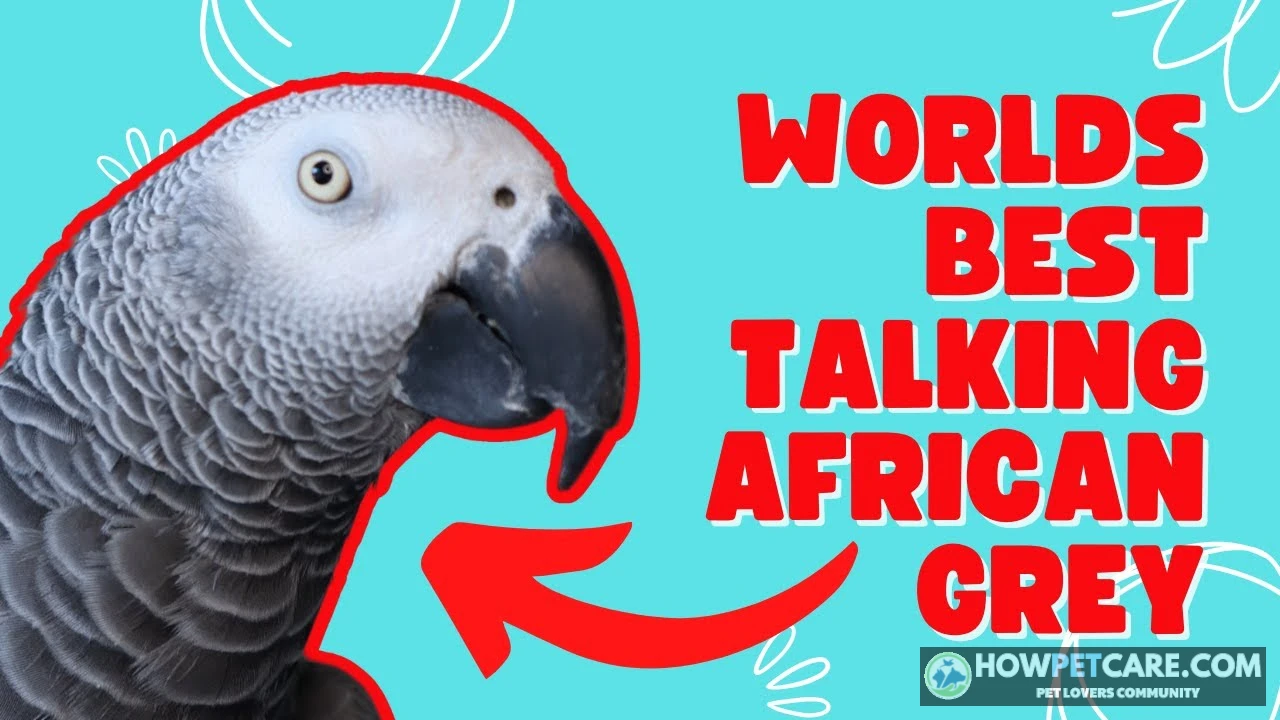

The strongest talking bird species, by their standout strength:
- African grey parrot — clearest, most varied speech; large commitment
- Budgerigar (budgie) — biggest vocabulary potential for the lowest cost
- Amazon parrot — expressive talker and singer, but loud
- Quaker parakeet — quick learner; restricted in some US states
- Indian ring-necked parakeet — clear, sometimes mechanical-sounding words
- Hill myna — notably clear imitation, but specialized care
No species is guaranteed to talk: individual birds vary, and some never speak.
The best talking bird for you depends on what you value. African grey parrots are known for clear speech, budgerigars can develop surprisingly large vocabularies for their size and cost, and Amazon parrots are often expressive, frequent talkers. If you’re looking for a smaller, generally more manageable first bird, compare budgies and cockatiels. For stronger speech potential, consider a quaker parakeet or an Amazon only if its noise, care needs, and long lifespan suit your home. No species guarantees speech: birds vary as individuals, and any bird may never talk.
Mimicking words is only one part of choosing a pet. Before contacting a breeder or rescue, weigh noise, daily social needs, legal restrictions, veterinary access, and the cost of care throughout the bird’s life.
Best talking birds ranked by ability—and who each suits
Each ranking reflects a particular strength, not a universal best-to-worst order. A bird with impressive speech potential may be a poor match for a household that can’t accommodate its noise or care needs.
Best for clear speech: African grey parrot
African greys are among the strongest candidates for clear, varied speech. Some learn words and sounds in context, but vocabulary depends on the individual; even a well-cared-for grey may never speak. Their intelligence and social needs call for steady interaction, enrichment, and an experienced, prepared household. A typical adult is about 13 inches long, and a lifespan of several decades makes this a major commitment. Purchase prices commonly fall around $1,500–$4,000, but vary by breeder, region, and year.

Best small-budget talker: budgerigar
The budgerigar, usually called a budgie or parakeet in the United States, is a small bird with remarkable mimicry potential. Puck the budgie holds the Guinness record for the largest avian human vocabulary, at 1,728 words, and was reported to form original phrases. That record shows what an exceptional individual can do—not what a typical pet will learn. Budgies may speak in a quick, somewhat raspy voice that can be harder to understand than a larger parrot’s. They’re usually less costly to acquire and house than large parrots, but they still need daily care, social contact, and veterinary attention.
Best balance of talking and sociability: Amazon or quaker parrot
Amazon parrots can be expressive talkers and singers, but they can also be loud. Their size, strong beaks, and long lifespan make them a better fit for owners prepared for a demanding companion than for people choosing a first bird on speech alone. Typical purchase prices range from about $800 to $3,000.

Quaker parrots, also called monk parakeets, can learn quickly and may suit someone seeking a smaller, sociable parrot. They’re restricted in some US jurisdictions, so confirm local rules before considering one. A typical purchase price ranges from about $250 to $800, with wide regional variation. If quakers aren’t legal where you live, compare a budgie, cockatiel, or ring-necked parakeet instead.
Other candidates have trade-offs. Cockatiels are better known for whistles than clear words, though some learn short phrases. Cockatoos may mimic speech but are often very loud and need substantial social attention. A myna can imitate human speech clearly, but its species-specific diet and housing needs make it a specialized choice rather than an easy shortcut to a talking pet.
Compare talking bird species side by side
The table offers broad planning ranges, not promises. Speech, temperament, and noise vary among individuals. Prices vary by breeder, region, and year; contact local rescues, reputable breeders, and avian veterinarians for current estimates.
| Species | Speech clarity and typical ability | Noise level | Size | Purchase price range | Lifespan | Training difficulty |
|---|---|---|---|---|---|---|
| Budgerigar (budgie) | Can mimic words; often quick and somewhat raspy | Low to moderate | About 7 inches | $20–$60 | About 5–10 years | Easier, but no guarantee of speech |
| Cockatiel | Often whistles; some learn words or short phrases | Low to moderate | About 12 inches | $100–$250 | About 15–25 years | Easier for basic sounds |
| Indian ring-necked parakeet | Can produce clear, sometimes mechanical-sounding words | Moderate | About 16 inches | $400–$800 | About 25–30 years | Moderate |
| Quaker parakeet | Often chatty; may learn words and phrases | Moderate | About 11–12 inches | $250–$800 | About 20–30 years | Easier to moderate |
| Green-cheeked conure | Speech may be muffled; often learns fewer words | Moderate | About 10 inches | $300–$600 | About 20–30 years | Moderate |
| African grey | Often clear, varied mimicry | Moderate, with loud calls | About 13 inches | $1,500–$4,000 | About 40–60 years | Moderate; needs consistent interaction |
| Amazon parrot | Expressive speech and song are possible | High | About 15–17 inches | About $800–$3,000 | About 40–60 years | Moderate |
| Cockatoo | May learn words; often more notable for calls and whistles | Very high | About 18 inches | About $1,000–$5,000 or more | About 40–70 years | Moderate to difficult |
| Macaw | May learn clear words or phrases; speech is not its only or defining vocalization | Very high | About 30–36 inches | About $1,500–$4,000 or more | About 50–80 years | Difficult for many beginners |
| Hill myna | Can imitate speech with notable clarity | Moderate | About 11–12 inches | About $500–$1,500 | About 12–25 years | Moderate; specialized care |
| European starling | Can mimic sounds, whistles, and phrases | Low to moderate | About 8 inches | Often available through rescue; prices vary | About 5–15 years | Variable; specialized care |

Sizes, prices, and lifespan figures are approximate planning ranges, not guarantees. Vocabulary estimates are especially unreliable: a species’ potential doesn’t predict an individual bird’s results. Budgies, cockatiels, and parrots aren’t the only birds that mimic speech; mynahs and starlings do too. Crows and ravens aren’t ordinary legal pet options in the United States; see the legal section before considering any wild bird.
What each species’ speech sounds like
A budgie’s voice can be high-pitched and rapid, while a cockatiel may whistle more readily than it speaks. African greys and ring-necked parakeets can produce clearer words, and an Amazon may sound animated and loud. Hill mynas are also known for clear imitation. These are tendencies, not guarantees. If possible, listen to the individual bird rather than choosing from a species description alone.
Why vocabulary estimates are not guarantees
Puck’s record is an extraordinary result, not a typical target: the record-holder learned 1,728 words. Even within a species known for mimicry, individual birds differ. A bird may learn only a few sounds, or none. Don’t pay more or choose a less suitable species on the assumption that it will talk.
Choose by experience, space, noise tolerance, and household
Best talking birds for beginners
Budgies and cockatiels are common starting points for people new to birds. Their smaller size and lower acquisition costs can make them more manageable than large parrots. If teaching a first word is the priority, a budgie is often the most practical place to start: many learn to mimic readily, and the stakes are lower if yours never speaks. But “more manageable” doesn’t mean effortless: they need appropriate housing, routine veterinary care, interaction, and enrichment. Neither species is guaranteed to learn words. Quaker parrots can be engaging learners, but check legality and be ready for their social needs and vocalizations.
Apartment and low-noise considerations
No talking bird is reliably quiet. Budgies and cockatiels may be more practical candidates in an apartment than an Amazon, cockatoo, or macaw, but an individual bird can still call loudly. Think about thin walls, lease rules, neighbors, and the hours when vocalizing would be disruptive. Neither a species description nor a seller can promise a quiet bird.

Birds for homes with children
An adult should remain responsible for the bird’s care, and children should be supervised around it. Even a small bird can be hurt by rough handling; larger parrots can bite hard. Teach children to give the bird space and recognize when it’s uncomfortable. Never choose a bird because it’s expected to entertain a child by talking.
Use this filter before you shortlist:
- Shared walls or low noise tolerance: Start by comparing budgies and cockatiels; don’t assume either will be silent.
- Limited daily time: Consider whether you can provide regular interaction and enrichment. A bird left alone for long periods may not be a good match; research the needs of the specific species and individual.
- Young children: Prioritize supervised, gentle interaction and adult responsibility. Be cautious about larger parrots and their bite risk.
- Tight budget: Compare the full setup and recurring costs, not just the bird’s purchase price.
- Interested in a quaker: Verify state and local rules before committing; if restricted, consider a legal alternative such as a budgie or cockatiel.
- Not ready for decades of care: Avoid choosing a long-lived parrot without a realistic plan for future care.
Calculate purchase, first-year, and lifetime ownership costs
The purchase price is only the entry cost. The ranges below are broad US planning estimates; prices vary by breeder, region, and year. Cage needs, veterinary fees, adoption costs, and the bird’s health can shift the total. Call local avian veterinary practices for current exam costs before bringing a bird home.
First-year setup versus annual care
| Cost item | Small tier: budgie or cockatiel | Mid tier: conure, quaker, or ring-necked parakeet | Large tier: African grey, Amazon, or macaw |
|---|---|---|---|
| Bird purchase or adoption | $20–$250 | $250–$800 | $800–$4,000 or more |
| Cage | $60–$150 | $150–$400 | $400–$1,500 |
| Perches, bowls, toys, and carrier | $50–$100 | $80–$150 | $120–$250 |
| Initial avian-vet exam and possible tests | $75–$200 | $75–$250 | $100–$300 |
| Estimated first-year total | About $250–$700 | About $600–$1,600 | About $1,500–$6,000 |
| Annual food | $100–$200 | $150–$300 | $300–$600 |
| Annual toys and enrichment | $50–$100 | $75–$150 | $150–$400 |
| Annual wellness visit | $75–$150 | $75–$200 | $100–$250 |
| Estimated annual care | About $225–$450 | About $300–$650 | About $550–$1,250 |

These are estimates, not quotes, and may exclude emergency treatment, boarding, repairs, or replacement equipment. A single emergency visit can add hundreds or more, so keep a reserve appropriate to your circumstances. The first-year totals are rounded planning ranges, not a guarantee that every listed expense will fit within them.
Lifetime commitment by lifespan
A low purchase price doesn’t make a bird a low-commitment pet. Budgies generally have shorter lifespans than large parrots, while greys, Amazons, and macaws may need care across several decades. Multiplying annual estimates by a bird’s full lifespan gives only a rough scale: costs change over time, and health needs are unpredictable. Before choosing a long-lived parrot, consider who could care for it if your circumstances change.
Check US ownership laws before choosing a species
Rules depend on state, county, and city, and can change. Check with your state wildlife agency, state agriculture department, and local authorities before paying a deposit or bringing home a regulated species. Ask what permits, records, or proof of lawful origin are required.
Quaker parakeet restrictions
Quaker parakeets have been restricted or prohibited in some places because escaped birds can establish colonies and raise agricultural concerns. Rules vary by location, and a list found online may be outdated. Don’t assume a quaker is legal because a nearby store sells one, or illegal because an old article says so. Confirm the current rule for your exact location with the relevant state agencies and municipality. Consequences depend on the jurisdiction and may include losing the bird.
Why native crows and ravens are not pet options
Native crows and ravens are protected under the federal Migratory Bird Treaty Act. Keeping one as a pet without required federal authorization is generally prohibited; permits are for specific purposes such as rehabilitation, education, or research, not ordinary companionship. Don’t take a wild bird home, even if it appears tame or can mimic speech. European starlings are non-native and aren’t covered by that federal law, but state and local rules and welfare requirements still matter. A starling’s legal status doesn’t make it an easy or suitable pet.

How birds learn speech—and how to teach the first words
Some birds have vocal learning: they can copy sounds they hear in social settings. Parrots, starlings, mynahs, and corvids are among the groups known to learn vocalizations through social experience. A bird’s syrinx, its vocal organ, produces sound; mimicry isn’t the same as human speech or proof that a bird understands language. Birds also vocalize to communicate with one another, not just to imitate people.
A practical first-words training plan
Training may take weeks or months, and no method can guarantee a talking bird. Keep sessions brief and positive, and stop if the bird seems stressed or loses interest.
- Choose one useful word. Pick a word tied to a repeated moment, such as “hello” when you enter the room.
- Use the same cue consistently. Say it clearly in the same context, rather than repeating many words throughout the day.
- Practice briefly in a calm setting. Try a few minutes at a time when the bird is alert and comfortable. Keep enough distance for it to remain relaxed.
- Notice and reward attempts. If the bird makes a sound resembling the target, respond with attention or a small, appropriate reward. Rewarding effort is more useful than demanding a perfect word.
- Repeat the routine. Use the word in its everyday context and track changes over time. Avoid long sessions or pressure.
- Add another word only if the first is emerging. Progress can be slow; if the bird doesn’t speak, keep interacting without turning speech into a requirement.
Speech, comprehension, and health
A bird may associate a word with a person, routine, or outcome without understanding language the way a human does. Irene Pepperberg’s work with the African grey Alex helped bring attention to complex animal communication, but a famous example can’t predict an individual pet’s ability.
Good general health supports normal vocalization, but no specific diet can guarantee speech. Provide appropriate nutrition and routine care for the species. If a bird’s voice changes suddenly, becomes hoarse, or is accompanied by breathing difficulty, contact an avian veterinarian promptly. Respiratory or syrinx problems can affect vocalization; diagnosis and treatment belong with a veterinarian, not a speech-training plan.
A bird that suddenly stops vocalizing or has breathing symptoms needs an avian-veterinary assessment. Don’t assume the problem is a training setback.
Troubleshoot silence or unwanted words, then make a shortlist
When a bird stops talking
A bird may become quieter because of changes in routine, stress, age, or other factors. A sudden voice change can also signal a health problem, especially if it occurs with changes in breathing, appetite, or activity. Contact an avian veterinarian when the change is abrupt, persistent, or paired with other symptoms. Don’t pressure the bird to perform or interpret silence as misbehavior.
If a bird repeats unwanted words
Birds may repeat words that get a strong reaction. Avoid shouting, laughing, or scolding in response if that attention seems to encourage the sound. Calmly redirect the bird and reward sounds or behaviors you’d rather hear. Don’t punish or isolate it; speech isn’t a reliable measure of a bird’s wellbeing, and training can’t erase every learned sound on demand.
A pre-adoption fit checklist
Before contacting a reputable rescue or breeder, narrow your choices to two or three species and check each against these questions:
- Is the species legal in your state and municipality, and can you verify its lawful source?
- Can your household accommodate its typical noise and daily social needs?
- Does the bird’s adult size fit the space and equipment you can provide?
- Can you afford setup, routine care, and unexpected veterinary costs—not just the purchase price?
- Are you prepared for the likely lifespan and a plan if your circumstances change?
- Is an avian veterinarian accessible, and can you meet the care needs of this individual bird?

Then meet the individual bird and ask about its history, diet, health records, and behavior. A budgie or cockatiel may suit someone seeking a smaller first bird; a quaker or ring-necked parakeet may appeal to an owner prepared for more vocal interaction and legal checks; an African grey or Amazon calls for a substantial long-term commitment. Choose the bird whose needs fit your life even if it never says a word.
| Species | Speech Clarity and Typical Ability | Noise Level | Size | Purchase Price Range | Lifespan | Training Difficulty |
|---|---|---|---|---|---|---|
| African grey | Often clear, varied mimicry | Moderate, with loud calls | About 13 inches | 1,500–4,000 | About 40–60 years | Moderate; needs consistent interaction |
| Amazon parrot | Expressive speech and song are possible | High | About 15–17 inches | 800–3,000 | About 40–60 years | Moderate |
| Budgerigar (budgie) | Can mimic words; often quick and somewhat raspy | Low to moderate | About 7 inches | 20–60 | About 5–10 years | Easier, but no guarantee of speech |
| Cockatiel | Often whistles; some learn words or short phrases | Low to moderate | About 12 inches | 100–250 | About 15–25 years | Easier for basic sounds |
| Cockatoo | May learn words; often more notable for calls and whistles | Very high | About 18 inches | 1,000–5,000 or more | About 40–70 years | Moderate to difficult |
| European starling | Can mimic sounds, whistles, and phrases | Low to moderate | About 8 inches | Often available through rescue; prices vary | About 5–15 years | Variable; specialized care |
| Green-cheeked conure | Speech may be muffled; often learns fewer words | Moderate | About 10 inches | 300–600 | About 20–30 years | Moderate |
| Hill myna | Can imitate speech with notable clarity | Moderate | About 11–12 inches | 500–1,500 | About 12–25 years | Moderate; specialized care |
| Indian ring-necked parakeet | Can produce clear, sometimes mechanical-sounding words | Moderate | About 16 inches | 400–800 | About 25–30 years | Moderate |
| Macaw | May learn clear words or phrases; speech is not its only or defining vocalization | Very high | About 30–36 inches | 1,500–4,000 or more | About 50–80 years | Difficult for many beginners |
| Quaker parakeet | Often chatty; may learn words and phrases | Moderate | About 11–12 inches | 250–800 | About 20–30 years | Easier to moderate |

FAQ
Do talking birds understand the words they say?
Most pet birds learn sounds through mimicry and may associate particular words with people, routines, or outcomes. That is not the same as human-like understanding of language.
Can a bird learn to talk at any age?
Some birds learn sounds at different ages, but age, individual temperament, socialization, and prior experience all affect progress. There is no guaranteed age or training method that will make a bird speak.
Are myna birds good pets for people looking for a talking bird?
Myna birds can imitate human speech clearly, but their specialized care, diet, housing needs, and availability mean they are not automatically an easier choice than a parrot. Research species-specific welfare and legal requirements before considering one.
Can diet or illness affect a bird’s voice?
Poor overall health or respiratory and syrinx problems can affect vocalization, while a balanced diet supports general wellbeing. A sudden voice change or breathing difficulty warrants prompt advice from an avian veterinarian.