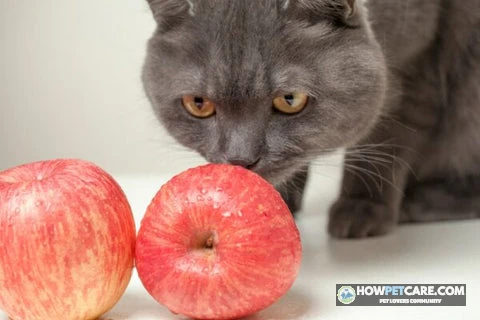

Yes, cats can eat apples—but only a small amount of plain, fresh apple flesh. Peel, core, and seed it, then dice it into ¼-inch pieces. Seeds, stems, leaves, and core contain cyanogenic compounds and must never be fed. Keep apple within about 10% of daily calories as an occasional treat.
Yes — cats can eat a small amount of plain, fresh apple flesh, but only the flesh. Apple seeds, stems, leaves, and core are unsafe because they contain cyanogenic compounds. Apple is an occasional treat, not a nutritional need, for an obligate carnivore.
Can Cats Have Apples? Yes—But Only the Flesh, Prepared Correctly
The 10-second verdict
Apple flesh is non-toxic to cats in tiny amounts. The seeds, stem, leaves, and core are the real danger because they contain amygdalin, a cyanogenic glycoside. If your cat only nibbled peeled flesh with no seeds, core, or stem, there’s no emergency — just watch for 24–48 hours. If seeds or core were eaten, act immediately: remove remaining apple parts, do not induce vomiting unless directed, call your veterinarian or ASPCA Animal Poison Control (888-426-4435), and monitor for drooling, vomiting, diarrhea, lethargy, breathing changes, or collapse. Follow the emergency checklist in the section below before doing anything else.

Why apples add almost nothing nutritionally
Cats are obligate carnivores that lack sweet-taste receptors, so they don’t crave or need fruit. Apple contributes no essential nutrient a complete cat food doesn’t already provide. For a broader overview of foods that fit a cat’s diet, apple should remain an occasional novelty, not a dietary staple, and kept inside the 10% treat-calorie rule.
How Much Apple Can a Cat Eat by Body Weight
Weight-based portion table
Use body weight to size a single serving instead of guessing. Treats should stay within about 10% of daily calories, with the remaining 90% from a complete and balanced cat food.

| Cat weight | Maximum apple flesh per serving | Sugar in that serving | Frequency |
|---|---|---|---|
| 5 lb (2.3 kg) | 5–8 g (about 1 small ¼-inch cube to 1 tsp diced) | ~0.5–1.0 g | Once weekly or less |
| 10 lb (4.5 kg) | 10–15 g (about 2–3 small cubes) | ~1.0–2.0 g | 1–2 times weekly |
| 15 lb (6.8 kg) | 15–20 g (about 3–4 small cubes) | ~1.5–2.5 g | 1–2 times weekly |
| 20 lb (9.1 kg) | 20–25 g (about 4–5 small cubes) | ~2.0–3.0 g | 1–2 times weekly |
Use the lower end for indoor, senior, overweight, or diabetic-risk cats.
Sugar, calorie, and fiber math
Plain apple flesh provides roughly 52 calories per 100 g, so a 10–15 g serving is about 5–8 calories. A 10-pound cat typically needs roughly 220–260 calories per day, giving a 10% treat allowance of about 22–26 calories. That means the full treat budget could in theory hold 42–50 g of apple, but a safer practical serving is 10–15 g. If each cube is about ¼ inch (6 mm), each weighs roughly 2–3 g, so 4–6 cubes equal a modest serving and 8–10 cubes would use most of the treat allowance. For a first trial, offer 2–3 cubes and watch stool, appetite, and behavior for 24 hours. Cats also need adequate taurine intake for cats from complete food, so fruit should never displace balanced meals.
A theoretical maximum of ¼ of an apple per day for a 10-pound cat exists in some guidance, but treat that as an upper ceiling, not a target. Start with the smallest listed amount and monitor stool and appetite.
Can Cats Eat Apple Skin, Applesauce, Juice, Dried Apple, or Pie?
Fresh raw versus cooked
Fresh raw flesh is the safest form when washed, peeled, cored, seeded, and cut small. Apple skin isn’t toxic, but it’s harder to digest and may carry pesticide residue or commercial wax, so peeling is the safer choice. Cooked plain apple is acceptable only when unsweetened and completely seed-free.
Unsweetened applesauce may be used in tiny amounts, including for hiding medicine, but it concentrates sugar. Avoid juice, dried apple, pie filling, candy apples, and sweetened sauces.

Unsafe apple products
| Product | Safe? | Key risk | Notes |
|---|---|---|---|
| Fresh raw apple flesh | Yes, in tiny amounts | Sugar and choking if pieces are large | Wash, peel, core, seed, and dice small |
| Cooked plain apple | Yes, in tiny amounts | Added sugar or spices in recipes | Must be unsweetened and completely seed-free |
| Unsweetened applesauce | Limited use | Concentrated sugar | Tiny amounts only; can help hide medicine |
| Dried apple | No or avoid | Very concentrated sugar and sticky texture | Not a routine cat treat |
| Apple juice | No | High sugar, no fiber, possible additives | Avoid entirely |
| Apple pie filling | No | Sugar, spices, possible xylitol or other additives | Avoid entirely |
| Candy apple | No | Sugar coating, stick hazard, dental risk | Avoid entirely |
| Apple used to hide medicine | Conditional | Depends on the product used | Use only a pea-sized amount of plain unsweetened applesauce or flesh if the medication allows food |
When in doubt, choose fresh peeled, cored, seeded, diced flesh in the smallest listed portion.
Can Kittens Eat Apples?
Kittens can have a very small taste of plain apple flesh after weaning. Prioritize complete kitten food; treats should stay minimal. Never give kittens seeds, core, stem, or leaves. Watch for choking because kittens are small and inexperienced chewers. The safe cut size remains ¼ inch (about 0.63 cm).

Which Cats Should Avoid Apples Entirely?
Cats with diabetes, obesity, inflammatory bowel disease (IBD), or chronic kidney disease (CKD) need individualized veterinary guidance. Apple sugar can complicate glycemic control in diabetic cats. Fiber and acidity may aggravate sensitive gastrointestinal tracts. Senior cats and cats on prescription diets should be cleared by a veterinarian.
Chronic kidney disease and apple safety
CKD cats often need carefully managed phosphorus, potassium, and hydration. Apple adds sugar and water but no therapeutic benefit, and its acidity may not suit every CKD patient. Ask your veterinarian before offering apple to a cat with CKD or any prescription renal diet.
Diabetes, obesity, and IBD considerations
For diabetic cats, even small sugar loads can disrupt glucose control. For obese cats, apple calories count toward an already tight treat budget. For IBD cats, fiber and acidity may flare symptoms. When in doubt, skip apple and use a vet-approved treat instead.
Quick decision checklist before offering apple
- Offer apple only if the cat is a healthy adult or senior cleared by a veterinarian.
- Skip apple for kittens unless it is a very small post-weaning taste and the kitten is eating complete kitten food.
- Skip apple for cats with diabetes, obesity, IBD, chronic kidney disease, or a prescription diet unless the veterinarian approves.
- Skip apple if the cat has had vomiting, diarrhea, poor appetite, or dental pain in the last 24 hours.
- Confirm the piece is peeled, cored, seeded, stem-free, and cut into ¼-inch cubes.
- Confirm the serving fits inside today’s 10% treat allowance.
- Stop and call the vet if the cat shows drooling, vomiting, diarrhea, lethargy, or breathing changes after eating apple.
Toxic Dose: Apple Seeds, Stems, and Leaves by Cat Weight
Amygdalin and cyanide poisoning

Apple seeds contain amygdalin, which can release cyanide during digestion. Stems and leaves also pose cyanide-related risk and should never be fed. No established safe seed count for cats exists; the safest threshold is zero. Risk depends on body weight, number of seeds, chewing, and individual sensitivity. Human toxicology references cite 83–500 seeds as a cyanide concern for people, but that range is not a feline guideline and should not be applied to cats.
Why zero seeds is the only safe rule
Because no feline lethal-dose threshold is established in the cited evidence, don’t count seeds and hope. Remove every seed, stem, leaf, and core piece before any apple reaches your cat.
Emergency First Aid if Your Cat Eats Apple Seeds or Core
Immediate checklist
- Remove all remaining apple, seeds, stem, leaves, and core pieces from the cat’s reach.
- Check the mouth gently for visible seeds or core fragments; do not force the mouth open.
- Do not induce vomiting unless a veterinarian or poison-control professional specifically directs it.
- Call your veterinarian, an emergency vet, or ASPCA Animal Poison Control (888-426-4435) with the cat’s weight, estimated seed count, time of ingestion, and symptoms.
- Watch for drooling, vomiting, diarrhea, abdominal pain, lethargy, weakness, fast or labored breathing, dilated pupils, or collapse.
- Keep the cat quiet and warm while arranging care; bring any remaining apple material or packaging to the appointment.
Symptoms and timeframe to watch
| Timeframe | Symptoms to watch | Action |
|---|---|---|
| 0–2 hours | Drooling, vomiting, diarrhea, abdominal pain, restlessness | Call vet or poison control immediately; keep cat quiet |
| 2–12 hours | Lethargy, weakness, fast or labored breathing, dilated pupils | Seek emergency veterinary care |
| 12–24 hours | Collapse, seizures, or worsening of above signs | Emergency care; do not wait |
Consult a veterinarian or poison-control professional for any ingestion beyond a single seed, or for any symptom. This article is not a substitute for veterinary care, especially for emergency seed ingestion.
Apple Variety and Form Differences: Granny Smith, Fuji, and Gala
All common varieties should be prepared the same way: washed, peeled, cored, seeded, and diced. Granny Smith is more tart and acidic, which may matter for dental enamel and sensitive cats. Fuji and Gala are sweeter, so portion control matters even more. Malic acid and pH differences are minor compared with seed removal and portion size.
Safe Apple Prep and Portion Calculator Steps
Step-by-step preparation
- Wash the apple thoroughly.
- Peel it completely.
- Core it and remove every seed, stem, and leaf.
- Cut flesh into ¼-inch (6 mm) cubes.
- Weigh or count cubes to match your cat’s body weight from the portion table.
- Offer 2–3 cubes the first time and monitor for 24–48 hours.
- Record the treat in today’s 10% allowance.

Home emergency card
Keep this information accessible: your veterinarian’s number, the nearest emergency vet, ASPCA Animal Poison Control (888-426-4435), your cat’s weight, and the emergency symptom checklist above. Store prepared apple pieces separately from unsafe parts.
For safe-fruit rotation, small amounts of cat-safe fruits such as blueberries, cantaloupe, seedless watermelon, and strawberries may be offered occasionally. If you want a non-fruit enrichment option, growing cat grass at home can provide a safe plant-based treat. Fruit should remain a minor treat, not a dietary staple.

| Product | Safe? | Key Risk | Preparation and Feeding Notes |
|---|---|---|---|
| Fresh raw apple flesh | Yes, in tiny amounts | High sugar content and choking hazard if pieces are large | Wash, peel, remove core and seeds, and cut into small diced pieces. [1] |
| Cooked plain apple | Yes, in tiny amounts | Added sugar or spices in recipes | Serve plain, unsweetened, and completely seed-free. [1] |
| Unsweetened applesauce | Limited use | Concentrated sugar | Serve in tiny amounts only. Can be used to help hide medicine. [1] |
| Apple used to hide medicine | Conditional | Depends on the product used | Use only a pea-sized amount of plain, unsweetened applesauce or raw flesh, provided the medication allows administration with food. [1] |
| Dried apple | No or avoid | Very concentrated sugar and sticky texture | Avoid; not suitable as a routine cat treat. [1] |
| Apple juice | No | High sugar, lack of fiber, and possible additives | Avoid entirely. [1] |
| Apple pie filling | No | High sugar, spices, and potential toxic additives like xylitol | Avoid entirely. [1] |
| Candy apple | No | Sugar coating, stick hazard, and dental risk | Avoid entirely. [1] |
FAQ
Can cats have applesauce?
Yes, only a tiny amount of plain unsweetened applesauce is acceptable. Avoid sweetened, spiced, or pie-style applesauce, and count it toward the daily treat allowance.
Can cats eat apples with skin?
Apple skin is not toxic, but it is harder to digest and may carry pesticide residue. Wash thoroughly and peel the apple before offering a small piece.
What fruits are safe for cats to eat?
Small amounts of cat-safe fruits such as blueberries, cantaloupe, or peeled apple flesh may be offered occasionally. Fruit should remain a minor treat, not a dietary staple.
Can I use a tiny bit of unsweetened applesauce to hide my cat’s medicine?
A pea-sized amount can work for some cats, provided it is unsweetened and seed-free. Check with your veterinarian if your cat has diabetes, obesity, IBD, or chronic kidney disease.
What should I do if my cat eats apple seeds?
Remove any remaining apple material, do not induce vomiting unless directed, and call your veterinarian or ASPCA Animal Poison Control at 888-426-4435 immediately. Watch for drooling, vomiting, lethargy, breathing changes, or collapse.
How much apple can a 10-pound cat eat?
A 10-pound cat can have about 10–15 g of peeled, seedless apple flesh—roughly 2–3 small cubes—one to two times weekly at most, kept inside the 10% treat-calorie rule.