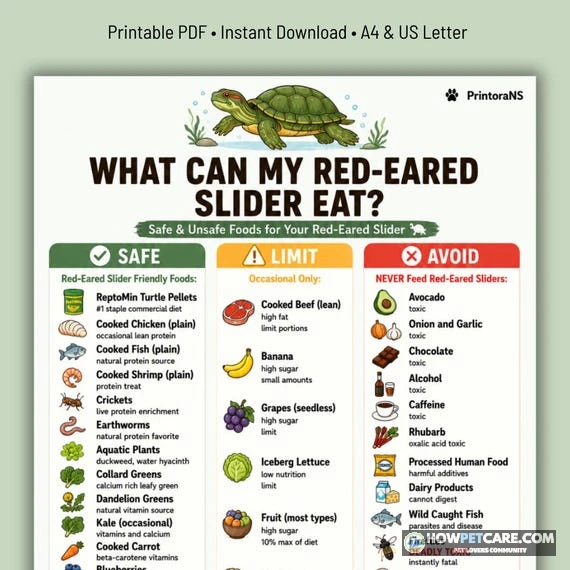

Turtles eat a balanced mix of commercial turtle pellets, dark leafy greens (like collard and dandelion greens), and lean animal protein such as earthworms, insects, and small fish. Juveniles need 50–70% protein, while adults shift to 70–80% plant material. Avoid dairy, processed meats, avocado, and high-oxalate greens like spinach.
Turtles require a balanced mix of commercial pellets, dark leafy greens, and lean animal proteins tailored to their species and stage of life. Wild turtles forage on aquatic plants, insects, worms, and small fish. Captive turtles, by contrast, depend on their keepers to recreate these nutrient profiles. A juvenile semi-aquatic turtle needs a protein-dense diet comprising up to 70% animal prey and fortified pellets to fuel rapid bone growth. Adult red-eared sliders shift to an omnivorous pattern: they need 70% to 80% plant material to stay clear of obesity, liver disease, and shell deformities.
Feeding a turtle correctly takes more than dropping dried flakes or a stray leaf of lettuce into a tank. Imbalanced nutrition—calcium deficiencies, excess phosphorus, and poor vitamin balance—remains the leading cause of preventable illness in captive chelonians. Learning what turtles eat, watching how their nutritional needs shift over time, and spotting dangerous foods early gives your reptile the foundation it needs to thrive.
Core Turtle Diet: What Turtles Eat in Captivity and the Wild
Turtles occupy diverse ecological niches, from fast-flowing freshwater streams to arid scrublands. In captivity, your main goal is meeting their physiological requirements with safe, parasite-free foods that mirror their natural foraging habits.
Wild Foraging vs. Captive Feeding Realities
Freshwater turtles in the wild are opportunistic feeders. Omnivorous species glide along riverbeds and ponds, browsing on submersed aquatic plants like duckweed, pondweed, and algae while hunting aquatic insects, snails, tadpoles, crayfish, and small fish. Terrestrial turtles forage the forest floor for fallen berries, earthworms, mushrooms, and broadleaf vegetation.

Avoid collecting earthworms, minnows, or snails from backyard gardens or local waterways. Wild feeder organisms frequently carry agricultural pesticides, heavy metals, and internal parasites that can infect a captive turtle.
Captive setups replace wild foraging with fortified commercial turtle pellets alongside fresh produce and cultured feeder invertebrates. Pellets establish a reliable baseline: they supply stabilized vitamin A, vitamin D3, and trace minerals that grocery produce alone cannot provide. Relying purely on pellets, however, leads to excess dietary nitrogen and dry, monotonous meals. A well-rounded captive diet blends dry pellets, fresh leafy greens, and clean live prey.
Primary Dietary Categories: Herbivores, Omnivores, and Carnivores
Turtles fall into three feeding categories based on their digestive anatomy and evolutionary background:
- Omnivores: Most common freshwater species—such as Red-Eared Sliders, Painted Turtles, and Map Turtles—are omnivorous. They consume a mix of plant and animal material. The ratio shifts heavily from animal protein in youth toward fibrous aquatic vegetation in adulthood. Semi-terrestrial box turtles are opportunistic omnivores as well.
- Carnivores: Specialized aquatic hunters, like Alligator Snapping Turtles, Common Snapping Turtles, and Spiny Softshell Turtles, stay carnivorous their entire lives. Sharp beaks, strong jaw muscles, and targeted enzymes allow them to digest fish, crustaceans, mollusks, and amphibians.
- Herbivores: Many true tortoises (including Russian and Sulcata tortoises) and select mature river species process fibrous vegetation almost exclusively. Long digestive tracts and hindgut microbial fermentation let them draw nutrients from high-fiber, low-protein grasses, weeds, and leaves.
Species and Life-Stage Feeding Ratios: Aquatic vs. Land Turtles
Feeding an adult turtle the same diet it ate as a hatchling causes serious health issues. In nature, rapid hatchling growth minimizes predator risks, which requires abundant protein. Once a turtle reaches full skeletal size, excess protein burdens the kidneys and triggers uneven shell growth, known as pyramiding.
Every chelonian species possesses individual dietary requirements. Before adjusting feeding regimens for unwell or breeding animals, consult an exotic veterinarian certified by the Association of Reptilian and Amphibian Veterinarians (ARAV).
Juvenile Red-Eared Sliders vs. Adult Aquatic Turtles
Hatchling and juvenile Red-Eared Sliders (under 6 cm or 2.5 inches in shell length) require roughly 50% to 70% protein in their diet. Supply this through juvenile-formulated aquatic pellets and live invertebrates like black soldier fly larvae or earthworms. This provides the amino acids needed for shell and tissue synthesis.
Once a slider reaches adult size (exceeding 12 to 15 cm or 5 to 6 inches), its dietary needs invert. Adults thrive on 70% to 80% plant material—mainly dark greens and submerged aquatic weeds—with only 20% to 30% commercial pellets and occasional invertebrate prey. In raw weight, an adult slider needs 12 to 20 grams of total food per feeding every other day. Juveniles require 8 to 12 grams daily.

Box Turtles and Semi-Terrestrial Feeding Profiles
Eastern and Three-Toed Box Turtles are neither fully aquatic nor arid land tortoises. Their nutritional profile bridges the gap between wetlands and woods. An adult box turtle needs roughly 50% mixed vegetables and greens, 40% gut-loaded invertebrates, and 10% low-sugar fruits. Juveniles need more animal protein (roughly 50% to 60%) to support early shell expansion.
Aquatic turtles require water to swallow their meals, but box turtles hunt live prey on land by sight. Earthworms, captive-bred snails, and silkworms provide hydration, calcium, and trace minerals that match their forest-floor diet.

Feeding Schedules by Age and Size
Feeding frequency must match the animal’s life stage and metabolic rate. Hatchlings burn energy quickly and need feeding once or twice daily. Subadults (between 6 months and 2 years old) do well on a once-daily routine. Adults over 2 to 3 years old have much slower metabolisms; feeding them every 2 to 3 days helps prevent obesity and organ fat accumulation.
| Species & Age Group | Pellet / Protein % | Leafy Greens / Veg % | Feeding Frequency | Recommended Portion Size (g) |
|---|---|---|---|---|
| Red-Eared Slider – Hatchling (≤3 cm) | 60% pellets + 40% live protein | 0% | Daily (2× per day) | 5–7 g total |
| Red-Eared Slider – Juvenile (3–6 cm) | 40% pellets | 30% leafy greens | Daily | 8–12 g |
| Red-Eared Slider – Adult (≥6 cm) | 20% pellets | 70% leafy greens & aquatic veg | Every 2 days | 12–20 g |
| Painted Turtle – Juvenile | 45% pellets | 25% greens | Daily | 10–15 g |
| Painted Turtle – Adult | 20% pellets | 80% greens | Every 2 days | 15–25 g |
| Eastern Box Turtle – Juvenile | 40% pellets/insects | 50% mixed veg | Daily | 10–14 g |
| Eastern Box Turtle – Adult | 10% pellets | 60% veg | Every 2 days | 15–22 g |
Protein Requirements by Life Stage:
Juvenile turtles (≤ 6 months) need 50%–70% of their diet as protein, which translates to 12 g–14 g of protein per 100 g of food.
Adult turtles drop to ≤ 30% protein (≈5 g–6 g per 100 g of food) to prevent shell-growth issues, pyramiding, and excess nitrogen waste.
If you lack a gram scale, use the head-and-neck volume guideline: offer an amount roughly equal to the volume of the turtle’s head and neck. For dry pellets, feed only what the turtle finishes within 10 to 15 minutes.
Safe Foods Reference: Leafy Greens, Live Prey, and Commercial Pellets
A varied rotation guards against chronic nutritional deficits. Single-ingredient diets will eventually cause health problems.
Safe Leafy Greens and Aquatic Vegetation
Leafy greens form the foundation of adult omnivore and herbivore diets. Excellent staples include dandelion greens, collard greens, turnip greens, and mustard greens. These varieties provide strong calcium-to-phosphorus ratios and bioavailable fiber. Romaine lettuce adds moisture and bulk, but avoid head lettuces like iceberg; iceberg is 96% water with practically no vitamins or minerals.
Living aquatic plants provide clean, continuous enrichment inside the tank:
- Duckweed (Lemna minor): Prolific, rich in trace nutrients, and readily consumed by sliders.
- Anacharis (Elodea): Floats or roots easily, providing consistent roughage.
- Water Lettuce (Pistia stratiotes): Features thick root networks that provide cover and safe grazing.

Insects, Worms, and Whole-Prey Protein Sources
Live prey items supply essential fats, chitin, and micronutrients:
- Earthworms and Nightcrawlers: Highly recommended. They deliver an exceptional balance of calcium and minerals while remaining easy to digest.
- Dubia Roaches and Crickets: Active prey that triggers natural hunting behavior. Gut-load these insects with squash or leafy greens for 24 hours before feeding.
- Freshwater Snails: High in shell-building calcium. Aquatic turtles crush the shells naturally, which helps wear down their beaks.
- Feeder Fish: Offer safe species like livebearer guppies, platies, or mosquito fish. Avoid commercial feeder goldfish and rosy red minnows. Both contain thiaminase, an enzyme that destroys thiamine (vitamin B1) and leads to severe neurological damage.

Evaluating Commercial Turtle Food Formulations
Floating pellets provide baseline nutritional stability. When shopping for commercial options, inspect the guaranteed analysis panel:
- Crude Protein: Hatchling and juvenile formulas should contain 35% to 42% crude protein. Adult formulations should stay within 25% to 32%.
- Crude Fat: Keep fat between 3% and 6% to prevent hepatic lipidosis (fatty liver disease).
- Calcium-to-Phosphorus Ratio: Look for an advertised minimum Ca:P ratio of 2:1.
- Primary Ingredients: Whole fish meal, spirulina, and aquatic plant derivatives indicate quality. Steer clear of brands built around wheat flour, soy millings, or artificial dyes.

| Species | Life Stage | Pellet/Protein Ratio | Vegetable/Greens Ratio | Feeding Frequency | Portion Size |
|---|---|---|---|---|---|
| Red-Eared Slider | Hatchling (le3 cm) | 60% pellets + 40% live protein | 0% leafy greens | Daily (2times per day) | 5–7 g total |
| Red-Eared Slider | Juvenile (3–6 cm) | 40% pellets | 30% leafy greens | Daily | 8–12 g |
| Red-Eared Slider | Adult (ge6 cm) | 20% pellets | 70% leafy greens & aquatic veg | Every 2 days | 12–20 g |
| Painted Turtle | Juvenile | 45% pellets | 25% leafy greens | Daily | 10–15 g |
| Painted Turtle | Adult | 20% pellets | 80% leafy greens | Every 2 days | 15–25 g |
| Eastern Box Turtle | Juvenile | 40% pellets/insects | 50% mixed veg | Daily | 10–14 g |
| Eastern Box Turtle | Adult | 10% pellets | 60% veg | Every 2 days | 15–22 g |
Vegetable Safety Matrix: Calcium, Phosphorus, and Oxalate Ratios
Shell and bone growth requires a stable balance of calcium, phosphorus, and vitamin D3. If dietary phosphorus exceeds calcium, the parathyroid glands release hormones that pull calcium straight from the skeleton to stabilize blood serum levels. This causes Metabolic Bone Disease (MBD) and soft, permanently warped shells.
High-oxalate foods present another metabolic risk. Oxalic acid binds with calcium inside the gut to form insoluble calcium oxalate crystals. These pass through unabsorbed, leaving the turtle functionally calcium-starved despite heavy feedings.
| Vegetable | Calcium-to-Phosphorus Ratio | Oxalate Level | Safety Status & Feeding Guidance |
|---|---|---|---|
| Collard Greens | 3.4:1 | Low | Staple. Outstanding Ca:P balance; feed multiple times weekly. |
| Dandelion Greens | 2.8:1 | Low to Moderate | Staple. High natural calcium, rich in bioavailable vitamins. |
| Turnip Greens | 4.5:1 | Low | Staple. Superb mineral density; ideal regular forage. |
| Mustard Greens | 2.4:1 | Low to Moderate | Regular. Sharp flavor; excellent rotation staple. |
| Romaine Lettuce | 1.4:1 | Very Low | Supplemental. Good for hydration; combine with higher-calcium greens. |
| Kale | 2.4:1 | Low | Moderate. Excellent calcium, but contains mild goitrogens; feed 1–2 times weekly. |
| Carrots (Shredded) | 0.8:1 | Low | Occasional. Rich in beta-carotene (vitamin A precursor); limit due to low calcium. |
| Spinach | 2.0:1 | Extreme | Avoid. Despite favorable calcium stats, oxalates chemically block absorption. |
| Swiss Chard | 1.1:1 | Extreme | Avoid. High oxalates bind minerals and irritate the gastrointestinal tract. |
| Beet Greens | 3.0:1 | Extreme | Avoid. Severe oxalate binding prevents systemic mineral uptake. |
To determine whether a new vegetable is safe, divide its total milligrams of calcium by its milligrams of phosphorus using nutritional data per 100 grams. If the resulting number is equal to or greater than 2.0, and oxalates are low, the vegetable is safe for regular rotation.
Supplementation: Powdered Calcium and Cuttlebone
Even with a solid rotation of greens, captive chelonians benefit from calcium supplements. Dust feeder insects or damp greens twice weekly with pure calcium carbonate powder. Use powder without vitamin D3 if your turtle has strong UVB lighting or direct natural sunlight. Switch to calcium with D3 once weekly if UVB exposure is purely artificial or minimal.
For aquatic tanks, float a natural cuttlebone in the water. Scrape off the hard backing with a butter knife so the turtle can reach the soft, chalky interior. This provides steady calcium on demand and naturally trims down beak growth.

Toxic Foods and Common Feeding Hazards to Avoid
Feeding the wrong proteins or toxic plants causes frequent veterinary emergencies. Never feed human leftovers, processed meats, or unverified yard clippings to your turtle.
Absolute Toxins: Dairy, Processed Meats, and Poisonous Plants
- Dairy Products (Cheese, Milk, Yogurt): Turtles lack lactase enzymes. Ingesting dairy destroys gut bacteria, leading to severe gas, diarrhea, and fatal enteritis.
- Processed or Seasoned Meats (Ham, Hot Dogs, Ground Beef): Commercial meats contain excessive saturated fats, sodium, and preservatives that cause kidney strain and rapid liver damage.
- Rhubarb Leaves and Stalks: Contains lethal levels of soluble oxalates that trigger sudden kidney failure.
- Avocado: The persin in avocado skin, pits, and flesh is toxic to chelonians.
- Chocolate, Caffeine, and Alcohol: Methylxanthines can cause cardiac collapse and severe nervous system failure.

Anti-Nutritional Hazards: Thiaminase and Goitrogens
- Thiaminase-Loaded Fish: Goldfish, rosy red minnows, and certain carp varieties contain thiaminase enzymes. Regular consumption destroys thiamine stores, resulting in tremors, swimming difficulties, and death.
- Goitrogenic Plants (Cabbage, Broccoli, Cauliflower, Brussels Sprouts): Brassica family greens contain glucosinolates that block iodine absorption in the thyroid. An occasional bite is harmless, but feeding them regularly triggers goiter and metabolic failure.
- Excess Fruit for Aquatic Turtles: Treat fruits like bananas, melons, and berries as rare treats for aquatic turtles (less than 5% of their diet). Aquatic turtles digest refined sugars poorly; excess fruit leads to bacterial blooms, bloating, and fungal infections on the shell or skin.
How to Transition Stubborn Turtles from Protein to Greens
Many pet turtles fixate on commercial pellets or live worms and ignore fresh greens. Because an adult slider on an all-protein diet faces severe kidney stress, switching them over to fibrous greens is crucial.
Never withhold food completely overnight; sudden starvation triggers rapid liver fat mobilization. Instead, leverage their sense of smell through gradual food pairing.

-
Step 1: The Scent-Soaking Prep (Days 1–3)
Take preferred high-value live foods or pellets and crush them in a small dish of water, or open a can of low-sodium tuna packed in spring water. Soak fresh, torn dandelion or collard green leaves in the scented water for 10 minutes. The greens absorb the strong fish aroma, bypassing initial refusal.
-
Step 2: Greens Introduction with Taper (Days 4–7)
Offer the scent-soaked greens first thing in the morning when the turtle’s appetite peaks. Withhold regular pellets until the turtle samples the greens. Reduce the regular protein portion by 25% while maintaining basking spot temperatures at the optimal 30–32 °C (86–90 °F) to sustain metabolic drive.
-
Step 3: The Gelatin Binding Matrix (Days 8–10)
If leaves are still refused, finely puree 60% safe greens with 40% commercial pellets and a small amount of warm water. Mix with plain, unsweetened gelatin. Pour into an ice cube tray to set. Feed small gelatin cubes, which prevents the turtle from picking out pellets while picking around the greens.
-
Step 4: Ratio Reversal and Normalization (Days 11–14)
Gradually reduce the pellet content in the gelatin mix or phase out the tuna-water soaking until the turtle eagerly attacks unadorned, crisp leafy greens directly in the water.
Healthy adult turtles can safely fast for 3 to 5 days. If an adult refuses greens entirely, withholding protein for a few days often stimulates natural foraging behavior.
Clean Feeding Protocol and Hydration Management
Aquatic turtles tear their food apart with their front claws, releasing oils, protein scraps, and organic debris into the water. Rapid bacterial breakdown quickly spikes ammonia and nitrites, fouling filtration systems and triggering eye and ear infections.
Separate Container Feeding: Step-by-Step Procedure
Feeding your turtle in a dedicated tub keeps the main habitat clean, extends filter media life, and helps you track food intake accurately.
- ☐ Keep a dedicated 10-to-20-liter plastic tub specifically reserved for feeding.
- ☐ Transfer 5 to 8 cm of warm water directly from the main aquarium into the tub to match temperature.
- ☐ Gently lift your turtle with two hands around the midpoint of the shell (bridge) and transfer it into the feeding tub.
- ☐ Introduce that day’s meal: pellets, leafy greens, or live prey.
- ☐ Allow the turtle 15 to 20 minutes of undisturbed feeding time in a quiet area.
- ☐ Wait for the turtle to finish eating and pass any immediate post-prandial bowel movements.
- ☐ Return the turtle to its primary enclosure, then immediately discard the soiled feeding water down the toilet.
- ☐ Rinse the tub thoroughly with clean water; sanitize weekly with a 1% bleach solution and rinse well.

| Day | Primary Food Item | Portion / Weight | Supplements Added |
|---|---|---|---|
| Monday | Staple commercial aquatic pellets | 4–6 g (small handful) | Light dusting pure calcium carbonate |
| Tuesday | Fasting day (No food offered) | None | None |
| Wednesday | Fresh dandelion & collard greens | 10–12 g (shredded) | None |
| Thursday | Submerged aquatic plants (Duckweed) | Free-floating grazing mass | Natural tank forage |
| Friday | Live earthworms or Dubia roaches | 2–3 insects (gut-loaded) | Calcium powder with D3 |
| Saturday | Fresh turnip greens or mustard greens | 10–12 g (shredded) | None |
| Sunday | Fasting day (No food offered) | None | Float fresh cuttlebone piece |
Hydration and Shallow Soaking Routines for Land Turtles
Terrestrial box turtles and tortoises easily develop subclinical dehydration under indoor heat lamps. Chronic dehydration leads to concentrated urate deposits, bladder stones, and kidney failure.
Always provide land turtles with a broad, shallow water dish sunk level with the substrate so they can climb in without tipping it. Keep water levels below the bridge of the shell to prevent drowning. Soak land turtles in a shallow tub of lukewarm water (26–28 °C / 78–82 °F) for 15 to 20 minutes two to three times a week. Soaking stimulates drinking, rehydrates the cloaca, and helps clear waste.
Nutritional Tweaks for Gravid Females
Gravid females carrying eggs undergo intense metabolic strain. Eggshell production requires large amounts of calcium, which females draw from their own bones if their diet falls short.
Increase calcium supplementation by 50% for confirmed or suspected gravid females. Provide whole prey items rich in natural bone calcium, such as whole small fish, small gut-loaded land snails, and nightcrawlers dusted with calcium carbonate. Keep a fresh cuttlebone in the enclosure at all times. Because developing eggs compress the stomach, gravid turtles often refuse large meals; switch to smaller, nutrient-rich portions offered more frequently. Provide a deep nesting container filled with damp sand and soil to prevent egg-binding (dystocia).
Troubleshooting Food Refusal: Diagnostic Husbandry Checklist
When a turtle stops eating, keepers often assume it is bored with the menu. In reality, food refusal in captive reptiles usually points to poor habitat parameters or underlying illness.
Check these basic husbandry factors before changing diets or offering junk treats:
- Verify Water and Basking Temperatures: Turtles are ectotherms that rely on external heat to digest their food. If the water drops below 22 °C (72 °F) or the basking area falls under 29 °C (85 °F), digestion stalls. The turtle will stop eating to prevent food from rotting in its gut. Bring your water heaters and basking bulbs into the proper temperature ranges.
- Check UVB Lamp Age and Exposure: Reptiles require UVB light (specifically in the 290–320 nm range) to synthesize vitamin D3, which drives appetite and calcium uptake. Standard UVB bulbs stop producing effective ultraviolet rays after 6 to 12 months, even if they still cast visible light. Replace aging bulbs promptly.
- Inspect for Hypovitaminosis A (Vitamin A Deficiency): If your turtle refuses food and has swollen eyelids, wheezing, or clear mouth discharge, it may have a vitamin A deficiency. Swollen tissue impairs vision, making it hard to find food. This requires targeted veterinary treatment, which often includes vitamin injections alongside temperature adjustments.
- Check for Environmental Stress: Tank moves, new enclosures, heavy room traffic, or aggressive tank mates cause stress that shuts down appetite. Provide quiet surroundings and ample hiding spots.
- Recognize Exotics Veterinarian Thresholds: If an adult turtle goes without food for more than 7 to 10 days despite correct temperatures, or if a hatchling refuses meals for more than 48 hours, contact an exotic animal veterinarian. Watch for open-mouth breathing, audible wheezing or clicking, shell softening, or listing sideways in the water. These symptoms indicate severe respiratory infections or advanced Metabolic Bone Disease.


Print a feeding schedule to keep near your tank, and record your turtle’s meals, weights, and water parameters over time. Consistent feeding routines, proper mineral ratios, and clean water will keep your turtle healthy for decades to come.
FAQ
What do turtles like to eat most?
Most pet turtles strongly prefer live animal protein such as earthworms, crickets, and feeder shrimp because their movement and scent trigger natural predatory feeding instincts.
How long can a turtle survive without food?
Healthy adult turtles can survive for several weeks without food if optimal hydration and habitat temperatures are maintained, but hatchlings and juveniles can decline rapidly after just a few days without nourishment.
Can pet turtles eat bread, cooked meat, or human table scraps?
No, you should never feed turtles processed human food, cooked meats, or bread. These foods lack required nutrients, cause severe gut fermentation and shell deformities, and rapidly foul aquarium water.
Do aquatic turtles need to eat in the water?
Yes, most aquatic turtles, including Red-Eared Sliders, lack movable tongues and fixed pharyngeal muscles, meaning they require water to swallow food safely without choking.
Can turtles eat fruit?
Yes, but only in moderation. Box turtles can have low-sugar fruits like berries as about 10% of their diet, while aquatic turtles should get fruit only as a rare treat—less than 5%—since excess sugar causes bloating and water fouling.