
The safest paint around dogs is a water-based acrylic or latex labeled low- or zero-VOC, ideally GREENGUARD Gold certified. Let it fully cure—typically 14 to 30 days—before your dog has unsupervised access, and remember that no paint is safe to eat.
If you’re painting a dog house, crate, kennel wall, or room your dog shares, choose a water-based, low-VOC or zero-VOC acrylic or latex paint. Let it fully cure, and never assume any paint is safe for your dog to eat. “Pet safe” and “non toxic” are marketing terms, not regulated safety standards. The ingredients, VOC rating, and cure window matter more than a badge on the can. This guide to non toxic paint for dogs compares US-available brands and explains certifications, re-entry timelines, paw-print art, and what to do if your dog licks or eats paint.
What Paint Is Safe Around Dogs? The Short Answer by Project Type
For most dog projects, choose a water-based acrylic or latex paint with low or zero VOCs. Let it fully cure before your dog has unsupervised access.
- Dog house, exterior: Use zero-VOC exterior acrylic latex or a dedicated pet habitat line such as ECOS Pet Dwellings. Apply a low-VOC primer to bare wood and use a compatible exterior sealant if the surface will face rain or chewing.
- Dog crate and kennel walls: Choose zero-VOC interior acrylic latex in satin or semi-gloss. These finishes are easier to scrub and resist claw marks better than flat matte.
- Interior room or kennel room: Choose zero-VOC latex with GREENGUARD Gold or CDPH 01350 emissions testing. Keep your dog out during application and for the full re-entry window below.
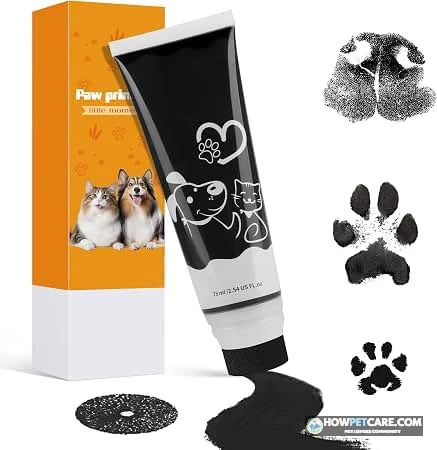
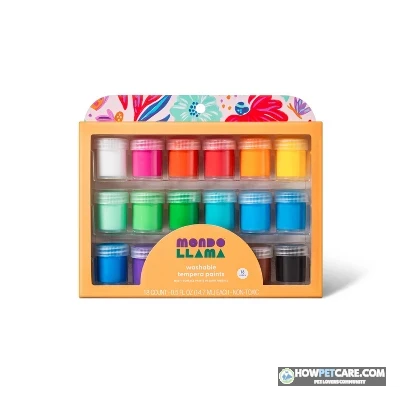
- Paw-print art: Use a purpose-made pet paw-print ink or paint kit, or a non-toxic, water-based children’s paint with an AP seal and ASTM D4236 labeling. Skip ordinary craft acrylics and glitter paints because dogs lick their paws.
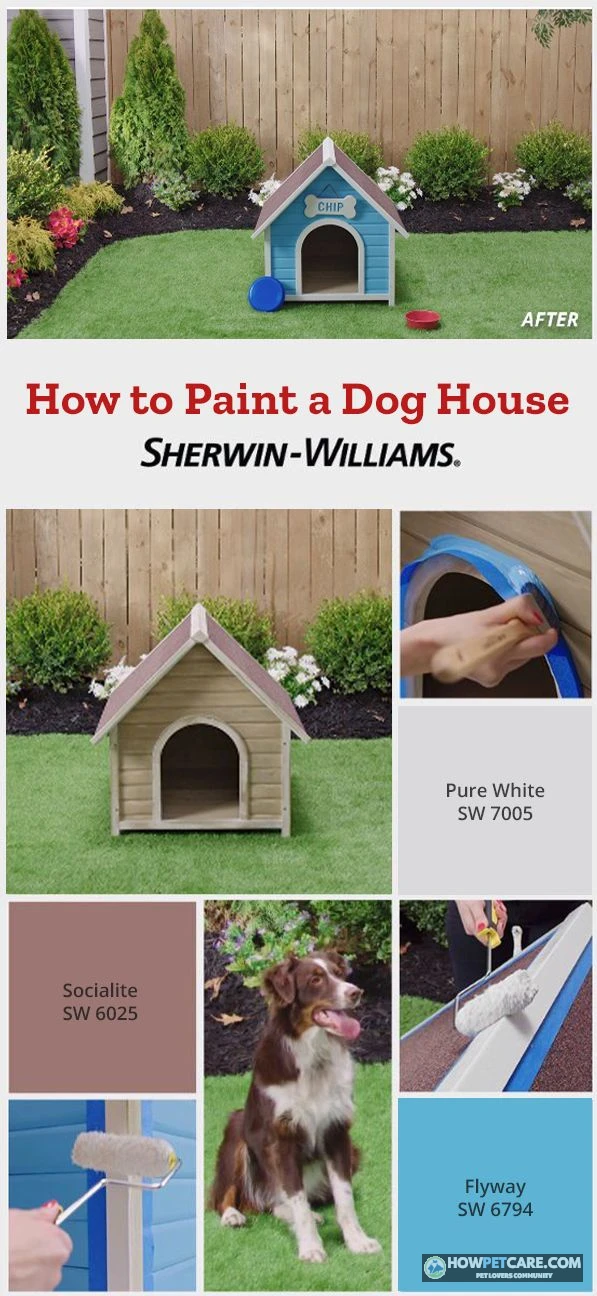
No paint is “safe to eat.” “Non toxic” describes the absence of certain hazardous ingredients under normal use; it doesn’t mean the product is food-grade or ingestion-proof.
Wet paint and solvent fumes are the main hazards to dogs. A fully cured water-based film is low risk for brief contact, but chewing, licking, or swallowing paint chips can still cause stomach upset, obstruction, or worse if the paint contains lead, heavy-metal pigments, or petroleum solvents. The matrix, cure timelines, and emergency steps later in this article explain how to manage those risks.
Water-based vs oil-based vs milk paint in one paragraph each
Water-based acrylic or latex paint uses water as its carrier. It has a low odor, fewer VOCs, simple soap-and-water cleanup, and a relatively fast drying time. It’s the default choice for interior walls, kennel rooms, and most dog-house interiors.
Oil-based or alkyd paint relies on petroleum solvents. It produces strong toxic fumes, takes much longer to cure, and releases vapors that can irritate a dog’s respiratory system. Avoid it around dogs whenever a water-based alternative will do the job.
Milk paint is made from milk protein (casein), lime, and natural pigments. It’s typically zero-VOC and free of synthetic preservatives, but its dried film is porous and softer than acrylic. It works well on dog-house furniture or interior wood, provided lick zones are sealed with a compatible low-VOC topcoat and the paint fully cures before the dog returns.
Why “zero-VOC” does not mean “zero risk”
Zero-VOC refers to the base paint before tinting. Colorant can push the VOC level higher, sometimes well above zero, so check the VOC of the tinted color, not just the base. A zero-VOC label also says nothing about preservatives, biocides, or what happens if a dog chews the dried film. Cured water-based paint is lower risk, but no paint is chew-proof or ingestion-proof.
Ingredients to Avoid in Paint When You Have a Dog (and How to Read the Label or SDS)
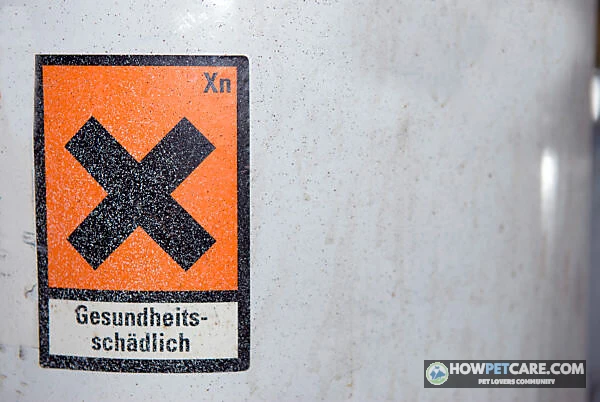
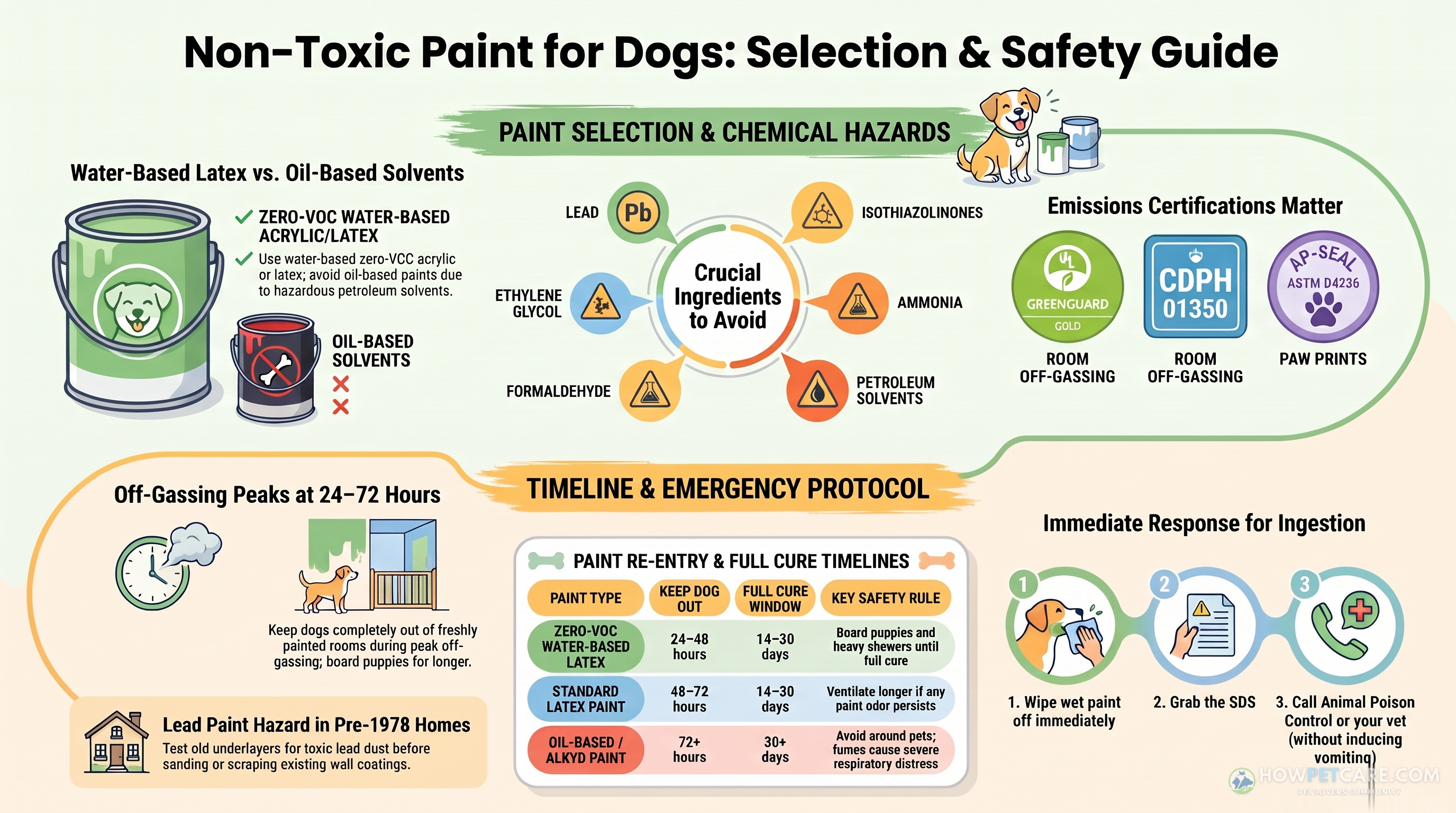
Choose paint labeled non-toxic and low- or zero-VOC: the main hazards are ingestion and inhaled fumes. When reading a can or Safety Data Sheet, look for these ingredients:
- Lead and heavy-metal pigments: Lead was banned in residential paint in 1978, but older homes may still have lead layers underneath. Heavy metals such as cadmium, chromium, and mercury can appear in some pigments and are toxic if swallowed.
- Ethylene glycol and glycol ethers: If ingested in meaningful amounts, these solvents can cause kidney damage and metabolic acidosis in dogs.
- Formaldehyde and formaldehyde releasers: These respiratory irritants and potential carcinogens off-gas during and after application.
- Ammonia: A strong respiratory irritant found in some latex formulations and cleaners.
- Isothiazolinones (MI, MIT, BIT): These preservatives can trigger skin sensitization and irritation; avoid them in areas a dog will lick or chew.
- Petroleum solvents: Mineral spirits, xylene, and toluene appear in oil-based paints and thinners. Their fumes are hazardous, and swallowing them risks aspiration into the lungs.
Label-reading checklist (5 checks in 60 seconds)
- Find the VOC number, expressed in grams per liter. Lower is better; zero-VOC is best for occupied pet spaces.
- Scan the “contains” or warning text for solvents, formaldehyde, and heavy-metal cautions.
- Look on the product page or data sheet for third-party certifications such as GREENGUARD Gold, Green Seal, or CDPH 01350.
- For craft or paw-print paint, check for the AP seal and ASTM D4236 chronic-hazard labeling.
- Save or photograph the Safety Data Sheet (SDS) before you buy; you’ll need it if your dog is exposed.
How to read a Safety Data Sheet
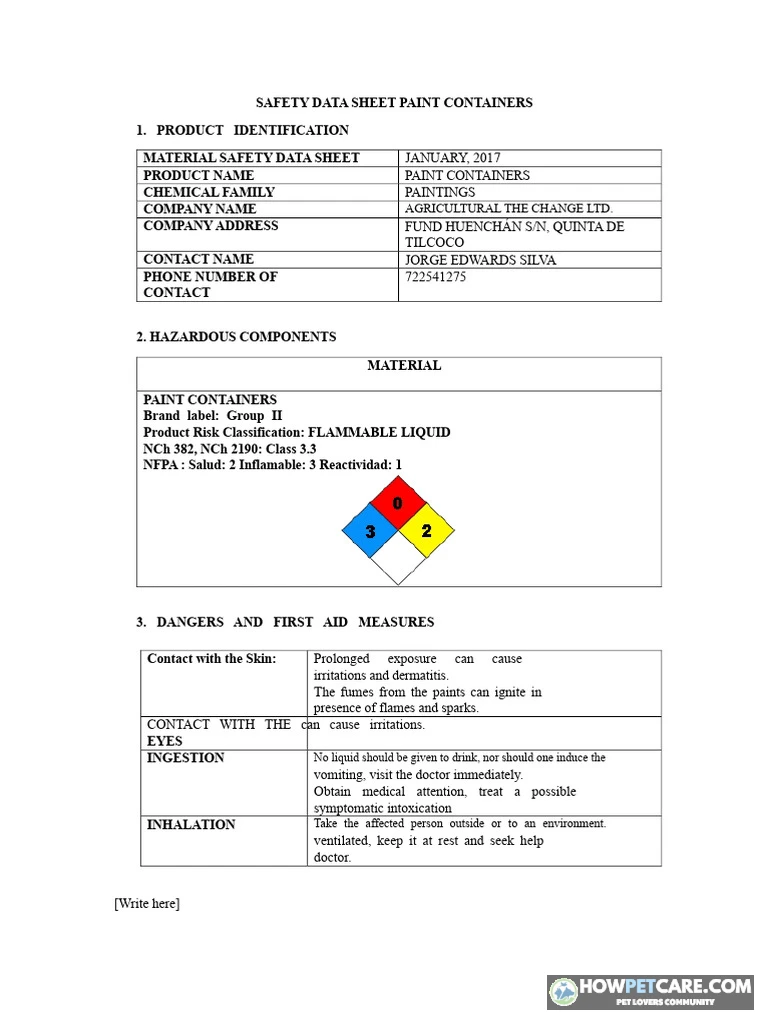
Focus on Section 2 (hazards identification), Section 3 (composition), Section 11 (toxicological information), and Section 13 (disposal). Red flags include “harmful if swallowed,” “causes skin irritation,” “may cause respiratory irritation,” and any instruction to call a poison center after ingestion. Keep the SDS on your phone alongside your vet’s number.
Natural pigments vs synthetic pigments
Natural doesn’t automatically mean safer. Some mineral and earth pigments carry heavy-metal concerns, while many synthetic pigments are inert once locked into a cured acrylic film. The full formulation and third-party testing matter more than whether a color sounds earthy. If you’re unsure, ask the manufacturer for the SDS and confirm whether the tinted color changes the VOC rating.
Pet-Safe Paint Brands Compared: US Price, Coverage, VOC, Cure Time and Claw Durability
No ranking page currently combines product specifications with pet-safety guidance in one table. The matrix below compares US-available products, using manufacturer data sheets and retailer listings checked in late 2026. Recheck before buying: prices and zero-VOC lines change. VOC figures are for the base; deep-tinted colors can add VOCs, so confirm the tinted value.
UK-only brands such as Lakeland Paints often appear on international lists but aren’t practical options for US buyers. None of the products here—including ECOS Pet Dwellings—is certified safe to ingest. Certifications cover emissions and ingredient restrictions, not chewing or licking.
| Brand and product line | Best for (project) | Price per gallon (date checked) | Coverage per gallon (sq ft) | VOC (g/L, as tinted) | Touch-dry / full-cure time | Certifications | Scratch and claw durability | Where to buy in the US |
|---|---|---|---|---|---|---|---|---|
| ECOS Paints — Pet Dwellings | Dog house interior, crate walls | ~$89 (Nov 2026) | ~400 | 0 | 1 hr / 7–14 days | Green Seal GS-11, CDPH 01350 tested | Moderate; satin/semi-gloss recommended over matte for kennels | Direct (ecospaints.net) |
| The Real Milk Paint Co. | Dog house interior, paw-friendly furniture | ~$80 (Nov 2026) | ~240–280 | 0 | 30–60 min / 14–30 days | Made from food/pharma-grade ingredients; no formal certification | Good on wood but porous — seal with low-VOC finish for lick zones | Direct; select hardware stores |
| Benjamin Moore Natura | Interior room, kennel walls | ~$60–75 (Nov 2026) | ~350–400 | 0 | 1 hr / ~14 days | GREENGUARD Gold, CDPH 01350, certified asthma & allergy friendly | Good; washable in eggshell and up | Benjamin Moore dealers |
| Sherwin-Williams Harmony | Interior room, kennel walls | ~$75–90 (Nov 2026) | ~350–400 | 0 | 1 hr / ~14 days | GREENGUARD Gold, CDPH 01350 | Good; odor-absorbing formula helps kennel spaces | Sherwin-Williams stores |
| Behr Premium Plus (Zero VOC) | Budget dog house exterior, walls | ~$30–45 (Nov 2026) | ~400 | 0 (base) | 1–2 hr / ~14 days | GREENGUARD Gold | Good for the price; scuff-resistant line holds up better on crates | Home Depot |
| AFM Safecoat | Dogs with chemical sensitivities (and sensitive owners) | ~$70–80 (Nov 2026) | ~300–350 | 0 | 1 hr / 7–14 days | CDPH 01350 tested; marketed for chemically sensitive users | Moderate; add Polyureseal finish for chew-prone dogs | Direct (afmsafecoat.com) |
| Clare Zero-VOC | Interior accent walls, low-traffic areas | ~$59–65 (Nov 2026) | ~300–400 | 0 (base) | 1–2 hr / ~14 days | GREENGUARD Gold | Moderate; fewer scrub ratings published than Behr/SW | Direct (clare.com) |
ECOS offers four Pet Dwellings products—Eggshell, Semi-Gloss, Gloss paint, and Primer—for dog houses, bird cages, reptile enclosures, and pet habitats. The company says its paints are VOC-free, non-toxic, water-based, and free of polyurethane odor, citing ASTM-D4236, CDPH 01350, and other standards. It lists coverage of up to 560 square feet per gallon, though the matrix uses a conservative 400 square feet for planning. ECOS advises waiting at least 48–72 hours for paint to dry and cure before pets re-enter the area; the timeline section below offers more detailed guidance by paint type.
Best non toxic paint for a dog house (exterior and interior)
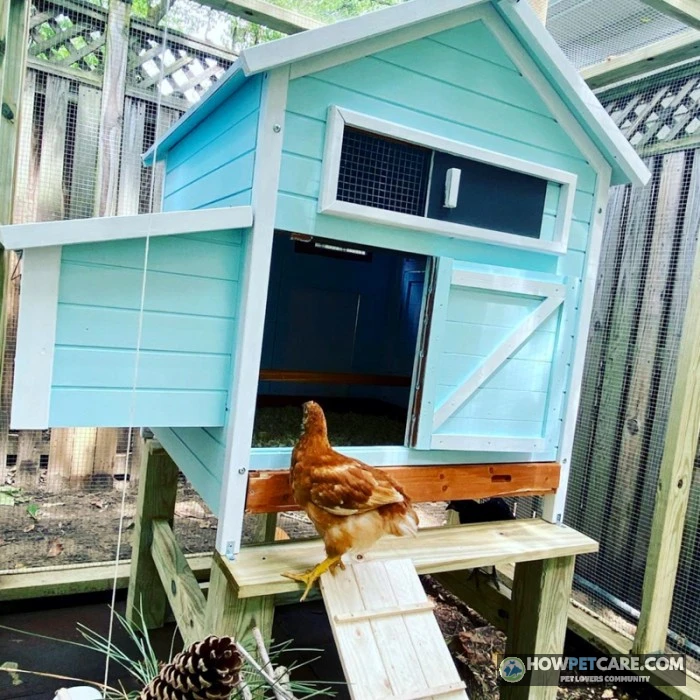
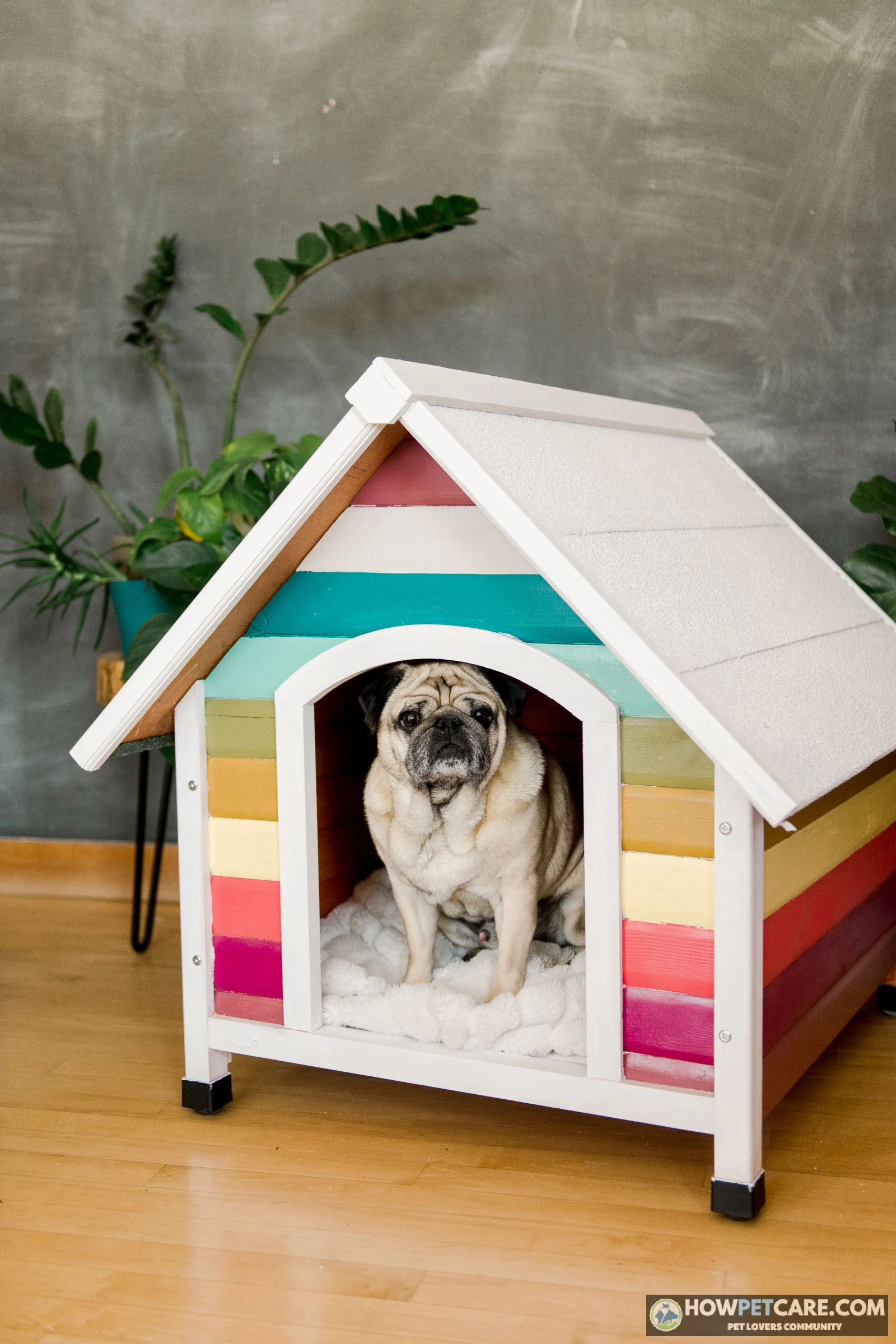
Match the paint to the conditions your dog house will face. Exterior walls need a zero-VOC exterior acrylic latex that can handle sun and rain; ECOS Pet Dwellings or Behr Premium Plus Zero VOC exterior are practical US options. Interior surfaces should be smooth, low-odor, and fully cured before your dog moves in. Milk paint works inside if sealed, but raw milk paint alone is too porous for a chewing dog.
Non toxic paint for a dog crate and kennel walls
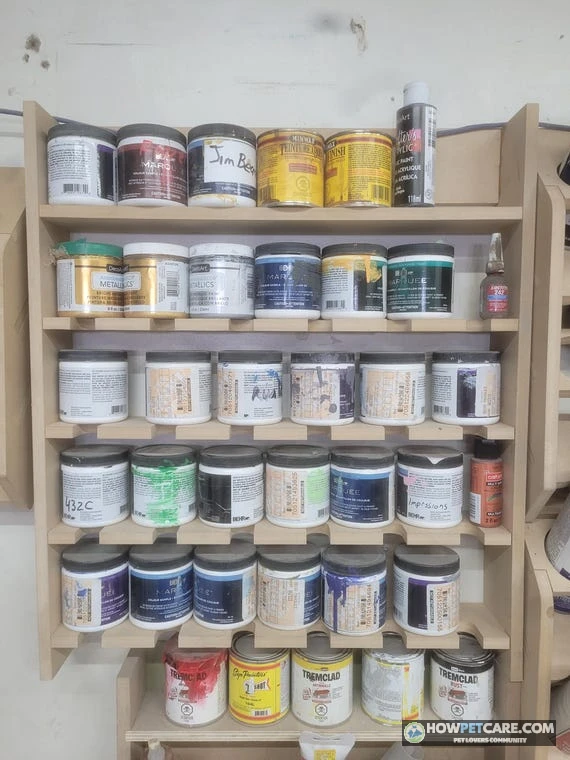
Crates and kennels get constant contact, licking, and clawing. Choose a zero-VOC interior acrylic latex in satin or semi-gloss from Benjamin Moore Natura, Sherwin-Williams Harmony, or Behr Premium Plus Zero VOC. These paints are available at US dealers or Home Depot and hold up to light scrubbing. Avoid painting metal bars or crate trays a dog can chew. If you must paint them, use a pet-safe sealant over fully cured paint and wait the full cure window.
How to choose when your dog is a large, scratch-prone breed
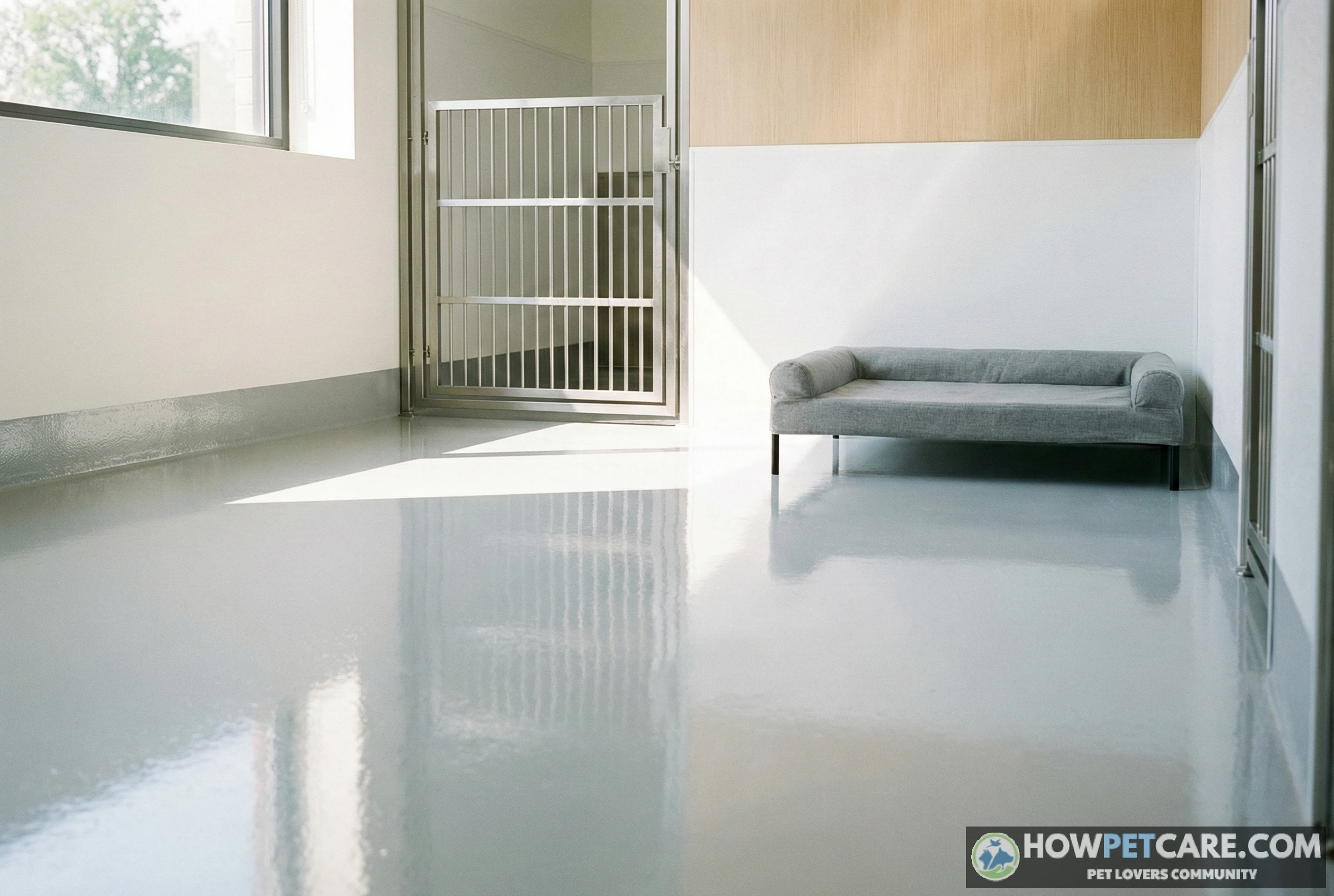
Large dogs can scratch doors, walls, and crate panels. Semi-gloss finishes resist scuffs better than eggshell or matte, and scrubbable zero-VOC lines tolerate cleaning without dulling. The matrix’s durability column reflects manufacturer claims and finish ratings, not independent claw-testing. Treat “good” or “moderate” as guidance rather than a guarantee.
What PFAS, ASTM D4236, CDPH 01350, EN-71, Green Seal and GREENGUARD Actually Certify
Certifications are useful when you know what they test—and what they don’t. Use this decoder in the paint aisle, and check that a certification appears on the specific product’s listing. A “pet safe” badge you can’t verify is marketing.
| Certification or label | What it tests or certifies | What it does NOT tell you | Relevance to dog owners |
|---|---|---|---|
| GREENGUARD / GREENGUARD Gold | Total chemical emissions from the cured product in a chamber test; Gold sets stricter limits, including formaldehyde | Nothing about licking, chewing, or ingestion | Strong signal for a dog’s breathing space; the right standard for rooms and kennels |
| Green Seal (GS-11) | VOC limits, restricted heavy metals and toxics, performance and quality criteria | Emissions after curing; ingestion safety | Good ingredient-level screen; pairs well with GREENGUARD |
| CDPH 01350 | Standardized emissions test for indoor air quality (VOCs as gases) | It is a test method, not a seal; passing does not mean edible | Useful when listed in the data sheet as evidence of low off-gassing |
| ASTM D4236 (AP / CL seal) | Requires a toxicologist to review art materials and label chronic hazards | Designed for human art users, not animals; “non-toxic” means no chronic human hazard | The minimum bar for paw-print paint; AP-seal washable kids’ paints are the safe pick |
| EN-71 Part 3 | Migration limits for certain heavy metals from toy surfaces when chewed or sucked | A European toy test; paint does not need it, and passing does not mean safe to eat | Best available proxy for chew-prone puppies; rare on US cans |
| FDA compliant / food contact safe | Usually means certain ingredients appear on FDA’s indirect food-contact list | That the dried film is safe to eat in quantity | Reassuring for lick zones, but do not treat it as a chew-toy rating |
| Lead-free | No intentionally added lead pigment | The old paint underneath; pre-1978 layers can still contain lead | Test old coatings before sanding; lead is a real ingestion risk for dogs |
| PFAS-free / no added fluorosurfactants | Absence of forever chemicals used in stain-proof and scrubbable coatings | Not a regulated claim; verify via SDS or by asking the manufacturer | Worth checking on stain-proof interior paints before a dog spends hours against the wall |
What no certification tells you about pets
Each certification above measures emissions, ingredients, or migration under lab conditions. None tests a dog licking the wall for a month. The cure window and watching for chewing matter more than the badge.
PFAS and stain-resistant paints
Stain-resistant and scrubbable formulas sometimes use fluorosurfactants or PFAS-type chemistry to repel liquids. “PFAS-free” isn’t a regulated claim, so check the SDS or email the manufacturer before relying on it. If a paint is marketed as “stain-proof” for a dog space, ask specifically whether it contains added PFAS.

How Long to Keep Your Dog Away After Painting: Dry, Cure and Off-Gassing Timelines by Paint Type
After painting, three clocks are running: touch-dry (hours), recoat-ready (hours to a day), and full cure, when the film hardens and off-gassing drops to baseline. Acrylic and latex typically need 7 to 30 days to cure. The smell may disappear sooner, but that isn’t the same as a full cure. Off-gassing peaks in the first 24 to 72 hours, which is why that’s the minimum dog-out window. The ranges below are conservative; stretch them in cold, humid, or still air.
Re-entry timeline table
| Paint type | Touch-dry | Keep dog out of the room | Supervised access | Full cure (chew/lick risk lowest) | Extra puppy and chew-prone dog notes |
|---|---|---|---|---|---|
| Zero-VOC water-based acrylic/latex | 1–2 hrs | 24–48 hrs | 48–72 hrs | 14–30 days | Puppies: board or gate off a full 72 hrs; block edges, baseboards, crate frames until day 30 |
| Standard (non-zero-VOC) latex | 1–2 hrs | 48–72 hrs | 72–96 hrs | 14–30 days | Same edge rules; add a sniff test—any paint smell means ventilate longer |
| Milk paint (true milk paint powder) | 30–60 min | 12–24 hrs | 24–48 hrs | 14–30 days | Film stays softer early; keep chewers out until week 2 minimum, seal lick zones |
| Oil-based / alkyd | 6–24 hrs | 72 hrs minimum | 4–7 days | 30+ days | Avoid entirely around dogs if possible; solvent smell lingers—if used, keep dog out of the house |
| Exterior dog-house paint + sealant | 1–4 hrs | 48–72 hrs | 72+ hrs | 7–14 days | Do not return the dog until both coats and sealant are fully cured; rain resets ventilation, not the cure clock |
Extra precautions for puppies and heavy chewers
Puppies explore with their mouths. Board them or gate the room for at least 72 hours after zero-VOC latex, and block access to edges, baseboards, and crate frames until day 30. For a heavy chewer, treat the full-cure date as the real re-entry date, not the touch-dry date. Don’t let a dog sleep inside a freshly painted crate until both the paint and any sealant have fully cured.
Ventilating a room and boarding the dog while it cures
For cross-ventilation, open two windows and place a fan exhausting outward. This can bring the dog-out window toward the short end of each range. A closed crate or unventilated garage kennel pushes it toward the long end. While the paint cures, keep your dog in a separate room, with a sitter, or boarded. Return the dog only after the cure date, then supervise the first few sessions to make sure licking or chewing doesn’t start.
Painting a Dog House, Crate or Kennel: Prep, Application and Durability Against Claws
Painting a dog house, crate, or kennel takes some planning beyond choosing a color. Consider how the finish will stand up to large-dog scratches and household cleaners once it cures.
Assumptions for cost: two coats everywhere, 2026 retail prices, existing surfaces in decent shape with no major primer needs.
| Project | Pet-safe route | Budget pet-safe route | Conventional route | Takeaway |
|---|---|---|---|---|
| Dog house (~90 sq ft, inside and out; buy 1 gallon) | ECOS Pet Dwellings, ~$89 + tax, ships direct | Behr Premium Plus Zero VOC, ~$38 | Standard exterior latex, ~$32 | Pet-safe premium is $6–$57 total—small in dollars, easy to justify |
| 12×12 room, 8-ft ceilings (~420 sq ft wall area; buy 3 gallons) | Benjamin Moore Natura or SW Harmony, ~$65–85/gal → ~$195–255 | Behr Premium Plus Zero VOC, ~$38/gal → ~$114 | Mid-tier latex, ~$35/gal → ~$105 | Zero-VOC premium runs $9–$150 depending on brand; Behr’s line removes most of the cost argument |
Where to buy: Behr is Home Depot–exclusive. Benjamin Moore Natura is sold at Benjamin Moore dealers, and Sherwin-Williams Harmony is sold at Sherwin-Williams stores. ECOS, AFM Safecoat, and Clare are direct-order only, so factor 3–7 days of shipping into your cure timeline.
Step-by-step: painting a dog house safely
- Remove your dog, bedding, toys, and bowls from the work area.
- Clean the surface, sand rough wood, and wipe away dust.
- Apply a low-VOC primer to bare wood if the manufacturer recommends it.
- Apply the first coat of zero-VOC paint and let it touch-dry according to the label.
- Apply the second coat after the recoat window.
- Allow the full cure time before your dog re-enters. For an exterior dog house, add a compatible sealant if the wood will face rain, then wait for the sealant to cure too.
- Return your dog only after both paint and sealant are fully cured.
Choosing finishes for scratch and lick zones
Satin and semi-gloss finishes resist scuffs and are easier to wipe clean than flat or eggshell. For lick zones—any surface a dog can reach with its tongue—choose a fully cured, zero-VOC acrylic film and consider a pet-safe sealant. Sealant adds protection, but it also adds VOCs and extra cure time. Check its data sheet before applying it inside a crate.
Cleaning cured pet-safe paint without damaging it
Household cleaners such as bleach, ammonia, and strong disinfectants can soften, dull, or react with cured paint films over time. For routine cleaning, use mild dish soap and warm water, rinse thoroughly, and avoid abrasive scrubbing on fresh films. Wait until the paint is fully cured before washing kennel walls.
Cost per room: pet-safe vs conventional paint
The example above shows that the pet-safe premium for a full room is often under $150 compared with mid-tier conventional paint. Behr’s zero-VOC line narrows the gap to about $9. For a single dog house, the difference is $6–$57 total. On small projects, cost is less of an obstacle; the larger question is whether your chosen product will hold up to claws and chewing.
Paw-Print Art: Which Paints Are Safe on a Dog’s Paws, and How to Remove Paint from Fur
Paw-print art puts paint directly on your dog. Because dogs lick their paws, anything you put there can end up in their mouths.
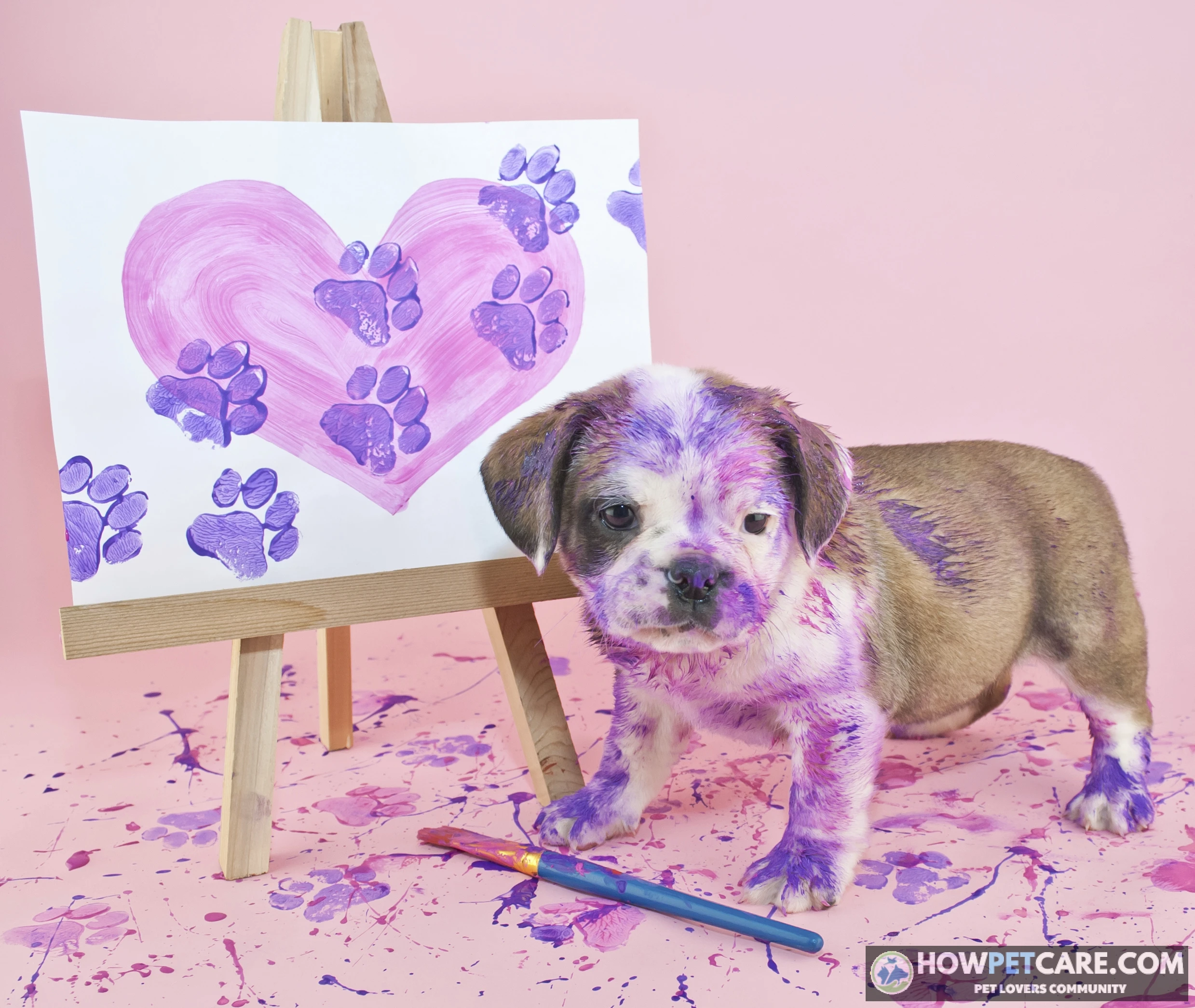
Options for paws include purpose-made pet paw-print ink and paint kits, or non-toxic, water-based washable children’s paints with an AP seal and ASTM D4236 labeling. Avoid craft acrylics, glitter paints, and products with unclear contents. Wet water-based acrylic is low risk for brief skin contact, but cured acrylic isn’t meant to be licked, and dogs will lick their paws after stamping. Wipe the paws immediately and keep sessions short.
Paw-print art step by step
- Dampen a cloth and wipe the paw clean.
- Apply a thin, even layer of pet-safe or AP-seal children’s paint to the pad.
- Press the paw firmly onto paper for a second, then lift it straight off.
- Wipe the paw clean immediately with a damp cloth.
- Give your dog a treat and end the session before the dog licks its paw.
- Keep paint away from the eyes, nose, and mouth.
Never use solvents, turpentine, or nail polish remover near a dog’s paws or coat.
Getting paint out of fur without solvents
If dried paint lands on fur, soften the spot with a little vegetable or coconut oil, work it loose, then wash with mild pet shampoo and rinse thoroughly. You can carefully trim the affected fur if needed. Never use turpentine, mineral spirits, paint thinner, or nail polish remover on skin or coat; these absorb through skin and are toxic if licked. Call a groomer or veterinarian if paint is stuck near the eyes or mouth, or if the skin looks irritated.
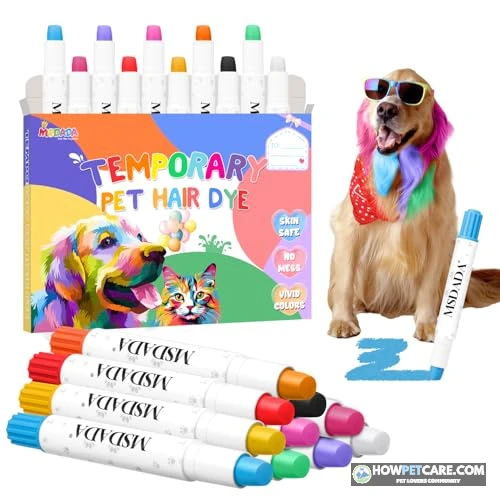
Pet hair-color products are a separate category from paint. They require pet-specific formulations; never substitute human hair dye or wall paint.
1A dog owner purchases a wall paint clearly labeled 'zero-VOC base' to repaint a room. However, after choosing a dark green shade, they notice a noticeable chemical odor. What explains why a paint labeled zero-VOC can still release volatile organic compounds after preparation?
Zero-VOC labels frequently apply only to the un-tinted base paint; deep or dark colorants added at retail can introduce significant VOC concentrations.
2When selecting zero-VOC interior acrylic paint for dog crate walls or kennel enclosures, why are satin or semi-gloss finishes recommended over flat matte finishes?
Higher-gloss sheens create a harder, smoother surface film that cleans easily and withstands mechanical abrasion from claws better than porous matte paint.
3Which of the following statements accurately describe what specific safety certifications evaluate regarding paint safety around dogs? (Select all that apply)
GREENGUARD Gold focuses specifically on off-gassing levels in room air, evaluating environmental health risks in enclosed spaces.
4What is the recommended paint choice for creating keepsake paw-print artwork with a dog?
AP-sealed washable children's paints undergo toxicological screening for chronic hazards and clean up easily before a dog licks its paws.
5A dog accidentally brushes against a freshly painted doorway and ends up with dried water-based paint stuck in its coat. What is the safest procedure to remove the dried paint safely?
Plant oils safely break down and lubricate dried water-based paint without introducing chemical toxins or skin irritants.
6Before repainting a room or kennel space in a home built before 1978, what specific precaution must be taken to protect dogs from severe toxicity?
Homes built before 1978 frequently contain lead paint layers; sanding produces lead dust, which is extremely toxic to dogs if inhaled or ingested.
If Your Dog Licks or Eats Paint: Symptoms of Paint Poisoning and What to Do Now
Act quickly, but don’t improvise medical treatment. Save these numbers now:
- Pet Poison Helpline: 800-213-6680 (24/7; a consultation fee applies)
- ASPCA Animal Poison Control: 888-426-4435 (24/7; a consultation fee applies)
- Your regular vet and nearest 24-hour emergency clinic
Immediate steps (first 5 minutes)
Move your dog away from the paint source and into fresh air. Wipe wet paint off the mouth, paws, and fur with a damp cloth, and prevent your dog from grooming. Grab the paint can or pull up the product’s SDS on your phone—you’ll be asked for exact ingredients. Note the product name, estimated amount swallowed, time of exposure, and whether the paint was wet or dried chips. Don’t induce vomiting or give milk, water flushes, or home remedies unless a vet or poison control tells you to. Vomiting solvent-based paint risks aspiration into the lungs.
Call right away for vomiting, drooling, or diarrhea after licking wet paint or eating chips; coughing, wheezing, or labored breathing after fume exposure; tremors, wobbliness, seizures, or extreme lethargy; or any exposure to oil-based paint, paint thinner, or pre-1978 flaking paint. For tremors, seizures, or labored breathing, go to an emergency vet immediately.
Symptoms vary by exposure route. Ingestion can cause drooling, vomiting, diarrhea, and lethargy; fumes can cause coughing or breathing trouble. Tremors, weakness, or seizures are emergencies. Low-risk scenarios—a few licks of fully cured zero-VOC water-based paint—usually cause nothing worse than mild stomach upset, but call poison control anyway if any symptom appears.
Risk also varies by paint type. Cured water-based paint is lower risk; solvent-based, lead-containing, and heavy-metal pigment paints are higher risk. Pre-1978 flaking paint poses a lead-poisoning risk and should be treated as urgent.
Paint poisoning symptoms: when to go to the emergency vet
Go to the emergency vet immediately for seizures, tremors, labored breathing, collapse, or known ingestion of lead-based paint, paint thinner, or solvent-based products. For mild drooling or a single vomiting episode after a small taste of cured latex, call your vet or poison control first.
Painting a pre-1978 home: lead checks before you start
Lead was banned in residential paint in 1978, but older homes often have lead layers under newer coatings. Sanding or chipping old paint creates dust that’s dangerous to dogs. Test old coatings with an EPA-recognized lead test kit, hire a lead-safe certified contractor for removal or encapsulation, and keep dogs out of the work area and away from cleanup debris before applying any new paint.
Your Pet-Safe Painting Checklist: Pick, Verify, Paint, Wait
Use this four-step decision guide for your project:
Step 1—Match the project to the paint. Dog house exterior: zero-VOC exterior acrylic or ECOS Pet Dwellings. Crate and kennel walls: zero-VOC interior acrylic latex in satin or semi-gloss. Interior room: zero-VOC latex with GREENGUARD Gold or CDPH 01350. Paw prints: AP-seal children’s paint or pet paw-print ink.
Step 2—Verify the product. Check the VOC of the tinted color, read the SDS, confirm certifications on the product listing, and save the can label.
Step 3—Apply with a plan for the dog. Cross-ventilate, remove your dog from the area, and note the touch-dry and full-cure dates.
Step 4—Wait out the cure window. Keep your dog out for the full re-entry range, block chew-prone edges until full cure, and supervise the first sessions back.
Pre-paint checklist
- Lead test if the home was built before 1978.
- SDS saved and poison-control numbers posted.
- Dog boarded or contained away from the work area.
- Sealant decision made and its cure time added to the timeline.
Post-paint checklist
- Cure date marked on the calendar.
- Supervised re-entry only.
- Mild soap-and-water cleaning plan after full cure.
- Chewing watch for puppies during the first 30 days.
Choose a product from the matrix, verify the current label, and follow its cure window before giving your dog access.
FAQ
Is milk paint or natural paint safer for dogs than regular paint?
Milk paint is usually low in VOCs and lacks synthetic preservatives, but ‘natural’ is not a safety guarantee. Check the SDS for pigments and additives, and still keep dogs away until it has fully cured.
How do I get dried paint off my dog’s fur safely?
Soften the paint with a dog-safe oil such as coconut or vegetable oil, then wash with mild pet shampoo and trim only the stuck fur if needed. Never use turpentine, mineral spirits or nail polish remover, and call a vet if the skin is irritated or the dog has licked off a large amount.
Is acrylic paint safe for dogs to walk on?
Wet water-based acrylic is low risk on skin briefly, but dogs lick their paws, so only use paint labeled non-toxic and ASTM D4236 compliant, or a pet-specific paw-print ink. Wipe paws right after stamping.
Does pet-safe paint cost much more than regular paint?
Premium low-VOC lines often cost more per gallon than basic builder-grade paint, though the gap narrows against mid-range conventional paint. For a single room, the difference is typically a modest amount of the total project cost.
Is dried paint dangerous if my dog chews on the wall?
Fully cured water-based paint is lower risk than wet paint, but chewing can still cause stomach upset and swallowed paint chips can be an obstruction risk. Lead-containing paint in older homes is a more serious concern, so call a vet or poison control if your dog has chewed painted surfaces.