

To keep a pet safe during a storm:
- Bring every pet inside early, before thunder, high winds, or sirens begin.
- Move to a safe room — a windowless interior room for thunderstorms and tornadoes; the highest level, never the basement, for flooding.
- Secure identification and containment: current tags and microchip registration, plus a latched carrier or leash and harness for each pet.
- Keep a go-bag ready with at least 3 days of food, water, medication, and records — 5–7 days in hurricane or flood zones.
- Stay sheltered, monitor official alerts, and inspect the home and yard for hazards before letting pets back outside.
Keep your pet indoors, identified, and secured in an interior room before the storm arrives. Pack a go-bag with at least 3 days of food and water; aim for 5–7 days if you live in a hurricane- or flood-prone area. Gather carriers, leashes, medications, and records. Decide in advance where you’ll go if officials order an evacuation. During the storm, stay on top of alerts and keep your pet contained. Afterward, inspect for hazards before anyone steps outside.
That framework works for dogs, cats, birds, reptiles, and small mammals, though the details shift by species and storm type. Use the timeline below when you have advance warning, or skip to the in-the-moment protocol if the storm is already hitting.
If the storm is already underway, round up your pets, close and secure exterior doors, and move to the safest available room. Don’t take a dog outside to relieve itself during lightning, high winds, or a tornado warning. The rest of this guide follows a before, during, and after timeline so you can act in order.
Storm Timeline: What to Do 72 Hours, 48 Hours, During, and After
The timeline fits a forecast storm, such as a hurricane. A fast-moving thunderstorm or tornado may leave almost no lead time: run through the highest-priority steps first—bring pets inside, secure them, and get to shelter.
| Phase | Priority Actions | Pet Items to Check | Species Notes |
|---|---|---|---|
| 72 hours before | Check forecasts and alerts; confirm identification; start the go-bag; identify pet-friendly destinations | Medication, food, water, records, tags | Confirm each animal has its own carrier or secure travel enclosure |
| 48 hours before | Finish the kit; prepare the safe room; check carriers and evacuation plans | Litter, bedding, leash and harness, batteries | Set up a cat litter area; prepare temperature and light-cycle plans for exotics |
| Day of the storm | Exercise dogs early; charge devices; bring all pets inside | Go-bag, water, carrier latches, current ID | Keep birds and small animals in secure enclosures; keep cats indoors |
| During | Stay sheltered; secure pets; monitor official alerts | Leash, carrier, medication, water | Avoid opening doors; manage heat, cold, and power loss for each species |
| After | Inspect the home and yard; check pets before restoring routine | ID, fencing, sanitation, food and water | Keep pets contained until outdoor and environmental hazards are checked |
72 Hours Before
- Check the forecast and sign up for local emergency alerts. Keep a NOAA weather radio within reach in case cellular service or power goes out.
- Make sure your pet’s collar tag has a current phone number. Verify the microchip registration directly with the registry and save the chip number. A microchip can help reunite a lost pet with its owner, but current contact information is essential.
- Refill prescriptions if you can. Keep medications in their labeled containers and write down the medication name, prescribed directions, and your veterinarian’s contact details. Ask your vet how to store any medication that needs refrigeration.
- Start the go-bag and identify two possible destinations: a pet-friendly hotel or other lodging, and a local emergency shelter or evacuation site. Confirm their policies rather than assuming they accept animals.
- Save the number and location of a nearby emergency veterinary clinic.
48 Hours Before
- Finish packing the go-bag and put it beside the safe room or the exit you’d use to evacuate.
- Set up the safe room with bedding, water, a secure carrier, and—if you have a cat—a litter box and litter. Add familiar bedding or a blanket.
- Find every carrier, check its latch, and make sure it is large enough for the animal to stand and turn around. Let a reluctant cat explore an open carrier without being forced inside.
- Buy or set aside the food, water, litter, waste bags, and batteries you will need. In hurricane or flood zones, plan for 5–7 days of pet supplies when feasible.
- Confirm your evacuation route, destination, backup caregiver, and a second route in case roads close.
The Day of the Storm
Exercise dogs early, while it is safe, and feed them on their normal schedule. Charge phones and power banks. Bring all pets indoors before the wind, thunder, or sirens begin. Put collars and identification on dogs and cats, and keep carriers close at hand. Don’t leave an animal in a yard, on a screened porch, or tethered outside.
During the Storm
Move to the safe room and keep dogs leashed or in a secure crate. Latch carriers. Close windows and curtains, and monitor alerts without opening exterior doors. Follow local instructions, including evacuation orders; don’t go outside to check conditions while a warning is active.
After the Storm
Keep pets inside or securely leashed until you have checked the yard and surrounding area for downed wires, debris, broken glass, standing water, and damaged fences. Inspect paws, eyes, and skin. Watch appetite, drinking, and behavior as you return to normal routines. The post-storm section below explains warning signs that need veterinary attention.
Pet Emergency Kit Checklist: Go-Bag Items and Exact Quantities
For a deeper packing list, use the pet emergency kit essentials; pack supplies for each pet separately where practical, and label bags or containers with the animal’s name. The recommended food and water target is at least 3 days, with 5–7 days preferable when hurricanes or flooding could disrupt access to supplies. Preparedness sources differ on the exact duration, but converge on having multiple days of essentials available. Rotate food and water so the supplies stay usable.
The water amount varies with species, size, health, diet, weather, and activity, so don’t rely on a single number for every animal. Pack enough for each pet’s normal daily needs for the full supply period, plus extra for warm conditions, spills, and cleaning. Ask your veterinarian for a specific daily estimate if you’re unsure.
| Item | Recommended Quantity | Why It Matters | Applies To |
|---|---|---|---|
| Food | 3 days minimum; aim for 5–7 days in hurricane or flood zones | A familiar diet may not be available at shelters or stores | All pets |
| Drinking water | 3 days minimum; aim for 5–7 days where feasible, based on each pet’s normal needs | Water access may be disrupted; bring extra for heat and cleaning | All pets |
| Medication | At least 7 days if available; keep in labeled containers | Prevents interruptions and provides clear medication information | Any medicated pet |
| Records and ownership documents | 1 waterproof copy per pet | Shelters and boarding facilities may request records; photos help establish ownership | All pets |
| Carrier or travel enclosure | 1 secure, correctly sized carrier per animal | Keeps each animal contained during transport and sheltering | All pets, with species-appropriate design |
| Leash and harness | 1 leash and harness per dog; add a spare leash if available | Provides secure control during evacuation and bathroom breaks | Dogs |
| Litter and pan | 1 disposable pan and enough litter for 3–5 days | Lets a cat use a toilet in a sheltered room | Cats |
| Waste bags and paper towels | 1 roll or supply of each | Supports cleanup and sanitation | All pets |
| First-aid basics | Gauze, saline, tweezers, blunt scissors, and a pet-appropriate styptic product | Helps manage minor issues while arranging veterinary care | Especially dogs and cats |
| Light | 1 flashlight or battery lantern, plus spare batteries | Helps you move safely during an outage; candles create a burn and fire risk | Household |
| Familiar comfort item | 1 blanket or familiar item per pet | Familiar scent and bedding can make an unfamiliar space less stressful | All pets |
| Species-specific supplies | 1 secure travel enclosure per animal, plus suitable bedding, hide, heat, or light supplies | Helps maintain containment and essential care during travel or outages | Birds, reptiles, small mammals, fish as applicable |
Food, Water, and Medication Quantities
Use your pet’s normal daily ration to calculate food: multiply the usual amount by the number of days in your supply plan, then add a modest buffer if you can. Keep food sealed and bring bowls. For animals that eat fresh or refrigerated food, ask your veterinarian how to manage it safely if the power fails.
For water, plan for every pet’s normal needs for the same number of days as the food supply, with extra for heat, spills, and cleaning. A dog, cat, rabbit, and bird do not have the same requirements. Keep the water in clean, closed containers and replace it as part of your regular kit check.
Pack at least 7 days of prescribed medication if you can, together with written directions and your veterinarian’s contact information. Don’t change doses, substitute medicines, or give a human medication based on a general emergency checklist. If a medication needs refrigeration, ask the prescribing veterinarian for an outage plan.
Documents and Identification Packet
Store one waterproof copy per pet of vaccination and medical records, your veterinarian’s contact information, proof of ownership, and the pet’s microchip number. Add a recent photo of you with your pet and clear photos of the animal from more than one angle. Keep a digital copy somewhere you can access if you evacuate without the paper packet.
A microchip is not a location tracker; it provides identification when a lost pet is scanned. Confirm the registration is current and that the listed phone number will work during an emergency. Keep a collar and tag on dogs and cats when safe and appropriate.
Carriers, Leashes, and Comfort Items
Use a secure carrier for each cat and for small animals that need containment. Dogs should have a properly fitted harness and leash. Don’t depend on a collar alone for a panicked dog that may back out of it. Put a familiar blanket in the carrier, but leave room for the animal to settle safely.
Printable Go-Bag Checklist
- ☐ Food for each pet for at least 3 days; preferably 5–7 days in hurricane- or flood-prone areas
- ☐ Drinking water for the same period, based on each pet’s normal needs, plus extra for heat and cleaning
- ☐ At least 7 days of medication if available; labeled containers and written directions
- ☐ Waterproof medical, vaccination, ownership, and microchip records
- ☐ Recent photos of each pet, including a photo with you
- ☐ One secure carrier or travel enclosure per animal
- ☐ Leash and harness for each dog; current collar and ID for dogs and cats
- ☐ Cat litter, disposable pan, and enough litter for 3–5 days
- ☐ Waste bags, paper towels, bowls, and familiar bedding
- ☐ Pet first-aid basics, flashlight or battery lantern, and spare batteries
- ☐ Species-specific bedding, hide, heat, lighting, or tank supplies as needed
Check and refresh the kit every 6 months, and whenever a pet’s medication, food, or contact information changes.
Where Your Pet Should Shelter Inside the Home
Pick a shelter location based on the hazard. A safe room is not simply the quietest room: it must also protect the animal from the specific danger. Keep a carrier, water, bedding, and essential supplies there before the storm begins.
Thunderstorms and Lightning Safety
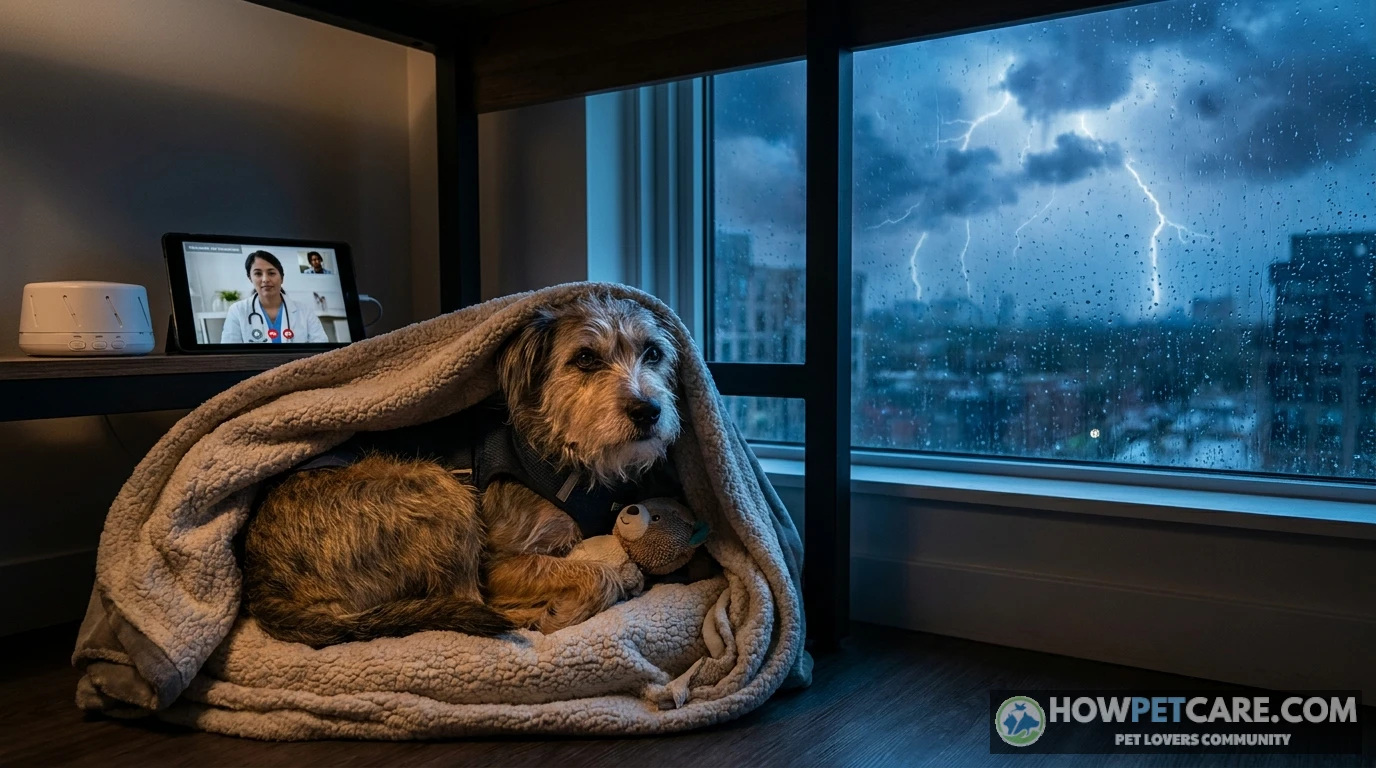
For a thunderstorm, use a windowless interior room such as a bathroom, closet, or hallway. Keep pets away from windows and exterior doors. Close curtains and run a fan, white-noise machine, or familiar music to soften the sound. Don’t shelter pets on screened porches or near metal fencing, and never tie a dog outdoors during a storm.
Tornado Warning Protocol for Pets
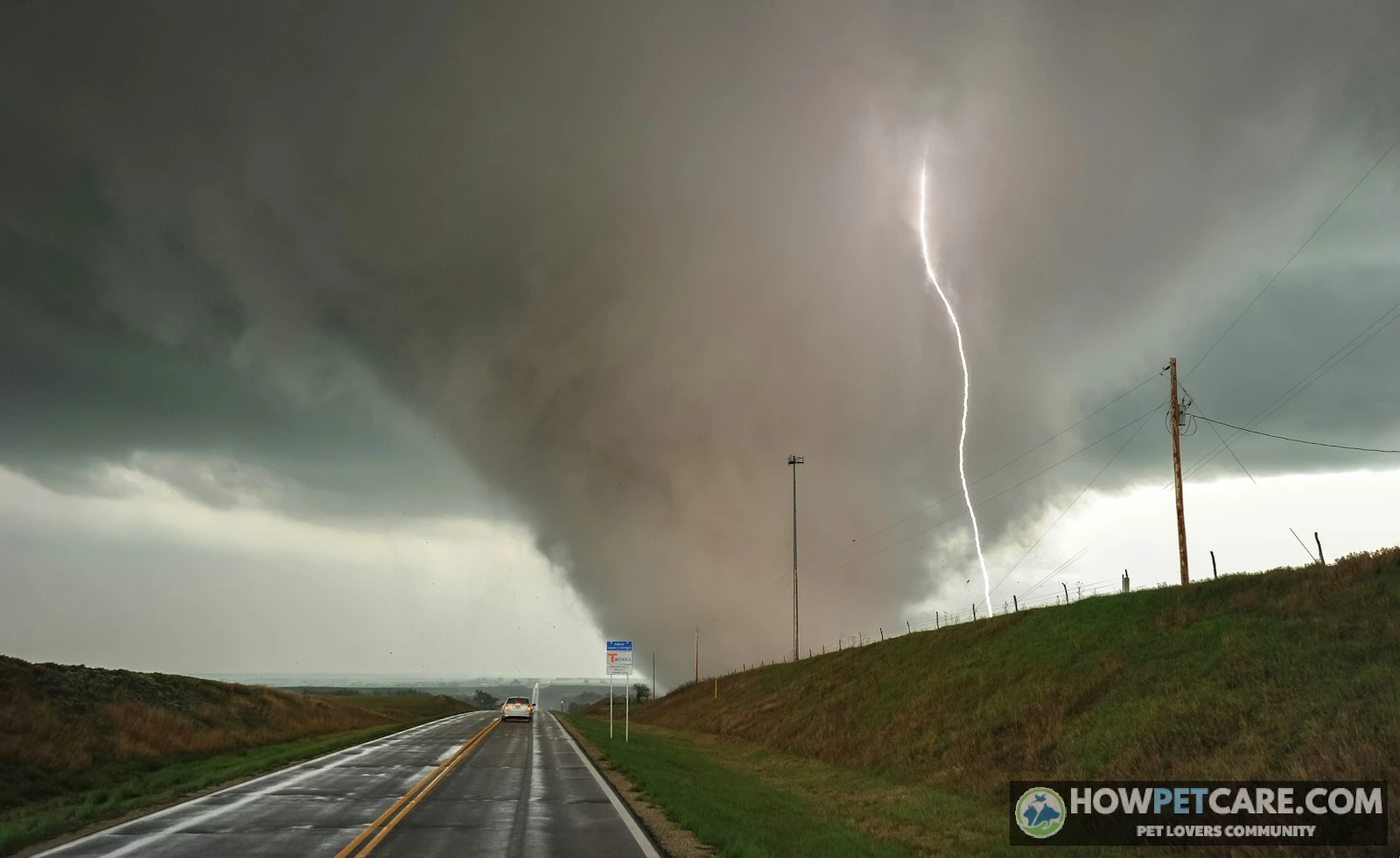
During a tornado warning, go to the lowest level available and choose a small interior room, such as a basement or ground-floor bathroom, away from windows. Bring pets with you in carriers or keep dogs leashed beside you. Stage carriers and the go-bag near the shelter well before severe weather. If a warning is active, don’t delay sheltering to search the house for a hiding cat.
Flood and Basement Rules
For flood risk, move to the highest usable level and never shelter in a basement. Keep carriers and supplies off the floor. If officials advise evacuation, leave early with your pets rather than waiting for water to rise. Don’t enter floodwater with an animal or assume that a carrier left in a flood zone will keep a pet safe.
What to Do in the Moment: Sirens, Power Failure, and Storm Arrival
When a warning sounds or a storm arrives unexpectedly, follow a short sequence instead of improvising. If officials issue an evacuation or shelter instruction, follow it and bring your pets.
The 60-Second Safe Room Sequence
- Collect pets and secure exits. Close exterior doors and gates. Don’t leave a pet outside while you gather supplies.
- Move to the right shelter. Use an interior room for thunderstorms and tornadoes; move upward for flood danger. Follow official instructions.
- Contain each animal. Put cats and small pets in latched carriers. Leash dogs before opening any door. If a cat resists, a towel can help you lift and contain it safely; don’t chase a panicked animal through the home while delaying shelter.
- Bring essentials. Take medications, water, the go-bag, and a charged phone or NOAA weather radio if they’re within reach. Don’t risk leaving shelter to retrieve them.
- Stay inside and monitor alerts. Keep doors closed and don’t go outside until officials indicate it is safe.
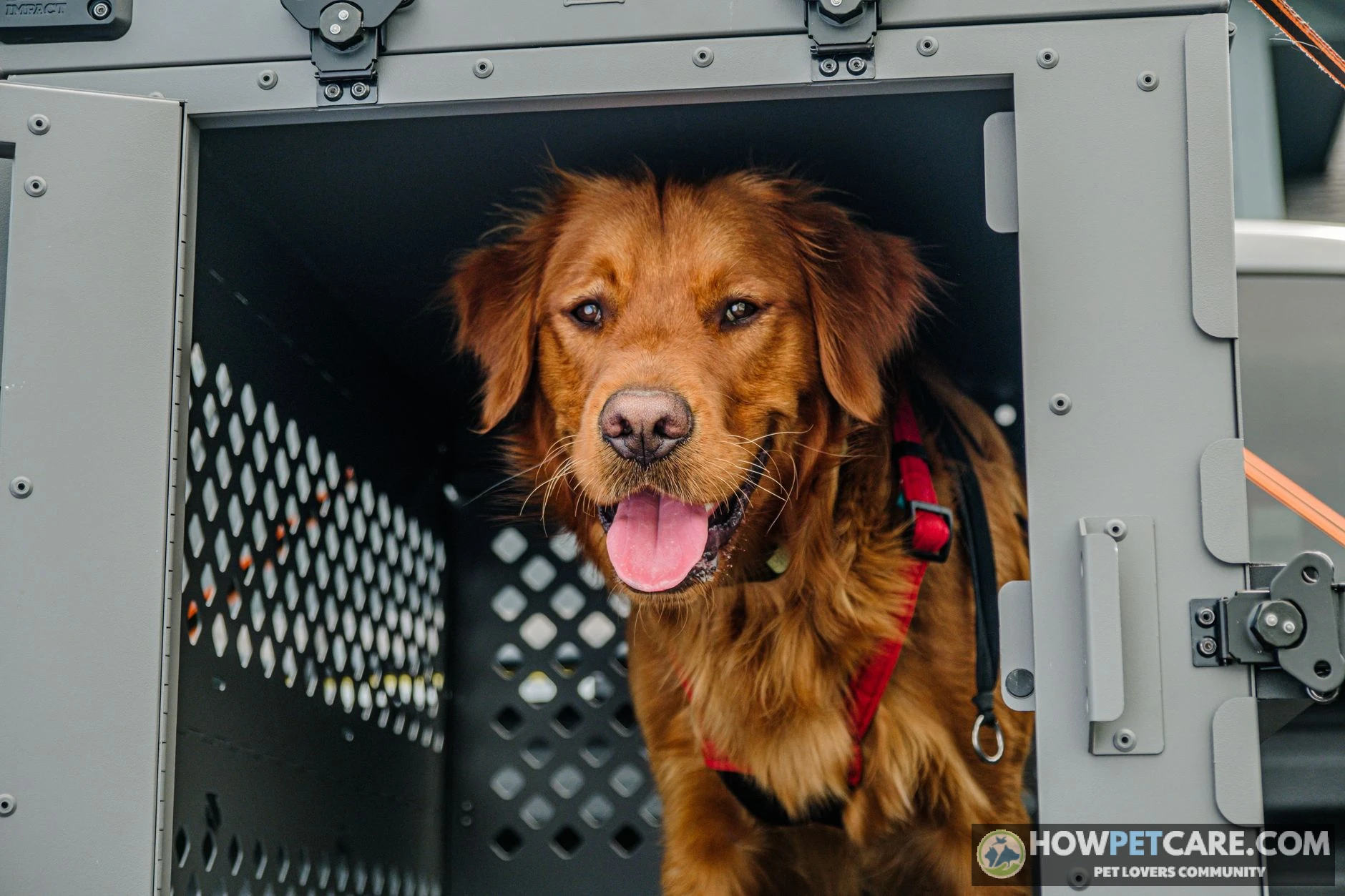
For dogs, keep a leash attached to a harness where practical. Keep carriers closed and latched; a frightened pet can slip out quickly when a door opens. Use a calm, ordinary voice and move deliberately.
Surviving a Multi-Day Power Outage With Pets
Use a battery lantern rather than candles, and keep pets away from generators and their exhaust. Don’t run a generator indoors, in a garage, or near an opening where exhaust can enter the home. Watch the indoor temperature: a prolonged outage can make a home unsafe for animals sensitive to heat or cold. Keep a species-specific plan for maintaining suitable conditions, and contact your veterinarian or local emergency management if you cannot do so safely.
Keep refrigerated medicines at the temperature required by the label; ask your veterinarian in advance what to do if refrigeration is lost. Use stored water carefully, and don’t let pets drink from floodwater, puddles, or water contaminated by chemicals. Keep an eye on battery-powered equipment, such as reptile heating devices, fish-tank aeration, and lighting. If you cannot maintain an animal’s essential conditions, seek safe temporary care or an evacuation option rather than waiting for the situation to worsen.

How to Calm an Anxious Dog or Cat During a Storm: What Actually Works
Thunderstorm anxiety is a fear response to storm cues such as loud sound, flashes, and changes in the environment; an animal may begin reacting before the loudest thunder reaches the home. The cause and triggers vary. The practical goal is to prevent escape and reduce distress—not to force a frightened pet to behave normally.
| Intervention | Best For | When to Start | Limitations |
|---|---|---|---|
| Safe room, closed curtains, and white noise | Dogs and cats that settle with a quieter, familiar space | Set up before the storm or at the first signs of restlessness | Reduces triggers but may not be enough for severe fear |
| Covered crate or carrier | A pet already comfortable resting in one | Before noise peaks; keep it accessible and familiar | Do not force a panicked animal into a crate or use one if it creates distress |
| Anxiety wrap or compression shirt | Some dogs that tolerate gentle pressure | Try it during calm weather, then use before panic begins if the dog accepts it | Response varies; it is not a substitute for a safe room or veterinary care |
| Pheromone diffuser | Some dogs or cats, as one part of a broader plan | Follow product directions; set up ahead of expected storms | Effects vary and should not be treated as an immediate rescue measure |
| Desensitization and counterconditioning | Dogs or cats with recurring, manageable noise fear | Begin during calm periods, gradually, with guidance if needed | Takes time; loud recordings or sudden exposure can worsen fear |
| Vet-prescribed medication | Pets with significant or persistent storm anxiety | Discuss in advance; follow the veterinarian’s specific timing instructions | Never use human medicine or leftover prescriptions without veterinary direction |

Calming Dogs During Thunder
A crate can help if your dog already sees it as a safe resting place. Put it in the safe room, add familiar bedding, and keep the door open unless the dog is comfortable being enclosed. A calming vest or anxiety wrap applies gentle pressure; some dogs tolerate it, while others don’t. Try it on a calm day before relying on it during a storm. Don’t restrain a dog in a wrap or crate if it struggles or becomes more distressed.
White noise, a fan, or familiar music may mask some storm sound. Offer a chew or food puzzle if the dog is willing to engage, but don’t insist if it refuses food. Keep the dog leashed for necessary trips outside, and wait until conditions are safe before taking one.
Calming Cats Who Hide and Resist Carriers
Hiding is a common way for a cat to cope. Make the safe room available early, with a covered hiding spot, water, litter, and an open carrier. Don’t drag a cat out of a secure hiding place just to comfort it. If evacuation is necessary, prepare the carrier before the storm and use calm, controlled handling. Keep the litter box in the shelter room so the cat does not need to cross the house or approach an exterior door.
If your cat will not enter a carrier, ask your veterinarian for a low-stress carrier-training plan well before storm season. A pheromone product may be considered as part of that plan, but it is not a guaranteed quick fix.
Desensitization and Long-Term Training
When there is no storm, gradually pair low-volume storm recordings with something your pet enjoys, such as food or calm play. Increase the volume only if the pet remains relaxed; stop or reduce the intensity if it shows fear. This is a gradual training process, not something to start during an active storm. A veterinarian or qualified behavior professional can help if fear is intense or worsening.
Avoid punishment, forced exposure, and unsupervised sedatives. Punishing fearful behavior can add stress, and medication can be unsafe if it is not chosen and timed for the individual animal.
When Storm Anxiety Needs a Vet: Severity Signs and Medication Decisions
Some restlessness or brief panting may settle once the storm passes. Arrange a veterinary discussion during calm weather if your pet trembles, drools, hides, or refuses food during storms, especially if these reactions are hard to manage. Severe distress includes destructive escape attempts, self-injury, house-soiling associated with panic, or fear that continues for hours or days after the storm.
A veterinarian can assess whether an underlying health issue contributes to the behavior and discuss a plan that may include environmental changes, training, or prescription medication. Ask what the medication is intended to do, when to give it relative to a forecast storm, what side effects to watch for, and what to do if the storm arrives unexpectedly. Some medicines need to be given before the storm begins; follow your veterinarian’s instructions for your pet rather than improvising. Discuss a new fear in an older pet, too, since pain or cognitive changes may be relevant.
Hurricane, Tornado, and Flood Differences: Evacuation Decisions and Pet-Friendly Shelters
| Hazard | Typical Warning Time | Where Pets Shelter | What Changes in Your Plan | Evacuation Rule |
|---|---|---|---|---|
| Thunderstorm | Minutes to hours | Windowless interior room | Reduce noise and prevent escapes; prepare for lightning, wind, and possible flooding | Usually shelter at home unless officials advise otherwise or the home becomes unsafe |
| Tornado | Minutes, sometimes less | Lowest-level interior room or basement | Keep carriers and the go-bag staged; do not delay shelter to find a hiding pet | Shelter in place during the warning; do not drive into the storm |
| Hurricane | Often days of advance forecasts | Interior room if staying; safe destination if evacuating | Prepare more supplies, confirm lodging, and leave early when directed | Follow evacuation orders and take pets with you |
| Flood | Hours to days, but conditions can change quickly | Highest usable level; never the basement | Raise carriers and supplies; avoid floodwater and prepare to leave early | Leave before roads are inundated; never leave pets tied or confined in a flood zone |
When to Evacuate With Pets During a Hurricane
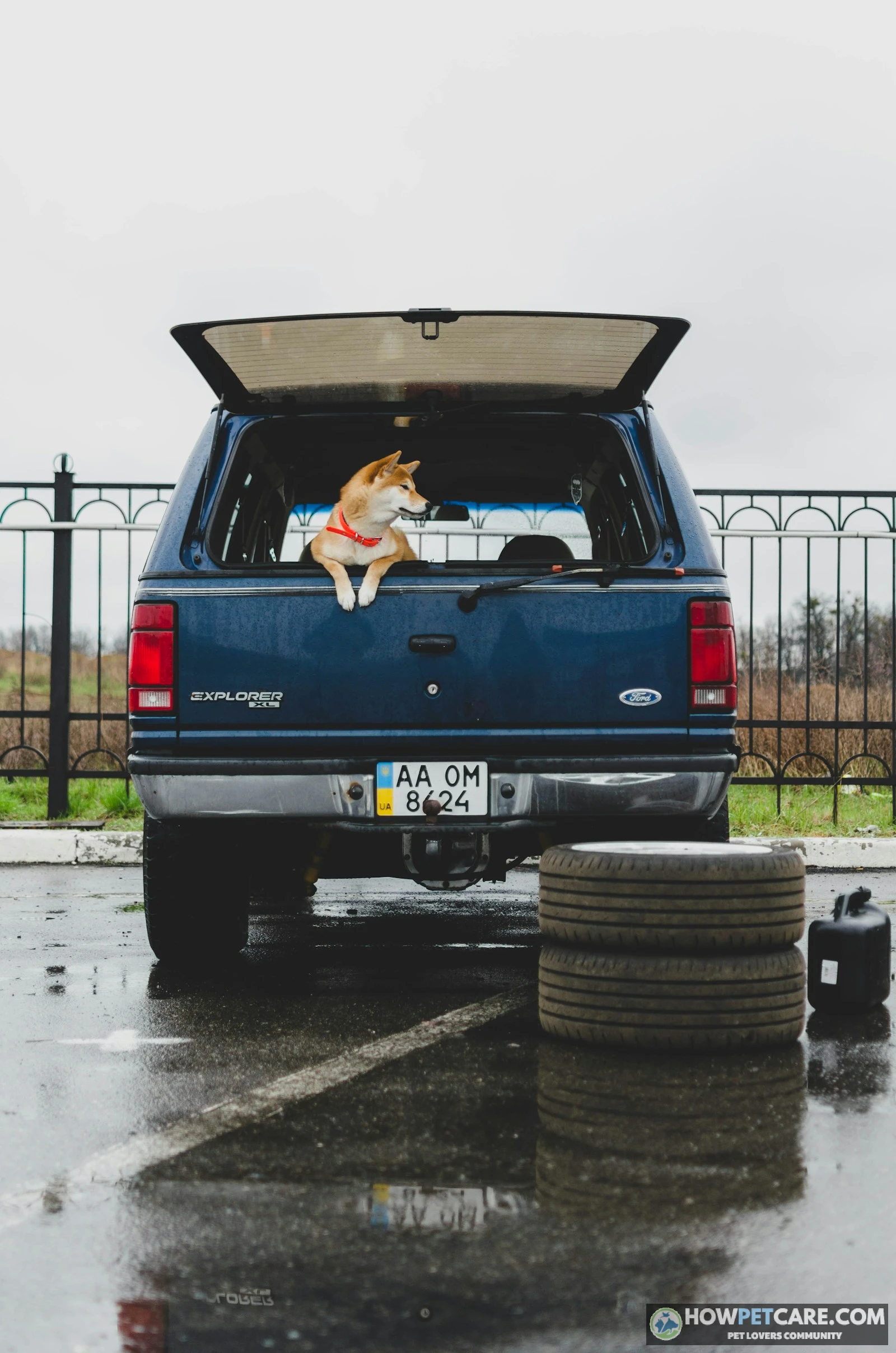
Leave when officials order an evacuation, when your location is at risk of flooding, or when the home will not remain safe for your household and animals. Don’t wait until roads are blocked or water is rising. Bring pets; don’t leave them behind, outdoors, or tied up. The ASPCA and AVMA advise that people evacuating with pets should take them rather than leaving them in danger.
Many emergency shelters do not accept pets, and available arrangements vary by location. Confirm in advance which local shelters accept animals and what conditions apply. If you can, plan for more than one option: a pet-friendly hotel, a friend or family member outside the hazard area, and a designated shelter or animal-care facility.
Finding Pet-Friendly Shelters and Hotels Near You
Check with your county or city emergency management office, local humane society or animal shelter, and hotels along your evacuation routes. Call ahead to verify pet rules, limits, fees, and whether animals must remain in carriers. Requirements may include vaccination records, current identification, a leash or carrier, and your own food and supplies. Keep these documents in the waterproof go-bag packet.
Include two possible routes, a backup caregiver, and a destination outside the hazard zone in your evacuation plan. Confirm that the person who might care for your pet can access the home and knows where the carrier and kit are stored. A microchip and current tag can improve the chance of reunification if separation occurs.
Keeping Cats, Birds, Reptiles, and Small Mammals Safe in a Storm
Cats
Bring cats inside before a storm and keep them there until outdoor hazards have been checked. Set up a litter box, water, hiding place, and carrier in the safe room. Keep the carrier accessible and familiar, and secure doors and windows to prevent escapes. Cats that hide during thunder should not be pulled out unless they must be moved to safety.
Birds
Move a bird’s cage to a quiet interior room, away from windows and drafts. A partial cage cover may reduce visual stimulation, but preserve adequate ventilation and follow the bird’s normal care needs. Secure the cage against falling objects and plan for temperature changes and loss of power or lighting. Ask an avian veterinarian how to maintain the species’ normal light and temperature needs during an extended outage.
Reptiles
Reptiles may depend on controlled heat and lighting. Prepare an insulated travel enclosure and a safe backup plan for maintaining appropriate conditions if power fails. Only use heat sources that are safe for the specific animal and cannot cause burns or overheating; follow an exotic-animal veterinarian’s guidance. Keep carriers off the floor if flooding is possible, and don’t assume a battery device will run indefinitely.
Rabbits, Guinea Pigs, and Other Small Mammals
Keep rabbits, guinea pigs, and other small mammals indoors in secure travel carriers or enclosures. Bring their usual food, water, bedding, and a hiding place. Protect them from both chilling and overheating, and keep cages away from unstable furniture or windows. Use paper bedding or other familiar material if their usual setup cannot travel.
Fish
Secure tanks against falling objects and have a plan for loss of power, including backup aeration if appropriate for the setup. Avoid overfeeding if normal filtration or aeration is interrupted, and seek species-specific aquarium guidance for an extended outage. If you may need to evacuate, plan ahead: fish are not safely transported in a tank left at home during a flood.
After the Storm: Hazard Checks and Red-Flag Symptoms That Mean Call the Vet
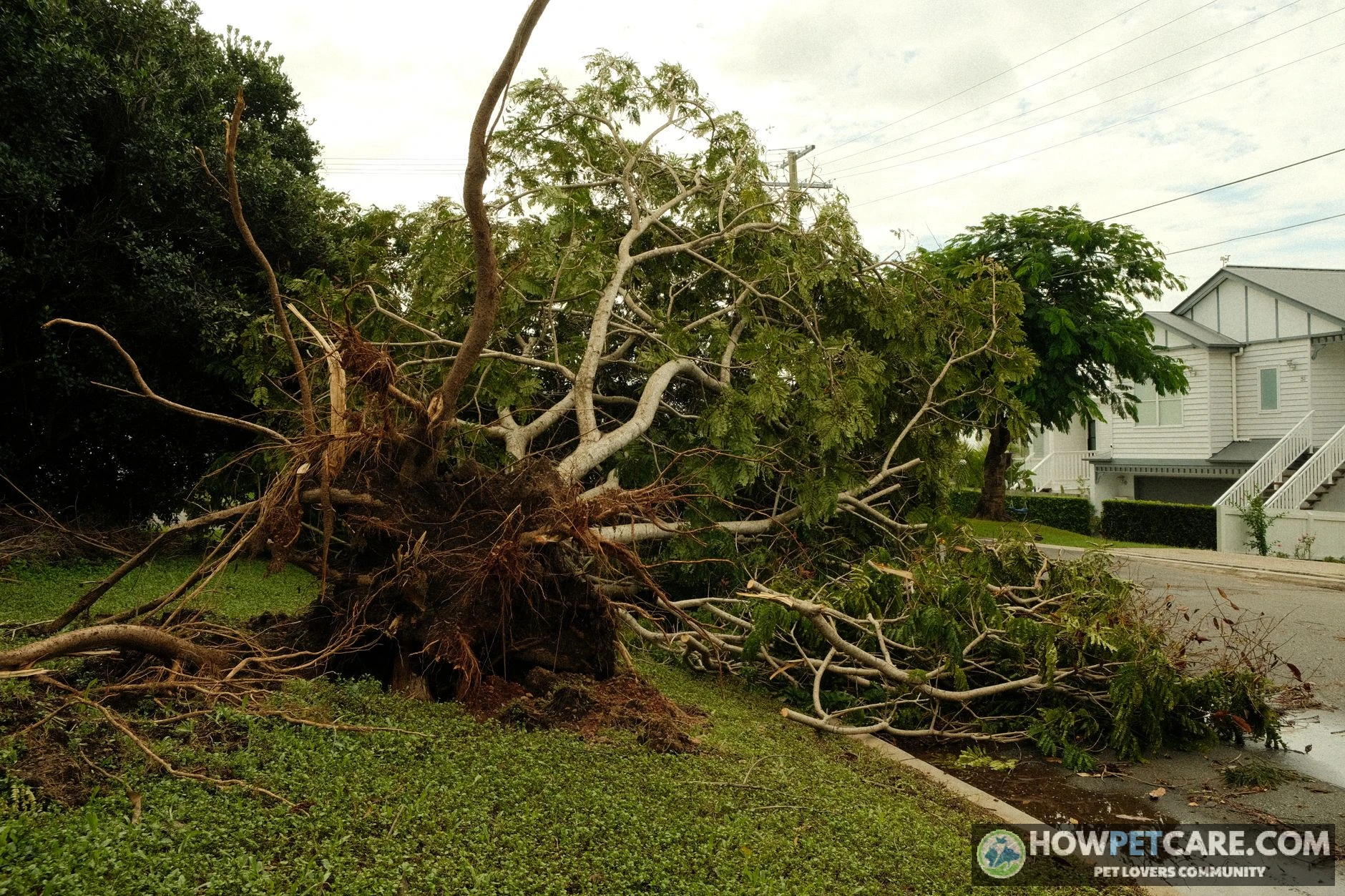
Don’t let a pet rush outside as soon as the rain stops. Storm damage can create new hazards in familiar places.
Yard and Neighborhood Hazard Checklist
- ☐ Look for downed power lines, damaged fences, unstable trees, broken glass, and sharp debris.
- ☐ Keep pets away from standing or floodwater, which may contain sewage, fuel, chemicals, or other contaminants.
- ☐ Check for displaced wildlife, damaged structures, and unfamiliar objects before allowing a pet to explore.
- ☐ Inspect paws, eyes, skin, and coat for cuts, burns, or contamination.
- ☐ Confirm gates, screens, and fencing are secure before allowing supervised outdoor access.
- ☐ Recheck tags and microchip contact details if you have moved or changed phone numbers.
Red-Flag Symptoms: When to Call a Vet or Poison Control
Call an emergency veterinarian now for difficulty breathing, collapse, seizures, unresponsiveness, serious bleeding, suspected fracture, severe pain, an eye injury, or signs of severe overheating or hypothermia. Call promptly for repeated vomiting or diarrhea, refusal to drink, or a sudden worsening in behavior. Don’t wait to see whether a pet improves after a lightning strike, being swept by floodwater, entrapment under debris, or loss of consciousness.
For bleeding, keep the animal as still as possible and seek veterinary direction if it does not stop with firm pressure. This is triage guidance, not a substitute for veterinary care. Don’t attempt complex first aid or give medication without professional instructions.
Call a veterinarian or animal poison-control service immediately if a pet drinks floodwater, licks fuel or chemical residue, eats unknown debris, or may have chewed a wire or ingested a battery. If you suspect poisoning, don’t wait for symptoms to develop. In the United States, ASPCA Animal Poison Control can be reached at (888) 426-4435; fees may apply. You can also contact an emergency veterinarian for immediate advice.
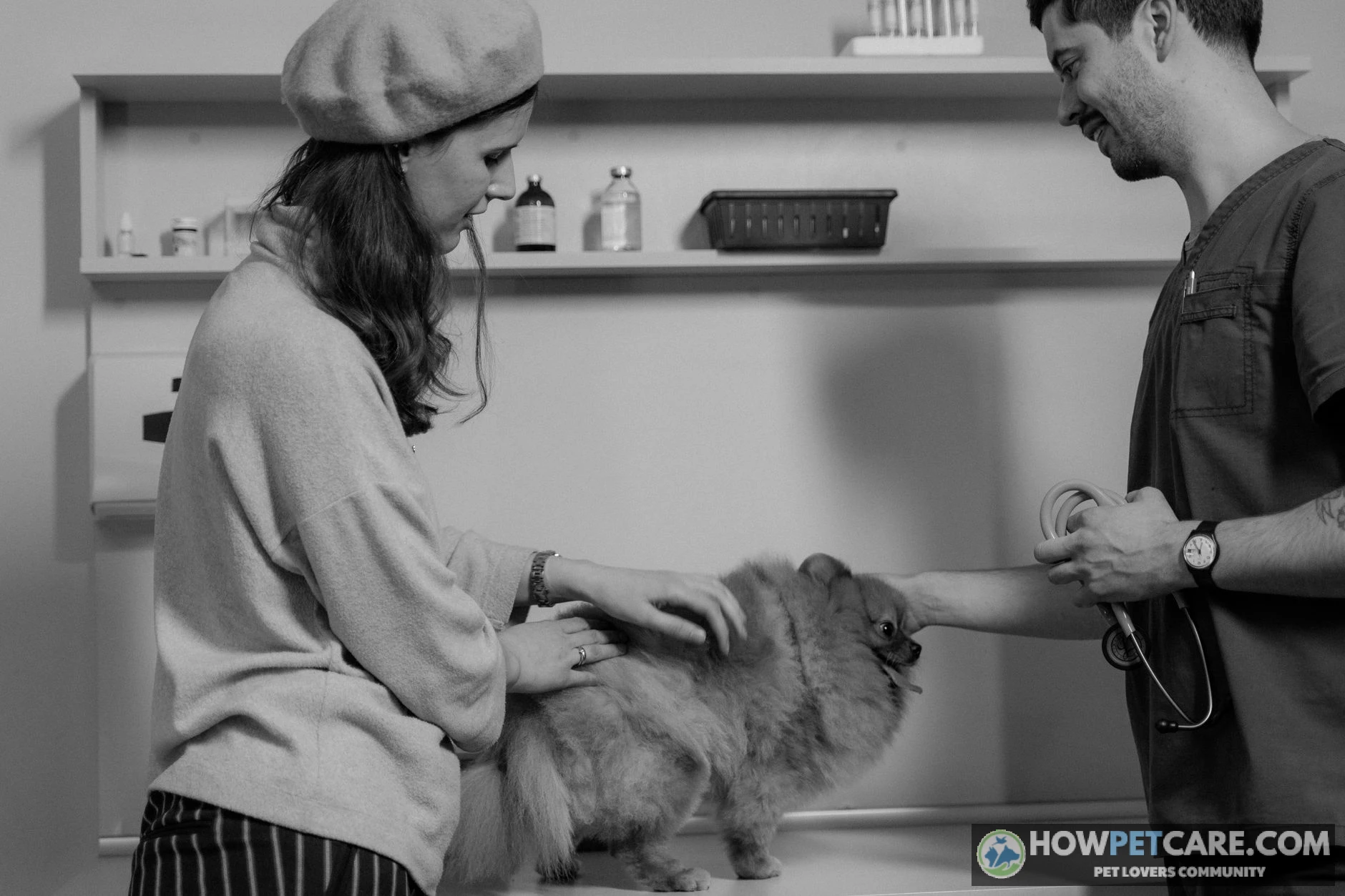
A pet that is mildly shaken or clingy but steadily improves once the home is quiet can be monitored closely. If fear persists, appetite or drinking does not return to normal, or new symptoms appear, contact your veterinarian. Continue checking fencing and sanitation as you gradually restore your pet’s routine.
Your Pet Storm Readiness Action Plan: A 7-Day Setup Checklist
Use this plan before storm season, or compress it if a storm is approaching. If you have less than 24 hours, prioritize identification, a carrier or leash, a safe room, water, medication, and a destination plan.
- Day 1: Identification. Confirm that tags, microchip registration, and contact details are current. Take recent photos of each pet.
- Day 2: Go-bag. Pack supplies using the checklist above. Include at least 3 days of food and water, and aim for 5–7 days if you face hurricane or flood risk.
- Day 3: Safe room and carriers. Set up the room, check each carrier’s condition and latch, and let pets inspect carriers at their own pace.
- Day 4: Veterinary plan. Contact your veterinarian about recurring anxiety, medication timing, special medical needs, and outage storage for prescriptions.
- Day 5: Destinations and contacts. Save local emergency management, pet-friendly lodging, shelter, and emergency veterinary contacts. Confirm the rules rather than relying on old information.
- Day 6: Calming preparation. Test any wrap or other calming aid during calm weather. Begin gradual sound desensitization only if your pet stays relaxed; ask a professional for help if fear is severe.
- Day 7: Practice. Walk through getting each pet into its carrier or on a leash, moving to the safe room, and collecting the go-bag. Make changes that reduce delays or stress.
Repeat the practice when household routines, pets, medications, or evacuation arrangements change. The best storm plan is one you can follow quickly without searching for supplies or guessing where your animals should go.
1When preparing a pet emergency go-bag for households in flood-prone or hurricane zones, what is the recommended target duration for food and water supplies?
While standard kits recommend a baseline of 3 days, severe storms and flooding frequently cause prolonged disruptions to local supply access.
2Where should pets be sheltered inside the home during a flood threat?
Elevating pets and supplies protects them from rising water and prevents containment in sub-ground level spaces.
3What is the primary limitation of relying on a microchip for pet identification during a storm evacuation?
Microchips do not emit active tracking signals; they rely on scanner reading and current owner registration data in a database.
4If a tornado warning is issued for your area, how should you handle pet containment and sheltering?
Tornado safety requires reaching the lowest level interior space as quickly as possible with animals firmly controlled.
5What is the correct protocol for managing prescription medications in a pet emergency kit?
Maintaining labeled containers ensures accurate dosing and provides verification for emergency veterinary facilities.
6How should calming aids, such as anxiety wraps or compression vests, be introduced to an anxious dog?
Pre-testing ensures the dog tolerates the pressure garment safely before storm cues trigger a fear response.
7During a multi-day power outage, what safety measure must be taken regarding equipment and illumination around pets?
Battery lights prevent fire hazards, while keeping distance from exhaust eliminates carbon monoxide risks.
8What step should be taken before allowing a pet outside into the yard after a storm has passed?
A thorough visual check ensures the outdoor space is free of physical, electrical, and chemical hazards before pet access.
9Which symptom observed in a pet post-storm requires immediate contact with an emergency veterinarian or animal poison control?
Toxic exposures and electrical trauma require rapid professional triage before fatal complications arise.
10What is the recommended approach for managing a cat that hides under furniture during a severe thunderstorm?
Hiding is an effective natural coping mechanism for felines; interrupting it unnecessarily exacerbates anxiety.
| Item | Recommended Quantity | Why It Matters | Applies To |
|---|---|---|---|
| Food | 3 days minimum; aim for 5–7 days in hurricane or flood zones | A familiar diet may not be available at shelters or stores | All pets |
| Drinking water | 3 days minimum; aim for 5–7 days where feasible, based on each pet's normal needs | Water access may be disrupted; bring extra for heat and cleaning | All pets |
| Medication | At least 7 days if available; keep in labeled containers | Prevents interruptions and provides clear medication information | Any medicated pet |
| Records and ownership documents | 1 waterproof copy per pet | Shelters and boarding facilities may request records; photos help establish ownership | All pets |
| Carrier or travel enclosure | 1 secure, correctly sized carrier per animal | Keeps each animal contained during transport and sheltering | All pets, with species-appropriate design |
| Leash and harness | 1 leash and harness per dog; add a spare leash if available | Provides secure control during evacuation and bathroom breaks | Dogs |
| Litter and pan | 1 disposable pan and enough litter for 3–5 days | Lets a cat use a toilet in a sheltered room | Cats |
| Waste bags and paper towels | 1 roll or supply of each | Supports cleanup and sanitation | All pets |
| First-aid basics | Gauze, saline, tweezers, blunt scissors, and a pet-appropriate styptic product | Helps manage minor issues while arranging veterinary care | Especially dogs and cats |
| Familiar comfort item | 1 blanket or familiar item per pet | Familiar scent and bedding can make an unfamiliar space less stressful | All pets |
| Species-specific supplies | 1 secure travel enclosure per animal, plus suitable bedding, hide, heat, or light supplies | Helps maintain containment and essential care during travel or outages | Birds, reptiles, small mammals, fish as applicable |
| Light | 1 flashlight or battery lantern, plus spare batteries | Helps you move safely during an outage; candles create a burn and fire risk | Household |
FAQ
Should I microchip my pet before storm season, and does it help reunite lost pets?
Yes. A microchip gives a permanent ID that survives lost collars, but it only helps if the registration has your current phone number and address. Check it with the chip registry before storm season.
Is it safe to leave my dog outside during a thunderstorm?
No. Dogs outdoors face lightning, flooding, and panic-driven escapes. Bring them inside early, and never tie or tether a dog outside during a storm.
Do pets sense storms before they arrive?
Many pets seem to react to changes in barometric pressure, static, and distant thunder before people notice. The exact cause is not fully proven, but early restlessness is a good cue to bring pets in and settle them.
Can I give my dog human anxiety medication or melatonin during a storm?
Do not give any human medication without a vet’s guidance, as some are toxic to pets and doses differ. Ask your vet in advance about safe options and the right timing.
How do I keep my pet safe from fireworks and thunder noise at the same time?
The same noise-reduction steps apply: a quiet interior room, white noise, and a calming plan started before the noise begins. Keep ID on your pet, since noise-triggered escapes are common.