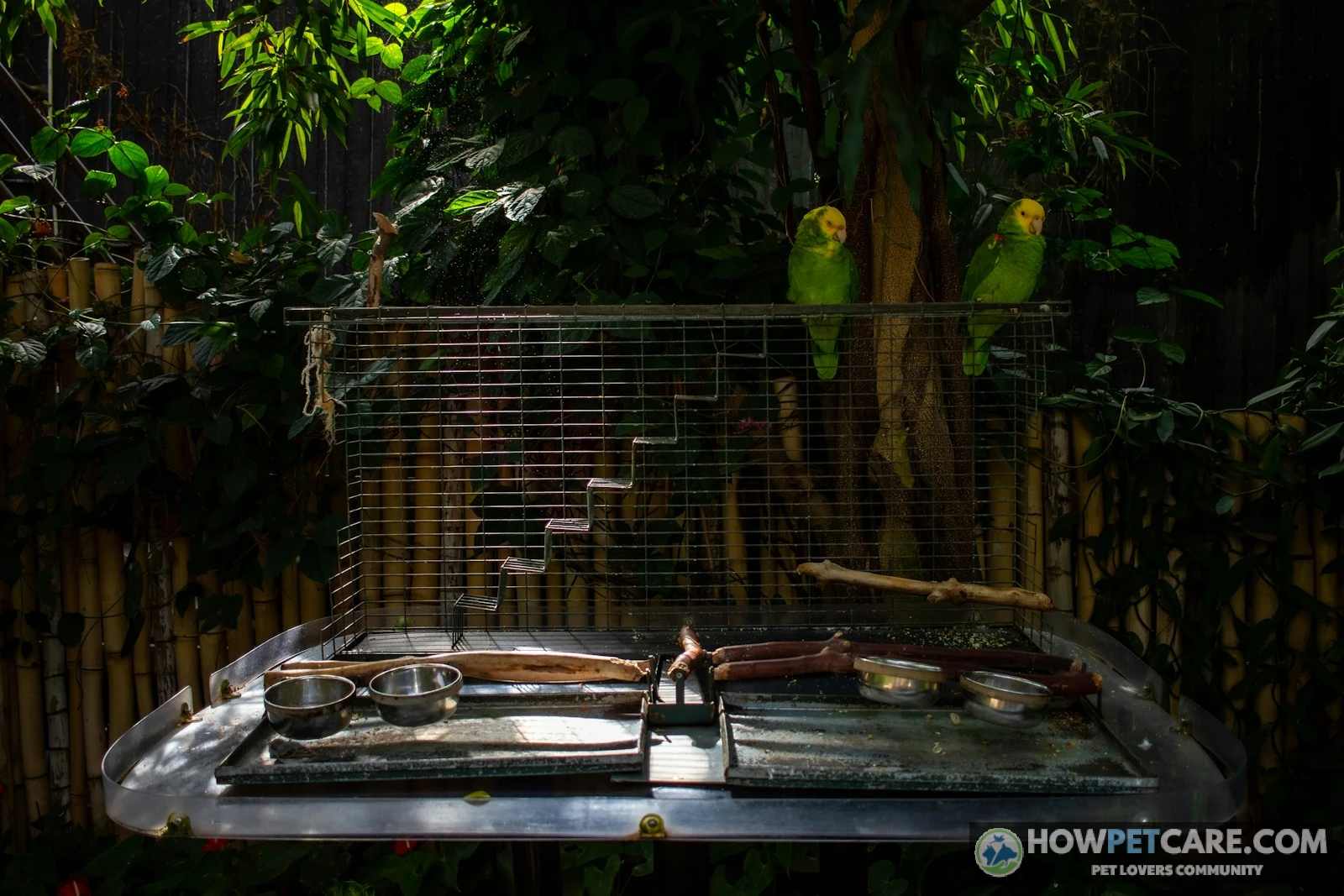

Caring for grass parakeets (Neophema) comes down to six essentials:
- House at least a pair in a long flight cage or aviary — about 35 x 18 x 24 in minimum indoors — with a dry, draft-free shelter.
- Feed a measured seed-based diet plus fresh greens, sprouts, and seeding grasses.
- Provide constant clean water, cuttlebone or a mineral block, and a water bath.
- Keep shelters above roughly 40°F for Bourke’s and 50°F for other species in winter.
- Quarantine new birds for 30 days and use an avian vet for annual exams.
- Plan on a 10–15 year commitment.
Grass parakeets, the small Australian parrots in the genus Neophema, aren’t simply beginner-easy budgies in different colors. A pair needs a flight-length cage or aviary, a daily seed-based diet with fresh greens and sprouts, cuttlebone or a mineral block, constant access to clean water, and a dry, draft-free shelter. You’ll also need an avian veterinarian you can reach before a bird looks sick. Healthy Neophemas typically live about 10 to 15 years. They’re quieter and more delicate than budgerigars, so their setup and routine matter more than handling.
The core routine in practice
A good grass parakeet routine is deliberately uneventful. Feed at the same times, check droppings and posture daily, clean water containers before biofilm builds, and keep the enclosure dry. Neophemas forage on the ground and are built for flight; they need horizontal room to move, not a tall cage with a small footprint. They also need a mate. A single bird can survive with constant human contact, but pairs are the default because social isolation stresses these quiet, flock-oriented parrots. For one pair, the daily routine takes about 10 to 15 minutes: provide fresh water, a measured seed portion, and a small serving of greens or rinsed sprouts; remove uneaten fresh food by evening; check droppings under the roost; and give both birds a visual once-over.
Neophema vs. budgie: the differences that change how you keep them
Budgies are widely bred and highly adaptable, and they often tolerate more handling and more mistakes. Neophemas are quieter, flightier, and less forgiving of drafts, damp floors, poor diets, and social isolation. They’re also less likely to become cuddly pets. That doesn’t make them bad birds; it means they’re aviary and flight-cage birds first. If you want a parrot that steps up on a finger daily, a hand-raised budgie is usually a better fit. If you’d rather watch a calm, quiet pair in a planted flight space, Neophemas are an excellent choice.
The differences matter most with cold and damp, diet, and stress. A budgie might bounce back from a drafty corner or a few days of poor food; a Neophema may not. Treat these as non-negotiable: a dry shelter, a varied seed-based diet, a pair, and a vet who sees birds.
Neophemas hide illness until they are very sick. A bird that looks slightly fluffed up in the afternoon may already be in trouble. Build the routine around prevention, not around waiting for symptoms.
Bourke’s, Turquoise, Elegant or Scarlet-Chested: Choosing Your Neophema Species
Choose a species before you buy a cage or a pair. Common Neophema options in US aviculture differ in price, hardiness, availability, and tolerance for beginner mistakes. The table uses typical captive-bred US birds; individual temperament varies by breeder and by whether a bird was hand-raised or parent-raised.
Species comparison table
| Species | Temperament | Noise Level | Fragility / Difficulty | Typical US Price per Pair | US Availability | Best For |
|---|---|---|---|---|---|---|
| Bourke’s parakeet | Calm, gentle, often active at dusk | Very quiet; soft twittering | Hardiest Neophema; most forgiving | $150–$400 | Widely available; most US breeders carry normals and rosy mutations | First-time Neophema keepers, pet-oriented owners |
| Turquoise parrot | Active, can be assertive; pairs bond closely | Quiet; thin, musical calls | Moderate; sensitive to stress and cold snaps | $400–$800 | Uncommon; usually through specialist aviculturists | Aviary display, keepers with prior parrot experience |
| Elegant parrot | Gentle, active, somewhat flighty | Quiet; light chattering | Moderate | $300–$600 | Moderate; established in US aviculture but less common than Bourke’s | Intermediate keepers, mixed quiet-species aviaries |
| Scarlet-chested parrot | Nervous, fast-flighting, shy | Quiet; soft calls | Highest fragility; prone to stress-related illness | $500–$1,000+ | Scarce; specialist breeders only | Experienced aviculturists, breeding programs |
How to read it: For your first grass parakeet, Bourke’s is the practical default. It’s the cheapest to buy, the easiest to source, and the most forgiving of beginner mistakes in feeding and housing. Turquoise and scarlet-chested birds can be rewarding for experienced keepers, but they’re quicker to suffer from drafts, quarantine shortcuts, and inconsistent diets. Bourke’s Parrot is also the species most often recommended as the best beginner Neophema for hardiness and tameness.

One species you shouldn’t plan around is the orange-bellied parrot. It’s critically endangered, tightly managed, and not a normal American pet-trade bird. If a seller offers one casually, ask hard questions and walk away.
Which species fits your goal and experience level
- Pet-oriented beginner: Bourke’s, preferably a hand-raised pair or a calm parent-raised pair from a quiet breeder.
- Aviary display with some experience: elegant parrot or turquoise parrot, with a large planted flight and a dry night room.
- Advanced aviculturist: scarlet-chested parrot, only if you already manage quarantine, winter shelter, and record-keeping well.
- Family with children: Bourke’s is the least fragile choice, but still a watch-and-enjoy bird rather than a hands-on cuddle pet.

Mutations and color varieties exist in the US, especially in Bourke’s. Rosy, normal, and other color forms may cost more than the base price range. Don’t pay a rarity premium before you’ve covered the basics: flight space, a mate, a vet, and a winter plan.
A cage bought for a budgie is usually too small for a pair of Neophemas, and an aviary built for Bourke’s may be too exposed for scarlet-chested birds. Species first, enclosure second.
Can different Neophema species share an aviary?
Sometimes, but don’t assume they’ll get along. Mixed-species aviaries can work in large, well-planted spaces with separate feeding stations and plenty of sight breaks. Neophemas are quiet birds that stress easily, though, and turquoise or scarlet-chested pairs can become assertive in confined spaces. Budgies are generally a poor match because they’re pushier, louder, and can spread illness. If you mix species, use a large aviary, quarantine every new bird, and watch for chasing, feather damage, and one pair guarding food or shelter.

What a Pair of Grass Parakeets Really Costs in the US
Grass parakeet prices in the US vary by species, mutation, breeder, and region. The ranges below are 2026 working estimates, not quotes. They help prevent a common first-year mistake: buying the birds and then discovering that the enclosure, quarantine cage, heating, and vet fund cost more than the pair.
First-year budget table
| Cost Category | Budget Setup | Mid-Range Setup | Ideal Setup | One-Time or Recurring |
|---|---|---|---|---|
| Pair of Bourke’s parakeets | $150–$300 | $250–$400 | $400–$600 | One-time |
| Indoor flight cage (min ~48 in long) | $150–$250 | $300–$500 | n/a | One-time |
| Outdoor aviary with shelter (built or kit) | n/a | n/a | $800–$2,500 | One-time |
| Quarantine cage | $50–$80 | $80–$150 | $100–$200 | One-time |
| Perches, feeders, waterers, roost boxes | $40–$80 | $80–$150 | $150–$300 | One-time |
| Heating (thermostat-controlled emitter + thermometer) | $60–$100 | $100–$200 | $150–$300 | One-time |
| Seed, sprouting seed, fresh produce | $15–$25/mo | $25–$40/mo | $35–$60/mo | Recurring |
| Cuttlebone, mineral block, bedding | $5–$10/mo | $8–$15/mo | $10–$20/mo | Recurring |
| Avian vet: wellness exam + fecal test | $100–$200/yr | $150–$300/yr | $200–$400/yr | Recurring |
| Emergency vet fund + winter electricity | $100/yr | $200–$300/yr | $400+/yr | Recurring |
| First-year total | ~$800–$1,200 | ~$1,400–$2,300 | ~$3,000–$5,000 | — |
Reading the tiers: The budget tier assumes an indoor flight cage in a heated room, so there’s no separate aviary power bill for most of the year. The mid-range tier adds a larger cage, a proper quarantine cage, and a small heating backup. The ideal tier assumes an outdoor aviary in a northern climate, where insulation, a night room, and thermostat-controlled heat account for most of the one-time spend.
Ongoing monthly and annual costs
For one pair, expect roughly $20 to $60 a month in food and supplies. The amount depends on how much fresh produce and sprouting seed you use and whether you buy in bulk. Annual avian vet costs often surprise new keepers: a wellness exam plus fecal testing commonly lands in the $100 to $400 range, and a same-day emergency visit can run $150 to $300 before treatment. Keep a separate emergency fund. The pair is the cheap part; winter shelter and vet care are the real commitments.

 You might be wonderingHow to care for a pet turtle?How to Care for a Pet Turtle: Complete Beginner’s GuideRead the answer
Where to Buy Grass Parakeets in the US: Sourcing, Legality and Quarantine
Buy captive-bred birds from a reputable avian breeder, a bird club, or a responsible expo seller. Pet stores sometimes carry Bourke’s, but ask where the birds were bred and whether they were hand-raised or parent-raised. Wild-caught Neophemas aren’t a legal or ethical option for US keepers. Australian native birds are protected, and the American trade is built on domestic captive breeding.
Rules aren’t uniform across all 50 states. Neophemas are kept legally in most of the US, but state and local rules can vary by species, permit requirements, and agriculture and wildlife regulations. Before you pay a deposit, check with your state wildlife agency and agriculture department, and ask local bird clubs what they know. This guide can’t guarantee current rules in every state.
Vetting a breeder
Ask for the hatch date, whether the bird is closed-banded or otherwise identified, what diet it was raised on, whether the parents have been health-tested, and whether the breeder has a veterinarian they use. A good breeder will show you the parents if you visit, won’t sell unweaned birds to a beginner, and will ask about your enclosure and winter plan before selling. Avoid sellers who won’t let you see the housing or who dismiss quarantine as unnecessary.

Quarantine protocol for new birds
If you already have birds, quarantine isn’t optional. Keep new Neophemas in a separate room for at least 30 days, with separate bowls and tools, and wash your hands between rooms. Watch for fluffed posture, abnormal droppings, sneezing, discharge, and weight loss. Psittacosis is one reason for strict quarantine: it can spread from bird to bird and to humans. If a new bird looks sick, call an avian vet and don’t introduce it to your existing flock.

Neophemas are legal in most US states, but permit and agriculture rules vary. Confirm with your state wildlife and agriculture agencies before money changes hands.
Grass Parakeet Cage Size, Aviary Setup and Layout
For a pair of Neophemas, the indoor working minimum is a flight cage at least 90 x 45 x 60 cm, or about 35 x 18 x 24 inches, with length prioritized over height. That’s a floor, not a target. A standard budgie cage is usually too small for flight-oriented grass parakeets, and a tall cage with a tiny footprint is worse than a long, low one. Outdoors, the working minimum for a pair is 1.8 x 0.9 x 1.8 m, or 6 x 3 x 6 feet, with 2.4 to 3.6 m, or 8 to 12 feet, of length preferred.
Indoor flight cage versus outdoor aviary
An indoor flight cage works for a pair if it’s long, has narrow bar spacing, and sits in a quiet room away from drafts, kitchens, and aerosol sprays. Bar spacing should be about 1/2 inch or less for small Neophemas, and the cage should have a solid or easy-to-clean bottom. A properly built outdoor aviary is the better long-term home if you can provide a dry night room, a roof, predator-proof wire, and a sheltered corner. Don’t put a pair outdoors without a quarantine plan, a winter plan, and a safe power source for heating.

Step-by-step aviary layout
- Start with the shelter, not the flight. Build or place a dry, insulated night room that blocks wind and rain, with a solid floor and a door you can close.
- Secure the perimeter. Use sturdy welded wire, bury or extend an apron to stop digging predators, and check every gap a raccoon, rat, or hawk could exploit. Avoid wire that birds can chew and zinc-coated surfaces they can reach.
- Create a long flight path. Put the longest dimension horizontal, with perches at both ends and open space in the middle.
- Use natural branches of varied diameter. Avoid toxic wood and sharp wire ends.
- Put feeding and water stations low and spread out. Neophemas are ground foragers, so a ground-level feeding area suits them, but keep it dry and away from droppings.
- Add a shallow water bath and a dry dust-bathing tray. Constant access to a water bath and a sand bath supports daily feather care.
- Place roost boxes or sheltered ledges high in the night room, and keep nest boxes separate from daily roost spots.

Pairs, groups and cohabitation rules
Keep grass parakeets at least in pairs. They’re social birds that do best with company, and a single bird needs far more daily interaction and enrichment to avoid stress. Groups can work in a large aviary, but the space must scale up: more birds need more feeding stations and sight breaks, and may quarrel more over heat and shelter. Don’t overcrowd a small flight cage with three or four pairs and expect peace.
Different Neophema species can sometimes share a very large aviary, but it’s not a beginner project. Watch for aggression, feather damage, and one pair monopolizing food or warmth. Budgies are generally not recommended as companions.
What Grass Parakeets Eat: Seed Mix, Sprouts, Greens and Supplements
In captivity, grass parakeets do best on a seed-based diet with fresh greens, sprouts, and a mineral source, not on a bowl of colorful pellets alone. Use a quality small-parakeet or Neophema seed mix as the base, with canary seed, millets, oat groats, and limited small sunflower. Pellets can be part of the dry ration, but they shouldn’t replace the seed-based diet overnight. Aim for variety, freshness, and portion control.
Building a balanced seed mix and pellet ratio
A practical starting point is a good Neophema or small-parakeet mix as the main dry food, with pellets making up a smaller part of the bowl, perhaps one part pellets to three or four parts seed by volume. Adjust with your avian vet and according to what the bird actually eats. Some keepers feed pellets separately so they can see how much is consumed. Limit sunflower and oat-heavy mixes; captive Neophemas are far less active than wild birds and can become overweight.
Seeding grasses are a core part of Australian grass parakeet care. Offer fresh seeding grasses, leafy greens, chickweed, carrot, apple, and small amounts of other bird-safe produce. Egg food or egg-and-biscuit mix is sometimes used during breeding, but it isn’t a daily food for a non-breeding pair.

Never feed avocado, chocolate, caffeine, alcohol, salty snacks, fruit pits, or anything containing xylitol. Keep birds out of the kitchen when aerosols, nonstick pans, or self-cleaning ovens are in use; fumes can kill small parrots quickly.
How to sprout seed at home safely, step by step
Sprouted seed is one of the best fresh foods for grass parakeets, but careless preparation can expose them to poisonous mold. Use a sprouting-grade mix of millet, canary seed, mung, wheat, and a little small sunflower. Follow this sequence exactly.

-
Measure and rinse
Put 1 to 2 tablespoons of sprouting-grade seed mix in a clean jar. Rinse under cool water until the water runs clear.
-
Soak 8 to 12 hours
Cover the seed with 2 to 3 times its volume of cool water and soak overnight, out of direct sun. Do not exceed 12 hours.
-
Drain fully
Pour off all soak water. The seed should sit damp in the jar, never submerged. Standing water breeds bacteria.
-
Rinse two to three times daily
Every 8 to 12 hours, fill the jar with cool water, swirl, and drain completely. Morning and evening at minimum.
-
Feed at tiny-tail stage
Sprouts are ready when a white root tip of about 1 to 3 mm emerges. For millet, that is usually 24 to 48 hours from the start of soaking. Rinse once more, drain well, and serve a small portion.
-
Discard after 24 hours
Any unserved sprouts go in the trash after a day in the fridge. Never feed sprouts that smell sour, feel slimy, or show fuzzy growth.
-
Sanitize every batch
Wash the jar with hot soapy water or run it through the dishwasher between batches. Mold spores left in a jar contaminate the next round.
Sour or musty smell, slimy seed, gray or pink fuzz, or seed sitting in cloudy water means the batch is unsafe. Throw it out and sanitize the jar before starting again.
Greens, fruits and supplements
Offer cuttlebone or a mineral block at all times. Both provide calcium and minerals, especially for hens that may lay. Discuss grit with your avian vet: some Australian aviary diets list shell grit, but many US bird vets advise against routine grit for parrots that hull their seed because excess grit can cause crop or digestive problems. Don’t add grit just because a care sheet mentions it.
Rinse and chop fresh foods, and remove them before they spoil. Feed small amounts and rotate them: leafy greens and seeding grasses most days, carrot or apple a few times a week, and sprouts several times a week. Use millet sprays and foraging toys to encourage natural feeding behavior, and scatter some seed in a clean tray so the birds work for part of their food.
Keeping Neophemas Warm: Winter Care for Outdoor Aviaries in the US
Winter catches many US keepers out because most detailed Neophema guides are written for Australian, British, or European aviary conditions. A healthy, fully acclimated adult Bourke’s can handle cool nights with a dry, draft-free night room. That’s different from leaving a pair in an open flight on a freezing night. Damp and drafts do more damage than a dry cold snap. New birds, molting birds, and young birds have much less margin.
Minimum safe temperatures by region
There’s no single legal minimum for all grass parakeets. This guide uses a practical working floor of about 40°F, or 4°C, in a dry, draft-free night shelter for healthy, acclimated Bourke’s, and closer to 50°F, or 10°C, for turquoise, elegant, and scarlet-chested birds. Never let the shelter fall below freezing, and never let birds sit in a damp draft even if the thermometer looks acceptable. In northern states, plan for sustained subfreezing weather; in mid-Atlantic states, plan for cold rain and wind; in southern states, plan for occasional hard freezes and heat stress in summer.
Put a thermometer inside the night room, not on the outside wall. Check it at dusk and again before bed. If the power or heater fails, have a plan to move the birds to a warm indoor quarantine cage.
Safe heating options for aviaries
Use thermostat-controlled ceramic heat emitters, oil-filled radiators, or sealed heat panels designed for animal housing. Put the heat source where birds can move away from it, guard it so they can’t chew wires or land on a hot surface, and keep it away from damp bedding. Don’t use unguarded space heaters, heat lamps that birds can reach, or extension cords they can chew.

Keep nonstick pans, PTFE-coated heat lamps, and fume-producing appliances out of any room or building shared with birds. Overheated nonstick surfaces can kill small parrots with no warning.
Winter-prep checklist
- Seal drafts in the night room before the first cold night.
- Insulate the roof and the wall facing prevailing wind.
- Add a dry roost box or sheltered ledge for each pair.
- Test the heater and thermostat on a mild day, not during a cold snap.
- Keep backup power or a warm indoor cage ready.
- Store food and bedding where it stays dry.
- Watch water bowls for ice and check twice daily in freezing weather.
Grass Parakeet Health: Symptom Chart and When to Call an Avian Vet
Grass parakeets hide illness. By the time a Neophema sits fluffed on the floor, it may have been sick for days. Common health problems in captive Neophemas include respiratory disease, obesity and fatty liver, parasites such as worms, mites, and coccidia, psittacosis, and egg binding in hens. The signs in this section aren’t diagnoses. A qualified avian veterinarian should make every treatment decision.
Symptom chart with urgency levels
Birds can hide illness until they’re very sick. Treat any watch row as a same-day vet call if it lasts beyond 24 hours or combines with a second symptom.
| Symptom | Possible Causes | Urgency | What to Do |
|---|---|---|---|
| Fluffed up, quiet, sitting low or on the floor | Chilling or draft exposure, infection, pain, advanced illness | Same-day vet | Move to a warm 80–85°F, draft-free quarantine cage immediately and call an avian vet |
| Tail bobbing with each breath, open-mouth breathing | Respiratory infection, air sac disease, overheating | Emergency — same day | Minimize handling, keep warm, get to an avian vet; breathing distress is a true emergency |
| Droppings: watery, dark, bloody, or consistently abnormal | Diet change, intestinal infection, parasites such as coccidia or worms, liver disease | Vet within 24–48 hrs | Photograph and save a fresh dropping sample for the vet; review recent food changes |
| Weight loss or going off food | Illness, parasites, crop problems, spoiled food | Vet within 24 hrs | Weigh on a gram scale if possible; note food intake and fecal output for the vet |
| Discharge or crusting around eyes or nostrils, sneezing | Respiratory infection, psittacosis, dusty environment | Vet within 24–48 hrs | Isolate from other birds; psittacosis is contagious to humans and birds |
| Hen straining, swollen abdomen, not laying | Egg binding | Emergency — same day | Warm humid environment; do not squeeze the abdomen; get to a vet fast |
| Feather plucking or patchy feather loss | Mites, boredom or stress, nutritional deficiency | Book a routine appointment | Check for mites, increase foraging, review diet; not an emergency unless skin is damaged |
| Occasional single watery dropping after fruit or fresh greens | Normal dietary response | Watch | Normal if the bird is bright, eating, and droppings normalize |

Emergency signs
Seek same-day avian vet care for open-mouth breathing, tail bobbing at rest, a bird sitting on the floor fluffed up, bleeding, a hen straining to lay, seizures, or any bird that has stopped eating. Don’t wait for an appointment if breathing is labored. Neophemas are small and can decline faster than budgies, so the watch-and-see window is shorter.
A bird that is fluffed, quiet, and sitting low is not just chilly. Warm it, isolate it, and call an avian vet the same day.
Prevention and finding an avian vet
Prevention comes down largely to routine: quarantine new birds, clean water containers daily, remove spoiled fresh food, keep the enclosure dry, avoid overcrowding, and feed a measured diet that limits fatty seeds. Annual wellness exams and fecal testing are worth the cost. Find an avian vet before you buy the birds. Ask local bird clubs and breeders who they use, confirm the clinic sees parrots, and keep the carrier clean and ready.

Taming and Handling Grass Parakeets: What’s Realistic
Grass parakeets can be tamed, but most aren’t budgie-tame. Hand-raised Neophemas can become finger-friendly, step up, and accept brief handling. Parent-raised aviary birds are usually display birds: calm to watch, but nervous about hands. A breeder who handles chicks regularly gives you a much better chance of a tame pair.

Step-by-step taming plan
-
Let them settle first
Give new birds at least one to two weeks in their enclosure with minimal handling. Rushing this step teaches them that hands are scary.
-
Share space without touching
Sit quietly near the cage at the same time each day. Talk softly, move slowly, and let the birds choose whether to approach.
-
Offer millet by hand
Hold a millet spray just inside the cage and stay still. Let the birds nibble and retreat. Repeat daily until they come closer.
-
Teach a simple target
Use a small stick or target to guide a bird onto a perch or scale. Target training builds movement and trust with less grabbing.
-
Keep sessions short
Limit sessions to a few minutes and end before the bird panics. Short, calm repetitions beat long handling sessions.
Setting realistic expectations
Neophemas are fast, flighty, ground-foraging birds. A frightened bird can injure itself against wire or escape through an open door, so keep handling limited, calm, and purposeful. If you want a bird that rides on a shoulder for an hour, choose a hand-raised budgie or another species bred for pet handling. If you want a quiet pair that comes to a millet spray and lives well in a flight, Neophemas can be an excellent fit.
Your Grass Parakeet Care Checklist and Pre-Purchase Shopping List
Consistency is central to how to care for grass parakeets. Use this checklist for one pair and scale up if you keep more birds.
Daily, weekly and monthly care checklist
Daily (~10–15 min)
- Replace water and wash the water container.
- Provide a fresh seed portion plus fresh greens or a small serving of rinsed sprouts.
- Remove uneaten fresh food before evening.
- Check droppings under roost perches and note color and consistency.
- Give both birds a visual health check: bright eyes, dry nostrils, smooth breathing, alert posture.
- Confirm room or aviary temperature, especially overnight in winter.
Weekly (~30–45 min)
- Scrub food and water bowls with hot soapy water; sanitize sprouting jars.
- Clean the cage floor or aviary feeding area; replace bedding or ground cover.
- Wash perches and rotate or trim natural branches.
- Check heater function, thermostat accuracy, and thermometer in winter.
- Weigh birds on a gram scale if they’re tame enough; the trend matters more than the number.
- Restock produce, sprouting seed, and cuttlebone as needed.
Monthly (~1–2 hrs)
- Deep clean the cage or aviary, including corners, nest box exterior, and food storage bins.
- Inspect wire mesh for chew damage, gaps, rust, and predator or rodent entry points.
- Check insulation and seals on the aviary night room before cold weather.
- Review the bird log for weights and dropping notes.
- Confirm avian vet contact details and that the carrier is clean and ready.
- Restock supplies and top up the emergency vet fund.
Pre-purchase shopping list
Buy by function, not by brand:
- A long indoor flight cage or a properly built outdoor aviary with a dry night room.
- A separate quarantine cage if you already keep birds.
- Narrow-bar-spacing cage or welded wire safe for small parrots.
- Natural-branch perches of varied diameter, plus a roost box or sheltered ledge.
- Heavy ceramic or stainless food and water bowls that are easy to sanitize.
- A shallow water bath and a dry dust-bathing tray.
- Thermostat-controlled heating, a thermometer, and a backup plan for power failure.
- Sprouting jars, a strainer, and a dedicated scrub brush.
- Cuttlebone, mineral block, and a quality Neophema or small-parakeet seed mix.
- Millet sprays, foraging toys, and safe greens and seeding grasses.
- A gram scale, a bird-safe carrier, and an avian vet contact before you need one.

Are you ready? A final decision guide
You’re ready for grass parakeets if you can provide a long flight space or a proper aviary, keep at least a pair, commit to a mostly seed-based diet with fresh foods, keep the shelter dry and warm in winter, and fund an avian vet before a bird looks sick. You’re not ready if you want a cuddly pet that tolerates constant handling, if you can’t build or heat a safe winter shelter, or if you’re choosing a scarlet-chested parrot because it looks rare and you have no quarantine plan.
Unless you already have aviary experience, choose Bourke’s as your first species. Contact two or three breeders, ask the quarantine and diet questions above, and price the enclosure and winter heating before you pay for birds. Grass parakeet care for beginners isn’t complicated, but it isn’t forgiving. Build the flight, the routine, and the vet relationship first. The birds are the last purchase, not the first.
 You might be wonderingHow to care for a cat?How to Care for a Cat: A Practical Beginner’s GuideRead the answer
FAQ
How long do grass parakeets live?
With good care, most Neophema species live roughly 8 to 15 years, though lifespan varies by species and by diet, housing, and health care. Birds fed poor diets or kept in cold, damp conditions often live shorter lives.
Can grass parakeets live with budgies or other birds?
It is generally not recommended. Budgies can be pushy and spread illness, and Neophemas are quieter and more easily stressed. If you mix birds in a large aviary, choose compatible species, provide plenty of space, and watch closely for aggression.
Are grass parakeets noisy?
Neophemas are generally quieter than budgies, with soft twittering and short calls. Males can be louder during breeding season, but they are usually suitable for neighbors and indoor rooms.
Do grass parakeets need grit?
Opinions vary. Most seed-eating parakeets hull their seed and do not need grit, and too much can cause crop or digestive problems. Ask your avian vet, and offer a mineral block or cuttlebone for calcium instead.
Can grass parakeets be kept alone?
They can survive alone, but they are social birds and do best in pairs. A single bird needs much more daily interaction and enrichment to avoid stress and boredom.