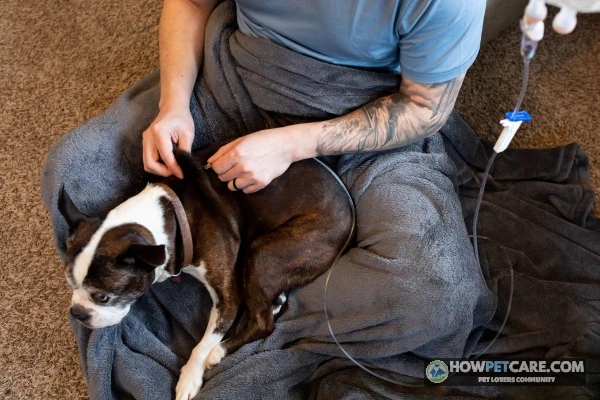

Intravenous (IV) fluids for dogs are sterile fluids delivered through a catheter into a vein to treat dehydration, restore circulation, and correct electrolyte imbalances. Vets use them for vomiting, diarrhea, kidney disease, shock, and surgery. A weak dog that can’t keep water down needs prompt veterinary assessment.
Intravenous fluids for dogs: what they do and when home care isn’t enough
Intravenous fluids for dogs are sterile fluids delivered through a catheter into a vein. They replace lost fluid, support circulation, and help correct electrolyte imbalances. Vets use them for dehydration caused by vomiting or diarrhea, kidney disease, shock, and other illnesses, and during some procedures. A weak dog that can’t keep water down or may be seriously dehydrated needs prompt veterinary assessment. A bright dog with one mild bout of diarrhea may need only a call to the vet and careful monitoring.
IV fluid therapy puts fluid directly into the bloodstream. This gives the veterinary team more control than fluids given by mouth or under the skin, especially when a dog is seriously ill. The veterinarian decides whether fluids are needed, which route and solution to use, and how closely to monitor your dog.
Cost: An outpatient visit for a stable dog generally costs less than an overnight or multi-day hospital stay. A useful dollar estimate, though, has to come from the treating clinic. Charges vary based on the examination, catheter placement, laboratory tests, medications, monitoring, and location. Ask for a written low-to-high estimate, and check whether the hospitalization charge includes fluids and monitoring. This guide covers more questions to ask later.
Dehydration signs: a triage checklist for tonight versus tomorrow morning
You can’t reliably calculate a dog’s percentage of dehydration at home. Gum moisture, skin elasticity, and energy level may offer clues, but normal-looking gums or skin that snaps back quickly don’t rule out serious illness. Get veterinary advice sooner for young puppies, small dogs, seniors, and dogs with existing disease.
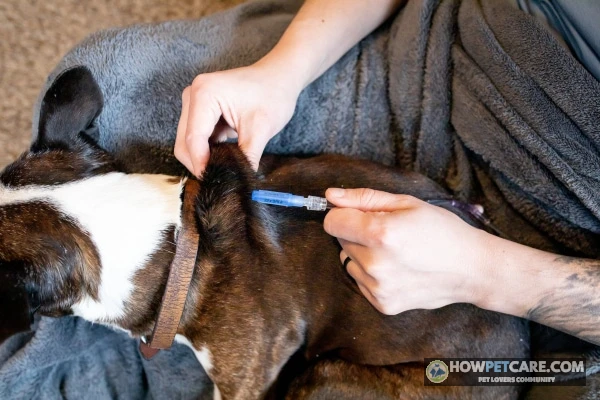
Go now: red-flag signs that justify an emergency clinic
Go to an emergency veterinarian now if your dog has any of these signs or circumstances:
- Collapse, extreme weakness, difficulty breathing, or pale, gray, or blue gums.
- Repeated vomiting, bloody diarrhea, or inability to keep water down.
- A swollen or distended abdomen, especially with unproductive retching.
- Known or suspected toxin exposure, even if your dog looks normal.
- A puppy with vomiting or diarrhea that could be parvovirus.
- Marked lethargy, sunken eyes, or very dry gums alongside signs of illness.
If possible, call the clinic as you’re leaving. Don’t wait to see if a drink or electrolyte product fixes the problem. If a toxin may be involved, bring its packaging or a photo and tell the team when the exposure may have happened.
Call your vet today: signs that need an exam soon
Call your veterinarian promptly if your dog has tacky gums, a reduced appetite, diarrhea, vomiting, less energy than usual, or is drinking less than normal. The clinic can help determine whether your dog needs an appointment today or emergency care sooner.
For a quick check, look at your dog’s gum color and moisture, notice whether the eyes seem sunken, and see whether your dog is alert and able to stand. You can gently lift the skin over the shoulders and release it, too; skin that returns slowly can be a clue to dehydration. But skin elasticity varies with age, body condition, and other factors, so this check can’t diagnose dehydration.
If you press an unpigmented area of gum and release, its color should return promptly. A delayed return or pale gums can point to a circulation problem. Don’t let this check delay care if your dog otherwise looks very sick.
Monitor at home: what mild dehydration looks like
If your dog is bright, has normal-colored, moist gums, is drinking, and has had only one mild episode of vomiting or diarrhea, call your vet for advice. The clinic may recommend monitoring at home, depending on your dog’s history and symptoms. Keep fresh water available, track any further vomiting or diarrhea, and call back if your dog gets worse.
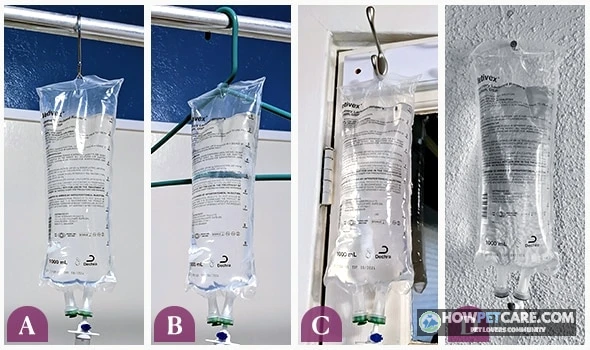
A dog that can’t keep water down, becomes weak, or develops repeated symptoms needs more than home monitoring. And dehydration isn’t the only concern: a dog can be ill without showing obvious signs of it, so consider the whole picture rather than relying on one check.
The decision is not whether you can prove your dog needs an IV. It is whether a veterinarian should examine your dog before fluid losses or the underlying illness worsen.
 You might be wonderingCommon medications for dogsCommon Medications for Dogs: What Each Drug Class TreatsRead the answer
Which IV fluid will the vet choose? Crystalloids, colloids, and why the choice matters
The fluid bag isn’t necessarily just water. Common solutions contain different combinations of electrolytes, and the veterinary team may tailor the plan to your dog’s bloodwork and condition. Lactated Ringer’s solution, normal saline, Normosol-R, and Plasma-Lyte are among the fluids used in dogs.
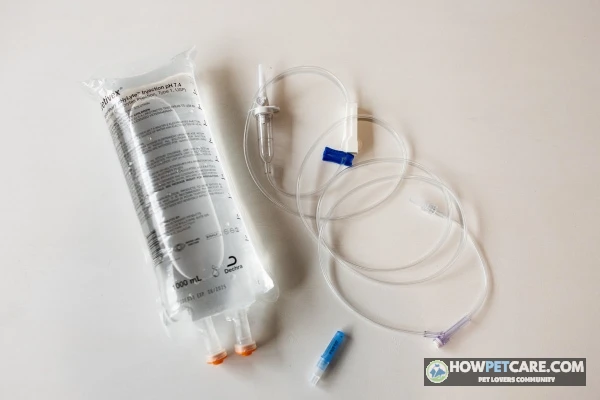
Crystalloids versus colloids in plain language
Crystalloids are water-based solutions with small dissolved particles, including salts. Vets commonly use them to replace fluid and electrolyte losses. Colloids contain larger molecules intended to help keep fluid in circulation. They’re used selectively, not as a routine replacement for crystalloids.
| Fluid | Fluid class | Typically chosen when | Cautions | Common additives |
|---|---|---|---|---|
| Lactated Ringer’s solution, or LRS | Balanced crystalloid | A common choice for dehydration and routine fluid support | The full electrolyte and acid-base picture matters | Potassium or dextrose when indicated |
| Plasma-Lyte or Normosol-R | Balanced crystalloid | Another option for fluid replacement and support | Formulations differ; the vet checks compatibility and the dog’s needs | Potassium or dextrose when indicated |
| 0.9% sodium chloride, or normal saline | Crystalloid | Selected when its electrolyte composition suits the case, including some dogs with high calcium | Its high chloride content can be a concern with substantial use | Potassium or dextrose when indicated |
| Colloids, such as selected albumin products or synthetic colloids | Colloid | Selected patients with particular circulatory or protein-related problems | Not routine; benefits and safety depend on the product and patient | Depends on the product and treatment plan |
| Hypertonic saline | Concentrated crystalloid | Selected emergencies under close veterinary supervision | Can cause rapid fluid and electrolyte shifts | Depends on the treatment plan |
A balanced crystalloid is a common starting point, but a solution isn’t automatically right or wrong just because another dog received it. Ask, “What fluid is my dog receiving, and why is it a good fit?”
Additives vets may put in the bag: potassium, dextrose, and others
A veterinarian may add potassium or dextrose, a form of sugar, when the test results and clinical situation support it. Other medications may also be given through an IV line when appropriate. Before deciding what to give, the team checks the fluid label, your dog’s laboratory results, and compatibility. Additives aren’t interchangeable. Never alter a fluid bag or pump setting yourself.
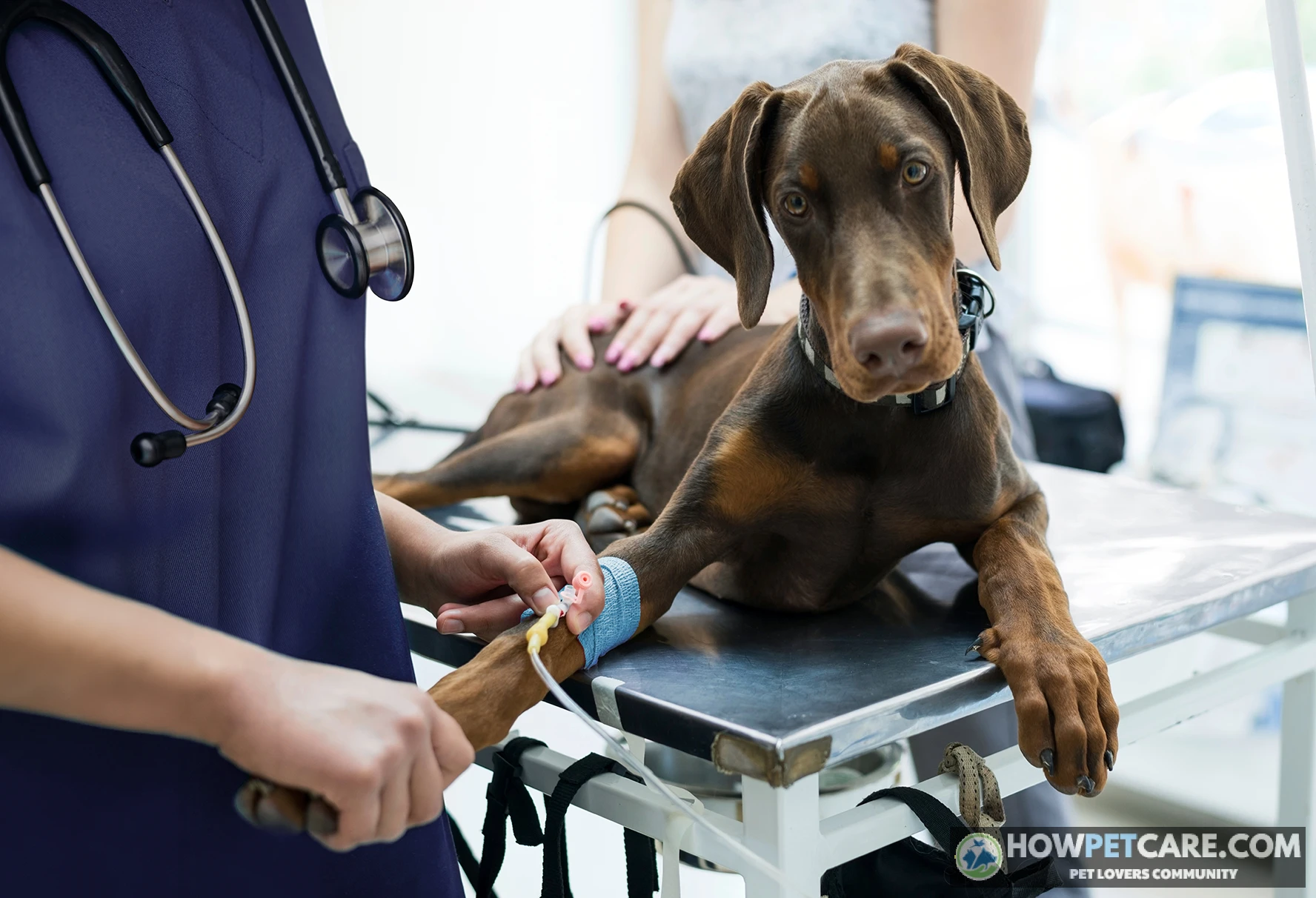
How IV fluids are given: catheter placement, routes compared, and what to expect
What happens from arrival to catheter
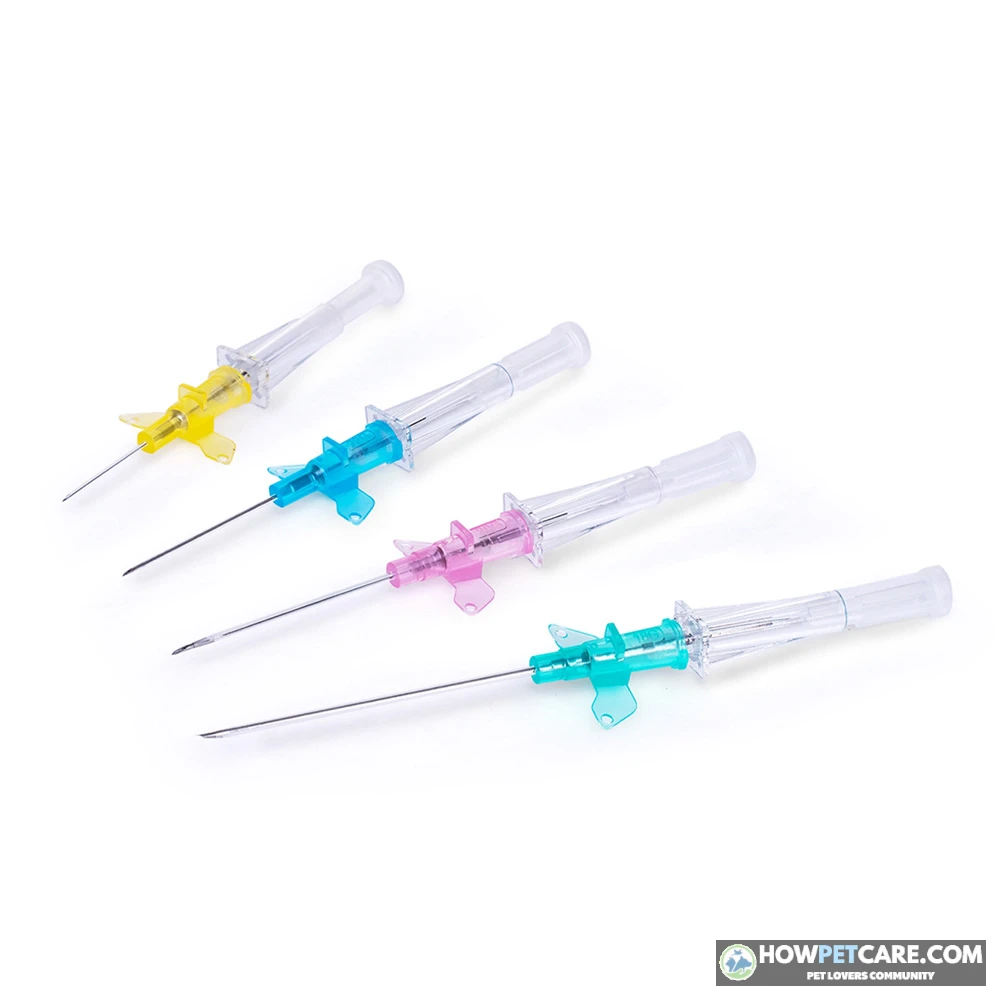
The veterinary team examines your dog and may recommend blood or urine tests before or during treatment. A team member usually clips and cleans a small area on a front leg, places an intravenous catheter in the cephalic vein, and secures it with a protective dressing. A rear-leg saphenous vein or a jugular vein may be used in other circumstances.
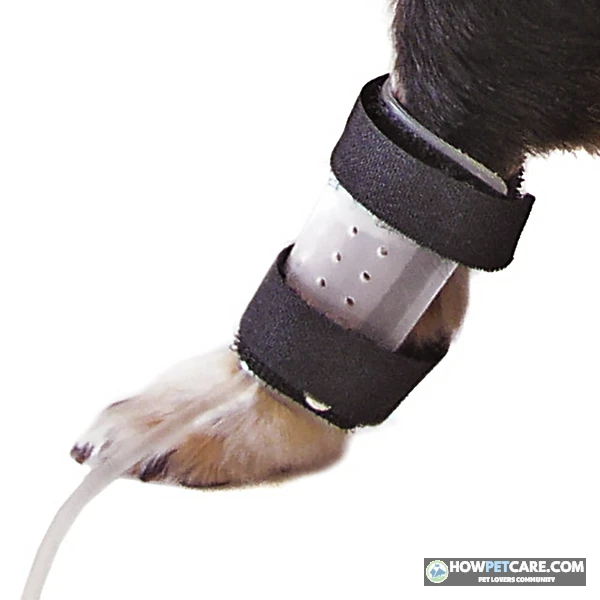
Tubing connects the catheter to a fluid bag. A pump or drip set controls the flow, and the team checks your dog and the catheter site during treatment. Your dog may wear an E-collar to discourage chewing on the line.
A stable dog may need only a short course of treatment and can go home if the veterinarian is satisfied that drinking and ongoing fluid losses can be managed safely. A dog that remains ill may need continuous fluids and hospitalization. Ask when the team expects to reassess your dog and whether visits are possible.
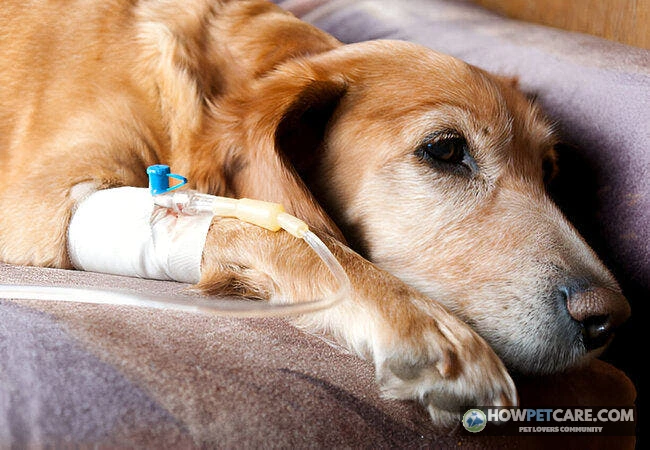
IV, subcutaneous, intraosseous, and intraperitoneal: when each is used
| Route | How it’s given | Best for | Speed of effect | Limitations or risks | Who does it |
|---|---|---|---|---|---|
| Intravenous, or IV | Catheter in a vein | Dogs needing controlled fluid delivery, including seriously dehydrated or hospitalized dogs | Direct delivery into the bloodstream | Requires a working catheter and monitoring; leakage and vein inflammation can occur | Veterinary team in a clinical setting |
| Subcutaneous, or SQ | Fluid placed under the skin | Selected stable dogs with mild fluid deficits or ongoing needs | Absorbs more slowly, over time | Not a substitute for IV treatment in shock or severe illness; absorption can be unreliable | Veterinary team or an owner trained and directed by a vet |
| Intraosseous, or IO | Access into a bone’s marrow cavity | Emergency access when a vein cannot readily be used, particularly in small patients | Rapid access to the circulation | Invasive and generally a temporary veterinary access route | Veterinary team |
| Intraperitoneal, or IP | Fluid placed into the abdominal cavity | Rare, selected situations where other routes are not practical | Absorption is less predictable than IV delivery | Limited role and risk of complications; not a home option | Veterinary team |
Veterinarians prefer IV infusion for severely dehydrated animals. Intraosseous access can be an alternative when IV access fails in a small patient. Under-the-skin fluids may help selected stable dogs, but a very dehydrated or lethargic dog needs veterinary assessment, not a home substitute.
Does IV fluid therapy hurt?
Placing a catheter involves a needle prick. Many dogs tolerate it, but a painful or anxious dog may need extra handling, pain relief, or sedation if the vet thinks that’s appropriate. Once secured, the catheter shouldn’t cause persistent pain. Tell staff if your dog keeps licking the area, seems uncomfortable, or develops swelling around the wrap.
Reading the bag and pump: fluid rate, deficit, and worked dosing examples
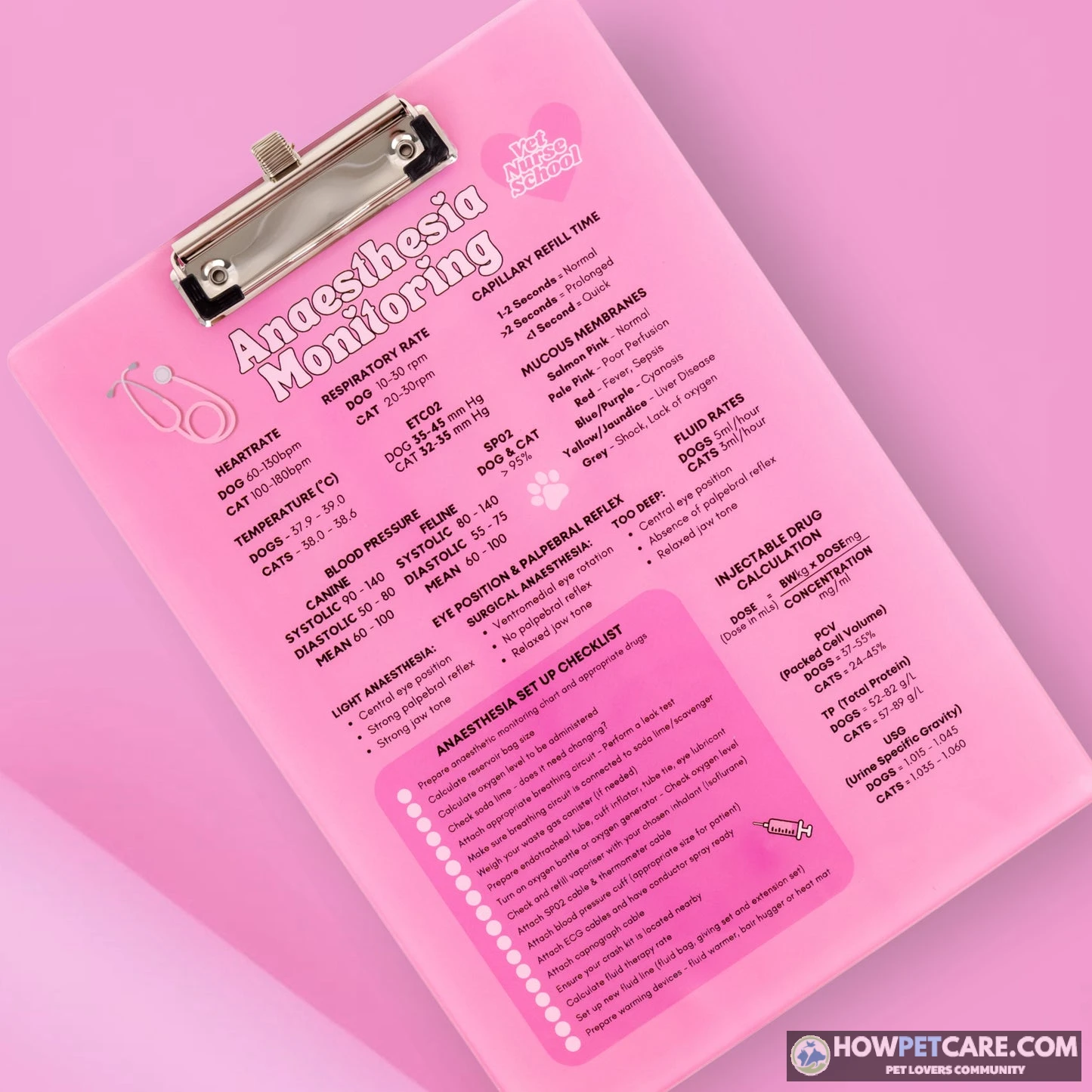
A fluid plan usually accounts for fluid already lost, the dog’s ongoing needs, and any further losses, such as vomiting or diarrhea. Fluids can also replace electrolytes or provide a route for medication. The team estimates these needs and revisits them as your dog responds.
Worked example: a 20 kg dog, step by step
This arithmetic illustrates how a veterinarian might estimate a deficit. It is not a treatment rate or an instruction to give fluids.
Suppose a veterinarian estimates that a 20 kg dog is 6% dehydrated:
- Express 6% as 0.06.
- Multiply 20 kg by 0.06 to get 1.2 kg of estimated fluid loss.
- Because 1 liter of water weighs approximately 1 kg, the estimated deficit is about 1.2 liters, or 1,200 milliliters.
That number estimates what’s already missing. It doesn’t include maintenance needs or further losses, and it doesn’t tell an owner how quickly to give fluid. The veterinarian sets and adjusts the plan based on examination, circulation, test results, urine production, and risks such as heart or kidney disease.
Why vets now favor smaller shock boluses
A bolus is a set amount of fluid given over a relatively short period. For a dog in shock, a veterinary team may give fluid in increments and reassess circulation rather than assume one large amount is right for every patient. Before deciding what to do next, the team may check heart rate, pulse quality, gum color, blood pressure, breathing, and other findings.
The 2024 AAHA fluid therapy guidelines offer veterinary guidance on individualized fluid treatment and monitoring. Ask your veterinarian what response they hope to see and what would lead them to change the plan. The right approach depends on the cause of shock and the individual dog.
What the pump and bag tell you
The bag label identifies the solution and any additives. The pump may display a fluid rate in milliliters per hour, and the line connects the bag to the catheter under the leg wrap. That displayed rate is only one part of the plan. It may change as hydration improves, test results come in, or fluid losses continue.
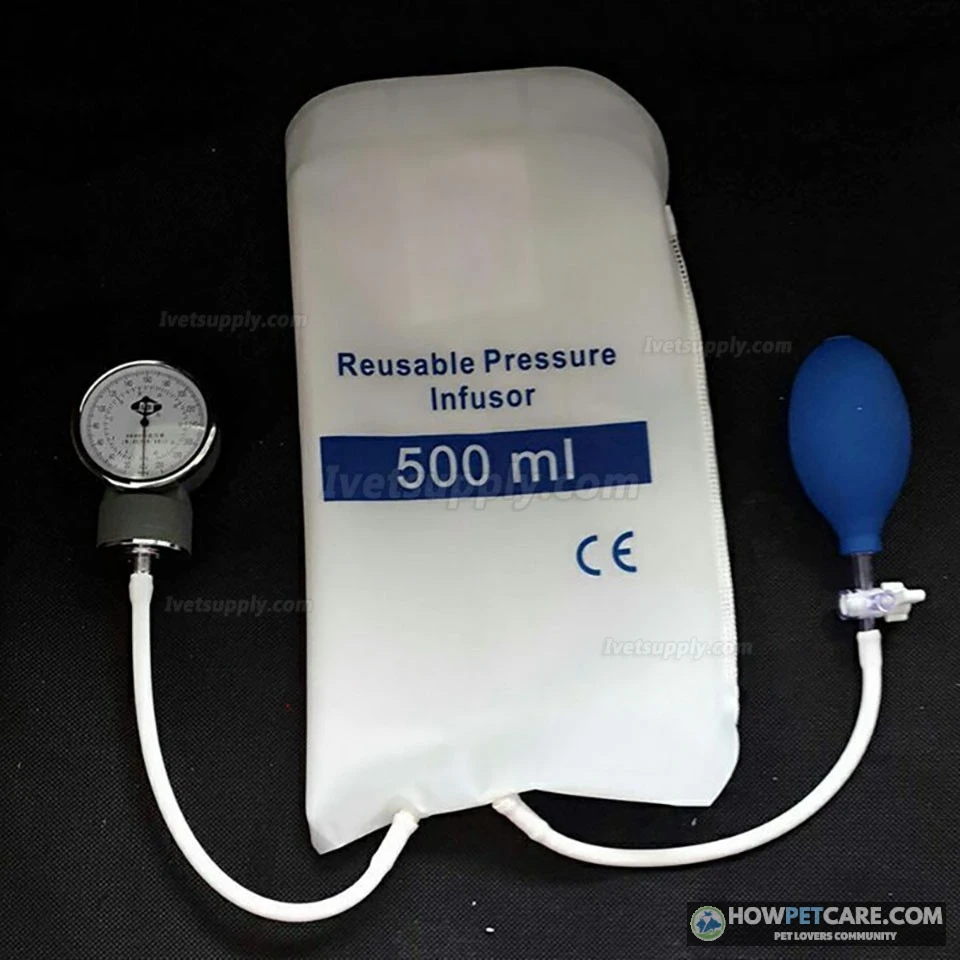
If an alarm sounds or the bag looks empty, tell a team member. Don’t adjust the equipment yourself.
What IV fluid therapy looks like for parvo, kidney disease, pancreatitis, toxicity, surgery, and senior dogs
Fluid therapy supports a patient, but it doesn’t cure every underlying condition. How long a dog stays in hospital depends on the response to treatment, ability to drink, test results, and care needed for the underlying cause.
| Condition | How fluids help | Typical stay or duration (varies) | Key monitoring | Main cost drivers |
|---|---|---|---|---|
| Parvovirus | Replace losses and support circulation alongside other treatment | Often requires hospitalization; the length depends on severity and response | Hydration, blood glucose and electrolytes, vomiting and stool losses | Isolation, nursing, medications, tests, length of stay |
| Kidney disease or acute kidney injury | Support hydration and circulation while the team assesses kidney function | May require inpatient treatment; varies with urine production and response | Urine output, weight, kidney values, electrolytes, breathing | Repeated tests, monitoring, hospitalization, additional treatment |
| Pancreatitis | Address dehydration and support circulation alongside pain and nausea treatment | Ranges from outpatient care in selected mild cases to hospitalization for severe illness | Hydration, pain, appetite, vomiting, laboratory results | Imaging, medications, nursing, length of stay |
| Vomiting or diarrhea | Replace fluid losses while the cause is investigated | Some stable dogs go home after treatment; persistent or severe illness may require admission | Ongoing losses, hydration, ability to drink | Diagnostic tests, medications, fluid treatment |
| Toxin exposure | Support circulation or elimination when appropriate for the specific toxin | Depends on the substance, amount, and required observation | Organ function and toxin-specific complications | Poison assessment, tests, antidotes where available, monitoring |
| Surgery or anesthesia | Provide controlled fluid support during the procedure and recovery when indicated | Often limited to the procedure and recovery; complications can extend the stay | Blood pressure, circulation, temperature, recovery | Anesthesia, procedure, monitoring, complications |
| Senior dog | Address the specific problem while accounting for other health conditions | Depends on the illness and recovery | Heart and kidney status, breathing, weight, laboratory results | Pre-treatment testing, monitoring, other conditions |
Parvo and severe gastroenteritis
Dogs with parvo can lose substantial fluid through vomiting and diarrhea. Hospital care may include IV fluids, correction of blood sugar or electrolyte abnormalities when needed, medication for nausea, and nutritional support. Infection control and nursing matter, too. A puppy with suspected parvo needs urgent veterinary advice; oral fluids at home can’t replace hospital care.
Vomiting and diarrhea can have many causes. A dog that improves, can keep water down, and has a manageable underlying problem may be able to go home sooner than one with ongoing losses or another serious diagnosis.
Kidney disease and IV fluids
IV fluids can help address dehydration and support circulation in a dog with kidney disease, but the prescription depends on the type and severity of the problem. The team tracks hydration and bloodwork, with particular attention to urine production. If the kidneys produce little urine, additional fluid may build up instead of leaving the body.
A stable dog with chronic kidney disease may later be prescribed subcutaneous fluids at home. That’s a separate decision from treating an acute crisis. Dogs with heart disease, swelling, or kidney failure with low urine production may be poor candidates for home SQ fluids because of the risk of fluid overload.
Pancreatitis, toxins, surgery, and seniors
For pancreatitis, fluids are one part of care, alongside treatment for pain and nausea and a feeding plan. Toxin treatment depends on the substance. Fluids may be appropriate in some cases, but they aren’t a universal antidote. For surgery, the team tailors fluid support to the procedure and patient rather than assuming every dog needs the same plan.
Age alone doesn’t determine a senior dog’s fluid rate. Existing heart or kidney disease, medications, examination findings, and laboratory results all help the team decide how to monitor and adjust treatment.
How much do IV fluids for dogs cost? Price ranges and what changes the bill
Typical cost ranges and what’s included
There’s no dependable nationwide price for IV fluid treatment in dogs. Clinics bundle and itemize services differently, and the fluid bag is only one part of the bill. An outpatient visit may include an exam, catheter, supplies, fluids, and a period of observation. Hospitalization can add nursing, repeat examinations, laboratory tests, medications, and overnight monitoring.
A dollar range would be speculative because no reliable price dataset is available here. Ask your local clinic or emergency hospital for a current estimate rather than relying on an online figure as a quote. For a multi-day admission, ask for the anticipated first-day cost and the likely cost of each additional day.
Factors that raise or lower the price
Emergency or specialty care, overnight staffing, frequent blood tests, imaging, isolation, and intensive monitoring can increase the bill. Your dog’s size, amount of fluid required, medications, complications, and length of stay also affect the cost. A brief visit for a stable dog and an intensive admission for parvo or acute kidney injury aren’t comparable services.
How to ask for an estimate
Ask for a written low and high estimate, what each line covers, which tests may need repeating, and when the clinic will seek authorization if costs change. If the estimate is beyond your budget, say so early and ask whether a medically appropriate outpatient or day-treatment plan is possible. That won’t be safe for every dog.
Check your pet insurance policy for deductibles, exclusions, and coverage limits; don’t assume a pre-existing condition is covered. The clinic can also tell you whether it offers payment options. If your dog has emergency signs, call while arranging care rather than delaying the examination to compare prices.
Risks of intravenous fluids for dogs: fluid overload, phlebitis, leakage, and how vets monitor
IV fluids can be lifesaving, but more isn’t always better. Risks depend on your dog’s condition, the fluid and rate, and how your dog responds.
What fluid overload looks like in a dog
Fluid overload occurs when the body receives or retains more fluid than it can handle. Signs may include faster or more difficult breathing, new coughing, swelling of the limbs or around the eyes, nasal discharge, or unexpected weight gain. Other problems can cause some of these signs, but breathing difficulty during or after treatment is urgent.
Dogs with heart disease, impaired kidney function, or other conditions affecting fluid balance may need especially close monitoring. If you notice a change in breathing during a visit, tell staff immediately. After discharge, contact the veterinary team urgently; seek emergency care for labored breathing, collapse, or severe weakness.
Catheter problems: phlebitis, leakage, and infection
Phlebitis is inflammation of a vein. It may make the catheter site painful, warm, or swollen. Fluid can also leak outside the vein into the surrounding tissue and cause swelling. Infection and accidental dislodgement are other possible concerns.
Tell the team if the wrap gets wet, the leg swells, your dog chews the dressing, or the site seems painful. Staff can inspect the catheter and decide whether it needs to be moved or replaced. Don’t remove or reposition it yourself unless the veterinary team specifically directs you to.
How vets track response and urine output
Veterinary monitoring may include body weight, breathing rate and effort, heart rate, pulse quality, blood pressure, hydration, and catheter-site checks. The team may repeat bloodwork to assess electrolytes, kidney values, and other changes. The specific checks depend on the patient and setting.
Urine output helps the team judge fluid balance and kidney response, but they consider it alongside hydration, blood pressure, medications, and laboratory results. Low urine production despite treatment calls for reassessment; it doesn’t automatically mean fluids should be increased. Ask, “How is my dog responding, and what are you watching for before changing the rate?”
Fast or labored breathing during fluid treatment can signal a serious complication. Alert the veterinary team at once rather than waiting for the next scheduled update.
Fluids at home: where subcutaneous fluids help, and why Pedialyte or ‘Liquid IV’ isn’t a substitute
Vet-directed subcutaneous fluids
Subcutaneous fluids go under the skin, not into a vein. They may be part of a veterinarian’s home-care plan for a stable dog with chronic kidney disease or another condition that causes ongoing dehydration. Owners can be taught to give them, but very dehydrated or lethargic pets still need veterinary care.

SQ fluids absorb more slowly than IV fluids. They aren’t a substitute for emergency treatment if circulation is poor, vomiting continues, or the dog is seriously weak. Don’t attempt IV fluid administration at home; fluid selection, catheter care, and monitoring require a veterinary team.
Prescriptions, supplies, and sharps disposal
If your vet recommends home SQ treatment, ask about the prescription and get a hands-on demonstration. The prescribed supplies generally include sterile fluid, an administration set, and needles. Confirm the fluid, amount, schedule, storage, and what to do if your dog resists or seems unwell. Don’t add medication or change the plan without the vet’s direction.
Put used needles directly into an FDA-cleared sharps container or an appropriate heavy-duty, puncture-resistant container. Never put loose needles in household trash. Ask your clinic or local waste program about disposal rules and drop-off locations.
Pedialyte and electrolyte drinks: when they help and when they harm
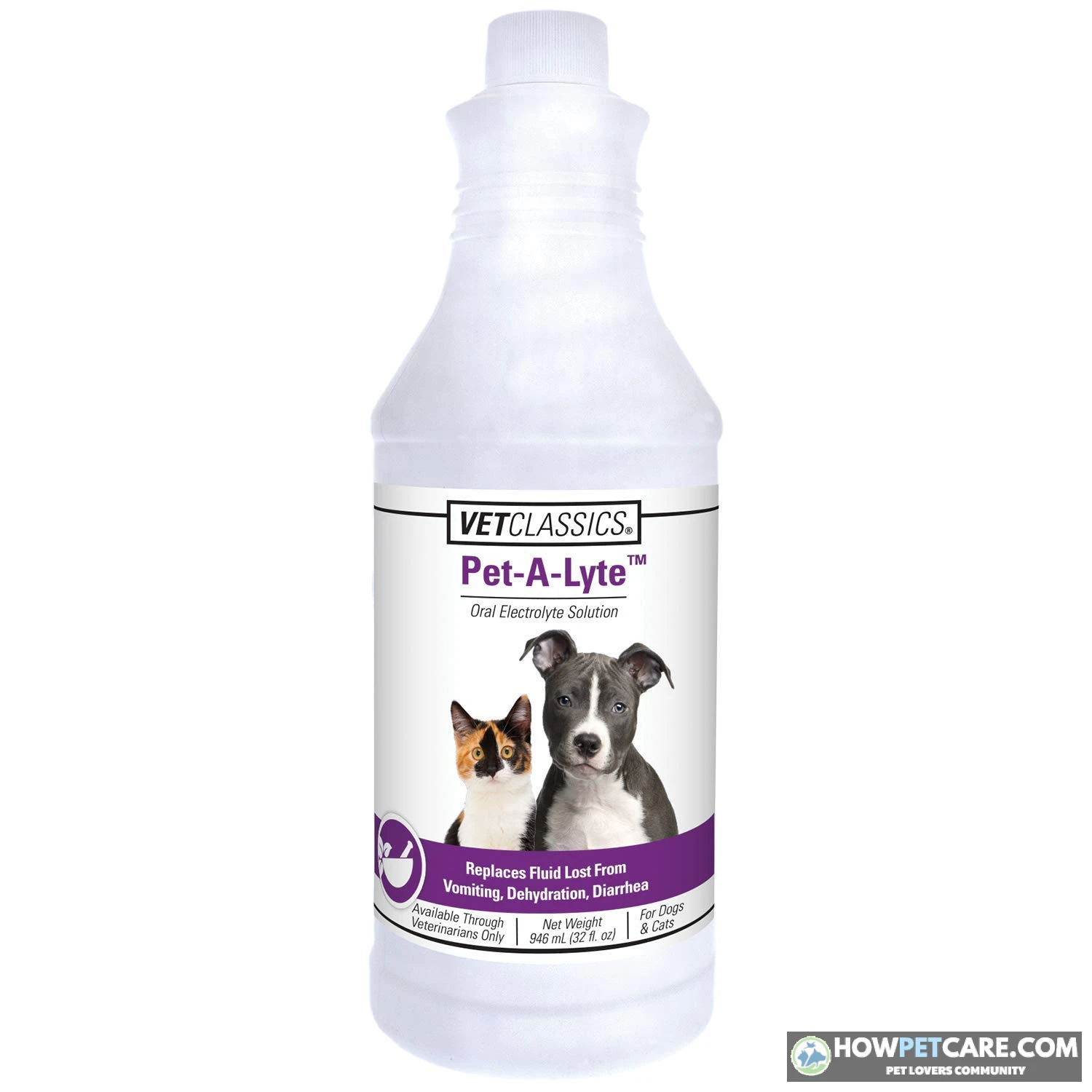
Plain fresh water is usually the place to start for a dog that can drink. Ask your vet before offering Pedialyte or another human electrolyte product. A vet may consider an appropriate oral solution for a particular mild case, but human products vary in ingredients and concentration. Some can contain ingredients unsafe for dogs, including xylitol; check the exact label with your veterinary team.
Pedialyte and products sold as “Liquid IV” aren’t intravenous fluids. They can’t replace clinic treatment for a dog that’s weak, seriously dehydrated, or unable to keep fluids down. Don’t force a sick dog to drink.
Your next-steps checklist: what to do before, during, and after IV fluid treatment
- Before you leave: Note when your dog last drank, ate, vomited, had diarrhea, and urinated. Bring a medication list and information about any possible toxin exposure. Photos of vomit or stool may help the vet understand what happened.
- At the appointment: Ask what the likely problem is, whether testing is recommended, which fluid route the team recommends, and why. Request a written estimate that separates initial charges from possible ongoing costs.
- During hospitalization: Ask when to expect updates, what the team is monitoring, and what would make it safe to switch to oral or subcutaneous fluids. Mention any breathing change, swollen leg, or chewing at the catheter wrap.
- Before discharge: Confirm the feeding and medication plan, whether bloodwork needs rechecking, and how to care for the catheter site. Ask whom to call overnight and which signs require an immediate return.
- At home: Contact the clinic if vomiting returns, your dog becomes lethargic, urine output concerns you, or the catheter site swells. For collapse, severe weakness, or difficulty breathing, seek emergency veterinary care now.
 You might be wonderingActivated charcoal for dogsActivated Charcoal for Dogs: Safety, Dosing & When to CallRead the answer
FAQ
Can I give my dog Pedialyte instead of IV fluids?
Only with your vet’s approval, and only for mild cases. Pedialyte can’t replace IV fluids in a dog that is vomiting, weak, or moderately to severely dehydrated. Some flavored products contain sugar or sweeteners such as xylitol that are unsafe for dogs.
How long does a dog stay on IV fluids?
It depends on the cause. Mild dehydration may need a few hours to a day, while parvo, pancreatitis, or kidney injury often require several days. Your vet will decide when to stop based on hydration, bloodwork, appetite, and whether the dog can keep fluids down.
Can a dog go home the same day after IV fluids?
Yes, if the dog is stable, eating or drinking, and not losing fluids faster than they can replace them. Some clinics offer outpatient or day-treatment fluids for mild cases. Dogs with ongoing vomiting, kidney problems, or shock usually need to stay.
Why is my dog’s leg swollen after IV fluids?
Swelling around the catheter can mean fluid is leaking into the tissue (perivascular leakage) or the vein is inflamed (phlebitis). Tell the veterinary team right away so they can check the site and replace the catheter if needed.
Does pet insurance cover IV fluids for dogs?
Most accident and illness plans cover IV fluids and hospitalization when they treat a covered condition, after the deductible and reimbursement rate. Pre-existing conditions and wellness-only plans are usually excluded, so check your policy or ask the insurer before treatment when time allows.