
Routine dog or cat bloodwork—a CBC plus a chemistry panel—typically runs about $100–$200 for the tests alone. A full visit with exam, blood draw and lab fees usually lands around $300–$450. Exact totals depend on the tests ordered, your region and what’s bundled, so always request an itemized estimate.
How Much Does Bloodwork Cost at the Vet? The Quick Answer
Routine dog or cat bloodwork—a complete blood count (CBC) plus a chemistry panel—typically costs about $100–$200 for the tests alone in the United States. A visit can cost roughly $300–$450 with an exam, blood draw, lab testing and clinic overhead included, though clinics don’t always bill those components separately.
Use these published estimates to budget for 2026, not as a current national price survey or a quote. The cost of bloodwork at the vet depends on the tests ordered, your pet, the clinic, your region and whether the estimate includes the visit. Ask for an itemized estimate before comparing prices.
Average cost of dog bloodwork vs. cat bloodwork
The same broad routine-panel estimate applies to dogs and cats. One national cost listing reports chemistry-panel averages of $164 for dogs and $144 for cats, but that comparison alone doesn’t establish a reliable species-wide discount. A cat’s bill may be higher or lower depending on the panel, additional tests and collection needs.
For either species, a sick-pet visit can involve more diagnostics than a routine screen. An emergency visit may add urgent care and rapid testing charges. Compare the full scope of the visit, not just the animal on the invoice.
Why a lump-sum range isn’t enough
A quote labeled “bloodwork” might mean a CBC and chemistry panel, a larger package or a complete visit with an exam and collection included. Two clinics can charge similar totals for different services—or different totals for essentially the same services. Start with an itemized estimate to make a useful comparison.
What’s Included in Routine Vet Bloodwork (and What Isn’t)
Routine bloodwork often means a CBC and a blood chemistry panel, but “routine” isn’t a standardized package name. Ask the clinic to list the tests rather than assuming what the label includes.
CBC vs. chemistry panel: what each one checks
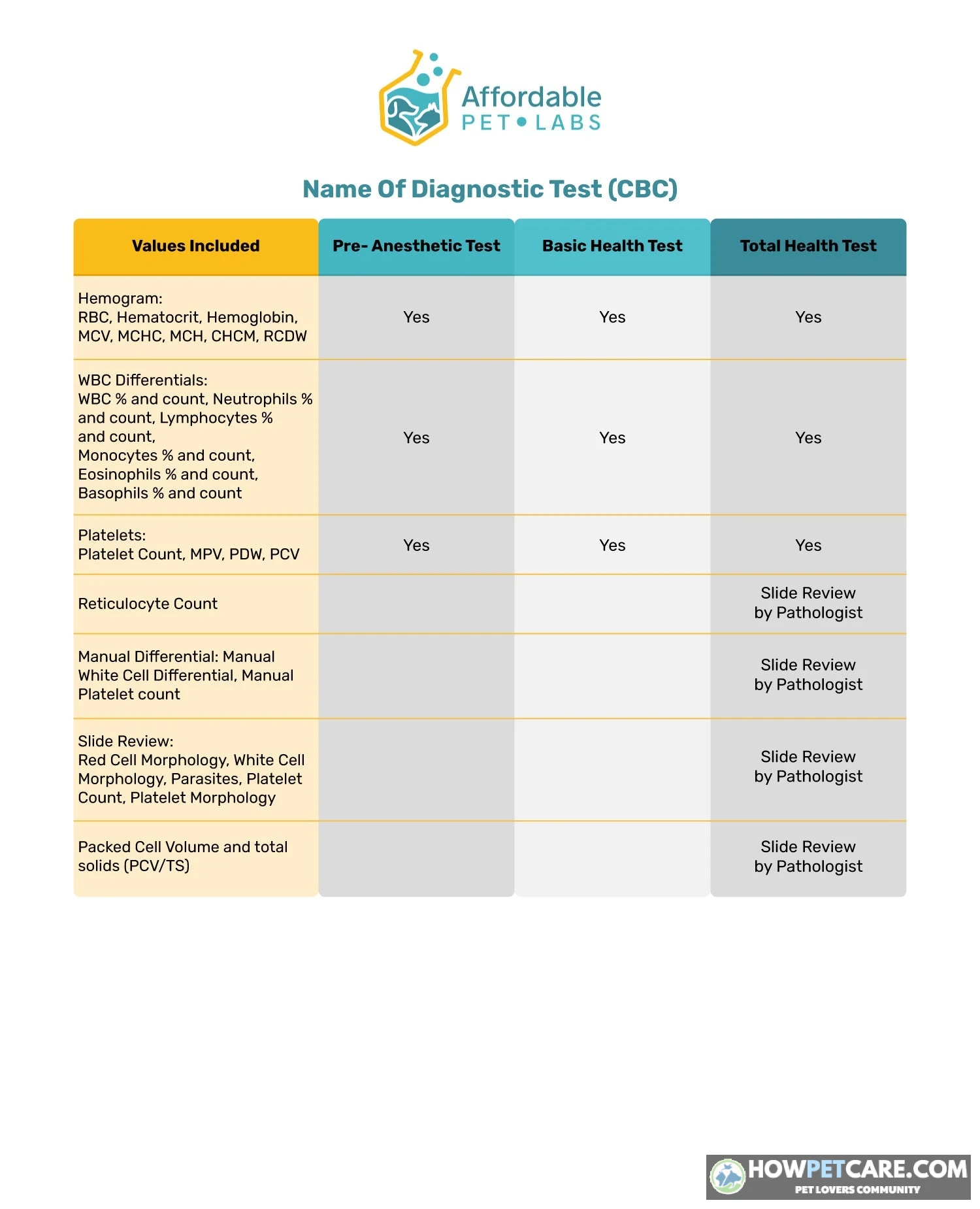
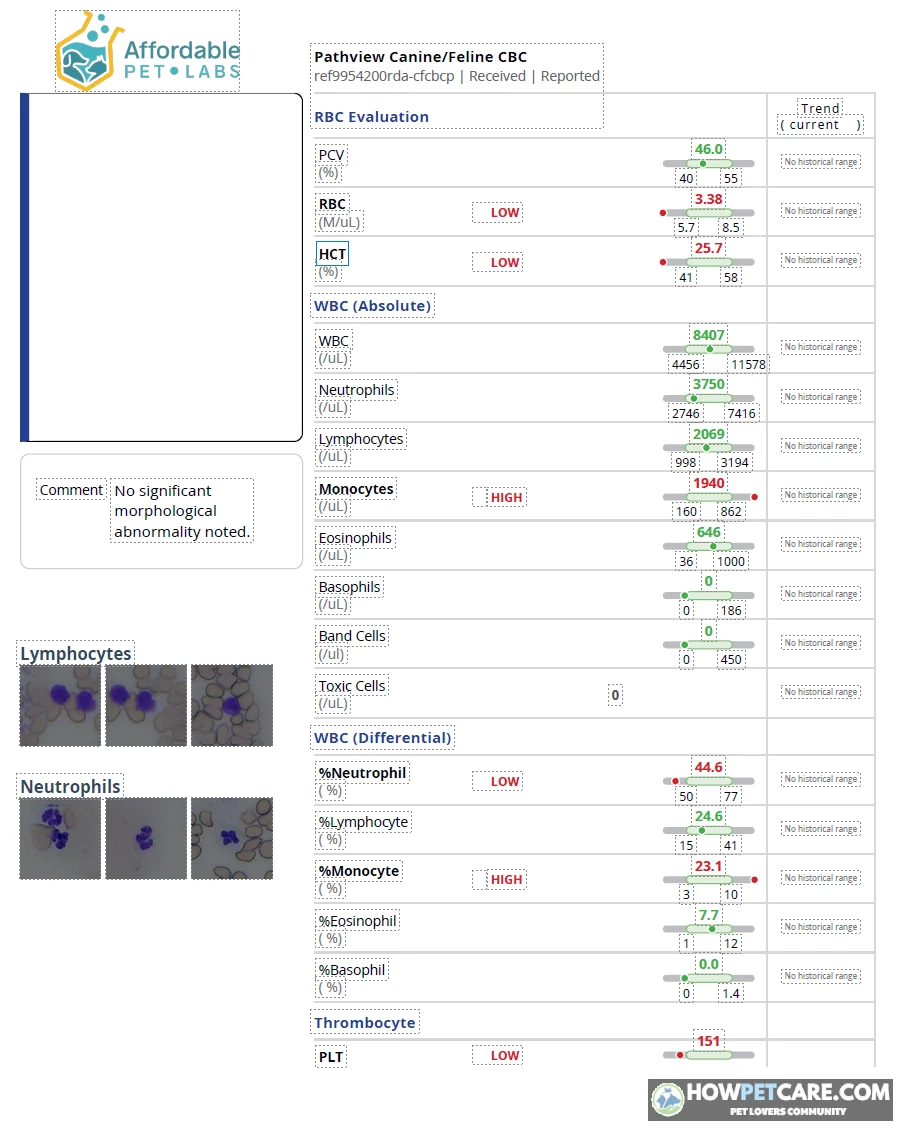
A complete blood count (CBC) measures components of the blood, including red blood cells, white blood cells and platelets. A blood chemistry panel measures substances in the blood and may include tests associated with organ function, glucose, proteins and electrolytes. The exact tests vary by panel.
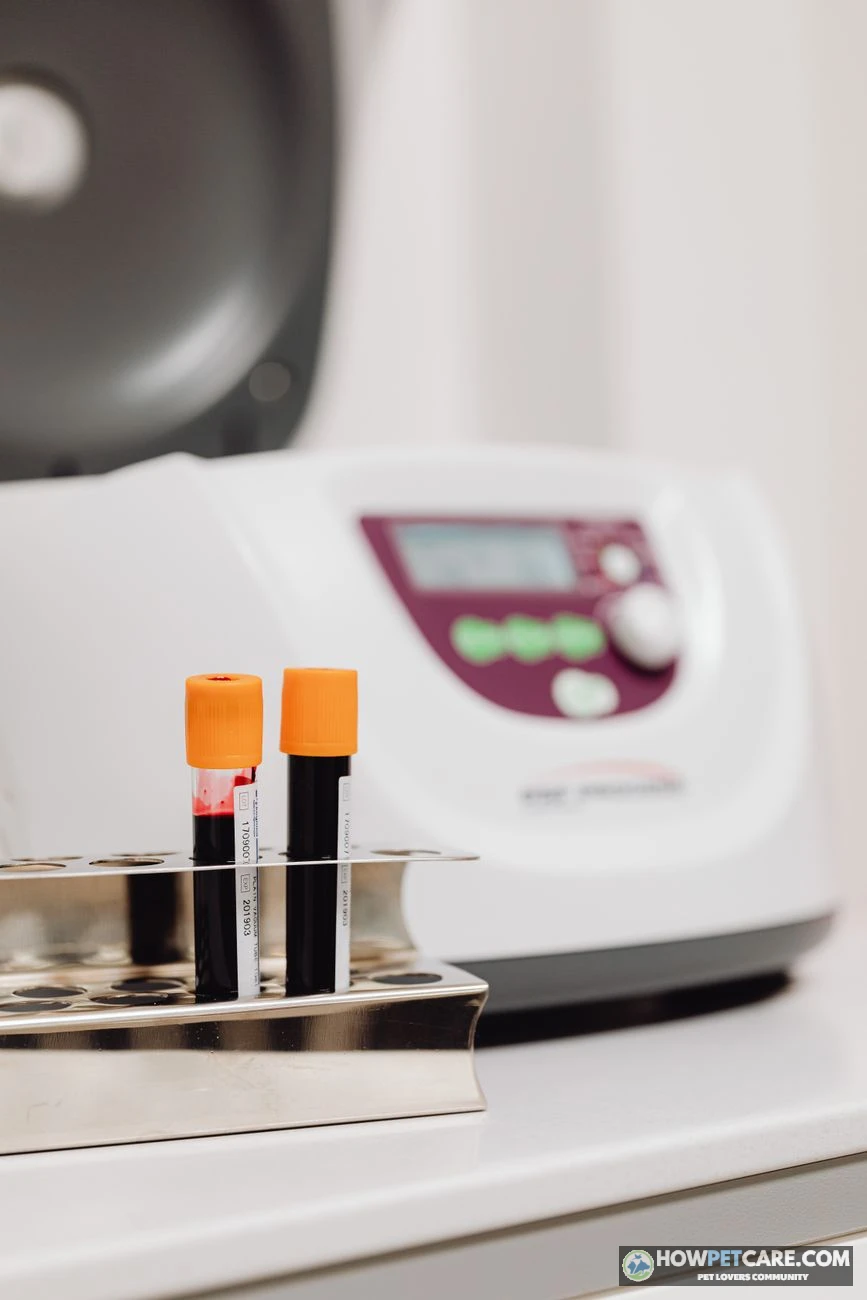
A CBC and chemistry panel answer different kinds of questions; don’t assume that one includes the other. Your veterinarian can explain the purpose of the tests in your pet’s estimate and what the results mean for your pet.
Common add-on tests that raise the total
Depending on the visit, a quote may also include thyroid testing, urinalysis, a heartworm test, flea and tick-borne disease testing, or a feline leukemia virus/feline immunodeficiency virus (FeLV/FIV) test. Urinalysis examines urine, so it isn’t a blood test. Additional diagnostics such as urinalysis or imaging can raise the total beyond the initial blood panel. In a dog being assessed for adrenal disease, your veterinarian may recommend an ACTH stimulation test for dogs in addition to the routine panel.
A wellness exam is a separate service from laboratory testing, even when a clinic packages them together. An exam or panel name doesn’t guarantee that every add-on is included, either. Ask for the names of the tests and whether collection and result review are part of the quoted price.
Per-Test Price Ranges: CBC, Chemistry, Thyroid, FeLV/FIV, Urinalysis and Pre-Anesthetic Panels
The available evidence supports a $100–$200 range for a routine combined CBC and chemistry panel, but it doesn’t establish reliable national ranges for each individual add-on. The table makes that distinction clear: use it to identify what to ask for, not to assign an unsupported price to a line on your bill. These figures are published US estimates for 2026 budgeting, not guaranteed current local rates.
| Test or panel | What it checks | Published price basis | Dog vs. cat notes | Common reason for adding |
|---|---|---|---|---|
| CBC | Red blood cells, white blood cells and platelets | Separate national range not established in the available evidence; ask for an itemized quote | Used for both | May be included in a routine or diagnostic panel |
| Blood chemistry panel | Blood substances associated with organ function and other measures | One national listing reports species averages from $144–$164 across cats and dogs; individual prices vary. | Panel contents can vary for either species | Organ function screening or a diagnostic workup |
| Combined CBC and chemistry | Blood cells and blood chemistry | Approximately $100–$200 for the tests. | Published routine range applies to both. | Often described as routine bloodwork |
| Thyroid testing | Thyroid hormone levels | Separate national range not established; ask whether the quote is for a single test or a broader panel | Offered for both; the exact test may differ | May be included in a broader workup |
| FeLV/FIV combination test | Tests associated with feline leukemia virus and feline immunodeficiency virus | Separate national range not established; request the clinic’s price | Cat-specific | May be offered as a separate feline test |
| Urinalysis | Properties of a urine sample | Separate national range not established; ask whether collection is included | Used for both; this is not a blood test | May accompany bloodwork |
| Heartworm test | Tests associated with heartworm infection | Separate national range not established; ask whether it is bundled with other testing | Testing choices can differ by species | Parasite-exposure screening. |
| Tick-borne disease testing | Tests associated with selected tick-borne infections | Separate national range not established; ask which diseases are included | Test menus vary | Parasite-exposure screening. |
| Pre-anesthetic bloodwork | A clinic-selected set of blood tests before anesthesia | No separate national panel range established; request the exact contents | Used for both; packages differ | Pre-anesthesia evaluation. |
| Senior pet wellness panel | A package that may combine blood and other tests | No separate national panel range established; request an itemized package | Contents vary by clinic and pet | Broader wellness screening |
The combined-panel range doesn’t prove that a bundle is always cheaper than purchasing a CBC and chemistry separately. Ask for both prices if the clinic offers both. Check, too, whether the chemistry panel includes electrolytes and whether collection, laboratory processing and interpretation appear elsewhere on the estimate.
Pre-anesthetic bloodwork cost
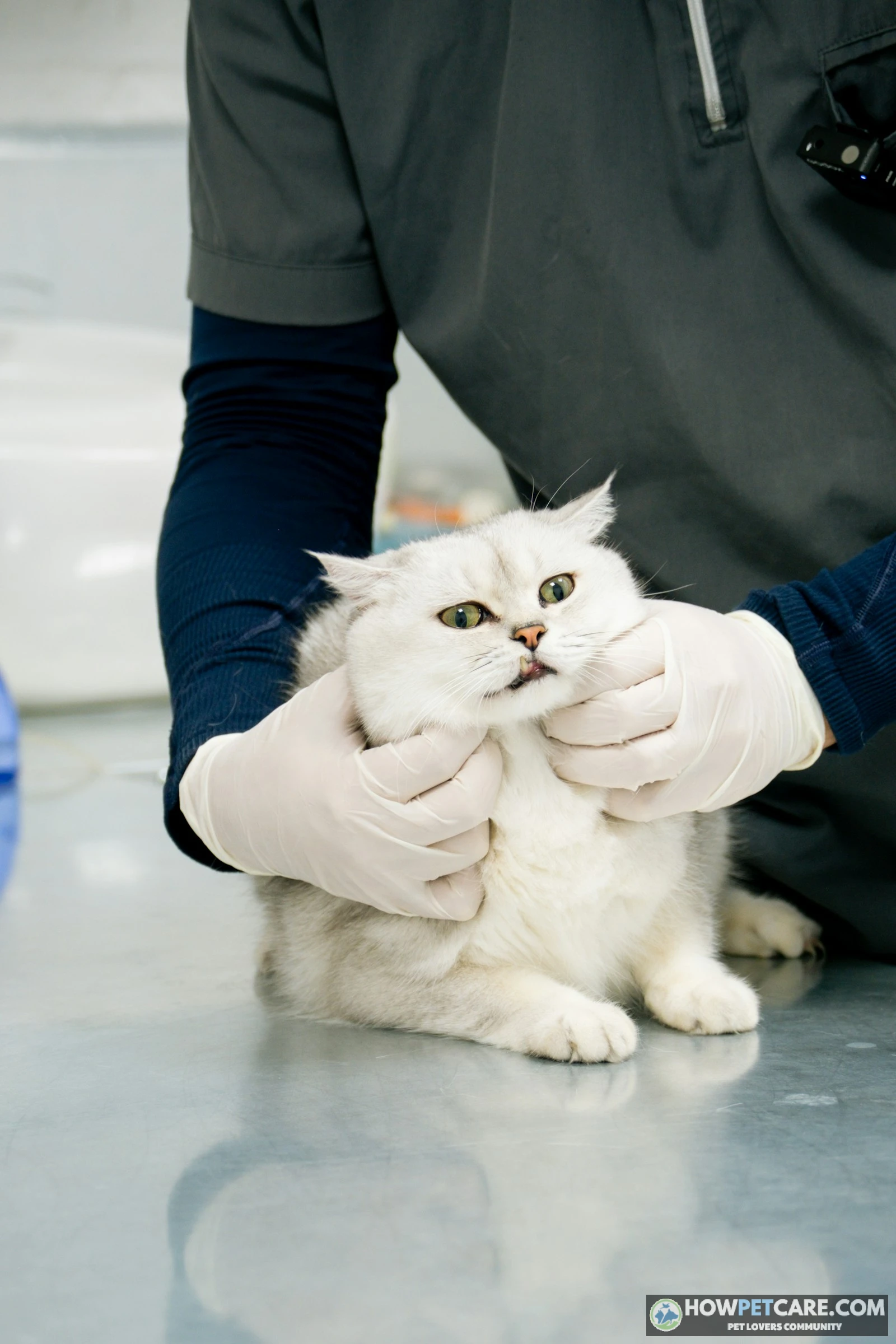
Pre-anesthetic bloodwork is testing offered as part of an evaluation before anesthesia. The price depends on the tests the clinic selects and whether the procedure estimate already includes the panel, exam or collection. A limited panel and a CBC-plus-chemistry package aren’t necessarily equivalent. Ask the veterinarian what’s included and whether existing results can be considered.
Senior pet wellness panel cost
A senior dog bloodwork cost estimate may include more than a basic CBC and chemistry panel. A clinic may package thyroid testing, urinalysis or other services with the blood tests. Ask what’s in the package and how its price compares with its components; don’t assume every senior panel contains the same tests.
Cat vs. dog: is cat bloodwork actually cheaper?
Not reliably enough to apply a fixed discount. The published chemistry averages differ by species, but those figures don’t guarantee a price for a particular clinic or equivalent package. The most useful comparison is the price for the same tests, collection method and visit type at clinics serving your area.
Anatomy of a Vet Bloodwork Bill: Where a $300–$450 Charge Goes
A published traditional-clinic estimate puts a bloodwork visit at roughly $300–$450, describing exam fees of $50–$150, draw fees of $25–$50 and lab fees of $100–$250, with clinic overhead also contributing to the price. These ranges overlap and aren’t a fixed bill: adding every low or high endpoint won’t reproduce the visit range. Some clinics bundle the draw or other services instead of listing them separately.
| Line item | Published range or billing treatment | What it covers | Question to ask |
|---|---|---|---|
| Exam or veterinary visit fee | $50–$150 in one traditional-clinic estimate. | The appointment and veterinarian’s assessment | “Is the exam included in this estimate?” |
| Blood draw or venipuncture | $25–$50 in the same estimate. | Collecting the sample; practices may bundle this charge | “Is collection separate from the panel?” |
| Lab panel | $100–$250 in the same estimate. | The testing package identified on the estimate | “Which tests are included, and is this the full lab charge?” |
| Add-on testing | No reliable separate range established in the available evidence | A test outside the quoted panel | “Is this already included in the package?” |
| Handling, shipping or biohazard charge | Varies by clinic; no reliable range established here | May cover sample preparation, transport or disposal | “What does this line cover, and is it already included elsewhere?” |
| Clinic overhead | Usually embedded in service prices, not a separate amount to add | Facility, equipment, supplies and staffing costs | “Which services are included in the quoted panel price?” |
Exam fee vs. draw fee vs. lab fee
The exam fee pays for the appointment, the draw fee pays for collecting a sample, and the lab fee pays for the specified testing. Those are useful categories, but an invoice doesn’t have to show all three as separate lines. A bundled panel isn’t automatically a duplicate charge, and a separate draw fee isn’t automatically padding.
For an arithmetic example only, imagine an estimate with an exam in the $75–$85 range, collection in the $25–$35 range and a named CBC-plus-chemistry panel in the $175–$185 range. Together, those hypothetical components total $275–$305 before any add-ons. They show how to check the math; they aren’t a survey of clinic prices or a recommended fee schedule.
Is a biohazard or handling fee legitimate?
A handling or biohazard line can represent a real cost, such as preparing a sample for transport or disposing of materials. The charge alone doesn’t establish overcharging. Ask what it covers and whether the lab or collection charge already includes the same service. If the answer is unclear, request a revised, itemized estimate before approving nonurgent work.
A lower panel price doesn’t necessarily mean a lower visit price. Check the exam, collection, lab and any separate handling charges together.
What Drives Bloodwork Prices: Lab Type, Sedation, Fasting, Region and Clinic Type
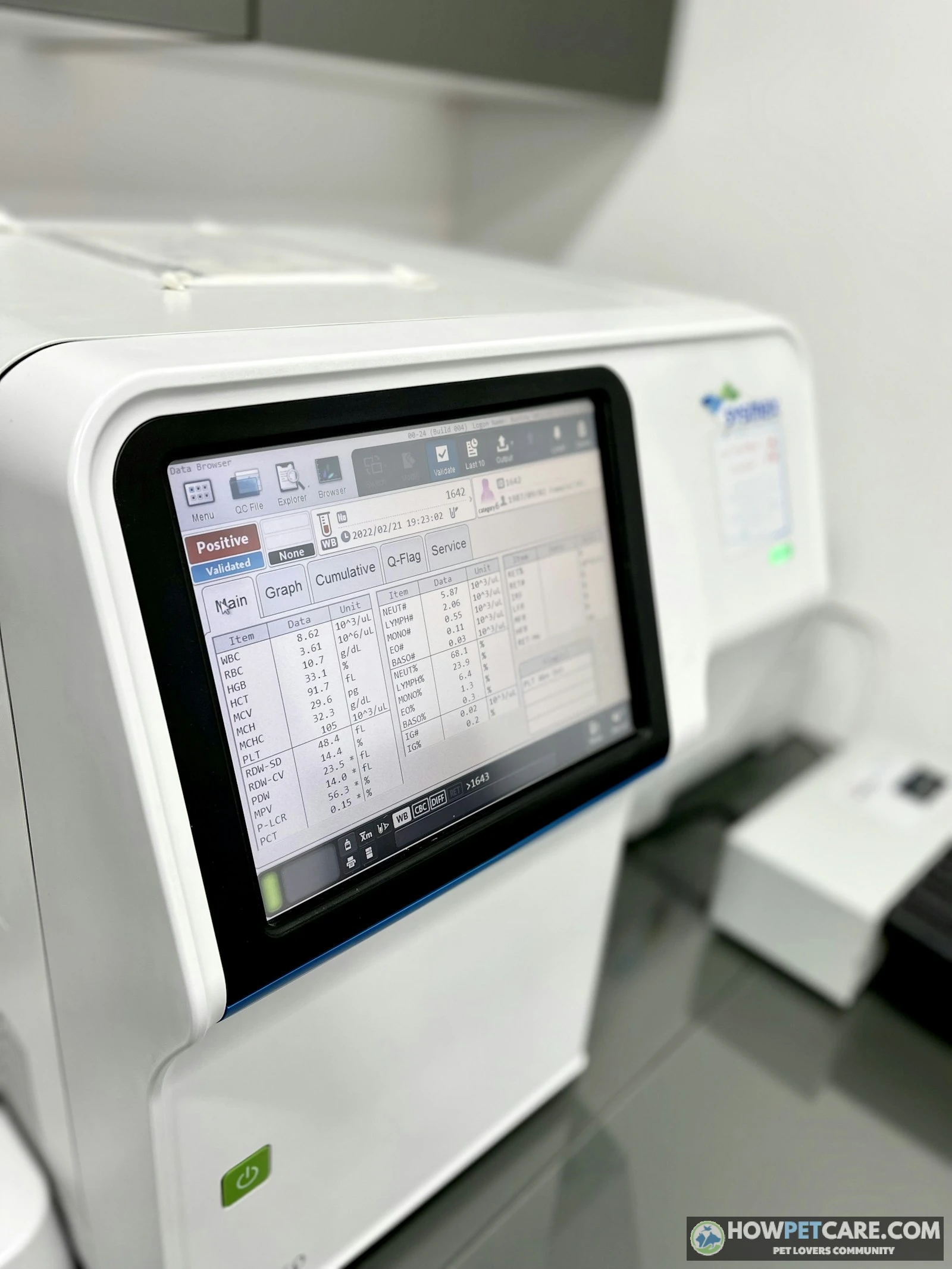
Lab type and turnaround. In-house lab testing uses equipment at the clinic; a reference veterinary diagnostic lab processes samples sent to it. The available test menu, turnaround and charges can differ. In-house testing may be useful when results are needed promptly, while a send-out may be an option for a scheduled visit. Neither is always cheaper. Ask for both prices and whether the timing meets your veterinarian’s needs. Location and lab type are recognized cost factors.
Collection needs. Some pets need extra handling or, when the veterinarian considers it appropriate, medication or sedation for a safe collection. Ask whether those services are anticipated and included. Don’t request that a clinic skip precautions simply to reduce the bill.
Preparation and repeat visits. Some tests may require fasting for 6–12 hours; preparation depends on the tests and the pet. Ask the clinic for instructions rather than withholding food on your own. A missed preparation step or a sample that needs repeating may change the appointment or cost. Ask how the clinic handles a repeat collection.
Regional variation: urban vs. rural clinics
Rent, staffing, local competition and access to labs can affect prices. A high-cost urban practice may have different expenses from a rural clinic, but an urban quote isn’t necessarily higher in every comparison. National routine-visit data show variation across states, yet they don’t establish a reliable urban-versus-rural bloodwork premium.
Compare quotes from nearby independent practices, larger clinic groups and nonprofit providers where available. Ask each for the same panel, the same visit type and all required fees. A low advertised panel price may not include an exam or collection.
Routine wellness panel vs. sick-pet workup
A scheduled wellness panel may be quoted as a defined package. A sick-pet workup can expand when the veterinarian needs different or additional diagnostics; imaging, urinalysis and treatment can add to the bill. Ask for a written estimate that separates the initial plan from potential additional testing, and agree on when the team should contact you before costs change.
Emergency Vet Bloodwork Cost vs. a Regular Clinic
Emergency bloodwork can cost more overall because the visit may include urgent assessment, rapid testing and services beyond a routine panel. The available evidence doesn’t establish a reliable national emergency multiplier or a separate emergency bloodwork price range. Ask for an emergency estimate rather than multiplying a routine quote by an assumed factor. The emergency care setting is one factor that can affect bloodwork costs.
| Scenario | Typical scope | Evidence-based cost guide | Why the total differs |
|---|---|---|---|
| Routine wellness at a regular clinic | Often CBC plus chemistry, with other tests depending on the package | $100–$200 for routine tests alone; a traditional-clinic visit estimate is $300–$450 when associated fees are considered. | Scheduled care; exam and collection may be separate |
| Sick-pet visit at a regular clinic | Bloodwork plus any additional diagnostics the veterinarian discusses | No reliable single total established; request an itemized estimate | The workup may include urinalysis, imaging or other services. |
| Emergency visit | Urgent assessment and testing selected for the situation | No reliable national total or multiplier established in the available evidence | Urgent care and turnaround can change the services and price |
If your pet is stable, it’s reasonable to ask the emergency veterinarian whether a particular test can safely wait for the regular clinic. Don’t delay urgent care or move testing elsewhere without discussing the risk with the treating team.
Is Your Quote Fair? A Step-by-Step Method to Check a $250 or $518 Bloodwork Estimate
A total alone can’t tell you whether a price is fair. First identify what it buys, then compare like with like.
-
Get it in writing
Ask for an itemized estimate showing the exam, collection, named tests, lab processing and any additional fees.
-
Separate the services
Mark which charges are for the visit, the sample and the tests. Ask whether any are already bundled.
-
Identify the panel
Confirm whether the quote includes both a CBC and chemistry, and list any thyroid, urine, parasite or other add-ons.
-
Compare equivalent quotes
Use the published ranges as broad context, then request comparable estimates from two local clinics if time and circumstances allow.
-
Agree on the plan
Ask which items can be discussed separately and when the clinic will seek approval for additional costs.
Worked example: $250 quote
If $250 is the total for a routine visit, ask whether it includes the exam, collection and both parts of the panel. The published $100–$200 routine-panel range concerns the tests, not necessarily the complete visit. If the $250 is for the panel alone, ask what extra tests, processing or review it includes and compare an equivalent local quote. Either version can have an explanation; the label alone doesn’t establish it.
Worked example: $518 quote
A $518 estimate that includes a visit, a broader senior panel and additional tests is a different purchase from a $518 charge for a basic panel alone. An emergency assessment or other diagnostics may also change the comparison. Ask the clinic to identify each component, explain its role in the proposed visit and show any services that could require separate approval. If the visit is nonurgent and the scope remains unclear, seek another local estimate.

Questions to ask before you approve the panel
- “Does this total include the exam, blood draw, laboratory fee and result review?”
- “Which tests are in the package, and are any listed again as add-ons?”
- “Is there a separate handling, shipping or biohazard charge? What does it cover?”
- “Can the tests be sent to a reference lab, and how would price and turnaround differ?”
- “Can you use or review my pet’s recent results before repeating anything?”
- “Which parts of the estimate can we discuss separately, and what are the trade-offs?”
- “If the plan changes, will you contact me before adding charges?”
A higher fee or an unfamiliar line is a reason to ask, not proof of padding. A vague package description, likewise, is a reason to request details before deciding.
How to Lower Vet Bloodwork Costs Without Relying on Insurance
Low-cost clinics and wellness plans
Start with the services your veterinarian has proposed, then look for a lower-cost way to obtain an equivalent service:
- Compare complete estimates. Contact local clinics with the same list of tests and ask about exam, draw and handling fees. Check whether they accept new patients and whether an appointment is required.
- Ask about nonprofit and veterinary school clinics. Services, eligibility, appointment availability and prices vary. Confirm that the clinic offers the specific test and result follow-up your pet needs.
- Check bundles against separate prices. A wellness plan or annual package may include an exam and certain tests for a recurring fee. Compare the full plan cost, included services, limits and cancellation terms with paying for the care you expect to use.
- Share previous records. Send recent results to the clinic before the visit and ask whether they can be used. Repeating a test may still be medically appropriate; the veterinarian should make that call with you.
- Coordinate scheduled care. If a procedure or wellness visit is already planned, ask whether the timing of the blood draw can be coordinated. Don’t assume an older panel will meet the veterinarian’s requirements for anesthesia.
- Ask about payment arrangements. Without insurance, request the total due, accepted payment methods and any clinic payment options before the visit. For financing, review interest, fees and repayment terms rather than treating approval as a discount.
Some clinics may offer a collection-only appointment for an established patient; others may require an exam. Ask what applies to your pet and whether a recent examination or transferred records can be considered.
At-home and direct-to-lab options: pros and risks
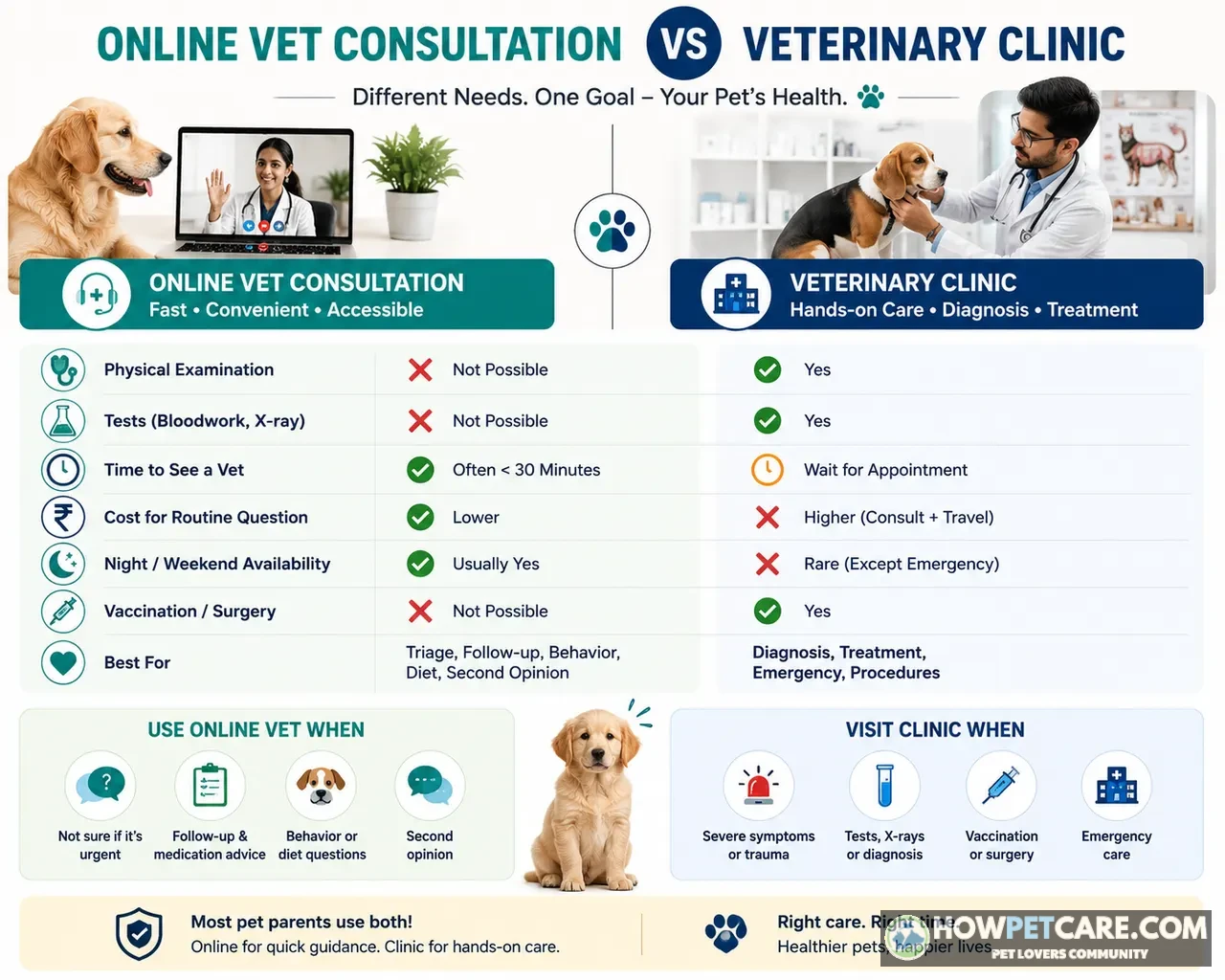
A home or direct-to-consumer product may look less expensive, but it isn’t necessarily equivalent to a veterinary CBC and chemistry panel. Kits may test different sample types or different markers, and a service that requires blood collection may still require a veterinary visit. Ask the provider exactly what’s measured, who collects and processes the sample, and whether your veterinarian can use the results.
Before ordering, check the complete cost: the kit, collection, shipping, a possible veterinary consultation and any repeat testing. Discuss the option with your veterinarian first, particularly if the results would affect a medical decision. A mail-in kit shouldn’t replace prompt veterinary assessment for a sick pet or be assumed to satisfy a clinic’s pre-anesthetic requirements.
If your pet is ill or the treating veterinarian says testing is urgent, ask about costs and alternatives without delaying the recommended assessment.
Does pet insurance cover bloodwork?
Coverage depends on the policy and why testing is performed. An accident-and-illness policy may cover eligible diagnostic bloodwork for a covered condition, subject to exclusions, waiting periods, deductibles, reimbursement limits and pre-existing-condition rules. Routine wellness bloodwork may require a separate preventive-care benefit or may not be covered at all.
Ask the insurer how it treats the specific visit and test before relying on reimbursement. A clinic wellness plan is different from insurance: it generally packages specified services, so read its benefit list and total payment terms. Either way, ask the clinic what you must pay at the appointment and what documentation you need afterward.

Your Bloodwork Budget Checklist: What to Do Before Your Next Vet Visit
- Identify the visit: routine wellness, illness, pre-anesthesia or emergency. Ask the veterinarian what’s proposed for your pet.
- Request an itemized estimate with named tests, the exam, collection and any handling charges. Confirm whether each is included in the total.
- Use the $100–$200 published routine-panel range as context for CBC plus chemistry—not as a guaranteed full-visit price.
- For nonurgent care, compare equivalent quotes and choose at least one practical saving tactic, such as sharing recent records or checking a nonprofit clinic.
- Ask at the next wellness exam how often bloodwork makes sense for your pet’s age, health and medications. The appropriate schedule is an individual veterinary decision.
- Keep a copy of the estimate and results so another clinic can review what was done and when.
1Which two diagnostic components typically make up standard routine bloodwork for dogs and cats?
Standard routine bloodwork commonly packages blood cell counts with chemical marker panels to evaluate both cellular health and organ function.
2What specific cellular components are evaluated during a Complete Blood Count (CBC)?
Complete Blood Count panels focus specifically on measuring and quantifying the cellular elements circulating in the blood sample.
3Why is a urinalysis classified as an add-on diagnostic rather than a standard component of routine bloodwork?
Diagnostics are categorized by sample type, and urinalysis analyzes urine rather than blood components.
4Based on published traditional clinic estimates of 300–450 for a full bloodwork visit, what does the 100–250 portion typically cover?
In a typical full visit estimate, laboratory testing fees represent the main cost component for analyzing the sample.
5Why should pet owners avoid assuming cat bloodwork will automatically be significantly cheaper than dog bloodwork?
Patient handling difficulty, additional diagnostic add-ons, and collection needs can easily negate baseline species chemistry price variations.
6What is a primary trade-off when choosing reference laboratory testing over in-house clinic lab testing?
Send-out diagnostic laboratories handle broader diagnostic menus, though sample transport adds turnaround time compared to immediate in-house analyzers.
7When reviewing an itemized estimate, how should a pet owner approach a listed biohazard or handling fee?
Clarifying line items ensures that sample preparation or waste disposal charges are legitimate distinct costs rather than duplicated billing.
8How can transferring a pet's recent medical records and lab results to a new clinic help manage bloodwork expenses?
Providing past diagnostic data enables the veterinarian to evaluate whether existing baseline results remain clinically valid for current needs.
9How do clinic wellness plans primarily differ from standard accident-and-illness pet insurance policies regarding routine bloodwork?
Wellness plans function as structured payment packages for predictable preventive care, while traditional pet insurance focuses on reimbursement for covered unexpected medical conditions.
10What should a pet owner do if an emergency vet recommends bloodwork for a pet that is currently stable?
Communicating with the treating emergency veterinarian allows pet owners to understand medical urgency and evaluate cost-saving timing safely.
| Test or Panel Name | What It Checks | Published Price Basis | Species Applicability | Common Reason for Adding |
|---|---|---|---|---|
| Blood chemistry panel | Blood substances associated with organ function and other measures | One national listing reports species averages from 144–164 across cats and dogs; individual prices vary. | Panel contents can vary for either species | Organ function screening or a diagnostic workup |
| Combined CBC and chemistry | Blood cells and blood chemistry | Approximately 100–200 for the tests. | Published routine range applies to both. | Often described as routine bloodwork |
| CBC | Red blood cells, white blood cells and platelets | Separate national range not established in the available evidence; ask for an itemized quote | Used for both | May be included in a routine or diagnostic panel |
| Thyroid testing | Thyroid hormone levels | Separate national range not established; ask whether the quote is for a single test or a broader panel | Offered for both; the exact test may differ | May be included in a broader workup |
| FeLV/FIV combination test | Tests associated with feline leukemia virus and feline immunodeficiency virus | Separate national range not established; request the clinic's price | Cat-specific | May be offered as a separate feline test |
| Urinalysis | Properties of a urine sample | Separate national range not established; ask whether collection is included | Used for both; this is not a blood test | May accompany bloodwork |
| Heartworm test | Tests associated with heartworm infection | Separate national range not established; ask whether it is bundled with other testing | Testing choices can differ by species | Parasite-exposure screening. |
| Tick-borne disease testing | Tests associated with selected tick-borne infections | Separate national range not established; ask which diseases are included | Test menus vary | Parasite-exposure screening. |
| Pre-anesthetic bloodwork | A clinic-selected set of blood tests before anesthesia | No separate national panel range established; request the exact contents | Used for both; packages differ | Pre-anesthesia evaluation. |
| Senior pet wellness panel | A package that may combine blood and other tests | No separate national panel range established; request an itemized package | Contents vary by clinic and pet | Broader wellness screening |
FAQ
How often does a dog need bloodwork?
It depends on age, health, and medications, so your vet sets the schedule. Many healthy adult dogs are tested yearly or at key life stages, while seniors and pets on long-term medication may be tested more often.
Is bloodwork for cats cheaper than for dogs?
Often only slightly. Lab panels cost about the same, but cats may need smaller panels or fewer add-ons, while difficult draws or sedation can erase any savings.
Why is vet bloodwork so expensive?
The price covers lab equipment and reagents, or reference lab fees, staff time for the draw and review, and clinic overhead. Add-on tests and exam fees can raise the total further.
Can I get my pet’s bloodwork done without an exam?
Some clinics allow it for established patients, but many require a recent exam for a valid veterinarian-client-patient relationship. Ask whether a recent exam or records can cover the requirement.
Do wellness plans include bloodwork?
Many do, often with an annual CBC and chemistry panel bundled into a monthly payment. Compare the plan’s total cost to paying per visit, since savings depend on what’s included.