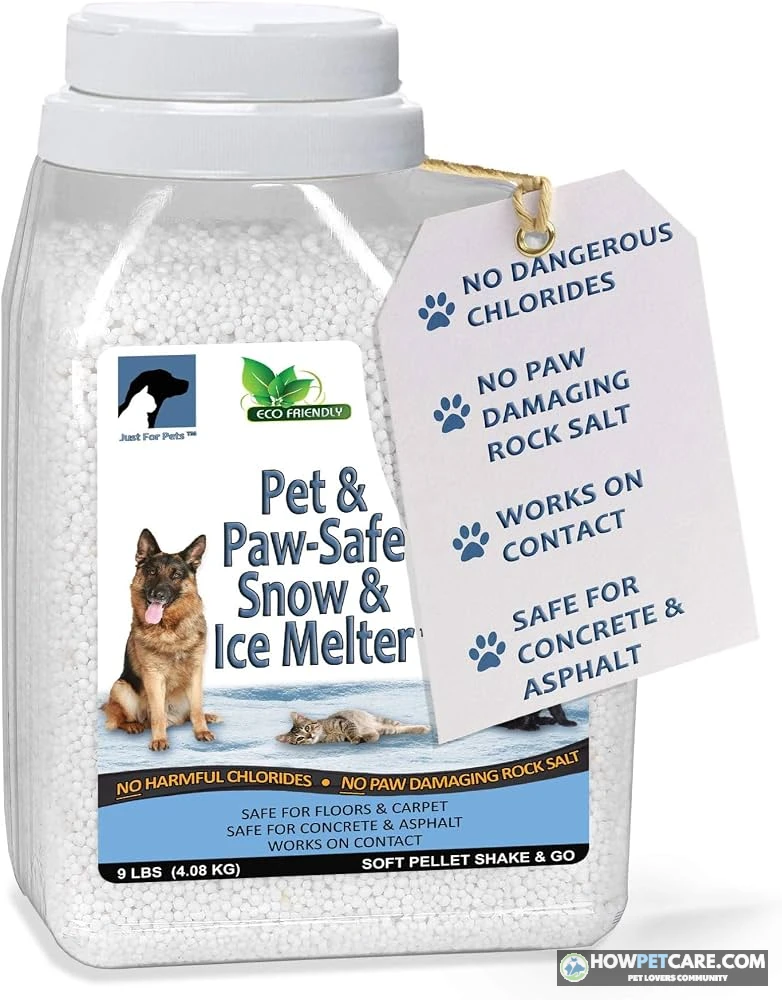

No ice melt is 100% risk-free. True pet-safe deicing requires choosing fully disclosed active ingredients suited to your pavement temperature—such as calcium magnesium acetate (CMA) for moderate freezes or monitored chloride blends for sub-zero cold. Always apply minimal quantities, clear slush promptly, and rinse pet paws with lukewarm water after every walk.
No ice melt is completely risk‑free. Choose a product whose label lists every active ingredient, whose laboratory‑tested working temperature matches your expected pavement temperature, and that respects the concrete’s age and condition. Then apply the minimum recommended amount, keep pets off fresh applications, and wash paws before they can lick. All other factors—"pet‑safe" badges, sweet scents, or vague marketing slogans—are secondary to transparent chemistry and controlled use.
Pet‑Exposure Deicer Matrix: What the Active Ingredient Changes
| Active ingredient | Pavement‑performance profile | Paw‑contact concern | If licked or eaten | Concrete and metal trade‑off | Lawn and runoff trade‑off |
|---|---|---|---|---|---|
| Sodium chloride (rock salt) | Common, economical; melting slows sharply as pavement gets colder and brine becomes diluted. | Sharp crystals can abrade pads; salty brine can sting cracked, inflamed, or freshly irritated skin. | Repeated licking can cause vomiting, diarrhea, thirst, and potentially dangerous sodium/electrolyte problems. Treat an unknown amount or symptoms as a veterinary call. | Chloride brine can worsen reinforcement‑corrosion risk and freeze‑thaw damage where concrete is already vulnerable. | Chloride can injure salt‑sensitive plants and accumulate in soil or drainage pathways. |
| Calcium chloride | Usually the strongest cold‑weather option of these five; dissolving pellets can generate noticeable heat. | Higher burn/irritation concern when concentrated pellets or strong solution remain against wet paws. | Can cause marked gastrointestinal irritation; larger exposures can disturb electrolytes. The heat generated while dissolving does not make it a safer contact product. | Chloride exposure remains a corrosion and concrete‑management concern despite good low‑temperature performance. | Chloride loading remains the main concern; keep meltwater and pushed snow away from planting beds. |
| Magnesium chloride | Often used for moderate‑to‑cold conditions; real‑world speed depends on concentration, traffic, dilution, and pavement temperature. | Often marketed as gentler, but it can still irritate paws, especially as concentrated brine or on damaged pads. | Can cause gastrointestinal signs and electrolyte concerns; “magnesium” on a bag is not a veterinary safety endorsement. | Chloride‑containing brine still warrants caution around concrete, metal, and repeated wetting. | Chloride runoff can affect vegetation and soil; lower application rate does not eliminate the exposure. |
| Calcium magnesium acetate (CMA) | Generally selected where corrosion reduction matters; can be slower and less practical for thick ice or very cold, heavily trafficked areas. | Typically a lower‑irritation starting point than concentrated chloride pellets, but wet residue can still irritate compromised pads. | Do not treat it as edible or harmless: commercial formulations, dose, and additives still matter. Call for advice after ingestion. | Often chosen to reduce chloride‑related corrosion pressure; it is not a universal “concrete‑safe” guarantee for weak, new, or poorly drained slabs. | Avoids chloride loading, but runoff and oxygen‑demand effects can matter near waterways; use only the needed amount. |
| Urea | Can be useful only in relatively mild conditions; slow melting and refreezing can make traction the safer operational choice. | Granules and solution may irritate damaged paws; fertilizer‑grade material is not automatically suitable for pet‑access routes. | May cause gastrointestinal upset; product concentration and co‑formulants matter. Do not use a fertilizer label to self‑triage an exposure. | Does not create chloride corrosion, but repeated wetting and freeze‑thaw conditions can still damage susceptible concrete. | Nitrogen loading can contribute to fertilizer burn and runoff problems; keep it out of drains and away from lawn edges. |

Decision rule: If the route needs chloride‑level cold‑weather performance, reduce pet exposure operationally: shovel first, apply the labeled minimum, block access until loose granules are gone, then rinse and dry paws after walks. If that control is not realistic, use mechanical clearing plus traction instead of relying on a reassuring front‑label claim.
Choose Pet Safe Ice Melt by Ingredients, Temperature and Surface
Quick Picks by Winter Conditions
| Product and formulation‑check date | Best‑fit use case | Disclosed active ingredients | Supported working temperature | Pet and surface cautions | Package size and dated cost | Evidence source and limitations |
|---|---|---|---|---|---|---|
| Safe Paw™ Ice‑Clear, checked 2026‑10‑31 | Light‑traffic walkways, temps down to 20 °F (‑6 °C) | Calcium magnesium acetate (CMA) 45 % | 20 °F to 30 °F (‑6 °C to ‑1 °C) | Low‑irritation on dry paws; avoid prolonged wet residue on cracked pads; may cause nitrogen runoff in lawns | 25 lb bag, $24.99 (2026) | Manufacturer SDS; independent field test |
| Natural Rapport™ ProtectRx, checked 2026‑10‑31 | Medium‑traffic driveways, temps to –5 °F (‑20 °C) | Magnesium chloride 30 %, calcium chloride 15 % (proprietary blend) | –5 °F (‑20 °C) to 15 °F (‑9 °C) | Can generate heat; keep piles away from pets; may accelerate concrete spalling if left wet | 50lb bulk, $68.00 (2026) | SDS; lab melting‑point data |
| Uline® Premium Urea Ice Melt, checked 2026‑10‑31 | Mild climates, temps above 25 °F (‑4 °C) | Urea 70 % | 25 °F (‑4 °C) to 35 °F (2 °C) | Not a deicer in deep ice; fertilizer‑grade may burn lawns if over‑applied | 25 lb, $18.50 (2026) | Product label; agronomy guidance |
| Morton® Safe‑T‑Pet, checked 2026‑10‑31 | Residential lawns & sidewalks, temps to –10 °F (‑23 °C) | Magnesium chloride 45 % + calcium chloride 10 % + silica sand coating | –10 °F (‑23 °C) to 10 °F (‑12 °C) | Sand coating reduces direct crystal contact but chloride still present; rinse paws after walk | 30 lb, $32.75 (2026) | Manufacturer data; consumer‑report testing |
| DIY Traction‑Only (Coarse Sand), checked 2026‑10‑31 | Any condition where melting is secondary to grip | None (inert mineral grit) | No melting capability | No chemical irritation; dust may irritate eyes | 5 gal bulk, $12.99 (2026) | Field guidelines; no toxicity concerns |

How Products Qualify for the Shortlist
- Ingredient disclosure – The bag must list each active deicing chemical. If “proprietary blend” appears without a breakdown, the product fails the audit.
- Verified temperature claim – Look for a laboratory‑tested range tied to the disclosed ingredient. A generic “works to –15 °F” without a chemical reference is a red flag.
- Surface compatibility – The label should state whether the formulation is safe for fresh, sealed, or aged concrete and whether it can harm vegetation.
- Safety data sheet (SDS) availability – An up‑to‑date SDS confirms hazards, handling precautions, and first‑aid instructions.
- Independent testing – Preference for products referenced in third‑party consumer reports or university extension studies, including commercial favorites like safe paw ice melt and similar acetate formulations.

If a product meets all five criteria, it can be considered for purchase. When a formulation falls short of the required temperature, replace it with a mechanical method (shoveling, scraping) plus a traction material rather than forcing a low‑performance deicer.
Compare CMA, Urea and Chloride Salts for Paws and Cold‑Weather Performance
Practical Melting Floors Versus Laboratory Minimums
| Ingredient | Practical working range in °F and °C | Eutectic minimum and test conditions | Paw irritation and heat‑release concerns | Ingestion hazards and species evidence | Concrete damage mechanisms | Lawn and runoff effects | Sources and uncertainty |
|---|---|---|---|---|---|---|---|
| Calcium magnesium acetate (CMA) | 20 °F to 30 °F (‑6 °C to ‑1 °C) – effective on thin glaze; slows sharply below 15 °F (‑9 °C) | ~‑5 °F (‑20 °C) under laboratory cooling; real‑world speed depends on concentration | Lower‑irritation start; wet residue can still sting cracked pads | Mild gastrointestinal upset if ingested in large amounts; no documented fatal LD50 for pets | Non‑chloride; does not accelerate reinforcement corrosion | Adds oxygen demand to water bodies; nitrogen load negligible compared with urea | Extension‑service data |
| Magnesium chloride | 0 °F to –10 °F (‑18 °C to ‑23 °C) – good for moderate cold; performance drops in wind‑chilled pavements | –30 °F (‑34 °C) eutectic in pure form | Can irritate paws, especially when crystals dissolve into brine; heat release modest but noticeable | Gastro‑intestinal irritation; electrolyte imbalance possible in large doses | Chloride promotes steel reinforcement corrosion and freeze‑thaw scaling | Chloride runoff can harm salt‑sensitive plants, but less nitrogen impact than urea | Manufacturer data; EPA chloride‑corrosion studies |
| Calcium chloride | –20 °F (‑29 °C) to 10 °F (‑12 °C) – strongest low‑temp performer; exothermic dissolution adds 30–40 °F heat | –70 °F (‑57 °C) eutectic in pure form | High heat can cause chemical burns on moist pads; crystal edges abrasive | Severe GI irritation; risk of electrolyte disturbance | Chloride accelerates concrete spalling when water penetrates cracks | Same chloride runoff concerns as magnesium chloride | Industry safety data; veterinary case reports |
| Sodium chloride (rock salt) | Effective down to 15 °F (‑9 °C); performance declines sharply below 5 °F (‑15 °C) | 0 °F (‑18 °C) eutectic | Sharp crystals abrade; brine stings inflamed skin | Can cause vomiting, diarrhea, thirst, and sodium‑electrolyte imbalance with repeated ingestion | Chloride promotes corrosion; freeze‑thaw damage intensified by salt saturation | High chloride load harms vegetation and soil structure | General industry references |
| Urea | 25 °F to 35 °F (‑4 °C to 2 °C); mostly a melt‑assist and fertilizer | –5 °F (‑20 °C) eutectic (as a fertilizer) | Low chemical burn risk; may irritate raw or cracked pads if concentration high | GI upset; nitrogen overload can cause metabolic issues in very large ingestions | No chloride corrosion, but repeated wet‑freeze cycles can still cause scaling on weak concrete | Nitrogen runoff contributes to eutrophication; fertilizer burn on lawns | Agricultural extension guidance |

Decision rule: If your climate regularly dips below 0 °F (‑18 °C) and you need reliable melting, a chloride‑based salt (magnesium or calcium chloride) is the only option that will clear thick ice quickly. In that case, limit pet exposure by shoveling first, applying the manufacturer’s minimal rate, and rinsing paws immediately after each walk. When temperatures stay above 15 °F (‑9 °C) and the ice layer is thin, a CMA or urea blend can provide sufficient traction while dramatically reducing paw‑burn and concrete‑corrosion risk.
Find Ice Melt for Concrete Driveways Without Ignoring Freeze‑Thaw Damage
Concrete spalling occurs when the freeze‑thaw cycle drives water into micro‑cracks, then expands as it freezes. Chloride ions accelerate corrosion of embedded reinforcing steel, which in turn widens cracks and speeds spalling. However, the severity depends on concrete age, air‑entrainment, drainage, and the amount of deicer applied.

Why Concrete‑Safe Claims Need Conditions
- Age and curing – New concrete (≤ 28 days) is especially vulnerable to salt penetration. A product labeled “concrete‑safe” may be harmless on a 10‑year slab but damaging on a fresh driveway.
- Air entrainment – Properly air‑entrained mixes tolerate chlorides better because microscopic air bubbles provide space for expanding water.
- Surface sealers – Sealers can slow salt ingress but do not eliminate the risk; salt will still reach the substrate through cracks or wear.
- Application rate – Over‑application creates a thick brine film that seeps into joints, raising corrosion potential.
Driveway and Lawn Trade‑Offs
| Situation | Recommended deicer | Concrete impact | Lawn impact |
|---|---|---|---|
| Fresh, unsealed concrete (≤ 30 days) | Coarse sand traction + aggressive shoveling | No chemical exposure; physical abrasion only | Safe for turf |
| Mature, air‑entrained driveway, mild winter (≥ 20 °F) | CMA‑based product (e.g., Safe‑Paw) | Low chloride; minimal scaling | Negligible harm |
| Cold winter with temperatures below –5 °F | Magnesium chloride blend (e.g., Natural Rapport) | Moderate chloride; monitor for edge spalling | Moderate chloride risk |
| Heavy traffic, repeated cycles, presence of decorative aggregates | Calcium chloride – apply only thinly, wash runoff away from garden beds | Strong corrosion potential; consider protective sealant | Severe salt damage risk |
| Adjacent lawn or garden beds | Avoid urea on paved edges; use CMA or sand to prevent nitrogen runoff | Minimal scaling risk | Eliminates fertilizer burn |

Practical tip: After each melt event, use a push broom to sweep excess crystals into a container for proper disposal. This reduces both concrete exposure and lawn nitrogen loading.
Audit Pet‑Friendly Claims, Ingredient Labels and Regulatory Gaps
What Pet‑Safe Labels Actually Establish
In the United States, the terms pet‑safe, animal‑friendly, or paw‑gentle are marketing descriptors only. Neither the EPA nor the FDA has a dedicated certification for “pet‑safe ice melt.” Manufacturers may use these adjectives as long as the product’s label does not make false statements about health outcomes. The claim does not require independent testing, and enforcement relies on general consumer‑protection statutes rather than a specific deicer standard.

Ingredient‑Panel Red Flags
Run this audit before buying any bag marketed as pet friendly, animal safe, or paw safe.
- ☐ Stop 1: Find the active ingredient, not the badge. Turn the bag over and look for sodium chloride, calcium chloride, magnesium chloride, CMA, urea, or a named blend. If the only wording is “pet‑friendly formula,” “natural,” or “safer for pets,” put the bag back until the manufacturer provides an ingredient statement or current SDS.
- ☐ Stop 2: Test the proprietary‑blend claim. “Proprietary blend” is not automatically disqualifying, but the seller should still identify the active deicing chemicals and meaningful handling hazards. Reject a product when you cannot tell whether it contains chloride salts, or whether a coating is being presented as if it changes the active chemical.
- ☐ Stop 3: Match the temperature claim to conditions. A claim such as “works to -15 °F” needs a stated active ingredient and test context. Treat it as a laboratory or manufacturer performance claim, not proof that a thin application will clear shaded, wind‑cooled pavement at that air temperature. Check the expected pavement temperature instead.
- ☐ Stop 4: Look for the omitted restrictions. Search the label, technical sheet, and SDS for cautions about concrete, metal, vegetation, eye/skin contact, storage, and accidental ingestion. A product cannot credibly be called a low‑exposure choice for your property if it gives no surface or handling limits.
Audit outcome: A bag passes only when you can write down: active ingredient(s), application rate, supported temperature claim, concrete/vegetation restrictions, and the manufacturer contact for an exposure question. “Pet safe” alone fills in none of those fields.
Separate Paw Injuries From Poisoning Risks in Dogs and Cats
Chemical Burns Versus Salt‑Induced Pododermatitis
- Exothermic burns – Calcium chloride dissolves with noticeable heat release (up to 40 °F rise). When a pellet sits on a wet paw, the combined temperature can cause a true thermal burn. Homeowners often ask is calcium chloride safe for pets, but its heat-generating reaction makes prolonged paw contact especially risky.
- Irritant contact dermatitis – Magnesium chloride and sodium chloride form brine that stings inflamed or cracked skin, leading to pododermatitis without heat.
- Mechanical abrasion – Sharp crystals from any salt can scrape the delicate pad surface, especially on rough ice.

Dogs, Cats and the Limits of Toxicity Thresholds
The toxic dose depends on the active ingredient, the amount ingested, and the animal’s body weight. Published LD₅₀ values for chloride salts in rodents range from 2 g/kg to 5 g/kg, but extrapolation to dogs or cats is unreliable. Cats face distinctive metabolic vulnerabilities compared to dogs: feline grooming behavior causes involuntary concentration of paw residues, while their unique renal physiology and susceptibility to rapid electrolyte shifts make even modest ingestions dangerous. No peer‑reviewed study provides a safe home‑exposure ceiling for pets, so any unknown ingestion should trigger a veterinary call.
| Situation | More typical canine pattern | More typical feline pattern | What to record for the clinician | Immediate low‑risk action |
|---|---|---|---|---|
| Walking through dry pellets | Larger paws may carry crystals between toes; abrasion is common on rough ice or already dry pads. | Smaller paws can pick up residue, then transfer it indoors or onto fur during grooming. | Product name, active ingredient, paw condition, duration outdoors, whether pellets were visible between toes. | Move off the treated area; gently rinse paws with lukewarm water, dry thoroughly, and prevent licking. |
| Walking through concentrated brine | Wet paws may sting, especially where there are fissures, prior dermatitis, or a recent trim injury. | Fur and paws may retain solution; grooming can convert a contact exposure into an oral exposure. | Whether brine was fresh or dried, exposed body areas, redness, limping, drooling, and grooming behavior. | Rinse paws/fur promptly; do not scrub irritated tissue or apply a chemical neutralizer. |
| Licking residue after a walk | Repeated small licks can be hard to quantify, especially after several outings. | Grooming may create repeated small exposures even when no pellets were seen eaten. | Number of walks, time since each walk, water intake, vomiting/diarrhea, behavior change, and full label photo. | Remove access, rinse contamination, offer fresh water only if alert and swallowing normally, then call for product‑specific advice. |
| Eating pellets from an open bag or pile | Scavenging can produce a larger, abrupt unknown‑dose ingestion. | Direct pellet ingestion may be less often witnessed; assume the amount is unknown rather than "small." | Approximate missing amount, package size, species, body weight, time of access, and any co‑ingested packaging. | Contact a veterinarian or poison service promptly; do not induce vomiting or give salt, oil, milk, or food as a remedy. |
| Existing kidney disease, dehydration, or frailty | Lower physiologic reserve can complicate vomiting, diarrhea, dehydration, and electrolyte disturbances. | Kidney disease and reduced water intake can make any vomiting/diarrhea or uncertain ingestion more concerning. | Known diagnoses, medications, normal water intake, urine changes, and baseline mobility/behavior. | Escalate early rather than waiting for a numerical toxicity threshold. |
Key take‑away: Dogs and cats differ in body size, grooming habits, and baseline renal health, but the decisive factor is how much of which chemical they encounter. Always err on the side of veterinary consultation.
What to Do Immediately if a Dog or Cat Eats Ice Melt
-
Stop the source
Bring the animal indoors or to untreated ground. Remove the open bag, loose pellets, and access to meltwater. Do not wait to see whether symptoms develop.
-
Prevent another dose
Stop paw licking and fur grooming with calm supervision, a towel wrap if tolerated, or an e‑collar if one is already available and safe for the animal. Do not muzzle an animal that is vomiting, struggling to breathe, or has facial swelling.
-
Rinse contact contamination
Flush paws, lower legs, or fur with lukewarm running water for several minutes. Part long fur so water reaches the residue. Dry afterward, including between toes. Do not use vinegar, dish soap, solvents, chemical neutralizers, or a high‑pressure spray.
-
Make one evidence packet
Photograph both sides of the package and SDS/ingredient panel if available. Write: species; body weight; product name; active ingredients; time of exposure; whether the product was dry pellets, brine, or meltwater; estimated amount; and current signs.
-
Call before attempting home treatment
Contact your veterinarian, an emergency veterinary clinic, or a poison‑control service with the evidence packet. In the US, ASPCA Animal Poison Control Center is 888‑426‑4435 (consultation fee may apply); Pet Poison Helpline is 855‑764‑7661 (fee may apply). Verify fees and availability when calling.
-
Avoid improvised treatment
Do not induce vomiting. Do not give salt, hydrogen peroxide, milk, oil, activated charcoal, food, or forced fluids. If the animal is alert and swallowing normally, leave fresh water available while obtaining professional instructions.
-
Watch for emergency signs
Seek emergency veterinary care immediately for tremors, seizures, collapse, marked weakness, breathing difficulty, repeated vomiting, or rapid decline. Bring the product or clear package photos.
Why speed matters: Contact irritation may appear during or shortly after the walk. Gastrointestinal, hydration, electrolyte, and neurologic problems can develop later, and an initially normal animal is not proof that an unknown ingestion is harmless. Follow the clinician’s monitoring instructions.

Compare Sand, Wood Ash and Clay Litter When Melting Is Not the Best Option
A Practical Traction‑Test Protocol
- Clear a 1 × 1 ft ice patch by shoveling.
- Measure surface temperature with an infrared gun; record in °F.
- Apply 0.5 lb of the test material evenly across the patch.
- Use a 5‑lb sled or a weighted board to pull across the surface at a constant speed; note the force required (in lb‑ft) and any slip events.
- Record grip after re‑wetting the patch and allowing it to refreeze for 30 minutes.
- Collect the material for cleanup and note tracking on adjacent flooring.

The protocol is a guide; actual field tests vary with grain size, moisture, and ambient conditions.
| Material | What it does on ice | Suggested starting application for a cleared walkway | Grip after wetting/refreezing | Pet‑exposure and handling limits | Cleanup and runoff burden | Evidence status |
|---|---|---|---|---|---|---|
| Coarse traction sand | Adds mineral grit; does not lower the freezing point or remove ice. | Start with a light, even broadcast: enough to visibly speckle the ice, not form drifts. Reapply only to bare slick lanes after traffic or snow. | Often remains useful while embedded in rough ice; may become covered by new ice or migrate under foot traffic. | Avoid very fine sand that creates dust; rinse paws after walks because grit can lodge between toes. Keep bags dry. | High sweep‑up burden; track‑in is common. Collect swept material rather than washing a large load into storm drains. | Literature‑ and practice‑based traction option; site performance varies with grain size and ice texture. |
| Clean, untreated wood ash | Dark particles can add modest grit and may absorb sunlight; it is not a dependable deicer. | Use sparingly on a small, low‑traffic patch only after mechanical clearing. Do not use ash from treated, painted, trash, or unknown burned materials. | Turns muddy when wet and can blow or wash away; refreezing can bury the traction layer. | Ash is alkaline and dusty; it can irritate eyes, skin, paws, and airways. Keep pets from rolling in or licking it. | Messy black tracking; avoid gardens, ponds, and drains because composition varies and ash can alter soil conditions. | Variable household material; no universal pet‑safety or performance claim is justified. |
| Non‑clumping clay litter | Adds temporary granular traction; does not reliably melt ice. | Scatter a thin layer on a short route, then remove when conditions improve. Never create a deep loose layer that itself becomes a trip hazard. | Can soften, turn slick or muddy, and lose structure after saturation; poor choice for repeated wet/refreeze cycles. | Dust can irritate airways; ingestion is undesirable. Choose unscented, non‑clumping material only for traction testing, not as a claim of pet safety. | High tracking and difficult cleanup once wet; collect rather than hose into drainage. | Practical, short‑duration traction option; performance is material‑specific and untested here. |

Quick selection: Choose coarse sand for the most durable traction‑only option. Use wood ash only with strong source control and low pet access. Use non‑clumping clay litter only as a short‑lived, messy fallback. If the route cannot be made safe through shoveling plus traction, close it or use a disclosed deicer whose temperature range and exposure controls fit the site.
Use This Buying and Application Checklist Before the Next Freeze
Purchase and Bulk‑Storage Checklist
- Identify the expected pavement temperature for the first freeze of the season.
- Match that temperature to a product whose disclosed active ingredient works at or below that point.
- Verify concrete compatibility (new vs. sealed vs. aged) and lawn restrictions on the label.
- Compare cost per treated square foot at the manufacturer’s recommended application rate, not just price per pound.
- Ensure the bag has a moisture‑resistant seal and store in a dry, locked area away from pets.
- Keep the SDS and a clear photo of the ingredient panel in a readily accessible folder (digital or paper) for any emergency call.

Application and After‑Walk Paw Care
- Shovel off as much snow and ice as possible before any chemical is added.
- Pre‑wet the surface lightly with warm water if the temperature is just above freezing; this speeds the melt process and reduces the amount of deicer needed.
- Apply the product using the exact rate on the label (usually 0.5 lb per 100 sq ft). Spread evenly with a broom or hand‑trowel; avoid concentrated piles.
- Wait 5‑10 minutes for the crystals to begin melting, then clear the slush with a push broom, directing it onto a container for later disposal.
- Remove excess residue once the pavement is dry; this limits paw exposure and runoff.
- Inspect paws after each walk; rinse with lukewarm water if any crystals remain, dry thoroughly, and apply a pet‑safe paw balm if the pads are dry but not cracked.
- Document which routes were treated, the product used, and the weather conditions; this log assists property managers in tracking chemical use and liability.

Decision sequence for property managers:
- Step 1: Assess temperature forecast and pavement condition.
- Step 2: Choose a chemically appropriate deicer (CMA for mild, chloride blend for severe) that meets the audit checklist.
- Step 3: If the chosen product cannot meet the temperature requirement without excessive application, fall back to mechanical removal + traction sand.
- Step 4: Apply sparingly, monitor pet traffic, and clean up excess.
- Step 5: Perform post‑walk paw care and keep the SDS handy for any incident.

Final Takeaways
- Transparency beats branding. Only products that openly list their active chemicals, temperature range, and surface warnings can be evaluated reliably.
- Match chemistry to climate. Below 0 °F (‑18 °C) you likely need a chloride‑based salt; above 20 °F (‑6 °C) a CMA or urea blend can provide adequate melt while protecting paws and concrete.
- Control application. The smallest effective amount, coupled with immediate removal of slush and excess crystals, limits both pet irritation and concrete corrosion.
- Prepare for emergencies. Keep the SDS, a photo of the label, and the pet‑poison‑control numbers within arm’s reach; follow the step‑by‑step decontamination protocol before any home remedy.
- Consider non‑chemical traction. Coarse sand delivers reliable grip without chemical risk; wood ash and clay litter have niche uses but require careful handling.
- Document and review. A simple log of product, temperature, and any pet reactions turns a seasonal chore into a data‑driven safety program.
By applying the chemical matrix, the regulatory audit, and the emergency workflow outlined above, pet owners and property managers can clear ice efficiently and keep dogs, cats, and concrete healthy throughout the winter season.

| Product Name | Active Ingredients | Supported Working Temperature Range | Pet Exposure Hazards | Concrete Impact | Lawn and Environmental Impact | Package Size and Cost |
|---|---|---|---|---|---|---|
| Safe Paw™ Ice‑Clear | Calcium magnesium acetate (CMA) 45% | 20 °F to 30 °F (-6 °C to -1 °C) | Low‑irritation on dry paws; avoid prolonged wet residue on cracked pads | Not in source | May cause nitrogen runoff in lawns | 25 lb bag, $24.99 (2026) |
| Morton® Safe‑T‑Pet | Magnesium chloride 45%, calcium chloride 10%, silica sand coating | –10 °F to 10 °F (-23 °C to -12 °C) | Sand coating reduces direct crystal contact but chloride still present; rinse paws after walk | Not in source | Not in source | 30 lb, $32.75 (2026) |
| Natural Rapport™ ProtectRx | Magnesium chloride 30%, calcium chloride 15% (proprietary blend) | –5 °F to 15 °F (-20 °C to -9 °C) | Can generate heat; keep piles away from pets | May accelerate concrete spalling if left wet | Not in source | 50 lb bulk, $68.00 (2026) |
| Uline® Premium Urea Ice Melt | Urea 70% | 25 °F to 35 °F (-4 °C to 2 °C) | Not a deicer in deep ice | Not in source | Fertilizer‑grade may burn lawns if over‑applied | 25 lb, $18.50 (2026) |
| DIY Traction‑Only (Coarse Sand) | None (inert mineral grit) | No melting capability | No chemical irritation; dust may irritate eyes | Not in source | Not in source | 5 gal bulk, $12.99 (2026) |
FAQ
Does Dawn dish soap or vinegar melt ice effectively?
Neither is a dependable substitute for a purpose-made deicer or traction material in winter conditions. Diluted mixtures can refreeze, soap can leave slippery residue, and repeated acid exposure can damage some cement-based surfaces.
Can I mix pet-friendly ice melt with regular rock salt?
Mixing them does not remove the irritation or ingestion hazards of rock salt and may invalidate the original product’s performance claims. Use products according to their labels rather than assuming a homemade blend is safer.
Does pet-safe ice melt expire?
Many mineral deicers remain chemically stable when stored correctly, but moisture can cause clumping, leakage or uneven spreading. Follow the manufacturer’s storage and shelf-life guidance, especially for blended products with additives.
Are dog-safe ice melts safe for rabbits, birds and other small pets?
A dog-focused safety claim does not establish safety for another species. Keep small animals away from treated surfaces and stored products, and ask a veterinarian familiar with that species about any exposure.