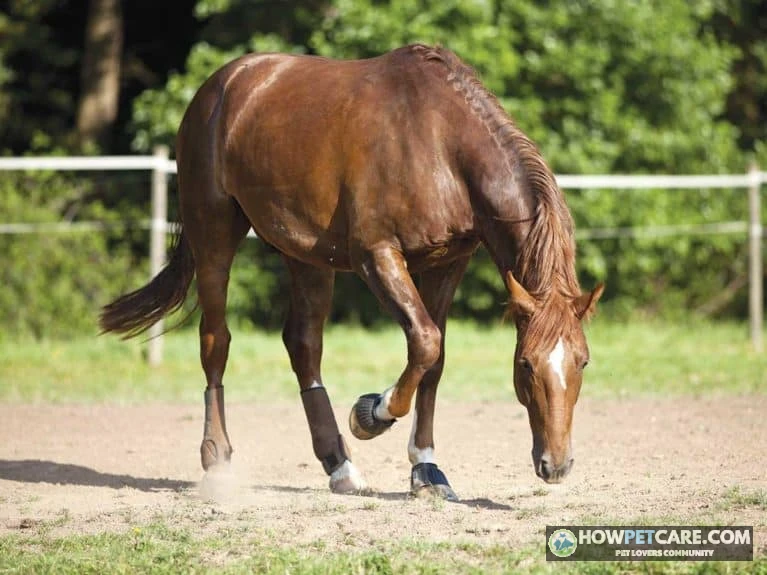

Colic in horses means abdominal pain — call an equine vet at the first sign. Watch for these common signs:
- Looking at or kicking at the flank, pawing, restlessness
- Repeatedly lying down and getting up, or rolling
- Reduced appetite and less or no manure passed
- Stretching as if to urinate, sweating, or trembling
- Violent rolling, collapse, or unsafe behavior — an emergency
If your horse shows signs of abdominal pain, call an equine veterinarian now. Colic means abdominal pain; it isn’t a diagnosis. The cause may be mild gas or an intestinal impaction, but it could also be a displaced section of intestine or one that has lost its blood supply and needs emergency surgery. Behavior alone can’t tell you which it is. Remove access to feed if it’s safe, keep people clear of a horse in severe pain, and follow the vet’s instructions while you prepare for possible referral.
Early signs include reduced appetite, pawing, looking at the flank, restlessness, stretching, lying down more than usual, and changes in manure. Repeated rolling, sweating, severe or worsening pain, inability to stay standing, or behavior that makes a horse unsafe to handle are emergencies. Call even if the signs seem mild. Temporary improvement doesn’t prove the underlying problem has resolved.
Colic in horses: recognize the signs and call your vet

Colic describes abdominal pain, usually arising from the digestive tract. It’s a syndrome rather than a specific disease, with causes ranging from gas and constipation-like impaction to intestinal displacement or loss of blood supply. Because horses can’t vomit, some digestive problems can worsen without an obvious way to relieve pressure.
Colic can be fatal, but it doesn’t mean surgery is inevitable. A veterinarian needs to assess the horse and the likely cause. Don’t wait until you’ve collected a complete set of vital signs before calling. And don’t assume your horse is safe because it has stopped rolling or seems quieter.
Watch for these signs of colic in horses:
- Turning to look at the flank or kicking at the belly
- Pawing, repeated shifting, restlessness, or reluctance to eat
- Stretching as if to urinate, lying down, or getting up repeatedly
- Passing less manure than usual, producing dry or unusually small manure, or passing none
- Repeated rolling, sweating, trembling, abdominal swelling, or obvious distress

Severe pain may look dramatic, but a quiet horse can have a serious problem too. Signs can come and go. Neither the intensity of the behavior nor a single normal vital sign rules out a dangerous cause.
Keep yourself and others safe. Don’t enter a stall with a horse that’s violently rolling or striking. Tell the vet when the signs began, whether they’re changing, and whether the horse can be approached and moved safely. If the pain is violent, persistent, or worsening, say so clearly and ask whether the horse should be referred directly to a surgical hospital.
The first 30 minutes: what to do while the vet is coming

Use this sequence as a guide, not a reason to delay your call. The times are approximate. If the horse is severely distressed or unsafe, skip ahead to emergency help and follow professional direction.
-
Minutes 0–5: call and make the scene safe
Note when the signs started and call your equine vet or emergency line. Say, “I think my horse has colic. The signs started around [time].” Keep people out of reach of a horse that is rolling, striking, or panicking. If it’s safe, remove access to hay, grain, and pasture. Use a grazing muzzle only if you can fit it without a struggle.
-
Minutes 5–15: gather useful details
Tell the vet when the horse last ate and drank, what manure it has passed, and whether feed, turnout, exercise, travel, or medication has changed recently. List any medication given in the last 48 hours and relevant deworming or foaling details. If it’s safe and quick, check temperature and heart rate; never delay the call to take measurements.
-
Minutes 15–30: prepare and watch for change
Turn on lights and clear access for the vet. Have a halter and lead ready if it’s safe. Locate trailer keys and identify the route to a surgical hospital, but coordinate any transport with the vet. Recheck pain and vital signs only if safe. Call back immediately if the horse deteriorates or handling becomes dangerous.
Feed, water, and walking: Keep feed away until the vet advises when and how to offer it again. Ask the vet about water; don’t force water or give it by syringe or stomach tube. Brief hand walking can be reasonable if the horse is willing and safe to handle, for example, to interrupt repeated rolling. Walking isn’t a treatment, and it isn’t mandatory. Stop if pain worsens, the horse tires, or handling becomes risky. A horse lying quietly can generally be left alone while you wait for the vet’s advice.
Medication and home remedies: Don’t give Banamine (flunixin meglumine), another pain medicine, mineral oil, or an enema unless the vet directs you to. Pain relief can mask signs the vet needs to assess, and medication choices depend on the horse’s condition. Injectable flunixin must not be given into muscle because it can cause a severe, potentially life-threatening infection. Don’t pass a stomach tube yourself.

Tell the vet about any medication already given, including the dose and time if known. Don't give an additional dose to make the horse more comfortable unless the vet instructs you to.
When to monitor, call again, or prepare for a surgical hospital
Use this triage table to organize your conversation with the veterinarian, not to diagnose the horse at home. Monitoring is appropriate only after a vet has assessed the horse or explicitly advised you to watch, with a set recheck time and clear instructions for calling back.
| Observed signs or findings | Recommended action | Escalation or safety caveat |
|---|---|---|
| Mild signs, such as flank-watching or reduced appetite, have resolved; a veterinarian has assessed the horse or specifically approved monitoring. | Monitor on the veterinarian’s schedule. Record behavior, manure, appetite, and any readings requested. | Ask exactly when to recheck and what changes require another call. Any returning pain ends the watch-and-wait plan. |
| Pain lasts more than a brief spell, returns after a quiet period, or occurs with little or no manure, a swollen abdomen, or a general sense that the horse is worsening. | Call the vet now or call back urgently. Describe what changed and when. | Don’t wait to collect every vital sign. Combinations of findings matter, and one reassuring observation can’t rule out an emergency. |
| Violent or uncontrolled pain, heavy sweating, inability to remain standing, unsafe handling, or rapidly worsening condition. | Request emergency veterinary assessment and discuss immediate referral. Prepare transport if the vet directs it. | Don’t load a thrashing or unsafe horse without professional guidance. Contact the receiving hospital before departure and coordinate with the vet. |
| The veterinarian suspects an obstruction, displacement, compromised intestine, or another condition needing surgery; pain is not controlled or the horse deteriorates despite initial care. | Coordinate prompt referral to a surgical hospital. | Referral preserves treatment options. The receiving team and your vet should advise on timing, stabilization, and transport. |
A persistently high heart rate, abnormal gum color, absent gut sounds, or worsening pain raises concern, but no owner-measured number alone proves surgery is needed. A veterinarian may recommend referral after finding persistent stomach fluid buildup, concerning rectal or ultrasound results, or abnormal abdominal fluid. These findings require a professional examination and interpretation.

Check vital signs: normal ranges and warning signs

If your horse is calm and you can check safely, record the measurement, the time, and what the horse was doing. Exercise, excitement, heat, pain, pregnancy, age, and the horse’s individual baseline can affect readings. These are typical resting ranges for adult horses, not a way to diagnose colic. Foals have different reference ranges.
| Measure | Typical resting finding | Concerning finding | How to check or report |
|---|---|---|---|
| Heart rate | About 28–44 beats per minute is a common adult reference range; sources and individual baselines vary. | A sustained rate around 60 or higher at rest is urgent in context. A rising rate or a rate above the horse’s usual baseline also matters. | Count a pulse at the artery under the jaw or listen behind the left elbow. If counting for 15 seconds, multiply by four. Report whether the horse was resting, excited, or in pain. |
| Temperature | About 99–101.5°F is a typical adult resting range. | Around 102°F or higher, or a fever combined with colic signs. | Use a lubricated rectal thermometer only if it’s safe and you know how to handle it. Report the exact reading. |
| Capillary refill time | Pink color returns to the pressed gum in about 1–2 seconds. | More than about 2–3 seconds, especially with other signs of poor circulation. | Lift the lip, press a thumb on the gum until it pales, release, and count how long pink color takes to return. Don’t risk being bitten. |
| Gum color and feel | Pink and moist. | Pale, dark or brick-red, purple, yellow, or tacky and dry. | Describe the color and whether the gum feels moist or sticky. Abnormal gums warrant urgent veterinary discussion. |
| Gut sounds | Gurgling sounds may be heard in different areas, and they naturally vary. | No sounds heard across areas, reduced sounds, or unusually loud and persistent sounds. | Listen at several areas of the abdomen if you can do so safely. Report what you heard and where. Gut sounds alone can’t identify or exclude a cause. |
One veterinary reference gives a normal heart rate of 30–50 beats per minute for a 1,000-pound horse and identifies rates over 50 as concerning in colic. Reference ranges differ, so your horse’s baseline and the whole clinical picture matter. Severe pain or deterioration needs action even if you can’t obtain a reading.
What causes colic, and what else can look like it?
Colic can follow changes in gut movement, gas buildup, an obstruction, a change in intestinal position, or damage to blood supply. Dehydration and changes in feeding or management can contribute to risk. Parasites, including tapeworms and Strongylus vulgaris, can affect the digestive tract and blood vessels. An owner can’t reliably distinguish these causes from behavior alone.
Gas, impaction, sand, and twisted intestine

- Gas colic: Gas stretches the intestine and causes discomfort. Some episodes settle with veterinary-directed medical treatment, but worsening or persistent pain still needs urgent reassessment.
- Impaction colic: A firm mass of feed or other material obstructs the intestine. Reduced manure, dry manure, and discomfort can occur, but these signs aren’t specific enough to diagnose an impaction at home. Dehydration or changes in diet and routine may contribute.
- Sand colic: Sand can accumulate in the gut, particularly where horses graze or eat from sandy ground. Signs may resemble other forms of colic; the vet determines whether sand is involved.
- Displacement, strangulation, and intestinal torsion: A section of intestine may move out of position, become trapped, or twist. If its blood supply is compromised, damage can progress quickly and surgery may be needed. A high-risk intestinal twist is not the same as every case of gas or discomfort.
- Gastric torsion: A twist involving the stomach is distinct from the more commonly discussed intestinal displacement or torsion. It’s uncommon and shouldn’t be assumed whenever a horse has colic.
Colic look-alikes and special concerns in foals
Not all abdominal pain or distress comes from the digestive tract. Some look-alikes need different handling, so don’t try to settle on a diagnosis before calling the vet.
| Possible cause | Clues an owner may notice | Why it can be confused with colic | Veterinary urgency |
|---|---|---|---|
| Digestive colic | Pawing, flank-watching, lying down, reduced appetite, or altered manure. | These are common signs of abdominal discomfort, but don’t identify the specific digestive cause. | Call promptly; severe or worsening signs are an emergency. |
| Laminitis | Reluctance to move, weight shifting, or a painful stance; hoof pain may be obvious. | A horse in pain may sweat, lie down, or appear restless, much like a horse with abdominal pain. | Urgent veterinary assessment. Avoid forced walking and ask the vet how to move the horse. |
| Urinary obstruction or bladder problem | Straining to urinate, frequent attempts, or discomfort around urination. | Stretching and straining can resemble abdominal pain from the gut. | Prompt veterinary assessment; don’t assume the horse is constipated. |
| Uterine torsion or foaling complication | A pregnant or recently foaled mare may show abdominal pain, distress, or labor-related signs. | Pain may look like digestive colic, while the cause requires reproductive assessment. | Emergency call, especially around foaling. Tell the vet the mare’s pregnancy and foaling history. |
| Ovarian or reproductive-tract problem | A mare may show pain or behavior changes; signs can be difficult to interpret at home. | Abdominal discomfort and agitation overlap with digestive signs. | Veterinary assessment is needed to identify the cause and direct safe treatment. |
Foals need a lower threshold for calling. A newborn foal with straining, discomfort, reduced nursing, or other signs of abdominal pain should be assessed promptly. Meconium impaction—failure to pass the first manure—can cause pain in newborns, but the signs and normal vital ranges differ from those of adult horses. Don’t monitor a symptomatic newborn at home or give an enema without veterinary instruction.

How veterinarians treat colic and decide on surgery
The veterinarian’s first job is to assess pain, circulation, hydration, and the likelihood of obstruction or intestinal damage. The examination may include listening to gut sounds, checking vital signs and gums, and assessing manure and abdominal distension. Depending on the case, the vet may perform a rectal examination or ultrasound.
A nasogastric tube passes through a nostril into the stomach. It lets the veterinarian check for fluid buildup and, when appropriate, relieve pressure or give treatment. Horses can’t vomit, so draining excess stomach fluid can be important. The volume and character of the fluid, along with the rest of the examination, help the vet judge severity. For example, more than 4 liters of reflux is identified as a concerning finding in veterinary references.

The vet may also recommend blood tests or abdominocentesis, which samples fluid from the abdomen. These are clinical tests, not home procedures. Abnormal results can add to concern about intestinal compromise, but the vet interprets them alongside the horse’s pain, vital signs, and imaging or rectal findings.
Medical treatment and referral tests
Many cases are treated without surgery. Depending on the suspected cause, veterinary care may include fluids, pain relief, monitoring, and treatments given by mouth or through a nasogastric tube. Some horses need hospital observation even if surgery isn’t expected. A horse that improves after treatment still needs the recheck plan the veterinarian recommends.
Surgery decisions and what survival statistics really mean
Surgery becomes more likely when pain remains severe despite treatment, an obstruction or displacement is suspected, the intestine may have lost its blood supply, or the horse’s condition is worsening. The decision comes from the full examination and response to treatment, not a single heart-rate reading or an owner-completed checklist. Early referral can preserve options, but not every horse with colic needs surgery.

Colic statistics can look contradictory because studies count different populations and outcomes. Reported annual incidence estimates are 4–7 episodes per 100 horses, while a summary of farm-level studies gives a wider approximate range of 4–10 per 100 horses. These estimates shouldn’t be silently combined: study population, location, methods, and period matter.
The reported share of cases needing surgery ranges from 2% to 20%, depending on the source and population counted. The lower end can describe all episodes, including mild cases managed on farms; the higher end may reflect a selected group reaching referral hospitals. A referral hospital doesn’t see a random sample of every colic episode.
The cited evidence states that about 80% of cases can be treated successfully with medical management, but that figure isn’t a universal outcome for every population or a prognosis for an individual horse. The evidence cited here doesn’t provide a general surgery-survival percentage, so quoting a single figure would risk misleading owners. Survival to discharge, survival months later, and return to work are different outcomes. Prognosis depends on the cause, the extent of intestinal damage, timing, complications, and the horse’s overall condition.
Colic is described as a leading cause of death among adult horses when geriatric horses are excluded. That claim applies to a defined population; it shouldn’t be shortened to an unqualified claim that colic is the leading cause of death for every horse. Evidence also identifies Thoroughbreds and Arabians as having higher risk than some other breeds, but that doesn’t predict the outcome for an individual horse. Age and breed claims vary by study, so ask what population and outcome a statistic actually describes.
Costs, insurance, and recovery after colic treatment
Emergency care and surgery costs
The cited evidence gives an estimated colic surgery cost of $2,000–$3,000, but it doesn’t specify the country, date, what the estimate includes, or whether it covers hospitalization and complications. It isn’t a dependable current U.S. total. Don’t use that figure as a quote or assume it covers the full episode.
U.S. costs vary by region, time of day, travel, diagnostics, treatment, length of hospitalization, surgery type, and complications. The sources cited here don’t provide reliable, current U.S. price ranges for an emergency farm call, medical treatment, hospitalization, and surgery; exact ranges would be false precision. Ask the treating practice for an itemized estimate and clarify what’s included: examination and travel, diagnostics, medication and fluids, hospitalization, surgery, and post-operative care. Ask about the deposit, payment timing, your spending limit, and how the team will contact you if the estimate changes.
Insurance, discharge, and rehabilitation
If your horse is insured, notify the insurer promptly and follow the policy’s reporting and authorization terms. Mortality coverage and major-medical coverage aren’t the same. Deductibles, waiting periods, exclusions, pre-existing conditions, annual limits, and emergency authorization rules vary by policy. Don’t assume a policy will cover a specific colic episode; ask the insurer and the treating hospital to clarify coverage while care proceeds.
After medical treatment or surgery, follow the discharge plan rather than a generic schedule. Refeeding may begin gradually and depend on the procedure, gut function, and the vet’s assessment. The team may prescribe stall rest, hand walking, incision checks, medication, and a staged return to turnout and work. Don’t restart normal feed or exercise just because the horse looks comfortable.

Call the veterinarian promptly if pain returns, appetite or manure worsens, the horse develops fever or abnormal discharge, an incision becomes swollen or leaks, or the horse seems unwell. The discharge instructions should say whom to call and when. Recovery time and return to work vary with the cause, operation, and complications; the cited evidence here doesn’t support a single timeline. Survival to hospital discharge doesn’t guarantee long-term comfort or a return to the horse’s previous use.
Prevent colic and make an emergency plan

No management plan prevents every episode, but consistent feeding, water, movement, and parasite care can reduce avoidable risks. Make changes gradually, keep routines as steady as practical, and ask your veterinarian to tailor prevention to your horse’s health and environment, especially for horses with conditions such as equine Cushing’s syndrome.
Feeding and water: Provide forage as the foundation of the diet and avoid sudden changes in hay or concentrate. A commonly recommended forage target for an adult horse at maintenance is about 1.5% of body weight per day; for a 1,000-pound horse, that’s roughly 15 pounds. Individual needs vary, so confirm the ration with a veterinarian or qualified nutrition professional. Keep clean water available and check that automatic waterers work. A typical resting adult may drink roughly 5–10 gallons or more daily, with needs increasing in heat or work; the cited evidence doesn’t verify this amount, so treat it as a general planning estimate rather than a diagnostic target.
Routine and movement: Maximize regular turnout and movement when possible. Avoid abrupt changes to exercise, stabling, or feeding. Feed smaller, more frequent concentrate meals rather than one large grain meal, and don’t feed moldy or spoiled hay. These steps can reduce risk but can’t guarantee that colic won’t occur.
Dental, parasite, and sand management: Arrange dental assessment on a schedule recommended for the individual horse; an annual check is a common husbandry approach, but needs vary. Work with your veterinarian on fecal testing and a risk-based deworming plan rather than automatically using a fixed calendar. Parasites such as tapeworms and Strongylus vulgaris can affect the digestive tract. In sandy areas, consider feeding off the ground and discuss whether a sand-management plan is appropriate. Evidence for some sand-clearing approaches, including psyllium, is mixed; don’t treat them as a universal remedy.
Prepare before an emergency: Save your vet’s daytime and emergency numbers, identify a suitable surgical hospital, and make a workable trailer plan. Keep the horse’s medication list, relevant history, insurance details, and transport contacts where barn staff can find them. Record resting vital signs while the horse is healthy so you know its baseline.
When you suspect colic, recognize the change in behavior and call the vet. Remove feed if safe, follow individualized water and medication instructions, monitor without risking people or horse, and prepare for referral if the veterinarian advises it. If pain becomes severe or the horse deteriorates, call again immediately rather than waiting for a scheduled recheck.
| Condition or Cause | Category | Observable Signs or Clues | Underlying Pathology | Veterinary Urgency Level |
|---|---|---|---|---|
| Digestive colic | Digestive Colic Type | Pawing, flank-watching, lying down, reduced appetite, or altered manure. | Common signs of abdominal discomfort arising from the digestive tract (changes in gut movement, gas, obstruction, displacement, or loss of blood supply). | Call promptly; severe or worsening signs are an emergency. |
| Gas colic | Digestive Colic Type | Pawing, flank-watching, lying down, reduced appetite, altered manure, or general discomfort. | Gas stretches the intestine and causes discomfort. | Call promptly; severe, worsening, or persistent pain needs urgent reassessment. |
| Impaction colic | Digestive Colic Type | Reduced manure, dry manure, pawing, flank-watching, lying down, reduced appetite, or discomfort. | A firm mass of feed or other material obstructs the intestine. | Call promptly; severe or worsening signs are an emergency. |
| Sand colic | Digestive Colic Type | Pawing, flank-watching, lying down, reduced appetite, reduced manure, or altered manure; signs resemble other forms of colic. | Sand accumulates in the gut, particularly where horses graze or eat from sandy ground. | Call promptly; severe or worsening signs are an emergency. |
| Displacement, strangulation, and intestinal torsion | Digestive Colic Type | Pawing, flank-watching, lying down, reduced appetite, altered manure, worsening/persistent severe/violent pain, sweating, or distress. | A section of intestine moves out of position, becomes trapped, or twists, compromising blood supply and progressing quickly to intestinal damage. | Call promptly; severe or worsening signs are an emergency (may require surgery / direct referral to a surgical hospital). |
| Gastric torsion | Digestive Colic Type | Signs of colic / abdominal pain. | A twist involving the stomach (distinct from intestinal displacement or torsion). | Call promptly; severe or worsening signs are an emergency. |
| Meconium impaction | Special Concern in Foals / Digestive Colic Type (Foal) | Straining, discomfort, reduced nursing, or other signs of abdominal pain in newborn foals. | Failure to pass the first manure (meconium) in newborns, causing intestinal blockage. | Assess promptly; foals need a lower threshold for calling the vet. Don't monitor at home or give an enema without veterinary instruction. |
| Laminitis | Non-Digestive Look-Alike | Reluctance to move, weight shifting, painful stance, obvious hoof pain, sweating, lying down, or restlessness. | Hoof pain causing general pain and restlessness confused with abdominal pain (mimicking abdominal discomfort). | Urgent veterinary assessment. Avoid forced walking and ask the vet how to move the horse. |
| Urinary obstruction or bladder problem | Non-Digestive Look-Alike | Straining to urinate, frequent attempts to urinate, discomfort around urination, or stretching. | Stretching and straining from an obstruction or disorder of the urinary system/bladder causing pain when attempting to void that resembles abdominal pain from the gut. | Prompt veterinary assessment; don't assume the horse is constipated. |
| Uterine torsion or foaling complication | Reproductive Issue | A pregnant or recently foaled mare showing abdominal pain, distress, or labor-related signs. | Pain caused by a reproductive condition around foaling (such as twisting of the uterus or labor/delivery complication) rather than digestive issues. | Emergency call, especially around foaling. Tell the vet the mare's pregnancy and foaling history. |
| Ovarian or reproductive-tract problem | Reproductive Issue | A mare showing pain or behavior changes, abdominal discomfort, and agitation. | Abdominal discomfort and agitation arising from ovarian or reproductive tract issues overlapping with digestive signs. | Veterinary assessment is needed to identify the cause and direct safe treatment. |

FAQ
How long does colic last in horses?
Duration depends on the cause and treatment: discomfort may improve quickly or persist and recur. Do not use elapsed time alone to decide whether to call; contact a veterinarian when colic is suspected.
Is colic in horses contagious?
Colic is a sign of abdominal pain and is not itself contagious. Some underlying infectious causes of abdominal pain or diarrhea can spread, so ask your veterinarian whether isolation or other precautions are needed.
Can a horse eat normally after a mild colic episode?
Do not restart feed simply because the horse looks comfortable. Ask the veterinarian when and how to reintroduce forage and other feed, since the right plan depends on the cause and treatment.
Should you walk a horse with colic?
Brief hand walking can be reasonable if the horse is willing and safe to handle, for example to interrupt repeated rolling, but it is not a treatment and is not mandatory. Stop if pain worsens, the horse tires, or handling becomes risky.
Can you give Banamine to a horse with colic?
Only if a veterinarian directs you to, because pain relief can mask signs the vet needs to assess. Never give injectable flunixin into muscle, since it can cause a severe, potentially life-threatening infection.