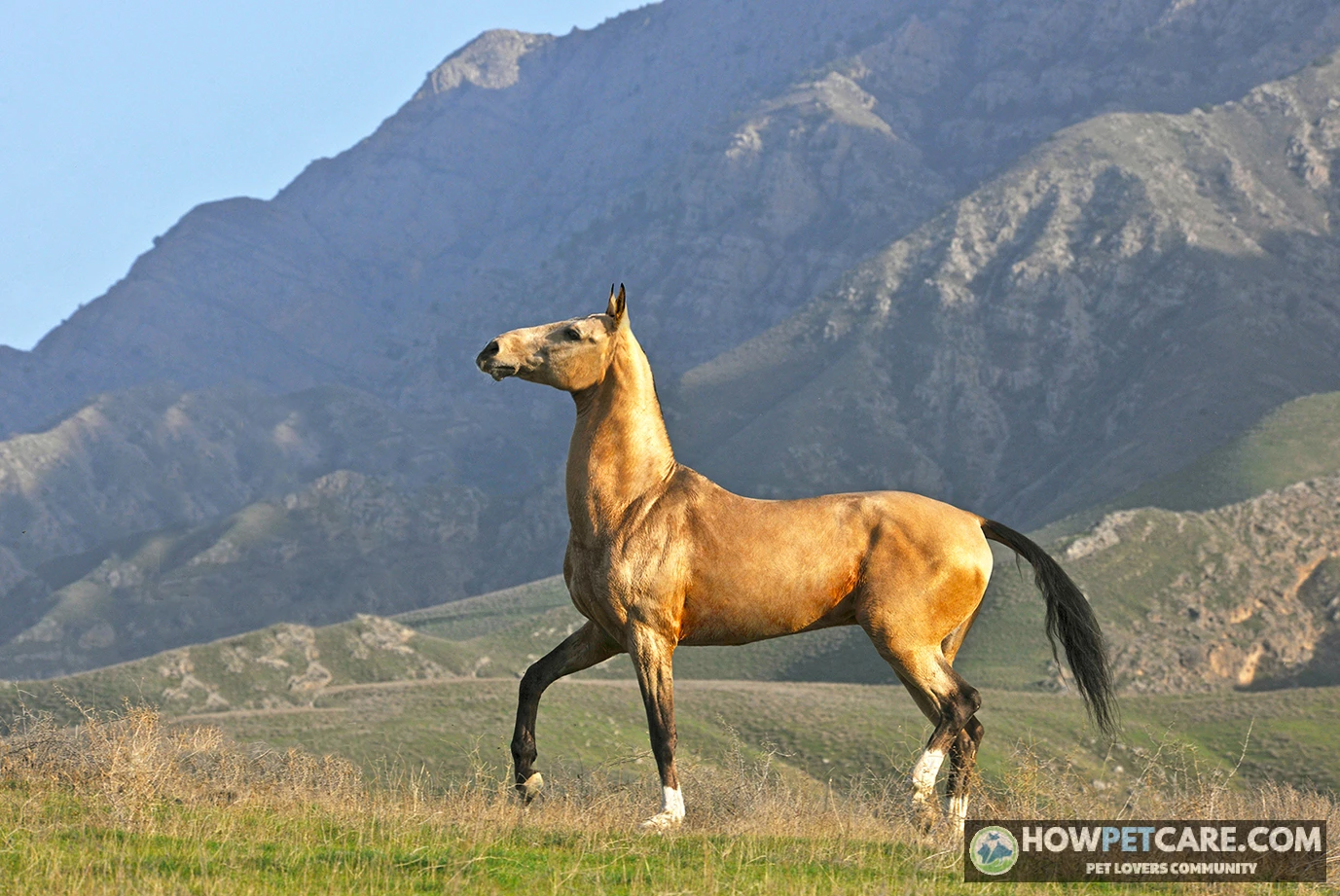

Akhal-Teke horses are a Turkmenistan breed shaped by desert-oasis selection and studbook records, not coat color alone. They are known for lean conformation, metallic sheen, stamina, and cultural importance, but individual quality, registry status, health, and training matter more than breed reputation.
Akhal-Teke Turkmenistan: What the Breed Is and Why It Matters
An Akhal-Teke is a distinct horse breed tied to the Akhal oasis and Turkmen horse culture in present-day Turkmenistan. Its importance goes beyond looks. The breed represents a long tradition of selective breeding for a demanding desert-and-oasis environment, and it remains a powerful national equestrian symbol.
For anyone sorting solid information from romantic claims, the practical rule is simple: coat color tells you what a horse looks like; pedigree records, identification, and parentage evidence tell you what it is. Turkmenistan sits at the center because the breed’s name, breeding culture, state institutions, and cultural traditions are rooted there, even though Akhal-Tekes are now bred internationally.
Akhal-Teke, Akhal horse, and Turkmen horse: the names explained
The name combines Akhal, the oasis region near the Kopet Dag foothills, with Teke, a Turkmen tribal group closely tied to the horses’ development. "Turkmen horse" is a broader cultural description and gets used loosely in travel writing; it shouldn’t automatically count as proof that every horse called a Turkmen horse is a registered Akhal-Teke.
The modern breed is defined through breeding records, accepted parentage, and studbook practice rather than appearance alone. A refined head, dry limbs, and a metallic coat may fit the type, but none replaces documentation.
Why Turkmenistan is the breed’s historical center
Turkmenistan preserves the breed as a cultural emblem through horse competitions, state breeding activity, and public celebrations. Turkmen Horse Day is held annually on the final Sunday of April and includes beauty and speed competitions. The art of breeding Akhal-Teke horses and related horse-decoration traditions is included on UNESCO’s Representative List of the Intangible Cultural Heritage of Humanity.

That national importance can make breed stories sound more settled than the surviving evidence allows. Traditional accounts connect the Akhal-Teke with ancient Central Asian horses, including Nisaean, Massagetae, Bactrian, and Alan traditions, but a direct, unbroken descent from each named ancient population is a historical claim rather than something a modern pedigree can prove.
Akhal-Teke Horse Breed Origin: From the Akhal Oasis to Modern Studbooks
What is documented about the breed’s age and ancestry?
The Akhal-Teke horse breed origin in Turkmenistan is best understood as a long regional process, not a single founding date. Sources commonly describe a history of more than 3,000 years. That figure conveys the antiquity of horse culture in the region, but it shouldn’t be read as proof that a genetically unchanged modern breed existed in precisely its present form for all that time.
The Akhal oasis environment rewarded horses that could travel efficiently with limited resources, tolerate dry heat, and work closely with people. Turkmen breeding traditions placed value on stamina, speed, soundness, and a horse’s bond with its handler. Those pressures help explain the lean, efficient type associated with the breed today.

From tribal breeding to modern registration
Informal selection within tribal horse culture gradually gave way to more formal recording under Russian imperial and Soviet systems. Modern registries, breed associations, stallion and mare records, and DNA parentage work now shape what can be documented as an Akhal-Teke.
This transition matters because older narratives and modern studbooks answer different questions. A cultural story may establish historical significance; a registry entry can establish a recorded pedigree. Researchers should keep those categories separate, especially when evaluating claims about a horse’s purity, national origin, or famous ancestry.
A claim that an Akhal-Teke is ancient, golden, or from Turkmenistan is not equivalent to documented parentage. Ask which registry recorded the horse, when the record was issued, and whether the horse’s identification matches its papers.
Why the Akhal-Teke Is Called Turkmenistan’s Golden Horse
Metallic coat, golden palomino, and other recognized colors
The phrase "golden horse Turkmenistan" refers to the sheen seen on many Akhal-Tekes, especially horses in golden palomino, buckskin, and chestnut shades. The effect is generally described as optical: light reflects through or across the fine hair structure, producing a metallic appearance. The breed is known for a thin, fine coat that can show a gold or silver sheen.
A golden palomino may be the image most often used in tourism and breed publicity, but Akhal-Tekes also occur in bay, black, gray, chestnut, buckskin, cream, and other dilute-related colors. Lighting, grooming, season, and the individual coat can alter how dramatic the sheen appears in a photograph.

Misconceptions about the golden Akhal-Teke horse
Myth: A golden coat proves an Akhal-Teke is rare, purebred, Turkmen, or more valuable.
Fact: Metallic sheen is a visual effect, not a pedigree test. A golden coat alone cannot establish breed identity, purity, or origin. Registration, parentage, identification, and DNA documentation carry more weight than color.
The same caution applies to social-media images. A striking metallic coat can be genuine and still reveal little about a horse’s age, soundness, training, registry status, or location. Treat photographs as descriptive evidence, not conclusive evidence.
Akhal-Teke Characteristics: Conformation, Temperament, Movement and Endurance
How Akhal-Tekes behave with riders and handlers
Typical Akhal-Teke characteristics include a refined head, long neck, sloping shoulder, lean athletic frame, long limbs, and a deep but often comparatively narrow body. Many have hard-looking feet and a light, dry overall appearance. Individual conformation varies substantially, so saddle fit, hoof balance, and veterinary assessment should always focus on the horse in front of you.
Temperament is often described as alert, intelligent, sensitive, and strongly attached to a familiar person. That can make a well-trained Akhal-Teke highly responsive, but it can also make inconsistent handling counterproductive. They’re often a better match for patient, capable riders than for beginners who need a forgiving schoolmaster.
The breed is associated with efficient, ground-covering movement and an economical gallop. It appears in endurance riding, dressage, eventing, racing, and exhibition, but breed reputation is never a guarantee of success. Soundness, conditioning, training, rider skill, and the horse’s own mind determine whether it can do a job well.

Desert origin may support heat tolerance in a conditioned horse, but it doesn’t remove ordinary care needs. Shade, clean water, forage, balanced nutrition, hoof care, gradual conditioning, and preventive veterinary oversight remain essential in Turkmenistan and elsewhere.
The 1935 Ashgabat-to-Moscow journey and what it demonstrated
The celebrated 1935 ride from Ashgabat to Moscow is central to the breed’s endurance reputation. Accounts state that a group of purebred Akhal-Tekes completed a 2,700-mile journey to Moscow’s Red Square in 84 days. They’re also said to have crossed more than 300 kilometers of the Karakum Desert without stopping at an oasis.
The journey demonstrates that carefully prepared horses and riders completed an exceptional endurance feat; it doesn’t prove that every modern Akhal-Teke can repeat it. Route conditions, pacing, weather, rider management, support, and the individual horses all matter when interpreting the story.
Akhal-Teke vs Arabian vs Thoroughbred: A Useful Breed Comparison
Arabians, Akhal-Tekes, and Thoroughbreds overlap in athletic ability but were shaped toward different emphases. Arabians are internationally associated with endurance; Thoroughbreds are specialized for speed and racing influence; Akhal-Tekes combine a desert-horse history with versatile modern sport use. No breed label can replace an assessment of the individual horse’s training and health.
Traits and performance at a glance
| Trait | Akhal-Teke | Arabian | Thoroughbred | Management note |
|---|---|---|---|---|
| Typical build | Lean, long-legged, refined head, deep but often narrow body | Compact, short-backed, high tail carriage | Tall, long-limbed, athletic | Fit tack and saddle to the individual, not the breed label |
| Movement | Efficient, ground-covering, often elastic at speed | Light, floating, economical | Long stride, powerful gallop | Video and veterinary gait review beat reputation |
| Endurance | Strong heat tolerance and stamina in conditioned horses | Renowned endurance capacity | Speed-focused, needs careful conditioning | Build base fitness gradually |
| Temperament | Alert, sensitive, often strongly bonded | Reactive but often people-oriented | High-strung in some lines | Handler skill and training history matter more than breed |
| Common uses | Endurance, dressage, eventing, racing, exhibition | Endurance, showing, riding | Racing, sport-horse breeding | Match discipline to training records and soundness |
| Care considerations | Heat adaptation helps, but shade, water, hoof care, and nutrition still matter | Generally hardy; assess individual metabolic needs | Injury and stress management are important | Request veterinary records and conditioning history |

Choosing by purpose rather than prestige
Choose by intended work, temperament, physical suitability, and documented history. An endurance prospect needs sound limbs, appropriate conditioning, recovery capacity, and a realistic program. A dressage or eventing prospect needs trainability, balance, movement quality, and a record appropriate to its level. A famous pedigree may be meaningful context, but it’s not a veterinary report.
How Many Akhal-Teke Horses Exist? Population, Breeding and Verification
Published totals vary because sources may count living horses, registered horses, breeding stock, horses in a particular registry, or informal estimates. A commonly repeated estimate places the worldwide population between 3,000 and 6,000 horses. It’s not a definitive current census unless the source identifies its date, geographic coverage, and counting method.
Turkmenistan remains the historic center, while Russia, Europe, North America, and other regions also maintain breeding programs. Russia is described as holding the world’s second-largest population of purebred Akhal-Tekes. Exact current numbers in Turkmenistan versus abroad remain a documented information gap.

A reconciled way to read population estimates
| Claim type | What it may count | Why figures differ | How to verify it |
|---|---|---|---|
| Worldwide total | Living horses, registered horses, or database entries | Definitions vary by registry and country | Ask for date, source, and counting method |
| Turkmenistan count | State-stud horses, private horses, or estimates | Record access and rural holdings may be incomplete | Seek official or registry-backed documentation |
| Registered population | Horses with accepted pedigree records | Registries use different rules and recognition dates | Check the registry and studbook edition |
| Breeding-stock count | Mares and stallions used for breeding | May exclude young stock or geldings | Ask how breeding status was defined |
| Marketing claim | A seller’s selected subset | May omit duplicates, imports, or unregistered animals | Compare with independent registry and veterinary records |
Pedigree, DNA, and documentation checks before relying on a claim
DNA can help confirm that a submitted sample matches recorded parents. It can’t independently prove a horse’s current location, quality, cultural importance, or every claim made about its ancestry. Historical concerns about Thoroughbred crossbreeding in Turkmen herds have made evidence and recordkeeping especially important in public discussions of the breed.
| Record or check | What it should show | Red flags | Who should verify it |
|---|---|---|---|
| Registry entry | Registry name, registration number, date, recorded transfer | No number or an unverifiable registry | Relevant registry or breed association |
| Sire and dam records | Full parentage, not only famous ancestor names | Missing parents or inconsistent dates | Registry and independent researcher |
| DNA parentage test | Recognized laboratory result tied to the horse | Unlabeled result or unclear sample chain | Laboratory and registry |
| Identification link | Microchip, brand, markings, or photos matching papers | Paperwork does not match the horse | Veterinarian and registry |
| Health records | Vaccination, dental, hoof, parasite, and injury history | Gaps or refusal to share records | Independent equine veterinarian |
| Import or export records | Required permits, quarantine, and transport status | Assumptions made before requirements are confirmed | Official authorities and qualified professionals |

- Confirm registry entry and transfer history.
- Request full sire and dam documentation.
- Match DNA parentage, microchip, markings, and photographs.
- Review complete health records.
- Do not rely on a claimed Turkmen origin without records.
- Use an independent veterinarian and the relevant registry where possible.
Health, Climate Adaptation and Responsible Akhal-Teke Care
Questions for a breeder and equine veterinarian
Responsible Akhal-Teke care looks like responsible care for any high-performance horse: forage-based nutrition, reliable hydration, dental care, parasite control, routine hoof management, preventive veterinary visits, and conditioning that increases gradually. Ask for the individual horse’s medical history, injury history, vaccination status, hoof records, current workload, and feeding routine.
Discuss breed-related or familial risks with an equine veterinarian and the relevant breed organization rather than assuming that every Akhal-Teke shares the same health profile. A pre-purchase examination, where relevant, should be independent and matched to the intended discipline. This is health planning, not a diagnosis.
Moving an Akhal-Teke outside Turkmenistan
A horse adapted to dry heat can still struggle with humid summers, cold wet winters, abrupt dietary changes, transport stress, or inadequate shelter. Acclimation should be gradual. Monitor hydration, body condition, skin and coat condition, feet, respiratory comfort, and behavior as management changes.

Avoid the myth that a desert horse needs little care. Heat tolerance is an adaptation, not immunity from dehydration, colic, hoof problems, parasites, injury, or poor nutrition.
Seeing or Buying an Akhal-Teke in Turkmenistan: Access and Next Steps
Planning a responsible stud-farm visit
Seeing Akhal-Tekes in Turkmenistan can be a valuable research or cultural experience, but a stud-farm visit shouldn’t be treated as a walk-in tourist activity. Access may require advance permission, a confirmed itinerary, local coordination, and compliance with farm, photography, transport, or security rules. Visa rules, regional access, and farm availability can change, so verify current requirements through official sources and reputable local contacts before making nonrefundable plans.
Do not assume that a state farm, private breeding facility, or event will admit visitors simply because it is named in travel content. Confirm permission, timing, photography rules, and animal-handling expectations before travel.
Researching price, purchase, and international export realistically
An Akhal-Teke horse price in the United States varies too widely by age, training, pedigree, health, and location to infer from a coat color or a headline claim. For an Akhal-Teke horse for sale in the USA, begin with records and independent review rather than a deposit. International export depends on current ownership documents, Turkmen and destination-country rules, permits, veterinary certification, quarantine, and qualified transport arrangements. Requirements must be confirmed before any transaction.
Akhal-Teke research and ownership checklist
-
Define the goal
Decide whether you are researching history, planning a visit, evaluating a horse, or studying breeding records.
-
Check the evidence
Request registry information, parentage records, identification details, and health history before relying on a claim.
-
Use independent expertise
Arrange qualified veterinary review and, where possible, registry confirmation.
-
Confirm logistics
For travel or international movement, verify permissions, visas, transport, permits, quarantine, and farm access through current official channels.
-
Document uncertainty
Keep a written list of claims that remain unverified, including population figures, pedigree gaps, availability, and price statements.
For a Turkmenistan visit, add farm permission, itinerary approval, photography rules, local contact details, weather planning, and biosecurity expectations to that checklist. For ownership research, don’t let a metallic coat, a famous ancestor name, or a rare-breed story outweigh sound documentation and an independent clinical assessment.

| Horse Breed | Typical Build | Movement Style | Endurance & Stamina | Temperament | Common Uses | Care Considerations |
|---|---|---|---|---|---|---|
| Akhal-Teke | Lean, long-legged, refined head, deep but often narrow body | Efficient, ground-covering, often elastic at speed | Strong heat tolerance and stamina in conditioned horses | Alert, sensitive, often strongly bonded | Endurance, dressage, eventing, racing, exhibition | Heat adaptation helps, but shade, water, hoof care, and nutrition still matter |
| Arabian | Compact, short-backed, high tail carriage | Light, floating, economical | Renowned endurance capacity | Reactive, but often people-oriented | Endurance, showing, riding | Generally hardy; assess individual metabolic needs |
| Thoroughbred | Tall, long-limbed, athletic | Long stride, powerful gallop | Speed-focused, needs careful conditioning | High-strung in some lines | Racing, sport-horse breeding | Injury and stress management are important |
FAQ
Why is the Akhal-Teke associated with gold even though not every horse has a golden coat?
Some Akhal-Tekes have a striking metallic sheen, especially golden palomino, buckskin, and chestnut individuals. However, the breed includes many other colors, and coat color alone cannot establish pedigree or Turkmen origin.
Did Akhal-Teke horses really travel from Ashgabat to Moscow in 1935?
Yes, a group of Turkmen horses completed the celebrated Ashgabat-to-Moscow journey in 1935. The feat is used as evidence of their endurance, but it should be understood in the context of the riders, route, preparation, weather, and support conditions.
Are Akhal-Teke horses suitable for beginner riders?
Often they are better matched with experienced, patient riders because many are intelligent, sensitive, and highly responsive. Suitability depends on the individual horse’s training, temperament, age, and the quality of the rider’s support.
Can an Akhal-Teke horse be exported from Turkmenistan?
Export depends on current Turkmen regulations, ownership documentation, permits, veterinary certification, quarantine, and the destination country’s import rules. Requirements and practical access can change, so buyers should confirm them with official authorities and qualified equine transport specialists.
Is an Akhal-Teke always a good endurance horse?
The breed has a strong historical reputation for stamina and efficient movement, but individual endurance depends on soundness, conditioning, conformation, training, nutrition, and veterinary care. Breed reputation is not a substitute for evaluating the specific horse.