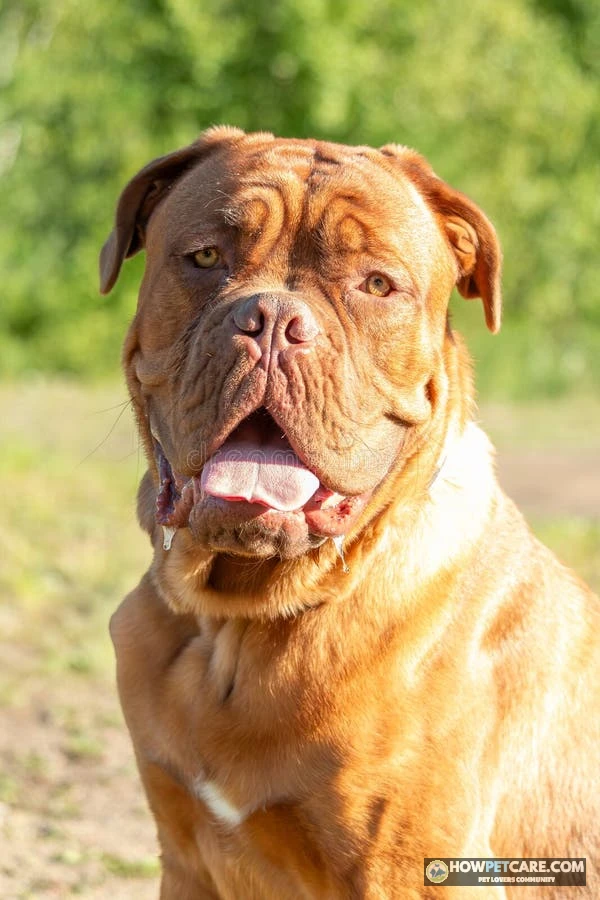

A Dogue Mastiff is the Dogue de Bordeaux, also called the French Mastiff or Bordeaux Mastiff. This powerful French guardian requires early socialization, daily wrinkle and drool care, reliable cooling, careful growth-stage feeding, verified parental health screening, and substantial financial preparation for giant-breed veterinary emergencies.
The term "Dogue Mastiff" is an informal search label for the Dogue de Bordeaux (pronounced "Dohg duh Bor-DOH"), widely known across the English-speaking world as the French Mastiff or Bordeaux Mastiff. These names refer to the same breed. If you are searching for a "Dogue Mastiff," you are looking at one of France’s oldest indigenous working breeds: a powerful, stocky guardian famous for having one of the largest head-to-body ratios in the canine kingdom. Pop culture introduced this distinctive molosser to millions alongside Tom Hanks in the 1989 comedy Turner & Hooch, but living with one requires far more than appreciating its cinematic charm.
Owning a Dogue de Bordeaux is a massive physical, logistical, and financial undertaking. Rapid growth, heavy drooling, severe heat sensitivity, and inherited risks like bloat (gastric dilatation-volvulus) and heart disease demand clear-eyed preparation. This guide covers physical standards, temperament, day-to-day maintenance, lifetime ownership costs, and health screening verification protocols to help you decide whether this French guardian fits your home.
What Is a Dogue Mastiff? Demystifying the Dogue de Bordeaux
People searching for "Dogue Mastiff" usually run into an overlap of breed history, casual naming habits, and commercial marketing labels. The word dogue is simply French for a large, heavy mastiff-type dog. Bred in southwestern France as an ancient molosser to guard estates, drive cattle, pull carts, and hunt large game, the Dogue de Bordeaux earned official recognition by the American Kennel Club (AKC) in the Working Group in 2008.

Breed Nomenclature: Dogue de Bordeaux vs. French Mastiff vs. Crosses
Because dogue is unfamiliar to many English speakers, the breed picked up the common label "French Mastiff." Both names refer to the same purebred dog. Searching for "Dogue Mastiff," however, can expose buyers to unregulated designer hybrids. Some sellers label crosses—such as English Mastiff mixes ("Daniffs" or "Bandogs")—as mastiff variants without providing the pedigree health testing expected for a purebred Dogue de Bordeaux.
| Common Name / Label | Formal Breed Designation | Kennel Club Recognition | Key Distinguishing Traits |
|---|---|---|---|
| Dogue Mastiff | Dogue de Bordeaux | AKC (Working Group since 2008), FCI (Group 2) | Informal shorthand. Stocky, low-slung, uniform fawn/mahogany coat with red or black mask. |
| French Mastiff | Dogue de Bordeaux | AKC, UKC, FCI | Most common lay name. Massive head circumference-to-height ratio; brachycephalic muzzle. |
| English Mastiff | Mastiff | AKC (Working Group), FCI | Significantly taller (27.5–30+ inches) and heavier (120–230 lbs); black mask always required; longer, rectangular profile. |
| Bullmastiff | Bullmastiff | AKC (Working Group), FCI | 60% Mastiff / 40% Bulldog heritage. Squarer head, more athletic/compact build, distinctly shorter back than a Dogue. |
| ‘Designer’ Mastiff Crosses | Non-standard hybrid (e.g., ‘Bandog’, ‘Daniff’) | None (Unrecognized mixed breed) | Unpredictable growth curves, variable facial structure, and no consistent pedigree health-clearance standard or predictable genetic baseline. |
When evaluating breeders, look for litters registered under the official breed name Dogue de Bordeaux through recognized registries such as the American Kennel Club (AKC) or the Fédération Cynologique Internationale (FCI). Do not treat a colloquial alias like "French Dogue Mastiff" as proof of breed identity, registration, or health testing.
Physical Standard Overview: Weight, Height, and Brachycephalic Build
The Dogue de Bordeaux is a low-slung, heavily muscled brachycephalic dog whose outline is defined by broad bone density, a deep chest, and an imposing head covered in symmetrical wrinkles. Unlike the towering English Mastiff, the French Mastiff carries its weight close to the ground, giving it an anchor-like center of gravity.

| Attribute | Male Standard | Female Standard | Practical Management Impact |
|---|---|---|---|
| Height at Withers | 23.5–27 inches (60–68 cm) | 23–26 inches (58–66 cm) | Lower center of gravity than other mastiffs, requiring stable handler bracing during sudden stops. |
| Weight | 118–143+ lbs (54–65+ kg) | 99–119+ lbs (45–54+ kg) | Requires team lifting or support harnesses in medical emergencies; prescription dosages scale to adult human sizes. |
| Head Circumference | Roughly equals height at withers | Slightly less than height at withers | Massive jaw muscles require careful handling; narrow pelvises in dams frequently require cesarean deliveries. |
| Muzzle & Skull | Short, broad, pug-nosed (brachycephalic) | Short, broad, slightly softer wrinkling | Impaired cooling efficiency, chronic snoring, and intense drooling. |
| Coat & Color | Short, soft fawn to mahogany; red or black mask | Short, soft fawn to mahogany; red or black mask | Minimal brushing required, but folds trap moisture, dirt, and yeast. |
| Budget Category | First-Year Expense Range | Recurring Annual Range | Notes & Weight-Scaled Factors |
|---|---|---|---|
| Total Estimated Outlay | $6,550 – $12,450 | $3,700 – $6,900 | Excludes emergency surgical interventions (e.g., GDV repair or TPLO surgery: 4,000–8,000). |
| Purchase / Adoption | $2,000 – $4,500 | $0 | Purebred puppy from OFA-cleared parents vs. breed-specific rescue (400–600). |
| Commercial Diet | $1,200 – $1,800 | $1,500 – $2,400 | Calculated at 45–60 lbs high-protein, giant-formula kibble monthly (~90–140/bag). |
| Giant-Breed Pet Insurance | $1,200 – $2,400 | $1,400 – $3,000 | High-risk category; rates reflect potential claims for bloat, cancer, and torn cruciates. |
| Prophylactic Gastropexy | $800 – $1,500 | $0 | Surgical stomach-tack to reduce the risk of fatal torsion (GDV), typically combined with spay/neuter. |
| Giant-Breed Gear | $550 – $900 | $100 – $250 | 48"–54" wire crate (180–250), dense memory foam orthopedic bed (150–300), heavy-gauge 1.5" hardware. |
| Routine Vet Care & Vaccines | $450 – $800 | $300 – $600 | Baseline wellness exams, rabies, core distemper, and annual cardiac auscultation. |
| Preventative Medications | $350 – $550 | $400 – $650 | Heartworm, flea, and tick preventatives dosed for dogs over 100+ lbs carry a 40–60% premium over medium-breed dosing. |
Dogue Mastiff Temperament, Household Dynamics, and Daily Reality
Popular media often portrays mastiffs as either lazy, oversized couch potatoes or aggressive guard dogs. The reality falls squarely in the middle. The Dogue de Bordeaux is devoted, sensitive to household routines, and calm indoors when given modest daily activity. Beneath that quiet exterior, however, lies an ancient guardian instinct with high situational awareness.

Guardian Instincts, Stranger Tolerance, and Socialization Needs
A French Mastiff does not need guard training; territorial protection and family defense are instinctual. As a puppy moves from adolescence into social maturity between 18 and 30 months, those protective instincts sharpen. An inadequately socialized Dogue may view delivery workers, tradespeople, or houseguests as threats.
Thorough early socialization is mandatory. Between 8 and 16 weeks of age, expose puppies to varied surfaces, sounds, sights, and neutral strangers in controlled settings. Socialization does not mean forcing your dog to greet every person it sees. The goal is confident neutrality: teaching your Dogue to observe unfamiliar people, dogs, and environments without fear or arousal.
Managing Children and Multi-Pet Households Safely
Dogues de Bordeaux can be gentle and patient with their immediate human family, but temperament varies, and their sheer physical mass presents risks around toddlers and young children. A friendly lean, a heavy tail wag, or a clumsy step can knock a toddler flat. Visiting children can also trigger defensive reactions if rough play or wrestling gets misinterpreted as an attack on the family’s child.
Never leave a 120-pound mastiff unsupervised with young children or strange visiting children. In multi-pet homes, manage same-sex dog dynamics carefully; Dogues of the same sex (particularly intact males) can show significant dog-directed aggression upon reaching social maturity. Small prey animals, including cats, require slow introductions and careful management.
A multi-pet home is suitable only when residents can separate animals with secure doors or gates, supervise introductions, feed pets apart, and prevent competition over toys or resting spaces. Existing harmony does not eliminate the need for management as a Dogue reaches social maturity.

The Slobber Factor: Daily Wrinkle Care and Drool Management
If you need a spotless home, do not get a Dogue Mastiff. The breed’s heavy, pendulous flews channel saliva continuously. Drool pools during naps and splatters across walls, ceilings, and furniture when the dog shakes its head. Salivation spikes after drinking, during meals, after exercise, and in warm weather.
Facial hygiene is an unavoidable daily chore. Deep skin folds around the muzzle, nose, and eyes collect saliva, shed skin cells, food particles, and moisture. Left unattended, these warm crevices can develop facial fold pyoderma, yeast dermatitis, and painful bacterial infections.

- Daily Wipe Downs: Clean facial wrinkles daily using unscented, chlorhexidine-based veterinary wipes or a damp microfiber cloth.
- Drying Folds: Thoroughly dry each crease with a clean towel; leaving moisture trapped inside deep wrinkles accelerates fungal growth.
- Coat Grooming: While their short coat sheds moderately year-round, weekly brushing with a rubber curry comb removes loose hair and stimulates skin health.
Critical Health Vulnerabilities, GDV Bloat, and Lifespan Realities
The hardest part of living with a Dogue de Bordeaux is its brief lifespan. Epidemiological veterinary data indicates that the breed’s median life expectancy is roughly 5 to 8 years, with an average of around 6 years. Prospective owners must prepare for both the emotional and financial realities of raising a giant, short-lived dog.
Acute Emergency: Recognizing and Responding to GDV (Bloat)
Gastric Dilatation-Volvulus (GDV), commonly known as bloat, is the most urgent medical emergency facing deep-chested giant breeds like the French Mastiff. During GDV, the stomach fills with gas and fluid (dilatation) and twists on its axis (volvulus), cutting off blood supply to the stomach, spleen, and heart. Without emergency surgical intervention, death can occur within hours.

Clinical Warning Signs of GDV:
- Non-productive retching (trying to vomit repeatedly with nothing coming up except white foam)
- Restless pacing, inability to get comfortable, whining, and looking back at the flank
- Rapidly distending, tight, drum-like abdomen
- Excessive drooling, pale gums, and rapid, shallow breathing
Immediate Protocol: If your Dogue shows these symptoms, transport the dog to the nearest 24-hour veterinary emergency hospital immediately. Do not administer home remedies, antacids, or wait for morning appointments. Minutes dictate survival. By contrast, isolated flatulence, a single loose stool, or mild stomach noise without retching, abdominal distension, distress, or collapse is not the same presentation, though persistent or worsening gastrointestinal symptoms still warrant veterinary advice.
Discuss prophylactic gastropexy—a surgical procedure where the stomach wall is permanently tacked to the abdominal wall—with your veterinarian. Vets may perform this during a routine spay or neuter. While gastropexy does not keep the stomach from expanding with gas, it reduces the risk of fatal twisting.
Cardiac Conditions and Orthopedic Risks in Giant Breeds
The breed carries inherited risk of structural heart disease, particularly Dilated Cardiomyopathy (DCM) and Subaortic Stenosis (SAS). Subaortic stenosis involves a ring of fibrous tissue below the aortic valve that impedes blood flow from the left ventricle. This defect can cause heart muscle thickening, exercise intolerance, fainting spells, and sudden cardiac death. Dilated cardiomyopathy stretches and weakens the heart walls, reducing pumping efficiency and leading to congestive heart failure.
Orthopedically, rapid bone growth paired with heavy adult weight makes the breed prone to several issues:

- Hip and Elbow Dysplasia: Joint malformations that trigger early-onset arthritis, chronic pain, and mobility loss.
- Cruciate Ligament Ruptures: Tearing of the cranial cruciate ligament (CCL) in the knee, potentially requiring expensive surgical stabilization (such as TPLO surgery).
- Idiopathic Epilepsy: A neurological disorder causing recurring seizures, typically showing onset between 6 months and 3 years of age.
Heat Sensitivity and Brachycephalic Airway Precautions
A shortened, brachycephalic skull compresses the Dogue de Bordeaux’s entire upper airway. Dogs do not sweat through their skin; they shed heat through evaporative panting. An elongated soft palate, narrowed nostrils (stenotic nares), and reduced nasal surface area make panting inefficient for a French Mastiff.
When ambient temperatures pass 75°F (24°C) or humidity climbs, a Dogue may suffer heat exhaustion and fatal heat stroke within 15 minutes of moderate physical exertion. Restrict warm-weather exercise to early mornings and late evenings, provide fresh water at all times, and keep the dog indoors with air conditioning throughout summer.

How to Vet a Responsible Breeder and Verify Health Screenings
Given the severe inherited health risks in this breed, finding a responsible preservation breeder is essential. Steer clear of commercial puppy brokers, pet stores, and classified sites selling litters without verifiable health testing.
Decoding Health Testing: Echocardiograms vs. General Auscultations
Sellers may market puppies from "vet-checked parents," but a standard stethoscope checkup (auscultation) is not enough for breeding stock. Auscultation alone may miss mild or moderate aortic stenosis murmurs and cannot detect subclinical dilated cardiomyopathy.
To screen breeding dogs for hereditary cardiac defects, the sire and dam should undergo an echocardiogram (cardiac ultrasound) performed by a board-certified veterinary cardiologist (DACVIM-Cardiology). X-rays of hips and elbows should also be taken and submitted to independent panels for formal scoring.

| Condition | Minimum Screening Standard | Gold Standard Diagnostic | Database Verification Method |
|---|---|---|---|
| Subaortic Stenosis & DCM | General vet auscultation (Insufficient) | Doppler Echocardiogram by Board-Certified Cardiologist | OFA Advanced Cardiac Database listing "Cardiologist" |
| Hip Dysplasia | Basic pelvis X-ray reviewed by local vet | Sedated pelvic radiographs scored by OFA or PennHIP | OFA Registry: Graded "Excellent," "Good," or "Fair" |
| Elbow Dysplasia | Basic leg X-ray | Official flexed-view radiographs | OFA Registry: Graded "Normal" (Negative for dysplasia) |
| Ichthyosis (DDB Type) | Visual skin inspection | Genetic DNA cheek swab/blood test | DNA panel result: "Clear" or "Carrier" (Never breed carrier-to-carrier) |
The Step-by-Step OFA Database Verification Protocol
Never rely on printed health certificates or verbal promises alone. Use the open database maintained by the Orthopedic Foundation for Animals (OFA) to check both parents yourself before putting down a deposit.
-
Step 1: Obtain Official Registered Pedigree Names
Request the full registered names (e.g., "Ch. Bordeaux’s Grand Heritage") and registration numbers (AKC or foreign registry) for both the sire and dam. Decline breeders who provide only pet call names.
-
Step 2: Access the OFA Public Database
Open the official Orthopedic Foundation for Animals website (ofa.org) and enter the registration number or exact registered name of the sire into the search bar. Repeat for the dam.
-
Step 3: Check for CHIC Eligibility
Look for the Canine Health Information Center (CHIC) icon on the dog’s record. A CHIC number confirms that the parent club’s required screenings—hips, elbows, heart, and DNA—were completed and entered into public record; it does not guarantee normal results, so inspect each result individually.
-
Step 4: Audit the Cardiac Evaluation Provider
Under the cardiac heading, verify that the examining veterinarian is recorded as a "Cardiologist." If the entry reads "Practitioner," it documents a practitioner evaluation rather than the specialized echocardiogram you should request.
-
Step 5: Verify Orthopedic Grades and DNA Status
Ensure hip ratings show Fair, Good, or Excellent, and elbows show Normal. Confirm the Ichthyosis DNA status of both parents and verify that at least one is certified Clear, ensuring puppies cannot inherit the dual-mutant alleles that trigger severe scaly skin disease.
Puppy Mill Red Flags and Ethical Rescue Alternatives
Watch for warning signs while researching breeders. Walk away if someone refuses to let you see the mother interact with her pups, demands non-refundable payment through peer-to-peer cash apps, offers instant shipping without screening your home, or charges extra for "rare" non-standard coat colors.
If buying a puppy is out of reach, look into dedicated 501(c)(3) Dogue de Bordeaux and giant-breed rescues. Rescues take in young and adult French Mastiffs whose owners underestimated their size, drooling, or living needs. Reputable rescue groups assess each dog’s temperament and match them to suitable homes.

Caloric Fueling and Growth Stages: Feeding Beyond Cup Measurements
Giant breeds need precise nutrition. Overfeeding a growing Dogue de Bordeaux carries real danger: rapid weight gain stresses immature growth plates and soft cartilage, contributing to developmental joint problems like osteochondritis dissecans (OCD) and hip dysplasia.
Slow Growth Strategy: Protecting Puppy Joints from Excess Weight
Feed a Dogue puppy a diet formulated for giant-breed growth rather than choosing food by cup volume alone. French Mastiffs need a specialized giant-breed puppy formula with a tight calcium-to-phosphorus ratio (typically 1.1:1 to 1.3:1) and moderate energy density (under 370–400 kcal per cup).

Do not try to rush growth. Aim for slow, lean development through the first 18 months. A slightly lean Dogue puppy still reaches its full genetic size, but without adding avoidable stress to developing joints. Avoid supplementing with extra calcium, cottage cheese, or growth boosters unless directed by a veterinarian; doing so can skew mineral ratios and contribute to skeletal deformities.
Use the food’s caloric density and growth-stage feeding guidance to establish a starting ration, divide it into appropriate meals, and reassess as body weight and condition change. Adults should transition to an appropriate maintenance formula, while seniors or less active dogs may need fewer calories. A veterinarian can calculate an individualized caloric target when growth, weight, or medical conditions make package guidance unreliable.
Using Body Condition Scoring (BCS) to Adjust Daily Rations
Feeding tables printed on kibble bags are rough starting estimates. They cannot account for your specific dog’s metabolism. Dogues de Bordeaux have relatively slow metabolic rates and modest exercise needs (~30 minutes per day), meaning bag recommendations may cause obesity in some dogs.
Track your dog’s condition using the standard 9-point Body Condition Score (BCS) system:
- Target Score (BCS 4 to 5 out of 9): Ribs should not show through the skin, but you should easily feel them under light pressure. Look for a distinct waistline tuck behind the ribs from above, along with an upward tuck of the belly from the side.
- Overweight (BCS 6 to 7 out of 9): Ribs feel buried under fat. The waistline looks wide or flat from above, and the belly hangs without an upward tuck.
- Action Protocol: If your Dogue reaches a BCS of 6, cut daily food volume by 10% to 15% and consult your vet. Every extra 5 pounds on a giant frame adds stress to hips, knees, and the heart.
Progressive Training Sequence: Cooperative Care and Adolescent Handling
You cannot safely rely on physical strength to control a fully grown 130-pound Dogue de Bordeaux. Trying to force an uncooperative giant onto an exam table or haul it back during an excited greeting creates safety hazards for everyone involved. Training must focus on building cooperative compliance and impulse control early.
Early Cooperative Care: Desensitizing Wrinkles, Paws, and Mouth
Cooperative care training teaches your dog to participate willingly in grooming and medical handling. Start these routines while the puppy still weighs under 45 pounds.

- ☐ Facial Fold & Wrinkle Desensitization: Pair gentle lift and wipe motions on deep muzzle folds with high-value treats twice daily so cleaning dried drool and skin folds does not trigger head-shying or defensive snapping.
- ☐ Voluntary Paw Handling: Handle individual toes and apply gentle nail-clipper or dremel vibrations for 3 seconds per foot; reward calm neutrality to prevent the multi-person vet wrestling match common to adult mastiffs.
- ☐ Oral Access & Muzzle Lift: Lift upper flews, expose molars, and swipe an enzymatic toothpaste finger brush along the gums while rewarding still head positioning.
- ☐ Stationary ‘Paws Up’ Platform Training: Train the pup to place front paws on low elevated benches or vehicle tailgates on verbal cue, laying the movement pattern needed to enter vehicles without full dead-weight lifting.
- ☐ Dead-Stop Loose-Leash Anchor: Teach the puppy that leash tension means immediate halting and eye contact. Never allow an adolescent Dogue to pull toward a greeting; use a front-clip harness to redirect momentum before adult mass develops.
- ☐ Towel Drool Clean Routine: Touch a towel to the lower jaw and lips at every doorway before entry, conditioning the dog to pause and accept lip wiping automatically.
Loose-Leash Mechanics and Visitor Protocol for 100+ Pound Dogs
Adolescent Dogues (roughly 7 to 18 months of age) often test boundaries. If your young French Mastiff discovers that pulling on the leash gets it to a fun smell or another dog, it will repeat that habit with adult muscle behind it.
Use positive reinforcement paired with appropriate walking gear. Fit your dog with a wide, padded front-clip harness or a properly conditioned headcollar to improve leverage without choking the windpipe. Whenever the leash pulls taut, stop immediately. Stand still, wait for the dog to turn back and give you focus, mark the slack leash with a clicker or reward word, and deliver a treat at your hip. Never jerk or crank a giant dog’s neck; hard corrections can injure cervical vertebrae and provoke defensive leash reactivity.
For arrivals, teach a reliable "Place" command. The dog should lie calmly on an orthopedic bed away from the doorway when guests arrive, waiting for a release cue before approaching.
The True Financial Blueprint: First-Year Outlay and Lifetime Maintenance
Giant dogs bring heavy expenses. Because medication doses, food volume, beds, crates, and gear scale directly with body weight, keeping a French Mastiff costs substantially more than maintaining a medium-sized pet. Treat the table as a planning range rather than a quote; location, insurance terms, diet, and medical needs can change the total.

| Budget Category | First-Year Expense Range | Recurring Annual Range | Notes & Weight-Scaled Factors |
|---|---|---|---|
| Purchase / Adoption | $2,000 – $4,500 | $0 | Purebred puppy from OFA-cleared parents vs. breed-specific rescue ($400–$600). |
| Giant-Breed Gear | $550 – $900 | $100 – $250 | 48"–54" wire crate ($180–$250), dense memory foam orthopedic bed ($150–$300), heavy-gauge 1.5" hardware. |
| Commercial Diet | $1,200 – $1,800 | $1,500 – $2,400 | Calculated at 45–60 lbs high-protein, giant-formula kibble monthly (~$90–$140/bag). |
| Preventative Medications | $350 – $550 | $400 – $650 | Heartworm, flea, and tick preventatives dosed for dogs over 100+ lbs carry a 40–60% premium over medium-breed dosing. |
| Prophylactic Gastropexy | $800 – $1,500 | $0 | Surgical stomach-tack to reduce the risk of fatal torsion (GDV), typically combined with spay/neuter. |
| Giant-Breed Pet Insurance | $1,200 – $2,400 | $1,400 – $3,000 | High-risk category; rates reflect potential claims for bloat, cancer, and torn cruciates. |
| Routine Vet Care & Vaccines | $450 – $800 | $300 – $600 | Baseline wellness exams, rabies, core distemper, and annual cardiac auscultation. |
| Total Estimated Outlay | $6,550 – $12,450 | $3,700 – $6,900 | Excludes emergency surgical interventions (e.g., GDV repair or TPLO surgery: $4,000–$8,000). |
The purchase or adoption line is the initial acquisition expense; gear, initial veterinary care, and gastropexy are major first-year startup items. Food, preventive medication, insurance, and routine care are recurring expenses. For monthly cash flow, food alone is estimated at ~$90–$140/bag, while insurance may run between $100 and $250. Keep emergency funding separate from routine spending because the total excludes emergency surgical interventions.
First-Year Setup, Initial Veterinary, and Purchase Expenses
Initial startup costs add up fast. A well-bred Dogue de Bordeaux from parents with certified cardiac, hip, elbow, and DNA clearances may run between $2,000 and $4,500. When you factor in a 48-to-54-inch wire crate, thick orthopedic beds that will not bottom out under 120 pounds, puppy vaccines, microchipping, and a spay or neuter paired with gastropexy, first-year spending can pass $7,000.
Weight-Scaled Maintenance: Food, Prescriptions, and Insurance Rates
Daily medical care scales with size. If your French Mastiff develops an ear infection or needs a round of antibiotics, the dose for a 130-pound animal dwarfs what a 30-pound dog needs, driving up pharmacy bills.
Pet insurance may be worth considering given the risk of bloat, cardiac disease, and joint injuries in this breed. Compare exclusions, waiting periods, reimbursement rules, and giant-breed limits rather than choosing on premium alone. Plan on monthly premiums between $100 and $250. Across an average 6-year lifespan, total financial investment in a Dogue de Bordeaux may fall between $25,000 and $45,000, though individual costs vary substantially.
Household Suitability Assessment: Can Your Home Support a French Mastiff?
Before bringing home a Dogue Mastiff, assess your living space, schedule, and physical capability. The breed’s low energy requirements can make them adaptable companions, but specific environmental demands are non-negotiable. Apartment living can work only with safe access, dependable cooling, and a realistic plan for noise and medical transport. Multi-pet living requires separation options and active supervision. A household must also have enough daily availability for exercise, training, fold care, companionship, and bathroom breaks rather than routinely leaving the dog alone for long stretches.

Apartment and Multi-Level Feasibility Checklist
Can a Dogue de Bordeaux live in an apartment? Yes, provided the building layout and management meet concrete safety criteria:

- Elevator Access or Ground-Floor Living: If you live in a third-floor walk-up with no elevator, you cannot safely keep this breed. If your 130-pound dog tears a cruciate ligament, develops acute hip pain, or bloats, carrying a limp giant dog down steep stairs is impossible for a single handler.
- Reliable Air Conditioning: In high-density apartments with inadequate air circulation or multistory units that trap heat, brachycephalic dogs face elevated heat stroke risks. Reliable, central climate control is mandatory.
- Barking and Guarding Isolation: Dogues have deep, resonant barks. In apartments with thin walls and shared interior hallways, a dog alerted by passing neighbors can disrupt entire floors.
Final Owner Compatibility Scorecard: Are You Ready for a Dogue?
Review this 6-factor assessment to determine if your household is ready for a Dogue de Bordeaux:
- ☐ Factor 1: Stair Architecture & Mobility Redundancy
Your living space has zero steep daily staircases required for bathroom access, or has a functional elevator. Why: Adult Dogues cannot navigate daily flights of stairs when arthritic, injured, or recovering from joint surgery. - ☐ Factor 2: Emergency 120-lb Lift Capacity
You have at least two able-bodied adults or dedicated lifting harnesses (e.g., Help ‘Em Up) capable of hoisting an immobile, limp 110–140 lb dog into a vehicle during a medical crisis. - ☐ Factor 3: Uninterrupted Summer Climate Control
Your home maintains consistent air conditioning under 74°F (23°C) during heat waves. Why: Brachycephalic airways make Dogues rapidly susceptible to fatal heat stroke in humid, non-conditioned spaces. - ☐ Factor 4: Drool & Cosmetic Tolerance
All household members accept chronic wall splatters, drenched baseboards, and daily wiping of furniture and clothes without sequestering or banishing the dog outdoors. - ☐ Factor 5: Physical Handling Leverage
The primary handler possesses the core stability, balance, and leash mechanics to redirect a dog that weighs as much as an adult human without being pulled off their feet. - ☐ Factor 6: $5,000 Emergency Liquidity
You maintain either an active, broad-coverage pet insurance policy with no giant-breed exclusions or an immediate, accessible $5,000 emergency credit line reserved specifically for GDV (bloat) or orthopedic surgery.
If you can meet every item on this scorecard, provide adequate daily companionship, manage resident animals safely, verify parent clearances through the OFA database, and comfortably manage the ongoing financial commitment, the Dogue de Bordeaux can be a devoted guardian and affectionate companion.
FAQ
How do you correctly pronounce Dogue de Bordeaux?
It is pronounced "Dohg duh Bor-DOH." "Dogue" rhymes roughly with "vogue," while "Bordeaux" sounds identical to the famous French wine region.
What dog breed was Hooch in the movie Turner & Hooch?
Hooch was played by a Dogue de Bordeaux named Beasley. The 1989 film introduced this historic French Mastiff breed to many American and international viewers.
Can a French Mastiff live comfortably in an apartment?
Yes, provided the apartment has reliable climate control and ground-floor or dependable elevator access. Owners also need a safe plan for barking, bathroom trips, and transporting an injured dog that may weigh around 120 pounds.
How much does a well-bred Dogue de Bordeaux puppy cost?
A well-bred Dogue de Bordeaux puppy may cost between $2,000 and $4,500. That excludes travel, supplies, food, insurance, initial veterinary care, and procedures such as prophylactic gastropexy.