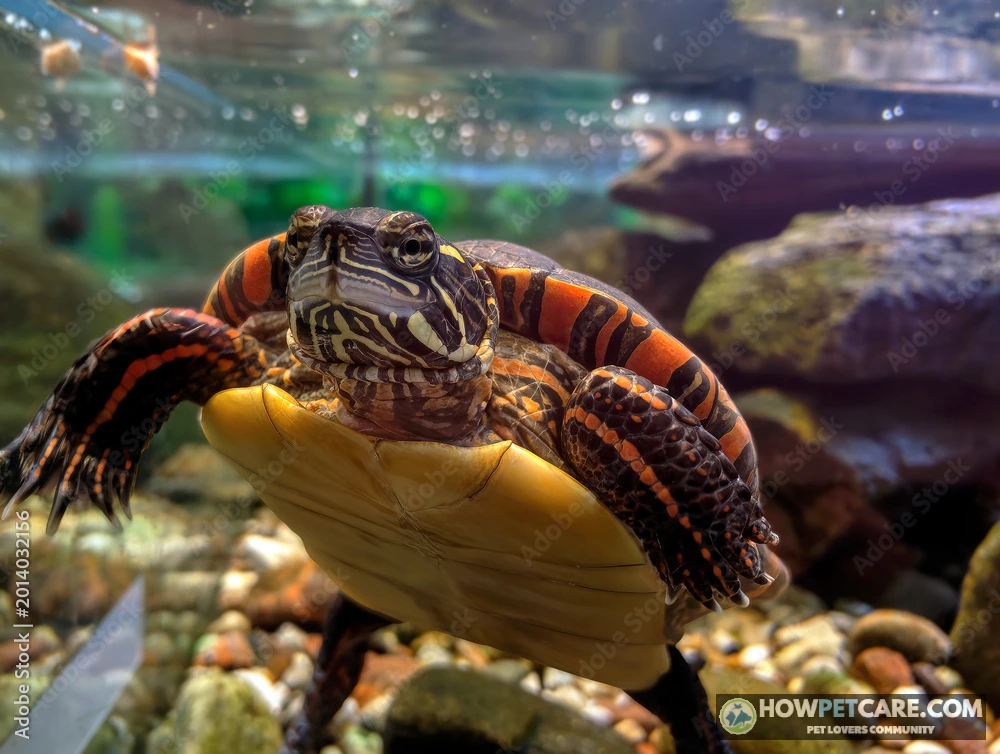

To care for a pet turtle, provide all of the following:
- An enclosure sized for its adult shell length — at least 10 gallons of water per inch for aquatic turtles; a land enclosure for box turtles.
- Clean, conditioned water with filtration rated for 2–3 times the water volume and weekly partial water changes.
- A dry basking area around 85–95°F plus UVB lighting, with bulbs replaced every 6–12 months.
- A species- and age-appropriate diet of pellets, leafy greens, and limited animal-based foods.
- Weekly water testing (ammonia and nitrite at 0 ppm) and access to a reptile veterinarian.
Learning how to care for a pet turtle starts with planning its habitat. A turtle needs an enclosure suited to its species and adult size, clean, conditioned water if aquatic, a dry basking area, measured heat and UVB lighting, a suitable diet, and routine monitoring. Before bringing one home, budget for the habitat and ongoing care, confirm that the species is legal where you live, and find a reptile veterinarian. Many turtles live for decades, so this is a long-term commitment.
This guide covers practical care for common pet turtles in the United States. Aquatic turtles and land-dwelling box turtles need different habitats. Don’t use an aquatic-tank setup for a box turtle.
Set Up the Right Turtle Habitat Before Bringing One Home

Set up and test the enclosure before your turtle arrives. For an aquatic turtle, plan around its expected adult shell length rather than the size of a hatchling. A useful starting rule is at least 10 gallons of water for each inch of adult shell length. This is a minimum planning guide, not a substitute for adequate swimming space, filtration, and a stable basking area.
Pet turtle tank setup: size, water depth, and basking area
| Species | Typical adult shell length | Starting minimum water volume | Water depth and basking area |
|---|---|---|---|
| Red-eared slider | 8–12 in | 75–120 gal | Strong swimmers; 18–24 in of water can work when the turtle can surface and right itself. Provide a fully dry platform at least 1.5 times its shell length. |
| Painted turtle | 5–7 in; western painted turtles can approach 10 in | 40–75 gal | Provide swimming depth appropriate to the individual and a fully dry basking platform at least 1.5 times shell length. |
| Musk or mud turtle | 3–5 in | 20–40 gal | Often use shallower water, around 6–10 in, with easy routes to the surface; provide a dock that dries completely. |
| Box turtle | 4–8 in | No swim tank | Use a land-focused enclosure; a roughly 4 by 2 ft indoor footprint is a starting minimum. Provide a shallow soaking dish, a moist hide, and a warm basking area. |
| Common snapping turtle | 12–20+ in | 150+ gal or pond-style setup | Not a beginner species. Adult size, strength, and specialized housing require substantial planning. |

For aquatic species, aim for water at least 1.5–2 times the shell length in depth, provided the turtle is a capable swimmer and can safely reach the surface. Supply ramps or other secure access to the surface and basking platform. The platform must support the turtle, stay stable, and allow its entire body to dry. Avoid sharp edges and small loose objects the turtle could swallow.
Choose a secure stand designed to support the filled enclosure. Water alone weighs about 8.3 pounds per gallon, before you add the tank, substrate, rocks, and equipment. Keep the enclosure away from drafts and direct sunlight, which can cause temperature swings or overheating.
UVB lighting, heat lamps, and temperature checks
Aquatic turtles need a warm basking area, a heat source, and appropriate UVB exposure. Position a UVB fixture and a separate heat lamp over the basking area, following the bulb maker’s distance and setup instructions. Light shining through glass or plastic won’t provide the intended UVB exposure. The turtle must also be able to leave the heated area and cool down.
As general starting ranges, hatchling water is commonly kept around 75–80°F and adult water around 72–78°F. A basking surface commonly falls around 85–95°F. Species and life stage matter, so check the range for your turtle with a reptile veterinarian or reliable species-specific husbandry guidance. Measure water and basking temperatures rather than estimating by touch. An aquarium thermometer and an infrared temperature gun are useful options.
A UVB bulb can still produce visible light after its useful UVB output has declined. Follow the manufacturer’s replacement interval; many fluorescent UVB bulbs need replacement about every 6–12 months. Record the installation date on the fixture, and don’t assume every bulb type has the same service life.

Choose a Species That Fits Your Space, Budget, and Experience
The species you choose determines whether you’ll need a large aquatic habitat or a land enclosure, how much space to reserve, and what daily care involves. A small hatchling won’t necessarily stay small. Before acquiring a turtle, identify its species and check its adult size, care requirements, and local laws.
Aquatic turtle care versus box turtle care
Red-eared sliders and painted turtles are aquatic: they swim, eat in water, and need a filtered swimming area and a dry basking platform. Sliders can grow to 8–12 inches in shell length, and aquatic turtles may live 15–25 years. Because of a slider’s adult size, a small starter aquarium is a temporary habitat, not a complete long-term plan.
Box turtles live on land, not in water. They need a secure, land-focused enclosure with suitable humidity, hides, substrate, and a shallow soaking dish they can enter and leave easily. A deep aquarium filled with water is not an appropriate habitat for them. The precise setup depends on the species and local climate. True tortoises such as the Russian tortoise also live on land, and caring for a Russian tortoise differs enough from box-turtle husbandry that species-specific guidance is worth following.

Common snapping turtles aren’t suitable beginner pets. They grow large, are strong, and need specialized, sturdy housing. Some species or locations may also have additional legal restrictions. Don’t acquire one based on a hatchling’s small size.
Adult size, lifespan, and legal checks
A turtle can be a decades-long household commitment. Lifespan varies by species and care, so don’t assume it will be a short-term pet. Consider who will provide care if a child loses interest, the family moves, or the turtle outlives its current owner.
In the United States, the FDA generally prohibits selling turtles with shells less than 4 inches long as pets, with limited exceptions. That doesn’t guarantee a turtle is legal to own in every state or locality. Check current federal, state, and local rules before acquiring any turtle, and avoid buying a small turtle from a source that can’t explain its legal status.
Budget the Complete Setup and Ongoing Turtle Care

A properly equipped enclosure costs much more than the turtle itself. The following are illustrative U.S. ranges for a mid-size, roughly 75-gallon aquatic setup. Actual prices vary by region, enclosure size, retailer, and whether equipment is new or used. A larger adult habitat can cost substantially more.
Equipment checklist and upfront costs
| Item or expense | Upfront or recurring | Estimated cost range | Replacement or frequency notes |
|---|---|---|---|
| Tank or stock tank, 75-gallon class | Upfront | $80–$350 | Size for the adult turtle; used tanks and stock tanks may cost less. |
| Secure stand | Upfront | $80–$250 | Must safely support the filled setup. |
| Filter rated for roughly 2–3 times the tank volume | Upfront | $80–$250 | Turtle waste is heavy; size filtration generously. |
| Guarded submersible heater, if needed | Upfront | $25–$60 | A guard helps prevent contact and damage. |
| Basking dock | Upfront | $15–$45 | Choose one that supports the adult turtle and dries fully. |
| Heat fixture and bulb | Upfront | $20–$50 | Replace the bulb when it burns out or no longer meets the required temperature. |
| UVB fixture and bulb | Upfront | $35–$90 | Include recurring bulb replacement in the budget. |
| Water and basking thermometers or infrared temperature gun | Upfront | $10–$40 | Measure both areas. |
| Liquid water test kit | Upfront | $25–$45 | Refill or replace as needed; follow its expiration date. |
| Water conditioner, starter food, and calcium | Upfront | $20–$40 | Replenish based on use. |
| Pellets, greens, and calcium | Monthly | $10–$30 | Food needs depend on species, age, and portion size. |
| Electricity | Monthly | $10–$25 | Varies with room climate, equipment wattage, and usage. |
| Test supplies and water conditioner | Monthly estimate | $5–$15 | Actual use varies with water changes and test-kit format. |
| UVB bulb | Every 6–12 months | $20–$45 | Use the interval specified for the specific bulb. |
| Veterinary savings | Ongoing | $20–$50 per month set aside | Wellness visits and emergencies vary; do not treat this as a guaranteed bill. |
Expect roughly $400–$1,200 in upfront setup costs for this illustrative range. Typical running expenses may be about $25–$70 per month before veterinary care and bulb replacements. These are estimates, not fixed prices. Large tanks, custom enclosures, and unexpected repairs can raise the total, and the listed monthly estimate doesn’t include a serious illness or emergency.
Monthly costs and veterinary planning
Before committing, price the complete adult setup, not just a hatchling tank. Set aside money for routine veterinary care and unexpected illness. Also confirm that a reptile or exotics veterinarian is accessible before bringing the turtle home. A general dog-and-cat clinic may not have the experience needed to assess a turtle.
Keep Turtle Tank Water Clean With Filtration and Measured Water Quality
Turtles produce substantial waste. A filter adequate for a lightly stocked fish tank may not keep a turtle habitat clean. For an aquatic turtle, choose a filter commonly rated for roughly 2–3 times the enclosure’s water volume, then monitor water quality and flow. Filter ratings are a starting point, not a substitute for testing and partial water changes.
Canister filters sit outside the tank and can offer substantial media capacity, but they cost more and require careful setup and maintenance. Hang-on-back filters are easier to access, though some struggle with large waste loads or low water levels. Submersible filters are compact but may have less capacity and can be harder to keep clean in a heavily stocked turtle tank. Match the filter to the tank, water level, turtle size, and maintenance routine instead of choosing by type alone.

Water parameters and testing
Use a liquid aquarium test kit to monitor the water, especially while establishing a new tank or after changing filtration. These are practical targets for many freshwater turtle setups:
| Test | Target | What to do if the reading is off |
|---|---|---|
| Ammonia | 0 ppm | Any detectable amount calls for a prompt partial water change and a check of the filter and uneaten food. |
| Nitrite | 0 ppm | Any reading needs attention; in a new tank it can indicate the biological filter is not established. |
| Nitrate | Under 40 ppm; aim under 20 ppm | Increase the size or frequency of water changes if it climbs. |
| pH | Stable, commonly around 6.5–8.0 | Stability matters; do not chase a number with unneeded chemicals. |
| Chlorine or chloramine | 0 after conditioning | Treat every batch of replacement tap water according to the conditioner label. |
These targets are starting points, not a diagnosis or a claim that one exact pH suits every species. Test weekly once the enclosure is running consistently, and more often during tank cycling, after filter problems, or when readings change. Log the results so you can spot a rising nitrate trend rather than reacting to one reading alone.
Water changes, dechlorination, and filter care
A reasonable starting routine is a weekly 25–50% partial water change, adjusted for test results, tank size, feeding, and waste load. If nitrate rises quickly or ammonia or nitrite becomes detectable, change more water and investigate the cause. Don’t rely on a fixed calendar if tests show the water needs attention sooner.
For each water change, prepare replacement water at a similar temperature and treat it with an aquarium water conditioner that addresses chlorine and chloramine. Follow the product label when dosing for the volume of new water. Refill gradually to avoid startling the turtle or shifting equipment.
When cleaning a filter, rinse mechanical media in water removed from the tank rather than untreated tap water. This helps preserve beneficial bacteria. Avoid replacing every filter medium at once unless the manufacturer’s instructions or a veterinarian directs otherwise. Check flow and remove trapped waste as needed.

Treat replacement water for chlorine and chloramine every time. Never rinse biological filter media under untreated tap water; use removed tank water instead.
Feed by Species and Life Stage, Not by Guesswork
A turtle’s diet depends on its species and age. Many aquatic turtles eat a suitable commercial turtle pellet as a staple, alongside plant foods appropriate to the species and occasional animal-based foods. Red-eared sliders, for example, benefit from a varied diet rather than an all-meat menu. Offer dark leafy greens several times a week and reserve insects or feeder fish for occasional treats; remove uneaten food after about 15 minutes.

Box turtles have different dietary needs, so don’t apply an aquatic turtle’s feeding plan to them. Ask a reptile veterinarian for a diet matched to the identified species, age, and body condition. Avoid improvising with a single food type or using supplements as a substitute for a balanced diet.
Hatchling versus adult feeding
| Life stage | General diet balance | Starting feeding frequency | Temperature and tank-size planning |
|---|---|---|---|
| Hatchling or growing juvenile | More protein-inclusive foods may be appropriate, with species-suitable greens introduced as part of a varied diet | Small meals daily are a practical starting framework | Water commonly around 75–80°F; size the enclosure for adult growth rather than the current shell. |
| Adult aquatic turtle | More plant matter and fewer protein-heavy meals are often appropriate, depending on species | Every other day or several times weekly is a starting framework | Water commonly around 72–78°F; maintain adult-size water volume and basking access. |
| Box turtle, any age | Land-turtle diet; proportions vary by species and life stage | Follow species-specific veterinary guidance | Land enclosure with a warm basking area and suitable humidity, not a deep swimming tank. |
These are general frameworks, not exact prescriptions for every turtle. Growth rate, species, body condition, and health all affect feeding. If a turtle is gaining excess weight, leaving food, or repeatedly refusing meals, review portions and husbandry with a reptile veterinarian.
Pellets, greens, and calcium
Use species-appropriate turtle pellets as part of a varied diet. Offer suitable leafy greens to species that eat them, and use animal-based foods sparingly where appropriate. Calcium supports shell and bone health, but the choice and frequency of supplements should fit the diet and species. Ask a reptile veterinarian whether a calcium supplement is needed and how to use it; don’t add supplements indiscriminately.
Feed aquatic turtles in a way that makes cleanup manageable. Remove leftovers promptly, since uneaten food adds waste to the water. A turtle that consistently leaves food may be getting too much, may dislike the food, or may have a health or temperature problem.
Follow a Daily, Weekly, and Monthly Care Routine

A short, repeatable routine makes problems easier to spot. Record water readings, temperatures, feeding changes, shell observations, and bulb installation dates. Adjust maintenance when measurements or the turtle’s condition call for it.
| Frequency | Task | What to check or do | When to adjust |
|---|---|---|---|
| Daily | Feed and observe | Offer the appropriate meal; remove leftovers after 15–20 minutes; check alertness, breathing, swimming, and basking. | Reduce portions if food is regularly left behind; investigate repeated behavior changes. |
| Daily | Check equipment | Confirm the filter runs, heater functions, lamps work, and water and basking temperatures are in range. | Recheck temperatures when room conditions or seasons change. |
| Weekly | Test water | Check ammonia, nitrite, nitrate, and pH; record the readings. | Test more often in a new or heavily stocked tank, or after equipment issues. |
| Weekly | Partial water change | Start with 25–50% conditioned, temperature-matched water and siphon waste. | Change more if readings or waste load require it. |
| Weekly | Inspect the turtle | Check shell firmness and appearance, eyes, skin, limbs, and appetite. | Contact a reptile veterinarian for concerning or persistent changes. |
| Monthly | Service filter and equipment | Check flow, remove trapped waste, and rinse mechanical media in removed tank water as needed. | Service sooner if flow weakens. Preserve biological media. |
| Monthly | Review trends | Compare water-test and temperature logs; clean visible algae from glass and dock. | Rising nitrate may call for more frequent changes or reduced uneaten food. |
| Every 6–12 months, or as specified | Replace UVB bulb | Replace on the maker’s schedule even if the bulb still emits visible light. | Record the installation date and follow the bulb-specific interval. |
| Yearly | Review growth and setup | Measure shell length and reassess the enclosure, equipment, and veterinary care. | Upgrade before the turtle outgrows its habitat. |
A new tank may need more frequent testing while its biological filtration becomes established. Treat the schedule as a baseline; don’t ignore an abnormal reading or a malfunctioning heater or filter. During inspections, look at the turtle’s mouth as well: an overgrown or damaged turtle beak can interfere with feeding and needs veterinary assessment.
Recognize Illness, Shell Problems, and Reproductive Emergencies
Turtles may hide signs of illness, so compare their behavior with their normal pattern. Poor water quality, incorrect temperatures, and inadequate UVB can contribute to health problems, but symptoms can have many causes. A reptile veterinarian should diagnose illness and recommend treatment.
Shell health and suspected shell rot

A healthy-looking shell doesn’t prove that a turtle is well. Possible signs of shell rot include soft or pitted areas, unusual discoloration, a foul smell, or discharge. These findings need prompt veterinary assessment. Don’t scrape a lesion, peel scutes, or apply household chemicals or unapproved treatments; home treatment can worsen an injury or delay proper care.
Thin, dry, translucent scute shedding can occur during growth. Lifting scutes with trapped material, soft spots, or a persistent odor, however, are not reasons to attempt treatment at home. Keep the water clean and confirm that heat and UVB equipment are working while arranging veterinary advice.
Egg binding and urgent warning signs
A female turtle may lay eggs even if no male is present. Repeated digging or straining, weakness, or a visibly swollen abdomen can indicate a reproductive problem such as egg binding. These signs require urgent veterinary care. Don’t try to induce egg-laying or manipulate the turtle at home.
Contact a reptile veterinarian promptly for a persistent loss of appetite, lethargy, swollen or closed eyes, nasal discharge or bubbles, wheezing, trouble swimming, unusual floating, or a marked change in basking or hiding. Seek same-day care for breathing difficulty, floating lopsided, a shell wound with odor or discharge, severe weakness, bleeding, or suspected egg binding.
Soft, pitted, discolored, foul-smelling, or draining shell areas can indicate a serious problem. Do not scrape or medicate the shell yourself; arrange prompt assessment by a reptile veterinarian.
Use Safe Handling and Make a Final Before-You-Buy Check
Turtles can carry Salmonella even when they look healthy. Wash your hands with soap and water after touching a turtle, its enclosure, or tank water. Keep turtle equipment and cleaning tools away from food-preparation areas. Children under five and other people at higher risk of serious infection should not handle turtles; supervise older children closely and make handwashing non-negotiable.
Handle a turtle only when necessary. Support its body securely with both hands, keep it low over a safe surface, and never lift it by the tail. Wash your hands afterward and clean any surface or equipment that contacted tank water.

Don’t assume a turtle can safely share a tank with fish or another turtle. Turtles may injure or eat fish, and tankmates can introduce disease, compete for food, or create stress. Aggression and competition can also injure other turtles. Separate housing is usually the safer starting plan unless a knowledgeable reptile professional has assessed the specific animals and enclosure.
Before-you-buy checklist
Before bringing a turtle home, confirm each item:
- ☐ You have identified the species and checked federal, state, and local rules, including the FDA restriction on selling pet turtles with shells under 4 inches and any applicable exceptions.
- ☐ You have room and a budget for the adult enclosure, not just a hatchling tank.
- ☐ The habitat is set up with suitable filtration, safe water depth or land enclosure, a dry basking area, measured heat, and UVB.
- ☐ You can afford ongoing food, electricity, water supplies, replacement bulbs, and a veterinary emergency fund.
- ☐ You have located a reptile veterinarian and know how to reach the clinic.
- ☐ Everyone in the household understands safe handling, Salmonella hygiene, and who will provide care over the turtle’s lifespan.
- ☐ You have a written daily, weekly, and monthly routine and a plan for keeping water and temperature records.
A turtle is a good fit only if its adult habitat, long-term costs, legal status, and daily care fit your household. If any of those pieces are uncertain, pause and resolve them before acquiring the animal.
1When planning an aquatic turtle habitat, what is the recommended minimum starting guideline for water volume relative to expected adult shell size?
This ratio serves as a practical baseline to ensure sufficient swimming space and dilute waste produced by an adult turtle.
2Why must a fluorescent UVB bulb be replaced every 6 to 12 months even if it continues to emit visible light?
UVB output drops significantly with usage, rendering the bulb ineffective for calcium metabolism even when visually illuminated.
3Which federal regulation in the United States affects acquiring pet turtles?
Federal restrictions restrict commercial sales of small hatchling turtles as pets to mitigate Salmonella exposure risks.
4What filter capacity rating is recommended when equipping an aquatic turtle tank?
Generously oversized filtration helps manage the heavy waste output unique to aquatic reptiles.
5How should filter media be cleaned during routine maintenance to maintain biological filtration?
Using removed aquarium water cleans away physical debris without exposing beneficial bacteria to harsh chlorine in tap water.
6When monitoring water parameters in a turtle enclosure, what are the target readings for ammonia and nitrite?
Ammonia and nitrite are toxic nitrogenous waste products that should remain undetectable in a properly filtered system.
7How do the enclosure requirements for box turtles differ from those of red-eared sliders?
Box turtles reside on land and require terrestrial substrates and accessible soaking areas rather than swimming tanks.
8Which of the following findings indicates potential shell rot requiring assessment by a reptile veterinarian?
Soft spots and foul odors suggest active microbial infection and tissue breakdown in the shell matrix.
9How does the diet balance typically change as an aquatic turtle like a red-eared slider matures from hatchling to adult?
Juvenile sliders require protein for rapid growth, while adults transition toward an omnivorous diet richer in leafy greens.
10What primary hygiene precaution should be taken to prevent Salmonella transmission when maintaining a turtle habitat?
Proper hand hygiene eliminates bacteria transferred to skin during handling or water changes.
FAQ
Can a pet turtle live with fish?
Often it cannot do so safely: turtles may eat or injure fish, and fish can add waste or introduce disease. Separate housing is the safer default unless an experienced reptile professional has assessed the specific setup.
Can I keep two turtles in the same tank?
Turtles may compete or become aggressive, and a shared tank can increase stress and injury risk. Plan separate enclosures unless a knowledgeable reptile veterinarian or specialist confirms a suitable arrangement.
Do pet turtles hibernate?
Some species brumate seasonally, but this is species- and condition-dependent and is not necessary for every pet turtle. Do not try to induce brumation without guidance from a reptile veterinarian.
How often should I replace a turtle’s UVB bulb?
Follow the manufacturer’s replacement interval for the specific bulb; many fluorescent UVB bulbs require replacement about every 6–12 months even when they still appear to work. Bulb type, use, and distance affect effective UVB output.