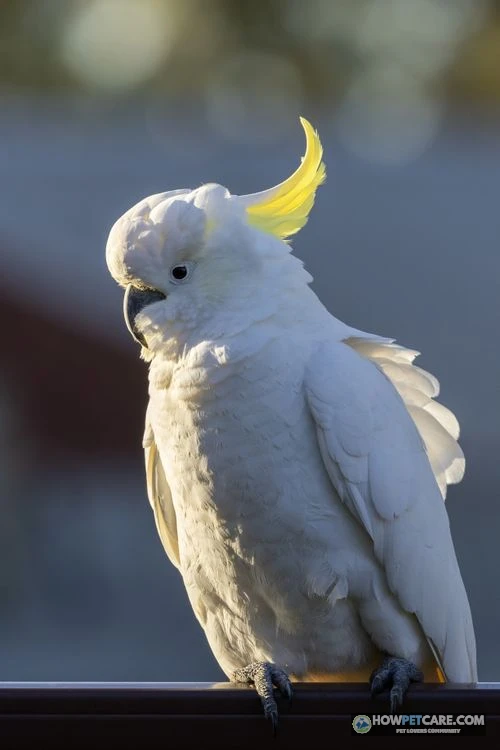

In captivity, large cockatoos may live roughly 40–80 years, while wild estimates run about 20–40 years. Cockatiels are shorter-lived at roughly 15–25 years. These are broad planning ranges, not verified species averages—an individual bird’s lifespan depends on species, diet, veterinary care, and living conditions.
Large cockatoos may live roughly 40–80 years in captivity. The often-cited wild range is 20–40 years, though reliable wild estimates are scarce and vary by species. Cockatiels are generally shorter-lived, with a captive estimate of 15–25 years. These broad figures aren’t guarantees or verified averages for every species.
For an individual bird, species, health, living conditions, and the quality of the records all matter. A documented exceptional age isn’t the same as the average cockatoo lifespan. The species table separates supported information from gaps where the supplied evidence doesn’t establish a trustworthy species-specific range.
Cockatoo Lifespan in Captivity vs. the Wild
In protected captive settings, cockatoos can benefit from dependable food, shelter, and veterinary treatment without facing the same exposure to predators and severe weather as wild birds. Those advantages help explain why captive birds can outlive wild ones, although captivity doesn’t guarantee a long life.
What the wild data actually shows
The frequently repeated 20–40-year wild range is a broad estimate, not a verified life expectancy for each cockatoo species. Tracking a wild bird throughout its life is difficult. A banded bird that isn’t seen again may have died, moved away, or simply escaped observation. A small number of long-lived survivors can’t establish an average for an entire population.
That distinction matters when comparing how long cockatoos live in the wild vs. captivity. The broad ranges suggest a difference, but they don’t support a precise wild-to-captive comparison for every species.
Why captive averages hide wide variation
An average, a median, and a maximum answer different questions. An average combines observed ages; a median is the middle of a group; a maximum describes an exceptional individual. The population matters too. Zoo records, pet-owner reports, and veterinary reference tables may cover different birds and circumstances.
The 2012 study often called “Survival on the Ark” examined survival in zoo-housed parrots. Its historical zoo data offer context, not a current guarantee for an individual pet or a substitute for wild survival estimates. Without the species-specific results and methods in the evidence available here, the study can’t responsibly be used to fill every cell in the table below.
Other parrots, including macaws, African greys, and Amazons, can also represent a multidecade commitment. A useful parrot lifespan comparison needs species-specific data and comparable measures. A single exceptional bird doesn’t prove that its species normally outlives another.
Cockatoo Lifespan by Species: Complete Table of All 21 Species
The table covers 21 species under one commonly used classification. Names and species boundaries can vary among taxonomic authorities. Tanimbar corella and Goffin’s cockatoo are two names for the same species; citron-crested cockatoos are generally treated as a subspecies of the yellow-crested cockatoo, not a separate row.
Reading the table: how confident is each number?
R means a broad reference estimate appears in the supplied evidence; it isn’t an individually verified age or a promise for a particular bird. ND means the supplied evidence doesn’t establish a dependable species-specific figure. ND doesn’t mean the bird has a short lifespan. The adult-size and care-demand descriptions offer broad orientation, not measured dimensions or a substitute for individual guidance.
| Species | Wild lifespan | Captive lifespan | Adult size | Care demand | Source type and confidence |
|---|---|---|---|---|---|
| Cockatiel | ND | 15–25 years | Small | Substantial | R: broad captive reference estimate; not a verified maximum |
| Galah, or rose-breasted cockatoo | ND | ND | Medium | Substantial | ND: species-specific ranges not established here |
| Gang-gang cockatoo | ND | ND | Medium | Substantial | ND: species-specific ranges not established here |
| Palm cockatoo | ND | ND | Large | Very high | ND: species-specific ranges not established here |
| Major Mitchell’s, or pink cockatoo | ND | ND | Medium | High | ND for typical lifespan; see Cookie’s record below |
| Red-tailed black cockatoo | ND | ND | Large | Very high | ND: species-specific ranges not established here |
| Glossy black cockatoo | ND | ND | Large | Very high | ND: species-specific ranges not established here |
| Yellow-tailed black cockatoo | ND | ND | Large | Very high | ND: species-specific ranges not established here |
| Carnaby’s black cockatoo | ND | ND | Large | Very high | ND: species-specific ranges not established here |
| Baudin’s black cockatoo | ND | ND | Large | Very high | ND: species-specific ranges not established here |
| Sulphur-crested cockatoo | ND | ND | Large | High | ND: species-specific ranges not established here |
| Yellow-crested, or lesser sulphur-crested, cockatoo | ND | ND | Medium | High | ND: species-specific ranges not established here |
| Blue-eyed cockatoo | ND | ND | Large | High | ND: species-specific ranges not established here |
| Umbrella, or white, cockatoo | ND | ND | Large | High | ND: species-specific ranges not established here |
| Moluccan, or salmon-crested, cockatoo | ND | ND | Large | Very high | ND: species-specific ranges not established here |
| Little corella | ND | ND | Medium | High | ND: species-specific ranges not established here |
| Long-billed, or slender-billed, corella | ND | ND | Medium | High | ND: species-specific ranges not established here |
| Western corella | ND | ND | Medium | High | ND: species-specific ranges not established here |
| Goffin’s cockatoo, or Tanimbar corella | ND | ND | Small to medium | High | ND: species-specific ranges not established here |
| Ducorps’s cockatoo, or Solomon Islands corella | ND | ND | Medium | High | ND: species-specific ranges not established here |
| Red-vented, or Philippine, cockatoo | ND | ND | Small to medium | High | ND: species-specific ranges not established here |
The care-demand column is a qualitative planning aid, not a published difficulty score. Even a small cockatoo needs sustained social care, safe housing, and veterinary attention. The general 40–80-year estimate for large captive cockatoos is useful for contingency planning. Applying it as a verified range to every large species—including an individual umbrella cockatoo—would overstate the evidence.
Which cockatoo species lives the longest?
The supplied comparable species-level data don’t establish a defensible winner. Larger cockatoos tend to live longer than smaller species, but size alone can’t predict an individual bird’s age. A species with a famous record-holder isn’t necessarily the species with the highest average life expectancy.

For a species-specific estimate, ask an avian veterinarian to interpret a named veterinary reference or zoo survival study. Check whether its number is an average, median, typical range, or documented maximum. That’s especially important for less commonly kept black cockatoos and corellas, where repeating an unsupported number creates false confidence.
A bird can die before a published range or live beyond it. Use broad estimates to plan for long-term care, not to predict an individual bird’s remaining years.
Oldest Cockatoo on Record: Verified Records vs. Anecdotes
Much of the apparent conflict in cockatoo longevity claims comes down to the difference between an exceptional age and a typical lifespan. The documentation behind an age matters just as much as the number.
| Claim or bird | Species | Claimed age | Verification status | Source and basis |
|---|---|---|---|---|
| Cookie, Brookfield Zoo | Major Mitchell’s cockatoo | 83 years | Guinness-recognized record, as reported in the supplied research context; the underlying records were not available for independent review here | Zoo and Guinness record; exceptional individual, not an average |
| Cocky Bennett | Sulphur-crested cockatoo | About 120 years | Unverified anecdote | Historical story; no birth documentation supplied |
| Fred and other centenarian claims | Cockatoos | Claims of 108–120 years | Unverified in the evidence supplied | Reported ages without a documentation chain available here |
| Merck Veterinary Manual | Cockatoos, as described in a general table | Up to 20 years in the cited table | Veterinary reference figure, not a record claim | The supplied evidence does not establish the table’s population or calculation method |
Cookie’s reported record is meaningful because it’s associated with an identified institution and a recognized record. It should still be checked against the primary record before being presented as independently verified. Cocky Bennett’s story may be memorable, but without reliable evidence of hatch date and identity throughout life, it can’t establish a 120-year lifespan.
Average vs. maximum lifespan explained
Merck’s general figure and a much older record-holder don’t necessarily contradict each other: a typical estimate and a maximum describe different things. The supplied evidence also notes a broader 20–80-year range in veterinary geriatric guidance. It doesn’t establish exactly why the general Merck table gives its lower number. Attributing that figure definitively to poor care or a particular population would be speculation.
A maximum shows what one documented bird reached; it doesn’t tell you what most birds reach. Likewise, a low reference estimate shouldn’t be used as an upper limit unless its source explicitly defines it that way.
How to judge a longevity claim
Look for a hatch or early-life date, evidence that the same bird is being tracked, and dated zoo, band, registry, or veterinary records. A contemporary account with no known birth date is weaker than a continuous record. If an article cites another pet site rather than the original documentation, treat the age as a claim—not a verified record.
If Your Cockatoo Outlives You: Estate Planning, Pet Trusts, and Lifetime Cost
A cockatoo may need care after its owner dies or becomes unable to provide it. Without an agreed plan, family members or an estate representative may have to find housing, money, and an experienced caregiver at short notice. Even when rehoming is necessary, a familiar routine and complete records can make the transition easier to manage.
Setting up a pet trust or will provision
A pet trust can set aside funds and instructions for an animal’s care. A will may also address a bird and provide for a caregiver, but a will and a trust work differently. A will alone may not cover the immediate period before an estate is administered.

This is general information, not legal advice. Consult an estate-planning attorney in your state about the appropriate documents, an enforceable arrangement, funding, a trustee, and what should happen to any remaining funds. Also discuss temporary incapacity, not just death.
Choosing and briefing a successor caregiver
- Ask an avian-experienced person whether they’re willing and realistically able to take the bird; name a backup who has also agreed.
- Arrange an immediate contact and temporary care plan in case of hospitalization or an emergency.
- Prepare a care file with the bird’s veterinarian, medications, diet, routine, housing needs, handling preferences, records, and any known behavior or medical concerns.
- If considering a rescue or sanctuary, speak with it in advance about its admission process, capacity, costs, and whether a written arrangement is possible. Don’t assume a place will be available.
- Review the plan as the bird’s health, caregiver’s circumstances, and available funds change.
Lifetime cost of owning a cockatoo
The following is an arithmetic illustration, not a survey of U.S. prices or a quote. Replace each assumption with local estimates from your veterinarian and suppliers. It models 50 years of care, excludes inflation and investment returns, and treats an emergency reserve as money set aside—not an additional bill that will necessarily be spent.
| Cost category | Annual assumption | 50-year illustration | Notes |
|---|---|---|---|
| Food | $600 | $30,000 | Pellets and fresh foods; actual needs vary |
| Routine veterinary care | $400 | $20,000 | Actual examination and testing costs vary |
| Toys, perches, and enrichment | $300 | $15,000 | Includes replacements |
| Emergency and illness reserve | $300 set aside | $15,000 set aside | May be unspent, insufficient, or needed earlier |
| Housing and replacements | Not annualized | $3,000 | Illustrative total for setup and later replacement |
| Illustrative total | — | $83,000 | Includes the reserve; excludes acquisition, boarding, inflation, and other unexpected costs |
If the bird still has many years of care ahead, a successor may need substantial funding even if you’ve paid for its earlier care. Work with the prospective caregiver and attorney on a realistic amount, how it will be accessed, and how major medical expenses will be handled. Don’t assume a fixed trust amount fits every bird.
What Shortens or Extends a Cockatoo’s Life
Good care can’t guarantee a particular cockatoo life expectancy, but it can address preventable risks and make illness easier to identify. For most owners, the priorities are nutrition, veterinary care, safe housing, exercise, and appropriate social and mental stimulation.
Diet and weight management
A seed-only cockatoo diet can contribute to obesity and other health problems. Discuss a balanced diet with an avian veterinarian. Formulated parrot pellets and vegetables are common components, while seeds and fatty treats shouldn’t displace a balanced diet. Appropriate proportions depend on the bird’s species, condition, and current food intake.
Don’t abruptly withhold a familiar food to force a dietary change. Ask the vet how to transition safely and monitor weight and actual food consumption. Unexpected weight loss or gain deserves attention, even when the bird looks normal through its feathers.

Veterinary care and screening
Establish a relationship with an avian veterinarian before an emergency. Schedule a wellness examination at least annually, or at the interval your vet recommends. Discuss baseline weight, bloodwork, diet, and any testing appropriate to the bird’s history.
Conditions an avian vet may consider include psittacine beak and feather disease, proventricular dilatation disease, chronic infections, liver disease, and atherosclerosis. Tests aren’t interchangeable; a vet should choose them based on symptoms, exposure, examination, and the bird’s health. A normal-looking bird can still be ill, so don’t wait for severe weakness before seeking advice.
Enrichment, stress, and feather plucking
Cockatoos need appropriate social interaction, sleep, opportunities to move, and activities that engage them. Lack of interaction and mental stimulation can contribute to stress and self-injury, including feather plucking. Plucking can also have medical causes. A veterinarian should assess new or worsening feather damage rather than assuming it’s purely behavioral.
Choose a cage large enough for the individual to move and extend its wings without striking the sides, with space for appropriately placed perches, food, and water. Provide supervised, bird-safe exercise outside the cage where practical. A larger cage alone has not been shown here to guarantee a longer life.

Do males and females live different lengths of time?
The supplied evidence doesn’t establish a reliable general lifespan advantage for either sex across cockatoos. Individual health and species matter, and female birds can face reproductive complications such as egg binding. Ask an avian vet about a hen’s reproductive history and any change in appetite, posture, or activity.
Household Toxin Safety Checklist for Cockatoos
Overheated PTFE nonstick coatings, including some products marketed as Teflon, can release fumes that are acutely fatal to birds. Scented products and sprays can also harm their sensitive respiratory systems. A kitchen extractor or moving the bird to another room isn’t a dependable safeguard against a serious fume exposure.
Airborne hazards
- Check cookware, air-fryer baskets, countertop appliances, and heat lamps for nonstick coatings; choose alternatives that do not use PTFE around birds.
- Keep birds away from cooking smoke and self-cleaning oven cycles. Don’t assume every oven or appliance contains PTFE; check its materials and instructions.
- Avoid indoor smoking or vaping, and keep aerosols, air fresheners, incense, candles, and essential-oil diffusers away from the bird.
- Use cleaning and renovation products cautiously; move the bird away from fumes and follow veterinary advice about ventilation and safe return.

Foods and plants
- Keep avocado, chocolate, caffeine, and alcohol out of reach. Don’t offer unfamiliar foods or plants without checking their safety for birds.
- Remove pits and seeds from fruit where appropriate, and prevent access to houseplants unless their safety has been confirmed for the species.
Metals and objects
- Inspect the bird’s environment for accessible lead, including old paint, fishing weights, and stained-glass materials.
- Check cage fittings and toys for potentially chewable zinc-containing or galvanized metal; ask the manufacturer and your vet when materials are uncertain.
- Secure electrical cords and remove damaged objects that a bird could chew or swallow.
Move the bird to fresh air without exposing yourself to danger, and immediately call an avian veterinarian or emergency veterinary clinic. Do not wait for symptoms. Save the ASPCA Animal Poison Control number, 888-426-4435; a consultation fee may apply.
How to Estimate the Age of a Rescue or Adopted Cockatoo
Start with evidence, not appearance. Ask the rescue or previous caregiver for transfer paperwork, veterinary records, photographs, and any known hatch or acquisition date. A closed leg band may identify a breeder or carry useful markings, but the code needs verification; a band isn’t automatically proof of a hatch year.
Signs of aging in older cockatoos
An avian vet can consider several clues together, but none reliably gives an adult bird’s exact age:
- Iris color: In some species, iris color changes with maturity or differs by sex. It may help identify a life stage, but it isn’t a universal clock.
- Beak texture and growth: Wear, grooves, or overgrowth can reflect diet, injury, or disease as well as age.
- Feet and leg scales: Thickened scales, changes in grip, or altered toe posture may be relevant, but previous husbandry and illness can produce similar signs.
- Feathers: Dullness, fraying, or feather loss may indicate a health or husbandry issue at any age.
- Mobility and examination: Reduced grip or difficulty climbing may warrant examination. Radiographs and bloodwork can help investigate health problems, not establish a birthday.

Record confirmed dates separately from estimates. If the history only supports “adult of unknown age,” that’s more useful than inventing a precise hatch year. Keep new weights, examination results, medications, and behavioral changes in the same file so your vet can follow trends.
Cockatoo age in human years: why simple conversions mislead
There’s no established universal formula for converting cockatoo age into human years. Cockatiels and larger cockatoos differ in expected lifespan, and development and aging don’t proceed at a constant multiple of human aging. Describe the bird’s actual age, species, health, and life stage instead.
Caring for a Senior Cockatoo: Geriatric Protocols
A bird in its 40s deserves a thoughtful senior-care review, but no single age makes every cockatoo geriatric. Species, medical history, mobility, and changes over time all matter. Discuss whether more frequent examinations, weight checks, bloodwork, or imaging would benefit your bird.
Arthritis and mobility support
Arthritis may make perching, climbing, or reaching food more difficult. Ask an avian vet to assess changes rather than treating them as inevitable aging. Depending on the examination, the vet may recommend pain relief, rehabilitation, or other treatment. Never give human pain medication without veterinary direction.
Practical adjustments can include lower or wider perches, accessible food and water, ramps, and a layout that reduces the consequences of a fall. Make changes gradually where possible, and check that the bird can still reach its preferred resting spots.

Cancer, endocrine, and organ disease warning signs
Cancer, endocrine disorders, and organ disease are among the possibilities a vet may investigate in an older bird. Changes in weight, appetite, droppings, breathing, thirst, activity, or feather condition may indicate illness, but they don’t identify a diagnosis. Ask which screening tests are appropriate. Imaging and bloodwork should be selected for the individual rather than treated as a guaranteed cancer screen.
A bird that is struggling to breathe, sitting weakly on the cage floor, unable to perch, or showing another sudden severe change needs urgent veterinary attention.
Quality-of-life checks
Keep a simple record of weight, appetite, movement, sleep, social interest, and the bird’s ability to reach food and water. Ask your vet about dietary changes, comfortable temperatures, and gentler enrichment if health or mobility changes. If pain or declining function can’t be adequately controlled, discuss comfort-focused care and end-of-life decisions with the veterinary team.
Your Cockatoo Longevity Action Plan
- Identify the bird’s species and distinguish a broad planning range from a verified species-specific average. For a rescue, preserve the uncertainty around its age.
- Book an avian veterinary examination, establish a baseline weight and health record, and agree on a follow-up schedule.
- Audit the home for overheated nonstick coatings, fumes, unsafe foods, toxic metals, and chewable electrical cords.
- Review diet, exercise space, sleep, social needs, and enrichment with the vet, especially if weight or feather condition changes.
- Ask a successor caregiver and a backup to participate; create an emergency care file and consult an estate attorney about funding and legal documents.
- If you’re considering responsibility for a cockatoo, test the commitment against your likely housing, finances, health, and support network over decades—not just the next few years.

1Why is it difficult for researchers to establish a precise wild lifespan average for cockatoo populations?
Tracking wild birds throughout life is complex because a bird that is no longer spotted may have moved or avoided detection rather than perished.
2Cookie, a famous Major Mitchell's cockatoo housed at the Brookfield Zoo, is notable in longevity records for reaching what age?
Cookie reached a Guinness-recognized record of 83 years, representing an exceptional documented individual.
3Why is the 120-year claim for Cocky Bennett classified as an unverified historical anecdote?
A reliable longevity record requires verifiable proof of birth date and continuous tracking, which historical stories lack.
4When arranging long-term estate planning for a cockatoo, why might a pet trust be preferred over relying solely on a standard will?
Wills often involve administration delays before execution, whereas a pet trust can seamlessly cover immediate funding and care needs.
5What precaution should a bird owner take when converting a cockatoo from a seed-only diet to formulated pellets and fresh vegetables?
Abruptly withholding familiar food can cause starvation or distress, making gradual transitions and weight tracking essential.
6How should an owner respond if their pet cockatoo suddenly begins displaying feather plucking behavior?
Feather plucking can stem from physical health conditions as well as stress, requiring medical evaluation before assuming a purely behavioral cause.
7Why are kitchen extractor fans and room isolation unreliable safety measures against PTFE (Teflon) fumes near cockatoos?
Birds have sensitive respiratory systems, making toxic PTFE fumes lethal even when exhaust fans or room separation are used.
8Which statement accurately describes the reliability of physical signs (such as beak texture or leg scales) when estimating an adult rescue cockatoo's age?
Diet, previous disease, and wear cause physical changes in beaks and scales that mimic aging, preventing exact age determination.
9What environmental modification is recommended to assist a senior cockatoo experiencing arthritis?
Lower and wider perches reduce foot strain and lower fall risks, making cage navigation safer for arthritic birds.
10In the illustrative 50-year cost outline for owning a large cockatoo, what category represents money set aside for potential emergencies rather than a guaranteed expense?
The emergency reserve is structured as funds set aside for unpredictable care needs, which may remain unspent or be required unexpectedly early.
| Species | Wild lifespan | Captive lifespan | Adult size | Care demand | Source type and confidence |
|---|---|---|---|---|---|
| Cockatiel | Not in source | 15–25 years | Small | Substantial | R: broad captive reference estimate; not a verified maximum |
| Galah, or rose-breasted cockatoo | Not in source | Not in source | Medium | Substantial | ND: species-specific ranges not established here |
| Gang-gang cockatoo | Not in source | Not in source | Medium | Substantial | ND: species-specific ranges not established here |
| Palm cockatoo | Not in source | Not in source | Large | Very high | ND: species-specific ranges not established here |
| Major Mitchell's, or pink cockatoo | Not in source | Not in source | Medium | High | ND for typical lifespan; see Cookie's record below |
| Red-tailed black cockatoo | Not in source | Not in source | Large | Very high | ND: species-specific ranges not established here |
| Glossy black cockatoo | Not in source | Not in source | Large | Very high | ND: species-specific ranges not established here |
| Yellow-tailed black cockatoo | Not in source | Not in source | Large | Very high | ND: species-specific ranges not established here |
| Carnaby's black cockatoo | Not in source | Not in source | Large | Very high | ND: species-specific ranges not established here |
| Baudin's black cockatoo | Not in source | Not in source | Large | Very high | ND: species-specific ranges not established here |
| Sulphur-crested cockatoo | Not in source | Not in source | Large | High | ND: species-specific ranges not established here |
| Yellow-crested, or lesser sulphur-crested, cockatoo | Not in source | Not in source | Medium | High | ND: species-specific ranges not established here |
| Blue-eyed cockatoo | Not in source | Not in source | Large | High | ND: species-specific ranges not established here |
| Umbrella, or white, cockatoo | Not in source | Not in source | Large | High | ND: species-specific ranges not established here |
| Moluccan, or salmon-crested, cockatoo | Not in source | Not in source | Large | Very high | ND: species-specific ranges not established here |
| Little corella | Not in source | Not in source | Medium | High | ND: species-specific ranges not established here |
| Long-billed, or slender-billed, corella | Not in source | Not in source | Medium | High | ND: species-specific ranges not established here |
| Western corella | Not in source | Not in source | Medium | High | ND: species-specific ranges not established here |
| Goffin's cockatoo, or Tanimbar corella | Not in source | Not in source | Small to medium | High | ND: species-specific ranges not established here |
| Ducorps's cockatoo, or Solomon Islands corella | Not in source | Not in source | Medium | High | ND: species-specific ranges not established here |
| Red-vented, or Philippine, cockatoo | Not in source | Not in source | Small to medium | High | ND: species-specific ranges not established here |
FAQ
Are cockatoos a lifelong pet commitment?
Yes. Large species may live several decades in captivity, so many owners must plan for the bird outliving them. Treat ownership as a potential 40–80 year commitment, with a backup caregiver and funding arranged in advance.
How long do cockatoos live as pets compared with other parrots?
Large cockatoos often rival or exceed Amazons and African greys and are generally comparable to many macaws, though macaws can reach similar ages. Small cockatoo species and cockatiels live shorter lives.
Can a cockatoo really live 100 years?
There is no well-documented case of a cockatoo reaching 100 years. Claims such as Cocky Bennett’s 120 years are unverified anecdotes, while verified records like Cookie the Major Mitchell’s cockatoo are considerably shorter.
At what age is a cockatoo considered a senior?
It depends on the species. Large cockatoos are often treated as seniors from around their 30s-40s, and smaller species earlier. An avian vet can help set a species-appropriate senior care schedule.
Does keeping a cockatoo in a bigger cage make it live longer?
Cage size alone is not proven to extend lifespan, but adequate space, exercise, and enrichment support physical and mental health, which reduces risks such as obesity and feather plucking.