
The major active grants for animal rescue in 2026 include Petco Love, ASPCA, Banfield Foundation, PetSmart Charities, Maddie’s Fund, and Grey Muzzle, with most small-rescue awards between $1,000 and $25,000. Nearly all require 501(c)(3) status or a fiscal sponsor, and most run on annual or rolling cycles.
Finding grants for animal rescue shouldn’t mean losing an afternoon to a dozen separate funder sites. The major active programs for 2026 include Petco Love, ASPCA grants, Banfield Foundation, PetSmart Charities, Maddie’s Fund, Best Friends Network partner grants, Bissell Pet Foundation, the Pedigree Foundation, and Grey Muzzle Organization, with most small-rescue awards landing somewhere between $1,000 and $25,000. The catch is that almost every program narrows eligibility by 501(c)(3) status, geography, species, or operating history, so the grant your neighbor’s shelter won last year may not be open to your organization at all. The table below consolidates award amounts, deadlines, eligibility, and status so you can rule programs in or out in minutes.
Animal Rescue Grants in 2026: Amounts, Deadlines, and Eligibility in One Table
The master table below covers the major US funders. Award ranges reflect published or historically reported figures; confirm the current number on each funder’s site before you build an application around it, because programs shift year to year. Rows marked "verify" had no firm public deadline at the time of checking.
| Funder / Program | Award Range | Deadline or Cycle | Status | Eligibility (Status, Location, Species, Budget) | Funding Purpose | Last Verified |
|---|---|---|---|---|---|---|
| Petco Love – Lifesaving & Innovation Grants | ~$5,000–$100,000+ | Annual RFPs to partner orgs | Invitation (partner network) | 501(c)(3) or municipal; US; mostly dogs/cats | Operating, lifesaving programs | 2026 |
| ASPCA Grants (shelter, equine, emergency) | ~$5,000–$250,000+ | Periodic open RFPs; some rolling | Mixed open/invitation | 501(c)(3) or government agency; US | Programs, emergency response, equine | 2026 |
| Banfield Foundation – Pet Advocacy Grants | ~$1,000–$10,000 | Historically two cycles per year | Annual (verify dates) | 501(c)(3); US; companion animals | Veterinary care, disaster relief | 2026 |
| PetSmart Charities | ~$5,000–$250,000+ | Annual cycles; some invite-only | Mixed | 501(c)(3); US/Canada; dogs/cats focus | Spay/neuter, access to care, adoptions | 2026 |
| Maddie’s Fund | Project-based; ~$10,000–$100,000+ | Periodic open calls | Mixed open/invitation | 501(c)(3) or municipal; US | Innovation, foster & adoption programs | 2026 |
| Best Friends Network Partner Grants | ~$1,000–$25,000 | Rolling for network partners | Open (members only) | Must join Best Friends Network; US | Programs, lifesaving capacity | 2026 |
| Bissell Pet Foundation – Partners for Pets | ~$5,000–$50,000 | Periodic; member portal | Open (members only) | 501(c)(3); must join Partners for Pets; US | Spay/neuter, transport, microchips | 2026 |
| The Pedigree Foundation | ~$1,000–$10,000 | Annual; typically opens spring | Annual | 501(c)(3); US; dogs only | Operating & program grants | 2026 |
| Grey Muzzle Organization | Up to ~$10,000 | Annual; reopens February 2026 | Annual | 501(c)(3) or municipal; US; senior dogs only | Medical, hospice, senior adoption | 2026 |
| RedRover – Safe Housing Grants | Up to ~$60,000 | Several deadlines per year | Annual | 501(c)(3) DV/animal shelters; US | Pet housing at domestic-violence shelters | 2026 |
| RedRover Relief (urgent care) | Small, typically under ~$300 | Rolling | Open | Rescuers/good Samaritans; US | Emergency vet bills, individual animals | 2026 |
| Doris Day Animal Foundation | ~$1,000–$5,000 | Annual; LOI typically due autumn | Annual | 501(c)(3); US; small orgs welcome | General animal welfare, spay/neuter | 2026 |
| Petfinder Foundation | ~$250–$10,000 | Rolling; disaster grants as needed | Open (members) | Must list pets on Petfinder; US | Disaster, sponsored grants, enrichment | 2026 |
| SPCA International – Shelter Support Fund | ~$500–$5,000 | Annual window | Annual | Registered nonprofit; international OK | General shelter support | 2026 |
| DJ&T Foundation | Per-surgery reimbursement (~$75–$100/animal) | Rolling within annual budget | Open | 501(c)(3) clinics/rescues; US | Spay/neuter only | 2026 |
| Kenneth A. Scott Charitable Trust | ~$10,000–$25,000+ | LOI cycles, historically spring/fall | Invitation via LOI | 501(c)(3); Ohio/Great Lakes priority | Humane programs, shelter improvements | 2026 |
| Onyx & Breezy Foundation | ~$500–$10,000 | Annual window; verify current dates | Annual | 501(c)(3); US | Medical, equipment, rescue support | 2026 |
One encouraging detail for dog-focused groups: the Pedigree Foundation awarded over $1.24 million in grants during 2026 and has already kicked off its 2027 fundraising campaign, which means fresh small grants for shelters and rescue organizations are cycling now rather than drying up. Maddie’s Fund, meanwhile, has awarded up to $10,000 on a monthly basis, and the William & Charlotte Parks Foundation typically awards no more than $10,000 per year — useful anchors when you’re deciding whether an award is worth the application effort.
How much do animal rescue grants typically award?
For a small or volunteer-run rescue, plan around awards of $1,000 to $10,000. Grants of $25,000 to $60,000 exist, but they cluster in capital projects, safe-housing builds, and large operating partnerships that usually expect an established track record and matching capacity. Emergency funds run the other way — small and fast — with RedRover Relief helping individual animals and generally keeping urgent-care awards under a few hundred dollars. The practical move is to match your ask to your scale: a first-time applicant asking a large funder for $75,000 rarely competes, while a $2,500 request tied to a specific, measurable outcome often does.
Annual cycles vs. rolling applications
"Annual" programs open once a year — miss the window and you wait roughly 12 months. Grey Muzzle reopens applications in February 2026, so a spring prep cycle makes sense for senior-dog funding. Some programs layer sub-deadlines: one spay-neuter transport grant opens March 1, closes July 31, and funds awards in late December, meaning you should plan cash flow around when money actually arrives, not just when you apply.
"Rolling" programs let you apply anytime until funds are exhausted. Petfinder Foundation disaster grants and RedRover Relief work this way, which is why they belong in the emergency category. "Invitation" or member-only programs — Best Friends Network, Bissell’s Partners for Pets, Petco Love — require you to join a network first. Joining is usually free and takes under an hour, and several of these programs accept repeat applicants, so one good fit can fund you more than once. Check each funder’s guidelines for how many awards an organization may receive per year before you plan a repeat ask.
| Funder / Program | Award Range | Deadline or Cycle | Status | Eligibility | Funding Purpose |
|---|---|---|---|---|---|
| Petco Love – Lifesaving & Innovation Grants | ~5,000–100,000+ | Annual RFPs to partner orgs | Invitation (partner network) | 501(c)(3) or municipal; US; mostly dogs/cats | Operating, lifesaving programs |
| ASPCA Grants (shelter, equine, emergency) | ~5,000–250,000+ | Periodic open RFPs; some rolling | Mixed open/invitation | 501(c)(3) or government agency; US | Programs, emergency response, equine |
| Banfield Foundation – Pet Advocacy Grants | ~1,000–10,000 | Historically two cycles per year | Annual (verify dates) | Discover more CAT Cats 501(c)(3); US; companion animals | Veterinary care, disaster relief |
| PetSmart Charities | ~5,000–250,000+ | Annual cycles; some invite-only | Mixed | 501(c)(3); US/Canada; dogs/cats focus | Spay/neuter, access to care, adoptions |
| Maddie's Fund | Project-based; ~10,000–100,000+ | Periodic open calls | Mixed open/invitation | 501(c)(3) or municipal; US | Innovation, foster & adoption programs |
| Best Friends Network Partner Grants | ~1,000–25,000 | Rolling for network partners | Open (members only) | Must join Best Friends Network; US | Programs, lifesaving capacity |
| Bissell Pet Foundation – Partners for Pets | ~5,000–50,000 | Periodic; member portal | Open (members only) | 501(c)(3); must join Partners for Pets; US | Spay/neuter, transport, microchips |
| The Pedigree Foundation | ~1,000–10,000 | Annual; typically opens spring | Annual | 501(c)(3); US; dogs only | Operating & program grants |
| Grey Muzzle Organization | Up to ~$10,000 | Annual; reopens February 2026 | Annual | 501(c)(3) or municipal; US; senior dogs only | Medical, hospice, senior adoption |
| RedRover – Safe Housing Grants | Up to ~$60,000 | Several deadlines per year | Annual | 501(c)(3) DV/animal shelters; US | Pet housing at domestic-violence shelters |
| RedRover Relief (urgent care) | Small, typically under ~$300 | Rolling | Open | Rescuers/good Samaritans; US | Emergency vet bills, individual animals |
| Doris Day Animal Foundation | ~1,000–5,000 | Annual; LOI typically due autumn | Annual | 501(c)(3); US; small orgs welcome | General animal welfare, spay/neuter |
| Petfinder Foundation | ~250–10,000 | Rolling; disaster grants as needed | Open (members) | Must list petshttps://howpetcare.com/grants-for-animal-rescue/ on Petfinder; US | Disaster, sponsored grants, enrichment |
| SPCA International – Shelter Support Fund | ~500–5,000 | Annual window | Annual | Registered nonprofit; international OK | General shelter support |
| DJ&T Foundation | Per-surgery reimbursement (~75–100/animal) | Rolling within annual budget | Open | 501(c)(3) clinics/rescues; US | Spay/neuter only |
| Kenneth A. Scott Charitable Trust | ~10,000–25,000+ | LOI cycles, historically spring/fall | Invitation via LOI | 501(c)(3); Ohio/Great Lakes priority | Humane programs, shelter improvements |
| Onyx & Breezy Foundation | ~500–10,000 | Annual window; verify current dates | Annual | 501(c)(3); US | Medical, equipment, rescue support |
| Petco Love – Lifesaving & Innovation Grants | ~ 5,000– 100,000+ | Annual RFPs to partner orgs | Invitation (partner network) | 501(c)(3) or municipal; US; mostly dogs/cats | Operating, lifesaving programs |
| ASPCA Grants (shelter, equine, emergency) | ~ 5,000– 250,000+ | Periodic open RFPs; some rolling | Mixed open/invitation | 501(c)(3) or government agency; US | Programs, emergency response, equine |
| Banfield Foundation – Pet Advocacy Grants | ~ 1,000– 10,000 | Historically two cycles per year | Annual (verify dates) | 501(c)(3); US; companion animals | Veterinary care, disaster relief |
| PetSmart Charities | ~ 5,000– 250,000+ | Annual cycles; some invite-only | Mixed | 501(c)(3); US/Canada; dogs/cats focus | Spay/neuter, access to care, adoptions |
| Maddie's Fund | Project-based; ~ 10,000– 100,000+ | Periodic open calls | Mixed open/invitation | 501(c)(3) or municipal; US | Innovation, foster & adoption programs |
| Best Friends Network Partner Grants | ~ 1,000– 25,000 | Rolling for network partners | Open (members only) | Must join Best Friends Network; US | Programs, lifesaving capacity |
| Bissell Pet Foundation – Partners for Pets | ~ 5,000– 50,000 | Periodic; member portal | Open (members only) | 501(c)(3); must join Partners for Pets; US | Spay/neuter, transport, microchips |
| The Pedigree Foundation | ~ 1,000– 10,000 | Annual; typically opens spring | Annual | 501(c)(3); US; dogs only | Operating & program grants |
| Doris Day Animal Foundation | ~ 1,000– 5,000 | Annual; LOI typically due autumn | Annual | 501(c)(3); US; small orgs welcome | General animal welfare, spay/neuter |
| Petfinder Foundation | ~ 250– 10,000 | Rolling; disaster grants as needed | Open (members) | Must list pets on Petfinder; US | Disaster, sponsored grants, enrichment |
| SPCA International – Shelter Support Fund | ~ 500– 5,000 | Annual window | Annual | Registered nonprofit; international OK | General shelter support |
| DJ&T Foundation | Per-surgery reimbursement (~ 75– 100/animal) | Rolling within annual budget | Open | 501(c)(3) clinics/rescues; US | Spay/neuter only |
| Kenneth A. Scott Charitable Trust | ~ 10,000– 25,000+ | LOI cycles, historically spring/fall | Invitation via LOI | 501(c)(3); Ohio/Great Lakes priority | Humane programs, shelter improvements |
| Onyx & Breezy Foundation | ~ 500– 10,000 | Annual window; verify current dates | Annual | 501(c)(3); US | Medical, equipment, rescue support |
| PetSmart Charities of Canada | ~CAD 5,000–100,000+ | Annual cycles (verify) | Not in source | Registered charity (CRA); Canada; dogs/cats | Spay/neuter, adoption, access to care |
| SPCA International – Shelter Support Fund | ~USD 500–5,000 | Annual window | Not in source | Registered nonprofit; international OK | General shelter support |
Do You Qualify? Eligibility Requirements and Grant Odds by Rescue Size and Type
Before you write a single word, run your organization through the gates below. Each one is a hard filter — failing any single gate is an automatic rejection no matter how strong your proposal is.
Core eligibility checklist (501(c)(3), location, species)
The common gates are: 501(c)(3) status confirmed by an IRS determination letter (municipal shelters sometimes qualify in place of it); a minimum operating history, often one to two years with financial records; geographic restrictions, which range from nationwide to narrow regions like the Ohio/Great Lakes priority at the Kenneth A. Scott Trust; species restrictions, since some funders serve dogs and cats only while others cover equines or wildlife; and, at some organizations, a no-kill or live-release philosophy shaped by what Asilomar means for shelters. Grey Muzzle’s senior-dogs-only rule and the Scott Trust’s regional focus are constraints that eliminate otherwise strong applicants.
Here is the quick self-screen. Answer in order, and let each "no" redirect you rather than waste an application.
- Do you have an IRS 501(c)(3) determination letter, or are you a municipal shelter? If no, stop and go to the startup section — a fiscal sponsor is your only grant path for now. If yes, continue.
- Has your organization operated at least one to two years with financial records? If no, filter the table to rows that accept new groups (Petfinder Foundation, Doris Day, Best Friends Network) and skip anything demanding audited financials. If yes, continue.
- Which species do you serve? Dogs only opens every dog-focused row (Pedigree, Grey Muzzle). Cats or mixed species means skipping those dog-only funders entirely — an automatic rejection otherwise. Exotics, wildlife, or livestock shrink your pool sharply; SPCA International and ASPCA’s equine programs are the main fits.
- What is your annual budget? Under about $50,000, target $1,000–$10,000 grants; large funders like PetSmart Charities and Maddie’s Fund expect organizational capacity that tiny rescues rarely demonstrate. Over $250,000 with audited financials, the full table opens up.
- Where are you located? Rural groups should add USDA community-facility options. Ohio/Great Lakes groups should add the Scott Trust. Outside the US, jump to the Canada and UK section — most US funders auto-reject foreign applicants.
Small grants for animal shelters and first-time applicants
If you’re new, your odds improve when you start small and simple. Small funders such as Doris Day Animal Foundation and Petfinder Foundation often skip the audited financials and complex reporting that large funders demand, so a clean one-to-two-page application is genuinely competitive. The strategy is to win a modest award first, report on it thoroughly, and use that documented success as the grant history that makes bigger programs attainable later. One animal-welfare fund you may encounter stopped accepting applications because it received roughly four times as many requests as it can fund, which tells you how competitive even small pools have become — another reason to lead with a tight, specific ask.
Which grants suit dog rescue organizations vs. mixed-species shelters
Dog-only rescues can use every dog-focused row: Pedigree Foundation, Grey Muzzle for seniors, and the general operating funders. Mixed-species and cat-focused shelters should skip Pedigree and Grey Muzzle — both restrict funding by species — and lean on the broad programs like PetSmart Charities, Petco Love, ASPCA, and Banfield that serve companion animals generally. Equine and large-animal groups have far fewer options, with ASPCA’s equine grant making up much of the field.
Animal Rescue Grants by Funding Purpose: Spay/Neuter, Veterinary Care, Emergencies, and Disaster Relief
Match the grant to the problem in front of you. The index below points each need at the programs that fund it, so you can skip the rest of the master table.
| I need money for… | Start with these programs | Typical award | How fast money moves |
|---|---|---|---|
| General operating costs (rent, food, payroll) | Pedigree Foundation (dogs), Doris Day, Best Friends Network, Petco Love | $1,000–$25,000 | Slow — annual cycles, months to a check |
| Spay/neuter surgeries | DJ&T Foundation, PetSmart Charities, Bissell Pet Foundation, state programs | Per-animal reimbursement up to $50,000+ | Moderate; reimbursement pays per surgery |
| Veterinary care / medical cases | Banfield Foundation, Onyx & Breezy, Grey Muzzle (seniors), RedRover Relief (individual animals) | $250–$10,000 | RedRover Relief is days; foundation grants take months |
| Emergency / disaster relief | Petfinder Foundation disaster grants, ASPCA emergency grants, Banfield disaster funding | $250–$25,000 | Fastest category — some respond in weeks |
| Capital projects, equipment, facilities | Kenneth A. Scott Charitable Trust, RedRover Safe Housing, Maddie’s Fund initiatives | $10,000–$60,000+ | Slow; often an LOI stage first |
| Senior dogs specifically | Grey Muzzle Organization (the dedicated funder) | Up to ~$10,000 | Annual cycle |
| Brand-new rescue with no track record | Petfinder Foundation, Doris Day (small asks), Best Friends Network | $250–$5,000 | Start here to build grant history |
| No 501(c)(3) yet | Fiscal sponsor (see startup section), RedRover Relief, fundraising alternatives | Varies | Depends on sponsor setup |
The rule of thumb: if your need is urgent this month, only the emergency row can possibly help. Plan operating needs 6 to 12 months ahead of a grant deadline.
Spay and neuter funding
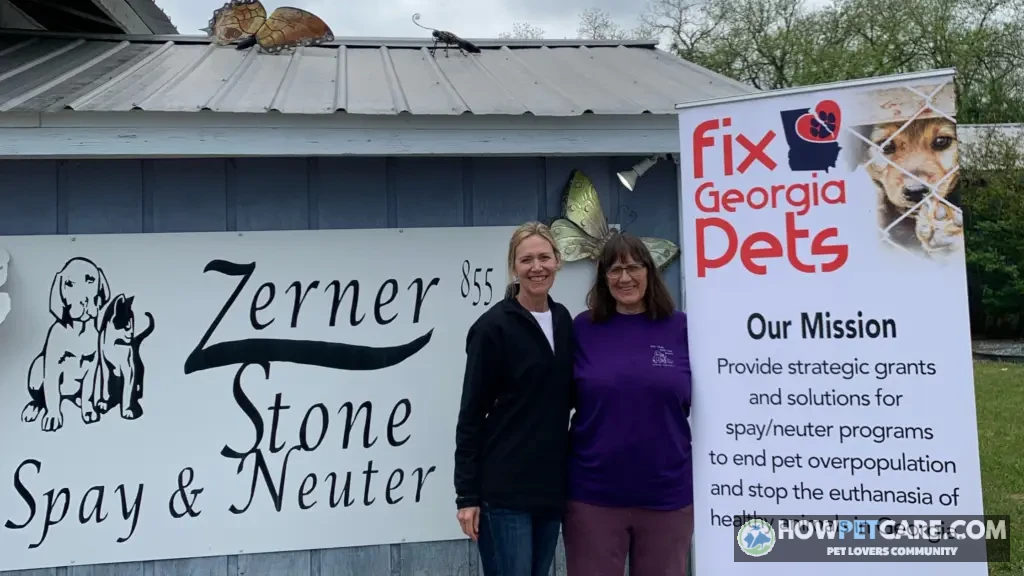
Spay/neuter is one of the best-funded categories in animal welfare, which makes it a reliable entry point. The DJ&T Foundation reimburses roughly $75 to $100 per surgery on a rolling basis within its annual budget, so payouts arrive per animal rather than as a lump grant. PetSmart Charities and Bissell Pet Foundation both prioritize spay/neuter, and Bissell funds transport and microchips alongside surgeries. Many state and regional programs also subsidize clinics directly. Because these are often reimbursement models, keep meticulous invoices — you pay upfront and recoup per procedure.
Emergency funding for animal shelters and disaster relief
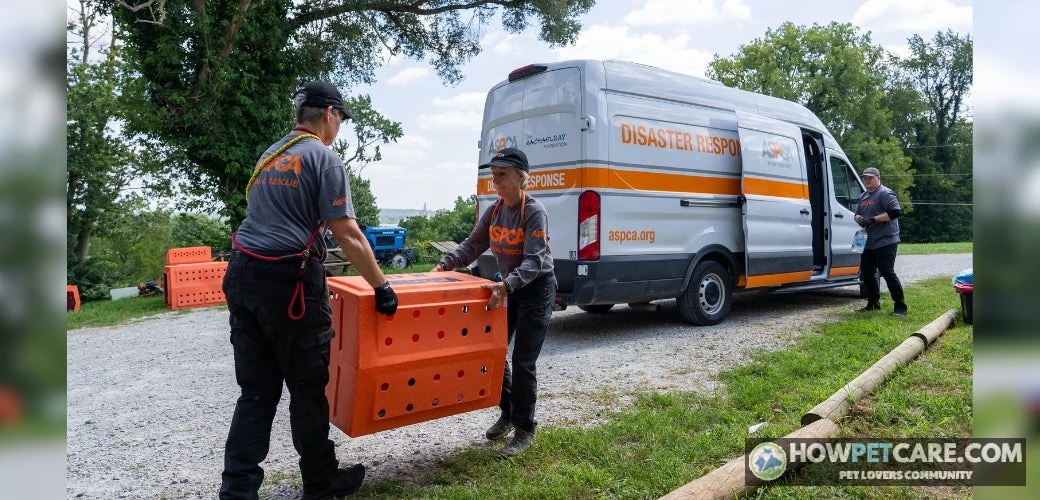
Emergency funding works differently: small awards that move fast. Petfinder Foundation disaster grants, ASPCA emergency grants, and Banfield Foundation disaster funding move in weeks rather than the months a planned program grant takes. RedRover Relief sits at the individual-animal end, helping good Samaritans and rescuers with urgent vet bills, typically under a few hundred dollars. These programs are not a substitute for planned operating funding, but they exist precisely for the crisis you can’t schedule — a hoarding seizure, a fire, a regional disaster. Keep one application ready and current so you can submit within hours when something breaks.
Medical care, senior dogs, and capital projects
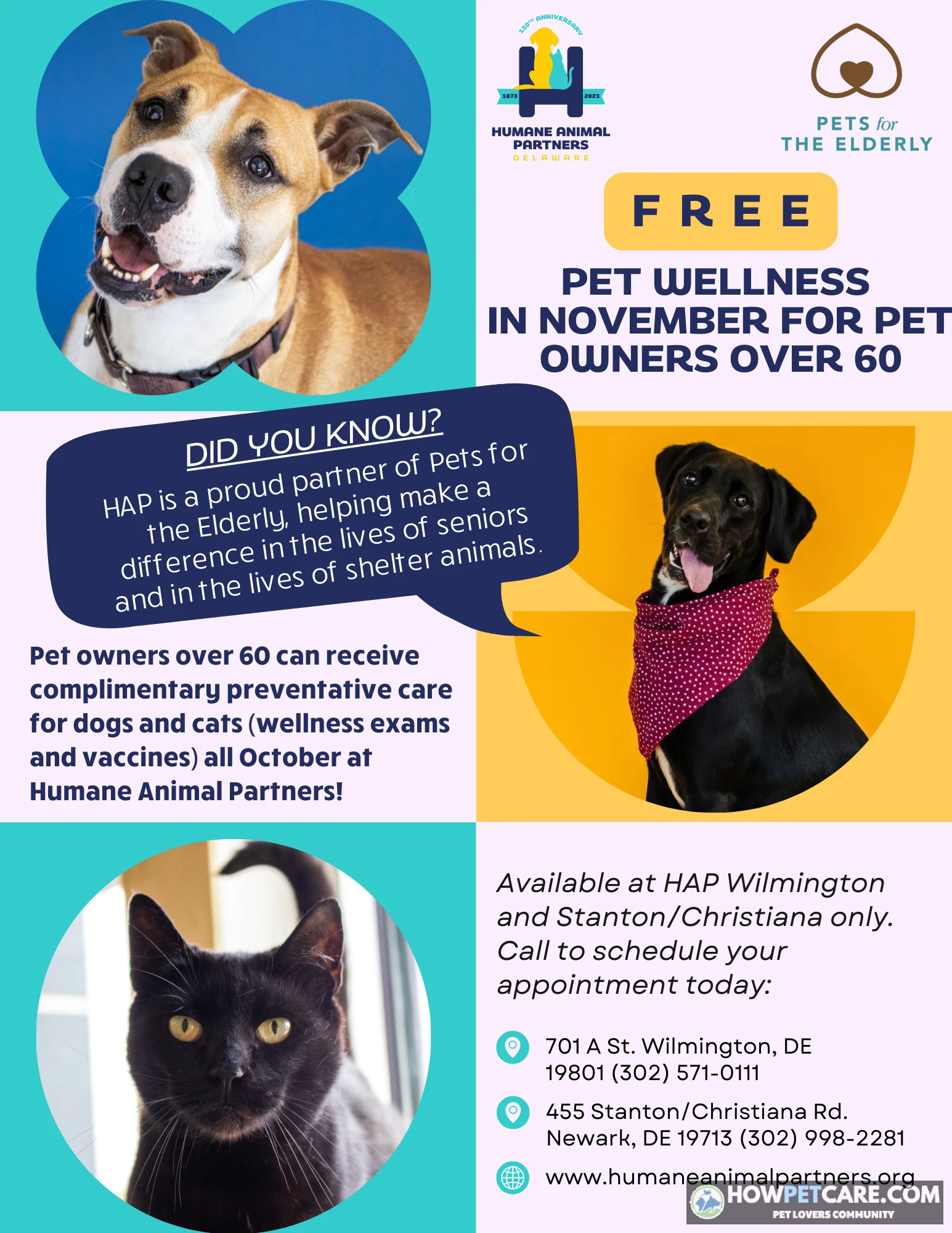
For ongoing veterinary care funding, Banfield Foundation, Onyx & Breezy Foundation, and Grey Muzzle are your primary fits. On the senior-dog question specifically: Grey Muzzle Organization is the dedicated funder, awarding up to roughly $10,000 for senior-dog medical care, hospice, and adoption programs on an annual spring window. If Grey Muzzle’s timing or fit is off, the closest alternatives are the general medical funders and adoption-program grants that can cover senior dogs as part of a broader animal population.
Capital projects — a new kennel, a clinic build, equipment — are slow and usually staged. RedRover’s Safe Housing grants reach up to about $60,000 for pet housing at domestic-violence shelters with several deadlines per year, and Maddie’s Fund and the Scott Trust fund facility and shelter improvements. Many of these are matching grants or challenge grants: the funder covers part of the cost only if you raise the rest. Prepare for a match by securing a documented commitment — a board pledge, a donor letter, or confirmed fundraising — before you submit, because a match you can’t meet turns a win into a liability.
Grants to Start an Animal Rescue Without 501(c)(3) Status
Be clear-eyed here: most animal welfare funders require 501(c)(3) status or a recognized fiscal sponsor, and individuals are rarely eligible to receive grants at all. If you’re incorporating now, or you have been operating as an unincorporated group, a direct grant application is not your path this season. Two routes get you there.
Fiscal sponsorship: how it works and what it costs
A fiscal sponsor is an established charity that receives the grant on your behalf, holds the funds, and releases them to you for the approved project. You keep programmatic control; the sponsor keeps legal and tax responsibility. Sponsors typically charge an administrative fee of about 5% to 10% of the grant, which comes out of the award. The trade-off is speed and access: sponsorship lets you apply under an existing charity’s tax-exempt status while your own paperwork is pending, and setting up the relationship usually takes weeks rather than the 2 to 6-plus months an IRS determination can require. The catch is that not every funder accepts sponsored applicants, so confirm each program’s rules before you rely on this.
Funding to bridge the gap before your determination letter arrives
While you pursue incorporation, build the grant-ready folder below — you’ll need every item eventually, and assembling it now shortens your path to a first award. Also note which funders in the table accept newer organizations: Petfinder Foundation, Doris Day, and Best Friends Network are the realistic first targets, while anything requiring audited financials or multi-year history should wait.
- ☐ IRS 501(c)(3) determination letter (funders verify it directly)
- ☐ EIN confirmation and a signed W-9
- ☐ Articles of incorporation and bylaws
- ☐ Fiscal sponsorship agreement, if you apply through a sponsor
- ☐ Current-year operating budget (income and expenses)
- ☐ Most recent Form 990, 990-EZ, or 990-N — small funders often accept bank statements if you file the 990-N postcard
- ☐ Last 12 months of financial statements
- ☐ Board of directors list with names, roles, and affiliations
- ☐ Intake and outcome statistics: animals taken in, adopted, transferred, euthanized
- ☐ A letter or invoice from a partner veterinarian proving care capacity
- ☐ 3–5 photos of your facility or foster operations
- ☐ A written euthanasia and live-release policy
- ☐ A project budget for your specific ask, with per-animal or per-surgery costs
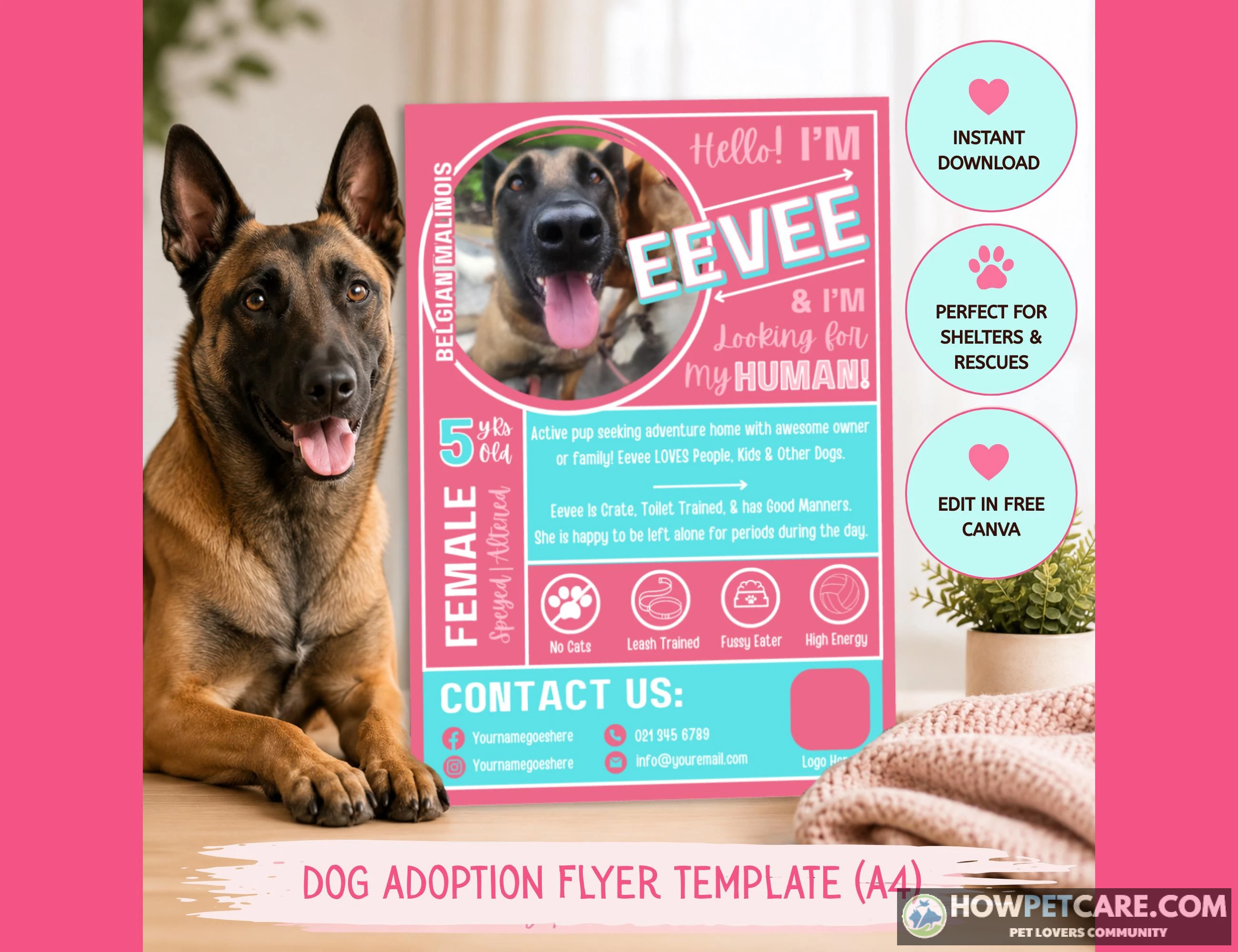
In place of grant history, show what a new rescue genuinely has: clean intake and outcome records, a written veterinary partnership, documented foster capacity, and a simple, honest budget. Funders would rather back a small, credible operation with real numbers than a polished proposal built on inflated claims.
When you do apply, the sequence is straightforward: confirm eligibility, assemble the folder above, draft a master narrative with a line-item budget, tailor it to each funder’s stated outcomes, and submit early with reporting reminders set. The how-to section below walks through each step in detail.
Animal Rescue and Welfare Grants in Canada and the UK
Most ranking pages ignore international applicants entirely, yet demand is clear. The programs below serve rescues outside the US; confirm each before you invest time, because international options carry thinner public information and dates move.
| Funder / Program | Country | Award Range (Local Currency) | Deadline or Cycle | Eligibility (Charity Registration, Location, Species) | Funding Purpose | Last Verified |
|---|---|---|---|---|---|---|
| PetSmart Charities of Canada | Canada | ~CAD 5,000–100,000+ | Annual cycles (verify) | Registered charity (CRA); Canada; dogs/cats | Spay/neuter, adoption, access to care | 2026 |
| SPCA International – Shelter Support Fund | International | ~USD 500–5,000 | Annual window | Registered nonprofit; international OK | General shelter support | 2026 |
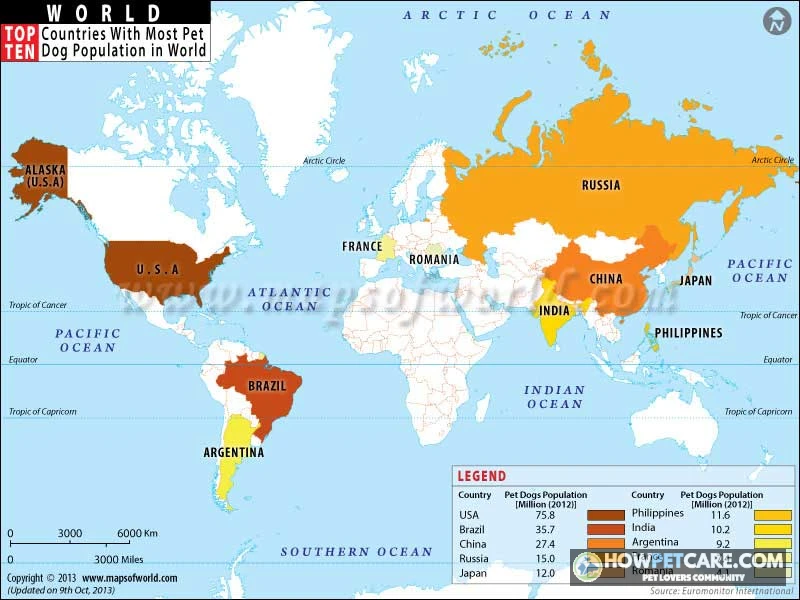
On registration: the Canadian equivalent of 501(c)(3) is registered charity status with the Canada Revenue Agency, and most Canadian funders require that number. In the UK, charities register with the Charity Commission (England and Wales), OSCR (Scotland), or the CCNI (Northern Ireland), and funders ask for the corresponding registration. A practical warning: several US programs exclude non-US applicants outright, so confirm geography before applying — a strong proposal rejected on address alone wastes a season.
Canada
PetSmart Charities operates a Canadian arm that has historically funded spay/neuter and adoption work for registered charities, though you should confirm the program is accepting applications for the current cycle before relying on it. Beyond that, provincial and municipal animal-welfare bodies and local community foundations are often more accessible to a new Canadian rescue than large national grants. Evidence on specific Canadian award amounts is thinner than for US programs, so treat the ranges above as starting points to verify rather than firm figures.
United Kingdom
UK animal-welfare funding tends to flow through national charities, grant-making trusts, and the Community Foundation network, which pools local donors into accessible small grants. Larger established names fund rehoming and welfare work, but public data on individual award sizes and deadlines is limited compared with the US. If you are UK-based, start with a local community foundation and a grant-making trust that names animal welfare in its criteria, then confirm registration status before applying. Where this article cannot verify a specific amount or date, treat it as "verify before applying" rather than assuming a program is open.
Closed, Invitation-Only, and Retired Animal Welfare Funds to Skip
Directories pad their lists with funds that are no longer live, which wastes your time and can cost you a deadline. A few categories to handle carefully:
- Closed funds. Some animal-welfare funds stop accepting applications when demand far exceeds capacity — one such fund closed after receiving about four times as many applications as it could fund. A closed status is not permanent, but do not plan around it until it reopens.
- Invitation-only programs. Petco Love, the Kenneth A. Scott Trust, and several Maddie’s Fund and ASPCA rounds award by invitation or through a letter-of-inquiry stage. Small rescues sometimes get invited by joining a partner network, building a relationship with a funder’s program officer, or earning a prior small award. These are not closed to you — they simply require an entry point.
- Programs that quietly retired. Funders rename, merge, or retire programs without much announcement, so a listing you find may point to a page that no longer opens applications.
To check whether a grant is still live in under five minutes, open the funder’s most recent cycle page, scan its latest annual report or Form 990 for a recent grant-making date, and look for a dated award announcement. If a directory lists a program with no deadline and no amount, assume it is stale until the funder’s own site confirms otherwise, and move it off your shortlist.
How to Apply for and Win an Animal Rescue Grant: Documents, Proposal Structure, and Rejection Reasons
Winning grants is less about eloquence and more about fit, evidence, and follow-through. Here is what first-time animal welfare grant writers need, which most funder pages never explain.
Required documents checklist
Use the grant-ready folder above as your master document set — determination letter, EIN, W-9, budget, financials or Form 990, board list, intake and outcome statistics, a veterinarian letter, and photos. Large funders ask for audited financials and detailed outcomes; small funders usually skip those and accept a bank statement and a simple budget. Build the full set once so you can tailor quickly.
Proposal basics for a first-time applicant
A strong small-rescue grant proposal follows a predictable skeleton: a need statement grounded in local data (your intake numbers, your county’s stray and surrender rates); a program description naming exactly what the grant funds; measurable outcomes expressed in the metrics funders recognize — animals served, live release rate, surgeries funded; a line-item budget with per-animal or per-surgery costs; a sustainability plan showing how the work continues after the grant ends; and a brief organizational background. Write for animal welfare specifically: translate everything into outcomes and cost-per-animal, and connect the ask to a change in live outcomes rather than a change in your bank balance.
A few logistics make the difference between a good proposal and a funded one. Maintain a master narrative you can re-tailor, track each funder’s requirements in a simple spreadsheet, apply early rather than at the deadline, and report promptly after an award — timely reporting is often the deciding factor in whether a funder invites you back.

-
Confirm eligibility
Match your organization to a funder’s status, species, geography, and budget rules before drafting anything.
-
Assemble the grant-ready folder
Pull your determination letter, budget, financials, outcome statistics, and vet letter into one reusable file set.
-
Draft the master narrative and budget
Write a needs statement with local data, measurable outcomes, and a line-item budget you can tailor per funder.
-
Tailor each application
Adjust the narrative to each funder’s priorities, matching their language and required outcomes exactly.
-
Review, submit early, and calendar follow-ups
Proofread against the funder’s checklist, submit before the deadline, and set reminders to report after any award.
Why animal rescue grant applications get rejected
Most rejections trace to a handful of avoidable errors: applying with an ineligible species or geography; a missing or invalid determination letter; asking for costs a funder explicitly excludes (often salaries, rent, or overhead); vague outcomes with no numbers; no budget detail; and late or incomplete submissions. When you are rejected, ask for feedback, adjust the specific weakness, and reapply when the funder allows it. A rejection with a reason is worth more than a silent one — it tells you exactly what to fix next cycle.
When Grants Don’t Fit: Corporate Giving, Community Foundations, USDA Loans, and Other Funding
Some organizations won’t qualify for the grants above this year, and some needs simply don’t match a grant’s restrictions. Alternatives exist, and several are faster than any foundation.
No federal program grants money to animal rescues or shelters for general operations. Search results implying otherwise are usually mislabeled loan programs, paid-listing directories, or outright scams. Do not spend your first funding season chasing a federal grant that does not exist.
Federal and government funding: what exists and what doesn’t
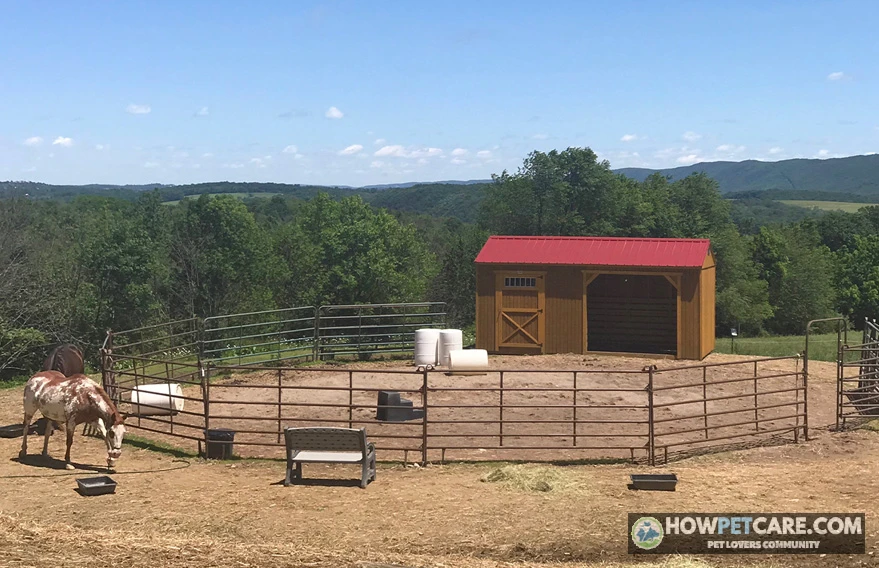
What does exist at the government level is narrow and usually debt, not free money. USDA Rural Development Community Facilities offers loans and occasional grants for building or renovating facilities in eligible rural areas, generally towns under about 20,000 people — it funds buildings, not operations. State and county animal-control contracts sometimes pay shelters to provide impound services, but that is a service contract, not a grant. A few agriculture or wildlife programs occasionally fund rehabilitation or feral-animal control through state agencies, with tight eligibility.
| Option | Best For | Typical Amount | Speed | Requirements | Main Drawback |
|---|---|---|---|---|---|
| USDA Rural Development Community Facilities | Rural facility builds or renovations | Loan-based; occasional grants | Slow | Rural eligibility, repayment ability | Debt, not a grant; buildings only |
| Community foundations | Small, local, unrestricted needs | ~$500–$25,000 | Moderate | Local focus, charity status | Geographic limits |
| Corporate giving / employee matching | Sponsorships, in-kind, matching | Varies widely | Varies | Vendor or employer relationship | Often tied to a purchase or partnership |
| Monthly donors and peer-to-peer campaigns | Ongoing, unrestricted operating funds | Small but recurring | Fast to start | Fundraising capacity | Requires steady outreach |
| In-kind veterinary partnerships | Medical care without cash | Value of services | Fast | A willing clinic partner | Not cash for other costs |
Community foundations and local corporate giving
For most small rescues, community foundations are the most accessible grant source after the national funders — they pool local donors and often make quick, modest awards with less competition than a national program. Corporate giving is underrated: pet-supply retailers, veterinary chains, and local businesses run sponsorship, employee-matching, and cause-marketing programs, and an in-kind partnership with a clinic can offset the exact veterinary costs that grants rarely cover. These programs are frequently faster than a foundation cycle and come with fewer reporting requirements.
Fundraising and in-kind support that can replace or supplement grants
When a grant does not fit, nonprofit fundraising fills the gap. Monthly donors provide predictable unrestricted income, peer-to-peer campaigns turn your supporters into fundraisers, and giving-day events concentrate attention into a single high-visibility push. In-kind veterinary partnerships directly reduce medical spending without cash. Grants shine for large, specific, plannable projects; fundraising and in-kind support win on speed and flexibility. The healthiest rescues run both in parallel rather than depending on any single check.
Build Your Shortlist and a 30-Day Grant Application Plan
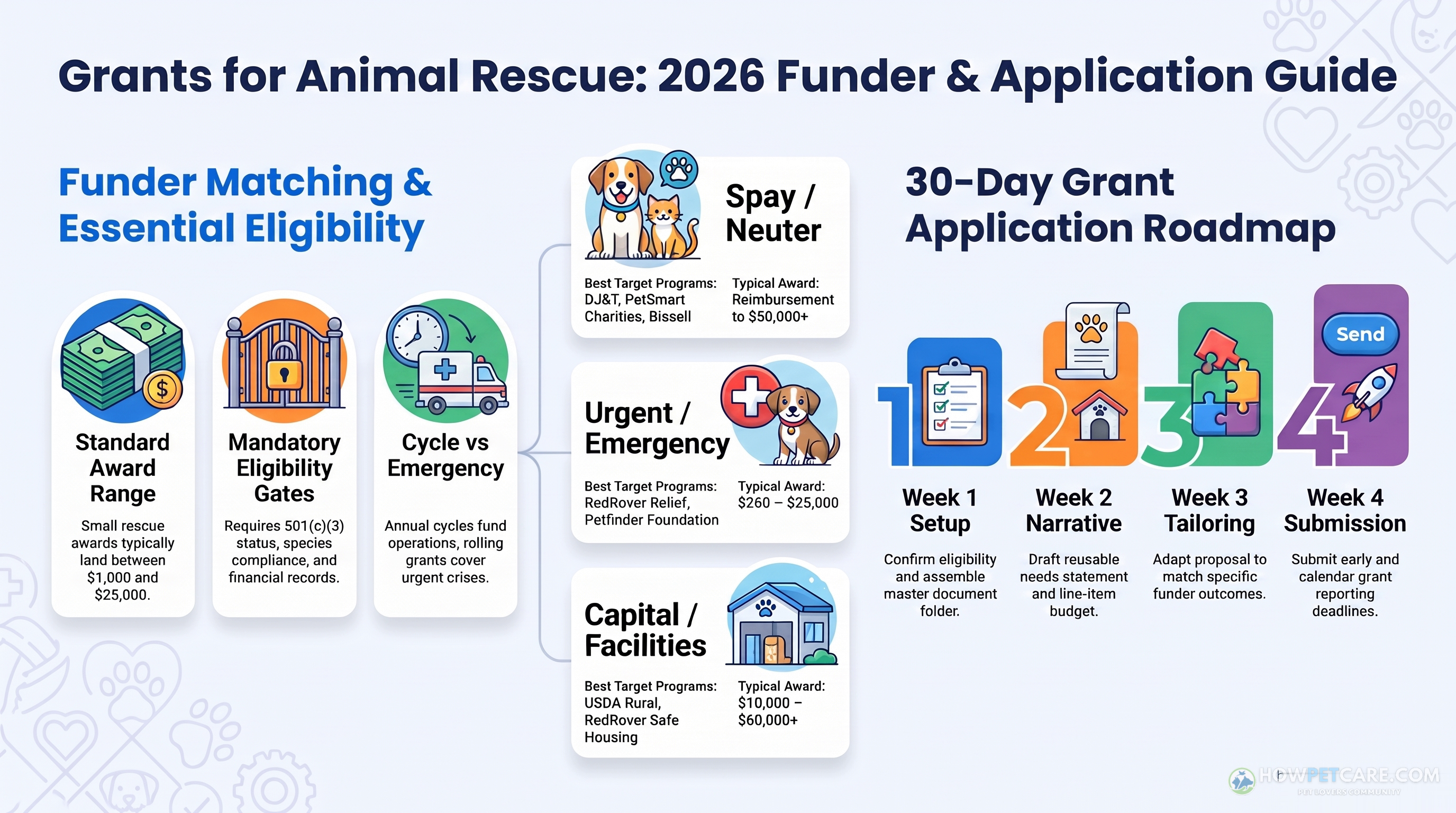
Turn everything above into a prioritized list of 3 to 5 grants and a plan to draft them. The method is simple: filter the master table by status first (drop anything closed or not yet open), then by eligibility (species, geography, 501(c)(3)), then by purpose and award size. Rank the survivors by fit, by effort, and by deadline — a strong-fit $3,000 grant with a rolling deadline beats a long-shot $50,000 one closing Friday.
Then work a 30-day schedule:
- Week 1 — Eligibility and documents. Confirm each target’s rules and assemble your grant-ready folder. If you lack a 501(c)(3), settle your fiscal-sponsor path this week.
- Week 2 — Master narrative and budget. Draft your needs statement, outcomes, and line-item budget in a reusable form.
- Week 3 — Tailor each application. Adapt the narrative to each funder’s priorities and required outcomes.
- Week 4 — Review, submit, and calendar. Proofread against each checklist, submit early, and set reminders for reporting and for next year’s annual deadlines.
Run a quick readiness check before you send anything: 501(c)(3) or sponsor secured, current financials in hand, clean outcome data, a named project with a real budget, and a reporting plan you can actually deliver. If any box is empty, that grant isn’t ready yet.
Finally, commit to one small, fast application this week — Petfinder Foundation, Doris Day, or Best Friends Network is a realistic first target — and put every annual deadline from your shortlist on the calendar now. The rescues that get funded are rarely the ones with the best writing; they are the ones that applied to the right three funders, early, with the documents already in the folder.
FAQ
Can an individual get a grant to start an animal rescue?
Rarely. Most animal welfare funders give only to registered nonprofits, so individuals usually need a fiscal sponsor or their own 501(c)(3) before applying.
Does the federal government give grants to animal rescues?
There is no general federal grant program for animal rescues. Some rescues find support through other routes, such as USDA Rural Development facility financing, local government contracts, or disaster-related programs, and eligibility varies.
Can grants pay for salaries, rent, and other operating costs?
Sometimes, but many funders restrict awards to specific programs such as spay/neuter, medical care, or equipment. Check each funder’s guidelines for allowed costs and indirect-cost limits before you apply.
How long does it take to hear back after applying for an animal rescue grant?
It depends on the funder. Rapid-response and small grants may be decided in weeks, while annual programs can take several months after the deadline. Check the notification date in the guidelines.
Do small, foster-based rescues without a shelter building qualify for grants?
Many do, provided they hold 501(c)(3) status and meet the funder’s other criteria. Some programs require a physical facility or a minimum budget, so check each one before investing time.