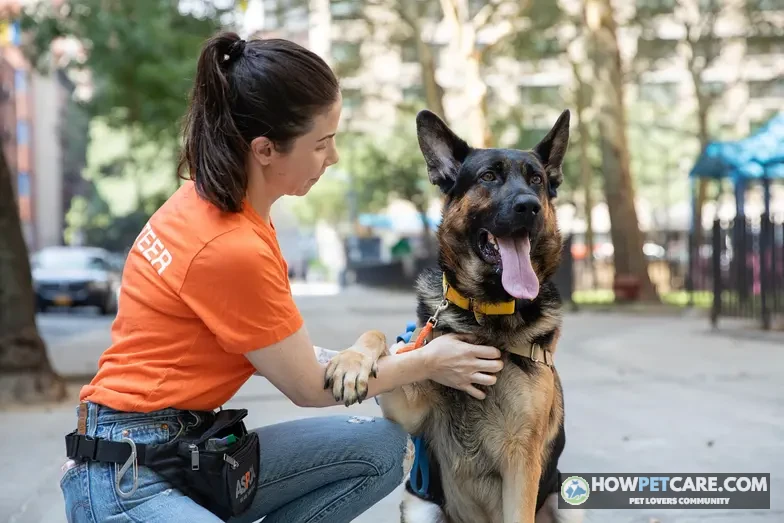

Animal advocacy is work to change decisions, practices, or conditions that affect animals’ lives. To begin, choose a specific problem, gather evidence, identify the person or organization with authority to act, and make a realistic request. Set a follow-up date and measure whether conditions or services actually change.
Animal advocacy means working to change decisions, practices, or conditions that shape animals’ lives. To get started, choose a specific problem, identify who has the authority to address it, make a realistic request, and decide how and when you’ll check for progress. Direct care can also support advocacy when it meets an immediate need or helps bring about broader change.
You don’t need to begin with a national campaign. A pet owner asking a county to address a documented barrier to veterinary care is advocating for animals. So is a community member working with a retailer on farmed-animal sourcing or asking a wildlife agency to review a harmful practice.
What Animal Advocacy Means and Which Animal Issues It Covers
Animal welfare advocacy, animal protection advocacy, and pet advocacy overlap, but each term puts the emphasis somewhere different. Animal welfare focuses on animals’ conditions and experiences. Animal protection is a broad term for efforts to prevent harm. Pet advocacy generally centers on companion animals and their caregivers. Animal rights advocacy can overlap with all three, while also questioning whether certain human uses of animals are acceptable at all.
Advocacy isn’t limited to lobbying. It can include humane education, community programs, corporate engagement, research, and veterinary services. Rather than asking only, “What activity can I do?” ask, “What needs to change, and who can change it?”
Companion animals: pets, shelters, and community cats and dogs
For dogs and cats, the issue could be long waits for affordable veterinary appointments, too few foster homes, a gap in animal cruelty prevention, or a shelter practice that a governing board could review. Other possibilities include supporting spay and neuter programs, accessible pet food services, and responsible pet ownership education.
If you suspect cruelty, document what you can safely and report it to the appropriate local animal-control agency or law enforcement. Don’t trespass or confront someone if doing so could put you or an animal at risk.
Farmed animals: housing, handling, and purchasing policies
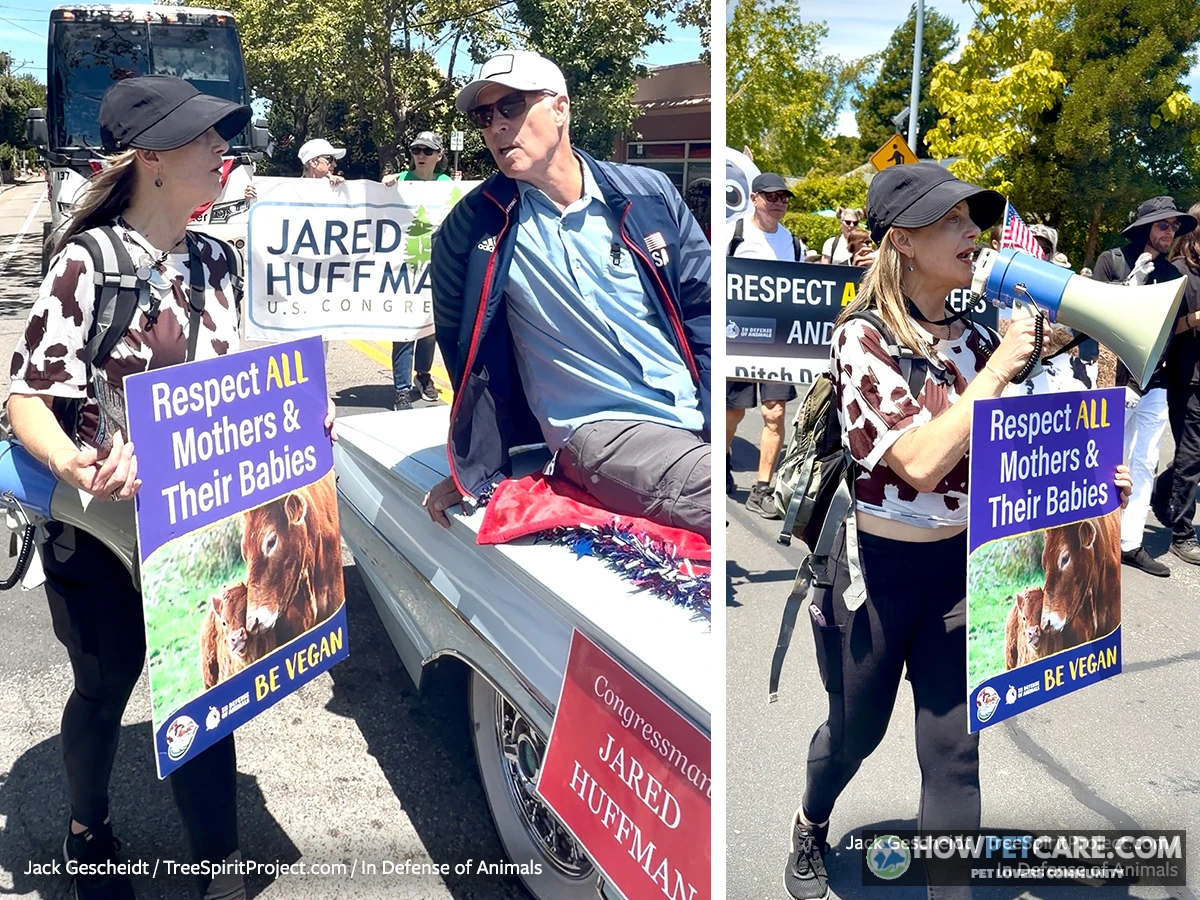
Advocates for farmed animals may seek changes to housing, handling, transport, or slaughter practices. Depending on the issue, the decision-maker might be a state legislature, a regulatory agency, a food company, or a retailer whose purchasing standards influence suppliers.
For example, a customer group could ask a grocery chain to publish a measurable animal-welfare sourcing policy and report on its implementation each year. The request should name the animals, products, standard, and deadline—not just ask the company to “do better.”
Wild animals: habitat, wildlife trade, and captivity
Wildlife advocacy can focus on habitat protection, trade, human-wildlife conflict, or conditions for animals in captivity. Depending on the issue, the authority to act may rest with a wildlife agency, local government, land manager, or federal regulator.
The same decision process applies to captive wildlife, including animals in roadside exhibits or circuses. These issues raise distinct welfare questions and involve different rules, so look into the relevant facility and jurisdiction before choosing a tactic.
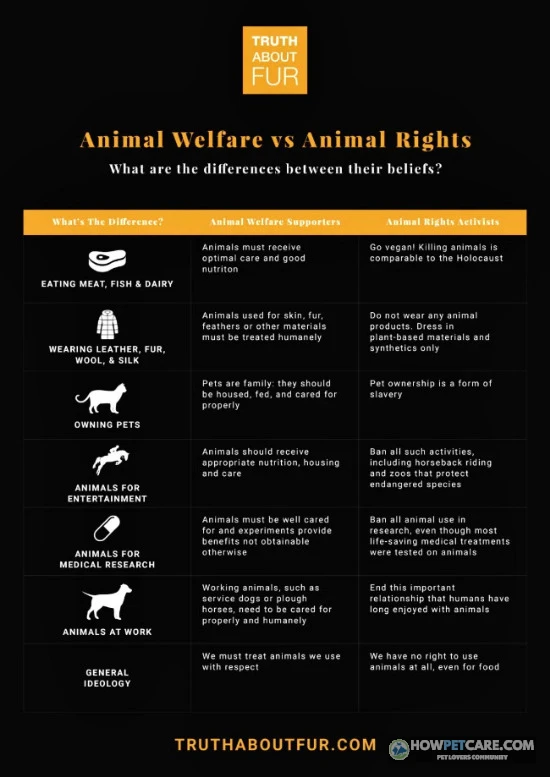
Animal Welfare vs. Animal Rights Advocacy: Where They Differ and Where They Conflict
Side-by-side differences in goals and typical tactics
These are broad perspectives, not fixed categories. People in each movement disagree about priorities and tactics, and many organizations use a mix of approaches.
| Question | Animal welfare perspective | Animal rights perspective | Possible overlap or tension |
|---|---|---|---|
| What is the central concern? | Improving animals’ conditions and reducing suffering, including where humans use animals | Protecting animals’ interests in ways that may rule out certain human uses | Both can seek less suffering; they may differ on whether a particular use should continue |
| What might success look like? | Better care, enforceable standards, and reduced harm | Ending or limiting practices viewed as violating animals’ interests | Both may support cruelty prevention or veterinary access |
| How might advocates act? | Seek stronger care standards, services, oversight, or education | Seek restrictions or an end to a use, as well as education and other reforms | Either may use policy, education, corporate engagement, or direct services |
When an immediate improvement and a long-term goal pull in different directions
Consider a proposal to give animals in confinement more space. A welfare advocate might support it as a practical way to reduce suffering. A rights advocate might also support it, or might oppose it because it could make a system they want to end seem more acceptable. The actual effects depend on the proposal and how it’s enforced; the label alone doesn’t tell you which position someone will take.
Be specific about both the immediate request and the longer-term goal. Ask: What changes for which animals, by when, and how will we know? A reform can matter without solving everything, and a commitment to long-term change doesn’t make immediate care irrelevant.
 You might be wonderingMaltrato animalAnimal Abuse: How to Recognize, Report, and Escalate ItRead the answer
Policy, Corporate, Education, or Direct Services: Which Approach Fits You?
Start with the target, not the tactic. A public petition can help if it reaches someone with authority and makes a specific request. A signature count by itself shows support; it doesn’t show that conditions for animals have improved.
Comparison of advocacy methods
| Approach | Typical target | Best fit for | Limitations | Observable outcomes | Time horizon |
|---|---|---|---|---|---|
| Policy advocacy | City council, county budget office, legislature, or public agency | A problem depends on a public rule, budget, or service standard | Adoption can take time and does not guarantee enforcement or access | Rule or budget adopted; funds spent; services delivered; compliance data | Months to several budget cycles |
| Corporate campaign | Retailer, food company, or supplier policy team | A business can change a purchasing or sourcing practice | A pledge may have a distant deadline or lack transparent verification | Share of purchases meeting the standard; implementation reports; supplier audits | Months to years |
| Public education | School, community audience, or public-facing institution | A specific knowledge gap may contribute to a welfare problem | Attendance and engagement do not establish changed behavior | Follow-up evidence of changed practice or use of a relevant service | Weeks to months, with follow-up |
| Direct services | Animals and caregivers served through a clinic, shelter, foster network, or pantry | An immediate need can be met with available capacity | Individual services may not change the conditions creating demand | Animals treated or fostered; procedures completed; wait times; cost per service | Days to months |
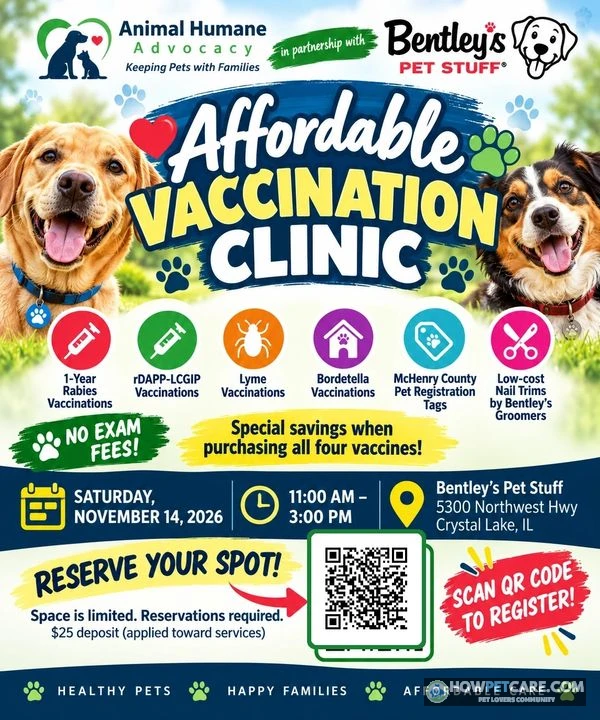
Think about how much time you can give each month, whether you have relevant evidence or a local story, and whether you or a partner can reach the decision-maker. If you want visible results for individual animals, a clinic or foster program may suit you. If the obstacle is a public budget, you may need a policy request.
These approaches can support each other. A service provider may spot recurring barriers to access. Advocates can use appropriately shared, anonymized information to ask the responsible office for a longer-term response.
For a first project, choose an issue with a named decision-maker and a request you can explain in one sentence. A smaller, testable request is easier to follow than a broad demand to fix every problem at once.
A Step-by-Step Plan: Choose an Issue, Find the Decision-Maker, Act, and Follow Up
Match the issue to who can change it
Use this sequence for a local pet issue, or adapt it to farmed animals and wildlife.
-
Choose one problem
Describe the affected animals, location, and barrier. For example: residents report long waits for affordable dog and cat spay/neuter appointments.
-
Gather basic evidence
Check clinic availability and wait times, relevant budgets or rules, and shelter records where appropriate. Record sources and dates, and mark unknowns.
-
Verify authority
Find the office, board, agency, or company team that controls the relevant budget, rule, or practice. Check an official document or ask the organization directly.
-
Make a specific request
Ask for a defined action, such as a meeting, a published service assessment, or a budget proposal for a time-limited pilot.
-
Act and set a follow-up
Send an email, make a public comment, request a meeting, or coordinate a joint letter. Put a follow-up date on your calendar.
-
Review the result
Compare the response and any implemented changes with your measure of progress. Continue, adjust the request, find a better target, partner with others, or stop.
For a shelter issue, a city council might approve funding while an animal-services department runs the program. A nonprofit shelter may have its own board. Read the relevant budget, contract, or governing documents before assuming who can act. If authority is unclear, ask the agency: “Who decides this, and when is the next decision scheduled?”
Write a request with a clear ask
A useful request names an action and a decision point: “Please include a proposal for a low-cost spay/neuter pilot in the next budget discussion and explain how residents can comment.” If the right solution isn’t clear yet, asking for a hearing or assessment can be a reasonable first step.
Don’t present one complaint or a small survey as the whole picture. Shelter intake figures, for example, may help describe demand, but they don’t establish why animals entered a shelter or whether a particular service will reduce intake.
What to do after the first message or meeting
Send a brief thank-you and summarize any commitments, open questions, and agreed next steps. Record who responded and when. If no date was agreed, suggest one. If there’s no reply, follow up courteously with the original request and an offer to provide evidence.
Set a later review date, too. A meeting can open access to a decision-maker, but a completed service, adopted rule, or verified change in practice is a different—and more substantial—result.
Applying the same steps to farmed and wild animals
For farmed animals, identify the retailer’s sourcing team, ask for a defined standard and reporting timeline, then check purchasing reports or audits rather than relying on a pledge alone. For wildlife, identify the agency responsible for a specific rule or habitat decision, review its public materials, and submit relevant evidence through the process it identifies.
How to Contact Elected Officials and Support Animal Welfare Legislation in the United States
Local, state, and federal: who handles what
Local governments often make decisions about animal-control services and local budgets. States commonly address cruelty laws and other animal standards. Federal agencies and Congress have roles in areas such as interstate commerce and wildlife. Responsibilities can overlap, so check the specific rule and jurisdiction before writing.
Find local officials on your city or county government website. For state representatives, use your state legislature’s official website and district lookup. For federal representatives, use the official U.S. House and Senate websites. If your question is about how an existing program works, agency staff may be a better first contact than an elected official.
Before asking someone to support animal welfare legislation, read the bill or ordinance and check its status on the relevant government website. Confirm its number, what it would do, and whether the person you’re contacting can vote on or implement it. This is general information, not legal advice; rules for paid lobbying and public participation vary by jurisdiction.
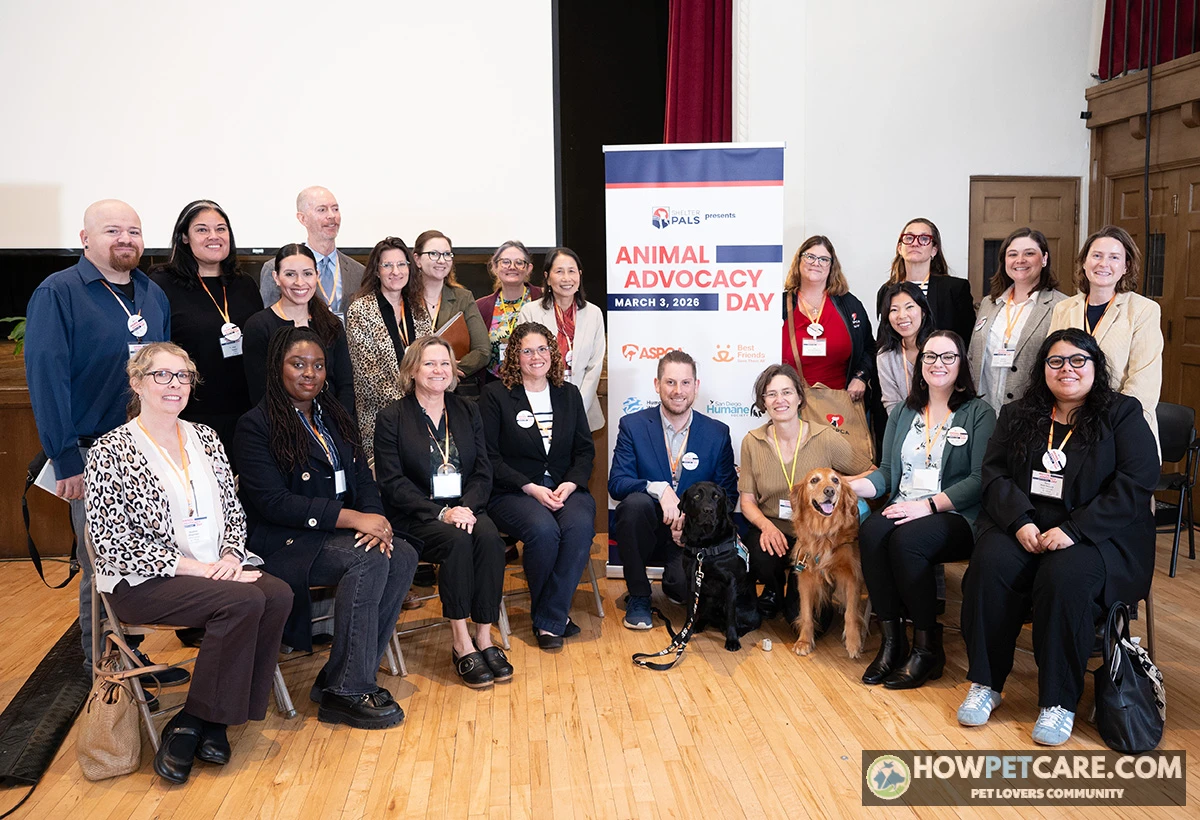
Writing and sending a message that gets a response
You can email, call, attend a town hall, submit a public comment, or request a meeting with an official or staff member. A concise message with a clear request is easier to answer than a general appeal.
Subject: Request about affordable spay/neuter access
Hello,
I live in your jurisdiction and am writing about access to affordable spay/neuter appointments. Residents report long waits for appointments.
Please include a proposal for a low-cost spay/neuter pilot in the next budget discussion and explain how residents can comment. Would you let me know whether your office can take this step, or who is responsible? I can share a short summary of the issue.
Thank you.
Include your name and neighborhood or ZIP code, and add a source or date for any local fact when available. You can also suggest a reply date.
A requested reply date doesn’t guarantee a response. If the office points you to another decision-maker, verify that person’s role and redirect your request.
Evaluating and joining an animal advocacy group
To find animal advocacy organizations in the United States, start with local humane societies, shelters, rescue organizations, and state or national groups working on your chosen issue. Look for a specific local campaign or service rather than joining based on a name alone. The ASPCA and Animal Welfare Institute are examples of national organizations to investigate; a local group may have closer access to the decision you want to influence.
Before joining or endorsing a group, check:
- Mission and methods: Does it explain its goals and how it handles welfare-versus-rights disagreements?
- Local relevance: Can it identify the affected animals and the decision-maker it’s trying to reach?
- Transparency: Does it identify leadership, explain how funds are used, and distinguish pledges from verified results?
- Participation: Are there realistic tasks for your skills and schedule, and can volunteers ask questions without pressure to repeat unsupported claims?
Topics such as laws restricting undercover investigations and the proposed Save Our Bacon Act raise distinct questions about state authority and animal protection. Check the actual text and current legislative status before taking a position on either measure.
Advocating for Veterinary Care and Spay/Neuter Access in Your Community
Identify the barrier in your area
Pet welfare can be affected by cost, distance, transportation, language access, limited clinic capacity, or housing restrictions. Match the proposed solution to the obstacle: a voucher may not help much if appointments aren’t available or a caregiver can’t get to the clinic.
Ask clinics, shelters, rescue organizations, veterinarians, and community groups what they can share about appointment availability and wait times. A short, anonymous community survey can reveal possible barriers, but note how respondents were recruited and don’t assume a small sample represents everyone. Protect personal information and get permission before sharing records.
Match each barrier to a decision-maker and a request
| Barrier | Who can change it | Example request | Progress indicator |
|---|---|---|---|
| Cost of appointments or surgery | County budget office, grant administrator, or participating provider | Consider a funded voucher pilot for eligible residents | Completed appointments and cost per appointment |
| Transportation or distance | Local grant administrator, community partner, or clinic | Test transport assistance or a mobile-service partnership | Completed visits, missed appointments, and participant feedback |
| Limited appointment capacity | Clinics, shelter partners, or a public funder | Assess whether additional clinic sessions or a veterinary-school partnership are feasible | Available and completed appointments; wait times |
| Language barriers | Service provider or agency | Provide translated booking information and appropriate interpretation | Successful bookings and feedback from users |
| Restrictions affecting pets in housing | Housing provider or relevant local authority | Review a specific rule and consider a documented change | Rule reviewed or changed; residents’ reported access |
Confirm who has authority in your community; a county funder can’t necessarily set a private clinic’s schedule. State veterinary-practice and licensing rules may also affect how services can be delivered. Before proposing changes, ask the relevant state authority and participating veterinarians.
Pair a policy request with a service-based pilot
Hypothetical example: A neighborhood group hears that residents are waiting several weeks for affordable dog and cat appointments. It asks two clinics and a shelter to review available appointment records and a short anonymous survey. Respondents often report transportation as an obstacle, and the clinics say they have capacity for a small Saturday pilot. The sample is limited, so the group doesn’t claim it represents the whole county.
The group checks the rules for a county animal-services grant and confirms that transport is eligible. It asks the department to allocate $4,000 for a 12-week pilot, reimbursing participating providers for transport support for up to 40 completed appointments. These figures and the grant are invented for this scenario, not reports of an actual program.
The group sends the request on May 6, asks to meet by May 20, and plans to follow up on May 21 if there’s no reply. If funded, partners would track completed appointments, no-shows, participant-reported transport access, and cost per completed appointment. At the end of the pilot, they’d compare those measures with their targets and explain what the small sample can’t show.
A foster network or community group could also offer volunteer transport while a funding request is pending, provided it coordinates safely with the clinic and caregivers. A funded pilot is a step forward; completed appointments and participant feedback provide stronger evidence of whether it helped people access care.
Track more than the number of referrals or vouchers issued. Compare completed visits, wait times, costs, and participant feedback with the problem you identified, while protecting personal information.
Dated Campaign Examples: Commitments, Implementation, and Documented Results
Reading a campaign timeline: pledge, rollout, verified outcome
A campaign claim is more useful when it identifies a decision, its date and jurisdiction, what happened afterward, and who verified the result. For the examples below, the available evidence establishes a reported decision, but not a dated implementation timeline or an independently measured animal-welfare outcome. Treat them as starting points for checking public records, not proof of lasting impact.
- New York City, companion and working animals: The New York City Council voted to pass a law banning commercial horse-drawn carriages. The supplied record doesn’t establish the vote date, implementation date, any subsequent legal changes, or the outcome for horses. As of 2026, the current legal and implementation status and any animal-welfare outcome remain unverified here; check the city’s official legislative record and implementation materials before describing them as established.
- Connecticut, wildlife: Connecticut enacted the Big 5 African Trophies Act, restricting trade in body parts from five African wildlife species. The supplied record doesn’t establish an enactment date, enforcement results, subsequent changes, or independently documented effects on wildlife. Check the state’s official statutes and agency reports before relying on it as a current example.
Neither example shows that a particular campaign alone caused the decision. A bill’s passage, a company’s pledge, and verified changes for animals are separate milestones.
What counts as evidence and what does not
When assessing a claim, ask who reported it, what was measured, what comparison was used, and over what period. A government budget or enacted rule can verify a public decision. Spending records, inspections, service records, or independent audits may help establish implementation. Even then, better implementation doesn’t automatically prove a measured welfare improvement.
Signatures, messages, and shares can show support or organizing activity. They don’t establish that a decision-maker acted, a program operated, or animals benefited. If implementation records aren’t available, say so rather than filling the gap with assumptions.
Comparing Campaign Impact with Direct Rescue and Service Work Without Overstating Results
Cost, uncertainty, attribution, and time horizon
Direct services often produce countable near-term outputs, such as completed appointments or animals fostered. Campaigns may affect a broader population, but a decision, funding, implementation, and use can all remain uncertain. Other advocates, political changes, and market conditions may contribute to an outcome, which makes attribution difficult.
Illustrative planning exercise: The following figures are invented. They describe two possible one-year projects, not evidence about actual programs or a ranking of approaches.
| Item | Veterinary-service pilot | Policy advocacy campaign |
|---|---|---|
| Budget assumption | $12,000 for vouchers, transport, and administration | $12,000 for staff time, research, meetings, and outreach |
| Assumed outcome | 120–180 completed appointments, depending on costs and clinic capacity | No result guaranteed in year one; if a budget is adopted and implemented, later capacity might support 300–600 appointments annually |
| Simple calculation | Approximately $67–$100 per completed appointment, based on the assumed range | No defensible cost per appointment yet: adoption, funding, delivery, and use are uncertain |
| Main uncertainty | Some appointments might have happened without assistance; capacity could limit delivery | Other groups or budget pressures may contribute; future appointments may not materialize |
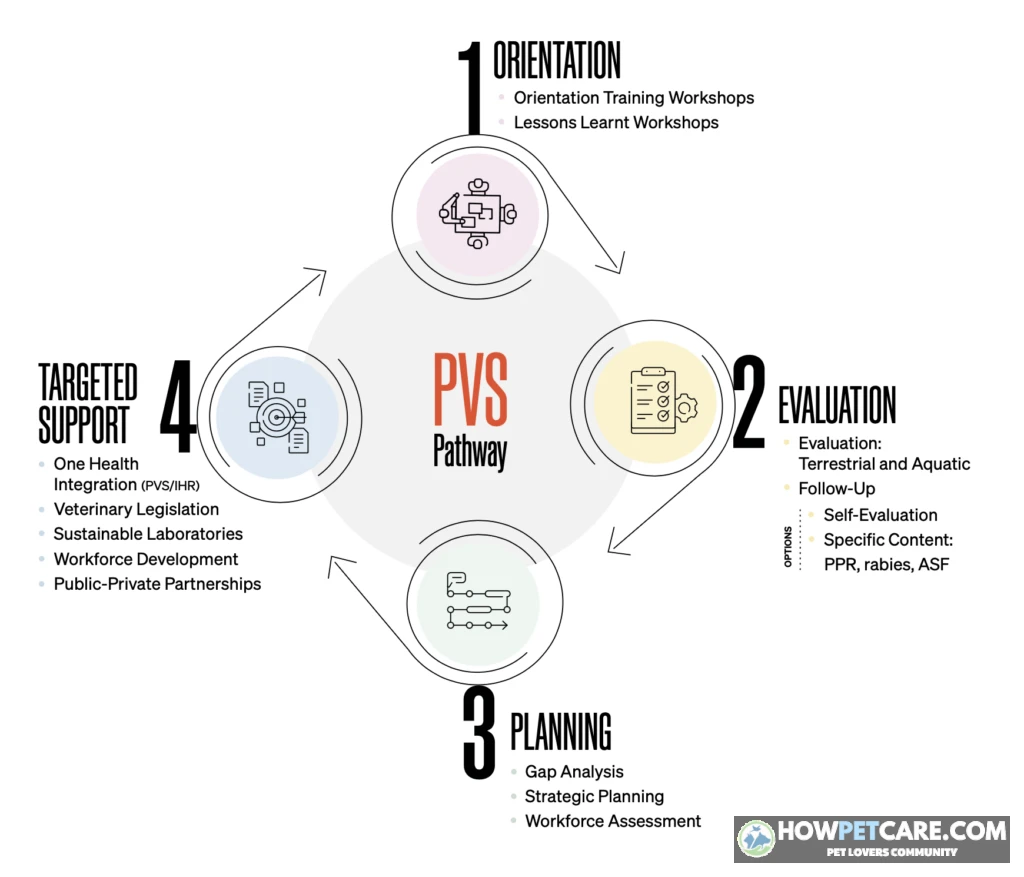
The direct-service calculation includes only the assumed project budget. It doesn’t establish how many visits would have happened without assistance or the welfare effect of each appointment. The campaign estimate is conditional and refers to a later period, so dividing its budget by the hypothetical appointment range would be misleading. Future service delivery would also need its own funding.
Questions to ask before you commit time or money
Ask which costs are included, whether volunteer time is counted, what outcome is being measured, and whether the estimate covers a comparable period. Look for ranges, evidence of implementation, and an explanation of what might have happened without the project. Be cautious when one program reports animals reached and another reports animals helped; those aren’t necessarily equivalent measures.
A campaign may have a broad potential reach, while a service may have more immediate countable results. Neither fact alone establishes which approach is more cost-effective.
Defining progress measures and a review date
Set a six- or twelve-month review that fits the project. For services, review completed appointments, costs, wait times, and feedback. For advocacy, track the decision sought, any adoption and spending, implementation, and eventual use. Separate your contribution from the contributions of partners and other plausible causes.
A community can pursue both paths: provide help now while gathering evidence for a well-defined, longer-term request.
Your Next Steps: A Decision Checklist for Your First 30 Days
A 30-day action checklist
Use one sheet for one issue. If you don’t know an answer, write “unknown” and note how you’ll check it.
- ☐ Affected animals: Which animals are affected, where, and approximately how many? Separate confirmed counts from estimates.
- ☐ Problem evidence: Write a one-sentence problem statement. Record sources and dates, plus gaps or conflicting evidence.
- ☐ Desired change: Describe the condition, service, rule, or budget decision you want changed—not just the activity you plan to undertake.
- ☐ Decision-maker: Name the responsible office, board, agency, or company team. Verify its authority in a policy, budget, organizational document, or direct inquiry.
- ☐ Resources: Note your available time, skills, partners, evidence, and funds, as well as what’s outside your capacity.
- ☐ First action and request: Choose a feasible action, such as requesting a meeting or proposing a limited pilot. Write down who will do it and by when.
- ☐ Follow-up and measure: Put a date on your calendar and choose a measure tied to the intended change, such as appointments completed or a budget item adopted.
If you can’t yet name the decision-maker or the change you’re seeking, use your next step to narrow the problem and verify who has authority before recruiting supporters.
Choosing your next step by available time
With 30 minutes, find the relevant office, watch part of a public meeting, or send one specific email. With a few hours a month, join a suitable group, collect local information, or help a clinic or foster network. With a regular commitment, coordinate partners around a bounded campaign or help run a service project with an established provider.
Pet owners might start by checking local veterinary and spay/neuter access. Farmed-animal supporters might look at a retailer’s sourcing policy. Wildlife supporters might identify an agency decision affecting local habitat or captive animals. For deeper research, explore the distinct issues raised by ag-gag laws, the Save Our Bacon Act, or circus animal treatment, checking current primary sources for each.
At your review date, ask whether your target has authority, whether the request still fits the evidence, and whether there’s a credible path to the intended change. Continue if progress supports it. Otherwise, change the request or target, find a partner with relevant access, or stop and choose a better-defined problem.
 You might be wonderingFarm animal welfareFarm Animal Welfare: A U.S. Guide to Standards and LabelsRead the answer
FAQ
How can I advocate for animals in my community?
Start with a specific local problem, such as limited access to low-cost spay/neuter services. Identify who can address it, make a clear request, and follow up; you can also volunteer with a local rescue or humane society.
What are examples of animal advocacy beyond lobbying?
Examples include humane education, fostering shelter animals, supporting low-cost veterinary clinics, and asking companies to improve animal-welfare policies. Reporting suspected cruelty to the appropriate authorities is another way to help.
How can I find animal advocacy organizations or groups to join?
Look for local humane societies, shelters, rescues, and state or national animal protection groups. Check their goals, how they report results, and whether their volunteer opportunities fit your skills and schedule.
How can I start a career or find a job in animal advocacy?
Volunteering or interning with a shelter or advocacy group can build experience in outreach, policy, or operations. Check animal welfare organizations’ job boards and compare the skills required for roles that interest you.
Is signing a petition enough to help animals?
A petition demonstrates public support but does not guarantee a change in conditions. It can be more useful when directed at a decision-maker with a specific request and followed by meetings, public comments, or other action.