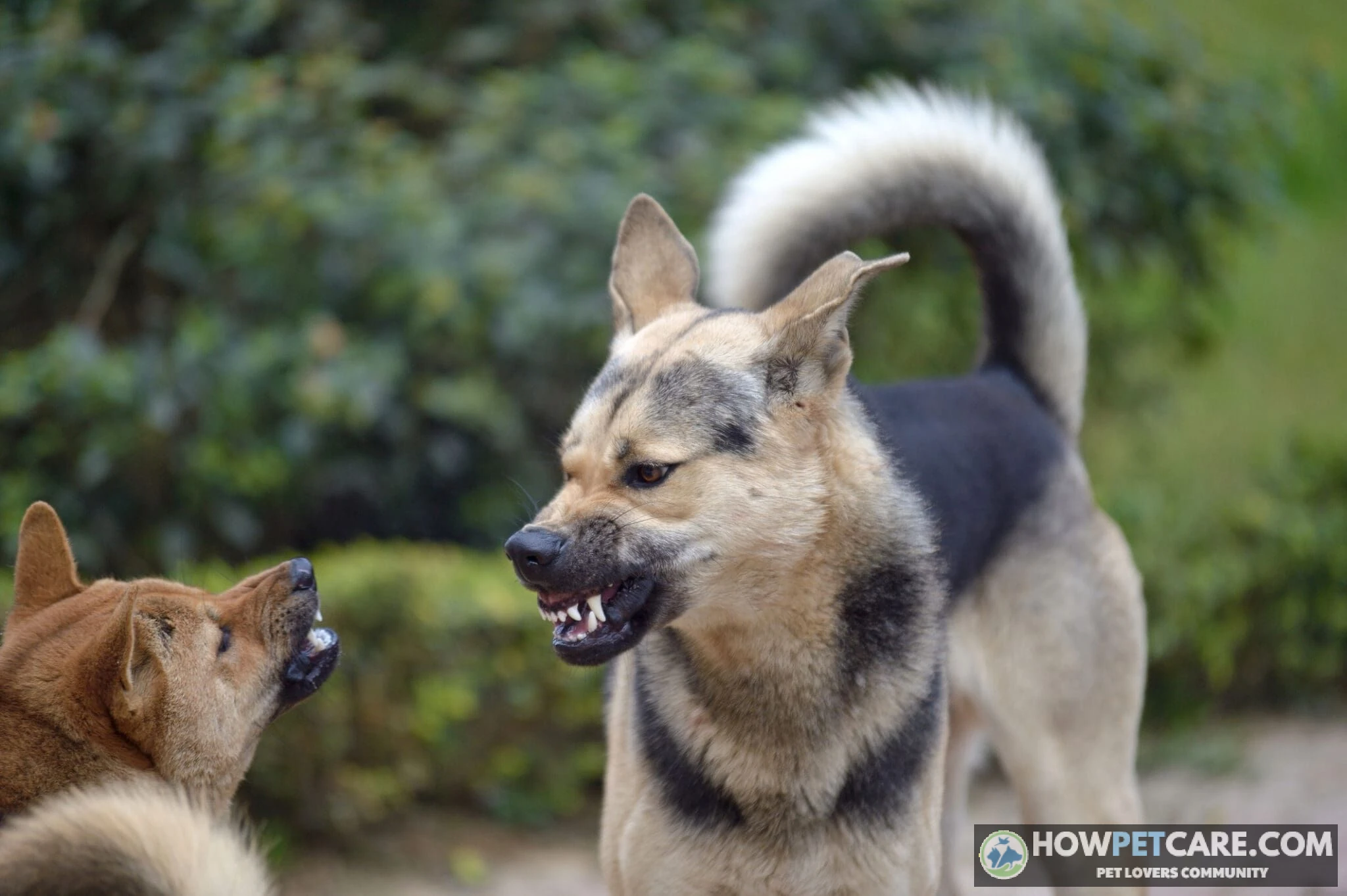

To stop dogs from fighting without getting bitten:
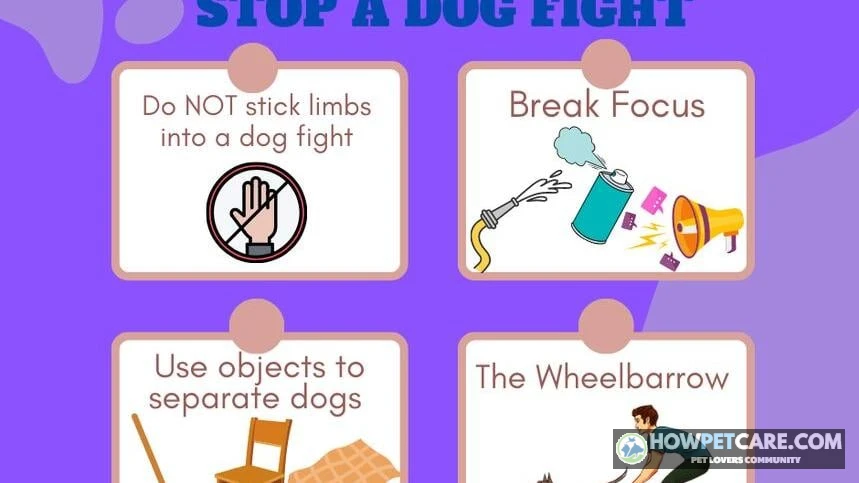
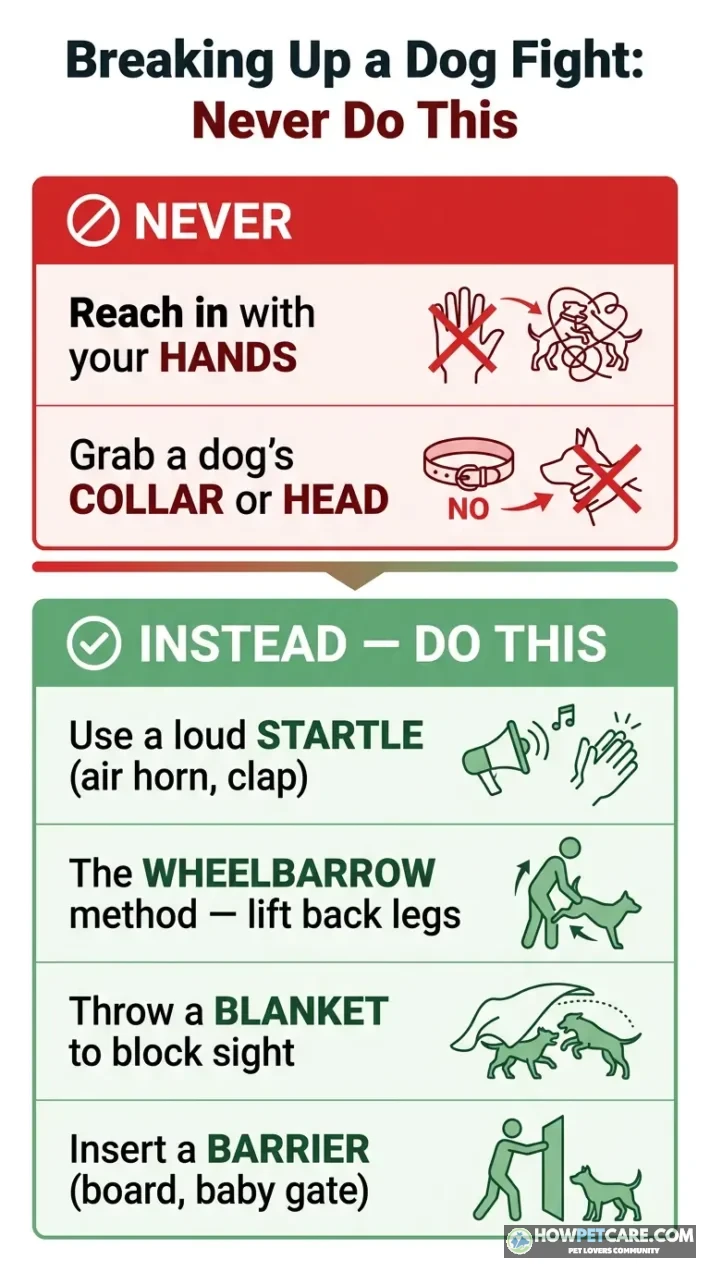
- Stay calm—never scream, grab collars, or reach between their heads.
- Slide a rigid barrier (board, baby gate, cushion) between their faces, or spray citronella/water across the muzzle line.
- With a helper, use the wheelbarrow lift: each person grabs one dog’s hind legs and pulls backward in opposite directions.
- Secure each dog behind a separate closed door for at least 30–60 minutes.
- Check both dogs—and yourself—for puncture wounds, then address the trigger that caused the fight.
How to Break Up a Dog Fight Safely: The First 60 Seconds
If your dogs are fighting right now, stay calm. Don’t scream, reach between their heads, or grab their collars. During a high-arousal fight, dogs experience involuntary sensory overload: a touch to the neck, head, or collar area can trigger a redirected bite before the dog realizes who’s touching them [#N]. Use the lowest-risk physical barrier or lifting technique available, walk the dogs backward in opposite directions, and immediately secure them behind separate closed doors.
Never put your hands, arms, or face near fighting dogs’ mouths. A fighting dog may not recognize its owner in the middle of a clash; reflex snaps can pierce hands and sever nerves. Direct hands-on collar grabs are the single leading cause of severe human bite injuries during dog fights.
Follow this 10-second decision path during a fight to separate the dogs without putting yourself in the bite zone:
- Is contact still happening?
- No, dogs have separated: Don’t let them make eye contact or re-engage. Close a door or gate between them immediately, leash or crate each dog, and proceed to post-fight checks.
- Yes, they are actively locked or snapping: Proceed to Step 2.
- Is a second adult present?
- Yes: Perform the two-person wheelbarrow lift simultaneously. Both handlers lift the hind legs at the exact same moment, pull backward in opposite arcs, and isolate each dog behind a solid door.
- No, you are alone: Proceed to Step 3.
- Can you grab a barrier, leash, hose, spray, or air horn within 3 seconds without stepping between them?
- Sturdy barrier (board, baby gate, large cushion, trash-can lid, heavy laundry basket): Slide or drop the object directly between their faces to break eye line and contact.
- Hose or bucket of water: Douse their faces directly to trigger a momentary gasp and release.
- Citronella spray or compressed-air horn: Discharge directly across the muzzle line from 2–3 feet away.
- Leash: Loop the leash around one dog’s hindquarters or flank (never the neck), pull backward, and anchor that dog to a post or door.
- No tools available: Proceed to Step 4.
- Are you alone with zero tools?
- Make a single, explosive sound (clap hands hard once or drop a heavy object); don’t keep yelling.
- Grab an improvised barrier: a couch cushion, inverted dining chair, heavy winter coat, or trash bin.
- If one dog has a clamped grip and the other isn’t latching, use a solo wheelbarrow lift on the biting dog’s hind legs and back away rapidly.
- If both dogs are locked jaw-to-jaw and there’s no safe physical leverage, step back. Don’t thrust your limbs into their jaws; wait for a split-second shift in grip to insert an object.
- After the split: Keep both animals behind solid barriers with no line of sight for at least 30 to 60 minutes before assessing wounds or causes.
If You Have Someone to Help: The Two-Person Wheelbarrow and Barrier Method
When two capable adults are present, the wheelbarrow technique offers the most reliable mechanical separation without placing hands near the strike zone. Coordinate your movements before either person touches a dog.
-
Coordinate the timing
Make direct eye contact with the second handler. Confirm that both handlers are ready to move at the count of three, so one dog isn’t left free to bite an immobilized partner.
-
Grip the hind legs
Approach from behind each dog’s spine. Reach down and grasp each dog by the rear legs at the hocks or upper thighs, like picking up the handles of a wheelbarrow. Never lift by the tail or the loose skin of the flank.
-
Lift and walk backward
Lift both back legs completely off the ground so the dogs lose rear traction. Immediately walk backward in opposite directions, turning your body slightly in a gentle curve so the dog cannot whip its head around to redirect a bite onto your legs.
-
Isolate behind closed doors
Back the dogs directly into separate rooms, crates, or exterior yards. Swing a solid door shut and latch it before lowering the dog’s rear legs to the floor.
Never drop the dogs on the floor while they can still see each other. Adrenaline keeps arousal levels high; if released in the same room, they can pivot and collide with greater intensity.
If You’re Alone With No Leash, Hose or Tools
Breaking up a fight between two large dogs alone is especially dangerous. Without a partner, prioritize leverage and your own safety.
If a leash is within reach, loop it around one dog’s hindquarters—never the neck—pull backward, and anchor that dog to a door handle or heavy post so you can deal with the second dog. If a solid barrier such as a baby gate, board, or trash-can lid is within reach, slide or drop it between the dogs’ faces to break eye contact first, then split them while they’re disoriented. With no tools at all, rely on improvised household objects and the techniques below.
First, look around for large household objects. A couch cushion, an overturned coffee table, a rigid plastic laundry basket, or a large folded blanket tossed over both dogs’ heads can temporarily break visual targeting. When a dog loses sight of its target and feels an unfamiliar object over its head, it will often release its bite to orient to the new sensation.
If you must intervene physically because one dog is causing life-threatening trauma and has a sustained grip, use the solo wheelbarrow lift on the aggressor. Lift the gripping dog’s rear legs off the floor and pull backward. The other dog may try to retaliate; use your body angle to drag the gripping dog into a nearby room or bathroom, slide through the doorway, drop the hind legs, and slam the door shut between them. If one dog has latched and clamped down, never yank the dogs apart while the bite is engaged. Doing so tears skin and muscle, multiplying tissue damage.
If both dogs are actively locked and rolling, putting your body between them can cause severe injury. Don’t grab tails—dogs can easily curl upward and bite your hands. Wait for a positional reset while fetching a chair or blanket rather than sacrificing your hands.
What Not to Do While the Fight Is Happening
Panicked reactions can make a fight worse. Avoid these mistakes:
- Never reach for collars or heads: Placing hands anywhere near the jaw line invites a severe, deep puncture wound from redirected aggression.
- Do not pull dogs apart while teeth are locked: If a dog has skin clamped in its jaws, dragging them apart can turn a puncture into a deep, jagged laceration requiring emergency surgical reconstruction.
- Do not scream, shriek, or physically beat the dogs: High-pitched screams mimic prey sounds and heighten arousal. Hitting dogs increases fear and pain, driving them into a deeper fight-or-flight state.
- Never assume dogs will "work it out": Domestic dogs locked in a true fight rarely stop spontaneously once predatory arousal or intense defensive aggression takes over. Waiting can lead to catastrophic veterinary trauma.
Dog Fight Breakup Methods Ranked by Risk: What Works, What Fails, What to Keep on Hand
Every intervention involves trade-offs in speed, risk to you, and potential harm to the dogs. Knowing the differences can help you avoid wasting vital seconds on an ineffective tool.
| Method | Risk to You | Risk to the Dogs | Needs a Helper? | Best Used When | Where It Fails |
|---|---|---|---|---|---|
| Wheelbarrow hind-leg lift | Medium: hands are on the rear, but dogs can whip their heads back | Low-medium if lifted by legs; risk of joint strain if yanked violently | Strongly preferred | Two people can grab both dogs simultaneously and pull in opposite directions | Solo handler dealing with both dogs locked on each other; very heavy dogs (>90 lbs) |
| Physical barrier (gate, board, large cushion, lid) | Low: keeps a solid shield between your body and teeth | Low: may startle; non-injurious | No | Early clash or before bites are clamped; sliding between dogs to break line of sight | No rigid item nearby; dogs climb or maneuver around small barriers |
| Citronella spray (e.g., PetSafe SprayShield) | Low: discharged from 3–5 feet away | Low: temporary sensory disruption; avoids caustic chemical harm | No | Approaching arousal; early snapping phase before jaws clamp shut | Fully escalated, locked fights where dogs ignore sensory irritants; windy conditions |
| Water hose / heavy bucket of cold water | Low: deployed from a safe standing distance | Low: startle reflex, safe for eyes and skin | No | Outdoor yards or kennel spaces where high-pressure water is instantly accessible | Indoor living rooms; dogs that enjoy water; prolonged application that delays physical separation |
| Sudden loud noise (air horn, metal pots) | Low: operator remains outside the strike zone | Low: safe, though can cause brief noise aversion | No | First 1–2 seconds of stiff posturing or initial charge | High-arousal fights; dogs already locked in contact ignore acoustic stimuli entirely |
| Compressed-air deterrent (e.g., Pet Corrector) | Medium-low: requires proximity (2–4 feet) | Low: hiss startles without physical impact | No | Early posturing or interrupter for rough play crossing the line | Deeply aroused fights; can trigger redirected reactivity toward the handler |
| Break stick (parting tool) | High: requires placing hands within inches of a clamped jaw | Medium-high: risk of broken teeth, palatal punctures if twisted incorrectly | Yes, ideally | Dog with a sustained clamped bite that refuses to release; trained handlers only | Non-gripping scuffles, loose snapping; untrained handlers; breeds with non-clamping bite styles |
A break stick is a specialized wedge designed to pry open the jaws of a dog with a clamped, sustained bite. It’s not an everyday household tool. Using one requires specialized mechanical knowledge and a secondary handler to restrain the second dog, and it brings your hands directly into the biting zone. Twisting it improperly can fracture a dog’s premolars or puncture its soft palate. Reserve this tool for a properly trained handler managing dogs with known holding-bite tendencies.
Which Tool to Keep by the Door
For a standard multi-dog household, mount or store an emergency response kit near a high-traffic area, such as the back patio entrance or kitchen pantry:
- Citronella deterrent spray: Keep a 2.4 oz canister of citronella spray mounted near main doorways. The strong scent and hissing spray startle a dog’s acute olfactory system, providing a safer interruption than mechanical grabbing.
- Slip leads: Hang two nylon slip leads by the door. They let you loop a dog’s hindquarters from several feet away without fiddling with collar buckles or clip clasps.
- Rigid separation board or shield: A lightweight plastic panel, specialized kennel shield, or broad snow shovel can break visual contact and create a physical wedge without risking your fingers.
Review the setup with everyone in the household. Calmly walk through the motions: make sure everyone knows where the slip leads hang, how the spray nozzle unlocks, and which doors to close first when separating the dogs.
Why "Pack Leader" Corrections and Yelling Make Things Worse
Punishing dogs during a fight—by screaming, kicking, or attempting an "alpha roll"—draws on debunked dominance myths and increases the danger. Modern behavioral science establishes that dogs don’t fight to establish a rigid pack hierarchy or become the household "alpha" [#N]. Aggression is driven by acute emotional distress, fear, hyper-arousal, and perceived threats to safety or valued resources.
Physical punishment or screaming adds stress to an already flooded nervous system. The dog perceives the pain or violent noise as confirmation that the environment is unsafe, intensifying its struggle to defend itself. An "alpha roll" also places your vulnerable neck, face, and torso within inches of a panicked dog’s jaws, creating a serious risk of catastrophic injury.
What to Do After Separating Fighting Dogs: Wound Checks, First Aid and Vet Urgency
Once the dogs are in separate, closed rooms, step away and take five deep breaths. Adrenaline can cause tunnel vision, making it easy to overlook significant injuries on yourself or your pets.
| Method | Risk to You | Risk to the Dogs | Needs a Helper? | Best Used When | Where It Fails |
|---|---|---|---|---|---|
| Wheelbarrow hind-leg lift | Medium: hands are placed on the rear, but dogs can whip their heads back to bite | Low-medium if lifted by legs; risk of joint strain if yanked violently | Strongly preferred | Two people can grab both dogs simultaneously and pull in opposite directions | Solo handler dealing with both dogs locked on each other; very heavy dogs (>90 lbs) |
| Break stick (parting tool) | High: requires placing hands within inches of a clamped jaw | Medium-high: risk of broken teeth or palatal punctures if twisted incorrectly | Preferred | Dog has a sustained clamped bite and refuses to release; trained handlers only | Non-gripping scuffles or loose snapping; untrained handlers; breeds with non-clamping bite styles |
| Physical barrier (gate, board, large cushion, lid) | Low: keeps a solid shield between your body and teeth | Low: may startle; non-injurious | No | Early clash or before bites are clamped; sliding barrier between dogs to break line of sight | No rigid item nearby; dogs climb or maneuver around small barriers |
| Citronella spray (e.g., PetSafe SprayShield) | Low: discharged from 3–5 feet away | Low: temporary sensory disruption; avoids caustic chemical harm | No | Approaching arousal; early snapping phase before jaws clamp shut | Fully escalated, locked fights where dogs ignore sensory irritants; windy conditions |
| Compressed-air deterrent (e.g., Pet Corrector) | Medium-low: requires proximity (2–4 feet) | Low: hiss startles without physical impact | No | Early posturing or as an interrupter for rough play crossing the line | Deeply aroused fights; can trigger redirected reactivity toward the handler |
| Water hose / heavy bucket of cold water | Low: deployed from a safe standing distance | Low: startle reflex; safe for eyes and skin | No | Outdoor yards or kennel spaces where high-pressure water is instantly accessible | Indoor living rooms; dogs that enjoy water; prolonged application that delays physical separation |
| Sudden loud noise (air horn, metal pots) | Low: operator remains outside the strike zone | Low: safe, though can cause brief noise aversion | No | First 1–2 seconds of stiff posturing or initial charge | High-arousal fights; dogs already locked in contact ignore acoustic stimuli entirely |
Follow this post-fight triage process immediately:
- ☐ Make sure both dogs are completely separated behind latched doors before examining anyone.
- ☐ Inspect every human involved for puncture wounds or scratches under bright light.
- ☐ For human bites: wash wounds thoroughly under warm running water with antibacterial soap for at least 5 minutes, apply direct pressure with a clean cloth to stop bleeding, and wrap in sterile gauze.
- ☐ Seek medical attention at an urgent care or emergency room for any human bite that breaks the skin. Dog mouths harbor Pasteurella multocida and Capnocytophaga, bacteria that can cause systemic infections within 12 to 24 hours. Check your tetanus vaccination status (recommended if older than 5–10 years) and report the incident per local ordinances.
- ☐ Examine Dog A, then wash your hands and examine Dog B under high-intensity lighting.
- ☐ Part the fur down to the bare skin over high-impact zones: throat, ears, neck, armpits, groin, belly, and paws.
- ☐ Look for tiny puncture holes, wet or matted fur patches, localized heat, bruising, lameness, or signs of pain when touching specific areas.
- ☐ Assess the dogs for shock: check for pale or white gums, rapid shallow breathing, hypothermia, glazed eyes, or extreme lethargy.
- ☐ Contact your veterinarian or emergency clinic if any red-flag criteria are met.
- ☐ Document the incident in writing while the sequence of events is clear in your memory.
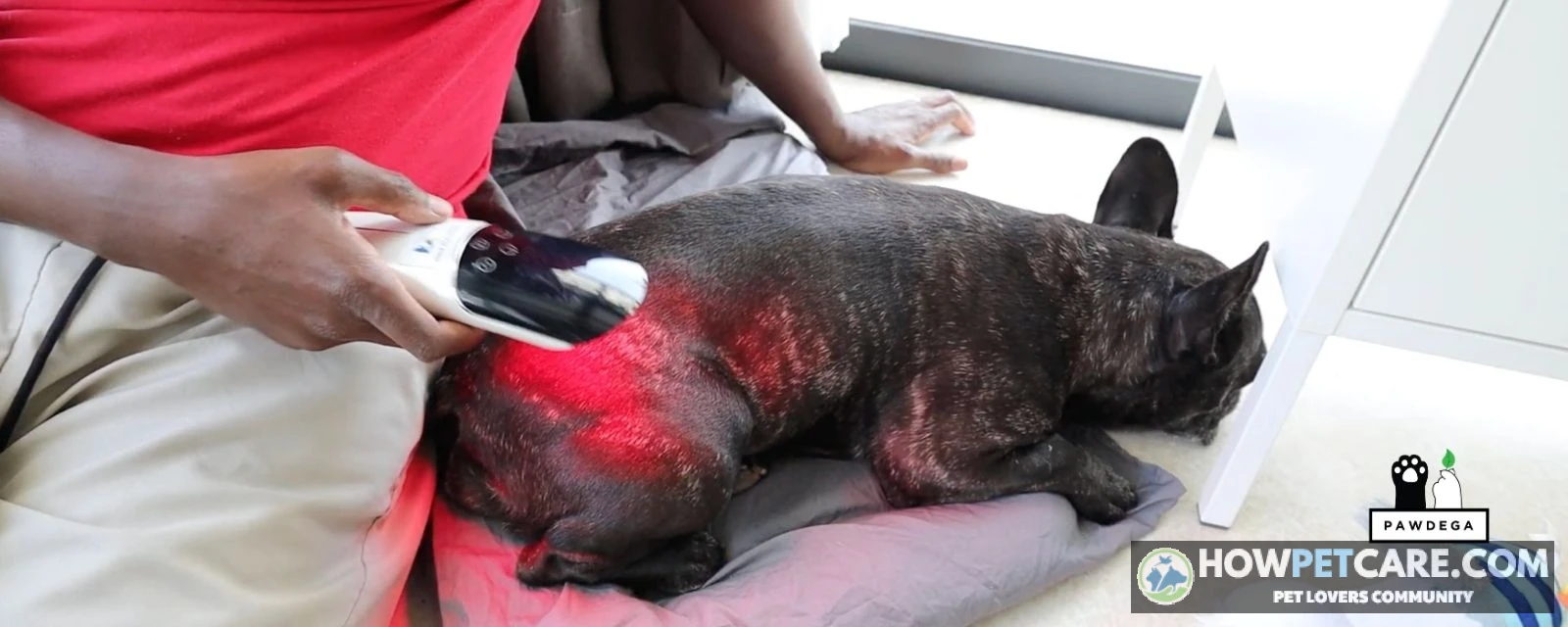
Treating a Bite on a Person
Human skin is far more fragile than canine skin. A bite that looks like a small surface hole can drive oral bacteria deep into fascia, tendons, and joints. Never tape a puncture wound closed or cover it with liquid bandages; sealing the wound creates an anaerobic environment where dangerous bacteria flourish. Wash it with plenty of water and soap, avoid aggressive chemical antiseptics like hydrogen peroxide that damage healing tissue, and consult a physician promptly.
How to Check Your Dog for Hidden Puncture Wounds
Dog skin is elastic and thick, especially around the neck and scruff. When a tooth penetrates, it acts like a needle: the skin stretches, the tooth punctures, and the underlying subcutaneous tissue tears away from the muscle wall. Veterinarians call this the "iceberg effect." A puncture no wider than an apple seed on the surface may conceal a large pocket of crushed, separated tissue underneath, creating dead space where abscesses or systemic sepsis can develop.
Run your bare fingers slowly across the dog’s entire body against the grain of the fur. Feel for damp patches, heat, swelling, or localized flinching. Pay special attention to the neck, behind the ears, the webbing between the toes, and the inguinal (groin) area where femoral blood vessels run.
Emergency Vet Now vs. Same-Day Visit vs. Home Monitoring
Assessing the injuries helps you decide whether to take your dog to an emergency clinic immediately or arrange an appointment later in the day.
Immediate Emergency Clinic Visits
Transport your dog to an emergency veterinary hospital immediately if you observe:
- Puncture or crush injuries to the chest, throat, abdomen, or eye
- Respiratory distress (gasping, rapid shallow chest movements, blue or pale gums)
- Arterial bleeding (pulsing or streaming blood that does not stop after 5 minutes of direct pressure)
- Severe lethargy, collapse, inability to stand, or signs of systemic shock
- Extensive skin tears where underlying muscle or adipose tissue is visible
Same-Day Veterinary Exam
Schedule an exam within 12 hours for:
- Any puncture wound that breaks the skin, no matter how small
- Moderate limping or obvious joint tenderness
- Persistent whimpering, trembling, or refusal to eat after calming down
- Ear flap tears (which bleed profusely and frequently require suturing to prevent aural hematomas)
Home Monitoring
Home care is appropriate only for minor, superficial scrapes that don’t penetrate the full thickness of the skin and show no signs of bruising, swelling, or lameness. Clean superficial scrapes with sterile saline solution. Never administer human pain medications such as ibuprofen, naproxen, acetaminophen, or aspirin; these are toxic to dogs and can cause fatal gastric ulceration or renal failure.
What to Write Down While You Remember It
Once the immediate medical situation is managed, record the objective facts of the fight in a notebook or on your phone. A veterinary behaviorist or certified trainer will need these details to create a behavior modification plan:
- Date and exact time: Note how long after meals, exercise, or waking up the fight occurred.
- Exact physical location: Hallway, doorway, backyard fence line, kitchen, or sofa.
- Preceding stimuli: Doorbell, presence of food, high-value chew, toys, or an owner entering the room.
- Initial body language: Who was standing where, who approached whom, and whether any vocalization occurred.
- Dunbar Bite Scale level: Determine whether the incident was a Level 1 (aggressive posturing, snapping, air bite with no contact), Level 2 (tooth contact on skin without puncture), Level 3 (one to four shallow punctures from a single bite), Level 4 (deep punctures with bruising or tearing, indicating clamping and shaking), or Level 5 (multiple Level 4 bites indicating predatory or unrestrained aggression).
Why Do My Dogs Keep Fighting All of a Sudden? Triggers and Medical Causes
When dogs who have peacefully coexisted suddenly fight, owners often wonder who’s "trying to be the boss." Dog-on-dog aggression, however, almost universally stems from unmanaged stress, acute fear, physical pain, or intense resource guarding.
[Underlying Stress / Pain / Fear]
               +
[Environmental Trigger (Food / Door / Space)]
               +
[Elevated Arousal / Trigger Stacking]
               =
       [Outbreak of Fight]
Stacked triggers—such as a lack of sleep, loud household renovations, and a passing thunderstorm—can push a dog’s baseline stress past its threshold. A minor interaction over a doorway can then tip into a full-scale fight.
Fear, Stress and Arousal: What Is Actually Driving the Fight
Aggression is an adaptive behavior that increases distance. When a dog feels threatened, trapped, or overstimulated, it uses threats such as growls, snarls, and snaps to make the other dog back away. If those communicative signals are ignored or suppressed through punishment, the dog escalates to physical contact.
Common triggers for household fighting include:
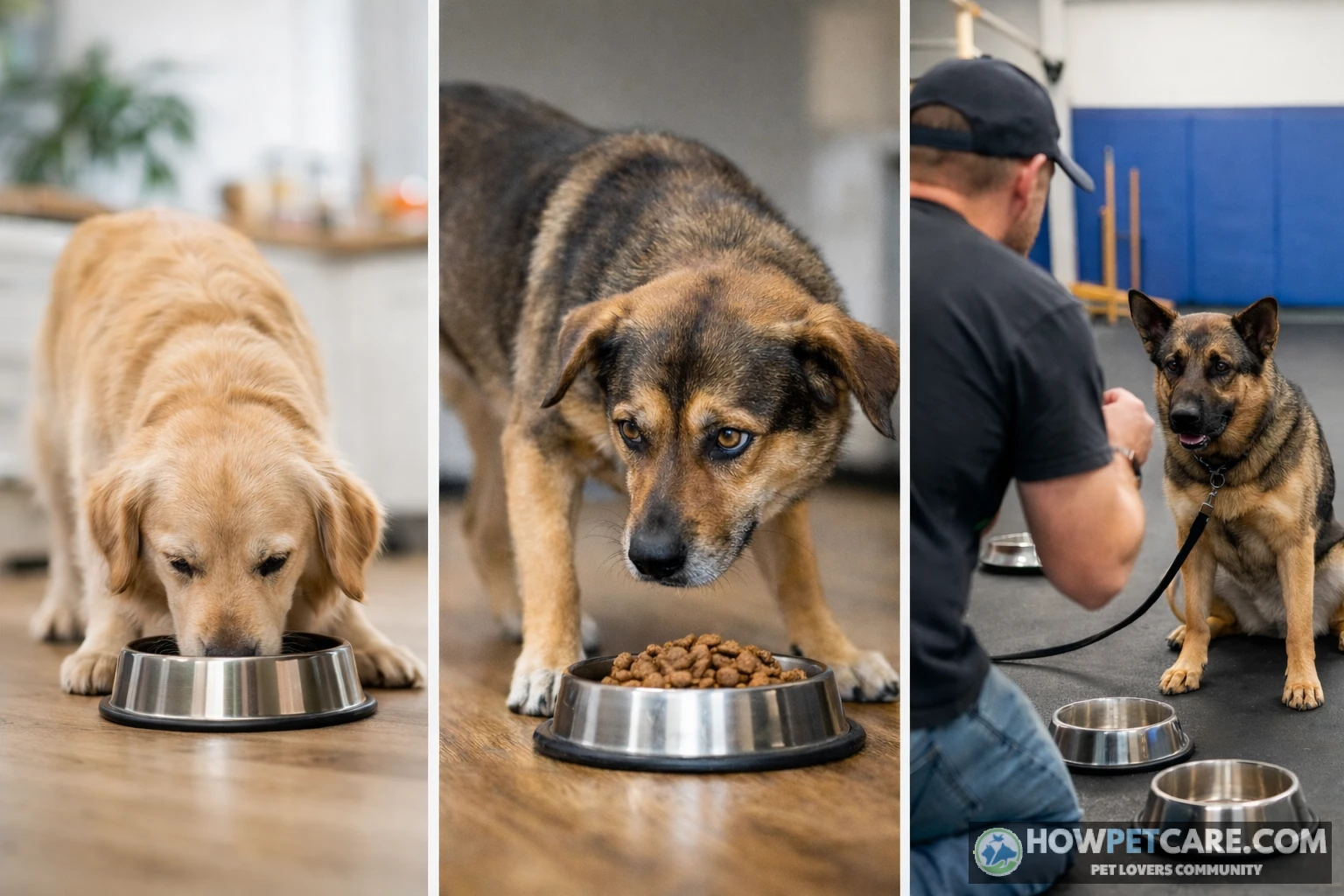
- Resource guarding: Protecting food bowls, dropped human food, raw bones, toys, human proximity, or preferred resting spots like dog beds and couches.
- Barrier frustration and redirected arousal: Spotting a squirrel, mail carrier, or neighbor dog through a window or chain-link fence causes an adrenaline spike. Unable to reach the target, the dog pivots and attacks the nearest housemate.
- Social maturity shifts: Dogs undergo major hormonal and neurological shifts between 12 and 36 months of age. A dog that tolerated rude play as a puppy may establish firmer boundaries as it reaches social maturity, leading to explosive friction if those boundaries are breached.
- Same-sex household dynamics: Female dogs sharing a household often engage in more intense, persistent, and difficult-to-resolve conflicts than male-female pairings [#N].
Vet Workup Checklist for Sudden Aggression
Before assuming a fight is strictly behavioral, arrange a comprehensive medical workup. Physical discomfort can significantly lower a dog’s threshold for irritability and defensive aggression.
Take this checklist to your veterinarian to rule out physiological root causes for sudden aggression:
- Complete orthopedic and spinal evaluation: Undetected arthritis, intervertebral disc disease (IVDD), or hip dysplasia causes acute pain when bumped by another dog.
- Full thyroid panel (Free T4 by Dialysis, Total T4, TSH, and Autoantibodies): Hypothyroidism and autoimmune thyroiditis are linked to sudden, unpredictable changes in reactivity and aggression.
- Comprehensive blood chemistry and CBC: Screens for systemic infections, hepatic encephalopathy, renal imbalances, and electrolyte abnormalities.
- Dental examination: Fractured teeth, root abscesses, or periodontal disease can cause excruciating pain that triggers snaps during close contact or meal times.
- Sensory assessment: Gradual vision loss (e.g., cataracts, PRA) or hearing loss can cause a dog to be startled by the silent or sudden approach of a housemate.
- Neurological evaluation: For senior dogs, evaluate for Canine Cognitive Dysfunction (CCD), which disrupts sleep cycles and causes disorientation, anxiety, and unprovoked irritability.
If physical pain or endocrine dysfunction is confirmed, treating the underlying condition frequently resolves the sudden behavioral reactivity. In complex cases involving chronic generalized anxiety, your vet or a veterinary behaviorist may also recommend prescription selective serotonin reuptake inhibitors (SSRIs) like fluoxetine or tricyclic antidepressants like clomipramine. These medications normalize neurotransmitter levels, raising the dog’s reactivity threshold so behavior modification can take hold.
Spaying and neutering can eliminate hormone-driven competition over estrus females among intact dogs, but they aren’t a silver bullet. Altering dogs won’t cure learned aggression, resource guarding, or fear-based reactivity.
Keeping a Trigger Log for Two Weeks
Tracking interactions objectively can cut through the stress and reveal patterns you might otherwise miss. Record every tense interaction for 14 days:
| Date/Time | Dogs Involved | Immediate Environment | Visible Trigger | Pre-Event Body Language | Outcome / Handler Action |
|---|---|---|---|---|---|
| Oct 14, 5:30 PM | Max & Bella | Kitchen narrow hallway | Preparing dinner | Max stiffened, Bella walked past | Low growl; Max lured away with treat |
| Oct 16, 8:15 AM | Max & Bella | Back patio door | Mail truck outside | Both barked, Max bumped Bella | Snapping air bite; gate dropped between them |
| Oct 19, 7:00 PM | Max & Bella | Living room rug | High-value chew bone | Bella froze with side-eye | Max backed away; chew bone removed |
You may notice that fights happen exclusively in narrow spaces, around high-value food, or in the evening when both dogs are fatigued.
How to Stop Two Dogs in the Same Household From Fighting: Fixes Matched to the Trigger
To stop dogs from fighting in the same household, use a two-step framework: manage first, train second. Management means restructuring the home to eliminate opportunities for fights. Training uses positive reinforcement and desensitization to teach alternative, non-confrontational behaviors over time.
One-Off Scuffle or Escalating Pattern?
Before choosing an intervention, identify the type of conflict you’re managing:
- One-off scuffle: A singular, identifiable, high-intensity trigger drives the incident (e.g., both dogs rushed to grab a dropped steak bone). Both dogs show immediate bite inhibition, no puncture wounds occur (Dunbar Level 1 or 2), and both recover within minutes. This calls for strict resource management and basic vigilance.
- Escalating pattern: Fights occur more often over decreasingly valuable items, triggers become unpredictable, bites inflict deep punctures or tears (Dunbar Level 3+), recovery takes hours or days, or one dog actively seeks out the other. This calls for immediate, total physical separation and intervention from a veterinary behaviorist.
The distinction also drives the long-term prognosis. Dogs that have had a single scuffle with intact bite inhibition can usually live together again through a staged reintroduction built on gradual, supervised contact. Where fights grow frequent, unpredictable, and severe—deep punctures, redirected bites on people—the pairing may not be fixable, and permanent separation, rehoming one dog, or in the most dangerous cases behavioral euthanasia become the humane options.
Dogs Fighting Over Food
Food is the most common resource guarded in domestic homes. Preventing conflict requires changes to the environment rather than verbal discipline:
- Feed in completely separate rooms with solid doors: Place Dog A in the laundry room and Dog B in the kitchen with a closed door between them. Never feed dogs side-by-side or rely on visual supervision around bowls.
- Eliminate free-feeding: Transition to timed meals. Leave bowls down for 15 minutes, pick up the empty bowls before opening doors, and store them out of reach.
- Isolate all high-value edible chews: Bully sticks, raw bones, and stuffed Kongs should only be enjoyed inside closed crates or separate rooms. Collect and safely store all chews before allowing the dogs back into shared spaces.

Dogs Fighting Over Toys, Chews or Their Spot
If toys trigger possessive guarding, clear the floor. Remove tennis balls, ropes, and plush toys from shared living areas.
Teach a reliable "Trade" and "Drop It" cue using positive reinforcement:
- Hand the dog a low-value toy.
- Present a piece of high-value chicken or freeze-dried liver right at their nose.
- Say "Trade." The moment the dog drops the toy to consume the meat, praise and offer the treat.
- Hand the toy back or swap it for a second treat.
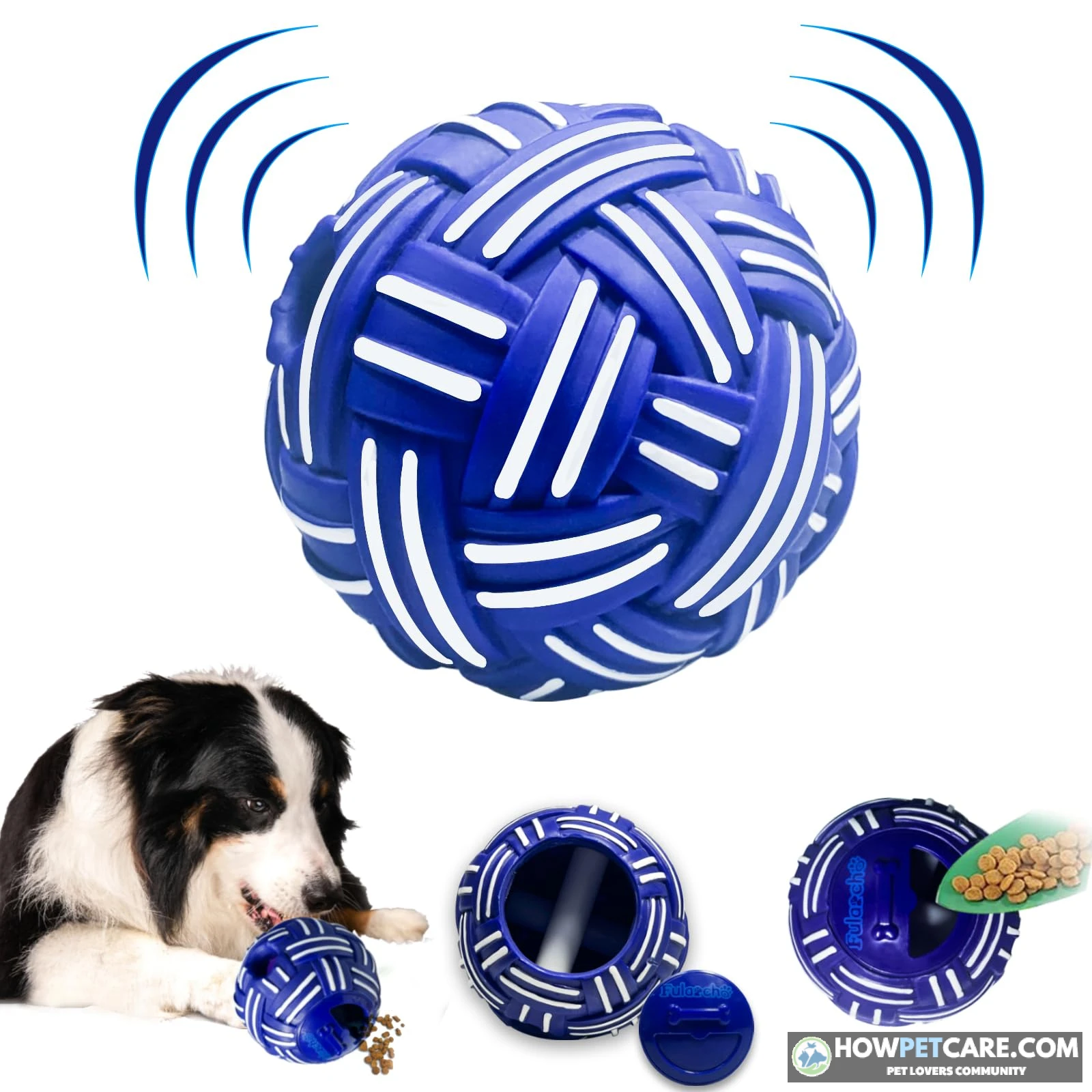
Never pry a guarded item from a dog’s mouth. Force validates the dog’s fear that resources will be stolen and can escalate guarding from a warning growl to a snap.
For resting spots such as couches and dog beds, establish clear zones. Place two beds on opposite sides of the room rather than side-by-side. If a dog guards human furniture, revoke couch privileges using physical barriers or baby gates until calm, non-possessive floor behaviors are firmly reinforced.
Dogs Fighting Over Your Attention
Human affection can be a highly prized resource. When an owner pets one dog, an insecure or aroused housemate may approach and try to body-block or lunge at the dog receiving affection.
- Never pet dogs when they are crowded together: If both dogs crowd your knees, stand up, fold your arms, and step away. Attention stops the instant crowding begins.
- Teach stationing on mats: Train each dog to go to their own designated mat on opposite sides of the room. Call one dog over for calm petting while the other stays on its mat, reward the waiting dog with a tossed treat, and then switch.
- Reward calm disengagement: Praise dogs when they choose to look away, lie down, or settle independently without demanding physical contact.
Fence, Door and Window Fights
Fence fighting and doorway scuffles are common examples of barrier frustration and redirected aggression. Dogs charging a front window or back fence line to bark at outside stimuli experience an adrenaline spike. If they bump into one another in that state, they can clash.
- Block sightlines: Apply opaque privacy film to front-facing windows or install solid wood privacy slats along chain-link fences.
- Supervise yard time separately: If dogs regularly fence-fight with neighbor dogs, rotate their yard access so they do not share the fence line simultaneously.
- Manage doorways: Install a baby gate 6 feet back from the primary exterior door. This prevents dogs from bottlenecking in the doorway when visitors arrive or when going out for walks.
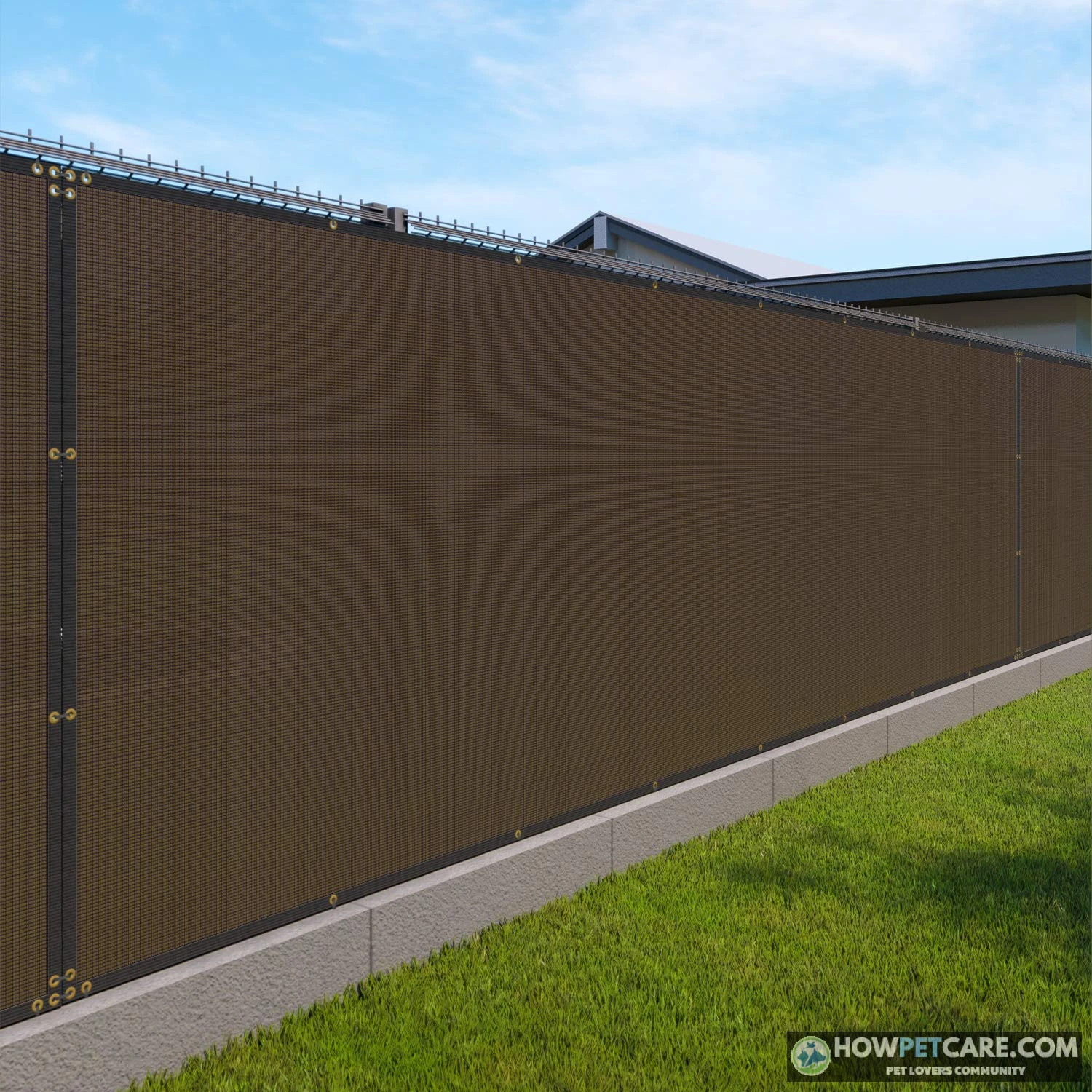
Sibling Rivalry and Rowdy-Play Fights
Littermates adopted together or dogs close in age can experience intense social friction as they mature, commonly termed sibling rivalry. Play can become dysregulated and cross from healthy games into full-scale fights.
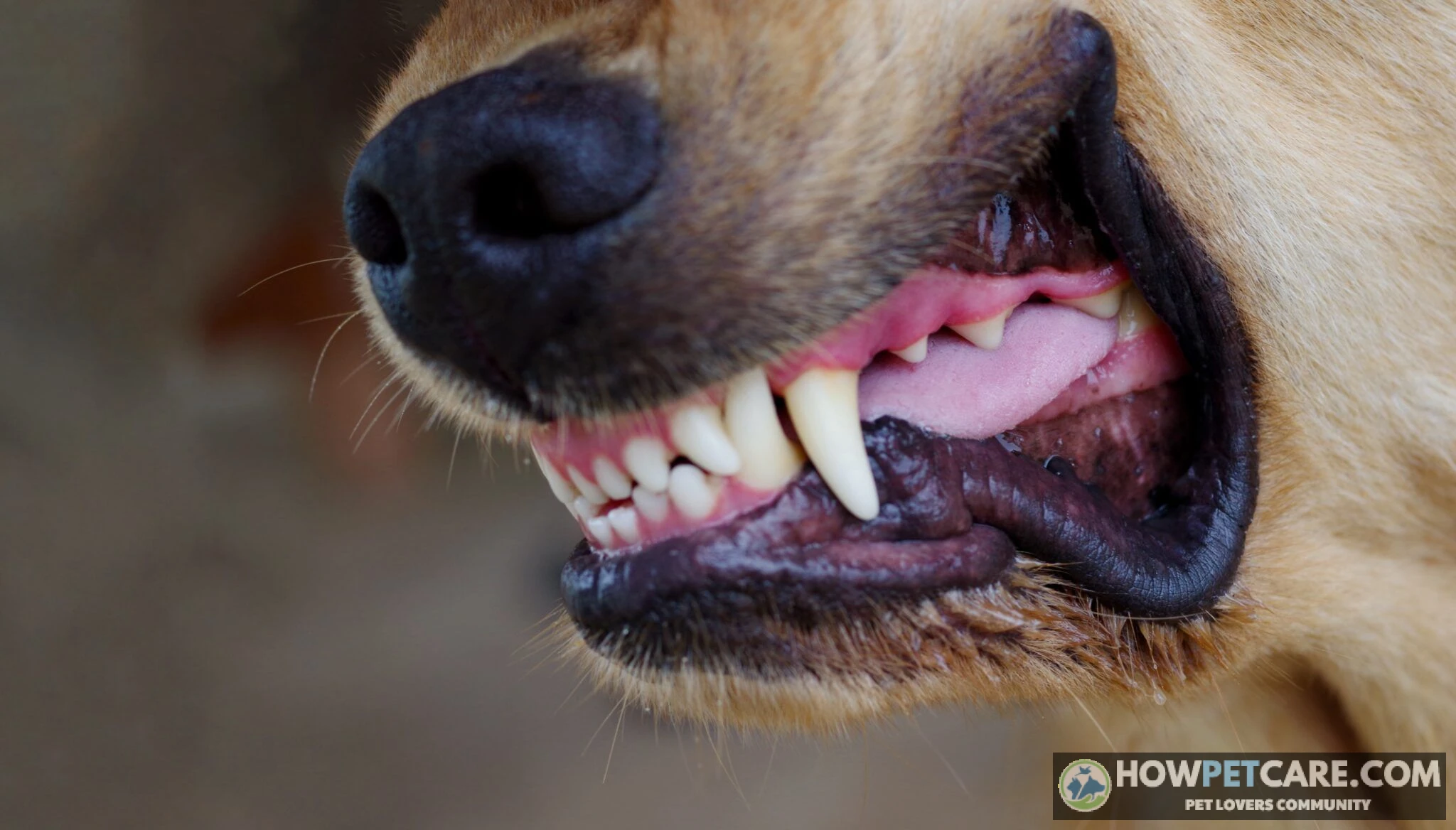
The line between rough play and a real fight is visible in body language: healthy play looks loose, bouncy, and rhythmic, with role reversals and natural pauses, while a genuine fight shows stiff, frozen posture, hard unblinking stares, and one-sided pursuit or pinning.
Use structured play sessions with mandatory pauses. If play becomes breathless, vocalizations grow deeper, or bodies stiffen, step in with a calm recall cue. Separate the dogs behind a gate for two minutes to let their heart rates drop before allowing them to resume. Provide separate one-on-one walks, separate training sessions, and independent sleeping arrangements to build each dog’s emotional resilience.
Setting Up the House to Prevent Fights
A safe multi-dog environment depends on how the home is arranged:
- Baby gates with walk-through doors: Use these to divide living rooms into separate zones while maintaining airflow and sightlines.
- Basket muzzles as an active safety layer: Properly desensitize both dogs to wearing well-fitted, humane wire or vinyl basket muzzles using positive reinforcement and peanut butter. A muzzle allows the dog to pant, drink water, and take treats while eliminating the risk of a bite during structured training sessions.
- Clear passage corridors: Arrange furniture to eliminate narrow bottlenecks in hallways and around doors where dogs are forced into uncomfortable proximity.
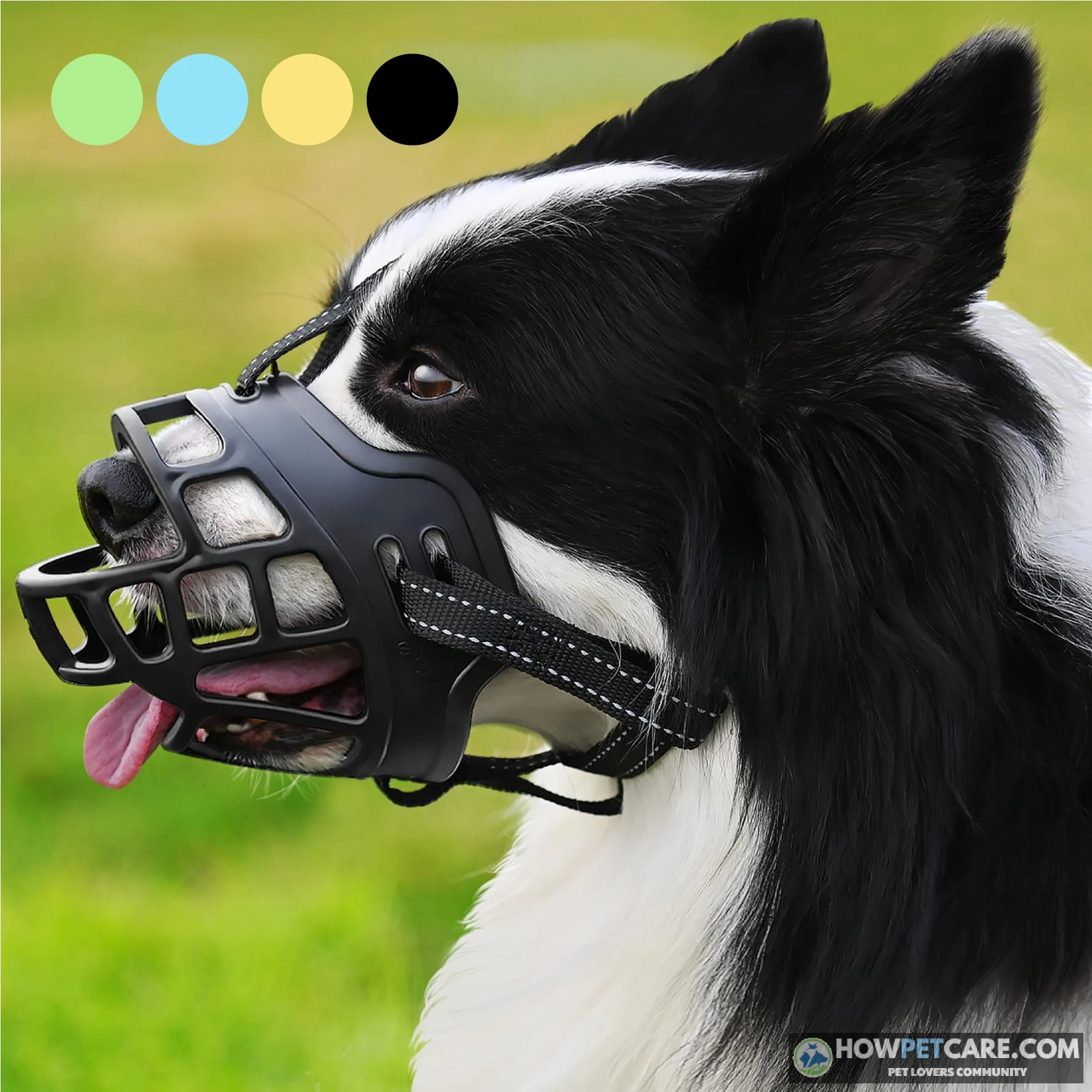
Rough Play or a Real Dog Fight? How to Tell the Difference
Some owners mistake normal, boisterous play for aggression; others dismiss escalating tension as "just playing." Learning to read changes in body language can help you intervene before a fight erupts.
| Signal | Rough Play | Real Fight | What to Do |
|---|---|---|---|
| Body posture | Loose, curvy, bouncy, "rubbery" spines; exaggerated movements | Stiff, rigid, upright, frozen; forward-leaning weight; tense musculature | If stiffening occurs, interrupt and call dogs apart immediately |
| Mouth and facial tension | Relaxed, open-mouth pant; loose lips; "play face" | Tight, closed lips; curled lips showing incisors/canines; hard muzzle wrinkles | Intervene with a barrier or recall before contact occurs |
| Eye contact | Soft, blinking eyes; breaking gaze frequently | Hard, unblinking, direct stare; dilated pupils; visible "whale eye" (whites showing) | Break visual line of sight with a physical barrier immediately |
| Role reversal | Fluid role swapping: chaser becomes chased, top dog rolls to bottom | One-sided pursuit: one dog persistently pins, corners, or chases the other | Stop play instantly; separate the pursuing dog for a mandatory reset |
| Self-handicapping | Larger/stronger dog inhibits bite force, lies down, or moderates speed | Full-force impacts, lunging to overpower, biting without releasing | End interaction; evaluate for fear or bullying behaviors |
| Vocalization | High-pitched, rhythmic growls and barks; frequent pauses | Deep, guttural, continuous rumbling growls; high-pitched screaming/shrieking | Treat as an active emergency; deploy breakup protocols |
Noise alone isn’t an accurate measure. Two golden retrievers can engage in deafening, vocal play with loose bodies and frequent pauses, while two dogs locked in a lethal predatory clash may fight in silence.
Warning Signs That Play Is Turning Into a Fight
Watch for the "freeze." Healthy play features continuous, bouncy motion. When play is about to turn into a fight, one or both dogs will suddenly freeze for 1 to 2 seconds. The mouth snaps shut, the body stiffens, and the eyes lock onto the partner. This micro-freeze is the final warning before an aggressive strike.
Other critical warning signs include:
- One dog attempting to hide behind furniture or an owner’s legs while the other continues forward.
- A lack of natural pauses (in healthy play, dogs pause every 15–30 seconds to shake off, sniff, or re-orient).
- Rapid, repetitive head-pinning or neck-slamming without role reversals.
How to Interrupt Rowdy Play Before It Escalates
Don’t wait for a bite. Interrupt high-arousal play as soon as bodies stiffen:
- Use a neutral recall sound: Use a cheerful kissy noise or say "Break!" in an upbeat tone. Avoid harsh shouting, which adds tension.
- Scatter high-value treats: Toss a handful of treats in opposite directions across the floor, saying "Find it!" Scent work forces the dogs to lower their heads, breaks visual fixation, and activates the parasympathetic nervous system.
- Enforce a physical separation: Direct the dogs to their separate sides of a baby gate for five minutes of calm chew time before permitting them to interact again.
A growl is vital canine communication. It’s an early warning that says, "I am uncomfortable, please give me space." If you punish a dog for growling, you suppress the warning without fixing the underlying emotional distress. The dog learns that giving a warning is unsafe and may bite suddenly without warning in future encounters.
Can Dogs Live Together Again After a Serious Fight? A Week-by-Week Reintroduction Plan
Dogs can sometimes rebuild a peaceful relationship after a serious fight, but success is never guaranteed. Rehabilitation depends heavily on the severity of past bites, bite inhibition history, individual stress thresholds, and the owner’s commitment to continuous, strict household management.
Before You Start: Vet Clearance and Trigger Plan
Don’t begin reintroduction until both dogs have full medical clearance from a veterinarian confirming they’re pain-free. You must also identify the trigger of the previous fight and create a physical management plan that prevents that specific trigger from recurring.
If the fight involved sustained clamping, shaking, or any bites categorized at Dunbar Level 3 or higher, work under the direct guidance of a Certified Applied Animal Behaviorist (CAAB) or board-certified Veterinary Behaviorist (DACVB).
Stage-by-Stage Timeline: Separation to Supervised Time Together
The reintroduction protocol has six distinct stages. Advance according to observable, relaxed body language—not an arbitrary calendar.
| Stage | Typical Timing | What You Do | Criteria to Advance | Reasons to Step Back |
|---|---|---|---|---|
| 0: Full separation | Days 1–7+ (longer if healing from wounds) | Maintain solid closed doors; separate meals, walks, and rest; rotate access to common areas so dogs never see each other | Vet clearance for both; both dogs eating, sleeping, and relaxing normally | Either dog guards doorways, whines/scratches at doors, or hyper-fixates on scent |
| 1: Scent swapping & closed-door meals | Week 2 | Swap bedding and toys daily; feed meals on opposite sides of a solid closed door, starting bowls 8 feet away from the door | Both dogs eat with relaxed bodies and disengage within 5–10 minutes of finishing | Refusal to eat, sniffing under the door with stiff posture, scratching at the barrier |
| 2: Controlled visual contact | Weeks 2–4 | Place a baby gate or screen door between rooms; conduct 2–5 minute sessions; reward dogs for looking at each other and then looking away | Soft eyes, yawning, sniffing, or ignoring the other dog across 7 consecutive sessions | Lip lifts, hard stares, prolonged freezing, low growls, or body blocking at the gate |
| 3: Parallel walks | Weeks 3–6 | Two handlers walk both dogs on leash on neutral ground (street or park); maintain a 25–40 foot gap where both remain relaxed | 7 consecutive incident-free walks with gradual distance reduction down to 6–8 feet | Lunging, barking, rigid pacing, or inability to take treats from the handler |
| 4: Neutral structured time | Weeks 4–8 | Bring both dogs together on loose leashes in a neutral, fenced outdoor space; zero food, toys, or gear present; keep sessions to 5 minutes | Loose body language, mutual sniff-and-dismiss, play bows, rapid recovery from startles | Any resource guarding, mounting, stiff approaches, or one dog attempting to escape |
| 5: Supervised home coexistence | Months 2–4+ | Allow short periods together in cleared living spaces with drop-leashes on; crates/gates remain for all meals, chews, and unsupervised time | Several weeks of relaxed coexistence and completely boring, peaceful interactions | Resurgence of tension around resting spots, lingering posturing, or owner fatigue |
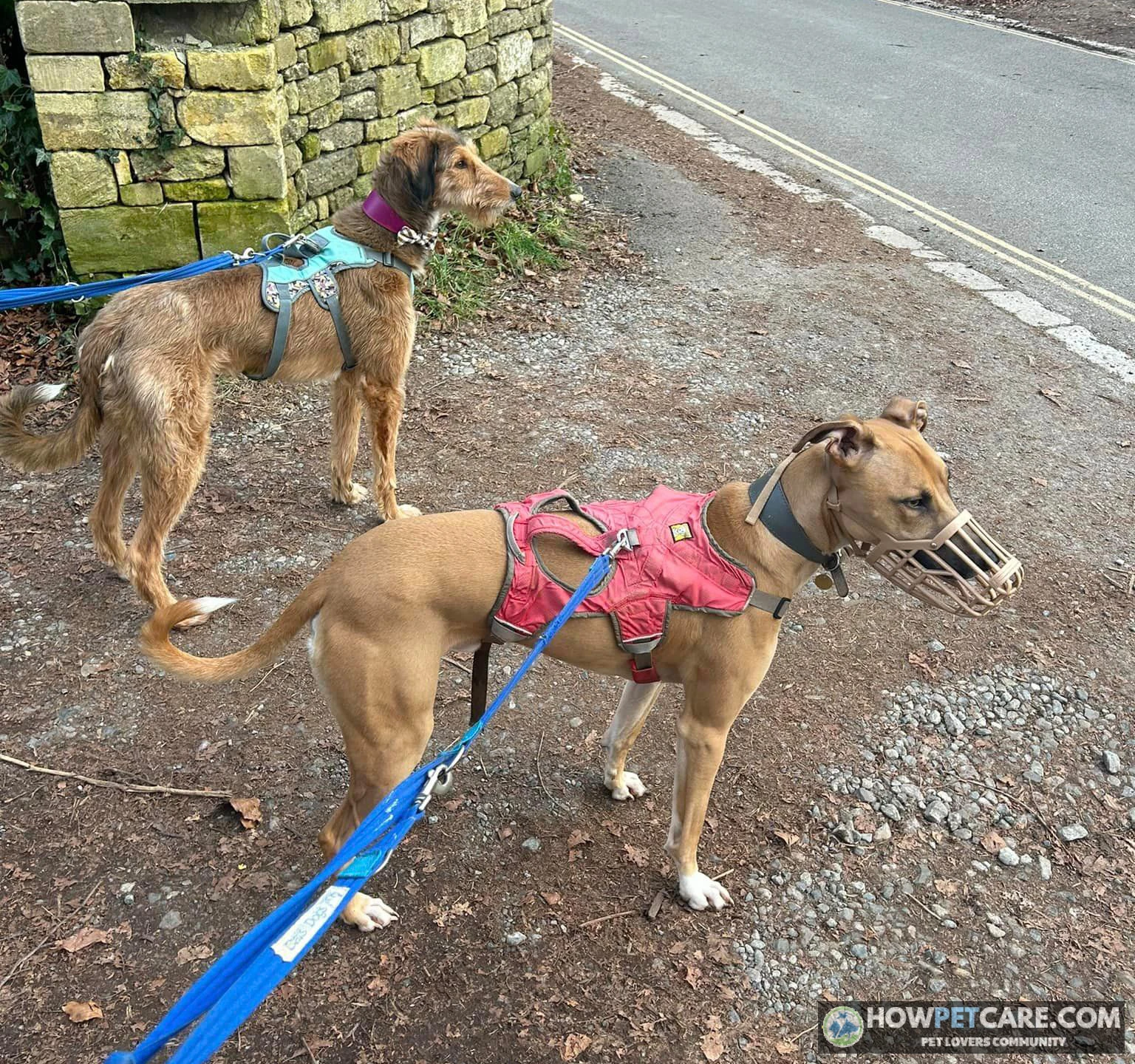
During Stages 2 and 3, use the Engage-Disengage Game to build positive emotional associations. When your dog looks at the other dog across the barrier ("engage"), click a clicker or say "Yes!" before they react. When the dog turns back to you for their reward ("disengage"), deliver a high-value treat. Over repeated trials, this operant conditioning replaces fight-or-flight reactivity with an automatic check-in reflex toward you.
When to Go Back a Stage
Progress is rarely linear. If either dog freezes, stares hard, curls a lip, shows piloerection (raised hackles), or lunges, you’ve exceeded their emotional threshold.
Don’t scold the dog. Immediately increase the distance between them, return to the previous successful stage, and remain there for at least 7 to 10 days before trying to advance again. Pushing forward while a dog displays defensive signals can trigger a behavioral relapse.
When to Call a Professional Trainer or Veterinary Behaviorist, and When a Pairing Can’t Be Fixed
Household dog aggression can take a heavy emotional and physical toll. Knowing when to seek advanced behavioral help, and when a pairing is unsafe to maintain, helps protect everyone in the home.
Signs It’s Time to Call a Professional
Seek professional help immediately if:
- A fight resulted in skin punctures requiring veterinary medical intervention (Dunbar Level 3+)
- A human was bitten, even if the bite was an accidental, redirected snap
- The frequency of fights is increasing while the time between incidents is shrinking
- Fights occur without an identifiable resource or trigger, appearing unprovoked
- One dog consistently targets, corners, or stalks a vulnerable, elderly, or smaller housemate
- You experience constant anxiety in your home, dreading moving dogs through doorways
Trainer vs. Veterinary Behaviorist: Who Does What
The dog training industry is largely unregulated. The wrong professional can worsen aggression by using punitive equipment or confrontational methods.
- Certified Professional Dog Trainer (CPDT-KA / KPA-CTP): Best for foundational obedience, polite leash manners, and establishing early separation protocols. Make sure they practice force-free, positive reinforcement training.
- Certified Applied Animal Behaviorist (CAAB): Holds an advanced degree (M.S. or Ph.D.) in animal behavior. These specialists evaluate complex behavioral disorders, conduct functional analyses, and design scientific behavior modification protocols.
- Board-Certified Veterinary Behaviorist (DACVB): A licensed veterinarian who has completed residency training and board certification in behavioral medicine. They can evaluate the interplay between neurochemistry, physical disease, and behavior, and prescribe specialized psychotropic medications alongside behavior modification.
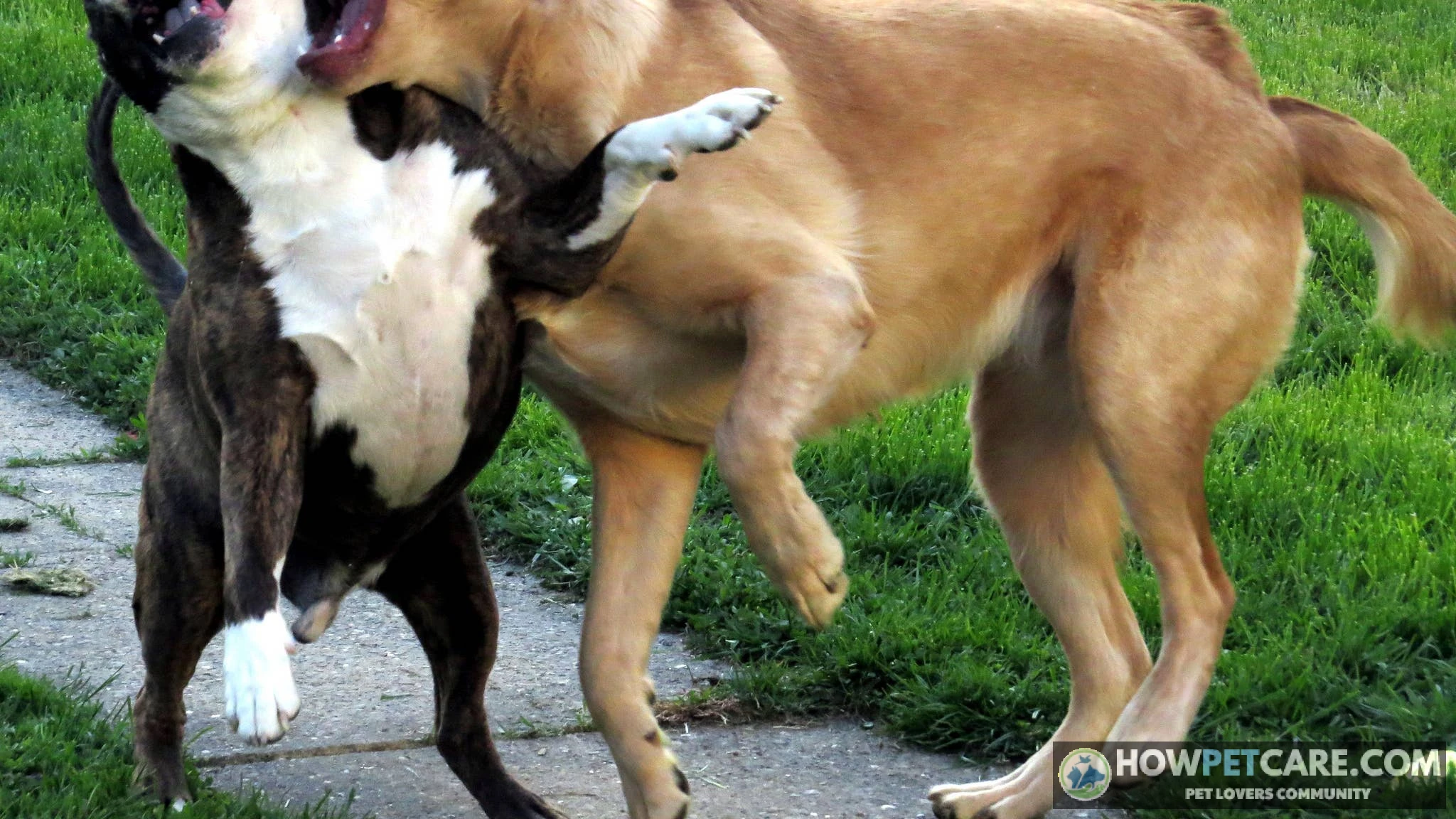
Avoid any trainer who promises a "100% guaranteed fix," attributes the aggression to a lack of "dominance," or advocates shock collars, prong collars, or physical intimidation. Modern behavior science shows that aversive equipment increases underlying anxiety and raises the risk of severe redirected bites.
Criteria for Permanent Separation, Rehoming or Behavioral Euthanasia
Some canine relationships cannot be repaired. When dogs lack bite inhibition or view a housemate as an existential threat, forced coexistence creates chronic terror for the animals and serious danger for the family.
Use this diagnostic checklist with a veterinary behaviorist to evaluate the prognosis:
- ☐ More likely repairable:
- Fights have a distinct, easily managed trigger (e.g., only around raw bones or the front door)
- Low bite severity: bites are strictly Dunbar Level 1 or 2 (air snaps, shallow bruising, no deep punctures)
- Both dogs exhibit clear bite inhibition and actively try to de-escalate or avoid contact
- Both animals can easily settle, relax, and eat within minutes of separation
- The household has the physical infrastructure (multiple sturdy doors, secure baby gates) to maintain separation without error
- ☐ High risk / likely unfixable:
- Fights inflict severe, damaging trauma: multiple deep punctures, crushed tissue, or tears (Dunbar Level 4 or 5)
- Fights occur spontaneously with no identifiable trigger, or one dog exhibits predatory-style targeting
- Bites have redirected onto human handlers, causing significant medical injury
- One or both dogs remain in a state of hyper-vigilance, unable to rest or eat if they hear the other dog behind a door
- Management breaches are inevitable due to household layout, active young children, or frail adults
When a pairing is deemed dangerous or unfixable, three humane options exist:
- Permanent "Crate and Rotate" living: The dogs remain in the same home but live completely separate lives, divided by solid doors, airlocks, and strict rotation schedules. This can be a long-term solution if both dogs experience high welfare, adequate exercise, and zero management failures. It requires flawless human discipline.
- Rehoming one dog: Rehoming the more adaptable dog or the victim dog to a home with no other pets can be a compassionate choice. Be entirely transparent about the dog’s behavioral history, provide bite documentation to the rescue or adopter, and make sure the receiving environment is set up for success.
- Behavioral euthanasia: In cases of severe, unpredictable, or predatory aggression where a dog poses a significant risk to human safety or animal life and cannot safely be managed or rehomed, humane behavioral euthanasia is a painful but valid option. Make this decision in consultation with a veterinary behaviorist and primary veterinarian. Choosing safety and ending a dog’s profound psychological suffering can be a heartbreaking, responsible act.
Your Dog Fight Action Plan: Checklists for Today, This Week and Long Term
Use these checklists to plan the hours, days, and weeks ahead.
Today: The 24-Hour Checklist
- ☐ Separate completely: Place the dogs in separate rooms with solid, closed doors between them.
- ☐ Check humans for wounds: Clean any bites thoroughly with soap and water; seek medical evaluation for broken skin.
- ☐ Check dogs for punctures: Run hands through the fur down to the skin over the entire body, feeling for heat, swelling, or punctures.
- ☐ Assess veterinary urgency: If red-flag symptoms are present (chest/abdomen punctures, pale gums, shock, heavy bleeding), go to an emergency veterinary clinic immediately.
- ☐ Decompress: Turn down household lights, minimize noise, and do not attempt to bring the dogs together or "make them make up."
- ☐ Write down the facts: Record time, location, potential triggers, body language, and Dunbar bite levels while fresh in your mind.
This Week: Vet Visit, House Rules and Trigger Log
- ☐ Schedule veterinary workups: Book comprehensive exams for both dogs; request a full thyroid panel and orthopedic pain evaluation.
- ☐ Institute total management: Remove all toys, chews, and bones from common spaces. Feed meals exclusively in separate, closed rooms.
- ☐ Install physical barriers: Secure heavy-duty baby gates with walk-through latches at key household transit points.
- ☐ Start the trigger log: Document every instance of vocalization, stiffening, or posturing to map out the dogs’ behavioral patterns.
- ☐ Assemble the breakup safety kit: Hang slip leads, mount a 2.4 oz canister of citronella spray, and place an emergency barrier near high-traffic entry points.
- ☐ Reach out for professional support: Contact a certified force-free behavior consultant (CPDT-KA) or veterinary behaviorist (DACVB) if injuries occurred or if fights are repeating.
Next Month: Training Plan and Review Points
- ☐ Condition basket muzzles: Train both dogs to happily wear a well-ventilated basket muzzle using positive reinforcement and treat pairing.
- ☐ Execute desensitization training: Practice the Engage-Disengage game and stationing behaviors under professional guidance.
- ☐ Evaluate reintroduction milestones: Only advance through the reintroduction timeline if both dogs consistently meet the relaxed body language criteria.
- ☐ Hold an honest safety review: Re-evaluate the household dynamics. If management is breaking down, stress is unmanageable, or bites are escalating, review the criteria for permanent separation or rehoming.
(Note: If you suspect organized dog fighting operations or intentional animal cruelty in your neighborhood, this is a serious criminal offense entirely separate from household pet conflict. Don’t investigate or intervene yourself. Document addresses, dates, and vehicle descriptions, and report the activity immediately to your local animal control agency or municipal police department.)
1A dog owner attempts to break up an active dog fight by grabbing the dogs by their collars. Why is this action considered the single leading cause of severe human bite injuries in dog fights?
High emotional arousal floods the dog's nervous system, causing an automatic reflex snap toward any physical touch near its head or neck.
2During post-fight triage, an owner notices a small, single puncture wound on a dog's neck that has stopped bleeding. Why must this wound still receive veterinary attention within 12 hours?
The elasticity of dog skin creates an 'iceberg effect,' where a tiny surface mark hides extensive underlying tissue crushing and dead space.
3Which of the following clinical signs following a dog fight indicate that an animal requires immediate emergency veterinary clinic transport?
Penetrating wounds to major body cavities threaten vital organ functioning and can cause swift internal collapse.
4An owner observes two dogs engaged in rough play. Which observation is a critical warning sign that play is about to transition into an aggressive attack?
The 'micro-freeze' interrupts continuous bouncy motion and serves as the immediate final warning of an incoming strike.
5Which of the following household management actions effectively help eliminate food-related resource-guarding fights?
Physical barriers block line-of-sight and physical access, eliminating acute food competition.
6Under the Dunbar Bite Scale system, how is a Level 3 bite identified?
Level 3 is characterized by shallow skin punctures (one to four holes) without deep tearing or lateral shaking.
7Two dogs that have lived together peacefully for years suddenly begin fighting unexpectedly. What should be the owner's immediate first step before starting behavioral modification?
Underlying physical discomfort, disc disease, or endocrine dysfunction can sharply lower a dog's threshold for irritability and defensive reactivity.
8Which of the following diagnostic factors indicate that a multi-dog aggression pairing is high-risk and likely unfixable?
High bite severity indicates a complete lack of bite inhibition, creating extreme risk of fatal trauma.
9What is a major limitation and risk of using a break stick to interrupt a dog fight?
Break sticks bring human limbs into the high-risk strike zone and risk severe anatomical trauma to the dog if used without proper training.
FAQ
How do I report dog fighting in my neighborhood?
Contact your local animal control or the police non-emergency line, and call emergency services if a fight is happening now. Write down dates, addresses, vehicle details and what you saw or heard, and do not confront anyone yourself.
Should I punish my dogs after a fight?
No. Punishment after a fight raises fear and arousal and can make future fights more likely. Separate the dogs calmly, treat any injuries, and work on the trigger with a professional.
Will spaying or neutering stop my dogs from fighting?
It may reduce some hormone-related conflict, particularly between intact dogs, but it does not fix resource guarding, fear or learned fighting patterns. Discuss timing and expected benefits with your vet.
Should I let my dogs ‘work it out’ on their own?
No. Dog fights can cause serious injuries quickly and leave lasting fear that makes later fights more likely. Interrupt early and safely, then separate the dogs.
Can I use a muzzle to keep my dogs from hurting each other?
A basket muzzle that the dog has been conditioned to accept can add safety during training or reintroduction. It does not replace separation, because the dogs can still injure each other and the fear and tension remain.