
Metabolic bone disease (MBD) in bearded dragons is a group of disorders that weaken the skeleton, usually caused by inadequate calcium, vitamin D3, UVB exposure, or an imbalanced diet. Mild signs warrant a reptile-vet visit within days; tremors, seizures, or inability to walk or eat require emergency care the same day.
If your bearded dragon cannot walk or eat, is having seizures or continuous tremors, or may have a fracture, call an emergency or exotic-animal clinic and go in today. Mild weakness or appetite changes also warrant an appointment with a reptile vet. Correct obvious lighting and temperature problems while you arrange it, but don’t rely on home care as treatment.
If you’ve searched for “metabolic bone disease bearded dragon,” you may already be worried about changes you’ve noticed. Metabolic bone disease (MBD) describes disorders that weaken the skeleton. In bearded dragons, a common form develops when inadequate calcium, vitamin D3, UVB exposure, or an imbalanced diet disrupts calcium regulation. This guide supports an individual veterinary diagnosis and treatment plan; it doesn’t replace one.
Which Stage Is Your Bearded Dragon In? Symptom-to-Action Severity Chart
These categories describe urgency, not medically confirmed stages. A dragon’s condition can change quickly, and the same sign can have several causes.
| Triage level | Signs you can see | What may be happening | Action and timeframe | Until seen |
|---|---|---|---|---|
| Early or uncertain | Mild weakness, sluggishness, reduced appetite, a change in jaw shape, or occasional twitching | Calcium regulation or another body system may be affected; visible changes don’t establish blood calcium levels | Book a reptile veterinarian within a few days. Call sooner if signs worsen. | Check heat and UVB; keep the dragon quiet and avoid unnecessary handling. |
| Advanced | Bowed or swollen limbs, a kinked tail, curved spine, swollen jaw, or trouble lifting the belly | Bones may be weakened or painful; fractures are possible. | Call an exotic vet promptly for the earliest appointment, ideally within 24 hours. Ask where to go if none is available. | Lower climbing surfaces and support the entire body when moving the dragon. |
| Emergency | Seizures or continuous shaking; inability to stand, walk, or eat; limp limbs; suspected fracture; or unresponsiveness | A serious calcium disturbance, fracture, neurologic problem, or another emergency is possible. | Phone an emergency or exotic clinic and go today. Confirm that it treats reptiles. | Use a warm, padded carrier; keep the dragon level and calm. Don’t force food, water, or supplements. |
A soft jaw, tremors, swollen limbs, spinal curvature, fractures, and paralysis are recognized signs of MBD, but they don’t prove it is the cause in an individual dragon.
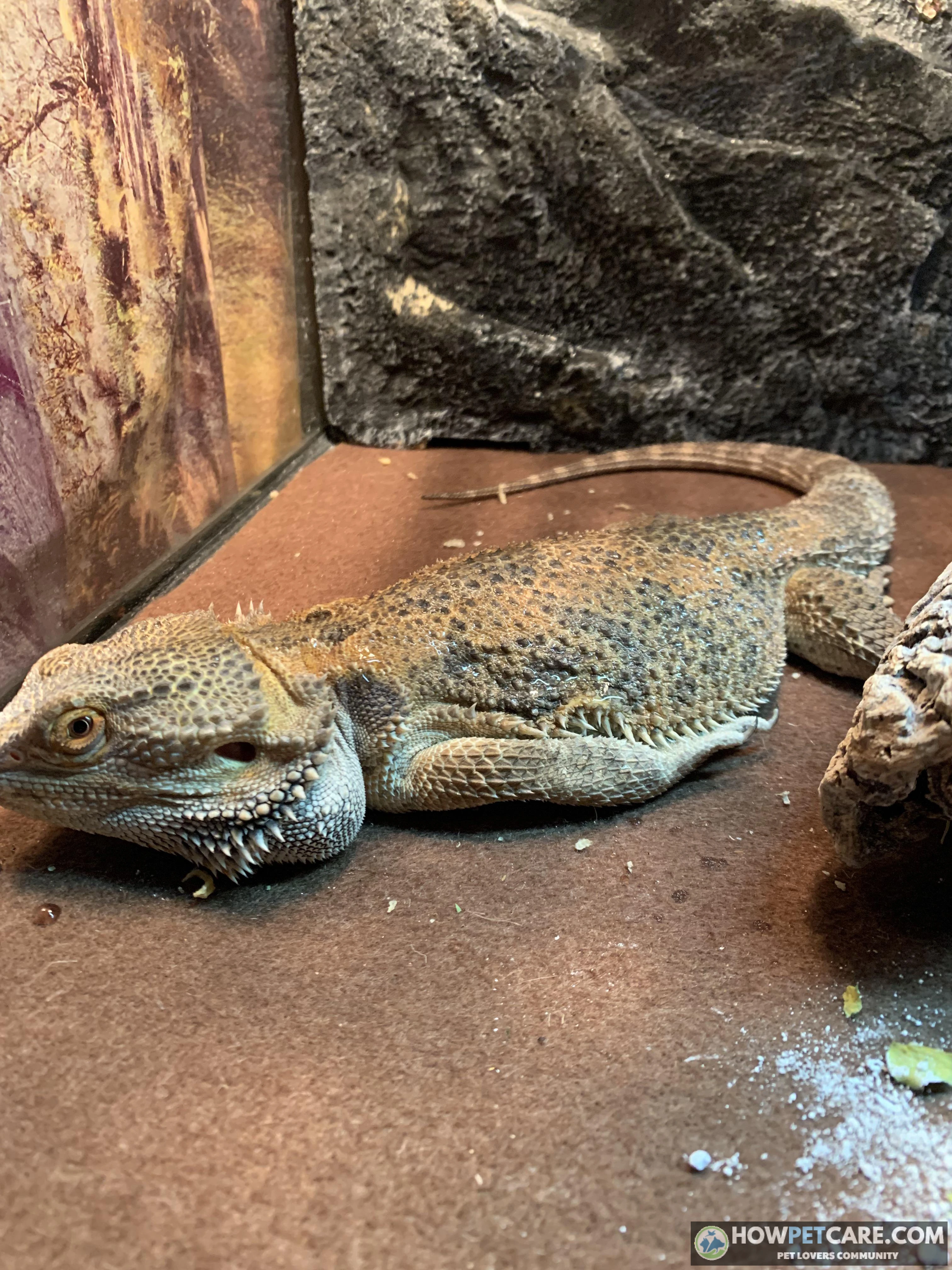
Don’t stretch the jaw or limbs, give extra calcium or vitamin D3, or attempt injections without veterinary instruction. A weak dragon may not be able to swallow safely. Call the clinic for advice while arranging transport.
MBD Symptoms in Bearded Dragons Explained: Soft Jaw, Tremors, Weak Legs, Bent Tail
Tremors, twitching, and weak legs
Low blood calcium, or hypocalcemia, can interfere with muscles and nerves. Tremors, twitching, weakness, and seizures may occur alongside bone disease. A dragon that drags its belly or struggles to push up needs prompt assessment. One that cannot stand or has ongoing tremors needs emergency care.
Arm waving and head bobbing can be normal behaviors. Repeated involuntary twitching or shaking is different. A video is more useful to your vet than an attempt to diagnose a brief movement yourself. Don’t assume a juvenile’s twitch is harmless just because it stops.
Jaw, tail, and spine changes
The lower jaw may feel unusually soft or look shortened or swollen, sometimes called “rubber jaw.” Limbs may bow or swell, the spine may curve, and the tail may develop a bend or kink. These changes can be painful, particularly if a bone fractures.
When calcium supply is inadequate, the body can draw calcium from bone. Over time, bone density and strength decline, leaving the skeleton more vulnerable to bending and fracture. Never squeeze the jaw or manipulate a suspected bend to check for softness.
MBD versus impaction, injury, and other look-alikes
Constipation or impaction may accompany straining or a lack of droppings. A fall can cause a localized injury, while spinal trauma can affect limb movement. Infection, inadequate heat, and brumation can also be associated with reduced activity or appetite. These clues overlap, so an exam, and sometimes imaging or other tests, are needed to identify the cause. Suspected paralysis or injury is urgent regardless of whether MBD is involved.
What Causes MBD in Bearded Dragons: The UVB, Heat, Calcium Chain
UVB reaching the skin enables vitamin D3 production, which supports calcium absorption from food. The dragon also needs dietary calcium and appropriate temperatures to digest food and function normally. If a link in that chain fails, supplementation alone may not correct the whole problem.
Common gaps include an aging or incorrectly positioned UVB lamp, glass blocking the light, a basking spot that’s too cool, and a diet dominated by insects high in phosphorus and low in calcium. Calcium and phosphorus need to be considered across the whole diet, not just in one meal; a roughly 2:1 calcium-to-phosphorus ratio is a commonly cited dietary target.
Fast-growing juveniles and egg-producing females need particular attention to nutrition. Kidney or other illness can also disrupt calcium balance, so a veterinarian should investigate rather than assume every case is caused solely by husbandry. MBD itself isn’t contagious, although dragons sharing the same inadequate setup can develop similar problems.

What Happens at the Exotic Vet: Diagnosis, Treatment, and Realistic Costs
Husbandry review and physical exam
Expect questions about appetite, droppings, behavior, growth, falls, and egg laying. The vet will also want to know the UVB lamp type and age, distance to the basking animal, measured temperatures, foods, and supplements. The examination may include the jaw, limbs, spine, body condition, hydration, and neurologic function.
Bring enclosure photos, bulb packaging or a clear product label, and supplement containers. A simple log of feeding frequency, dusting days, bulb installation date, and measured temperatures gives the vet useful context. Don’t delay emergency care to assemble it.
X-rays and bloodwork: what they show
Radiographs can reveal reduced bone density, thin-looking bone, deformities, and fractures. Compared with a normal radiograph, affected bone may appear less distinctly outlined and less opaque; interpretation depends on the image and the individual animal. Bloodwork may include calcium, phosphorus, and kidney values. A vet interprets results alongside the examination and imaging: a blood calcium result alone doesn’t establish the condition of the skeleton.
Treatment options and what you do at home
Depending on severity, treatment may include oral or injectable calcium, fluids, pain relief, nutritional support, and a vet-directed vitamin D3 plan. Seizures, profound weakness, or fractures may require hospitalization and additional stabilization. The veterinarian decides the drug, route, and dose; calcium gluconate is one medicine a vet may consider.
Correct lighting and feeding problems alongside the prescribed treatment. Give medications as directed and attend rechecks. Home adjustments alone aren’t an adequate substitute for treatment of advanced disease or an emergency.
Cost breakdown and how to ask for an estimate
US costs vary substantially by location, clinic, timing, and the care required; a reliable universal price for a reptile MBD visit is not available here. Ask for a written, itemized estimate covering the exam, radiographs, bloodwork, medications or injections, hospitalization, emergency or after-hours charges, and rechecks. Ask which steps are urgent, which can wait, and whether the clinic offers payment options or can refer you elsewhere.
UVB Lighting That Prevents MBD: Bulb Type, Distance, UVI, and Replacement
UVB tube vs compact bulb vs mercury vapor
| Bulb type | Coverage and output | Distance guidance | Replacement guidance | Strengths and limitations |
|---|---|---|---|---|
| Linear fluorescent tube | Provides a broader illuminated area than a small point source; output varies by lamp and reflector. | Use the exact lamp and fixture manufacturer’s chart for the animal’s basking position. | Follow the lamp’s rated UVB service life; fluorescent UVB lamps are commonly replaced at 6–12 months, depending on the product. | Can provide a useful basking gradient; requires a compatible fixture and proper positioning. |
| Compact fluorescent bulb | Concentrates exposure in a smaller area; performance varies by model. | Follow the specific product chart; don’t assume a tube’s distance applies. | Follow the manufacturer’s UVB service life; check output where possible. | Fits a compact fixture, but the limited coverage can make consistent exposure harder. |
| Mercury vapor bulb | A point source that can supply both heat and UVB. | Follow the exact bulb’s minimum and recommended distances; measure heat and UV separately. | Follow the manufacturer’s service-life guidance and replace sooner if it fails. | Combines heat and UVB, but adjusting one independently of the other is difficult. |
Distance, mesh, and glass: why your bulb may be doing less than you think
Glass between the lamp and dragon blocks useful UVB, while screen mesh reduces output by an amount that depends on the screen. The reflector, mounting height, and dragon’s position also affect exposure. A visibly glowing bulb is not proof that it’s delivering sufficient UVB.
Set the basking zone using the manufacturer’s chart for the exact fixture and whether a screen is present. Don’t move a bulb closer based on guesswork: excessive exposure can also be harmful. Provide a shaded retreat and a gradient so the dragon can move away from the light.
How to measure UVI and when to replace the bulb
A reptile-appropriate handheld UV Index meter can check the reading at the height and orientation of the dragon’s back in its normal basking position, with the actual screen and fixture in place. Discuss the target with your reptile vet for the lamp and enclosure; a basking UVI around 3–6 is often used as a starting range, not a guarantee that every point or every animal should receive that exposure. Measure shaded areas too.
Mark the installation date and follow the manufacturer’s replacement interval even if visible light still works. A roughly 12-hour daily light period is a practical starting point. Check the basking surface with an infrared thermometer; a commonly cited basking range is approximately 100–108°F, consistent with the 38–42°C range in standard husbandry guidance. Confirm the target for your dragon and setup with your vet, and retain a cooler area so it can thermoregulate.

Supervised access to unfiltered outdoor sunlight can provide UVB, but a window is not a substitute for a suitable lamp. Prevent escape and overheating, and always provide shade.
How Much Calcium Does a Bearded Dragon Need? Dusting Schedule by Life Stage
There is no single safe frequency that fits every powder, diet, UVB setup, and dragon. The following is an illustrative maintenance starting point to discuss with a reptile vet, not a treatment prescription or a substitute for product-specific advice. Frequencies refer to lightly dusted meals; they aren’t measured doses. Confirm a plan before combining products that both contain D3 or vitamin A.
| Life stage | Calcium without D3 | Calcium with D3 | Multivitamin | Notes and when to adjust with your vet |
|---|---|---|---|---|
| Hatchling or juvenile | About 4–5 meals per week | About 1 meal per week, if advised | About 1 meal per week, if advised | Rapid growth increases nutritional demand; review the complete diet and UVB. |
| Subadult | About 3 meals per week | About 1 meal per week, if advised | About 1 meal per week, if advised | Adjust as growth and feeding frequency change. |
| Adult | About 2 meals per week | About 1 meal per week, if advised | About every 1–2 weeks, if advised | Insect meals are less frequent; a vet can advise whether to dust greens. |
| Gravid or laying female | Vet-directed; needs may rise during egg production | Vet-directed | Vet-directed | Arrange an individual plan before and after laying. |
| Dragon being treated for MBD | Only as prescribed | Only as prescribed | Only as prescribed | Treatment is different from routine maintenance. |
Plain calcium carbonate provides calcium without adding D3. Calcium with D3 and multivitamins add nutrients that can accumulate or overlap; excess D3 or vitamin A can be harmful. Verified UVB affects how much supplemental D3 may be appropriate, but weak lighting should be fixed rather than compensated for with unprescribed high doses.
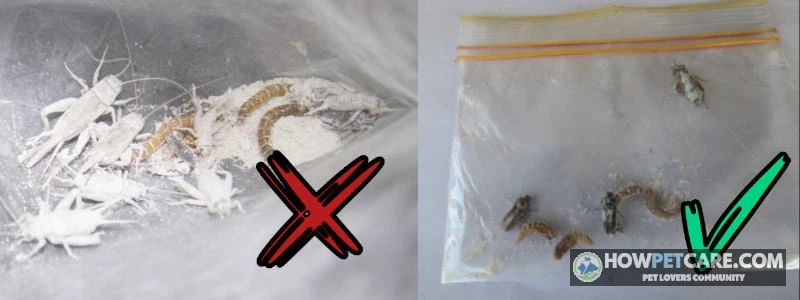
For a lightly dusted meal, place feeders in a cup with a small pinch of powder, coat them evenly without clumps, and offer them immediately. If your vet recommends dusting salad, mix a small amount through it. Ask how to account for the specific concentration on each label.
Diet and Gut-Loading: Calcium-to-Phosphorus Ratios, Oxalates, and a Weekly Plan
Best and worst feeder insects for calcium
A calcium-to-phosphorus ratio compares the amount of each mineral in a food or the whole diet; the overall balance matters more than a single ingredient. Common feeder crickets and roaches are naturally relatively low in calcium and high in phosphorus, making gut-loading and appropriate dusting important. Black soldier fly larvae are a comparatively calcium-rich feeder, while mealworms and superworms shouldn’t be relied on as the sole staple.
Greens and vegetables: calcium, phosphorus, and oxalates
Rotate greens such as collards, mustard greens, turnip greens, and dandelion greens rather than relying on one food. Spinach, beet greens, and Swiss chard contain oxalates that bind calcium, so don’t use them as everyday calcium sources. Fruit isn’t a substitute for calcium-rich greens. Exact nutrient ratios vary with the food and preparation; assess the complete diet with your vet rather than treating a list of individual foods as a prescription.

A practical weekly gut-loading and dusting plan
Feed insects nutritious greens and vegetables for 24–48 hours before offering them, and provide appropriate water or moisture. Gut-loading improves what feeders carry but doesn’t eliminate the need to evaluate the rest of the diet.
For an adult, offer a varied greens-based diet and rotate suitable insects on the feeding days your vet recommends. As an example to discuss with the vet, dust two insect meals with plain calcium, use a D3-containing product on another meal only if advised, and use a multivitamin at the advised interval. If fewer insect meals are offered, ask whether a light salad dusting is appropriate instead of adding unnecessary insects. Juveniles generally need more insect food for growth and a different schedule; gravid females and dragons in recovery need individual plans.
Can MBD Be Reversed? Recovery Time, Permanent Damage, and Living With Deformities
What improves and what stays permanent
| Change | What recovery may look like |
|---|---|
| Tremors, weakness, appetite, and activity | May improve as the underlying problem is treated, although improvement isn’t guaranteed. |
| Reduced bone strength | Can improve with treatment and corrected husbandry; healing needs veterinary monitoring. |
| Bowed limbs, kinked tail, curved spine, or misshapen jaw | Established deformities can remain even after the disease is controlled. |
| Fracture or neurologic injury | Outcome depends on location and severity; some dragons have lasting limitations. |
Recovery timeline and lifespan after MBD
Some neurologic signs may improve over days to weeks after appropriate treatment, while bone healing and remodeling can take months. These are broad possibilities, not promises. Recheck examinations, and sometimes repeat radiographs or bloodwork, help the vet judge progress.
Early treatment can give a dragon a good long-term outlook, but an individual lifespan cannot be predicted from a diagnosis alone. Severe untreated disease, recurrent fractures, feeding problems, or other illness can reduce both comfort and longevity. A gravid female with suspected MBD needs prompt veterinary guidance because weakness or pelvic deformity may complicate laying; don’t breed her while the problem is being assessed.
Safe housing and handling for a dragon with fragile bones
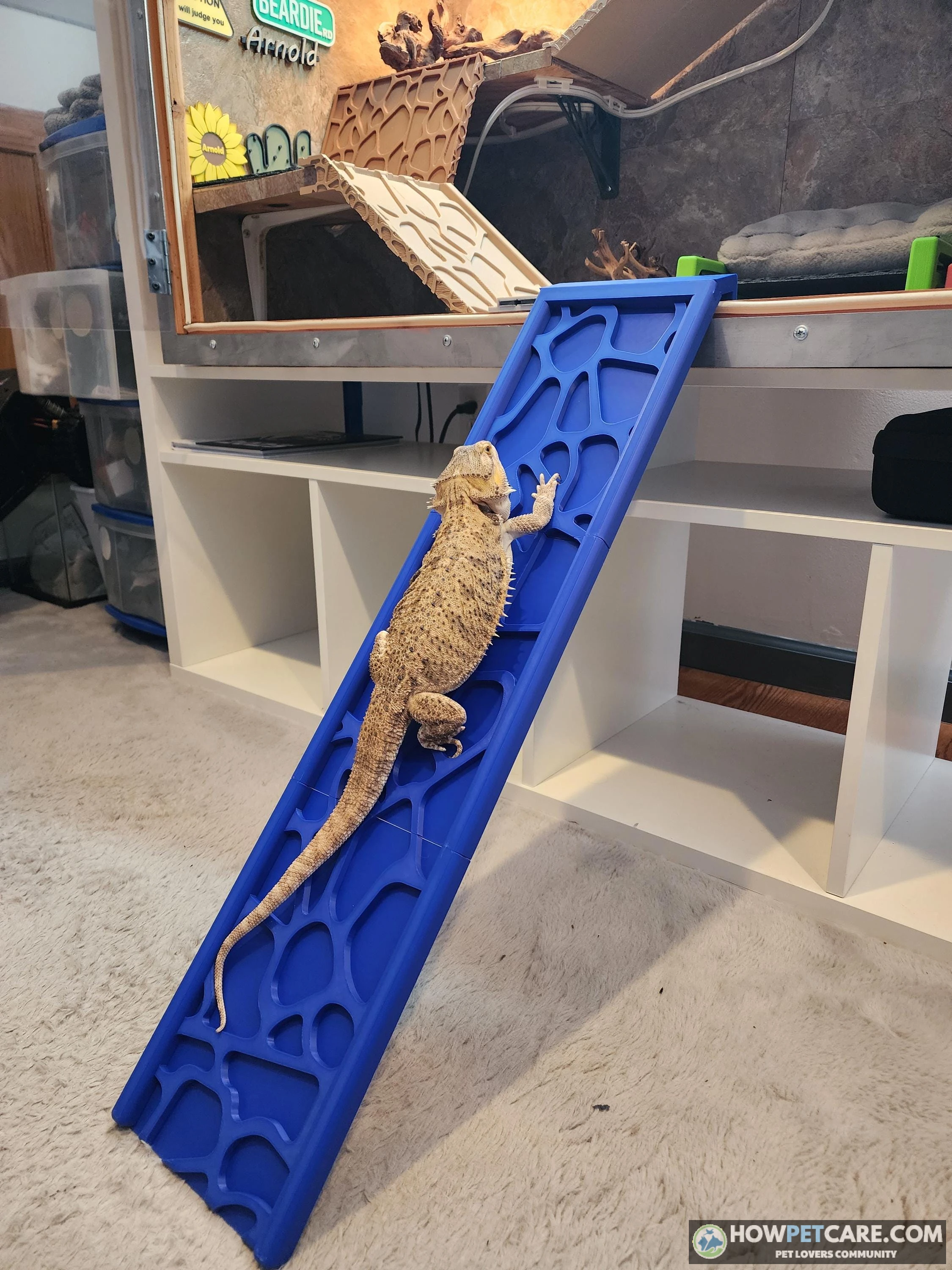
- Lower or remove high climbing furniture; use wide, shallow, non-slip ramps and secure basking surfaces. Recheck heat and UVB after changing their height.
- Use a stable, easy-to-clean floor covering such as paper towel, and remove sharp edges and fall hazards.
- Put shallow food and water dishes within easy reach. Ask the vet how to assist feeding or hydration if the jaw or swallowing is affected.
- Limit handling. When moving the dragon, support the chest, pelvis, and tail together; never lift by a limb or tail.
- Record appetite, droppings, and any new swelling or loss of limb use. Report deterioration promptly. Avoid deep baths, especially if the dragon is weak.
Quality-of-life decisions and when to talk to your vet about euthanasia
Ask your exotic vet about pain control and realistic options if pain persists, the dragon cannot eat or move comfortably, or treatment isn’t helping. A frank conversation can include supportive care, likely outcomes, and humane euthanasia when suffering cannot be adequately relieved.
Your MBD Action Plan: Today, This Week, and Ongoing
Today: Use the triage chart. Call an emergency clinic for seizures, continuous shaking, inability to walk or eat, suspected fracture, or unresponsiveness. For milder signs, book an exotic-vet exam and check the basking temperature, bulb age, position, and barriers. Keep the dragon warm, quiet, and supported.
This week: Bring your husbandry log and enclosure photos to the appointment. Correct lighting and temperature gaps, begin gut-loading feeders, and agree on a life-stage-appropriate diet and supplement plan with the vet. Don’t apply a maintenance schedule over prescribed MBD treatment.
Ongoing: Record weight, appetite, and any return of twitching or weakness. Replace UVB lamps according to their service life, recheck the setup after changes, and attend the follow-up visits your vet recommends. If your dragon cannot walk, eat, or stop shaking, go to a clinic today; if signs are mild, correct husbandry and still arrange an exam.
1A bearded dragon owner notices their pet dragging its belly, displaying continuous tremors, and unable to stand up or eat. According to triage guidelines, what is the appropriate triage classification and immediate action?
Continuous tremors, inability to stand, and inability to eat represent severe systemic disturbance or neurological distress requiring immediate same-day emergency clinical care.
2A reptile keeper places a linear fluorescent UVB tube directly above a solid glass terrarium top. Despite using a brand-new bulb with an appropriate UV output, why might the bearded dragon still develop Metabolic Bone Disease?
Standard glass completely filters out useful UVB radiation, preventing the synthesis of Vitamin D3 necessary for calcium absorption regardless of bulb quality.
3Which of the following dietary practices can negatively impact calcium absorption or contribute to an imbalanced calcium-to-phosphorus ratio in bearded dragons? (Select all that apply)
Mealworms and superworms are naturally low in calcium and higher in phosphorus, making them unsuitable as sole staple feeders without proper dusting and variety.
4After months of veterinary treatment for MBD, a bearded dragon regains normal blood calcium levels, muscle control, and appetite. However, its lower jaw remains shortened ('rubber jaw') and its tail retains a kink. What does this outcome illustrate regarding MBD recovery?
While bone density and metabolic health can normalize with treatment, structural skeletal deformities such as bowed limbs or rubber jaw are often permanent.
5Why does a gravid (egg-producing) female bearded dragon with suspected Metabolic Bone Disease face severe, life-threatening risks during egg laying?
Calcium is required for strong uterine muscle contractions to pass eggs, and MBD-induced pelvic narrowing creates physical obstructions, resulting in life-threatening egg binding.
6When modifying an enclosure for a bearded dragon recovering from advanced MBD with fragile bones, which of the following measures should be taken? (Select all that apply)
Removing high structures prevents dangerous falls that could easily fracture fragile or low-density bones.
7Why should reptile owners avoid giving unprescribed high-dose liquid calcium or high-dose Vitamin D3 supplements to a weak dragon at home prior to a vet visit?
Unprescribed high-dose calcium or Vitamin D3 can lead to nutrient toxicity, and a weak dragon lacks the swallowing reflex to take oral liquids safely without aspirating.
8Which of the following statements correctly describe what diagnostic tools reveal during a veterinary evaluation for MBD? (Select all that apply)
Radiographs allow veterinarians to visualize bone density loss, cortical thinning, and active or healed fractures throughout the skeleton.
| Triage Level | Visible Signs | Underlying Physiology | Required Action and Timeframe | Interim Home Care |
|---|---|---|---|---|
| Emergency | Seizures or continuous shaking; inability to stand, walk, or eat; limp limbs; suspected fracture; or unresponsiveness | A serious calcium disturbance, fracture, neurologic problem, or another emergency is possible. | Phone an emergency or exotic clinic and go today. Confirm that it treats reptiles. | Use a warm, padded carrier; keep the dragon level and calm. Don't force food, water, or supplements. |
| Advanced | Bowed or swollen limbs, a kinked tail, curved spine, swollen jaw, or trouble lifting the belly | Bones may be weakened or painful; fractures are possible. | Call an exotic vet promptly for the earliest appointment, ideally within 24 hours. Ask where to go if none is available. | Lower climbing surfaces and support the entire body when moving the dragon. |
| Early or uncertain | Mild weakness, sluggishness, reduced appetite, a change in jaw shape, or occasional twitching | Calcium regulation or another body system may be affected; visible changes don't establish blood calcium levels | Book a reptile veterinarian within a few days. Call sooner if signs worsen. | Check heat and UVB; keep the dragon quiet and avoid unnecessary handling. |
FAQ
Is metabolic bone disease in bearded dragons contagious?
No. MBD is caused by calcium, vitamin D3, UVB, and diet problems, not by an infectious agent. However, dragons housed with the same lighting and diet may develop it for the same reasons, so check every animal in the household.
Is MBD painful for a bearded dragon?
Yes, it can be. Bone deformities, fractures, and muscle cramps and tremors from low calcium are uncomfortable or painful. Ask the exotic vet about pain relief as part of the treatment plan.
Can a bearded dragon get enough UVB from sunlight instead of a bulb?
Unfiltered outdoor sunlight provides strong UVB, and supervised time outdoors in a secure, shaded-option enclosure can help. Sunlight through glass or a window provides very little UVB, and overheating is a serious risk, so it should not be the only source.
Can a female bearded dragon with MBD lay eggs safely?
It is risky. Low blood calcium weakens the muscles needed to pass eggs, and a deformed pelvis can obstruct them, leading to egg binding. A female with suspected MBD should see an exotic vet before laying and should not be bred.
Can I give my bearded dragon liquid calcium at home before the vet visit?
Do not start high-dose or injectable-style calcium or extra D3 on your own. The wrong dose can cause harm, especially if the dragon is weak or unable to swallow well. Ask the vet’s office by phone what to give while you wait.