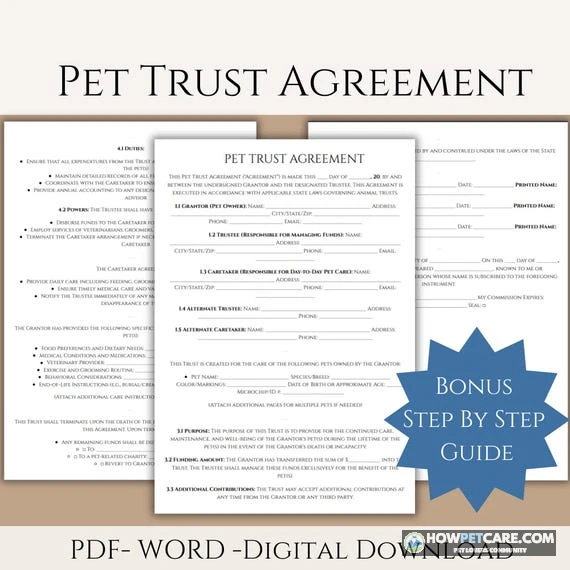

A pet trust is a legal arrangement that sets aside money for your animal’s care, managed by a trustee who pays a designated caregiver. Unlike a will, a funded pet trust can take effect during your incapacity as well as after death, with enforceable oversight.
A pet trust is a legally binding arrangement in which a pet owner appoints a trustee to hold and manage money for the care of one or more surviving animals. The trustee distributes funds to a designated caregiver according to written instructions. Unlike an informal promise or a basic will provision, a properly structured and funded pet trust can provide for care if you become incapacitated or die, without waiting for court proceedings. In the United States, an estimated 500,000 pets are euthanized each year after their owners experience serious disability or death without an enforceable plan in place. Understanding how to structure, fund, and oversee a pet trust can help protect your companion from surrender or neglect.
How a Pet Trust Works If You Become Incapacitated or Die
Under United States property law, animals are classified as personal property. Because personal property cannot own other property, you cannot name a dog or cat as a direct beneficiary of a bank account, life insurance policy, or investment portfolio. An attempt to leave money directly to an animal in an informal note or a will fails as a matter of law. A pet trust addresses that barrier by placing legal title to the money with a human or corporate trustee. The trustee has a fiduciary duty to use the money solely for your animal’s benefit, with care provided through a designated caregiver.
A pet trust generally follows this lifecycle:
- Establishment: The pet owner, legally called the settlor or grantor, signs a formal trust agreement with care instructions, a named caregiver and trustee, and succession rules.
- Funding: The owner transfers assets into the trust, either during life (an inter vivos or living trust) or upon death through beneficiary designations or a pour-over will.
- Trigger Event: The trust agreement activates under its terms if the owner experiences sudden medical incapacity, cognitive decline, or death.
- Administration: The appointed caregiver takes physical custody of the animal. The trustee reviews care requirements, approves veterinary and everyday budgets, and releases payments or reimbursements.
- Termination: When the last surviving covered pet dies, the trust terminates, and the remaining balance goes to a named remainder beneficiary according to the trust terms.

This guide provides practical education on estate planning mechanics and state-law frameworks for companion animals. It is not individualized legal advice and does not establish an attorney-client relationship. State trust statutes and probate rules vary significantly, so consult a qualified estate planning attorney in your jurisdiction before signing documents or transferring assets.
What a pet trust covers during incapacity versus after death
An inter vivos pet trust can provide protection during both medical incapacity and after death. Many owners focus on what happens when they die, but an unexpected stroke, traumatic injury, severe illness, or progressive dementia can leave someone unable to care for an animal long before then.
Without a trust, a court-supervised guardianship or conservatorship proceeding may take weeks or months to establish legal authority over your funds. In the meantime, there may be no clear authority to spend your money on emergency veterinary care, prescription diets, or professional boarding. A funded pet trust can include explicit incapacity trigger clauses. Once qualified medical professionals confirm incapacity under the criteria in your document, the successor trustee can access the trust’s dedicated bank account and provide the caregiver with funds to maintain your pet’s routine, including meals and medications.
Pet trust vs pet will: what a will can and cannot do
Many pet owners assume a clause in a standard last will and testament provides enough protection. A will lets you bequeath your pet to a chosen person and leave that person a cash bequest, but it has three structural weaknesses:
- Delayed legal authority: A will has no legal effect during your lifetime and cannot help your pet if you’re hospitalized or incapacitated. After death, a will must undergo probate, a public court process that routinely takes months before an executor is formally empowered to distribute funds. In the meantime, the person caring for your pet may have to pay expenses out of pocket, with no legal guarantee of reimbursement.
- No fiduciary oversight: When you leave a pet and money to someone in a will, the gift becomes their personal property once probate closes. The recipient has no ongoing legal obligation to spend the money on the animal. They can surrender the animal to a shelter the next afternoon and use the cash for personal debts, vacations, or home renovations.
- No automatic backup mechanism: If the person named in your will refuses the pet or predeceases you, the animal falls into the residuary estate. An executor focused on liquidating assets may then surrender the animal to a municipal pound or rescue organization.
An informal verbal promise from a neighbor or relative offers even less protection; it is legally unenforceable.
When is a will provision sufficient? A simple will provision paired with an informal letter of instruction may suffice if you have a young, healthy pet with low expected lifetime costs, modest estate assets, and a devoted family member who already shares a home or close bond with the animal and has the independent financial means to cover unexpected veterinary crises.
When is a pet trust necessary? A formal pet trust is strongly indicated if you have an animal with chronic medical needs, an exotic or long-lived species (such as a horse or parrot), multiple companion animals that must be kept together, substantial funds set aside for long-term care, or doubts about the proposed caregiver’s financial discipline or longevity.
Caregiver, Trustee, and Backups: Who Does What in a Pet Trust
A properly drafted pet trust assigns distinct responsibilities to create checks and balances. The primary parties include:
- Settlor (or Grantor): You, the pet owner who establishes the trust, transfers assets, and sets the standard of care.
- Caregiver: The person who provides daily physical care, housing, nutrition, exercise, and companionship to the animal.
- Trustee: The fiduciary who manages trust assets, maintains accounting records, files trust tax returns, and distributes funds to the caregiver based on approved expenses.
- Trust Enforcer (or Trust Protector): An independent third party authorized to monitor the trust, request accountings, inspect the animal’s living conditions, and take legal action if the trustee or caregiver fails in their duties.
- Remainder Beneficiary: The person, charitable entity, or animal shelter designated to receive leftover funds once the final covered pet dies.
Under trust law, the animal is the benefited subject of the trust rather than a legal beneficiary, because an animal cannot hold equitable title or initiate a lawsuit in court.
Choosing a caregiver and a trustee for a dog or cat
Choosing a caregiver and trustee is a central decision in pet estate planning. State laws generally allow one person to serve in both roles, but combining them creates a conflict of interest. A sole caregiver-trustee can write checks to themselves from trust funds without external oversight, creating a temptation to skimp on veterinary care or nutrition for personal benefit.
Separating the roles creates accountability. The caregiver attends to the dog or cat’s physical well-being, while the trustee checks distributions against receipts, veterinary invoices, or approved expense allowances. If family dynamics or a limited social network lead you to name one person in both roles, include safeguards such as an independent trust enforcer or annual accountings submitted to an outside CPA.
To make sure your pet receives care, look beyond a candidate’s general fondness for animals:
- Residential stability and housing rules: Does the candidate own a home with an appropriate yard, or rent an apartment subject to landlord restrictions, breed prohibitions, or weight limits?
- Household compatibility: Do they have children or other pets whose temperaments might clash with your animal?
- Physical capacity and lifestyle: Can they handle the daily exercise demands of a high-energy dog or the intensive medication schedules a senior cat may need?
For the trustee, look for financial organization, administrative reliability, and emotional detachment. A sibling, close friend, trusted professional, or bank trust department can serve. Corporate trustees charge annual administrative fees, but they offer perpetual existence and professional asset management, which can be valuable for high-value trusts protecting long-lived animals.
Successor caregivers and who steps in when someone says no
Circumstances change. A primary caregiver who agrees to take your pet today may face severe illness, financial insolvency, divorce, housing loss, or death before your trust takes effect. Name successor caregivers and successor trustees so the plan does not depend on one person in each role.
A common practice is to name at least two successive backups for each role (e.g., Primary Caregiver, First Alternate Caregiver, Second Alternate Caregiver). Before signing, discuss the responsibility with every candidate and obtain their explicit agreement. Your trust agreement should also provide a fallback if every named person is unable or unwilling to serve. It can authorize the trustee or trust enforcer to select a reputable no-kill animal sanctuary, rescue organization, or perpetual-care foster network to take custody with financial support from the trust.
Writing pet care instructions a trustee can actually check
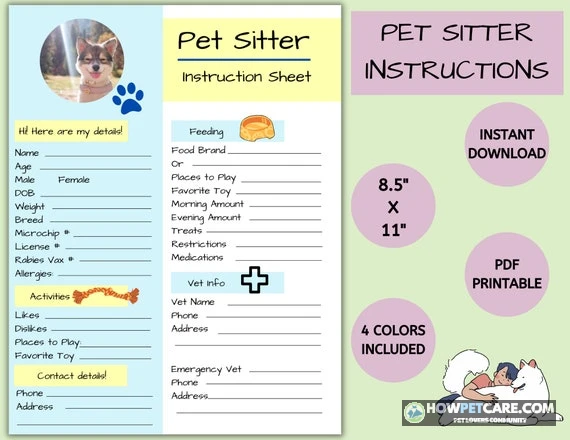
Vague directives such as "provide a loving home" or "take good care of my dog" give a trustee little to enforce objectively. Your trust agreement or attached care schedule should include specific, verifiable instructions covering:
- Nutrition and feeding: Food brands, portion sizes, daily feeding schedules, dietary restrictions, and prohibited treats.
- Veterinary care: The preferred veterinary clinic, minimum frequency of routine wellness exams (e.g., twice yearly for senior pets), vaccination protocols, and chronic medication schedules.
- Identification and registration: Microchip numbers, registry contacts, city licensing details, and physical descriptions, including photographs, distinctive markings, and medical history.
- Daily routine and environment: Sleeping arrangements, crate usage, exercise duration, grooming schedules, professional boarding facilities, and preferences for interaction with unfamiliar people or strange animals.
- End-of-life decisions: Clinical guidelines for terminal illness, chronic pain management, palliative care thresholds, and when euthanasia is ethically and medically appropriate based on veterinary consultation.
Specific instructions give the trustee a way to measure care. If the trust calls for biannual dental checks and monthly flea preventatives, for example, the trustee can withhold discretionary caregiver stipends until veterinary receipts confirm those services were provided.
 You might be wonderingPet anxietyPet Anxiety in Dogs & Cats: Signs, Severity, and What WorksRead the answer
Statutory, Traditional, and Honorary Pet Trusts: Enforceability and Best Use
Estate planning historically struggled to accommodate companion animals because common law required a human beneficiary capable of enforcing trust terms in court. Over the past several decades, legal frameworks have evolved into three distinct trust structures, alongside traditional will provisions.
                                  PET PROTECTION FRAMEWORKS
                                              │
         ┌────────────────────────────────────┼────────────────────────────────────┐
         ▼                                    ▼                                    ▼
  STATUTORY PET TRUST                 TRADITIONAL TRUST                    HONORARY TRUST
  • Authorized by state code          • Common-law trust vehicle           • Purpose trust structure
  • Strict statutory terms            • Fully custom drafted terms         • Dependent on trustee honor
• Court-backed enforcement • High flexibility for assets • Lacks binding legal tooth- Statutory Pet Trust: A trust authorized directly by a state’s animal trust statute. Most modern pet trusts are statutory creations. They allow an owner to establish an enforceable trust for designated animals, with standing for named enforcers or court-appointed representatives to compel performance.
- Traditional (Common-Law) Trust: A standard revocable or irrevocable trust with specialized terms governing animal care. Rather than relying solely on a simplified statutory framework, an attorney drafts terms for business assets, multi-tiered distributions, and complex family dynamics, integrating pet care obligations alongside human beneficiaries.
- Honorary Trust: An older common-law structure directing funds toward a non-charitable purpose, such as caring for an animal, without a human beneficiary. The animal cannot legally enforce an honorary trust. The trustee may carry out its terms on their "honor," but if they refuse or misapply the money, enforcement may be unavailable and the property may be reallocated to the settlor’s heirs or residuary estate. Recognition and enforcement depend on local law.
Which type fits which situation
The table compares how these arrangements are created and enforced, along with their limitations and risks.
| Trust type | How it is created | Who can enforce it | Enforceability limits | Best used when | Main risk |
|---|---|---|---|---|---|
| Statutory pet trust | Created under the applicable state’s animal-trust statute, with terms tailored to that law. | A person named in the trust, a person authorized by statute, or a court-appointed person may be able to enforce it. | The statute controls details such as eligible animals, duration, enforcement, and possible court reduction of excessive funds. | You want a structure expressly recognized by your state’s law and its rules fit your situation. | Assuming another state’s statute works the same way, or overlooking a duration or execution requirement. |
| Traditional trust | Drafted as an ordinary trust with pet-specific instructions, funding, and enforcement provisions. | Depends on the document and governing law; the drafter should identify who can demand compliance and seek court action. | Treatment varies by state. A document’s label alone does not guarantee that every provision will be enforceable. | Multiple animals, complex assets, or instructions that need careful coordination with a broader estate plan. | Vague terms or unclear enforcement authority can make oversight difficult. |
| Honorary trust | Written to direct property toward an animal-care purpose without relying on the animal as a human beneficiary. | May depend on a named human’s willingness to carry out the purpose, unless local law supplies enforcement. | Recognition and enforcement vary; do not assume it is binding or enforceable in your state. | Only after local counsel confirms how the arrangement will work and what happens if the trustee refuses. | The intended care may lack a person with clear authority to enforce it. |
| Will provision | A will names a recipient for the pet and may leave that person money or instructions. | Usually enforced through the estate process by people with legal standing under the will and local law. | Generally takes effect at death, may involve probate, and does not by itself create ongoing funded oversight during incapacity. | A trusted recipient is ready to take the pet and the care arrangement is relatively simple. | The recipient may receive the pet and money without continuous trust-based accounting or oversight. |
Why enforcement depends on the state, not the label
Calling a trust "statutory" or "protective" does not make it legally effective. Enforceability depends on whether the governing state’s statutes and case law recognize the arrangement and give someone standing to challenge fiduciary mismanagement.
Many states have adopted Section 408 of the Uniform Trust Code (UTC) or Section 2-907 of the Uniform Probate Code (UPC), both of which validate trusts for the care of designated domestic or pet animals. States often modify these uniform provisions, though. Some jurisdictions allow any "person having an interest in the welfare of the animal" to petition the court for an enforcer appointment or fiduciary removal; others restrict standing to people explicitly named in the trust instrument. If your trust does not designate an enforcer and state law lacks an expansive standing provision, a neglected animal may have no one with legal standing to bring the matter to court.
Pet Trust Laws by State: What to Verify Before You Draft
As of 2016, when Minnesota enacted its animal trust statute, all 50 U.S. states and the District of Columbia have codified laws recognizing pet trusts. The statutes differ, however, across four key areas:
- Maximum trust duration: Some states restrict how long a pet trust can legally exist. Many follow the traditional rule against perpetuities or a 21-year limit, terminating the trust after 21 years regardless of whether the animal is still alive. Others allow trusts to continue for the animal’s full natural life or for expanded statutory terms such as 90 or 150 years.
- Eligible animals: Statutes differ on whether they cover only animals alive during the settlor’s lifetime or include offspring conceived before the owner’s death. Some codes limit statutory trusts to "domestic or pet animals," which may exclude livestock or equines unless the trust is drafted under broader traditional trust statutes.
- Judicial power to reduce funding: Most state statutes allow a probate judge to review the trust’s funding and remove funds deemed excessive relative to the animal’s needs, reallocating the excess to the settlor’s human heirs.
- Execution formalities: Witness and notarization standards vary. Some states require only a notarized signature for a standalone trust; others require a testamentary trust to follow strict will-execution formalities, including two independent, disinterested witnesses.
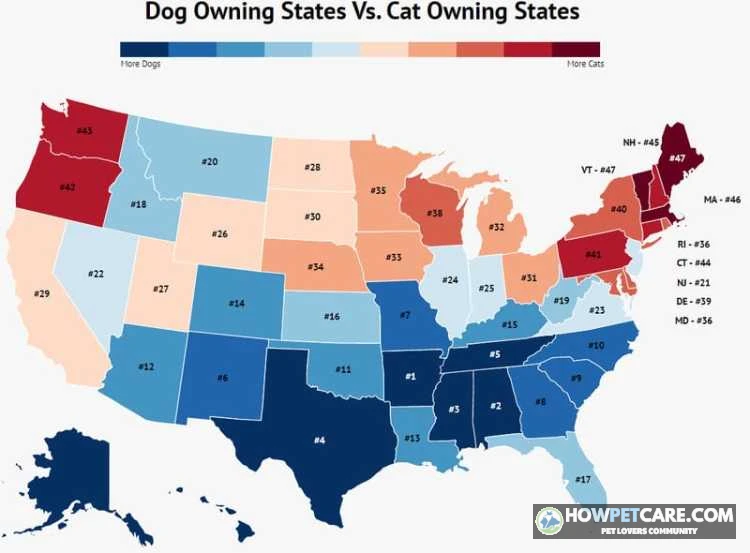
Which states allow pet trusts
Every state allows statutory pet trusts, but the mechanics differ across state lines. Online secondary references, including popular advocacy summaries from prior years, can become outdated as legislatures revise probate codes. When establishing a trust, you and your attorney should verify the controlling code on your state legislature’s official legislative website.
The following reference illustrates differences in key statutory fields between jurisdictions. Statutes are amended periodically, so confirm the current text of each code section on your legislature’s official website before relying on it:
| State | Statute citation | Duration rule | Eligible animals | Enforcement | Date verified |
|---|---|---|---|---|---|
| California | Cal. Prob. Code § 15212 | Natural life of covered animal(s) | Domestic or pet animals alive during settlor’s lifetime | Person named in trust, animal’s caregiver, or court-appointed nonprofit | 2026-11-16 |
| Michigan | Mich. Comp. Laws § 700.2722 | Terminates upon death of last surviving animal, or 21 years, whichever occurs first | Animals alive during settlor’s lifetime | Person designated in trust, or appointed by court upon petition | 2026-11-16 |
| Minnesota | Minn. Stat. § 501C.0408 | Natural life of covered animal, not to exceed 90 years | Domestic or pet animals alive during settlor’s lifetime | Person appointed in trust or court-appointed individual | 2026-11-16 |
| New York | N.Y. Est. Powers & Trusts Law § 7-8.1 | Natural life of covered animal(s), not to exceed 21 years | Domestic or pet animals alive during settlor’s lifetime | Designated trustee, enforcer, or person having interest in animal | 2026-11-16 |
| Tennessee | Tenn. Code Ann. § 35-15-408 | Natural life of covered animal, not to exceed 90 years | Animals alive during settlor’s lifetime | Designated person or court appointee | 2026-11-16 |
| Washington | Wash. Rev. Code § 11.98.130 | Natural life of covered animal, not to exceed 150 years | Animals alive during settlor’s lifetime | Person named in trust or appointed by court | 2026-11-16 |
Duration, eligible animals, and enforcement: the fields that differ
Duration limits can be a serious problem for owners of long-lived animals. In states like Michigan, New York, Alaska, and Montana, statutory pet trusts carry a ceiling of 21 years. While 21 years may accommodate the remaining lifespan of an adult dog or cat, it may be inadequate for horses, which frequently live past 30 years, or large parrots, macaws, and tortoises, which regularly live 60 to 80 years or more. If an owner in a 21-year limitation state establishes a statutory pet trust for a 15-year-old Amazon parrot, the trust will terminate when the bird turns 36, distributing remaining funds to the remainder beneficiary even though the bird may live another three decades. In such jurisdictions, an estate planning attorney can consider a traditional common-law trust or establishing the trust in another jurisdiction with an expanded duration rule, such as Tennessee (90 years) or Washington (150 years).

If you move or your caregiver lives in another state
Pet planning across state lines can become more complex when multiple states are involved. For example, an owner might live in Pennsylvania, the primary caregiver in North Carolina, and the real estate or financial accounts be titled in Florida. The trust document should contain a clear governing law clause stating which jurisdiction’s statutes interpret and control the trust.
If you permanently relocate, don’t assume your existing pet trust will remain compatible with the new state’s laws. A change in legal domicile can affect probate jurisdiction, state fiduciary income tax rates on trust earnings, and the statutory duration rules and creditor protections that apply. After an interstate move, have local counsel review your estate plan to determine whether the existing governing law remains advantageous or a restatement is needed.
How Much Money to Put in a Pet Trust: A Funding Calculation You Can Defend
A useful funding figure starts with a transparent budget rather than a guess. Leaving an arbitrary round number, such as $100,000 or $500,000, can unnecessarily deplete assets intended for human heirs or invite family members to petition a probate judge to reduce the trust’s capital.
A pet trust funding model can use this formula:
Total Trust Funding = (Annual Recurring Care × Remaining Life Expectancy) + Contingency Reserves + Administrative Costs
A worked example for one dog and one cat
Consider a household planning for two animals: a 6-year-old golden retriever mix and a 4-year-old domestic shorthair cat. These figures are planning assumptions, not mandatory legal standards or universal averages. Use your own veterinary invoices and regional care estimates.
| Cost category | Dog (6 yrs old) | Cat (4 yrs old) | Planning rationale and source |
|---|---|---|---|
| Commercial premium food & nutritional supplements | $1,200/yr | $600/yr | Based on current retail dietary costs ($100/mo dog, $50/mo cat) |
| Routine veterinary care (exams, vaccines, dental cleaning) | $800/yr | $600/yr | Annual wellness exams and alternating annual professional dentals |
| Flea, tick, and heartworm preventative medications | $400/yr | $300/yr | 12-month preventative supplies based on local clinic quotes |
| Routine professional grooming and maintenance | $600/yr | $0/yr | Dog groomed every 8 weeks ($75/visit); cat groomed at home |
| Municipal licensing, microchip fees, incidental supplies | $100/yr | $50/yr | Registration, toys, bedding, litter, scratching posts |
| Boarding or professional pet-sitting allocation | $500/yr | $250/yr | 5 to 7 days of annual professional care during caregiver travel |
| Total Annual Recurring Care | $3,600/yr | $1,800/yr | Combined annual operating baseline: $5,400 |
| Assumed remaining lifespan | 7 years | 12 years | Estimated lifespan of 13 for dog, 16 for cat (vet confirmed) |
| Recurring Care Subtotal | $25,200 | $21,600 | Recurring care over remaining lifespan ($46,800 total) |
| Veterinary emergency & chronic illness reserve | $6,000 | $4,000 | Separate reserve for MRI, orthopedic surgery, oncology, kidney care |
| Caregiver transition & travel contingency | $1,500 | $1,000 | Re-homing transport, short-term boarding, transitional supplies |
| Administrative buffer (fiduciary, tax prep, legal) | $2,000 | $2,000 | Form 1041 fiduciary tax filings and periodic trustee accounting |
| Total Defensible Trust Allocation | $34,700 | $28,600 | Grand total defensible funding: $63,300 |

In this model, the owner sets aside a total of $63,300. Keeping the breakdown in the estate planning file alongside historical receipts creates a record showing how the amount relates to documented care costs.
Contingencies and administration costs
It’s easy to budget for routine kibble and annual vaccinations while overlooking emergencies and overhead. As companion animals age, they may need more intensive medical care. A single cruciate ligament repair in a medium-to-large dog can cost $4,500 to $7,000 or more, depending on the procedure and region; treatment for feline chronic kidney disease or diabetes may require ongoing blood panels, subcutaneous fluids, and specialized medications costing several hundred dollars each month.
Trust administration has costs too. A trust is an independent taxable entity. If invested trust funds generate taxable interest or dividend income, the trustee must file annual federal fiduciary income tax returns (IRS Form 1041) and corresponding state returns. Over a 10-year trust duration, tax preparation fees can total roughly $2,000 to $4,000, depending on the preparer and jurisdiction. If an independent or professional trustee is appointed, the budget must also cover their reasonable annual fiduciary fee, often quoted around 1% to 1.5% of trust assets or an hourly rate; verify current fee schedules with any provider you consider.
Why a documented amount is safer than a round number
State statutes empower probate courts to scrutinize pet trust funding levels. If a court finds that the trust corpus "substantially exceeds the amount required for the intended use," a judge may have statutory authority to reduce the fund and distribute the surplus to human heirs or remainder beneficiaries.
A well-known example is the estate of New York hotelier Leona Helmsley, who bequeathed a $12 million trust to care for her Maltese dog, Trouble. Surviving family members contested the trust, and a probate court determined that $12 million substantially exceeded any conceivable standard of care for a small dog. The judge reduced the trust corpus to $2 million and redirected the remaining $10 million to charitable foundations.
Most pet owners don’t fund trusts with eight-figure sums, but family members may also challenge trusts funded with $150,000 or $200,000, claiming the money should belong to them. A round number without supporting documentation may be harder to defend. An itemized calculation supported by veterinary estimates, food costs, and lifespan data gives the trustee evidence to respond to a challenge, though it cannot guarantee the outcome.
What a Pet Trust Costs to Create and Administer
The cost of a pet trust falls into two categories: one-time creation expenses and ongoing administration.
One-time drafting and funding costs
One-time costs cover the work of customizing the trust instrument and transferring assets. Legal fees vary with geographic region, attorney expertise, and the complexity of your estate plan:
- Standalone attorney-drafted pet trust: Fees for an independent, customized statutory pet trust depend on local hourly rates and the work needed to tailor the document to your state’s code. The process typically includes drafting the trust, preparing transfer deeds or banking instructions, creating a durable power of attorney with animal provisions, and executing documents under state-required formalities.
- Pet trust integrated into a comprehensive revocable living trust: If you’re already establishing a family trust for real estate, financial portfolios, and human beneficiaries, an attorney can embed animal trust provisions in the master agreement. This is often more economical than executing two unrelated standalone trust documents.
- Online document platforms: Low-cost platforms offer basic pet trust forms, but generic forms may not address your state’s duration caps, appropriate trust enforcer provisions, or mandatory statutory execution language. Those omissions can leave an arrangement vulnerable to nullification.
Ongoing administration costs
Once a pet trust is triggered by incapacity or death, operating expenses can reduce its principal balance:
- Trustee compensation: Family members and close friends often agree to serve without compensation. An independent fiduciary, professional trustee, or trust company will generally charge an annual percentage of trust assets or an hourly administrative rate.
- Fiduciary tax preparation: If trust investments earn interest, capital gains, or dividends above statutory thresholds, a certified public accountant or enrolled agent must prepare and file annual fiduciary tax returns.
- Banking and custodial fees: These include standard monthly checking fees or investment brokerage administrative charges applied to the trust account.
- Court accountings and legal counsel: A dispute with an uncooperative caregiver or an heir’s challenge to an expenditure can require legal expenses to defend the fiduciary and enforce the settlor’s intent.
What changes the price
Several factors affect the complexity and expense of establishing a pet trust:
- Number and species of animals: An agreement for a single senior cat is relatively straightforward. A trust covering six competition horses, exotic birds, or an entire multi-generational rescue sanctuary requires customized covenants for boarding contracts, stable liability, breeding restrictions, and specialized veterinary authorization.
- Asset structure used for funding: Transferring cash savings or liquid brokerage accounts into a trust account is relatively simple. Funding through business interests, rental real estate, or retirement annuities requires more tax planning and transfer documentation.
- Conflict potential: If estranged children or litigious relatives may resent money being set aside for an animal, your attorney may need to strengthen the documentation, add no-contest clauses, and assemble contemporaneous medical proof of your legal capacity.

Setting Up a Pet Trust Step by Step, From Signing to Funding
Creating an enforceable pet trust involves both executing legal documents and transferring assets into the trust.
-
Step 1: Choose Your People and Secure Commitments
Identify your primary caregiver, primary trustee, trust enforcer, and at least two successors for each role. Discuss expectations with each candidate, confirm that their living arrangements accommodate your pet, and obtain their agreement before adding their names to legal drafts.
-
Step 2: Compile Identification and Care Instructions
Assemble a file for each animal. Include clear photographs, microchip documentation, registration numbers, medical histories, vaccination logs, dietary requirements, and daily routines. Attach the care schedule as an exhibit to the trust agreement.
-
Step 3: Draft and Execute the Trust with State Formalities
Work with a qualified estate planning attorney to draft the trust agreement under your state’s animal trust statute. Follow the applicable execution formalities, including any required disinterested witnesses and notarial acknowledgments.
-
Step 4: Formally Fund the Trust with Appropriate Assets
Open a dedicated trust checking or brokerage account using the trust’s formal legal title. Retitle liquid funds into the trust or complete updated payable-on-death (POD) and transfer-on-death (TOD) beneficiary designations through your bank or insurance custodian.
-
Step 5: Verify Transfers and Store Records Safely
Obtain written confirmation from banks and insurance companies that account titles and beneficiary designations reflect the trust. Store original signed documents in a secure, fireproof location and provide certified copies to your trustee, enforcer, and designated emergency contacts.
Documents to prepare and signing requirements to check
A complete pet estate plan relies on several connected legal documents, not just the trust agreement:
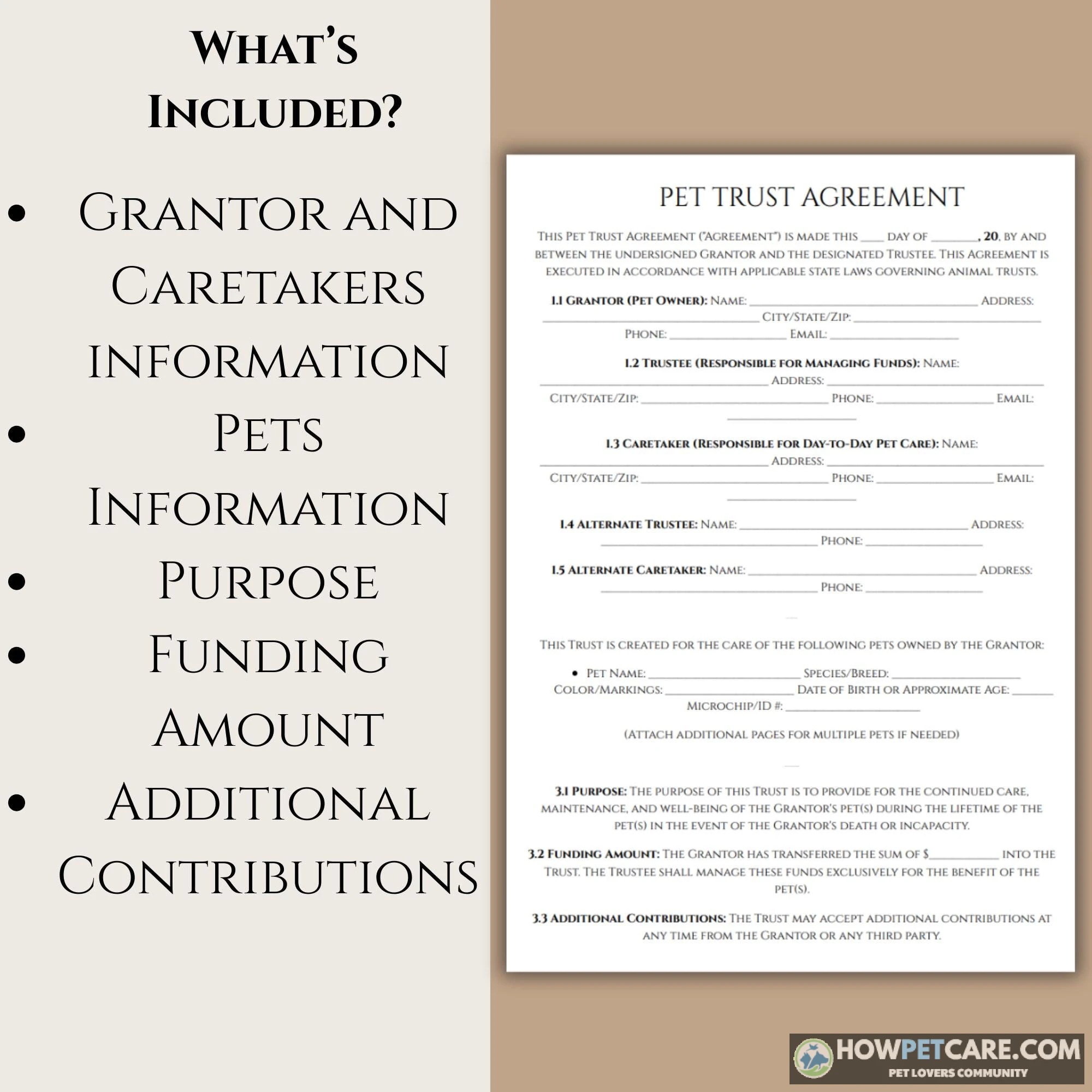
- The Pet Trust Agreement: The governing instrument that defines powers, names fiduciaries, details care covenants, and establishes distribution guidelines.
- Pour-Over Will: A will directing personal property or miscellaneous assets not retitled into your trust during your lifetime to "pour over" into the trust through probate upon your death.
- Durable Financial Power of Attorney: A lifetime document authorizing your designated agent to spend your personal funds on pet care and transfer personal accounts into the pet trust if illness or injury incapacitates you before the trust is fully funded.
- Caregiver Authorization Affidavit: A concise, notarized document authorizing the caregiver to take the animal to veterinary clinics, consent to emergency medical procedures, and access medical records.
Each document must meet your state’s execution formalities. In many jurisdictions, a standard living trust requires only notarization, while a testamentary instrument or will-integrated trust requires execution in the simultaneous presence of two disinterested witnesses who sign in the presence of the settlor and a notary public. Missing a required formality can invalidate a document and leave your pet unprotected.
Funding the trust: accounts, life insurance, and other assets
A trust needs assets to pay for care. An unfunded pet trust cannot distribute money. There are three primary ways to transfer funds to a pet trust:
- Direct Lifetime Funding (Inter Vivos Funding): Open a bank account titled in the name of the trust (e.g., Jane Doe, Trustee of the Jane Doe Pet Trust) and deposit cash while you’re alive and healthy. This provides liquid capital an alternate trustee can access if you’re hospitalized.
- Beneficiary Designations (POD/TOD): Retain ownership of a bank account, life insurance policy, or brokerage asset during your lifetime, but file a change-of-beneficiary form naming the pet trust as the primary or contingent beneficiary upon your death. Life insurance can be a funding tool for younger owners with limited liquid cash who want a substantial, tax-free sum transferred to the trust at death.
- Testamentary Bequest: Direct in your will that a specific dollar amount from your estate be paid into the pet trust. This method can be valid, but funds may remain in probate for months before reaching the trustee.
Do not designate a pet trust as the direct beneficiary of a tax-deferred traditional IRA or 401(k) without specialized tax analysis. Because a pet trust lacks a human "designated beneficiary" under IRS rules, naming it directly can trigger accelerated mandatory distribution rules. The entire account could be fully taxed as ordinary income within five years or by the end of the year following death, significantly reducing the fund.
Confirming the money actually reached the trust
Signing a trust document does not complete the funding process. If bank accounts are never retitled or beneficiary forms are never submitted, the trustee may have no money to distribute when your pet needs care.
Use this checklist to put the plan into operation:
- ☐ Care instructions: Write a dated care sheet covering food, medication, veterinary contacts, routines, ID and microchip details, and end-of-life preferences. Keep a copy with the trust records and tell the caregiver where to find the current version.
- ☐ Pet identification: List each animal’s name, description, microchip number, license details, and veterinarian in the trust schedule or an attached record. Update it when information changes.
- ☐ Caregiver and backups: Name the primary caregiver and at least two successors in the trust or coordinated estate documents. Obtain each person’s agreement in advance; record contact details and the order for contacting successors.
- ☐ Trustee and backups: Name the person responsible for holding and paying funds, plus successor trustees. State what documentation reimbursement requires and what records or care checks the trustee may request.
- ☐ Enforcement contact: Name an enforcer if permitted and appropriate under local law, or ask counsel to specify who can seek enforcement if the caregiver or trustee does not perform.
- ☐ Execution: Ask local counsel which signing, witness, and notarization requirements apply to the trust and related documents. Follow the required formalities and keep signed copies accessible to those who may need to act.
- ☐ Asset transfer: Retitle the intended cash or account into the trust as directed, or complete the other chosen funding step. Ask the bank or custodian for written confirmation; a signed trust without available assets cannot pay care costs.
- ☐ Beneficiary-designation review: Review life-insurance and retirement-account forms with an attorney or tax adviser before naming a trust. Keep copies of completed forms and confirmation of acceptance. Writing a trust into a will does not itself change an account’s beneficiary.
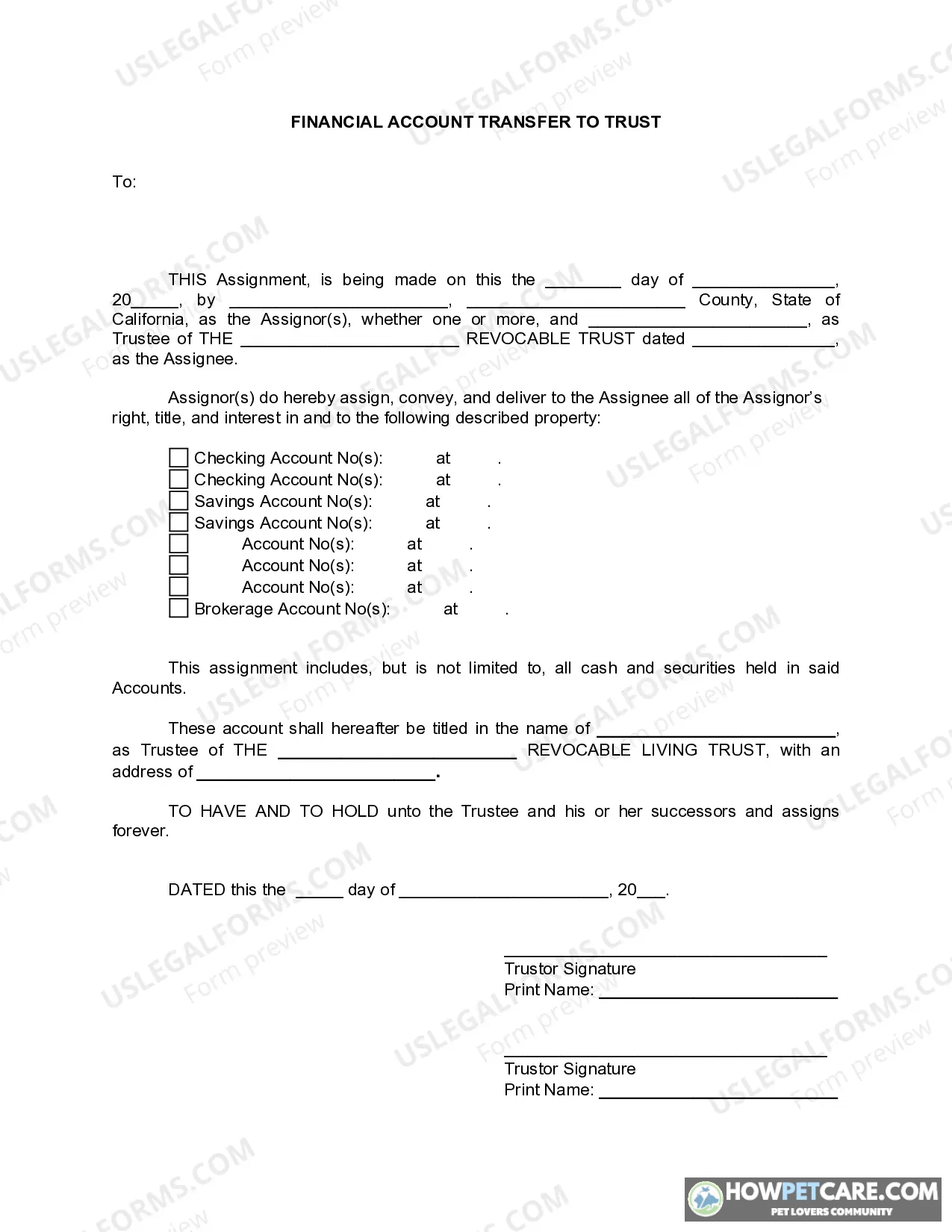
- ☐ Incapacity bridge: Put emergency contacts, temporary placement details, veterinary authorization, and instructions for releasing immediate funds in a separate, easy-to-find emergency sheet. Coordinate it with any power of attorney.
- ☐ Annual check: Schedule a yearly review and revisit the plan after a move, a major health change, or a caregiver or trustee change.
If You’re Hospitalized, Your Caregiver Fails, or Money Is Left Over: Running the Trust
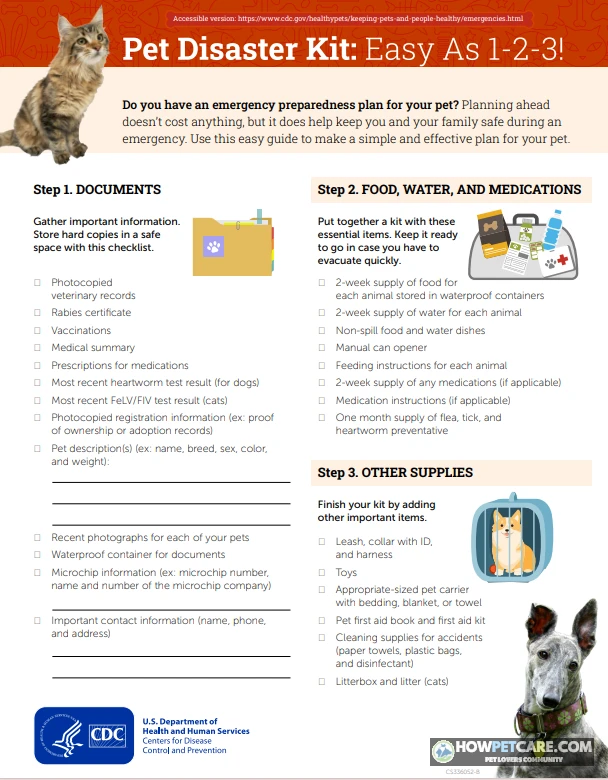
A pet trust needs to work in an emergency as well as over the long term. A bridge plan can cover the gap between a sudden emergency room admission and the administration of trust assets.
The first 72 hours: a bridge plan for sudden incapacity
Emergency responders, hospital social workers, and local animal control officers may not know about a trust document stored in your home office safe. Without an immediate plan, your animal could remain inside an empty home without water for days, or be impounded by animal control on a 72-hour stray hold, during which unclaimed animals may be euthanized in some jurisdictions.
A 72-hour emergency response plan can include:
- Wallet pet emergency card: Carry a card directly behind your driver’s license stating: "I have companion animals at home. In case of emergency or incapacitation, please immediately contact my emergency pet caregivers listed on the back."
- Immediate local emergency responders: Designate two trusted neighbors or local friends who have keys to your home, know your animals, and agree to step in within two hours of notification to feed, walk, and stabilize the pets.
- Veterinary authorization and emergency funds: Keep a written medical authorization form on file with your veterinary clinic. Ensure your durable power of attorney authorizes your financial agent to disburse up to $1,500 for emergency boarding or medical stabilization while the formal successor trustee is being notified.
How distributions and oversight work in practice
Once the long-term caregiver takes custody, the trustee needs a payment method that supports care and provides accountability. Fiduciaries generally choose between three payout models:
- Expense reimbursement against receipts: The caregiver pays out of pocket for food, grooming, and routine supplies, then submits itemized receipts to the trustee at the end of each month. This provides oversight but places a cash-flow burden on the caregiver.
- Fixed monthly care allowance: The trustee calculates a reasonable monthly operating budget (e.g., $300 per month) and direct-deposits the stipend into the caregiver’s checking account on the first of each month. The caregiver retains receipts for a random or annual audit by the trustee.
- Direct third-party payment: For major veterinary surgeries, specialty medications, or professional boarding, the caregiver asks the veterinary hospital or service provider to bill the trust directly. The trustee pays from trust funds, sparing the caregiver a large out-of-pocket expense.
For oversight, the trust agreement should expressly authorize the trustee to conduct scheduled wellness checks, inspect the caregiver’s home, and require an annual veterinary examination, with the veterinarian sending a health status report directly to the trustee.
Replacing a caregiver who can’t or won’t continue
Even a well-intentioned caregiver may experience burnout, develop serious health problems, or neglect an animal. The trustee and trust enforcer need a legally defined protocol for intervening if care deteriorates.
                         CAREGIVER-FAILURE RESPONSE LADDER
                                         │
[1. Emergency Contact] ──► [2. Temporary Care] ──► [3. Gather Evidence]
                                                         │
[6. Transfer Custody]  ◄── [5. Written Notice]  ◄── [4. Direct Pay Care]
         │
         ▼
[7. Legal Escalation]  ──► [8. Final Handoff]
A trustee or trust enforcer can follow this escalation protocol if a caregiver fails or becomes unavailable:
- Start with the emergency contact: Contact the primary caregiver and the named backup. If the caregiver cannot be reached, follow the written emergency contact sheet and request a prompt welfare check through an authorized person.
- Arrange temporary placement: Use the preselected temporary caregiver, boarding option, or veterinarian-approved arrangement. Identify in advance who can transport the animal, access its records, and approve immediate care.
- Gather evidence of the situation: The trustee or designated enforcer can request receipts, veterinary records, and a visit or other check if the document authorizes it. Record dates, requests, responses, and observed care concerns.
- Keep necessary care paid for: Follow the trust’s payment rules for urgent veterinary treatment and essential supplies. If reimbursement is disputed, use an authorized direct payment or alternate caregiver arrangement rather than leaving an immediate bill unpaid.
- Give written notice and set a response deadline: State the concern, the records or action requested, and the next step if it is not addressed. Use the notice method and timeline in the trust where provided.
- Activate replacement authority: If the caregiver is unavailable, refuses, or does not meet the document’s criteria, contact successors in order and arrange a safe transfer of the pet, medications, records, and funds needed for the transition.
- Escalate when needed: If the trust does not provide a workable remedy or the animal’s welfare remains at risk, contact the named enforcer or consult local counsel about seeking court action where available. Check the document and state law rather than assuming a particular person has standing.
- Document the handoff: Record the new caregiver’s acceptance, the animal’s condition and belongings, outstanding expenses, and who now has authority to approve care and receive payments.
What happens to unused money when the pet dies
A pet trust should state what happens to remaining funds after the last surviving covered animal dies. The caregiver notifies the trustee, who pays final expenses, including humane veterinary palliative care, euthanasia, and communal or private cremation, and completes a final fiduciary accounting.
Remaining capital then goes to the remainder beneficiary named in the trust. Consider the incentives created by your choice:
- Naming a non-profit charity: Directing remaining funds to an established animal welfare charity, rescue foundation, or veterinary research university can reduce a caregiver’s financial incentive to skimp on veterinary care or hasten the animal’s death.
- Naming the caregiver as remainder beneficiary: Some owners see leftover funds as a reward for the caregiver, but this creates a conflict of interest. A caregiver who receives the remainder has a financial incentive to limit expenditures, including the dog’s cancer treatment, or choose premature euthanasia.
- Naming family heirs: Leaving the remainder to children or relatives may address family concerns, but heirs expecting the balance may challenge legitimate veterinary expenditures while the pet is alive.
If the trust does not name a remainder beneficiary, state statutory defaults dictate whether leftover funds revert to the settlor’s probate estate for distribution under a will or state intestacy laws.

Your Pet Trust Action Plan: Decisions to Make and What to Bring to an Attorney
You can begin the groundwork before meeting with an estate planning attorney. Start by choosing the people and gathering the records your plan will need.
Action Checklist: Immediate Decisions to Make
- Designate your candidates: Write down the primary caregiver, trustee, trust enforcer, and two backups for each role. Call each person, explain the expected time commitment, and confirm their agreement.
- Audit your pet’s baseline expenses: Review 12 months of credit card or bank statements. Total your spending on food, preventative veterinary medications, routine exams, grooming, and boarding.
- Draft the care instruction memo: Describe your pet’s daily routine, medical history, dietary requirements, behavioral quirks, and microchip numbers.
- Decide on the remainder beneficiary: Select an animal charity or human beneficiary to receive leftover funds upon the animal’s death.
What to Bring to Your First Legal Consultation
Bring a pet planning packet to your estate planning consultation:
- Your completed funding calculation worksheet: An itemized breakdown of recurring annual care, estimated remaining lifespan, and contingency reserves.
- Complete contact roster: Full legal names, physical addresses, phone numbers, and email addresses for all proposed caregivers, trustees, enforcers, and alternates.
- Animal identification sheets: High-resolution photographs, microchip registration certificates, and municipal license details.
- Veterinary records summary: Name, clinic address, and historical medical summaries from your primary veterinary provider.
- Asset statements: Recent statements for the bank accounts, brokerage assets, or life insurance policies you plan to designate for trust funding.
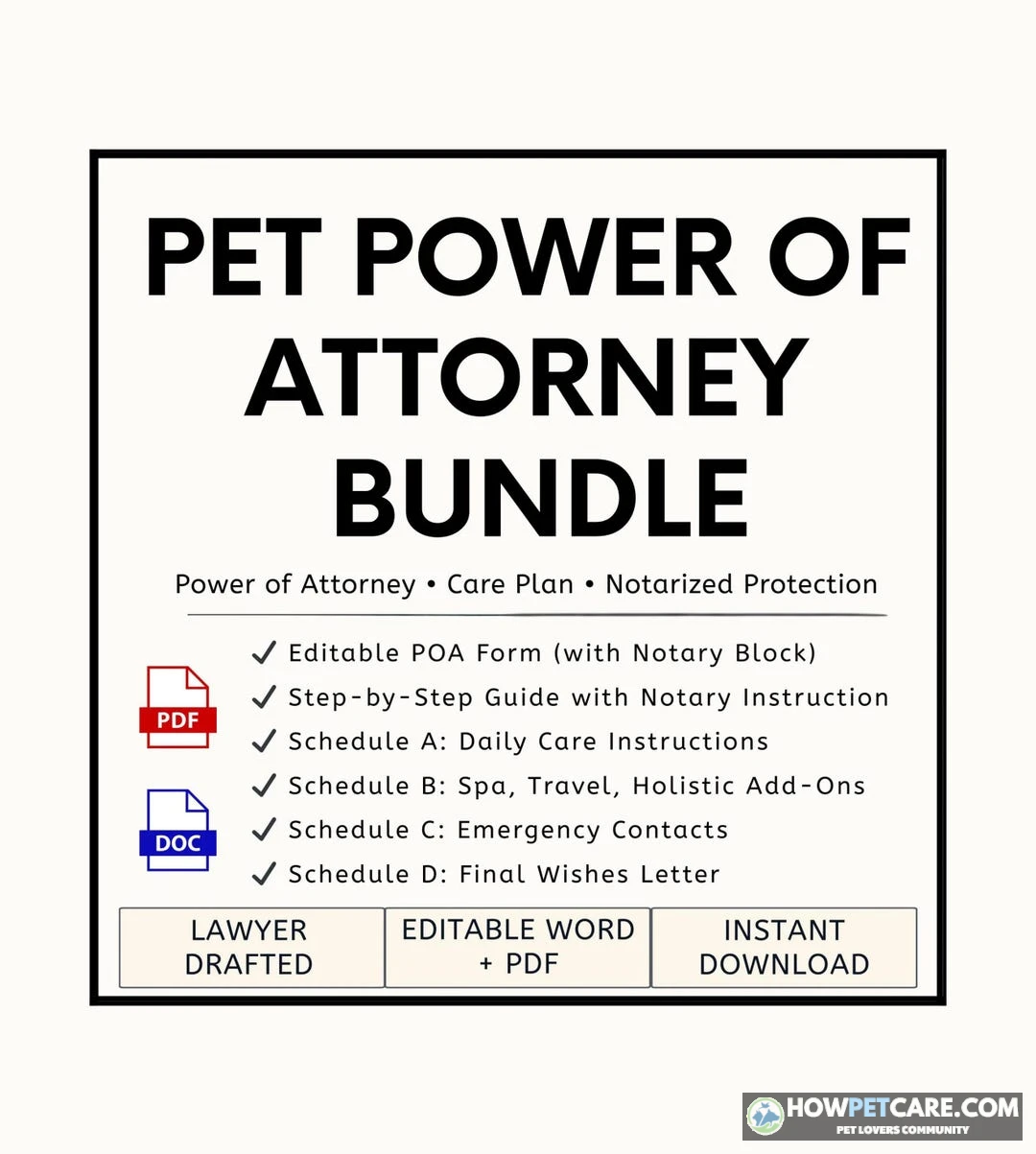
Critical Questions to Ask the Attorney
During your meeting, ask about the attorney’s familiarity with animal trust statutes and how the proposed documents will work:
- "How does our state’s specific pet trust statute handle duration caps, and will those limits comfortably cover my animal’s natural lifespan?"
- "Does your trust template explicitly name an independent trust enforcer to guarantee legal standing if the caregiver or trustee fails to perform?"
- "How do you structure the document’s incapacity provisions to ensure my animal receives immediate funding if I am hospitalized before death?"
- "Will you assist with retitling bank accounts and drafting beneficiary designation forms, or does your fee cover document drafting only?"
- "Based on the funding amount I have calculated, how can we structure the evidentiary file to protect against an heir petitioning the court for an excess-funding reduction?"
Work through these decisions with your attorney, document the funding calculation, and complete the required signing and transfer steps. Together, they turn your wishes into a plan for your dog or cat’s care.

 You might be wonderingPet medicationsPet Medications: Where to Buy Online Safely and Pay LessRead the answer
FAQ
Can I leave money directly to my dog or cat?
No. The law treats pets as property, so an animal cannot inherit money. A pet trust, or a will provision, directs the money to a person who must use it for the animal’s care.
Can one pet trust cover more than one animal?
Often yes. A single trust can name several pets, and the document can say how funds are shared and what happens as each animal dies. Some states restrict which animals qualify, so an attorney should check the state’s statute.
Can I change or cancel a pet trust after I create it?
It depends on whether the trust is revocable. A revocable trust can usually be amended or ended while the owner has capacity. After the owner dies or the trust becomes irrevocable, changes are limited by the document and state law.
Do I need a lawyer to set up a pet trust?
The law does not always require one, but an attorney helps with state-specific rules, signing formalities, and funding steps. Online forms may not match your state’s requirements.
Does a pet trust only cover dogs and cats?
No. Many pet trust statutes cover other animals, but eligible animals and duration limits differ by state. Check your state’s statute and ask an attorney if you have a horse, bird, or other long-lived animal.
Does pet insurance replace a pet trust?
No. Insurance may reimburse some veterinary costs, but it does not name a caregiver, set care instructions, or provide oversight. Insurance premiums can be one line in a trust’s budget.