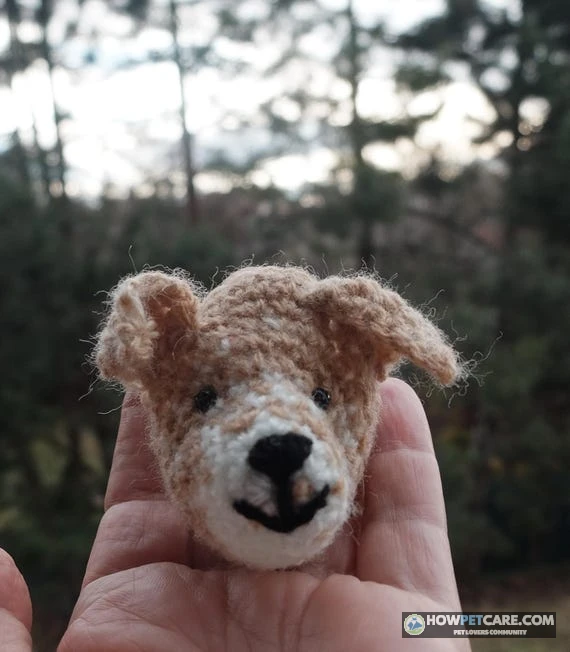

Most dogs do not need a dog nose warmer. A cover’s health benefits, including frostbite prevention and improved breathing, are unproven, and a poor fit can interfere with breathing or panting. If you consider one, choose a dog-specific design that keeps nostrils clear and the mouth free, and supervise continuously. Ask your veterinarian before use if your dog has a short snout or a breathing condition.
Most dogs don’t need a dog nose warmer for winter walks. A cover is optional, its health benefits aren’t established, and a poor fit can interfere with breathing or upset your dog. If your dog is sensitive to cold, start with shorter outings, shelter from the wind, and suitable body protection. Still considering a cover? Choose a dog-specific design that leaves the nostrils clear and lets your dog open its mouth. Supervise the entire time it’s on.
Does Your Dog Need a Nose Warmer? The Short Answer
A dog nose cover isn’t standard winter gear. Some dogs may tolerate a well-fitted cover for a short, windy outing, but that doesn’t show it prevents cold injury. Ask your veterinarian about your dog, especially if you’re unsure about cold sensitivity or breathing.
Quick suitability check before you buy
Consider a cover only if all of the following are true:
- The outing is short, cold, and supervised. Don’t use a cover indoors for warmth or in warm weather.
- Your dog breathes comfortably and doesn’t have a known airway or heart condition that calls for veterinary advice.
- Your dog tolerates face gear without panicking, and doesn’t chew or swallow fabric.
- The dog-specific design keeps both nostrils clear, allows the mouth to open, and stays away from the eyes.
- You can watch your dog continuously and remove the cover right away if needed.
Even if a cover seems suitable, try shorter outings, sheltered routes, and an appropriate coat first. A cover is never a reason to keep a dog outside longer in dangerous weather.
Dogs that should not wear a nose cover
Skip a cover if your dog panics, chews it, or can’t wear it without blocked nostrils or a restricted mouth. For short-snouted dogs and dogs with breathing, airway, or heart conditions, choose alternatives and ask a veterinarian before considering any face covering. Never leave a cover on a resting, crated, or unattended dog.
If a cover shifts over a nostril, restricts the mouth, or changes your dog’s breathing, remove it immediately. Seek urgent veterinary care for breathing difficulty.
What a Dog Nose Warmer Is and What Protection It Can Realistically Offer
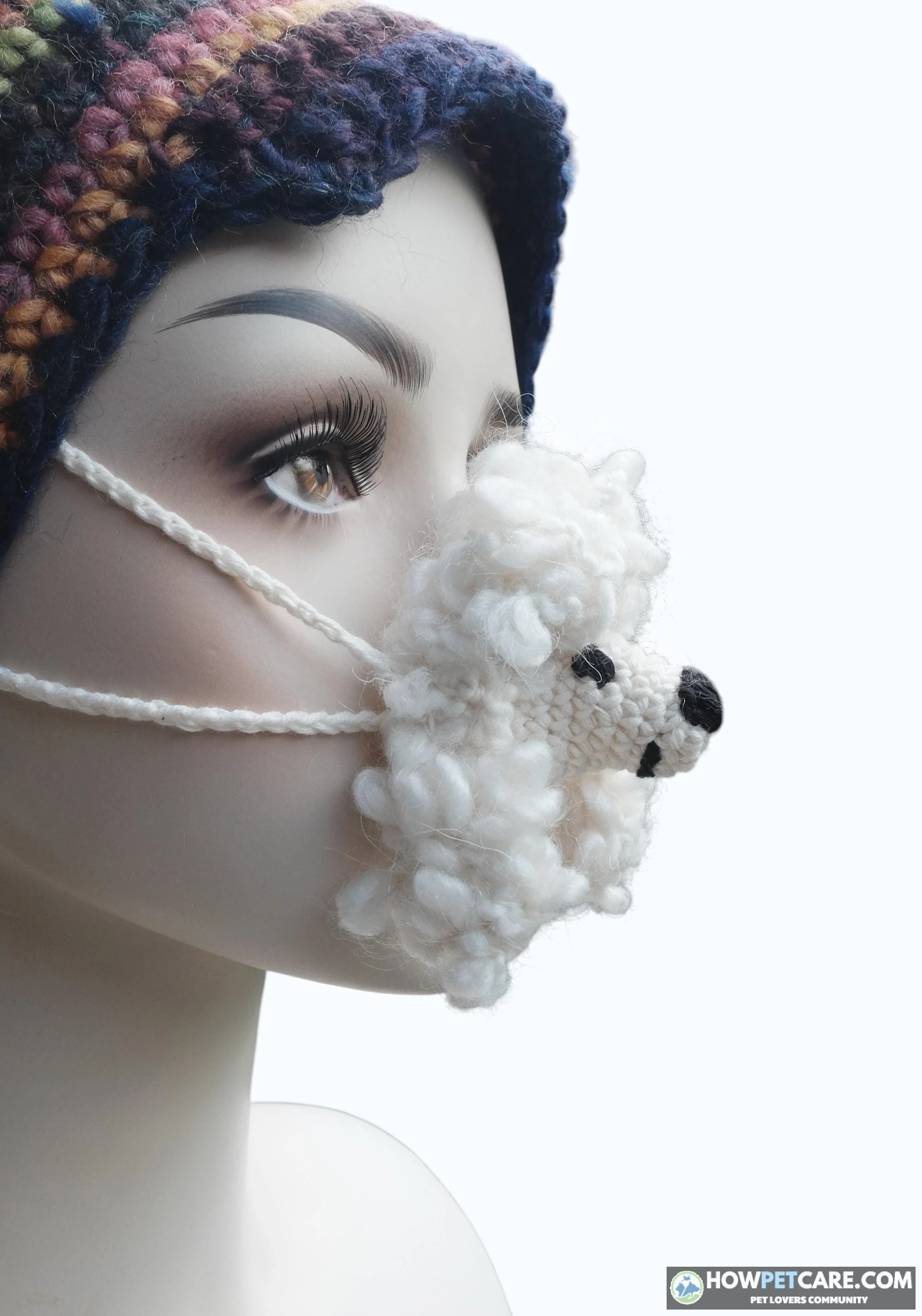
A dog nose warmer is a fabric accessory meant to reduce direct contact between cold wind and a dog’s nose or muzzle. Designs may look like a sleeve, a partial cover, or an attachment to a hood. A soft barrier may make the wind feel less direct, but comfort varies with the dog and the design. It should never come at the cost of clear breathing.
Nose warmer vs dog snood
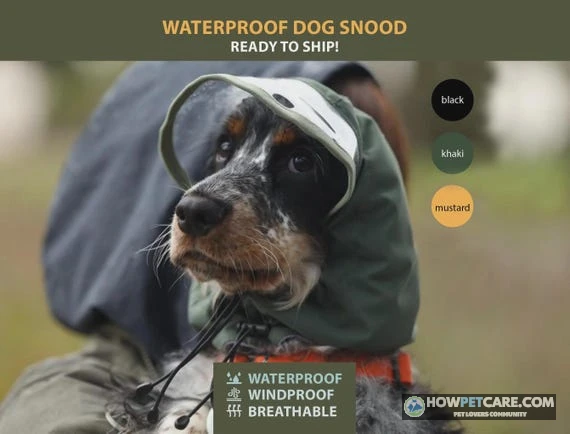
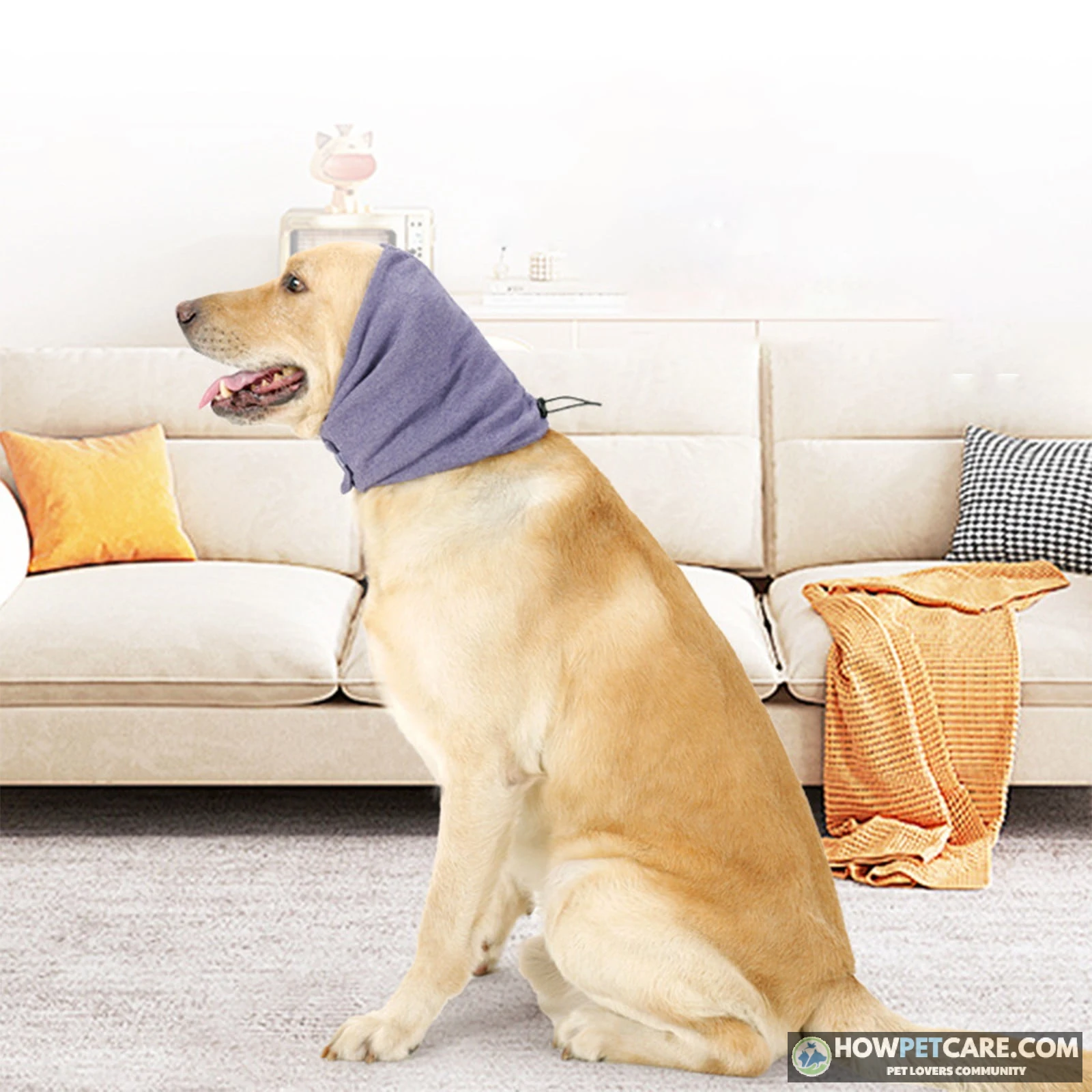
A dog snood usually covers part of the head, ears, or neck. A dog snout warmer, by contrast, is made to sit on or around the muzzle. A snood that leaves the face clear may suit a dog that tolerates headwear. Check that it won’t slip over the eyes or constrict the neck.
A muzzle serves a different purpose: depending on its construction, it limits biting or scavenging. Grooming snoods are different, too. Don’t assume either one protects a dog’s nose from cold.
What a cover cannot do
A cover doesn’t replace shelter, a dry coat, suitable body protection, or limits on time outdoors. Don’t treat it as a medical device or use it to manage a breathing condition. Covering the muzzle also won’t reliably warm the rest of the dog.
What the Evidence Says About Frostbite Prevention and Breathing Claims
The research supplied for this guide points to a lack of independent veterinary clinical evidence on dog-worn nose warmers. It doesn’t establish that a cover prevents frostbite or improves breathing. That gap doesn’t prove that no design can help with wind exposure. It does mean owners shouldn’t take a product claim as proof of protection.
Claims to treat with caution
- “It makes a cold walk more comfortable.” A barrier may reduce direct wind contact, but a dog may find the cover uncomfortable or stressful. Watch your dog rather than assuming it helps.
- “It prevents frostbite.” The available evidence doesn’t verify this claim. Limit cold exposure whether or not your dog wears a cover.
- “It improves breathing by warming inhaled air.” A respiratory benefit hasn’t been verified. Fabric or a shifting cover near the nose and mouth may instead interfere with airflow. Ask a veterinarian about breathing concerns.
- “Vet approved.” Ask who reviewed the product and what evidence supports the claim. An endorsement isn’t the same as an independent study.
What veterinary cold-weather guidance does emphasize
The risk of cold injury depends on the conditions and the individual dog, including exposure time, wind, wetness, and health. Practical advice focuses on limiting exposure and watching the dog’s condition—not assuming a piece of fabric makes extreme cold safe.
Risks of Covering a Dog’s Nose: Breathing, Overheating, Irritation, Chewing and Swallowing
Dogs need to breathe freely, open their mouths, and pant. A cover that presses on the nostrils, gets wet, shifts, or restricts the jaw can make breathing or cooling down harder. A dog can also get too warm during activity, even on a winter walk.
Seams and damp fabric can rub the skin, and straps can shift toward the eyes. Loose threads, elastic, and detachable decorations pose a chewing and swallowing risk. Don’t fix a slipping cover by tightening it if that adds pressure or limits movement.
Special caution for short-snouted dogs and dogs with breathing problems
Brachycephalic breeds, including pugs, bulldogs, and Boston terriers, can have airway difficulties linked to their short facial structure. A cover may create another obstacle around an already vulnerable area. Keep the face clear and use other cold-weather precautions; consult your veterinarian before considering a nose cover. The supplied research doesn’t establish which individual dogs can safely use one.
Signs your dog is not tolerating the cover
| Sign | What it may mean | What to do |
|---|---|---|
| Noisy, difficult, or changed breathing; struggling to pant | Airflow or mouth movement may be restricted | Remove the cover immediately; seek urgent veterinary care for breathing difficulty. |
| Excessive panting, distress, or unusual weakness | The dog may be too warm or otherwise unwell | Remove the cover, move to a comfortable place, and contact a veterinarian if signs persist or are severe. |
| Pawing at the face, freezing, or struggling | The gear may be uncomfortable or frightening | Remove it and stop the trial; don’t make the dog continue. |
| Redness, rubbed fur, moisture, or squinting | Fabric or straps may be irritating skin or eyes | Remove it and check the area; contact a veterinarian if injury or irritation persists. |
| Chewing, fraying, or a shifted cover | A piece could be swallowed, or vision or breathing could be obstructed | Remove it immediately. If a piece may have been swallowed, contact a veterinarian promptly. |
How to Measure, Fit and Introduce a Nose Cover Safely
A size label can’t tell you whether a cover fits your dog’s particular muzzle. Use the maker’s measurements as a starting point, then check the fit itself and your dog’s response. If you can’t meet every safety check, don’t use the cover.
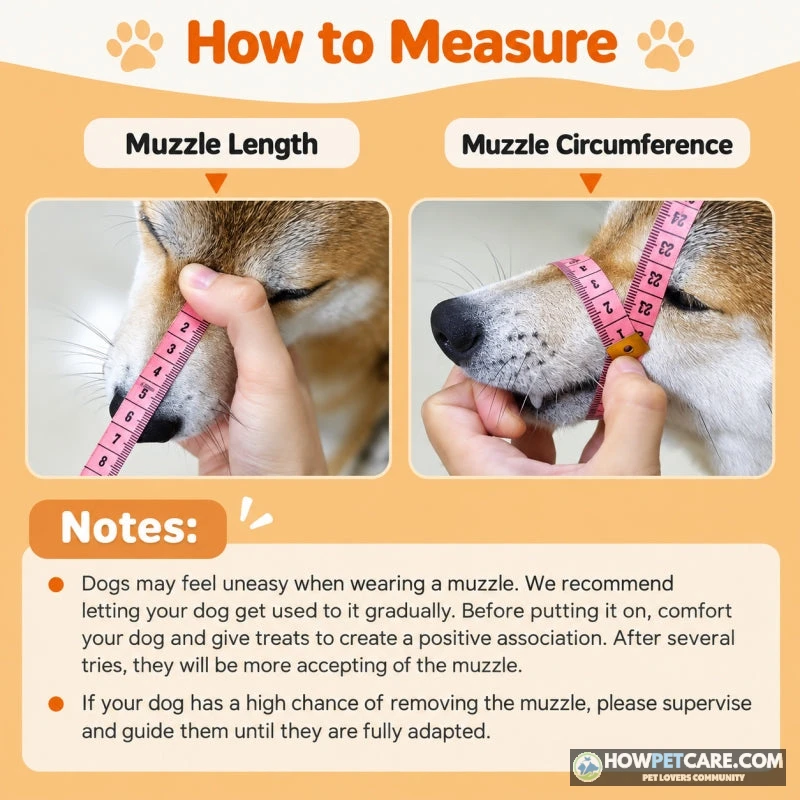
Step-by-step measuring
With your dog’s mouth relaxed and closed, use a soft measuring tape to take the measurements requested by the manufacturer. These may include snout length and circumference. Compare each one with that product’s chart; don’t choose by breed or weight alone. Ask the seller where the straps sit and whether the design allows an open mouth. A measurement taken with the mouth closed must not become a tight limit on circumference.
A first-use trial plan
-
Inspect
Check for loose threads, rough seams, detachable parts, and damage. Start with clean, fully dry fabric.
-
Fit
Keep both nostrils fully clear and the eyes unobstructed. Make sure the mouth can open to pant and the attachment does not press or rub.
-
Introduce
Offer treats during a brief supervised indoor introduction. Stop if your dog paws at the cover, freezes, struggles, or seems distressed.
-
Try outdoors
If the dog is comfortable, try a short supervised walk. Recheck the fit and breathing repeatedly; remove the cover immediately if it slips, rubs, is chewed, or causes distress.
-
Finish
Remove the cover when supervision ends. Never leave it on a resting or crated dog.
The attachment should stay secure without constricting your dog. If the cover only stays in place when tightened against the muzzle or neck, use another approach.
Cleaning and when to retire a cover
Follow the care label when washing the cover, then let it dry fully before using it again. Inspect it before every outing and replace it if it’s frayed, damaged, or no longer holds its intended shape. The evidence provided doesn’t establish a universal replacement schedule.
How to Choose a Dog-Specific Nose Warmer: Materials, Design and Availability
Fleece may feel soft, but a fabric description alone doesn’t show that a design allows enough airflow. Look for clearly identified, washable materials, smooth seams, minimal hardware, and no loose decorations. Wool, cotton, and fleece products vary in construction. Check how the particular item fits and dries instead of assuming a material makes it safe.
Dog-specific warmers vs novelty nose warmers
| Feature | Dog-specific warmer | Novelty warmer made for people | What to check before buying |
|---|---|---|---|
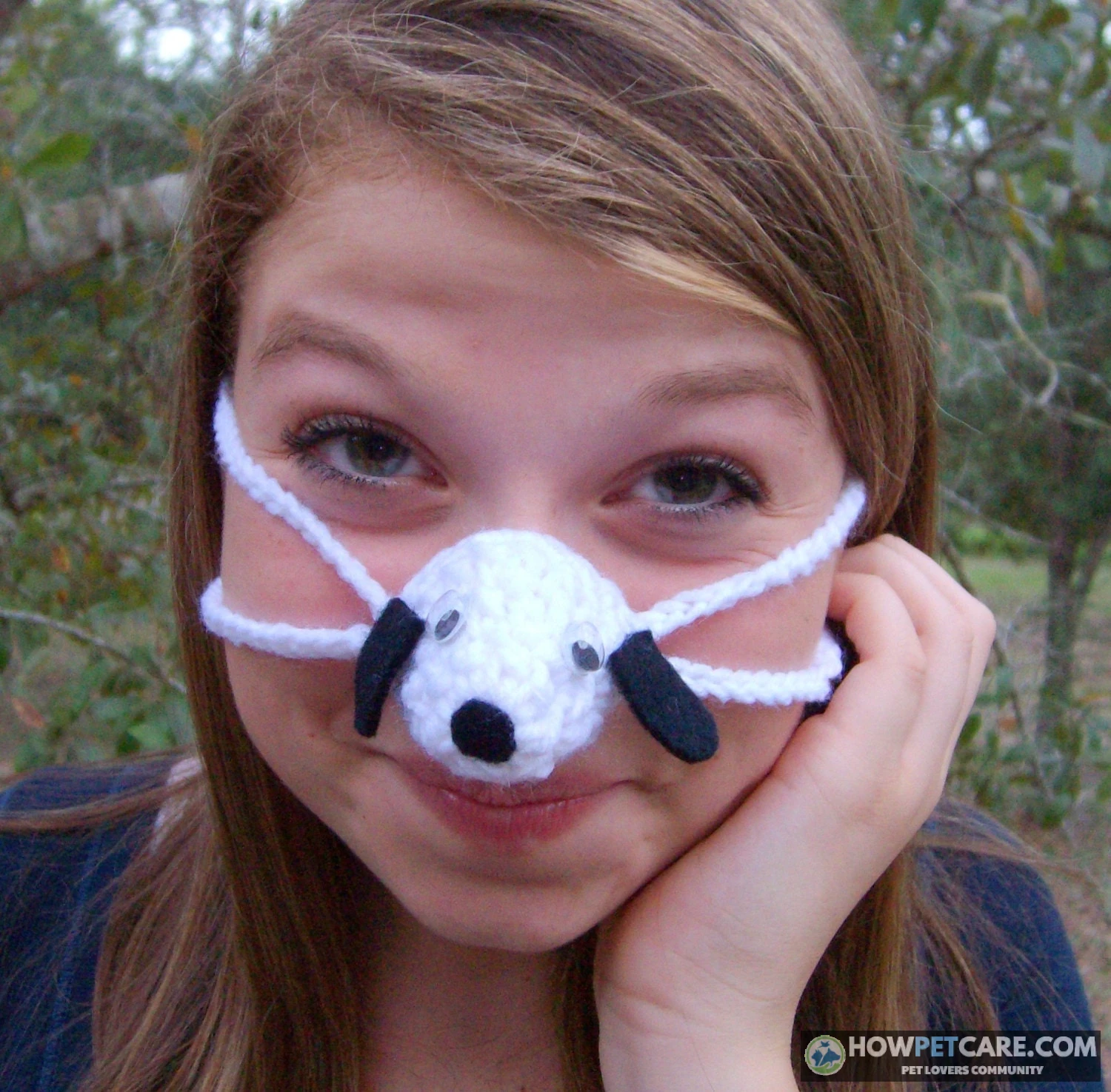
| Shape and openings | Intended for a dog’s snout, though designs vary | Shaped for a human nose | Both nostrils must stay clear, the mouth must open, and the eyes must remain unobstructed. |
| Sizing and attachment | May include muzzle measurements and adjustable straps | Usually sized for people or sold without dog-fit guidance | Compare measurements with the maker’s chart and check strap placement. |
| Fabric and construction | May use soft fabric and dog-oriented seams | May prioritize appearance | Ask for material details; avoid rough seams, loose parts, and accessible elastic. |
| Cleaning | Care instructions should be available | Care instructions may not address dog use | Confirm that it can be washed and dried fully; discard it if damaged. |
| Evidence and suitability | Dog-specific labeling is not proof of safety or effectiveness | Not designed for canine anatomy | Ask whether the design was tested on dogs and request supporting evidence. |
An open-front design may make it easier to check that the nostrils are clear, but it still needs an individual fit check. Don’t use a closed-front design that covers the nostrils. Hood and snood attachments can shift, too, so check your dog’s face and neck throughout use.
Where to buy and how to check current availability
Check pet retailers, specialist outdoor dog-gear sellers, and online marketplaces. Make sure the listing is designed for dogs, not people. Current product listings, availability, materials, sizing, and prices weren’t independently verified for this article, so no particular product is recommended here.
Before ordering, ask the seller about material composition, measurements, attachment details, return policy, and evidence for safety or performance claims. If the listing doesn’t show clear nostril and mouth clearance, or the seller can’t explain the fit, skip it.
Better Cold-Weather Protection When a Nose Cover Isn’t Right
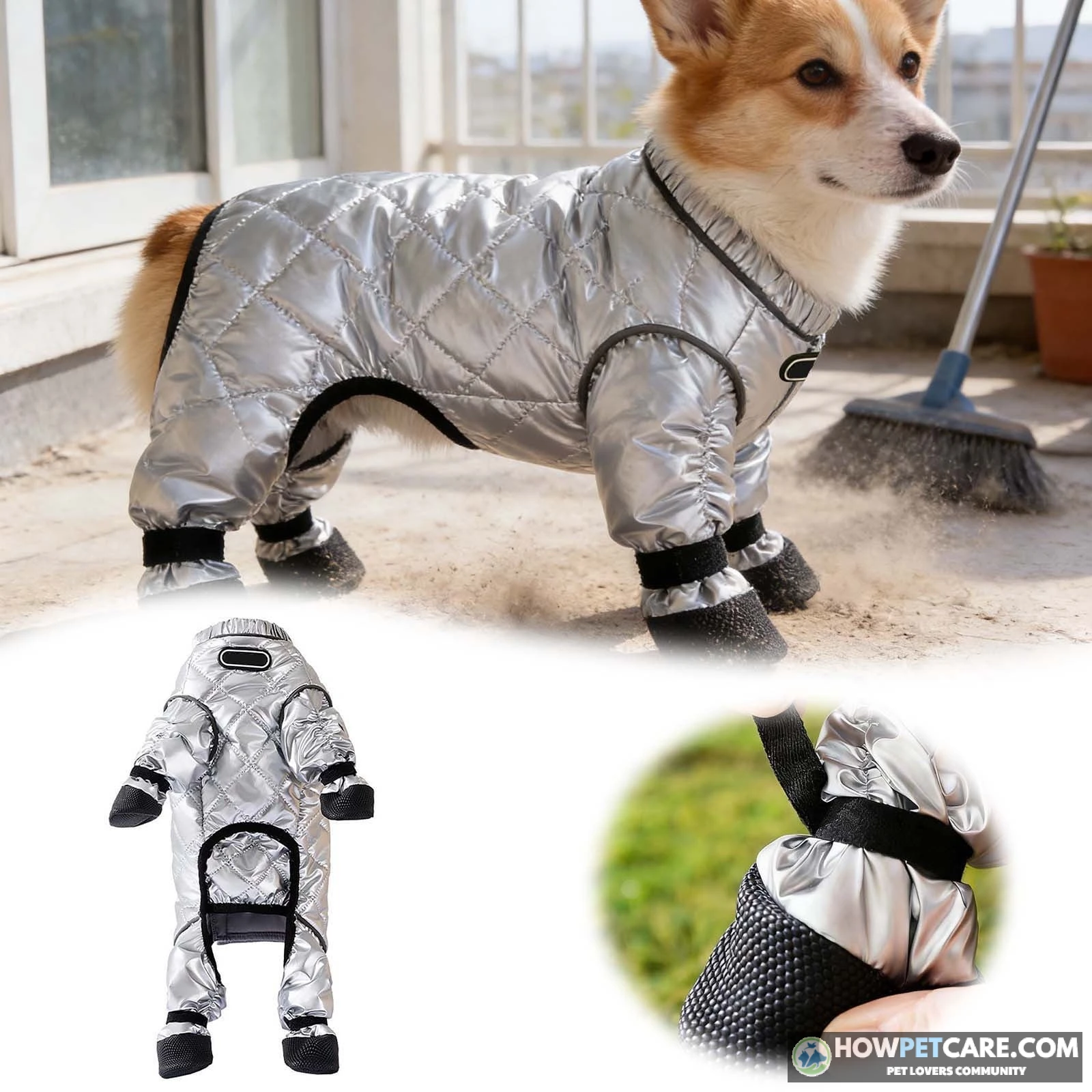
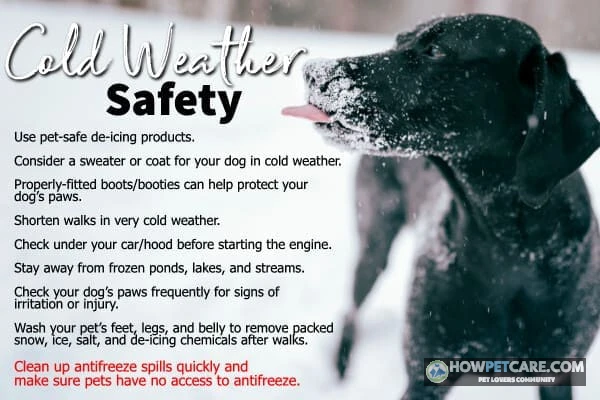
Start with the basics: shorten outings in harsh wind chill, keep your dog dry, choose sheltered routes, and head indoors if your dog shows signs of cold. A suitable coat can help protect the body of a cold-sensitive dog. Booties may protect paws from ice and salt if your dog tolerates them.
Comparing a nose cover with other cold-weather precautions
| Precaution | What it protects | Evidence and limits | Who it suits | Main risks or cautions |
|---|---|---|---|---|
| Shorter, sheltered outings | Reduces overall exposure to cold and wind | A practical cold-weather precaution; exact limits vary by dog and conditions | Most dogs, especially those sensitive to cold | Watch the dog and return indoors promptly when needed. |
| Well-fitting coat | Covers part of the body | Useful body protection for some cold-sensitive dogs; does not protect every exposed area | Dogs that tolerate clothing, including some small or short-haired dogs | Avoid rubbing, restricted movement, and wet gear. |
| Booties and paw care | Helps shield paws from ice and irritating surfaces | Coverage depends on fit and conditions | Dogs that tolerate paw gear | Check for slipping or rubbing; inspect paws after walks. |
| Snood or hood with a clear face | Covers part of the head, ears, or neck | Offers coverage without intentionally covering the muzzle | Dogs comfortable with headwear | Keep eyes, nostrils, mouth, and neck clear; supervise. |
| Dog-specific nose cover | May reduce direct wind contact on covered areas | Frostbite-prevention and breathing benefits are unverified | Only dogs for whom fit and tolerance checks are met | Potential breathing, slipping, irritation, and swallowing risks; supervision is essential. |
For a young, older, ill, or especially cold-sensitive dog, ask your veterinarian how to adjust outdoor time. No single temperature or walk duration works for every dog.
Cold-Injury Signs and Nose Temperature: When to Call a Vet
A cold nose after a walk doesn’t, by itself, diagnose an injury. Consider your dog’s overall condition, including alertness, breathing, movement, and exposed skin. If you suspect cold injury, act promptly; don’t wait for every sign to appear.
Signs of frostbite and hypothermia
Pale, gray, blue, or very red skin; swelling or blisters; skin that stays cold or hard; and pain when touched all warrant a prompt call to a veterinarian. Persistent shivering, lethargy, weakness, or confusion also need veterinary guidance. Fur can make skin changes hard to assess, so tell the veterinarian about the exposure and anything you’ve noticed.
Move your dog indoors and remove any cover. Do not rub affected skin or apply direct high heat. Call a veterinarian for warming and transport instructions. Seek urgent care for breathing difficulty, collapse, or profound weakness or confusion.
Why a warm or dry nose does not diagnose illness
A dog’s nose temperature and moisture can change with sleep, activity, and the environment. A nose may feel warm or dry after a dog has been sleeping; that alone doesn’t establish fever or illness.
A cool or moist nose doesn’t rule out illness, either. Watch for changes in appetite, energy, behavior, breathing, vomiting, coughing, or anything else that concerns you, and contact a veterinarian when symptoms warrant it. If you suspect fever, ask your veterinary team how to take your dog’s temperature safely.
Your Next Steps: A Decision Checklist Before You Buy or Use a Nose Cover
- Check suitability. Don’t use face gear your dog can’t tolerate. Choose alternatives and ask your veterinarian first if your dog has a short snout or a breathing, airway, or heart condition.
- Use the basics. Shorten cold outings, find shelter from the wind, keep your dog dry, and consider suitable body and paw protection.
- Shop cautiously. If a cover remains an option, choose a dog-specific design, compare measurements with its chart, and confirm clear nostrils and eyes, plus room for mouth movement.
- Trial and supervise. Introduce it briefly with treats, then watch your dog throughout outdoor use. Remove it at the first sign of slipping, chewing, discomfort, or changed breathing.
- Know when to call. Contact a veterinarian promptly if you suspect cold injury or notice concerning symptoms. Seek urgent care for breathing difficulty, collapse, or severe weakness or confusion.
1A manufacturer advertises a fabric snout cover claiming it 'improves respiratory function during winter walks by warming cold air before it enters the lungs.' Based on veterinary cold-weather guidance, how should a dog owner evaluate this product claim?
Independent clinical evidence does not support claims of improved breathing, and placing fabric near the nose can interfere with natural airflow.
2Which of the following conditions or behaviors indicate that a dog should NOT wear a nose cover?
Behavioral distress such as pawing or freezing indicates that the gear is frightening or uncomfortable and should be removed.
3An owner considers buying a snout cover featuring a closed-front design that covers the nostrils completely. Why is this design unsafe for canine use?
A safe fit requires nostrils to remain completely clear so the dog can breathe without restriction.
4When taking measurements to fit a dog nose cover, why must an owner avoid using a measurement taken with the dog's mouth tightly closed as a strict limit for circumference?
A closed-mouth measurement converted into a tight circumference restriction prevents the jaw from opening to pant.
5Which of the following practical cold-weather precautions are recommended over a nose warmer as primary protection for cold-sensitive dogs?
Reducing total exposure time in harsh conditions is a fundamental and effective cold-weather strategy.
6How does a dog snout warmer differ from a standard muzzle in terms of primary function?
Snout warmers act as fabric wind barriers, while muzzles are specialized gear for behavioral control such as preventing bites or scavenging.
| Precaution | What it protects | Evidence and limits | Who it suits | Main risks or cautions |
|---|---|---|---|---|
| Well-fitting coat | Covers part of the body | Useful body protection for some cold-sensitive dogs; does not protect every exposed area | Dogshttps://howpetcare.com/dog-nose-warmer/ that tolerate clothing, including some small or short-haired dogs | Avoid rubbing, restricted movement, and wet gear. |
| Dog-specific nose cover | May reduce direct wind contact on covered areas | Frostbite-prevention and breathing benefits are unverified | Only dogs for whom fit and tolerance checks are met | Potential breathing, slipping, irritation, and swallowing risks; supervision is essential. |
| Booties and paw care | Helps shield paws from ice and irritating surfaces | Coverage depends on fit and conditions | Dogs that tolerate paw gear | Check for slipping or rubbing; inspect paws after walks. |
| Snood or hood with a clear face | Covers part of the head, ears, or neck | Offers coverage without intentionally covering the muzzle | Dogs comfortable with headwear | Keep eyes, nostrils, mouth, and neck clear; supervise. |
| Shorter, sheltered outings | Reduces overall exposure to cold and wind | A practical cold-weather precaution; exact limits vary by dog and conditions | Most dogs, especially those sensitive to cold | Watch the dog and return indoors promptly when needed. |
FAQ
Does a warm or dry nose mean my dog is sick or has a fever?
No. Nose temperature and moisture vary with sleep, weather, and activity, so they are not reliable signs of illness. Check your dog’s behavior, appetite, energy, and breathing, and contact a veterinarian if other symptoms concern you.
Why is my dog’s nose warm after sleeping?
A dog’s nose temperature and moisture can change with sleep, activity, and the environment. A warm or dry nose after sleeping alone does not establish fever or illness; watch for other symptoms and contact a veterinarian if concerned.
Where can I buy a dog nose warmer?
Pet retailers, specialist outdoor dog-gear sellers, and online marketplaces may carry them. Check that the product is made for dogs, review its measurements and fit guidance, and confirm current availability before buying.
How can I keep a nose warmer from slipping off or being swallowed?
Choose a dog-specific design that stays secure without constricting the muzzle or neck, and avoid loose parts. Supervise every use and remove it immediately if your dog chews it, it shifts, or it becomes damaged.