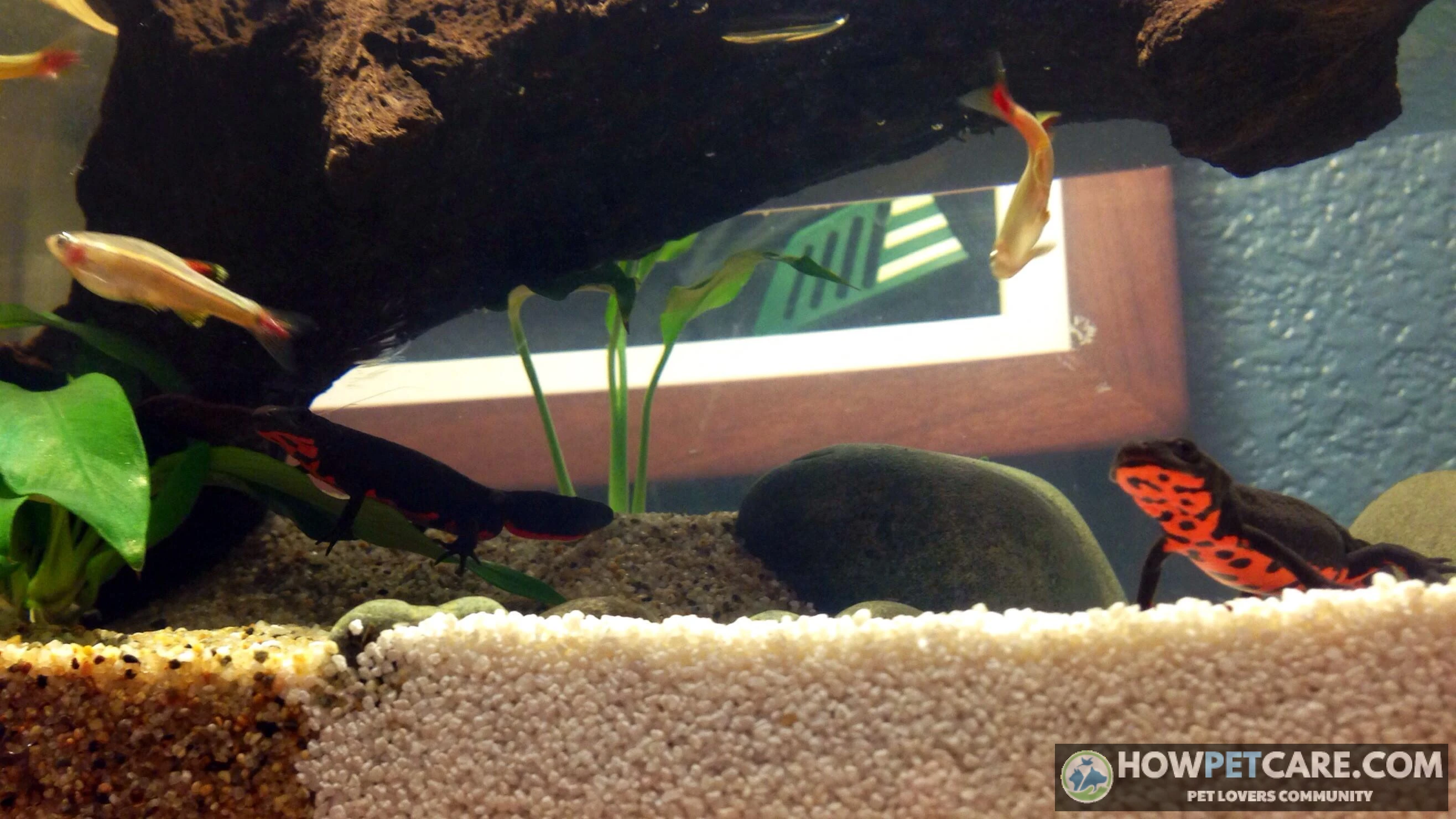

Choose a captive-bred beginner species such as a Japanese fire belly, keep it mostly aquatic in a secure 20-gallon-long tank with gentle filtration, zero ammonia and nitrite, nitrate under about 20 ppm, cool 60–72°F water, a land/resting spot, a varied carnivore diet, and minimal handling.
Choose the species before you buy the tank. A captive-bred Japanese fire belly or Spanish ribbed newt is a practical starting point if you can provide cool water, a secure enclosure, and a fully cycled filter. This newt care guide treats the animal as a long-term, look-don’t-touch pet—not something that can live in a bowl or be handled regularly. A 20-gallon long aquarium is a useful starting point for one small aquatic adult; larger ribbed newts need more room.
For an established aquatic habitat, aim for zero ammonia and nitrite, nitrate below about 20 ppm, a steady near-neutral pH, and stable, species-appropriate cool temperatures. These are practical starting targets, not substitutes for a care plan matched to the exact species and life stage.
Best Newt Species for Beginners: Care Difficulty, Lifespan and Availability Compared
Newts are salamanders, but their habitat needs vary. Some adults spend much of their time in water; others need substantial land space. Even an aquatic adult may have spent its juvenile stage on land. Identify the animal by scientific name and life stage before building its home.
The temperatures below are conservative working ranges for ordinary, nonbreeding care, not universal limits. Lifespans are approximate; individual animals can live longer. Availability and legal status vary by location.
| Species | Adult habits and size | Working temperature | Approximate captive lifespan | Difficulty | Availability and cautions |
|---|---|---|---|---|---|
| Chinese fire belly, Cynops orientalis | Mostly aquatic when settled; about 3–4 inches | 60–72°F (16–22°C) | 10–20+ years | Moderate | Seek captive-bred animals; imported pet-store specimens can arrive stressed and fragile. |
| Japanese fire belly, Cynops pyrrhogaster | Mostly aquatic adult; about 3–5 inches | 60–72°F (16–22°C) | 15–25 years | Beginner to moderate | A breeder-sourced, established adult is a good candidate; confirm local rules. |
| Spanish ribbed newt, Pleurodeles waltl | Highly aquatic adult; often about 6–10 inches | 60–72°F (16–22°C) | 10–20+ years | Beginner to moderate | Hardy alternative, but needs a larger aquarium; avoid handling its sharp rib tips. |
| Eastern newt, Notophthalmus viridescens | Aquatic adult; terrestrial juvenile eft; about 3–5 inches | 60–70°F (16–21°C) | 10–15+ years | Moderate | Seek captive-bred stock and check native-species rules; an eft needs a different setup from an adult. |
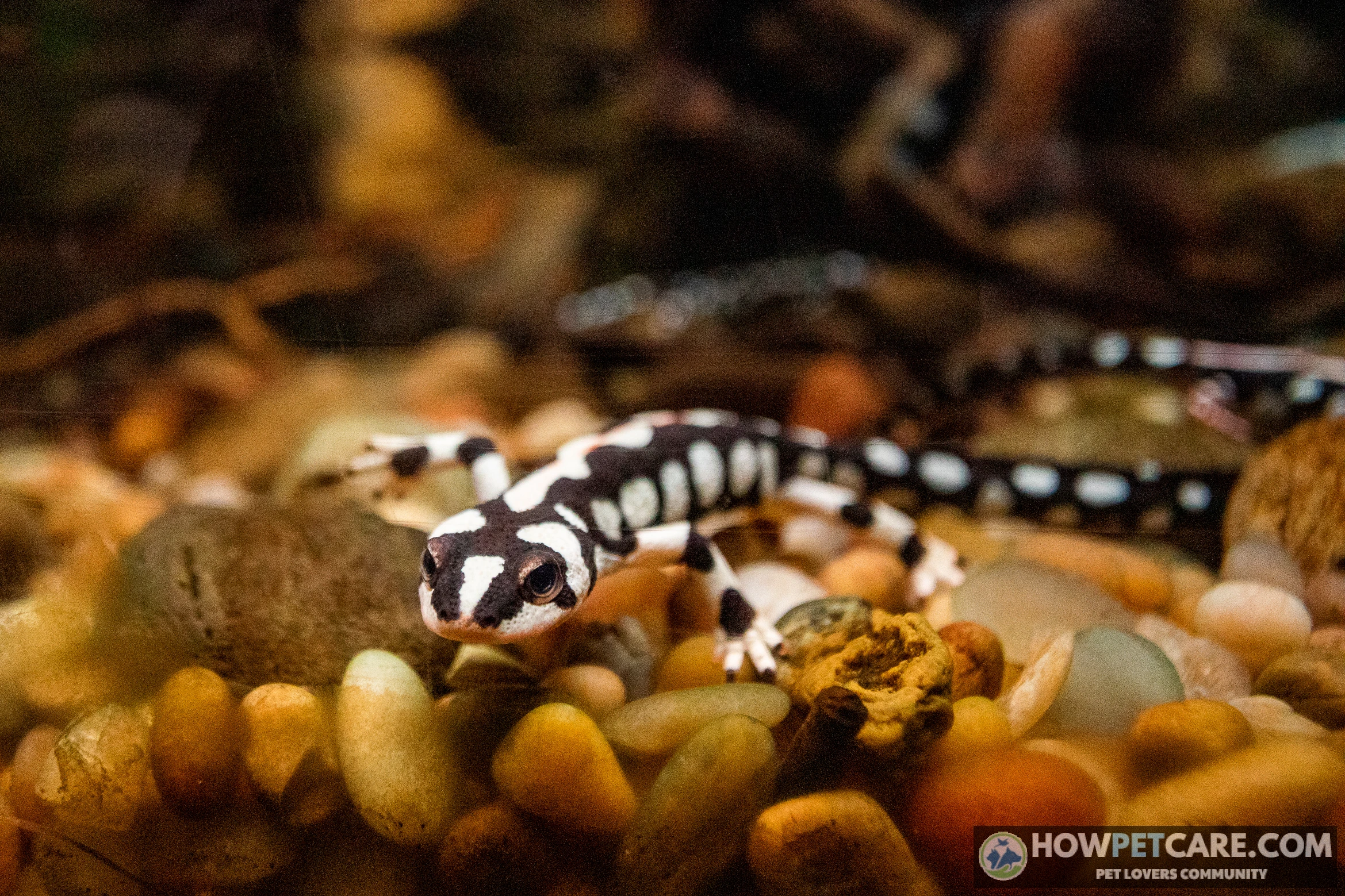
| Marbled newt, Triturus marmoratus | Seasonal aquatic and terrestrial phases; about 5–7 inches | 55–68°F (13–20°C) | 10–15+ years | Advanced | Occasional breeder availability; requires cool conditions and meaningful land space. |
| Alpine newt, Ichthyosaura alpestris | Seasonal aquatic and terrestrial phases; about 3–5 inches | 55–68°F (13–20°C) | 10–15+ years | Advanced | Cooling and seasonal habitat needs make it less forgiving. |
| Smooth or great crested newt, Lissotriton vulgaris or Triturus cristatus | Seasonal semi-aquatic adults; about 3–7 inches, depending on species | 55–68°F (13–20°C) | 10–15+ years | Advanced | Protected in parts of Europe; verify the precise species and applicable US rules. |
| California or rough-skinned newt, Taricha species | Seasonal aquatic and terrestrial phases; about 5–8 inches | 55–68°F (13–20°C) | 10–20+ years | Avoid as a first pet | Potent toxins and potential native-wildlife restrictions make these unsuitable beginner choices. |
| Emperor or crocodile newt, Tylototriton species | Often substantially terrestrial; size varies by species | About 60–72°F (16–22°C), depending on species | 10–20+ years | Specialist | Needs species-specific care and trade documentation; check CITES and US rules. |
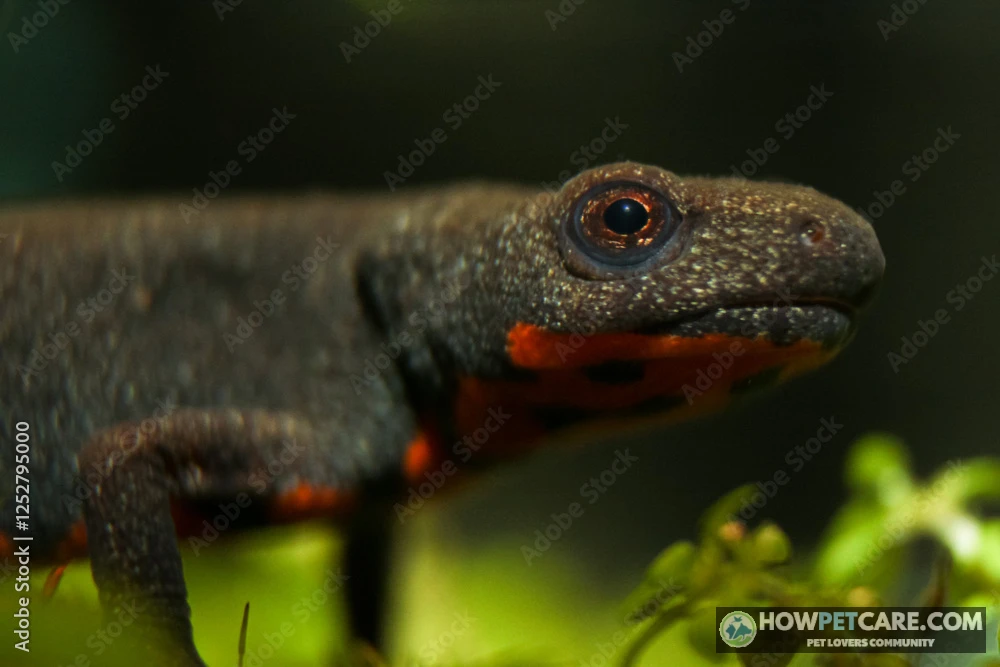
Fire belly newts: the default beginner pick
A healthy, captive-bred Japanese fire belly with a known feeding history is a sensible first choice when you can keep its water cool. Chinese fire bellies can also thrive with appropriate care, but don’t assume a stressed shop animal is an easy rescue project: imported specimens may arrive in poor condition.
Ribbed newts and eastern newts: when they make sense
The Spanish ribbed newt is a hardy, highly aquatic alternative if you can accommodate its adult size. An eastern newt can suit a prepared keeper, but buying an eft means maintaining a terrestrial habitat before moving to an aquatic adult setup.
Species to avoid as a first newt, and why
Marbled, alpine, and paddle-tail newts may require particularly cool water; paddle-tails can also be territorial. Crested, smooth, emperor, and Taricha species add legal, seasonal-husbandry, toxicity, or specialist-care complications. A tiger salamander or axolotl is not interchangeable with a newt: choose a care sheet for the exact animal rather than adapting this one. Tiger salamanders, for example, need a terrestrial setup.
Is a Newt the Right Pet? Lifespan, Handling, Toxicity and Household Fit
Newts can be rewarding observation pets, but their care is closer to aquarium keeping than owning a low-maintenance ornament. Check the animal and temperature daily, remove waste, and test and change water on a schedule. A commitment of 10–20 years or more is possible.
Can children and other pets live safely around a newt?
Newts are not cuddly pets. An adult should own responsibility for the habitat, supervise children near it, and enforce handwashing after contact with the enclosure or its water. Keep the tank securely covered and prevent cats and dogs from reaching the animal or drinking tank water.
Avoid handling unless necessary. Skin secretions can be dangerous if swallowed or transferred to the eyes or mouth; Taricha toxins are especially concerning. Brief contact with intact human skin is not the same as swallowing a newt, but wash hands thoroughly with soap and water afterward. Amphibians and their habitats can also carry germs, including Salmonella.
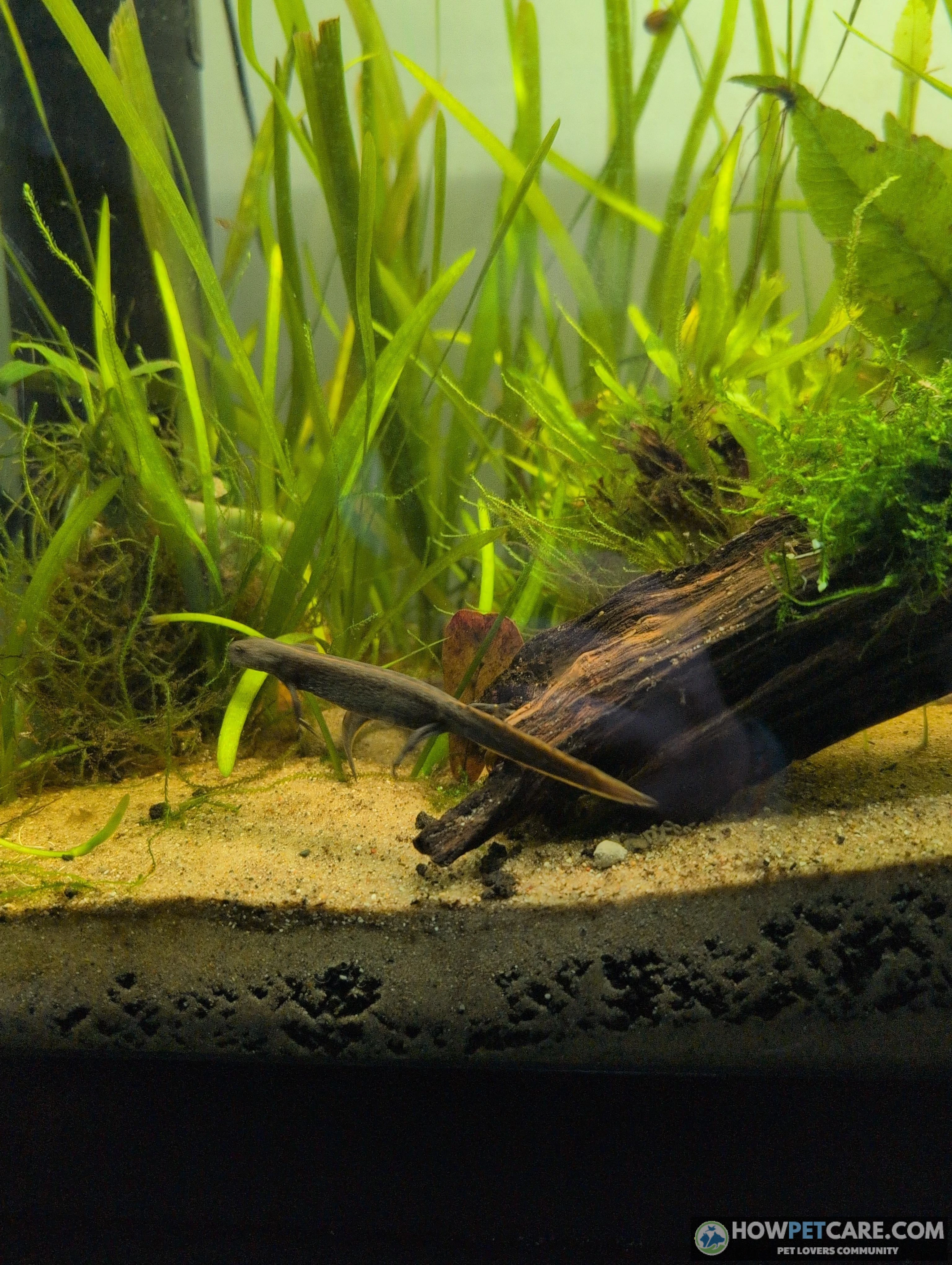
To move an animal, guide it into a clean, wet container. If direct contact is unavoidable, use clean, powder-free disposable gloves moistened with dechlorinated water, and avoid lotions or soap residue.
If a child or pet puts a newt in their mouth or swallows one, contact poison control, a physician, or an emergency veterinarian immediately. Do not wait for symptoms.
Can newts share a tank with fish, frogs or other newts?
A species-only tank is the safer default. Fish can nip or compete for food; frogs and other amphibians may have incompatible temperatures, diets, pathogens, or secretions. Do not mix newt species. Similar-sized members of the same species may coexist if they have ample space and separate feeding opportunities, but watch for biting and be ready to separate them.
Where to Buy a Newt: Legality, Wild-Caught vs Captive-Bred and Itemized Setup Costs
State and country rules to check before you buy
Before acquiring a newt, ask your state fish and wildlife agency about the exact species, possession, collection, import, and interstate transport; check local rules too. Restrictions differ by species and jurisdiction. Federal salamander rules introduced in 2016 to limit the spread of Bsal also affect certain listed species and movements, so verify current federal requirements rather than assuming a seller can ship legally.
Never release a pet newt outdoors, even where that species is native. Captive animals can introduce disease or disrupt local populations. If you cannot keep one, contact a knowledgeable rescue, veterinarian, or lawful keeper about rehoming; do not rehome a sick animal without veterinary guidance.
How to pick a healthy, captive-bred animal
Seek a reputable breeder who can identify the species, describe its age and life stage, and show what it eats. Captive-bred animals avoid adding collection pressure to wild populations. Be cautious of unexplained claims that a shop animal is captive-bred: many newts in the trade have historically been wild-caught.
Look for a reasonably rounded body without pronounced ribs or extreme swelling, clear eyes, intact limbs and tail, and clean skin without sores or fuzzy areas. Ask to see the animal eat. Even a healthy-looking newcomer should be quarantined separately from established amphibians for several weeks, with separate tools and careful hygiene.
Starter setup cost, item by item
These are broad US planning estimates, not price guarantees. The ranges allow for differences in tank sales, animal availability, and equipment quality.
| Item | Estimated cost |
|---|---|
| Captive-bred newt | $30–$100+ |
| 20-gallon long aquarium and secure lid | $60–$140 |
| Sponge filter and air pump, or gentle internal filter | $20–$50 |
| Bare-bottom supplies or smooth sand | $0–$25 |
| Land platform and hides | $20–$50 |
| Live plants | $10–$30 |
| Thermometer | $5–$15 |
| Liquid ammonia, nitrite, nitrate, and pH tests | $30–$60 |
| Water conditioner and fishless-cycle ammonia source | $10–$25 |
| Initial food | $10–$25 |
Budget roughly $165–$420 for equipment and initial supplies, plus the animal. Food and consumables may cost about $10–$30 per month. A cooling fan can add about $15–$40; a chiller and its electricity can add several hundred dollars or more. Test your room temperatures before committing: cooling can be a significant ongoing expense.
Newt Tank Size and Layout: How Much Water, How Much Land
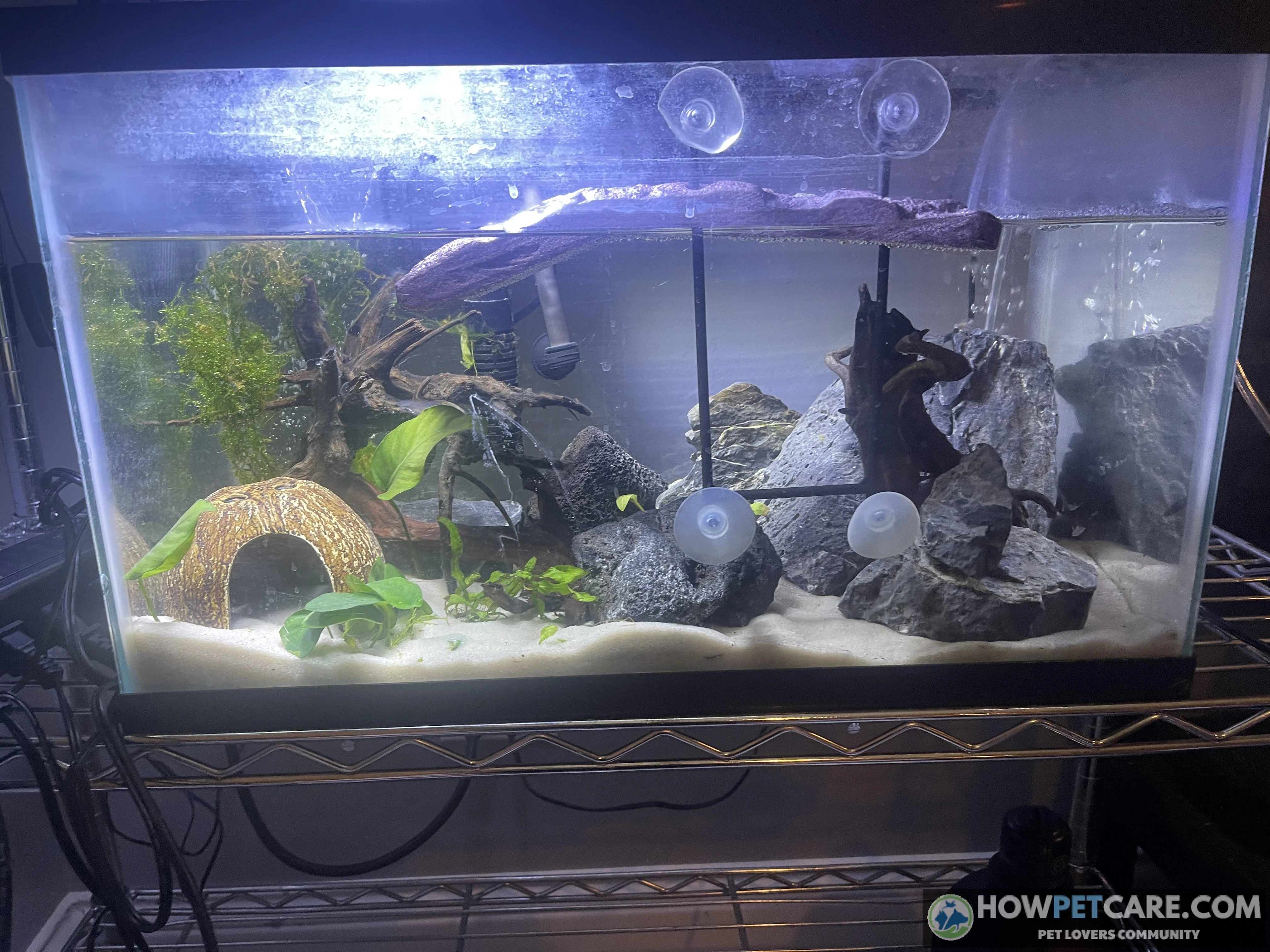
For one small adult fire belly, use a 20-gallon long as a practical beginner target. One veterinary care sheet recommends at least 15 gallons for one adult and 20 gallons for two; more water and floor area make a habitat easier to manage. A single adult Spanish ribbed newt warrants a larger enclosure, such as a 30-gallon long or larger, with more space if keeping additional animals.
A bowl is unsuitable: it offers too little stable water volume, usable floor space, and room for filtration and a safe exit. Horizontal space matters more than height, and the lid must fit tightly because newts can climb.
Aquatic vs terrestrial phases by species
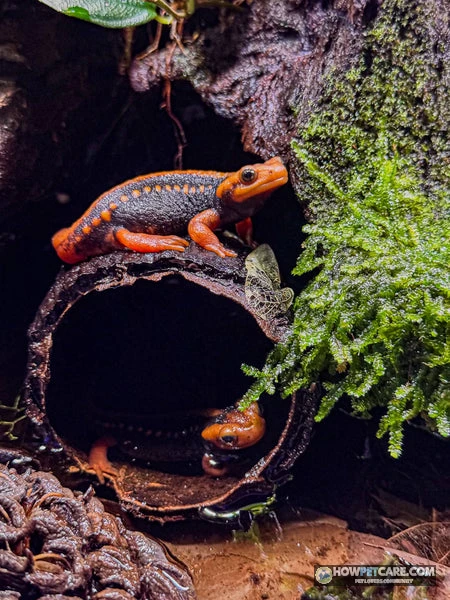
For a settled adult fire belly, start with an aquatic-leaning layout: approximately 70–80% of the footprint can be water, with an accessible land or resting area. This is a layout guide, not a rule for every individual. A ribbed newt needs generous water volume and an easy resting or exit point. An eastern eft, by contrast, needs a cool, moist terrestrial enclosure with appropriate shelter—not an adult aquatic tank.
For a small aquatic adult, approximately 6–8 inches of water can be a useful starting depth, with plants or furnishings providing routes to the surface and a gentle exit. One care sheet recommends water at least 1.5 times the animal’s body length deep. Adjust for the animal’s size, swimming ability, and condition; a newly metamorphosed or stressed animal may need shallower water and more support.
Substrate, hiding spots and live plants that are safe
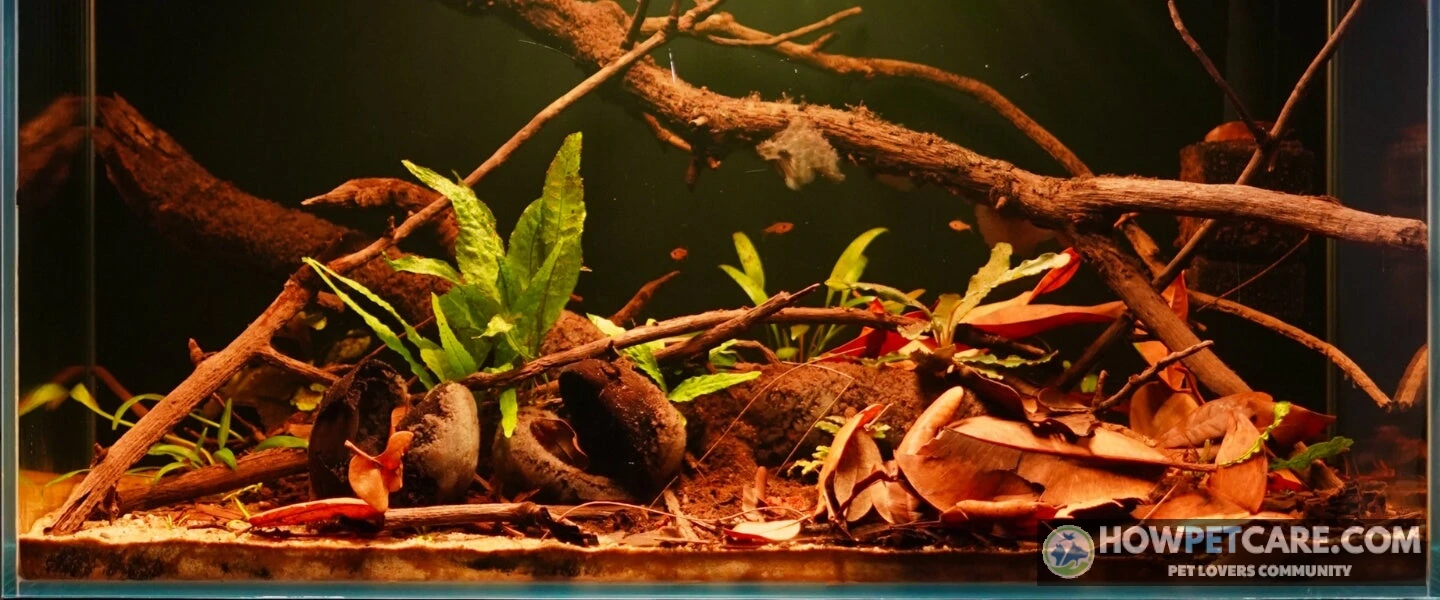
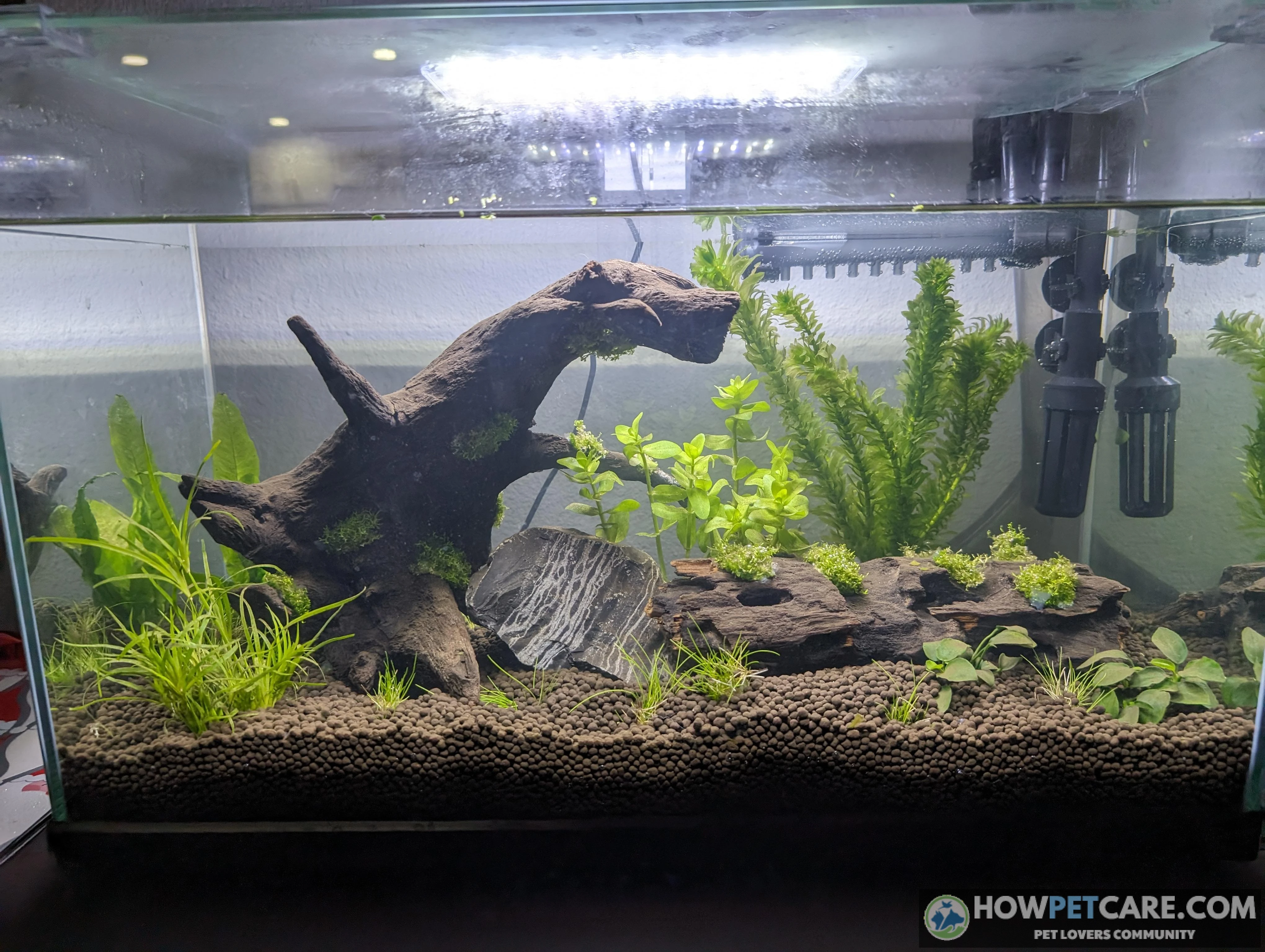
Bare glass is easy to clean. If using substrate, choose a thin layer of smooth aquarium sand and monitor feeding; avoid small gravel that can be swallowed and sharp decorations that can injure skin. Provide at least one hiding spot per animal, plus visual cover such as cork or live plants. Java fern, Anubias, and other sturdy aquarium plants can help create shaded resting areas.
A paludarium combines land and water in one enclosure, but a complex divided build is not essential for an aquatic adult. Ensure cork or a platform is stable, has a gradual route out, and cannot trap the animal underneath.
How to Set Up and Cycle a Newt Tank Step by Step (Before the Newt Goes In)
Build and cycle the habitat before bringing the animal home. A fishless cycle establishes beneficial microbes in the filter that convert toxic ammonia into nitrite and then nitrate. Dechlorination makes tap water safer immediately; it does not cycle the filter.
Dechlorinating water and choosing a filter
Use a water conditioner labeled to treat both chlorine and chloramine, following its dose for the volume of replacement water. Match the replacement water’s temperature to the tank. Simply leaving water out is not a reliable way to remove chloramine.
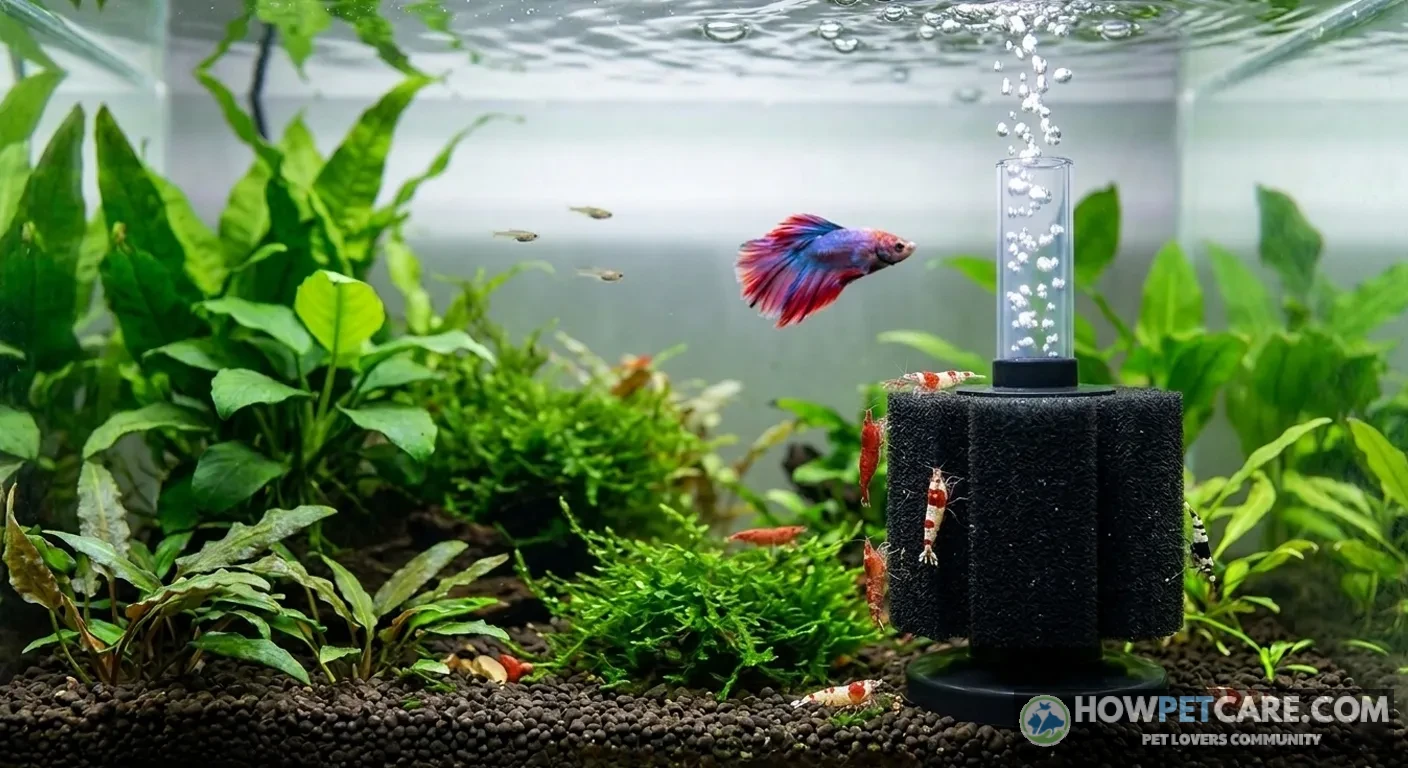
A sponge filter or adjustable low-flow filter is a useful choice. Newts should be able to rest and reach the surface without fighting the current; slow-to-moderate filtration is recommended for fire bellies.
Fishless cycling timeline and what test results mean
-
Prepare the enclosure
Place the tank on a level, sturdy surface. Rinse the tank, substrate, and decorations with plain water; do not use soap. Install the secure lid, thermometer, hides, land area, and filter.
-
Condition and fill
Add temperature-appropriate water treated for chlorine and chloramine. Start the filter and adjust or baffle the flow. Add plants if using them.
-
Feed the empty filter
With no animal present, use a measured aquarium-safe ammonia source without perfume or cleaning additives. Follow its directions and use a liquid test to reach about 2 ppm ammonia.
-
Test and wait
Test ammonia and nitrite every 2–3 days. As ammonia falls, nitrite should rise; later, nitrite falls and nitrate generally appears. Redose carefully to maintain the cycle, following the ammonia product’s instructions.
-
Verify the cycle
The filter is ready when it can process a measured 2 ppm ammonia dose to zero ammonia and zero nitrite within 24 hours. Allow roughly 4–6 weeks or longer; testing, not the calendar, determines readiness.
-
Change water and acclimate
Make a large partial change with conditioned, temperature-matched water and retest until nitrate is below about 20 ppm. Equalize transport-container temperature gradually, then transfer the newt without pouring shipping water into the habitat.
Established filter media from a healthy, disease-free aquarium may shorten the process, but still verify the cycle with tests. Once the newt arrives, check ammonia and nitrite frequently during the first weeks because the biological filter must adjust to its actual waste load.
Weekly and monthly maintenance schedule
Each day, check temperature and behavior and remove visible waste and uneaten food. Test ammonia, nitrite, nitrate, and pH weekly; change roughly 20–30% of the water weekly as a starting schedule, adjusting to test results and stocking. Use conditioned, temperature-matched water.
When flow slows, gently rinse reusable filter media in removed tank water, not untreated tap water. Do not replace all media at once: its surfaces hold the beneficial microbes. Record results so a gradual temperature or water-quality change is easier to spot.
Newt Water Parameters, Temperature, Humidity and Lighting: The Spec Sheet
This table is a working care sheet for a healthy, aquatic adult fire belly—not a prescription for every newt. Confirm the exact species and life stage with the breeder and an amphibian-experienced veterinarian.
| Parameter | Starting target | When to act | How to monitor or adjust |
|---|---|---|---|
| Water temperature | About 60–72°F (16–22°C) for a Japanese fire belly | Temperature outside the species’ range or rising steadily | Check an aquarium thermometer daily; shade the tank, use a fan, or use a chiller. |
| Land/air temperature | Approximately 60–72°F (16–22°C) for this setup | Land area becomes hot or completely dry | Measure near the resting area; avoid heat lamps. |
| Land humidity | Moist shelter and damp—not saturated—material | Shelter dries out or becomes stagnant and waterlogged | Mist with conditioned water as needed. A terrestrial species needs its own humidity plan; no single percentage fits all newts. |
| pH | Approximately 6.5–7.5 as a starting range | Rapid change or a reading outside the animal’s established range | Test weekly; prioritize stability and investigate the water source before making gradual corrections. |
| Ammonia | 0 ppm | Any detectable reading | Test immediately; perform a partial conditioned-water change and check the filter and feeding load. |
| Nitrite | 0 ppm | Any detectable reading | Change water, retest, and investigate an incomplete or disrupted cycle. |
| Nitrate | Preferably below 20 ppm | Rising toward 40 ppm or above | Increase water-change frequency or volume; test replacement water too. |
| Chlorine and chloramine | 0 | Any untreated tap water added | Treat all replacement water according to the conditioner label. |
| Water depth | Around 6–8 inches for a small, established adult | Animal struggles to surface or reach land | Provide gradual exits and resting places; adjust for size and life stage. |
| Lighting | Low-intensity light for about 8–12 hours daily | Bulb warms the habitat or there is no shade | Use a timer and shaded areas; avoid heat-producing bulbs. |
| Filter flow | Gentle enough for the animal to rest | Animal is swept along or avoids most of the tank | Use a sponge filter or baffle the outlet. |
Most cool-water newts do not need an aquarium heater in a suitably cool home. Low-output lighting and a varied diet are common approaches for aquatic fire bellies, but UVB needs are not established equally for every species or life stage; discuss terrestrial setups and appropriate supplementation with an experienced veterinarian. Don’t treat a single humidity percentage or pH reading as more important than a stable, species-appropriate habitat.
What Newts Eat: Foods, Portions and a Sample Weekly Feeding Plan
Newts are carnivores. Suitable foods depend on size and life stage, but earthworms or appropriately sized pieces, blackworms, bloodworms, daphnia, and suitable sinking amphibian pellets can form a varied menu. Bloodworms are useful as part of a rotation, not the only food indefinitely.
Offer adults a small amount they can finish in approximately 10–15 minutes: for example, several appropriately sized earthworm pieces or a small pinch of thawed bloodworms. Adjust for body condition and the individual’s appetite. Feed from tweezers or a shallow dish where practical, and promptly remove leftovers.
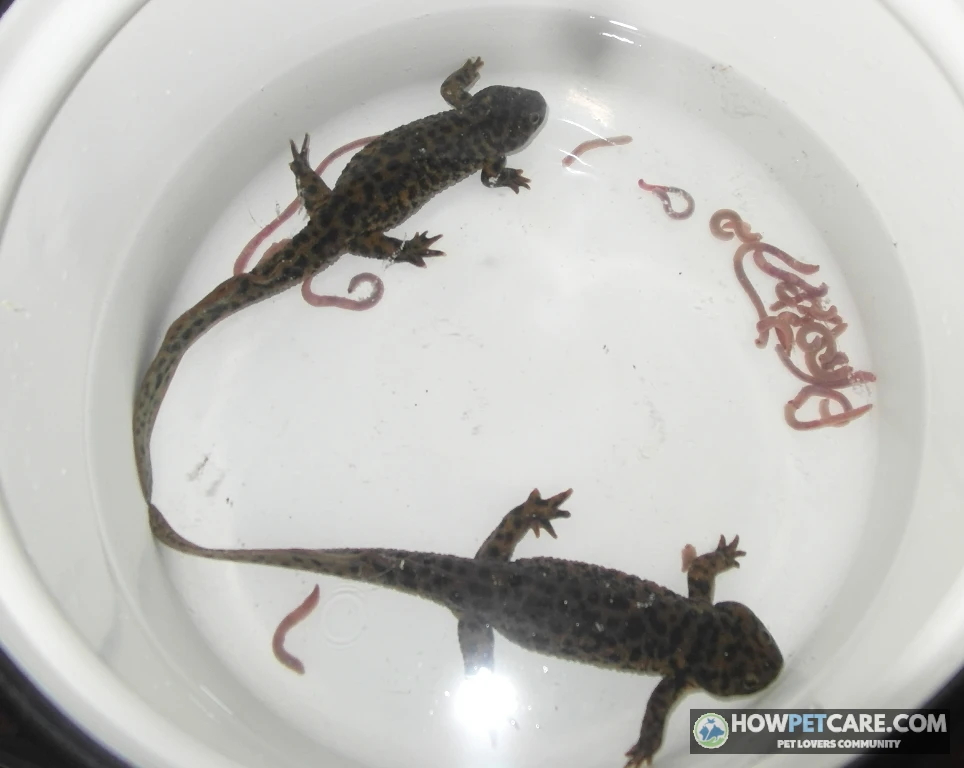
Feeding larvae, efts and adults
| Life stage | Food items | Portion guide | Frequency | Notes |
|---|---|---|---|---|
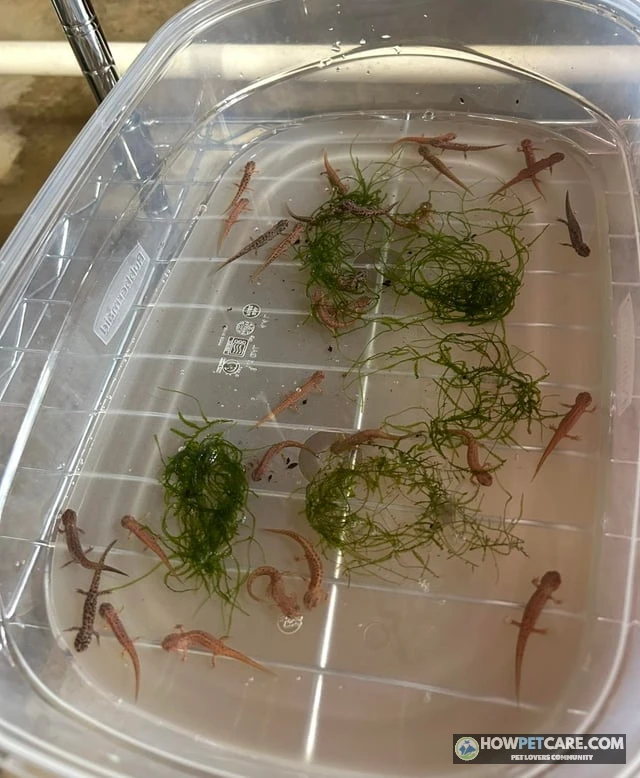
| Larva | Appropriately sized live baby brine shrimp, daphnia, or microworms | Small amounts the larva can catch | Daily, sometimes divided into small feeds | Keep prey small and maintain clean water. |
| Terrestrial juvenile or eft | Tiny earthworm pieces, springtails, or suitably small gut-loaded insects | Small prey appropriate to mouth size | Daily or near-daily | Feed on land; consult an amphibian vet about calcium and vitamin supplementation for the specific diet. |
| Aquatic adult | Earthworms, blackworms, bloodworms, or suitable pellets | A modest portion finished in about 10–15 minutes | About 3–4 times weekly | Adjust for condition, season, and species; remove leftovers. |
A sample adult week could be earthworm pieces on Monday, blackworms on Wednesday, thawed bloodworms on Friday, and earthworm pieces or suitable pellets on Sunday. Tuesday, Thursday, and Saturday are nonfeeding days. This is a starting schedule, not a fixed ration: a growing juvenile needs more frequent food.
Foods to avoid
Avoid seasoned human food, wild-caught insects exposed to pesticides, oversized prey, and a diet consisting only of one feeder. Rinse or thaw foods as appropriate and prevent leftovers from fouling the water. Do not add supplements indiscriminately; requirements depend on prey and life stage.
Newt Health Problems: Warning Signs, Quick Fixes and When to See an Exotic Vet
Check water quality and temperature whenever behavior or appearance changes, but do not assume an illness is caused solely by the tank. Find an amphibian-experienced veterinarian before an emergency. Correcting husbandry supports the animal; it does not replace diagnosis or treatment.
Symptom checker: what you see, what it means, what to do
| What you see | What to do first | Veterinary urgency |
|---|---|---|
| White, fuzzy patches | Check water and temperature; separate from tankmates in a clean, appropriately set up container. | Contact an exotics vet promptly; the cause cannot be confirmed by appearance alone. |
| Red streaks, raw skin, or open sores | Correct water quality and minimize disturbance. | Contact a vet promptly; do not wait for a presumed “red leg” infection to worsen. |
| Bloating, unusual floating, or trouble reaching the surface | Check temperature and water; provide easy access to the surface and land. | Seek prompt advice, particularly if severe, recurring, or accompanied by lethargy. |
| Refusing food | Check conditions and offer a familiar, suitable food after the animal has settled. | Contact a vet if refusal persists, weight falls, or other signs appear; juveniles need earlier attention. |
| Reddened skin, darting, or apparent breathing difficulty | Test ammonia and nitrite; if detectable, change a substantial portion with conditioned, temperature-matched water and retest. | Seek urgent veterinary advice if distress is marked or continues. |
| Missing tail tip or injured limb | Separate possible aggressors and remove sharp objects; keep water clean. | Ask a vet about any open wound, swelling, redness, or deterioration. |
| Several animals ill or sudden deaths | Isolate affected animals, keep equipment separate, and avoid transfers between tanks. | Contact a vet immediately and discuss possible infectious disease, including chytrid or Bsal. |
Do not use salt baths, fish medications, or other treatments without veterinary direction: amphibian skin is sensitive, and an inappropriate treatment can make matters worse.
Normal molting vs a sign of illness
Newts periodically shed their skin and may eat the shed. Brief shedding in an otherwise alert animal can be normal. Persistent stuck skin, fuzzy growth, sores, or shedding accompanied by lethargy warrants veterinary advice.
Metamorphosis is the transition from a larval form to a juvenile form; habitat needs can change substantially during that transition. Confirm whether your particular species becomes terrestrial or remains mostly aquatic rather than assuming every young newt can enter an adult tank immediately.
Your Pre-Purchase Checklist and First 30 Days with a New Newt
Buy-or-wait decision checklist
- Confirm the exact species and its legal status with the relevant agencies.
- Measure the intended room’s temperature, including warm afternoons; budget for cooling if needed.
- Choose a captive-bred animal whose life stage matches the habitat you can provide.
- Budget for the enclosure, tests, food, possible cooling, and veterinary care.
- Agree that adults will supervise children and maintain the tank, and that other pets cannot reach it.
- Identify an amphibian-experienced veterinarian and a lawful backup caretaker.
- Be prepared for a commitment that can exceed a decade.
30-day starter timeline
Before the animal arrives: Set up the habitat and begin fishless cycling. Allow approximately 4–6 weeks or longer; buy the newt only after the filter passes the ammonia-processing test and temperature is stable.
Arrival week: Acclimate the newt, provide cover, and minimize disturbance. Quarantine it separately from other amphibians. Offer a familiar food after it has settled, and test ammonia and nitrite frequently.
Weeks 2–4: Continue quarantine and observe appetite, body condition, skin, and behavior. Test water at least weekly, change approximately 20–30% as a starting routine, and adjust based on results. Maintain separate equipment for other tanks.
After the first month: Continue daily checks, scheduled feeding, weekly tests and water changes, and filter cleaning only when needed. If your home cannot stay cool enough—or your household wants an animal to handle—wait or choose a different pet. If those conditions are manageable, start with a healthy, captive-bred fire belly; choose a ribbed newt only if you can provide its larger adult habitat.
1An aspiring amphibian keeper is setting up their first aquarium and wants a hardy, mostly aquatic newt species. However, their home stays around 65°F, and they can only accommodate a 20-gallon long tank. Which species is the most practical choice for this setup?
Japanese fire belly newts thrive in cool temperatures (60–72°F) and a 20-gallon long aquarium provides appropriate space for a small aquatic adult.
2Which of the following actions are recommended safe practices when handling or interacting with a pet newt and its habitat?
Using a wet container minimizes skin disturbance and reduces stress on the animal during transport.
3When setting up an aquatic tank for a settled adult fire belly newt, why is small aquarium gravel discouraged as a substrate choice?
Newts lunge at prey items and can easily swallow small gravel particles, which can cause dangerous digestive blockages.
4If a newt displays signs of illness such as fuzzy white patches or skin sores, which of the following responses are appropriate?
Quarantine prevents potential infectious pathogens from spreading to tankmates while keeping the sick animal easy to monitor.
5A newt owner is no longer able to keep their pet. Which of the following options is unsafe and strictly unacceptable?
Releasing captive pets outdoors can introduce harmful pathogens to wild populations and disrupt native ecosystems.
6A keeper plans to feed their aquatic adult fire belly newt exclusively on freeze-dried bloodworms. Why is this feeding plan inadequate?
Relying on a single feeder item leads to nutritional imbalances; newts require a varied carnivore diet for long-term health.
| Species | Adult Habits and Size | Working Temperature | Approximate Captive Lifespan | Difficulty | Availability and Cautions |
|---|---|---|---|---|---|
| Japanese fire belly, Cynops pyrrhogaster | Mostly aquatic; about 3–5 inches | 60–72°F (16–22°C) | 15–25 years | Beginner to moderate | A breeder-sourced, established adult is a good candidate; confirm local rules. |
| Spanish ribbed newt, Pleurodeles waltl | Highly aquatic; often about 6–10 inches | 60–72°F (16–22°C) | 10–20+ years | Beginner to moderate | Hardy alternative, but needs a larger aquarium; avoid handling its sharp rib tips. |
| Chinese fire belly, Cynops orientalis | Mostly aquatic when settled; about 3–4 inches | 60–72°F (16–22°C) | 10–20+ years | Moderate | Seek captive-bred animals; imported pet-store specimens can arrive stressed and fragile. |
| Eastern newt, Notophthalmus viridescens | Aquatic adult, terrestrial juvenile eft; about 3–5 inches | 60–70°F (16–21°C) | 10–15+ years | Moderate | Seek captive-bred stock and check native-species rules; an eft needs a different setup from an adult. |
| Marbled newt, Triturus marmoratus | Seasonal aquatic and terrestrial phases; about 5–7 inches | 55–68°F (13–20°C) | 10–15+ years | Advanced | Occasional breeder availability; requires cool conditions and meaningful land space. |
| Alpine newt, Ichthyosaura alpestris | Seasonal aquatic and terrestrial phases; about 3–5 inches | 55–68°F (13–20°C) | 10–15+ years | Advanced | Cooling and seasonal habitat needs make it less forgiving. |
| Smooth or great crested newt, Lissotriton vulgaris or Triturus cristatus | Seasonal semi-aquatic; about 3–7 inches, depending on species | 55–68°F (13–20°C) | 10–15+ years | Advanced | Protected in parts of Europe; verify the precise species and applicable US rules. |
| California or rough-skinned newt, Taricha species | Seasonal aquatic and terrestrial phases; about 5–8 inches | 55–68°F (13–20°C) | 10–20+ years | Avoid as a first pet | Potent toxins and potential native-wildlife restrictions make these unsuitable beginner choices. |
| Emperor or crocodile newt, Tylototriton species | Often substantially terrestrial; size varies by species | 60–72°F (16–22°C), depending on species | 10–20+ years | Specialist | Needs species-specific care and trade documentation; check CITES and US rules. |
FAQ
Do newts need a heater?
Usually not. Most beginner species such as fire bellies and ribbed newts prefer room temperatures roughly in the mid-60s to low-70s °F, and overheating is a bigger danger than a cool room. If the tank climbs above about 75-78°F, use shade, a fan or a chiller.
Can a newt live in a small bowl or a tank without a filter?
A bowl is not suitable for long-term care because it can’t hold a stable temperature or water quality and offers no room or land access. A properly sized tank with a gentle filter and regular partial water changes is the safer baseline.
Do newts need UVB lighting?
Typically no. Common beginner newts are fed a varied diet and do well under low, ambient light on a regular day and night cycle with plenty of shade and live plants.
Do newts bite?
Newts rarely bite people and their teeth are tiny, but they can nip at food and at each other, especially when crowded or when food is scarce. The bigger concern is their skin secretions, so wash your hands after contact with the tank.
Can I use tap water for my newt tank?
Only after treating it with a dechlorinator that neutralizes both chlorine and chloramine. Untreated tap water can burn a newt’s permeable skin and gills and will damage your filter’s beneficial bacteria.