
You can help shelter animals with or without adopting — the main options are:
- Donate money or wish‑list items the shelter has requested
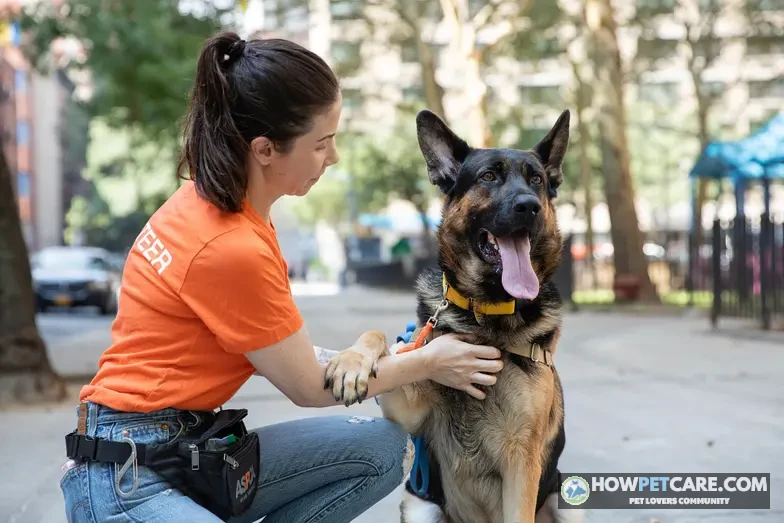
- Volunteer for dog walking, cat socializing, cleaning, or front‑desk shifts
- Foster an animal for a night, a weekend, or longer
- Share adoptable pets on social media with photos and bios
- Run a fundraiser or food drive at work, school, or online
- Help remotely with admin tasks, grant research, or advocacy
Ways to Help Shelter Animals, Matched to Your Time and Budget
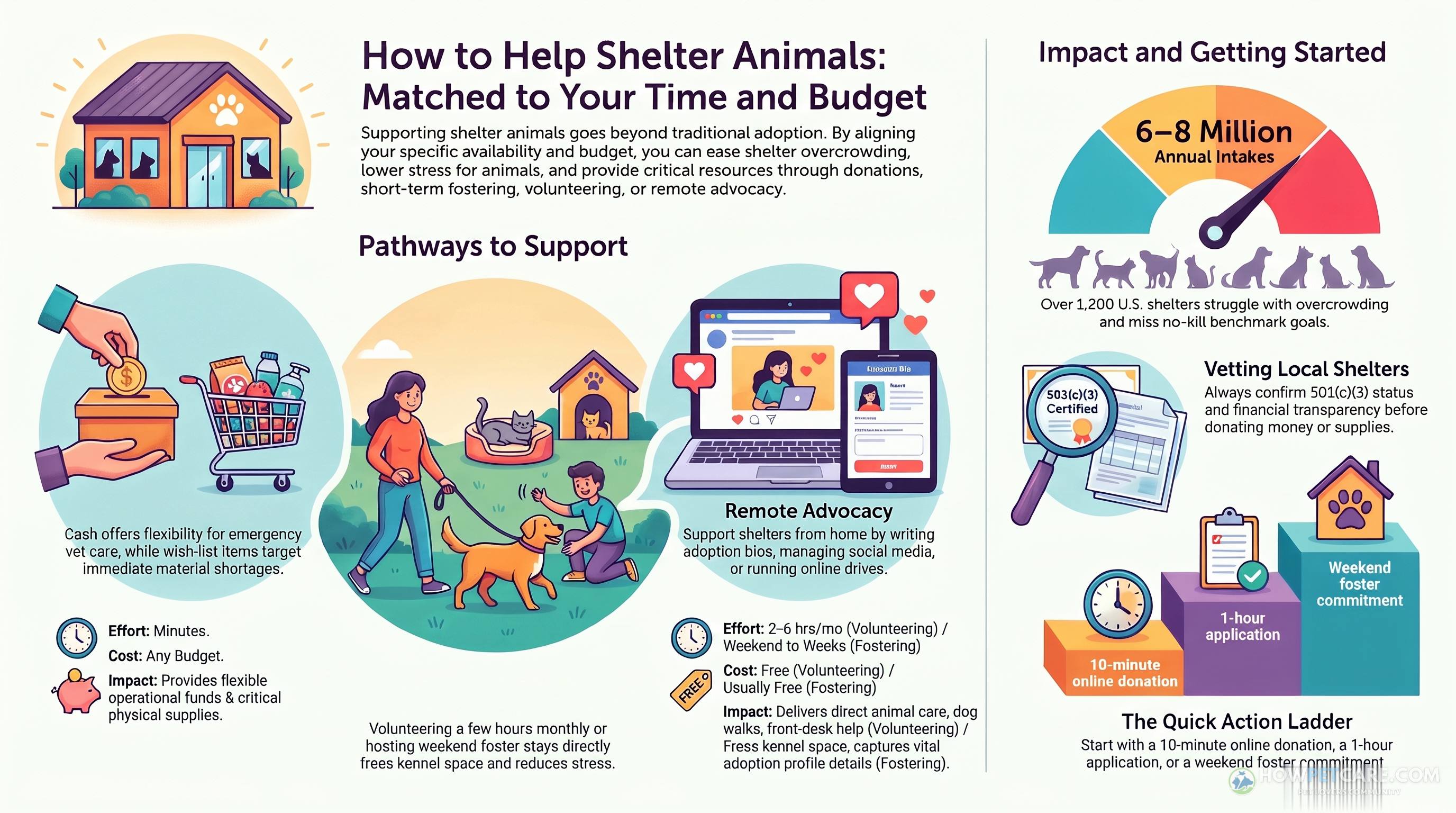
You can support shelter animals without bringing one home. Options range from a 15‑minute task online to fostering for several months, so there’s likely a way to help that fits your schedule and budget. Here’s a quick overview; the sections below explain how to choose and get started.
How to help shelter animals without adopting
- Donate money or wish‑list items – Cash gives a shelter flexibility to buy food in bulk, pay vet bills, or cover utilities. A wish list shows what it needs now. You can set up recurring gifts, check for employer matching, or organize a pet‑food drive.
- Volunteer – One shift can help with dog walks, cat socializing, kennel cleaning, or front‑desk tasks. Many shelters require a minimum of 2‑6 hours a month and an application or orientation.
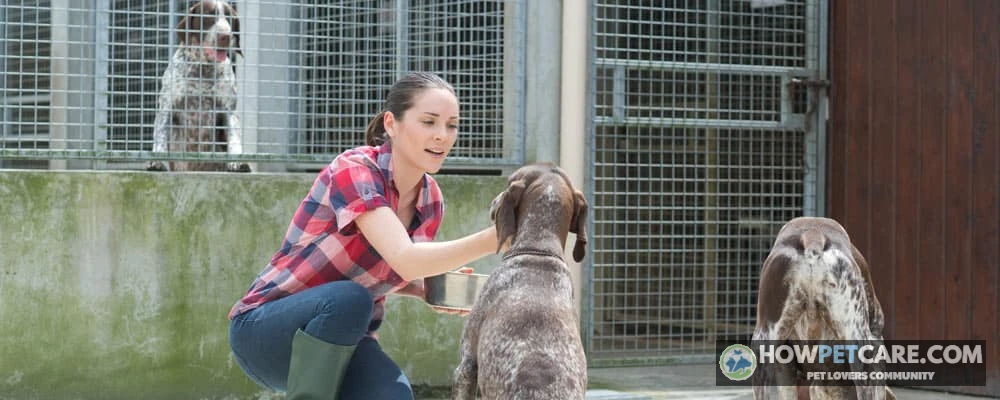
- Foster short‑term – Hosting an animal for a night, a weekend, or a few weeks gives them a break from the kennel. Photos and notes from a home stay can also support an adoption profile. Many shelters cover food, litter, and veterinary care, but policies vary.
- Share adoptable pets – Post a pet’s profile, write a bio, or edit photos to help potential adopters see what makes that animal a good fit.
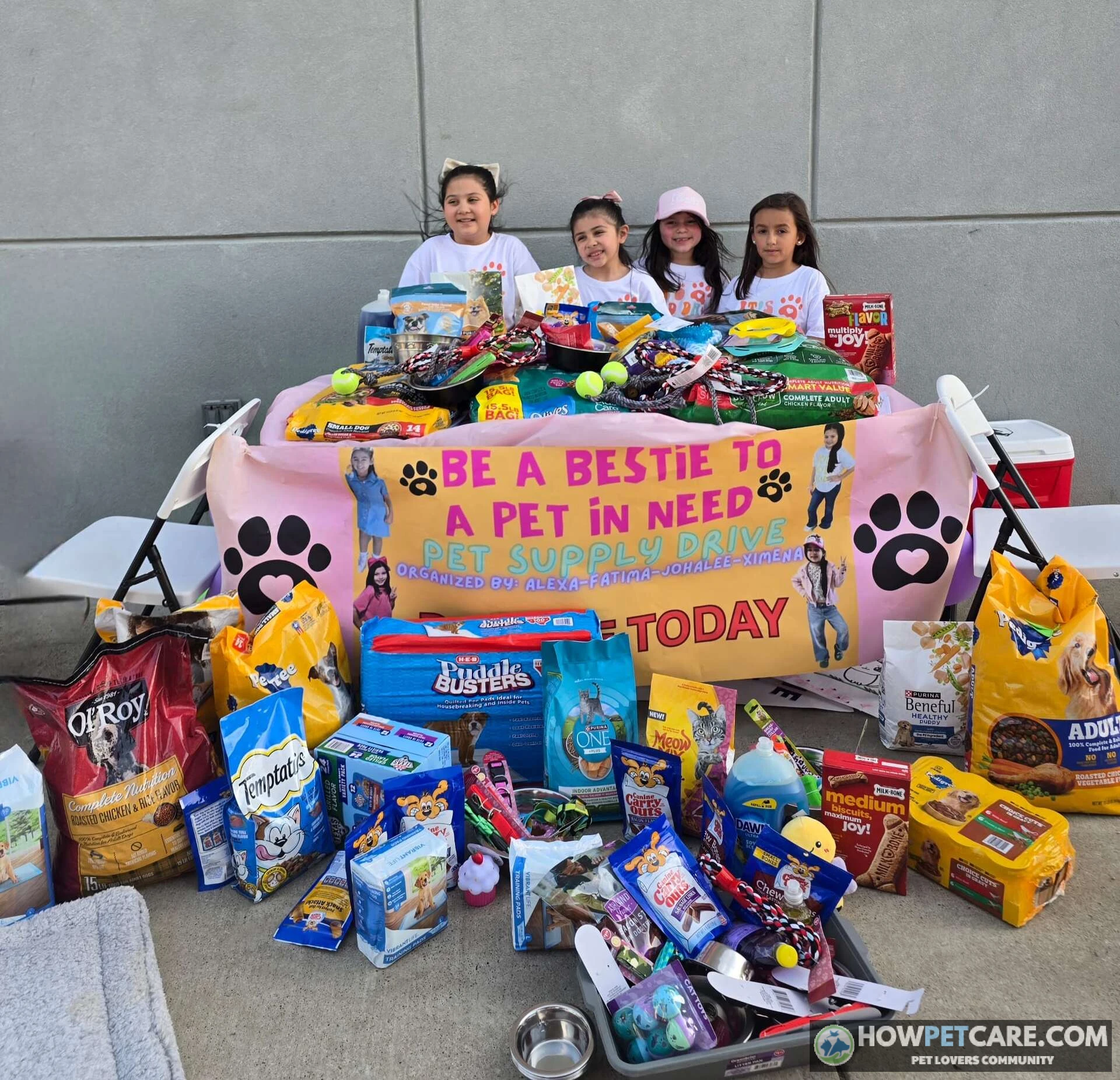
- Run a fundraiser or food drive – Tools like GoFundMe can help you raise money for a shelter, cover transport costs, or collect items from its wish list. Workplace matching may increase the value of cash gifts.
- Advocate and educate – Contact local officials about shelter funding, support spay/neuter initiatives, or help with shelter enrichment events. Remote tasks such as social media management, grant research, or donation processing can be done from anywhere.
The six categories of help at a glance
| Category | Minimum effort | Typical cost to you | What it achieves | Best for |
|---|---|---|---|---|
| Cash donation | Minutes (one‑time or recurring) | Any amount | Flexible funds for vet care, food, utilities, emergency needs | Tight budget, no spare time |
| Wish‑list supplies | Under an hour | Cost of items + shipping | Fills a specific shortage | Tangible giving, family project |
| Volunteering | 2‑6 hrs/mo (minimum) | Usually free (transport optional) | Hands‑on care, enrichment, adoption counseling | Animal interaction, flexible schedule |
| Short‑term fostering | One night to a weekend | Usually covered, may ask for small stipend | Frees kennel space, reduces stress, creates adoption photos | Spare room or flexible dates |
| Fundraising/food drive | A few hours to weeks | Low (often free) | Brings in more donations and community support | Workplace, school, or social network |
| Remote/virtual help | Flexible | Free or shipping | Social media promotion, photo/editing, admin support, online wish‑list fulfillment | Living far from shelters, homebody, limited mobility |
With 15 minutes, you could donate $10 online or share one pet’s profile. If you can give one hour a week, ask a local shelter about short volunteer shifts. A $50 budget could cover a small wish‑list item, such as blankets or a bag of prescription food. A spare room may make short-term fostering possible, while a social network can help you organize a fundraiser or food drive.
Choose one method from the table that fits your current constraints, then go to the detailed guide for that category. The later "Your First Step" section turns your choice into a concrete action plan.
What to Donate to an Animal Shelter: Cash, Wish List Items, and Workplace Matching
Shelters often ask for donations, but some gifts are more useful than others. Knowing why cash can be more flexible than supplies—and when a requested item is the right choice—can help you make a donation that meets a real need.
Cash vs. wish‑list supplies: which do shelters need most?
Cash donations give shelters flexibility. They can use the money for bulk food purchases, emergency veterinary care, and utilities. According to the latest data, 6–8 million animals enter U.S. shelters each year and most facilities operate on tight budgets, so unrestricted funds can go toward the highest‑priority need.
Wish‑list items are useful when a shelter has named a specific need—for example, a particular brand of kitten food that’s running low or towels for cleaning. Checking the list before you shop helps avoid waste: the shelter may not be able to use opened food, expired supplies, or items it can’t store. A requested item also gives donors a tangible way to contribute.
Best practices
- Check the shelter’s own wish list first. Many shelters post lists on sites like Amazon or Chewy.
- Don’t donate opened food, used bedding, or large items (e.g., crates) unless the shelter confirms it can accept them.
- Cash can cover several smaller needs, bulk purchases, or transport costs for special orders.
If you can give cash, it gives the shelter more flexibility. If you’d rather donate supplies, stick to the posted wish list and confirm the items are still needed before you shop.
Matching gifts and workplace fundraisers
Many companies match charitable donations. Depending on the program, your gift may be doubled, tripled, or increased further at no extra cost to you. The steps are usually simple, but deadlines and paperwork requirements vary, so submit your request promptly and keep your receipt.
Two copy‑paste scripts you can use
Script 1 – email to HR about matching gifts:
Hi [Name], I recently donated to [shelter name], a registered 501(c)(3) (EIN: [number], if known). Does our company offer charitable donation matching? If so, could you point me to the giving portal or the form I need to submit? Happy to provide the donation receipt. Thanks!
Matching payments often arrive weeks or months after your donation, so submit promptly and keep the receipt.
Script 2 – supply drive announcement for your team:
We’re running a pet supply drive for [shelter name] through [end date]. They confirmed their current wish list, so we’re collecting: [3‑5 items from the actual list, e.g., unscented laundry detergent, wet kitten food, flat sheets]. Drop‑off box is at [location]. Cash option: [link]. I’ll deliver everything on [date].
Five steps before you announce: (1) get manager/facilities approval, (2) choose the beneficiary and call to confirm the current wish list and that they can accept a bulk drop‑off, (3) set a collection point and firm end date, (4) list only items the shelter requested—no opened food or used bedding they can’t take, (5) schedule delivery and send donors a thank‑you with the receipt totals.
Running a pet food drive or fundraiser step by step
- Get approval – Ask your employer, homeowner association, or community group for permission. Send a brief proposal with the beneficiary, dates, and collection point.
- Choose the beneficiary – Call the shelter for its current wish list and check that it can receive bulk donations. Ask about restrictions, such as opened canned food.
- Set the logistics – Choose a drop-off location, decide who will collect donations, and set a delivery date. Include directions if the location isn’t obvious.
- Promote – Use email, social media, or flyers to explain what the drive is collecting. Name the specific items needed (e.g., "we need 20 lb bags of Royal Canin Veterinary Diet for senior dogs").
- Deliver and thank donors – Check that the items match the wish list when you deliver them. Give donors a receipt; a simple spreadsheet usually works. A thank-you note with a photo of the donated items can encourage people to take part again.
Many shelters also accept online fundraising platforms (e.g., GoFundMe, Facebook Fundraisers). These can help you reach more people and often include donation tracking and tax receipt generation.
How to Volunteer at an Animal Shelter for the First Time: Age Limits, Training, and Time Commitment
Volunteers help shelters care for animals and keep daily operations moving. Whether you can spare an hour a week or a few evenings a month, ask about roles that fit your availability.
The volunteer process, step by step
- Find the volunteer page – Check the shelter’s website for an application. Some use a third-party platform like Petfinder.
- Submit an application – Provide basic contact information, availability, and relevant experience.
- Attend an orientation – New volunteers learn safety protocols, kennel procedures, and shelter policies.
- Complete training – Training depends on the role and may cover dog walking, cat socializing, or front-desk duties.
- Shadow a shift – A first shift is often paired with an experienced volunteer so you can learn the routine and work safely.
- Begin regular shifts – Many shelters set a monthly minimum (e.g., 4‑6 hours) and may ask volunteers to commit for 3‑6 months.
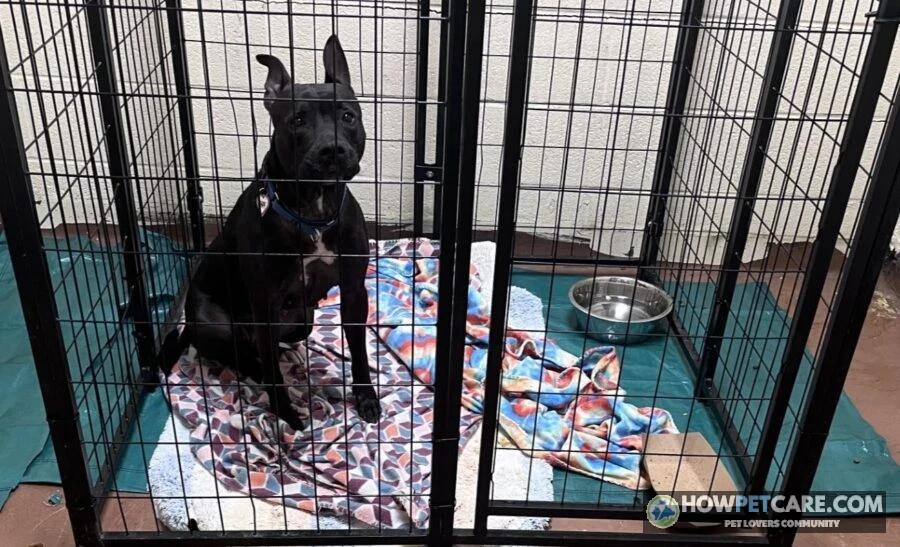
Be cautious if a shelter asks for money up front, requires you to buy merchandise, or won’t provide clear job descriptions. Those can be warning signs of a problematic organization.
Can kids and teens volunteer?
Age limits vary. Some shelters let children under 12 take part in supervised, low‑risk tasks, such as feeding animals or simple cleaning, when an adult accompanies them. Teens (13–17) often need a parent’s signature and may not be allowed to handle certain animals, such as large dogs.
Family-friendly options include:
- Reading to animals – Some shelters hold story times where children read aloud to help calm dogs and cats.
- Supply drives – Collect toys, bedding, or craft materials for enrichment projects.
- Fundraising projects – Bake cookies for adoption events or make informational sheets about pet care.

Call ahead to check the age requirements and find out whether parents need to provide documentation.
Roles that fit different schedules and comfort levels
| Role | Typical time commitment | Physical demand | Animal interaction level |
|---|---|---|---|
| Kennel cleaning | 2‑4 hrs/mo (batch job) | Medium (lifting, bending) | Low-moderate (quick interactions) |
| Dog walking | 30‑45 mins per walk, 2‑4 times/week | Low‑moderate (leash handling) | High (direct dog contact) |
| Cat socializing | 15‑30 mins per session, 1‑2 times/week | Low (small animals) | Moderate (short, supervised interactions) |
| Front‑desk/greeting | 1‑2 hrs per shift, flexible | Low (standing, phone) | Variable (meeting visitors) |
| Adoption counseling | 1‑2 hrs per adoption event, monthly events | Low‑moderate (interviewing) | Moderate (speaking with adopters) |
| Event support | 2‒8 hrs per event, 4‑5 events/yr | Variable (setup, tear‑down) | Low‑moderate (crowd management) |
| Photography / social media | 30‑45 mins per session, weekly or bi‑weekly | Low (handling cameras) | Low (images of animals) |
If you have limited mobility or would rather not handle animals, ask about administrative tasks, donation processing, or data entry.
How Fostering Works: Who Pays for Food and Vet Care, and Short‑Term Options
Fostering gives an animal a temporary home and can free up kennel space. Before you agree, find out what costs the shelter covers and what you’d be expected to provide.

Does the shelter cover foster costs?
Most shelters and rescues cover food, supplies, and routine veterinary care for foster animals. Foster parents may receive a stipend or reimbursement for unexpected costs, such as emergency vet visits. Policies differ: some organizations expect fosters to buy food, while others provide approved brands and reimburse receipts.
Foster cost reality check: what to confirm before you say yes
- ☐ Food and supplies: Do you provide food, litter, crates, and toys, or do I buy them? If I buy, is there reimbursement?
- ☐ Vet care: Which clinic do I use, and who approves non‑emergency visits? Is there an after‑hours emergency number, and who pays if I go to my own vet?
- ☐ Medications and preventives: Are flea/tick, dewormer, and prescriptions supplied?
- ☐ Commitment length: How long is this animal expected to need a foster home – days, weeks, or until adopted?
- ☐ Logistics: Am I required to bring them to adoption events or vet appointments? Is transport help available?
- ☐ Exit plan: If the fit isn’t working (allergies, resident pets, behavior), how quickly can the animal be moved, and to whom?
- ☐ Liability: Does the shelter carry insurance covering foster animals in my home? Are there rules about resident‑pet introductions or quarantine space?
- ☐ Expiring coverage: If I want to adopt my foster (“foster fail”), do costs shift to me at adoption?
A rescue that relies entirely on foster homes and has no physical shelter may have leaner support, since its foster network is its full capacity. Ask for written clarification before you commit.
Short‑term and "slumber party" fostering
Short-term fostering can work for people who want to help but aren’t ready for an open-ended commitment. A stay may last one night (a "slumber party"), a weekend, or a few weeks. Time away from the kennel can reduce stress. It also gives the shelter behavior notes and photos to use in an adoption profile.
Why shelters love short‑term fostering
- It frees kennel space quickly, which matters when facilities are overcrowded. Recent data shows overcrowding peaked in 2023, with approximately 1,200 of 3,900 U.S. shelters still not meeting no‑kill benchmarks.
- A quieter home can help shy or anxious pets show more of their personality.
- Photos and stories from the stay give shelters material to share with potential adopters.
Who benefits most?
- Puppies and kittens too young for adoption.
- Animals recovering from surgery or medical treatment.
- Seniors or pets whose behavior improves in a home setting.

A quiet home, a way to keep the animal separate from other pets, and a willingness to follow shelter guidelines can make short-term fostering a good fit.
Foster vs. volunteer: which fits you?
| Factor | Fostering | Volunteering |
|---|---|---|
| Time horizon | Days to months (often flexible) | Recurring shifts, often weekly/monthly |
| Physical presence | 24/7 (or most of the day) | Defined shift times (e.g., 2‑4 hrs) |
| Emotional bond | Typically deeper (animal stays in your home) | Casual interaction during shifts |
| Support needed | Food, vet care, supplies (often covered) | Application, training, orientation |
| Impact on shelter space | Directly frees kennel spots | Supports day‑to‑day operations but space impact is indirect |
| Best for | People with a spare room and stable routine, willing to commit to an animal’s daily care | People who want structured, scheduled help without long‑term pet responsibility |
Consider your routine, schedule, and comfort with animal care when choosing between the two.
Cost, Time, and Impact Compared: Which Way to Help Fits You?
A side-by-side comparison can help you match your time and budget to the kind of support you want to offer. The table covers cost, time commitment, and setup effort, along with the likely impact and who each option may suit.
Comparison table of ways to help
| Way to help | Typical cost | Time commitment | Setup effort | What it does for animals and the shelter | Best for |
|---|---|---|---|---|---|
| One‑time cash donation | Any amount; you choose | Minutes | Low | Flexible money for vet care, food, utilities, and whatever is most urgent | No spare time |
| Monthly recurring gift | Small recurring amount | Minutes once | Low | Predictable income the shelter can budget around | Steady, low‑effort giving |
| Wish‑list supplies | Cost of items plus shipping | Under an hour | Low‑Medium | Fills a posted, specific need; less flexible than cash | Tangible giving, drives with kids |
| Employer matching gift | Free on top of your donation | 15‑30 min of forms | Medium | Often doubles a donation you already made | Anyone with a matching program |
| Volunteering | Usually free (maybe transport) | Recurring shifts; many shelters ask a monthly minimum | Medium‑High (application, orientation, training) | Direct labor: walking, socializing, laundry, cleaning, events | Flexible schedule, low budget |
| Fostering (standard) | Often low – many shelters cover food/supplies/vet care, but ask | Weeks to months | Medium | Frees a kennel and shows how the animal behaves in a home | Spare room, stable routine |
| Short‑term / "slumber party" fostering | Usually minimal; confirm coverage | One night to a weekend | Low‑Medium | Gives animals a kennel break and generates photos/behavior notes | Trying fostering, busy households |
| Adopting | Adoption fee plus lifetime costs | Years | Medium | Permanent home; opens one shelter space | Life genuinely fits a pet |
| Fundraising / food drive | Low | A few hours to weeks | Medium | Brings in more donations | A workplace, school, or network |
| Advocacy | Free | Sporadic | Low | Pushes for shelter funding, spay/neuter access, and pet‑retention programs | No money, no nearby shelter |
| Remote/virtual help | Free or shipping costs | Flexible | Low‑Medium | Photos, bios, social sharing, admin help, wish‑list shipments to distant shelters | Rural readers, homebodies |
These ratings are generalizations. The right option depends on your constraints and your shelter’s current bottleneck—space, staff, or funds. Ask what it needs most right now.
Which option fits your situation?
- Tight budget and tight schedule – Consider a one-time cash donation or wish‑list supplies that cost $10‑15.
- Low budget, flexible time – Ask about volunteering for a few hours a month; some shelters accept one-off shifts.
- Spare room and stable routine – Explore standard fostering, and confirm cost coverage before you commit.
- Workplace connection – Check for employer matching or organize a food drive with colleagues.
- No nearby shelter – Look into remote roles such as social media promotion, bio writing, or online wish‑list fulfillment.
- Family with kids – A wish‑list drive or supervised volunteer shift may be a good fit. Consider short-term fostering only if it suits your household.
How to Find and Vet a Reputable Local Animal Shelter or Rescue Before You Give
Before donating money or time, find out who runs the organization, how it handles animals, and whether it can explain its finances and policies. This framework can help you assess a local shelter or rescue.
Municipal shelter vs. humane society vs. foster‑based rescue
| Type | Who runs it and how it’s funded | How it takes in animals | What helps most | How to vet it |
|---|---|---|---|---|
| Municipal shelter (city/county animal services) | Government budget, tax revenue | Usually takes in lost/stray pets; may also accept owner surrenders | Funding for operations, transport, and sometimes adoption fees | Check the municipal website for budget reports, adoption policies, and euthanasia figures. |
| Private humane society / SPCA | 501(c)(3) nonprofit, donations, grants | Accepts owner surrenders, strays, and sometimes transports from other shelters | Need for operating funds, shelter‑enrichment programs, adoption fees | Verify nonprofit status, look for annual reports, and ask about save rates. |
| Foster‑based rescue | Volunteer network, small administrative office, donations | No central facility; animals live in foster homes. Intake is managed through a network of fosters and partner shelters. | Fostering homes, transport, medical care funding | Ask for a list of foster coordinators, a physical address for admin, and vet partnerships. |

What ‘no‑kill’ means and how to check a shelter’s save rate
Best Friends Animal Society commonly defines “no‑kill” using a 90 % save‑rate threshold. Under that definition, a shelter reaches no‑kill status when it can limit intake and achieve at least a 90 % live‑release rate, including adoptions, returns to owners, and transfers. Some shelters don’t meet that threshold and may euthanize animals with severe medical or behavioral issues. Ask the shelter for its most recent intake and outcome data rather than relying on the label alone.
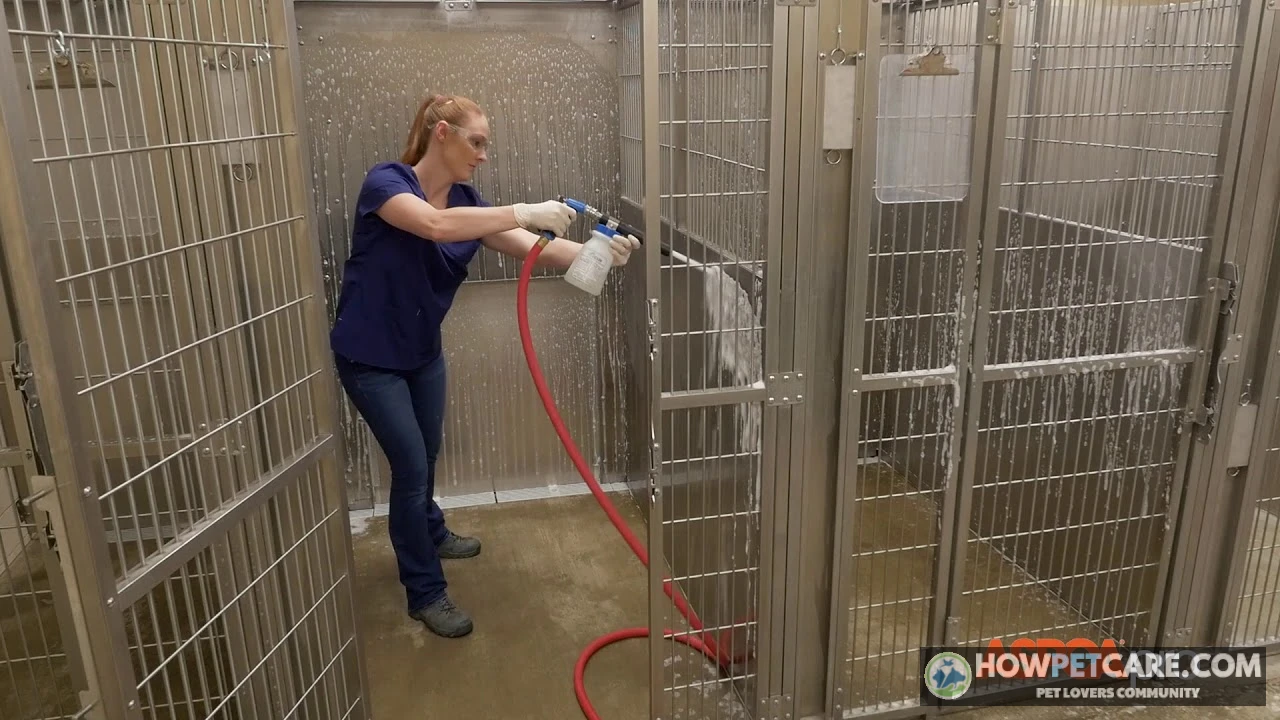
A 7‑point vetting checklist before you donate
- Confirm the legal type. Find out whether it’s a municipal shelter (city/county animal services), a private nonprofit, or a foster‑based rescue. The answer affects how it’s funded and how it takes in animals.
- Verify nonprofit status. For US nonprofits, search the IRS Tax Exempt Organization Search, then check Charity Navigator or Candid/GuideStar. Ask for the EIN if it isn’t published.
- Find the financials. Look for a recent Form 990, annual report, or audited statements. A complete absence of published financial information is a reason to ask more questions.
- Check outcome transparency. Reputable shelters publish intake and outcome data; many report to Shelter Animals Count. Ask for the live-release or save rate. Best Friends Animal Society commonly defines "no‑kill" as a 90 % save rate, and status can depend on whether the shelter can limit intake.
- Confirm a real footprint. Look for a physical address you can visit, or a documented foster network with named coordinators, and a relationship with a licensed veterinarian.
- Test donation handling. Check for a current wish list, receipts, and clear information about where money goes. Be wary of pressure for cash, gift-card or wire-transfer requests, and vague answers about fund use.
- Visit or call and ask. Ask how animals are taken in, what the euthanasia policy is, how adoptions are screened, and what volunteers do. If the organization can’t answer basic questions, has no adoption screening, or shows signs of overcrowding or hoarding, consider walking away.
Red flags to watch for
- Pressure for cash or gift cards – Reputable shelters accept checks, online donations, and credit‑card payments.
- No financial transparency – The organization refuses to share a Form 990 or recent audit results.
- Requests for payment through unusual channels – For example, wiring money directly to an individual.
- Signs of hoarding or extreme overcrowding – Look for overcrowded cages, foul odors, or a lack of enrichment.
- Unanswerable questions – e.g., the organization refuses to discuss its euthanasia policy or adoption screening criteria.
- Lack of vet partnerships – There’s no relationship with a licensed veterinarian, or the organization refuses to share medical records for animals you’re considering fostering.
If you spot one of these warning signs, consider another organization. If you’re already involved, ask for clarification and see whether anything changes.
How to Help Shelter Animals From Home or When There’s No Shelter Nearby
You don’t have to live near a shelter or volunteer in person to help. Remote tasks and online donations can support animals from home.
Remote and virtual volunteering ideas
- Social media promotion – Share an adoptable pet’s profile on Facebook, Instagram, or TikTok. You could also write a bio or tag friends who may be interested.
- Photography and content creation – Take and edit photos or write adoption stories for shelters that work with remote volunteers.
- Administrative assistance – Help with email newsletters, data entry, grant research, or shelter website updates.
- Online wish‑list fulfillment – Some shelters partner with retailers that ship donations directly. Check the shelter’s list and have requested items sent to it.
- Virtual fundraising – Host a live stream, create a peer‑to‑peer fundraising page, or run an online pet-photo contest with entry fees going to the shelter.
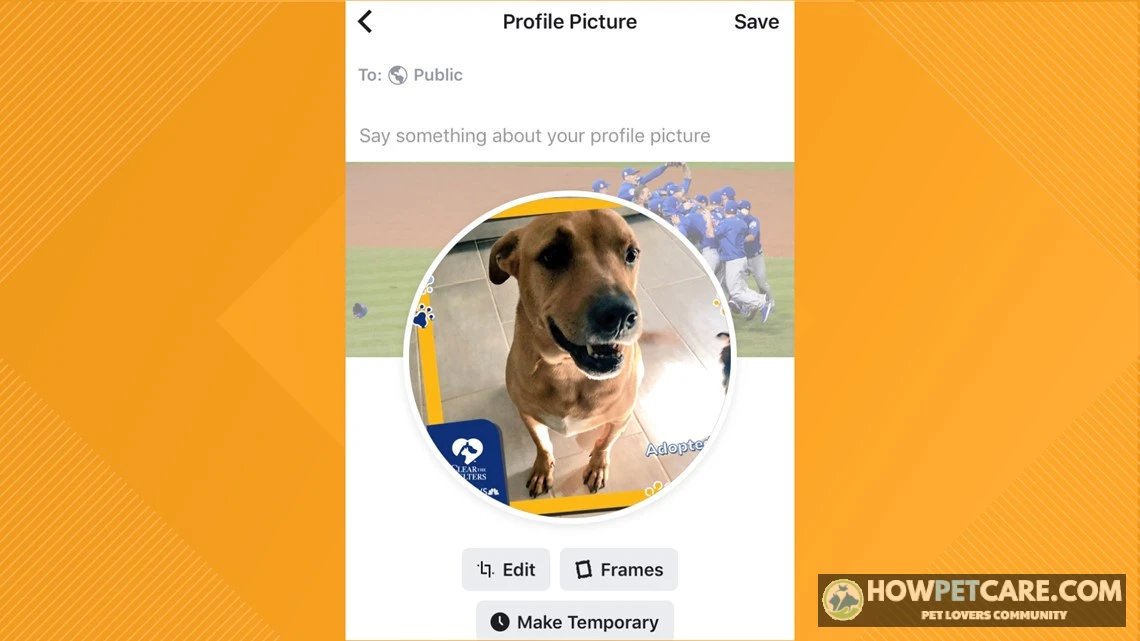
Ways to give when the nearest shelter is far away
- Sponsor a pet remotely – Ask whether the shelter accepts monthly gifts for a specific animal’s food, veterinary care, or enrichment.
- Fund transport – Some rescues need money to move animals from areas with overcrowded shelters to safer locations. You can donate to a transport fund or volunteer as a driver if you have a vehicle.
- Support national or regional organizations – Groups like the Humane Society of the United States or Best Friends Animal Society fund large-scale rescue, spay/neuter, and advocacy work that can benefit local shelters indirectly.
- Advocate from afar – Write to local representatives about shelter funding, support legislation for low-cost spay/neuter clinics, or volunteer with online petitions.
Helping With Overcrowding, Community Cats, Hard‑to‑Place Pets, and Disasters
When shelters are overcrowded, people often want to know which actions can help. These options include supporting community cat programs, fostering animals who need extra care, and preparing to respond to disasters.
What the latest shelter intake and overcrowding data show
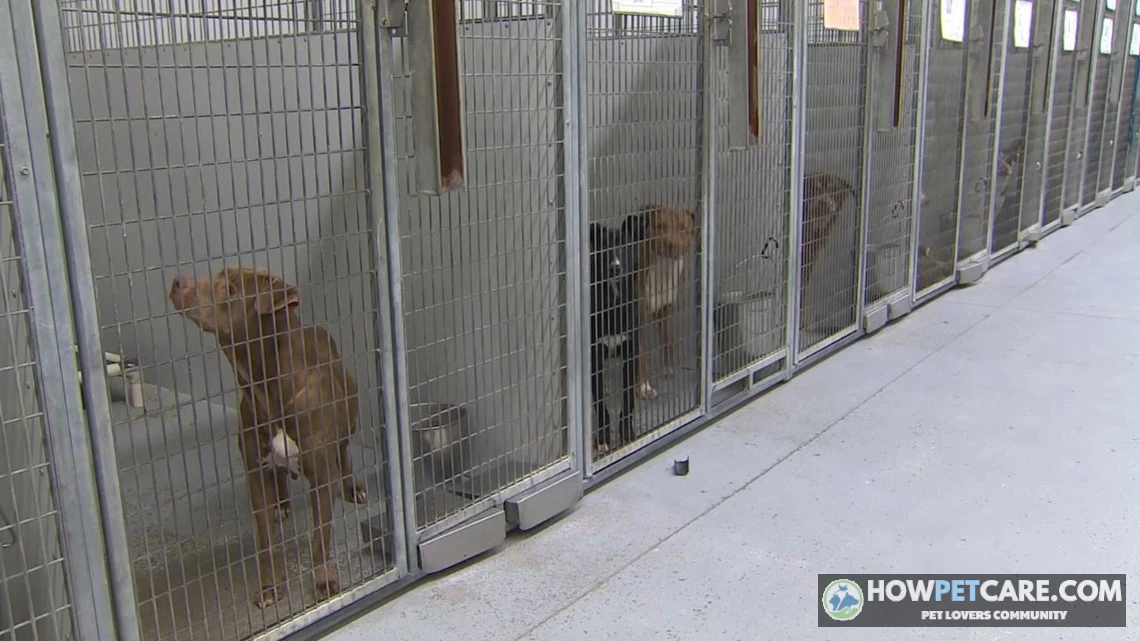
Reports from Best Friends Animal Society (2024) and Shelter Animals Count (2024) indicate that U.S. shelters continue to face overcrowding, with approximately 1,200 of 3,900 shelters still not meeting the 90 % no‑kill benchmark. Average intake remains around 6–8 million animals per year, and the save rate has improved slowly but still falls short of the no-kill goal in many regions.
Trap‑Neuter‑Return (TNR) explained step by step
-
Confirm the cats are truly unowned.
Community (feral or semi‑feral) cats live outdoors and aren’t socialized to people. Friendly strays or lost pets should go to a shelter or rescue for a hold period and owner search first.
-
Check local rules.
Some areas regulate feeding, trapping, or colony management – look up your municipal animal services page or a local TNR group before setting a trap.
-
Connect with a local TNR program.
They lend humane box traps, coach first‑timers, and hold appointments at low‑cost spay/neuter clinics.
-
Trap humanely.
Withhold food the day before, bait the trap, and cover it with a sheet once sprung to keep the cat calm. Never leave a set trap unattended.
-
Clinic day.
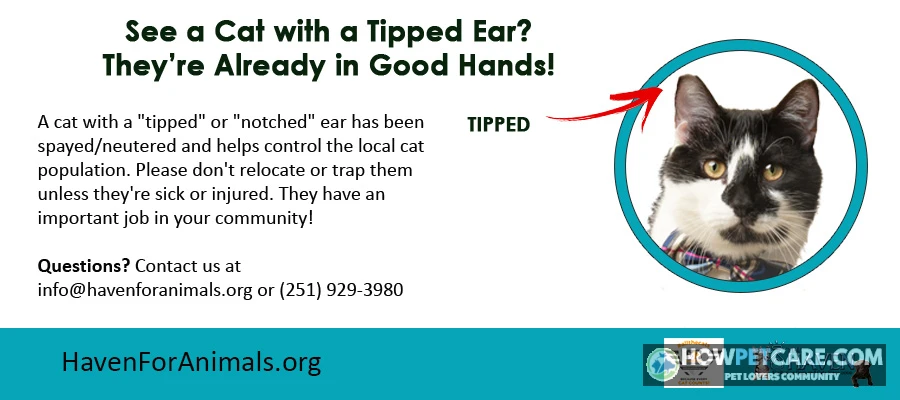
The cat gets spayed/neutered, vaccinated, and ear‑tipped – a small painless notch in the left ear, the universal sign a cat is fixed and has a caretaker.
-
Recover and return.
Keep the cat in the covered trap or a crate for the clinic’s recommended recovery window, then release at the exact spot you trapped it. Relocating cats rarely works and vacated territory draws new cats.
No trapping experience? You can still help: volunteer as a trapper’s driver or recovery‑space host, donate to spay/neuter clinics, fund a colony’s surgeries, or join a caretaker rotation that feeds and monitors a managed colony.
Helping senior, sick, and behaviorally challenged shelter pets
- Sponsor adoption fees – Senior pets or animals with special needs may come with higher fees or medical costs. A cash gift can help cover some of those expenses.
- Foster short‑term – Even a weekend at home can reveal a pet’s personality and help the shelter describe them to adopters.
- Share their stories – Write a bio, post videos, or create a flyer that highlights the animal’s good traits. Social media posts can bring the pet to more people’s attention.
- Volunteer for enrichment – Puzzle feeders, scent games, or simple play sessions provide mental stimulation, reduce stress, and may improve adoptability.

Shelter enrichment (e.g., puzzle toys, climbing structures, quiet rooms) has been shown to reduce stress hormones and increase adoption rates, per multiple veterinary studies.
Emergency animal relief: how to sign up before a disaster
- Register with local emergency animal response teams – Many counties have volunteer squads that help shelter pets during hurricanes, floods, or wildfires. Training is often required and can be completed in a few hours.
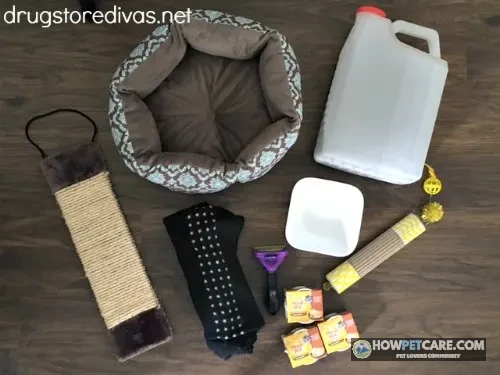
- Prepare a disaster kit – Include leashes, carriers, medications, recent vet records, and a photo of each pet with contact information.
- Know evacuation routes – Some shelters have pet-friendly evacuation sites. Check their locations and policies ahead of time.
- Stay informed – Follow agencies like the ASPCA or Humane Society of the United States for alerts and volunteer opportunities when disasters strike.
Training in advance can help you respond quickly during a crisis, when shelters may need extra support.
Your First Step: A Short Action Plan for Helping Shelter Animals This Week
Knowing the options is useful; choosing one and following through is what gets help to a shelter. Use this plan to pick a path, check the organization, and take a concrete step.
A 10‑minute, 1‑hour, and weekend action ladder
10‑minute micro‑task
- Visit a shelter’s website, find its wish list, and choose an inexpensive item (e.g., a bag of treats). Place the order with a credit card and keep the receipt.
1‑hour task
- Complete a volunteer application for a local shelter with your basic information, availability, and consent. The shelter will let you know about its next steps and orientation schedule.
Weekend task
- Contact a shelter’s fostering coordinator and ask about short-term fostering. If the shelter has a need, discuss a specific date range (e.g., Saturday‑Sunday) and confirm the requirements before you commit.
Start with the option you can manage now. Once you’ve tried it, you’ll have a better sense of the time, money, or space you can offer next.
Your pre‑donation checklist
- ☐ Verify the organization’s legal status and recent financial transparency.
- ☐ Check the current wish list and confirm the items are still needed.
- ☐ Choose a trackable payment method (credit card, PayPal, check) and request a receipt.
- ☐ If you’re giving time, read the volunteer or fostering application, complete it, and keep a copy for your records.
- ☐ After donating or volunteering, send the shelter a thank-you note or email.
A well-vetted first step gives you a practical way to help and a clearer idea of what you can offer next.
Way to help Typical cost Time commitment Setup effort What it does for animals and the shelter Best for One‑time cash donation Any amount; you choose Minutes Low Flexible money for vet care, food, utilities, and whatever is most urgent No spare time Monthly recurring gift Small recurring amount Minutes once Low Predictable income the shelter can budget around Steady, low‑effort giving Wish‑list supplies Cost of items plus shipping Under an hour Low‑Medium Fills a posted, specific need; less flexible than cash Tangible giving, drives with kids Employer matching gift Free on top of your donation 15‑30 min of forms Medium Often doubles a donation you already made Anyone with a matching program Volunteering Usually free (maybe transport) Recurring shifts; many shelters ask a monthly minimum Medium‑High (application, orientation, training) Direct labor: walking, socializing, laundry, cleaning, events Flexible schedule, low budget Fostering (standard) Often low – many shelters cover food/supplies/vet care, but ask Weeks to months Medium Frees a kennel and shows how the animal behaves in a home Spare room, stable routine Short‑term / "slumber party" fostering Usually minimal; confirm coverage One night to a weekend Low‑Medium Gives animals a kennel break and generates photos/behavior notes Trying fostering, busy households Adopting Adoption fee plus lifetime costs Years Medium Permanent home; opens one shelter space Life genuinely fits a pet Fundraising / food drive Low A few hours to weeks Medium Brings in more donations A workplace, school, or network Advocacy Free Sporadic Low Pushes for shelter funding, spay/neuter access, and pet‑retention programs No money, no nearby shelter Remote/virtual help Free or shipping costs Flexible Low‑Medium Photos, bios, social sharing, admin help, wish‑list shipments to distant shelters Rural readers, homebodies
1Why do shelters often prefer unrestricted cash donations over specific physical items when there is no named shortage?
Unrestricted monetary gifts allow shelter managers to allocate funds immediately to the highest-priority operational expenses or unexpected emergencies.
2A prospective volunteer wants to begin regular shifts handling animals at a local shelter. Which of the following steps are typically required before starting regular shifts?
Applications provide staff with essential background information, scheduling constraints, and volunteer preferences.
3According to benchmarks established by organizations like Best Friends Animal Society, what minimum live-release rate must a shelter reach to achieve 'no-kill' status?
The 90% save-rate threshold acknowledges that some animals enter shelters with severe, non-treatable medical conditions or dangerous behavioral issues that necessitate humane euthanasia.
4How do private humane societies and SPCAs differ fundamentally from municipal animal shelters regarding funding and intake?
Municipal shelters function as civic agencies backed by local tax budgets, whereas private humane societies operate as independent charitable organizations dependent on public giving.
5Which of the following categories of shelter animals benefit most from short-term or 'slumber party' foster stays?
Underage animals require specialized feeding and home environments to mature safely outside the kennel.
6Which statement correctly highlights a major distinction between animal fostering and standard shelter volunteering?
Removing an animal from a facility into a foster home immediately opens a physical kennel, whereas volunteer labor optimizes existing facility operations.
7Which of the following activities is an example of remote or virtual volunteering that supports shelter animals without requiring in-person visits?
Digital content creation and social media promotion can be performed completely online to help adoptable pets gain visibility.
FAQ
Are donations to an animal shelter tax deductible?
In the US, gifts to registered 501(c)(3) nonprofits are generally deductible if you itemize, and some government-run shelters can also accept deductible gifts. Ask for a receipt and confirm the organization’s status, and check with a tax professional about your own situation.
Can I help shelter animals if I rent or have allergies?
Yes. You can donate money or supplies, volunteer in roles away from the animals such as admin, photography, or laundry, run a drive, or share adoptable pets online. If you want to be around animals, ask the shelter which species it handles and whether there are low-allergen tasks.
What should I not donate to an animal shelter?
Avoid anything the shelter’s wish list doesn’t ask for, such as opened or expired food, damaged bedding, or large items it can’t store. Call or check the website first, because needs differ between shelters.
Can I just visit a shelter to play with the animals?
Some shelters allow visitors to socialize with animals during open hours, but many require you to sign up as a volunteer first so animals are handled safely. Call ahead and ask about visiting policies or one-time volunteer sessions.
How can I help a shelter dog that has been there a long time?
Ask the shelter about its longest-stay dogs, then share their profiles, sponsor the adoption fee, offer to foster, or volunteer for walks and training. Good photos and honest bios also help these dogs get noticed.
Is it better to give to a local shelter or a national organization?
Local shelters use gifts directly in your community, while national groups fund programs across many areas, such as policy, transport, and grants. Either can be a good choice if the organization is transparent about how it spends money, so vet it first.